3 Things to Know about ‘Brink of War,’ the Movie about Reagan, Gorbachev and the Cold War

Carbonatix Pre-Player Loader

Audio By Carbonatix

It Spotlights a Pivotal Moment in U.S.-Soviet Relations

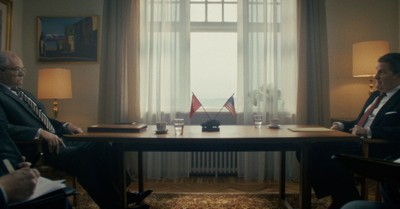
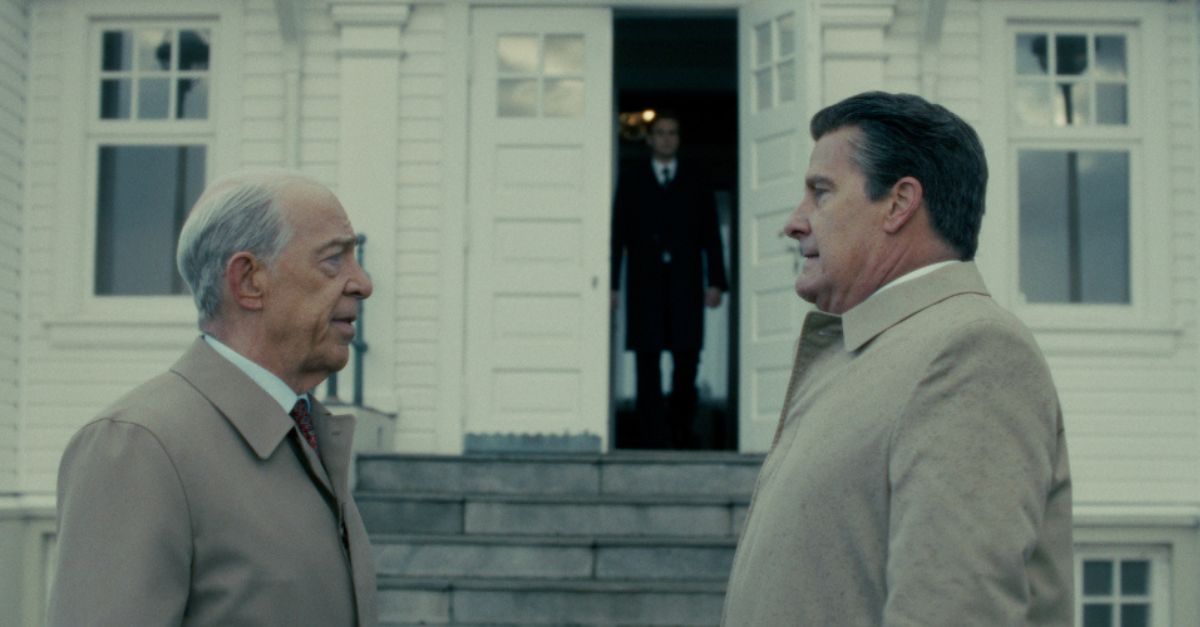
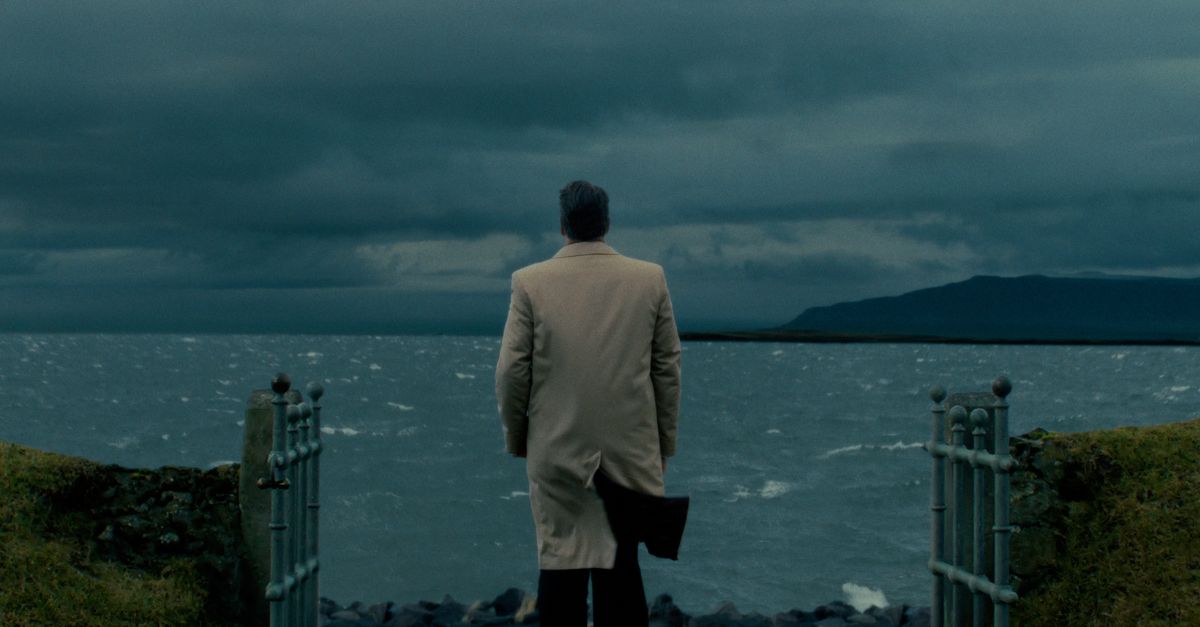
The movie begins and ends in a remote corner of Reykjavík, the capital of Iceland, and the site of the historic summit between Reagan (Jeff Daniels) and Soviet General Secretary Mikhail Gorbachev (Jared Harris), who had been chosen to lead his country only the year before.

Gorbachev wrote to Reagan in September 1986 proposing such a meeting, and Reagan agreed – and, incredibly, both sides organized the summit in a matter of weeks, with Reykjavík chosen for its remote location and security. The two sides met over the course of two days, Oct. 11-12, 1986.

The summit was expected to achieve little more than easing tensions, but it quickly took a dramatic turn when the two sides began discussing significant nuclear reductions – perhaps as much as 50 percent. The talks went even further when Gorbachev and Reagan entertained the possibility that the United States and Soviet Union could get rid of all their nuclear weapons – a stunning development that would have seemed almost unimaginable at the time. (The two sides then possessed a combined roughly 70,000 nuclear warheads, and the chance of an accidental, if not intentional, launch was real.) American and Soviet negotiators worked through the night on a proposal that could have changed world history. “We can leave America safer than we found her,” Reagan says in the film.

Much of the movie unfolds in the negotiating room with Reagan and Gorbachev, although it offers three other storylines that provide moments of levity: the media following Gorbachev’s wife, Raisa, as she tours Reykjavík; First Lady Nancy Reagan back in Washington talking to her husband by phone; and Soviet and American staffers working in Reykjavík separately on the proposal – even as they bicker over the differences between their two nations and, at one point, over the use of restrooms.

Photo Credit: ©Angel


It Encourages Dialogue at a Moment When Our Society So Often Shuns It

We live in an age when it’s popular to talk about – and talk over – our political opponents, with most of the nightly dialogue on Fox News, CNN, and MSNBC aimed more at scoring points than finding common ground. Genuine dialogue with the goal of understanding and compromise is rare, but that’s exactly what Brink of War spotlights.

Reagan had several goals in Reykjavík, including discussing Soviet human rights and the harsh treatment of religious and political dissidents. (He specifically mentions Jews and Pentecostals in the film.) Gorbachev had lofty goals, too, including persuading Reagan to slow or abandon the Strategic Defense Initiative – the system dubbed “Star Wars” in America that was designed to serve as a space-based shield against nuclear weapons.

The movie depicts the back-and-forth, point-counterpoint exchanges that are at the heart of such negotiations. Reagan wants SDI to protect the United States from future rogue threats – even if the Soviet nuclear arsenal is eliminated – while Gorbachev fears that SDI would allow the Americans to attack without fear of nuclear retaliation.

Eventually, the talks fall apart over a hangup involving a single word – “laboratory” – and the two sides walk to their cars disappointed. Still, the summit helped pave the way for a breakthrough treaty the following year that marked the first time two countries had agreed to reduce or eliminate nuclear weapons.

Such breakthroughs are possible when political enemies do something we too often have forgotten how to do: talk.

Photo Credit: ©Angel

It Is Largely Historically Accurate, Though It Exaggerates a Bit

Daniels and Harris are impressive in their respective roles, delivering believable performances that allow you to get lost in the story.

Still, the dialogue can be a bit confusing if you begin the movie knowing little to nothing about U.S.-Soviet relations – much less about things like SDI, ICBMs (intercontinental ballistic missiles), and the European and Asian countries that formed the Western and Eastern blocs. My suggestion: Do five minutes of reading before you start.

The core facts in the film are accurate. The two sides really did come remarkably close to eliminating nuclear weapons. That single word – “laboratory” – really did derail the talks. Reagan was focused on human rights, and Gorbachev wouldn’t budge on SDI. And Nancy Reagan stayed home while Gorbachev’s wife attended.

But a few plot points take creative liberties. It’s easy to watch the film and assume 1986 marked the height of 1980s-era tensions, when those tensions actually peaked earlier in the decade – especially around 1983, when Reagan labeled the Soviet Union an “evil empire,” and the Soviets shot down Korean Air Lines Flight 007, killing all 269 people aboard, including 62 Americans, after reportedly mistaking it for a U.S. military aircraft. By 1986, tensions were beginning to thaw, especially with Gorbachev emerging as a more reform-minded Soviet leader and promoting perestroika (“restructuring”) and glasnost (“openness”). (The Soviet Union fell five years later.) Also, Gorbachev calls Jesus a “socialist” in the film, even though he made that comment several years later.

Still, Brink of War is an engaging film for history buffs and moviegoers who want to better understand what made Reagan – and, in a very different way, Gorbachev – such consequential leaders. If nothing else, it shows what can happen when political opponents sit down, listen, and actually talk to one another.

Brink of War is rated PG for language, thematic elements, and smoking. Language details: S–t (2), h-ll (4), d–n (1), p–-ed (3)

Entertainment rating: 3.5 out of 5 stars.

Family-friendly rating: 4 out of 5 stars.

Photo Credit: ©Angel

 

Salem News Channel Today

Sponsored Links


September 26 - Phoenix, AZ
Scottsdale Center for the Performing Arts


November 2 - Detroit, MI
Zion Christian Church in Troy


October 6 - Los Angeles, CA
Pasadena Convention Center


November 5 - San Antonio, TX
Norris Centers – The Grand Red Oak Ballroom


October 8 - Sacramento, CA
William Jessup University


November 7 - Tampa, FL
The Palladium at St. Pete College


October 22 - Minneapolis, MN
Crowne Plaza AiRE


November 15 - San Francisco, CA
Fremont Marriott Silicon Valley


October 23 - Philadelphia, PA
Green Valley Country Club


November 16 - Denver, CO
CU South Denver - Formerly Wildlife Experience


November 2 - Chicago, IL
Chicago Westin Northwest in Itasca


November 21 - Cleveland, OH
Holiday Inn Rockside in Independence


Salem Radio Network Speakers

Larry Elder is an American lawyer, writer, and radio and television personality who calls himself the "Sage of South Central" a district of Los Angeles, Larry says his philosophy is to entertain, inform, provoke and to hopefully uplift. His calling card is "we have a country to save" and to him this means returning to the bedrock Constitutional principles of limited government and maximum personal responsibility. Elder's iconoclastic wit and intellectual agility makes him a particularly attractive voice in a nation that seems weary of traditional racial dialogue.” – Los Angeles Times.

Mike Gallagher Mike Gallagher began his broadcasting career in 1978 in Dayton, Ohio. Today, he is one of the most listened-to talk radio show hosts in America, recently having been ranked in the Talkers Magazine “Heavy Hundred” list – the 100 most important talk radio hosts in America. Prior to being launched into national syndication in 1998, Mike hosted the morning show on WABC-AM in New York City. Today, Talkers Magazine reports that his show is heard by over 3.75 million weekly listeners. Besides his radio work, Mike is seen on Fox News Channel as an on-air contributor, frequently appearing on the cable news giant.

Hugh Hewitt is one of the nation’s leading bloggers and a genuine media revolutionary. He brings that expertise, his wit and what The New Yorker magazine calls his “amiable but relentless manner” to his nationally syndicated show each day.

When Dr. Sebastian Gorka was growing up, he listened to talk radio under his pillow with a transistor radio, dreaming that one day he would be behind the microphone. Beginning New Year’s Day 2019, he got his wish. Gorka now hosts America First every weekday afternoon 3 to 6pm ET. Gorka’s unique story works well on the radio. He is national security analyst for the Fox News Channel and author of two books: "Why We Fight" and "Defeating Jihad." His latest book releasing this fall is “War For America’s Soul.” He is uniquely qualified to fight the culture war and stand up for what is great about America, his adopted home country.

Broadcasting from his home station of KRLA in Los Angeles, the Dennis Prager Show is heard across the country. Everything in life – from politics to religion to relationships – is grist for Dennis’ mill. If it’s interesting, if it affects your life, then Dennis will be talking about it – with passion, humor, insight and wisdom.

Sean Hannity is a conservative radio and television host, and one of the original primetime hosts on the Fox News Channel, where he has appeared since 1996. Sean Hannity began his radio career at a college station in California, before moving on to markets in the Southeast and New York. Today, he’s one of the most listened to on-air voices. Hannity’s radio program went into national syndication on September 10, 2001, and airs on more than 500 stations. Talkers Magazine estimates Hannity’s weekly radio audience at 13.5 million. In 1996 he was hired as one of the original hosts on Fox News Channel. As host of several popular Fox programs, Hannity has become the highest-paid news anchor on television.

Michelle Malkin is a mother, wife, blogger, conservative syndicated columnist, longtime cable TV news commentator, and best-selling author of six books. She started her newspaper journalism career at the Los Angeles Daily News in 1992, moved to the Seattle Times in 1995, and has been penning nationally syndicated newspaper columns for Creators Syndicate since 1999. She is founder of conservative Internet start-ups Hot Air and Twitchy.com. Malkin has received numerous awards for her investigative journalism, including the Council on Governmental Ethics Laws (COGEL) national award for outstanding service for the cause of governmental ethics and leadership (1998), the Reed Irvine Accuracy in Media Award for Investigative Journalism (2006), the Heritage Foundation and Franklin Center for Government & Public Integrity's Breitbart Award for Excellence in Journalism (2013), the Center for Immigration Studies' Eugene Katz Award for Excellence in the Coverage of Immigration Award (2016), and the Manhattan Film Festival's Film Heals Award (2018). Married for 26 years and the mother of two teenage children, she lives with her family in Colorado. Follow her at michellemalkin.com. (Photo reprinted with kind permission from Peter Duke Photography.)

Sponsored by:

3 Things to Know about ‘Brink of War,’ the Movie about Reagan, Gorbachev and the Cold War

Carbonatix Pre-Player Loader

Audio By Carbonatix

It Spotlights a Pivotal Moment in U.S.-Soviet Relations

The movie begins and ends in a remote corner of Reykjavík, the capital of Iceland, and the site of the historic summit between Reagan (Jeff Daniels) and Soviet General Secretary Mikhail Gorbachev (Jared Harris), who had been chosen to lead his country only the year before.

Gorbachev wrote to Reagan in September 1986 proposing such a meeting, and Reagan agreed – and, incredibly, both sides organized the summit in a matter of weeks, with Reykjavík chosen for its remote location and security. The two sides met over the course of two days, Oct. 11-12, 1986.

The summit was expected to achieve little more than easing tensions, but it quickly took a dramatic turn when the two sides began discussing significant nuclear reductions – perhaps as much as 50 percent. The talks went even further when Gorbachev and Reagan entertained the possibility that the United States and Soviet Union could get rid of all their nuclear weapons – a stunning development that would have seemed almost unimaginable at the time. (The two sides then possessed a combined roughly 70,000 nuclear warheads, and the chance of an accidental, if not intentional, launch was real.) American and Soviet negotiators worked through the night on a proposal that could have changed world history. “We can leave America safer than we found her,” Reagan says in the film.

Much of the movie unfolds in the negotiating room with Reagan and Gorbachev, although it offers three other storylines that provide moments of levity: the media following Gorbachev’s wife, Raisa, as she tours Reykjavík; First Lady Nancy Reagan back in Washington talking to her husband by phone; and Soviet and American staffers working in Reykjavík separately on the proposal – even as they bicker over the differences between their two nations and, at one point, over the use of restrooms.

Photo Credit: ©Angel


It Encourages Dialogue at a Moment When Our Society So Often Shuns It

We live in an age when it’s popular to talk about – and talk over – our political opponents, with most of the nightly dialogue on Fox News, CNN, and MSNBC aimed more at scoring points than finding common ground. Genuine dialogue with the goal of understanding and compromise is rare, but that’s exactly what Brink of War spotlights.

Reagan had several goals in Reykjavík, including discussing Soviet human rights and the harsh treatment of religious and political dissidents. (He specifically mentions Jews and Pentecostals in the film.) Gorbachev had lofty goals, too, including persuading Reagan to slow or abandon the Strategic Defense Initiative – the system dubbed “Star Wars” in America that was designed to serve as a space-based shield against nuclear weapons.

The movie depicts the back-and-forth, point-counterpoint exchanges that are at the heart of such negotiations. Reagan wants SDI to protect the United States from future rogue threats – even if the Soviet nuclear arsenal is eliminated – while Gorbachev fears that SDI would allow the Americans to attack without fear of nuclear retaliation.

Eventually, the talks fall apart over a hangup involving a single word – “laboratory” – and the two sides walk to their cars disappointed. Still, the summit helped pave the way for a breakthrough treaty the following year that marked the first time two countries had agreed to reduce or eliminate nuclear weapons.

Such breakthroughs are possible when political enemies do something we too often have forgotten how to do: talk.

Photo Credit: ©Angel


It Is Largely Historically Accurate, Though It Exaggerates a Bit

Daniels and Harris are impressive in their respective roles, delivering believable performances that allow you to get lost in the story.

Still, the dialogue can be a bit confusing if you begin the movie knowing little to nothing about U.S.-Soviet relations – much less about things like SDI, ICBMs (intercontinental ballistic missiles), and the European and Asian countries that formed the Western and Eastern blocs. My suggestion: Do five minutes of reading before you start.

The core facts in the film are accurate. The two sides really did come remarkably close to eliminating nuclear weapons. That single word – “laboratory” – really did derail the talks. Reagan was focused on human rights, and Gorbachev wouldn’t budge on SDI. And Nancy Reagan stayed home while Gorbachev’s wife attended.

But a few plot points take creative liberties. It’s easy to watch the film and assume 1986 marked the height of 1980s-era tensions, when those tensions actually peaked earlier in the decade – especially around 1983, when Reagan labeled the Soviet Union an “evil empire,” and the Soviets shot down Korean Air Lines Flight 007, killing all 269 people aboard, including 62 Americans, after reportedly mistaking it for a U.S. military aircraft. By 1986, tensions were beginning to thaw, especially with Gorbachev emerging as a more reform-minded Soviet leader and promoting perestroika (“restructuring”) and glasnost (“openness”). (The Soviet Union fell five years later.) Also, Gorbachev calls Jesus a “socialist” in the film, even though he made that comment several years later.

Still, Brink of War is an engaging film for history buffs and moviegoers who want to better understand what made Reagan – and, in a very different way, Gorbachev – such consequential leaders. If nothing else, it shows what can happen when political opponents sit down, listen, and actually talk to one another.

Brink of War is rated PG for language, thematic elements, and smoking. Language details: S–t (2), h-ll (4), d–n (1), p–-ed (3)

Entertainment rating: 3.5 out of 5 stars.

Family-friendly rating: 4 out of 5 stars.

Photo Credit: ©Angel

 

Salem News Channel Today

Sponsored Links

On Air & Up Next

See the Full Program Guide