4 Reasons ‘Supergirl’ May Not Be Right for Every Family

Carbonatix Pre-Player Loader

Audio By Carbonatix

Supergirl Is No Role Model (At Least – Not Yet)

James Gunn, the co-CEO of DC Studios, has said in recent years that Supergirl was inspired by the comic book series Supergirl: Woman of Tomorrow, which portrays Kara not as the hopeful, optimistic hero in the mold of Superman but rather as a cynical, emotionally scarred young woman who is angry about her parents’ death. (Like Superman, she lost her mom and dad when Krypton was destroyed.) Because of that, she drinks … a lot.

The film opens with punk rock music blaring in the background as Kara (Milly Alcock) wakes up on a distant planet after an apparent binge, with food boxes and trash scattered across the floor and Krypto randomly urinating around the room. The next scene finds Kara in a bar, drinking heavily – apparently celebrating her birthday – as alien patrons around her drink, debate, and revel.

The plot takes a turn when a young girl named Ruthye (Eve Ridley) enters the bar and announces that her parents and brother were murdered by a ruthless band of outlaws known as the Brigands – and she is searching for revenge against their leader, Krem. At first, Kara shows no interest. “That's not our problem,” she tells Krypto as she takes another drink. She reluctantly steps in only after a large alien steals Ruthye's sword and quickly defeats him in a fight.

Kara’s priorities change again moments later, when Krem shoots Krypto with a poisoned dart and escapes – leaving Kara with only three days to track down Krem, recover the antidote, and save her dog, which is her last living connection to Krypton.

After several refusals, she allows Ruthye to join her on the mission. Their goal is the same: Find Krem.

Kara makes clear her view of the universe is very different from her more famous cousin, Superman. (“He’s a freaking nerd,” she tells Ruthye, adding that he “sees the good in everyone, and I see the truth.”) She also curses (a lot) more than Superman. (She flips off a villain, too.) Kara is cynical about people, distrustful of others, and pessimistic about life in general.

Of course, Kara and Ruthye share a common bond, each having lost their parents to tragedy.

Photo Credit: ©DC


It’s Mad Max meets DC

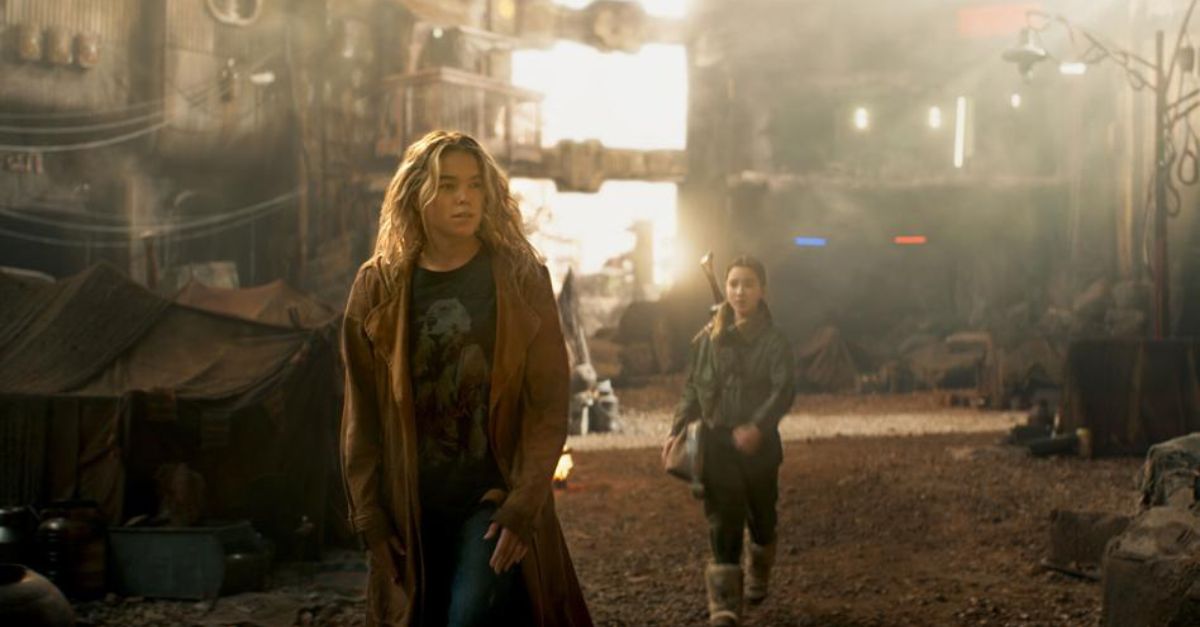
DC movies are often visually and thematically darker than their Marvel counterparts, and Supergirl fully embraces that approach. It presents a grim universe populated by grimy, battle-worn characters and desolate worlds that evoke Mad Max.

Krem (Matthias Schoenaerts) is a ruthless space pirate whose face is covered with metal studs and who kills simply because he enjoys it. (He murders Ruthye's parents even after they honor their agreement with him – and yes, the audience sees it.) Jason Momoa's Lobo is a leather-clad, axe-wielding bounty hunter with face paint, a heavy chain around his neck, and an intimidating presence, even though he eventually becomes a semi-ally to Supergirl.

The film's most likable character is Ruthye, who begins her journey consumed by revenge but gradually must decide whether vengeance will truly bring her peace or only deepen her pain.

Nearly everything in Supergirl is dark – the planets, the prison system, the villains, and, at least partially, even its title character. Most characters look as though they belong in the “before” photo of a soap commercial – and they're the last people you'd want to encounter in a dark alley.

Photo Credit: ©DC


It’s Super-Violent

Every superhero film includes some violence, but Supergirl pushes the boundaries with multiple scenes that are more graphic and intense than what audiences typically expect from the genre. We watch as Ruthye's family is murdered. Multiple characters are stabbed. Near the end, a villain is killed with a sword, including a fatal blow to the throat. Of course, the film includes the typical amount of punching and kicking.

That content is reflected in the film's PG-13 rating, which cites "sequences of strong violence." By comparison, 2025's Superman received a PG-13 rating for simply "violence."

Language in Supergirl is excessive, too (see details below).

Photo Credit: ©DC

A Redemptive Arc Emerges – But It Takes Too Long

Redemption is the hallmark of a great story. After all, it's the central theme of humanity's story in Scripture, fulfilled through Jesus Christ.

Supergirl does include a redemptive arc – but it takes nearly the entire film to get there. That's because the movie is essentially an origin story, showing how Kara became the hero audiences (hopefully) will see in future DC films. At the outset, she's cynical, careless, and emotionally scarred by unimaginable loss.

A lengthy flashback shows a younger Kara on Krypton, joyful and full of life before the planet's destruction. Unlike Superman, who escaped as an infant and was raised by adoptive parents on Earth, Kara witnessed Krypton's final days firsthand, watching her world and loved ones perish before escaping herself. We also learn that her mother urged her to be kind and to protect those too weak to defend themselves.

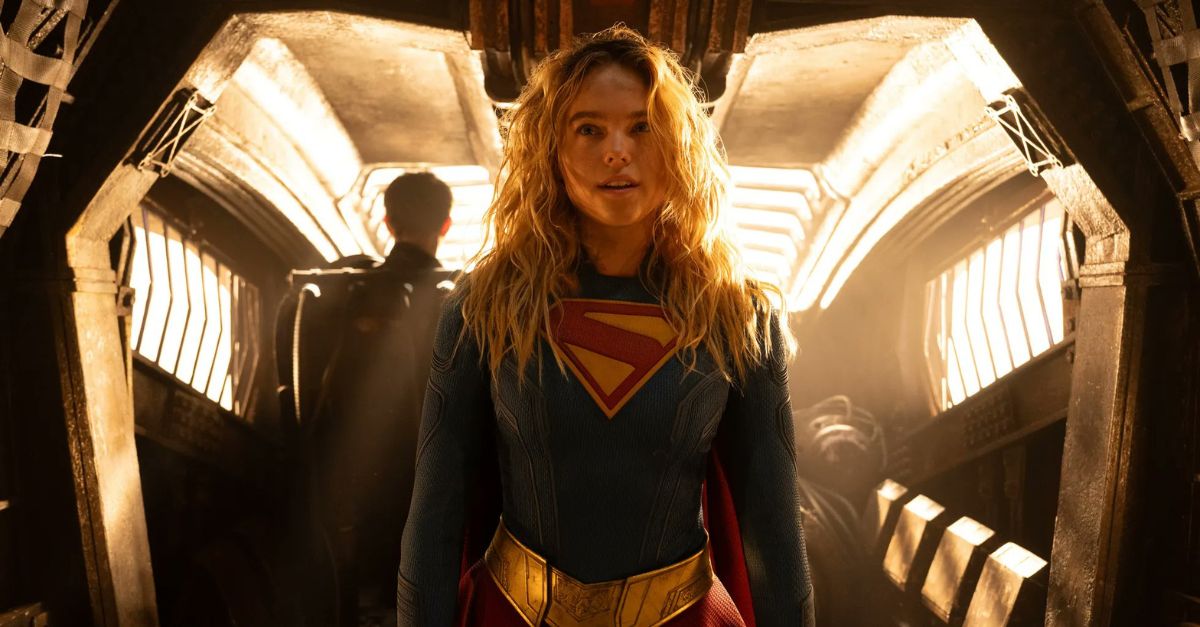
Ruthye eventually confronts Kara with a painful truth, telling her she stays drunk because “you never have to feel anything.” (“I do not want to be like you,” Ruthye says.) By the film’s final minutes, however, Kara says her drinking days are behind her as she dons her familiar red-and-blue cape – a visual reminder that she is finally embracing the hero she was meant to become.

That's not to say Supergirl won't win over DC fans and older moviegoers. But parents may find the road to redemption far longer – and far darker – than they expected.

Rated PG-13 for sequences of strong violence, action, language, and smoking. Language details: s–t (10), a– (2), b––rd (1), OMG (1), single misuse of “God” (1), “whore” (1).

Entertainment rating: 2.5 out of 5 stars. Family-friendly rating: 2.5 out of 5 stars.

Photo Credit: ©DC

 

Salem News Channel Today

Sponsored Links


September 26 - Phoenix, AZ
Scottsdale Center for the Performing Arts


November 2 - Detroit, MI
Zion Christian Church in Troy


October 6 - Los Angeles, CA
Pasadena Convention Center


November 5 - San Antonio, TX
Norris Centers – The Grand Red Oak Ballroom


October 8 - Sacramento, CA
William Jessup University


November 7 - Tampa, FL
The Palladium at St. Pete College


October 22 - Minneapolis, MN
Crowne Plaza AiRE


November 15 - San Francisco, CA
Fremont Marriott Silicon Valley


October 23 - Philadelphia, PA
Green Valley Country Club


November 16 - Denver, CO
CU South Denver - Formerly Wildlife Experience


November 2 - Chicago, IL
Chicago Westin Northwest in Itasca


November 21 - Cleveland, OH
Holiday Inn Rockside in Independence


Salem Radio Network Speakers

Larry Elder is an American lawyer, writer, and radio and television personality who calls himself the "Sage of South Central" a district of Los Angeles, Larry says his philosophy is to entertain, inform, provoke and to hopefully uplift. His calling card is "we have a country to save" and to him this means returning to the bedrock Constitutional principles of limited government and maximum personal responsibility. Elder's iconoclastic wit and intellectual agility makes him a particularly attractive voice in a nation that seems weary of traditional racial dialogue.” – Los Angeles Times.

Mike Gallagher Mike Gallagher began his broadcasting career in 1978 in Dayton, Ohio. Today, he is one of the most listened-to talk radio show hosts in America, recently having been ranked in the Talkers Magazine “Heavy Hundred” list – the 100 most important talk radio hosts in America. Prior to being launched into national syndication in 1998, Mike hosted the morning show on WABC-AM in New York City. Today, Talkers Magazine reports that his show is heard by over 3.75 million weekly listeners. Besides his radio work, Mike is seen on Fox News Channel as an on-air contributor, frequently appearing on the cable news giant.

Hugh Hewitt is one of the nation’s leading bloggers and a genuine media revolutionary. He brings that expertise, his wit and what The New Yorker magazine calls his “amiable but relentless manner” to his nationally syndicated show each day.

When Dr. Sebastian Gorka was growing up, he listened to talk radio under his pillow with a transistor radio, dreaming that one day he would be behind the microphone. Beginning New Year’s Day 2019, he got his wish. Gorka now hosts America First every weekday afternoon 3 to 6pm ET. Gorka’s unique story works well on the radio. He is national security analyst for the Fox News Channel and author of two books: "Why We Fight" and "Defeating Jihad." His latest book releasing this fall is “War For America’s Soul.” He is uniquely qualified to fight the culture war and stand up for what is great about America, his adopted home country.

Broadcasting from his home station of KRLA in Los Angeles, the Dennis Prager Show is heard across the country. Everything in life – from politics to religion to relationships – is grist for Dennis’ mill. If it’s interesting, if it affects your life, then Dennis will be talking about it – with passion, humor, insight and wisdom.

Sean Hannity is a conservative radio and television host, and one of the original primetime hosts on the Fox News Channel, where he has appeared since 1996. Sean Hannity began his radio career at a college station in California, before moving on to markets in the Southeast and New York. Today, he’s one of the most listened to on-air voices. Hannity’s radio program went into national syndication on September 10, 2001, and airs on more than 500 stations. Talkers Magazine estimates Hannity’s weekly radio audience at 13.5 million. In 1996 he was hired as one of the original hosts on Fox News Channel. As host of several popular Fox programs, Hannity has become the highest-paid news anchor on television.

Michelle Malkin is a mother, wife, blogger, conservative syndicated columnist, longtime cable TV news commentator, and best-selling author of six books. She started her newspaper journalism career at the Los Angeles Daily News in 1992, moved to the Seattle Times in 1995, and has been penning nationally syndicated newspaper columns for Creators Syndicate since 1999. She is founder of conservative Internet start-ups Hot Air and Twitchy.com. Malkin has received numerous awards for her investigative journalism, including the Council on Governmental Ethics Laws (COGEL) national award for outstanding service for the cause of governmental ethics and leadership (1998), the Reed Irvine Accuracy in Media Award for Investigative Journalism (2006), the Heritage Foundation and Franklin Center for Government & Public Integrity's Breitbart Award for Excellence in Journalism (2013), the Center for Immigration Studies' Eugene Katz Award for Excellence in the Coverage of Immigration Award (2016), and the Manhattan Film Festival's Film Heals Award (2018). Married for 26 years and the mother of two teenage children, she lives with her family in Colorado. Follow her at michellemalkin.com. (Photo reprinted with kind permission from Peter Duke Photography.)

Sponsored by:

4 Reasons ‘Supergirl’ May Not Be Right for Every Family

Carbonatix Pre-Player Loader

Audio By Carbonatix

Supergirl Is No Role Model (At Least – Not Yet)

James Gunn, the co-CEO of DC Studios, has said in recent years that Supergirl was inspired by the comic book series Supergirl: Woman of Tomorrow, which portrays Kara not as the hopeful, optimistic hero in the mold of Superman but rather as a cynical, emotionally scarred young woman who is angry about her parents’ death. (Like Superman, she lost her mom and dad when Krypton was destroyed.) Because of that, she drinks … a lot.

The film opens with punk rock music blaring in the background as Kara (Milly Alcock) wakes up on a distant planet after an apparent binge, with food boxes and trash scattered across the floor and Krypto randomly urinating around the room. The next scene finds Kara in a bar, drinking heavily – apparently celebrating her birthday – as alien patrons around her drink, debate, and revel.

The plot takes a turn when a young girl named Ruthye (Eve Ridley) enters the bar and announces that her parents and brother were murdered by a ruthless band of outlaws known as the Brigands – and she is searching for revenge against their leader, Krem. At first, Kara shows no interest. “That's not our problem,” she tells Krypto as she takes another drink. She reluctantly steps in only after a large alien steals Ruthye's sword and quickly defeats him in a fight.

Kara’s priorities change again moments later, when Krem shoots Krypto with a poisoned dart and escapes – leaving Kara with only three days to track down Krem, recover the antidote, and save her dog, which is her last living connection to Krypton.

After several refusals, she allows Ruthye to join her on the mission. Their goal is the same: Find Krem.

Kara makes clear her view of the universe is very different from her more famous cousin, Superman. (“He’s a freaking nerd,” she tells Ruthye, adding that he “sees the good in everyone, and I see the truth.”) She also curses (a lot) more than Superman. (She flips off a villain, too.) Kara is cynical about people, distrustful of others, and pessimistic about life in general.

Of course, Kara and Ruthye share a common bond, each having lost their parents to tragedy.

Photo Credit: ©DC


It’s Mad Max meets DC

DC movies are often visually and thematically darker than their Marvel counterparts, and Supergirl fully embraces that approach. It presents a grim universe populated by grimy, battle-worn characters and desolate worlds that evoke Mad Max.

Krem (Matthias Schoenaerts) is a ruthless space pirate whose face is covered with metal studs and who kills simply because he enjoys it. (He murders Ruthye's parents even after they honor their agreement with him – and yes, the audience sees it.) Jason Momoa's Lobo is a leather-clad, axe-wielding bounty hunter with face paint, a heavy chain around his neck, and an intimidating presence, even though he eventually becomes a semi-ally to Supergirl.

The film's most likable character is Ruthye, who begins her journey consumed by revenge but gradually must decide whether vengeance will truly bring her peace or only deepen her pain.

Nearly everything in Supergirl is dark – the planets, the prison system, the villains, and, at least partially, even its title character. Most characters look as though they belong in the “before” photo of a soap commercial – and they're the last people you'd want to encounter in a dark alley.

Photo Credit: ©DC


It’s Super-Violent

Every superhero film includes some violence, but Supergirl pushes the boundaries with multiple scenes that are more graphic and intense than what audiences typically expect from the genre. We watch as Ruthye's family is murdered. Multiple characters are stabbed. Near the end, a villain is killed with a sword, including a fatal blow to the throat. Of course, the film includes the typical amount of punching and kicking.

That content is reflected in the film's PG-13 rating, which cites "sequences of strong violence." By comparison, 2025's Superman received a PG-13 rating for simply "violence."

Language in Supergirl is excessive, too (see details below).

Photo Credit: ©DC


A Redemptive Arc Emerges – But It Takes Too Long

Redemption is the hallmark of a great story. After all, it's the central theme of humanity's story in Scripture, fulfilled through Jesus Christ.

Supergirl does include a redemptive arc – but it takes nearly the entire film to get there. That's because the movie is essentially an origin story, showing how Kara became the hero audiences (hopefully) will see in future DC films. At the outset, she's cynical, careless, and emotionally scarred by unimaginable loss.

A lengthy flashback shows a younger Kara on Krypton, joyful and full of life before the planet's destruction. Unlike Superman, who escaped as an infant and was raised by adoptive parents on Earth, Kara witnessed Krypton's final days firsthand, watching her world and loved ones perish before escaping herself. We also learn that her mother urged her to be kind and to protect those too weak to defend themselves.

Ruthye eventually confronts Kara with a painful truth, telling her she stays drunk because “you never have to feel anything.” (“I do not want to be like you,” Ruthye says.) By the film’s final minutes, however, Kara says her drinking days are behind her as she dons her familiar red-and-blue cape – a visual reminder that she is finally embracing the hero she was meant to become.

That's not to say Supergirl won't win over DC fans and older moviegoers. But parents may find the road to redemption far longer – and far darker – than they expected.

Rated PG-13 for sequences of strong violence, action, language, and smoking. Language details: s–t (10), a– (2), b––rd (1), OMG (1), single misuse of “God” (1), “whore” (1).

Entertainment rating: 2.5 out of 5 stars. Family-friendly rating: 2.5 out of 5 stars.

Photo Credit: ©DC

 

Salem News Channel Today

Sponsored Links

On Air & Up Next

See the Full Program Guide