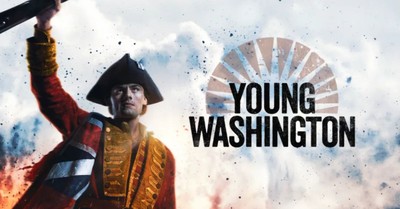
Is ‘Young Washington’ Historically Accurate?

Carbonatix Pre-Player Loader

Audio By Carbonatix

Washington’s Father Died When He Was Young, Changing His Life’s Direction

The film opens with a heartbreaking scene of young George Washington mourning the death of his father, Augustine Washington – a life-altering moment that shapes the rest of the movie. That part is rooted in history. Washington’s father died when he was 11, changing the “course of his life” and forcing him to “grow up quickly,” according to a biography on the website of Mount Vernon, Washington's estate.

His Half-Brother Helped Raise Him

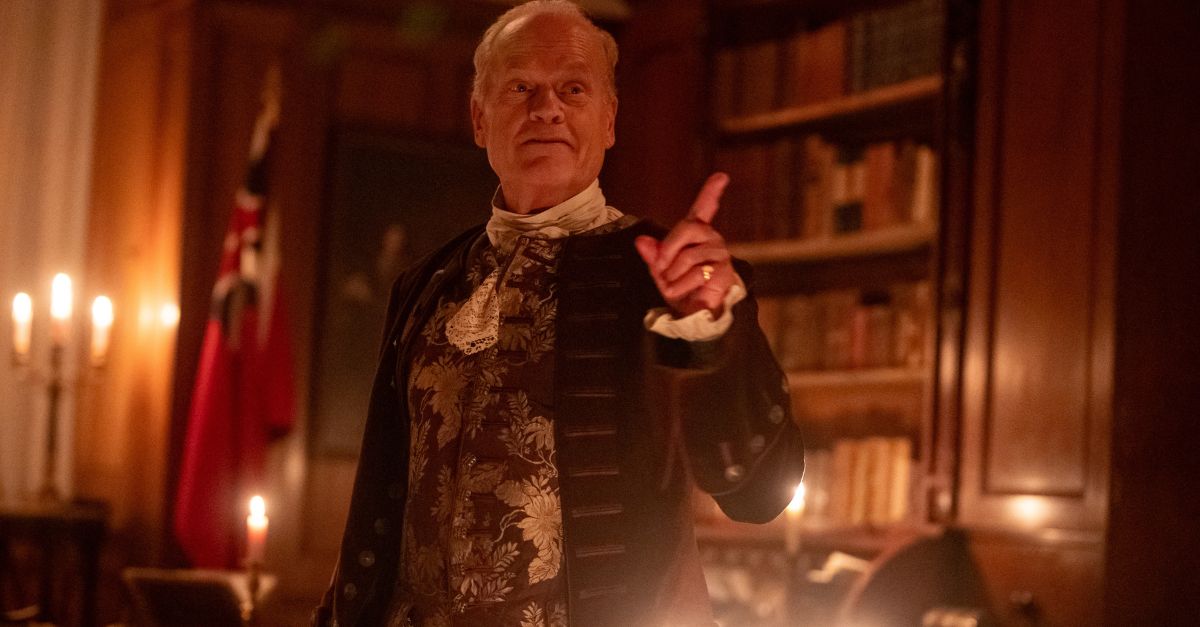
Young Washington depicts his half-brother, Lawrence, promising to help raise the young George after their father’s death. In the film, Lawrence had served the King and had been appointed adjutant general of the Virginia militia. That, too, is grounded in history. Lawrence Washington served as a captain during the British campaign against Spain in the West Indies and later became adjutant general of the militia in Virginia. After Augustine Washington's death, the younger George “looked to [Lawrence] as a paternal influence, as well as a brother,” according to a biography on the Mount Vernon website.

Photo Credit: ©Angel/Wonder Project

He Was Rejected by the British Military – and Fought to Prove Himself

Just as depicted in the film, George Washington’s life changed dramatically after his father's death. The tragedy prevented him from receiving the classical education enjoyed by his older half-brothers, who studied at Appleby School in England. Instead, George was educated by tutors and “possibly a local school,” according to the Mount Vernon biography.

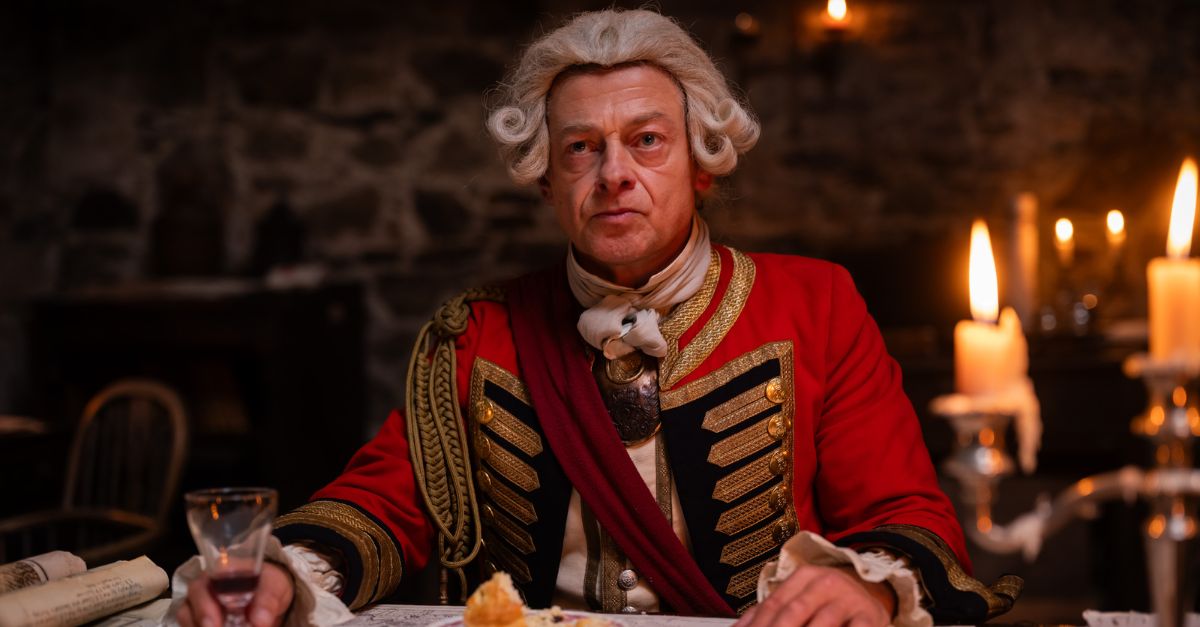
Washington went on to become a surveyor and later joined the Virginia militia, but he was repeatedly denied a royal commission as an officer in the British Army – a key plot point in the film. The movie also accurately portrays Washington copying 110 “Rules of Civility and Decent Behavior in Company and Conversation,” which he transcribed from a popular English text as a teenager.

“By 1757, Washington was coming to realize that being American was not the same thing as being British, and the snubs he faced as a Virginia officer in the French and Indian War would later help to radicalize him into political insurgency during the American Revolution,” the Mount Vernon bio says.

He Apparently Had Feelings for Sally Fairfax

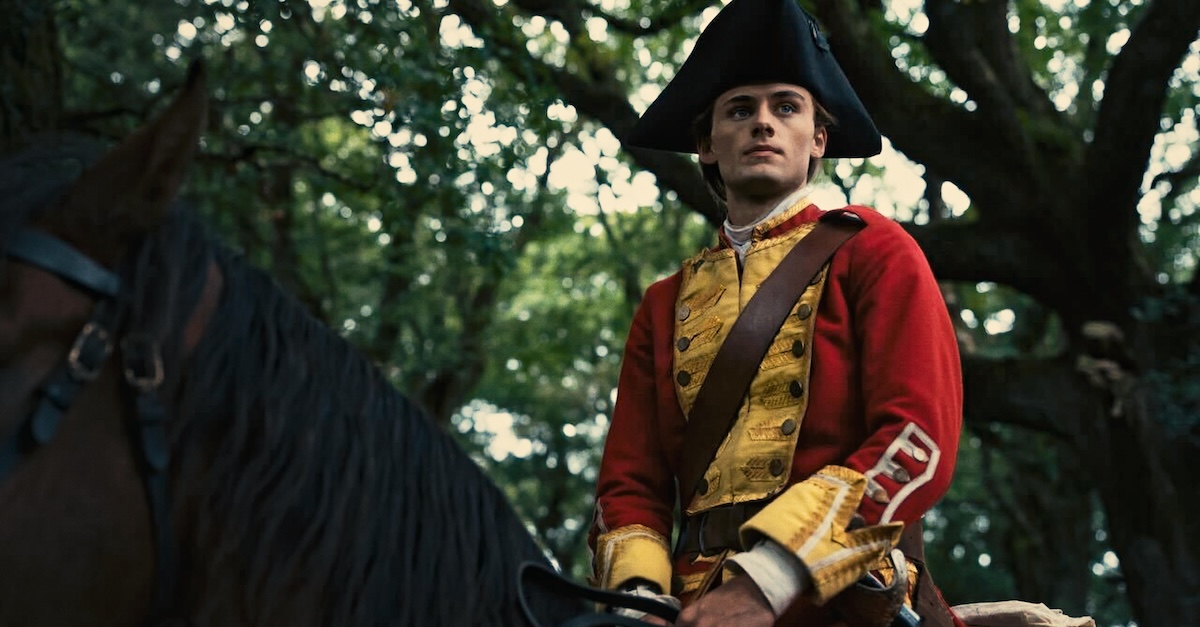
Just as depicted in the film, Washington appears to have developed romantic feelings for Sally Fairfax, whose sister, Anne, had married his half-brother, Lawrence. The Fairfaxes, as portrayed in the film, were among colonial Virginia's wealthiest and most influential families.

Those feelings appear to have lingered even after Sally married in 1748, although the film depicts Washington confessing his love before her engagement. A decade later, in 1758, he wrote her a famous letter that many historians believe hints at his affection:

“The world has no business to know the object of my love, declared in this manner to – you, when I want to conceal it. One thing above all things, in this World I wish to know, and only one person of your acquaintance can solve me that or guess my meaning - but adieu to this till happier times, if ever I shall see them.”

He married Martha Custis in 1759.

Photo Credit: ©Angel/Wonder Project

He and Christopher Gist nearly froze to Death

The film depicts Washington and fellow frontiersman Christopher Gist nearly freezing to death after becoming stranded overnight on a small island before the river froze, allowing them to escape. That dramatic sequence is rooted in history. According to the Mount Vernon website, the two men were traveling on a raft down the Allegheny River, “which was filled with large chunks of floating ice,” when “Washington was thrown into the icy waters after their raft struck an ice pack.”

They made their way to a “nearby island, where they spent a miserable night in the severe weather. By morning, the river was frozen solid, and the two battered survivors walked their way to safety.”

Washington Lost His First Battle

Just as depicted in the film, Washington lost his first military command at Fort Necessity, a defeat that helped ignite the French and Indian War – but also became a defining moment in his development as a leader.

“Even though his first significant mission as commander of troops was unsuccessful, George Washington had found his calling in life,” the Mount Vernon website says, quoting him as declaring: “I heard Bullets whistle and believe me there was something charming in the sound.”

He Survived Multiple Brushes with Death in Battle

The film ends with a dramatic portrayal of Washington surviving a hail of gunfire at the Battle of the Monongahela – a seemingly unbelievable scene that is firmly rooted in history. Just as the film shows, he entered the battle while recovering from dysentery.

General Edward Braddock was mortally wounded that day, but Washington survived.

“During the battle, while attempting to rally the British soldiers, Washington had two horses shot out from under him and four bullet holes shot through his coat,” the Mount Vernon biography says. “Although he behaved with conspicuous bravery, Washington could do little except lead the broken survivors to safety.”

Photo Credit: ©Angel/Wonder Project

 

Salem News Channel Today

Sponsored Links


September 26 - Phoenix, AZ
Scottsdale Center for the Performing Arts


November 2 - Detroit, MI
Zion Christian Church in Troy


October 6 - Los Angeles, CA
Pasadena Convention Center


November 5 - San Antonio, TX
Norris Centers – The Grand Red Oak Ballroom


October 8 - Sacramento, CA
William Jessup University


November 7 - Tampa, FL
The Palladium at St. Pete College


October 22 - Minneapolis, MN
Crowne Plaza AiRE


November 15 - San Francisco, CA
Fremont Marriott Silicon Valley


October 23 - Philadelphia, PA
Green Valley Country Club


November 16 - Denver, CO
CU South Denver - Formerly Wildlife Experience


November 2 - Chicago, IL
Chicago Westin Northwest in Itasca


November 21 - Cleveland, OH
Holiday Inn Rockside in Independence


Salem Radio Network Speakers

Larry Elder is an American lawyer, writer, and radio and television personality who calls himself the "Sage of South Central" a district of Los Angeles, Larry says his philosophy is to entertain, inform, provoke and to hopefully uplift. His calling card is "we have a country to save" and to him this means returning to the bedrock Constitutional principles of limited government and maximum personal responsibility. Elder's iconoclastic wit and intellectual agility makes him a particularly attractive voice in a nation that seems weary of traditional racial dialogue.” – Los Angeles Times.

Mike Gallagher Mike Gallagher began his broadcasting career in 1978 in Dayton, Ohio. Today, he is one of the most listened-to talk radio show hosts in America, recently having been ranked in the Talkers Magazine “Heavy Hundred” list – the 100 most important talk radio hosts in America. Prior to being launched into national syndication in 1998, Mike hosted the morning show on WABC-AM in New York City. Today, Talkers Magazine reports that his show is heard by over 3.75 million weekly listeners. Besides his radio work, Mike is seen on Fox News Channel as an on-air contributor, frequently appearing on the cable news giant.

Hugh Hewitt is one of the nation’s leading bloggers and a genuine media revolutionary. He brings that expertise, his wit and what The New Yorker magazine calls his “amiable but relentless manner” to his nationally syndicated show each day.

When Dr. Sebastian Gorka was growing up, he listened to talk radio under his pillow with a transistor radio, dreaming that one day he would be behind the microphone. Beginning New Year’s Day 2019, he got his wish. Gorka now hosts America First every weekday afternoon 3 to 6pm ET. Gorka’s unique story works well on the radio. He is national security analyst for the Fox News Channel and author of two books: "Why We Fight" and "Defeating Jihad." His latest book releasing this fall is “War For America’s Soul.” He is uniquely qualified to fight the culture war and stand up for what is great about America, his adopted home country.

Broadcasting from his home station of KRLA in Los Angeles, the Dennis Prager Show is heard across the country. Everything in life – from politics to religion to relationships – is grist for Dennis’ mill. If it’s interesting, if it affects your life, then Dennis will be talking about it – with passion, humor, insight and wisdom.

Sean Hannity is a conservative radio and television host, and one of the original primetime hosts on the Fox News Channel, where he has appeared since 1996. Sean Hannity began his radio career at a college station in California, before moving on to markets in the Southeast and New York. Today, he’s one of the most listened to on-air voices. Hannity’s radio program went into national syndication on September 10, 2001, and airs on more than 500 stations. Talkers Magazine estimates Hannity’s weekly radio audience at 13.5 million. In 1996 he was hired as one of the original hosts on Fox News Channel. As host of several popular Fox programs, Hannity has become the highest-paid news anchor on television.

Michelle Malkin is a mother, wife, blogger, conservative syndicated columnist, longtime cable TV news commentator, and best-selling author of six books. She started her newspaper journalism career at the Los Angeles Daily News in 1992, moved to the Seattle Times in 1995, and has been penning nationally syndicated newspaper columns for Creators Syndicate since 1999. She is founder of conservative Internet start-ups Hot Air and Twitchy.com. Malkin has received numerous awards for her investigative journalism, including the Council on Governmental Ethics Laws (COGEL) national award for outstanding service for the cause of governmental ethics and leadership (1998), the Reed Irvine Accuracy in Media Award for Investigative Journalism (2006), the Heritage Foundation and Franklin Center for Government & Public Integrity's Breitbart Award for Excellence in Journalism (2013), the Center for Immigration Studies' Eugene Katz Award for Excellence in the Coverage of Immigration Award (2016), and the Manhattan Film Festival's Film Heals Award (2018). Married for 26 years and the mother of two teenage children, she lives with her family in Colorado. Follow her at michellemalkin.com. (Photo reprinted with kind permission from Peter Duke Photography.)

Sponsored by:

Is ‘Young Washington’ Historically Accurate?

Carbonatix Pre-Player Loader

Audio By Carbonatix

Washington’s Father Died When He Was Young, Changing His Life’s Direction

The film opens with a heartbreaking scene of young George Washington mourning the death of his father, Augustine Washington – a life-altering moment that shapes the rest of the movie. That part is rooted in history. Washington’s father died when he was 11, changing the “course of his life” and forcing him to “grow up quickly,” according to a biography on the website of Mount Vernon, Washington's estate.

His Half-Brother Helped Raise Him

Young Washington depicts his half-brother, Lawrence, promising to help raise the young George after their father’s death. In the film, Lawrence had served the King and had been appointed adjutant general of the Virginia militia. That, too, is grounded in history. Lawrence Washington served as a captain during the British campaign against Spain in the West Indies and later became adjutant general of the militia in Virginia. After Augustine Washington's death, the younger George “looked to [Lawrence] as a paternal influence, as well as a brother,” according to a biography on the Mount Vernon website.

Photo Credit: ©Angel/Wonder Project


He Was Rejected by the British Military – and Fought to Prove Himself

Just as depicted in the film, George Washington’s life changed dramatically after his father's death. The tragedy prevented him from receiving the classical education enjoyed by his older half-brothers, who studied at Appleby School in England. Instead, George was educated by tutors and “possibly a local school,” according to the Mount Vernon biography.

Washington went on to become a surveyor and later joined the Virginia militia, but he was repeatedly denied a royal commission as an officer in the British Army – a key plot point in the film. The movie also accurately portrays Washington copying 110 “Rules of Civility and Decent Behavior in Company and Conversation,” which he transcribed from a popular English text as a teenager.

“By 1757, Washington was coming to realize that being American was not the same thing as being British, and the snubs he faced as a Virginia officer in the French and Indian War would later help to radicalize him into political insurgency during the American Revolution,” the Mount Vernon bio says.

He Apparently Had Feelings for Sally Fairfax

Just as depicted in the film, Washington appears to have developed romantic feelings for Sally Fairfax, whose sister, Anne, had married his half-brother, Lawrence. The Fairfaxes, as portrayed in the film, were among colonial Virginia's wealthiest and most influential families.

Those feelings appear to have lingered even after Sally married in 1748, although the film depicts Washington confessing his love before her engagement. A decade later, in 1758, he wrote her a famous letter that many historians believe hints at his affection:

“The world has no business to know the object of my love, declared in this manner to – you, when I want to conceal it. One thing above all things, in this World I wish to know, and only one person of your acquaintance can solve me that or guess my meaning - but adieu to this till happier times, if ever I shall see them.”

He married Martha Custis in 1759.

Photo Credit: ©Angel/Wonder Project


He and Christopher Gist nearly froze to Death

The film depicts Washington and fellow frontiersman Christopher Gist nearly freezing to death after becoming stranded overnight on a small island before the river froze, allowing them to escape. That dramatic sequence is rooted in history. According to the Mount Vernon website, the two men were traveling on a raft down the Allegheny River, “which was filled with large chunks of floating ice,” when “Washington was thrown into the icy waters after their raft struck an ice pack.”

They made their way to a “nearby island, where they spent a miserable night in the severe weather. By morning, the river was frozen solid, and the two battered survivors walked their way to safety.”

Washington Lost His First Battle

Just as depicted in the film, Washington lost his first military command at Fort Necessity, a defeat that helped ignite the French and Indian War – but also became a defining moment in his development as a leader.

“Even though his first significant mission as commander of troops was unsuccessful, George Washington had found his calling in life,” the Mount Vernon website says, quoting him as declaring: “I heard Bullets whistle and believe me there was something charming in the sound.”

He Survived Multiple Brushes with Death in Battle

The film ends with a dramatic portrayal of Washington surviving a hail of gunfire at the Battle of the Monongahela – a seemingly unbelievable scene that is firmly rooted in history. Just as the film shows, he entered the battle while recovering from dysentery.

General Edward Braddock was mortally wounded that day, but Washington survived.

“During the battle, while attempting to rally the British soldiers, Washington had two horses shot out from under him and four bullet holes shot through his coat,” the Mount Vernon biography says. “Although he behaved with conspicuous bravery, Washington could do little except lead the broken survivors to safety.”

Photo Credit: ©Angel/Wonder Project

 

Salem News Channel Today

Sponsored Links

On Air & Up Next

See the Full Program Guide