How to Monitor Your Child's YouTube Habits

Carbonatix Pre-Player Loader

Audio By Carbonatix

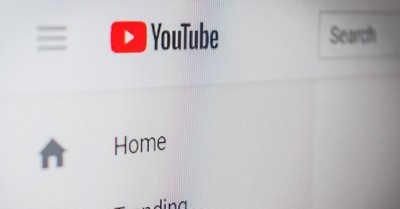
If you’re a parent, you have probably already been impacted by the other presence in your home. It’s the voices you hear coming down the hall. Those unfamiliar ones that perk up your ears, make you wonder who has crept into your child’s room, and give you an eerie sensation that you have unseen visitors in your home. No. I am not talking about ghosts. I’m talking about YouTube. That video library of millions and billions of hours of free watching. It tempts and tantalizes your children—maybe even you—and can invite a gajillion strangers into your home without you even really thinking about it.

Have you also noticed that your child views these YouTubers as their friends? When my son first started watching a popular kid’s channel, it was a few weeks later that I finally asked him who this “Jarod” was (name changed to protect the channel) that he kept talking about? Jarod says this, Jarod did this, Jarod is this. Oh! It’s the kid on YouTube. Nothing major. Welllllll, we can say “nothing major,” and in this case, Jarod’s Channel is totally kid-friendly. Annoying but kid-friendly. The problem was that my son was actually beginning to believe he had a personal friendship with Jarod, who lived thousands of miles away (I think), whose name may not even really be Jarod, and who has never once been introduced to my son. Warning sign? I’d say so.

There was not only an addiction starting, primarily due to my ignorance and naivete as a parent, but there was also a fantasy world being created in my son’s mind, of a friend that he had who didn’t even really exist. Not really. Sure, the kid was real—somewhere. But who knows if the life he portrayed on his channel even really was the life he lived. Also, the kid was inundated with toys to open, and my son firmly began to believe that he was owed those same toys. I didn’t know how to explain to my son that Jarod’s parents hadn’t spent thousands of dollars on those toys but instead received them from sponsors who wanted little boys all over the nation to drool and want and beg for those toys because—you guessed it—Jarod has them!

So, I had to take some steps back and really evaluate YouTube, how it applied to my son, and how to manage his YouTube habit. The surefire way to resolve it was cold turkey withdrawal. But I had a problem with that. One, I’m a sap and hate being harsh with my son—you may now issue your judgment on my lack of disciplinary stamina—and two, there really wasn’t anything wrong with it. In the end, I determined that YouTube was unhealthy habit-forming. I also decided to outline some ways to help navigate YouTube alongside my son without yanking it all together. I also got to teach him how to balance and why we need to balance these types of things in our lives.

Here’s what steps I took:

1. Fresh Restart

Okay, I’ll be honest. We did do a small, cold-turkey withdrawal. A time apart from Jarod was issued. One weekend. The reason? To make a point to our son to self-experience his addiction. Granted, my son was only eight, so I couldn’t go about this like a 12-step program for YouTube, but after several “I’m bored” and many “but it’s just Jarod’s Channel,” my son actually started laughing when I’d make a checkmark in the air and say, “here we go again!”. By the end of the weekend, my son had realized how attached he was to a personality (not a real person) and how emotional he got when he couldn’t watch it.

The good news? He self-realized it was a problem. The bad news? He didn’t care. In the end, he continued to beg and plead, and once the weekend was over, he fully expected the bans to be lifted. And they were, with conditions. Hence, a weekend break enabled us to make a fresh start.

2. New Rules

It was time for limits to be set. When you’re dealing with a child YouTube addict, you’ll quickly learn that one hour is about equal to one minute in YouTube time. The emotional angst at the idea they may barely be able to watch TWO EPISODES of Jarod’s Channel in that time is overwhelming. But necessary.

We set a time limit—not one we both agreed on because he wanted it to be unlimited, and I was thinking sixty minutes. This time, I stuck to my disciplinary motivations and laid down the law—sixty minutes only. Also, if he wanted more time, he could earn it by doing chores, reading a book, playing outside. All of that helped incentivize him to also do things that exercised his mind and body and sense of responsibility.

3. New Safeguards

 In the process of all this YouTube hoopla, I made sure to go and check my son’s YouTube viewing history. It’s not hard. It’s usually all there on the front page, or they’ve subscribed to the channels they want to watch. I sat down with my son, and we checked out every channel he adored—besides Jarod’s Channel. I was glad to find I could trust my son to be selective to what he knew was appropriate—but then, there were also a few channels that were disguised as “appropriate” but had some attitudes or comments I wasn’t keen on—those we discussed and unsubscribed from.

We also set a new rule—not rocket science, but hey, cut me some slack—that before he watched any new, unapproved channels, he needed to clear them with his dad or me. That way, we could make sure he wasn’t just YouTube surfing through the PG-13 ocean of videos—or worse. Granted, he thought that was a bit of a pain, but when given the alternative of no YouTube at all, my son quickly agreed.
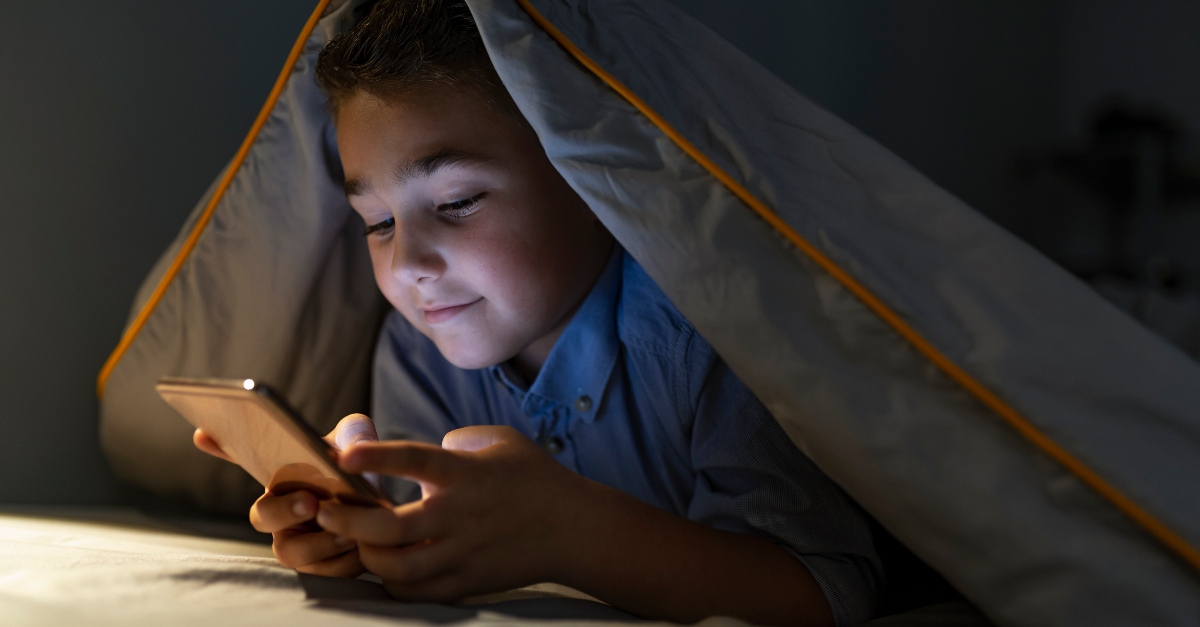

Photo credit: © Getty Images/dragana991

4. Open Communication

I then made a point to discuss with my son that “sneaking” onto YouTube wasn’t going to be tolerated. It’s easy for kids to abuse the time limits if they have a tablet or phone in their bedroom. You’ll need to be aware of this and be ready for it. They will try to sneak it. But rather than confiscate my son’s phone, I wanted to teach him to be truthful and trustworthy. I was able to check his YouTube time on his phone and match it to what I’d set as his approved viewing times. If there was any substantial unapproved amount of time beyond an accidental login to YouTube, I caught it, and he caught some discipline. It happened once. Being grounded from YouTube for a week was torture. It hasn’t happened again.

Not every kid will comply with boundaries, but be sure to stay strong and continue with them. It’s good to teach your kids responsibility and trustworthiness rather than insinuate an automatic distrust by not allowing them access to their electronics by holding them (the electronics, not the kid) under lock and key. Granted, if a child abuses these privileges, then lock and key may be the way to go.

5. Open View

The last big one was soooo annoying to me because I downloaded the YouTube app to our television and allowed my son to watch it on our TV. In our living room. In full view of me in the kitchen. This allowed for an important thing. Without him realizing it, I was able to monitor the content he was watching to make sure what I’d previously approved hadn’t digressed. It also became an opportunity for me to share what he liked to watch. I became a Jarod’s Channel aficionado, and trust me, I was stunned to find out how much my son loved to talk to me about a common interest. (Granted, I was only interested because of my son, but...minor detail).

In reality, helping your kids manage their YouTube habits is not anything that requires a full-on self-help book. It’s basic parenting 101 called “being involved.” The problem lies in the fact that electronics—namely, YouTube the app—is such an easy, free babysitter that more often than not, we fall prey to allowing our kids free rein.

Don’t. For their health and safety, for your sanity, and for the sake of the world’s future. Don’t. Be involved. Stay involved. Set guidelines and limits. And don’t, for pity’s sake, watch too much Jarod’s Channel.

Photo credit: ©Christian Wiediger/Unsplash

Jaime Jo Wright is an ECPA and Publisher’s Weekly bestselling author. Her novel “The House on Foster Hill” won the prestigious Christy Award and she continues to publish Gothic thrillers for the inspirational market. Jaime Jo resides in the woods of Wisconsin, lives in dreamland, exists in reality, and invites you to join her adventures at jaimewrightbooks.com and at her podcast madlitmusings.com where she discusses the deeper issues of story and faith with fellow authors.


 

Salem News Channel Today

Sponsored Links


September 26 - Phoenix, AZ
Scottsdale Center for the Performing Arts


November 2 - Detroit, MI
Zion Christian Church in Troy


October 6 - Los Angeles, CA
Pasadena Convention Center


November 5 - San Antonio, TX
Norris Centers – The Grand Red Oak Ballroom


October 8 - Sacramento, CA
William Jessup University


November 7 - Tampa, FL
The Palladium at St. Pete College


October 22 - Minneapolis, MN
Crowne Plaza AiRE


November 15 - San Francisco, CA
Fremont Marriott Silicon Valley


October 23 - Philadelphia, PA
Green Valley Country Club


November 16 - Denver, CO
CU South Denver - Formerly Wildlife Experience


November 2 - Chicago, IL
Chicago Westin Northwest in Itasca


November 21 - Cleveland, OH
Holiday Inn Rockside in Independence


Salem Radio Network Speakers

Larry Elder is an American lawyer, writer, and radio and television personality who calls himself the "Sage of South Central" a district of Los Angeles, Larry says his philosophy is to entertain, inform, provoke and to hopefully uplift. His calling card is "we have a country to save" and to him this means returning to the bedrock Constitutional principles of limited government and maximum personal responsibility. Elder's iconoclastic wit and intellectual agility makes him a particularly attractive voice in a nation that seems weary of traditional racial dialogue.” – Los Angeles Times.

Mike Gallagher Mike Gallagher began his broadcasting career in 1978 in Dayton, Ohio. Today, he is one of the most listened-to talk radio show hosts in America, recently having been ranked in the Talkers Magazine “Heavy Hundred” list – the 100 most important talk radio hosts in America. Prior to being launched into national syndication in 1998, Mike hosted the morning show on WABC-AM in New York City. Today, Talkers Magazine reports that his show is heard by over 3.75 million weekly listeners. Besides his radio work, Mike is seen on Fox News Channel as an on-air contributor, frequently appearing on the cable news giant.

Hugh Hewitt is one of the nation’s leading bloggers and a genuine media revolutionary. He brings that expertise, his wit and what The New Yorker magazine calls his “amiable but relentless manner” to his nationally syndicated show each day.

When Dr. Sebastian Gorka was growing up, he listened to talk radio under his pillow with a transistor radio, dreaming that one day he would be behind the microphone. Beginning New Year’s Day 2019, he got his wish. Gorka now hosts America First every weekday afternoon 3 to 6pm ET. Gorka’s unique story works well on the radio. He is national security analyst for the Fox News Channel and author of two books: "Why We Fight" and "Defeating Jihad." His latest book releasing this fall is “War For America’s Soul.” He is uniquely qualified to fight the culture war and stand up for what is great about America, his adopted home country.

Broadcasting from his home station of KRLA in Los Angeles, the Dennis Prager Show is heard across the country. Everything in life – from politics to religion to relationships – is grist for Dennis’ mill. If it’s interesting, if it affects your life, then Dennis will be talking about it – with passion, humor, insight and wisdom.

Sean Hannity is a conservative radio and television host, and one of the original primetime hosts on the Fox News Channel, where he has appeared since 1996. Sean Hannity began his radio career at a college station in California, before moving on to markets in the Southeast and New York. Today, he’s one of the most listened to on-air voices. Hannity’s radio program went into national syndication on September 10, 2001, and airs on more than 500 stations. Talkers Magazine estimates Hannity’s weekly radio audience at 13.5 million. In 1996 he was hired as one of the original hosts on Fox News Channel. As host of several popular Fox programs, Hannity has become the highest-paid news anchor on television.

Michelle Malkin is a mother, wife, blogger, conservative syndicated columnist, longtime cable TV news commentator, and best-selling author of six books. She started her newspaper journalism career at the Los Angeles Daily News in 1992, moved to the Seattle Times in 1995, and has been penning nationally syndicated newspaper columns for Creators Syndicate since 1999. She is founder of conservative Internet start-ups Hot Air and Twitchy.com. Malkin has received numerous awards for her investigative journalism, including the Council on Governmental Ethics Laws (COGEL) national award for outstanding service for the cause of governmental ethics and leadership (1998), the Reed Irvine Accuracy in Media Award for Investigative Journalism (2006), the Heritage Foundation and Franklin Center for Government & Public Integrity's Breitbart Award for Excellence in Journalism (2013), the Center for Immigration Studies' Eugene Katz Award for Excellence in the Coverage of Immigration Award (2016), and the Manhattan Film Festival's Film Heals Award (2018). Married for 26 years and the mother of two teenage children, she lives with her family in Colorado. Follow her at michellemalkin.com. (Photo reprinted with kind permission from Peter Duke Photography.)

Sponsored by:

How to Monitor Your Child's YouTube Habits

Carbonatix Pre-Player Loader

Audio By Carbonatix

If you’re a parent, you have probably already been impacted by the other presence in your home. It’s the voices you hear coming down the hall. Those unfamiliar ones that perk up your ears, make you wonder who has crept into your child’s room, and give you an eerie sensation that you have unseen visitors in your home. No. I am not talking about ghosts. I’m talking about YouTube. That video library of millions and billions of hours of free watching. It tempts and tantalizes your children—maybe even you—and can invite a gajillion strangers into your home without you even really thinking about it.

Have you also noticed that your child views these YouTubers as their friends? When my son first started watching a popular kid’s channel, it was a few weeks later that I finally asked him who this “Jarod” was (name changed to protect the channel) that he kept talking about? Jarod says this, Jarod did this, Jarod is this. Oh! It’s the kid on YouTube. Nothing major. Welllllll, we can say “nothing major,” and in this case, Jarod’s Channel is totally kid-friendly. Annoying but kid-friendly. The problem was that my son was actually beginning to believe he had a personal friendship with Jarod, who lived thousands of miles away (I think), whose name may not even really be Jarod, and who has never once been introduced to my son. Warning sign? I’d say so.

There was not only an addiction starting, primarily due to my ignorance and naivete as a parent, but there was also a fantasy world being created in my son’s mind, of a friend that he had who didn’t even really exist. Not really. Sure, the kid was real—somewhere. But who knows if the life he portrayed on his channel even really was the life he lived. Also, the kid was inundated with toys to open, and my son firmly began to believe that he was owed those same toys. I didn’t know how to explain to my son that Jarod’s parents hadn’t spent thousands of dollars on those toys but instead received them from sponsors who wanted little boys all over the nation to drool and want and beg for those toys because—you guessed it—Jarod has them!

So, I had to take some steps back and really evaluate YouTube, how it applied to my son, and how to manage his YouTube habit. The surefire way to resolve it was cold turkey withdrawal. But I had a problem with that. One, I’m a sap and hate being harsh with my son—you may now issue your judgment on my lack of disciplinary stamina—and two, there really wasn’t anything wrong with it. In the end, I determined that YouTube was unhealthy habit-forming. I also decided to outline some ways to help navigate YouTube alongside my son without yanking it all together. I also got to teach him how to balance and why we need to balance these types of things in our lives.

Here’s what steps I took:

1. Fresh Restart

Okay, I’ll be honest. We did do a small, cold-turkey withdrawal. A time apart from Jarod was issued. One weekend. The reason? To make a point to our son to self-experience his addiction. Granted, my son was only eight, so I couldn’t go about this like a 12-step program for YouTube, but after several “I’m bored” and many “but it’s just Jarod’s Channel,” my son actually started laughing when I’d make a checkmark in the air and say, “here we go again!”. By the end of the weekend, my son had realized how attached he was to a personality (not a real person) and how emotional he got when he couldn’t watch it.

The good news? He self-realized it was a problem. The bad news? He didn’t care. In the end, he continued to beg and plead, and once the weekend was over, he fully expected the bans to be lifted. And they were, with conditions. Hence, a weekend break enabled us to make a fresh start.

2. New Rules

It was time for limits to be set. When you’re dealing with a child YouTube addict, you’ll quickly learn that one hour is about equal to one minute in YouTube time. The emotional angst at the idea they may barely be able to watch TWO EPISODES of Jarod’s Channel in that time is overwhelming. But necessary.

We set a time limit—not one we both agreed on because he wanted it to be unlimited, and I was thinking sixty minutes. This time, I stuck to my disciplinary motivations and laid down the law—sixty minutes only. Also, if he wanted more time, he could earn it by doing chores, reading a book, playing outside. All of that helped incentivize him to also do things that exercised his mind and body and sense of responsibility.

3. New Safeguards

 In the process of all this YouTube hoopla, I made sure to go and check my son’s YouTube viewing history. It’s not hard. It’s usually all there on the front page, or they’ve subscribed to the channels they want to watch. I sat down with my son, and we checked out every channel he adored—besides Jarod’s Channel. I was glad to find I could trust my son to be selective to what he knew was appropriate—but then, there were also a few channels that were disguised as “appropriate” but had some attitudes or comments I wasn’t keen on—those we discussed and unsubscribed from.

We also set a new rule—not rocket science, but hey, cut me some slack—that before he watched any new, unapproved channels, he needed to clear them with his dad or me. That way, we could make sure he wasn’t just YouTube surfing through the PG-13 ocean of videos—or worse. Granted, he thought that was a bit of a pain, but when given the alternative of no YouTube at all, my son quickly agreed.


Photo credit: © Getty Images/dragana991

4. Open Communication

I then made a point to discuss with my son that “sneaking” onto YouTube wasn’t going to be tolerated. It’s easy for kids to abuse the time limits if they have a tablet or phone in their bedroom. You’ll need to be aware of this and be ready for it. They will try to sneak it. But rather than confiscate my son’s phone, I wanted to teach him to be truthful and trustworthy. I was able to check his YouTube time on his phone and match it to what I’d set as his approved viewing times. If there was any substantial unapproved amount of time beyond an accidental login to YouTube, I caught it, and he caught some discipline. It happened once. Being grounded from YouTube for a week was torture. It hasn’t happened again.

Not every kid will comply with boundaries, but be sure to stay strong and continue with them. It’s good to teach your kids responsibility and trustworthiness rather than insinuate an automatic distrust by not allowing them access to their electronics by holding them (the electronics, not the kid) under lock and key. Granted, if a child abuses these privileges, then lock and key may be the way to go.

5. Open View

The last big one was soooo annoying to me because I downloaded the YouTube app to our television and allowed my son to watch it on our TV. In our living room. In full view of me in the kitchen. This allowed for an important thing. Without him realizing it, I was able to monitor the content he was watching to make sure what I’d previously approved hadn’t digressed. It also became an opportunity for me to share what he liked to watch. I became a Jarod’s Channel aficionado, and trust me, I was stunned to find out how much my son loved to talk to me about a common interest. (Granted, I was only interested because of my son, but...minor detail).

In reality, helping your kids manage their YouTube habits is not anything that requires a full-on self-help book. It’s basic parenting 101 called “being involved.” The problem lies in the fact that electronics—namely, YouTube the app—is such an easy, free babysitter that more often than not, we fall prey to allowing our kids free rein.

Don’t. For their health and safety, for your sanity, and for the sake of the world’s future. Don’t. Be involved. Stay involved. Set guidelines and limits. And don’t, for pity’s sake, watch too much Jarod’s Channel.

Photo credit: ©Christian Wiediger/Unsplash

Jaime Jo Wright is an ECPA and Publisher’s Weekly bestselling author. Her novel “The House on Foster Hill” won the prestigious Christy Award and she continues to publish Gothic thrillers for the inspirational market. Jaime Jo resides in the woods of Wisconsin, lives in dreamland, exists in reality, and invites you to join her adventures at jaimewrightbooks.com and at her podcast madlitmusings.com where she discusses the deeper issues of story and faith with fellow authors.

 

Salem News Channel Today

Sponsored Links

On Air & Up Next

See the Full Program Guide