10 Ways to Protect Our Children from Abuse and Exploitation

Carbonatix Pre-Player Loader

Audio By Carbonatix

As parents, our list of worries for our children is long and ever-changing. Some of these fears are out of our control, but others we can, at least in part, help to prevent or shield from our kids—including two scary and very real concerns: abuse and exploitation. 

The Importance of Preparing Our Children

Startling numbers recently reported by the National Center for Missing and Exploited Children show that a rapidly growing number of children are being exploited online. With this disturbing information and during April’s focus on Childhood Abuse Awareness, I wanted to share my suggestions for protecting our children. As someone who experienced sexual abuse as a pre-teen and now has more than 10 years of experience rescuing trafficking survivors and leading an anti-trafficking organization, I’ve learned how to spot the warning signs and how to prepare our children so they don’t become victims.

10 Ways to Protect Our Children

1. The first thing parents need to know is just how rampant childhood sexual abuse is. One in 3 girls and 1 in 5 boys endure such abuse. This means it is very likely that someone you know or come in contact with has or could be suffering from sexual abuse. Abuse occurs across all demographics, income levels, races and genders.

2. Most abuse occurs at the hands of a family member or friend – someone children should be able to trust. It’s no longer sufficient to teach our children “stranger danger.” Help your kids understand that a safe adult would never ask them to keep a secret from you.  Let your kids know that they should never keep a secret from you and that they won’t get in trouble for telling you anything. Empower them with the correct words to use, communicating that a secret is very different from a surprise, which is something happy or exciting that everyone will find out about eventually.

3. While these are difficult topics to discuss, you must continually initiate age-appropriate conversations with your kids to help them understand the dangers. When speaking with them about keeping their bodies safe, use the anatomically correct language in discussing their off-limits areas, as predators will often use pet names for these areas. For very young children, you’ll want to use a term such as “bathing suit zone” to help them understand which areas are not safe for others to see or touch.

4. Kids also need to know that should tell you if there is an adult around that makes them or any of their friends feel unsafe or gives them any sort of “icky” or scary feeling, and that you will keep them safe. By making this a part of regular conversations about their activities or new people they have met, you are empowering them to be advocates for their friends or classmates who may be in potentially abusive or unsafe environments. Encourage them to have these same conversations with their peers, and communicate that you are happy to be a safe adult for a child who may not have anyone else. 

5. You’ll also want to warn children about the kinds of grooming techniques that today’s sophisticated predators use. They’ll befriend children, showering them with gifts and attention to make them feel special, “romancing” them and slowly building trust over time. If children don’t know to look out for these red flags, before they realize it they’ll find themselves being isolated and manipulated by an abuser. It is really sad that we need to teach our little ones to be so cynical, but in this day and age when you don’t know who to trust, it truly is better to be suspicious of seemingly unmerited and extravagant gifts.

6. Additionally, you need to make sure your kids understand the dangers of technology and online interactions. The statistics are pretty scary here, too – 1 out of 9 children is approached by a predator on their smart devices with 1 out of 7 preteens (9-12-year-olds) having shared their own nude photos, half of them with someone they have never met in real life.  Your children may think they could recognize an online predator, so they need to know that there are millions of adults online, posing as kids and trying to strike up innocent-sounding conversations and friendships, but with evil intent. Over half a million are active each day, 89% of which are using Internet chatrooms and instant messaging to make sexual advances toward children. 

7. Another key preventive measure in the area of online safety is to make sure your children’s cell phones are not set to allow explicit content. Many factory or default settings allow such content, so you’ll want to check and make those changes. Siri can even give your child access to dangerous online content, so adjust its settings as well and monitor your child’s use of all internet-connected devices. Instructions for setting parental controls are available online for both iPhone and Android.

8.“Geotags” are another setting you’ll need to adjust on your children’s devices, as these can automatically be attached to photos your children take and post, showing their location and allowing predators to know where they are. There are also instructions available online to help you remove these. 

9. Video games are one of the environments most targeted by predators for interacting with your children, posing as peers and growing the relationship to try and move it from online to offline. You’ll want to adjust game settings not to allow this interaction, or make sure your children know they are only allowed to interact with friends their own age who they already know in real life. Frontier Internet has provided a helpful guide for setting some of these parental controls on video games, browsers, and more. 

10. Finally, while the above strategies are all practical, perhaps the most important way we can protect our children is in the spiritual realm. I’m sure you do this already, but undergird your children in prayer every day and teach them to heed God’s spirit as He speaks into their lives. As they learn to hear His voice, He will help them make wise choices and be more discerning regarding the people around them who may be among the enemy’s agents, prowling around like a roaring lion seeking whom they may devour. 

Be Their Example

While God has called and equipped us as parents, we know there is always more we can do to protect, equip and empower our children, not only to shield them from the dangers of this world, but to set them on their own journey as Christ-followers. Let’s begin our battle on our knees, knowing that they learn most by example, and that’s the most important lesson of all.

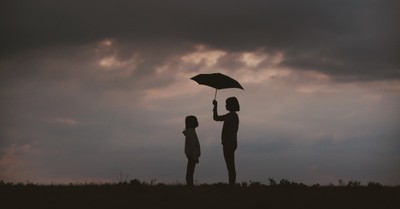
Photo Credit: © Unsplash/JW 


Elizabeth Melendez Fisher Good is the founder and CEO of The Foundation United, a catalytic platform to end sexual exploitation and trafficking through systemic change. Fisher Good is a passionate pioneer and inspirational thought leader with a desire to expose the root issue behind sex trafficking -- childhood sexual abuse. Her book “Groomed” (HarperCollins, 2020) recounts her own story of loss, abuse, and triumph. Statistics and resources quoted above can be accessed at https://www.thefoundationunited.com/statsandresources.

 

Salem News Channel Today

Sponsored Links


September 26 - Phoenix, AZ
Scottsdale Center for the Performing Arts


November 2 - Detroit, MI
Zion Christian Church in Troy


October 6 - Los Angeles, CA
Pasadena Convention Center


November 5 - San Antonio, TX
Norris Centers – The Grand Red Oak Ballroom


October 8 - Sacramento, CA
William Jessup University


November 7 - Tampa, FL
The Palladium at St. Pete College


October 22 - Minneapolis, MN
Crowne Plaza AiRE


November 15 - San Francisco, CA
Fremont Marriott Silicon Valley


October 23 - Philadelphia, PA
Green Valley Country Club


November 16 - Denver, CO
CU South Denver - Formerly Wildlife Experience


November 2 - Chicago, IL
Chicago Westin Northwest in Itasca


November 21 - Cleveland, OH
Holiday Inn Rockside in Independence


Salem Radio Network Speakers

Larry Elder is an American lawyer, writer, and radio and television personality who calls himself the "Sage of South Central" a district of Los Angeles, Larry says his philosophy is to entertain, inform, provoke and to hopefully uplift. His calling card is "we have a country to save" and to him this means returning to the bedrock Constitutional principles of limited government and maximum personal responsibility. Elder's iconoclastic wit and intellectual agility makes him a particularly attractive voice in a nation that seems weary of traditional racial dialogue.” – Los Angeles Times.

Mike Gallagher Mike Gallagher began his broadcasting career in 1978 in Dayton, Ohio. Today, he is one of the most listened-to talk radio show hosts in America, recently having been ranked in the Talkers Magazine “Heavy Hundred” list – the 100 most important talk radio hosts in America. Prior to being launched into national syndication in 1998, Mike hosted the morning show on WABC-AM in New York City. Today, Talkers Magazine reports that his show is heard by over 3.75 million weekly listeners. Besides his radio work, Mike is seen on Fox News Channel as an on-air contributor, frequently appearing on the cable news giant.

Hugh Hewitt is one of the nation’s leading bloggers and a genuine media revolutionary. He brings that expertise, his wit and what The New Yorker magazine calls his “amiable but relentless manner” to his nationally syndicated show each day.

When Dr. Sebastian Gorka was growing up, he listened to talk radio under his pillow with a transistor radio, dreaming that one day he would be behind the microphone. Beginning New Year’s Day 2019, he got his wish. Gorka now hosts America First every weekday afternoon 3 to 6pm ET. Gorka’s unique story works well on the radio. He is national security analyst for the Fox News Channel and author of two books: "Why We Fight" and "Defeating Jihad." His latest book releasing this fall is “War For America’s Soul.” He is uniquely qualified to fight the culture war and stand up for what is great about America, his adopted home country.

Broadcasting from his home station of KRLA in Los Angeles, the Dennis Prager Show is heard across the country. Everything in life – from politics to religion to relationships – is grist for Dennis’ mill. If it’s interesting, if it affects your life, then Dennis will be talking about it – with passion, humor, insight and wisdom.

Sean Hannity is a conservative radio and television host, and one of the original primetime hosts on the Fox News Channel, where he has appeared since 1996. Sean Hannity began his radio career at a college station in California, before moving on to markets in the Southeast and New York. Today, he’s one of the most listened to on-air voices. Hannity’s radio program went into national syndication on September 10, 2001, and airs on more than 500 stations. Talkers Magazine estimates Hannity’s weekly radio audience at 13.5 million. In 1996 he was hired as one of the original hosts on Fox News Channel. As host of several popular Fox programs, Hannity has become the highest-paid news anchor on television.

Michelle Malkin is a mother, wife, blogger, conservative syndicated columnist, longtime cable TV news commentator, and best-selling author of six books. She started her newspaper journalism career at the Los Angeles Daily News in 1992, moved to the Seattle Times in 1995, and has been penning nationally syndicated newspaper columns for Creators Syndicate since 1999. She is founder of conservative Internet start-ups Hot Air and Twitchy.com. Malkin has received numerous awards for her investigative journalism, including the Council on Governmental Ethics Laws (COGEL) national award for outstanding service for the cause of governmental ethics and leadership (1998), the Reed Irvine Accuracy in Media Award for Investigative Journalism (2006), the Heritage Foundation and Franklin Center for Government & Public Integrity's Breitbart Award for Excellence in Journalism (2013), the Center for Immigration Studies' Eugene Katz Award for Excellence in the Coverage of Immigration Award (2016), and the Manhattan Film Festival's Film Heals Award (2018). Married for 26 years and the mother of two teenage children, she lives with her family in Colorado. Follow her at michellemalkin.com. (Photo reprinted with kind permission from Peter Duke Photography.)

Sponsored by:

10 Ways to Protect Our Children from Abuse and Exploitation

Carbonatix Pre-Player Loader

Audio By Carbonatix

As parents, our list of worries for our children is long and ever-changing. Some of these fears are out of our control, but others we can, at least in part, help to prevent or shield from our kids—including two scary and very real concerns: abuse and exploitation. 

The Importance of Preparing Our Children

Startling numbers recently reported by the National Center for Missing and Exploited Children show that a rapidly growing number of children are being exploited online. With this disturbing information and during April’s focus on Childhood Abuse Awareness, I wanted to share my suggestions for protecting our children. As someone who experienced sexual abuse as a pre-teen and now has more than 10 years of experience rescuing trafficking survivors and leading an anti-trafficking organization, I’ve learned how to spot the warning signs and how to prepare our children so they don’t become victims.

10 Ways to Protect Our Children

1. The first thing parents need to know is just how rampant childhood sexual abuse is. One in 3 girls and 1 in 5 boys endure such abuse. This means it is very likely that someone you know or come in contact with has or could be suffering from sexual abuse. Abuse occurs across all demographics, income levels, races and genders.

2. Most abuse occurs at the hands of a family member or friend – someone children should be able to trust. It’s no longer sufficient to teach our children “stranger danger.” Help your kids understand that a safe adult would never ask them to keep a secret from you.  Let your kids know that they should never keep a secret from you and that they won’t get in trouble for telling you anything. Empower them with the correct words to use, communicating that a secret is very different from a surprise, which is something happy or exciting that everyone will find out about eventually.

3. While these are difficult topics to discuss, you must continually initiate age-appropriate conversations with your kids to help them understand the dangers. When speaking with them about keeping their bodies safe, use the anatomically correct language in discussing their off-limits areas, as predators will often use pet names for these areas. For very young children, you’ll want to use a term such as “bathing suit zone” to help them understand which areas are not safe for others to see or touch.

4. Kids also need to know that should tell you if there is an adult around that makes them or any of their friends feel unsafe or gives them any sort of “icky” or scary feeling, and that you will keep them safe. By making this a part of regular conversations about their activities or new people they have met, you are empowering them to be advocates for their friends or classmates who may be in potentially abusive or unsafe environments. Encourage them to have these same conversations with their peers, and communicate that you are happy to be a safe adult for a child who may not have anyone else. 

5. You’ll also want to warn children about the kinds of grooming techniques that today’s sophisticated predators use. They’ll befriend children, showering them with gifts and attention to make them feel special, “romancing” them and slowly building trust over time. If children don’t know to look out for these red flags, before they realize it they’ll find themselves being isolated and manipulated by an abuser. It is really sad that we need to teach our little ones to be so cynical, but in this day and age when you don’t know who to trust, it truly is better to be suspicious of seemingly unmerited and extravagant gifts.

6. Additionally, you need to make sure your kids understand the dangers of technology and online interactions. The statistics are pretty scary here, too – 1 out of 9 children is approached by a predator on their smart devices with 1 out of 7 preteens (9-12-year-olds) having shared their own nude photos, half of them with someone they have never met in real life.  Your children may think they could recognize an online predator, so they need to know that there are millions of adults online, posing as kids and trying to strike up innocent-sounding conversations and friendships, but with evil intent. Over half a million are active each day, 89% of which are using Internet chatrooms and instant messaging to make sexual advances toward children. 

7. Another key preventive measure in the area of online safety is to make sure your children’s cell phones are not set to allow explicit content. Many factory or default settings allow such content, so you’ll want to check and make those changes. Siri can even give your child access to dangerous online content, so adjust its settings as well and monitor your child’s use of all internet-connected devices. Instructions for setting parental controls are available online for both iPhone and Android.

8.“Geotags” are another setting you’ll need to adjust on your children’s devices, as these can automatically be attached to photos your children take and post, showing their location and allowing predators to know where they are. There are also instructions available online to help you remove these. 

9. Video games are one of the environments most targeted by predators for interacting with your children, posing as peers and growing the relationship to try and move it from online to offline. You’ll want to adjust game settings not to allow this interaction, or make sure your children know they are only allowed to interact with friends their own age who they already know in real life. Frontier Internet has provided a helpful guide for setting some of these parental controls on video games, browsers, and more. 

10. Finally, while the above strategies are all practical, perhaps the most important way we can protect our children is in the spiritual realm. I’m sure you do this already, but undergird your children in prayer every day and teach them to heed God’s spirit as He speaks into their lives. As they learn to hear His voice, He will help them make wise choices and be more discerning regarding the people around them who may be among the enemy’s agents, prowling around like a roaring lion seeking whom they may devour. 

Be Their Example

While God has called and equipped us as parents, we know there is always more we can do to protect, equip and empower our children, not only to shield them from the dangers of this world, but to set them on their own journey as Christ-followers. Let’s begin our battle on our knees, knowing that they learn most by example, and that’s the most important lesson of all.

Photo Credit: © Unsplash/JW 


Elizabeth Melendez Fisher Good is the founder and CEO of The Foundation United, a catalytic platform to end sexual exploitation and trafficking through systemic change. Fisher Good is a passionate pioneer and inspirational thought leader with a desire to expose the root issue behind sex trafficking -- childhood sexual abuse. Her book “Groomed” (HarperCollins, 2020) recounts her own story of loss, abuse, and triumph. Statistics and resources quoted above can be accessed at https://www.thefoundationunited.com/statsandresources.

 

Salem News Channel Today

Sponsored Links

On Air & Up Next

See the Full Program Guide