What Is "Nacho Parenting" in Blended Families?

Carbonatix Pre-Player Loader

Audio By Carbonatix

Because I’ve worked in stepfamily ministry for many years, I’m often asked about the term “Nacho Kids” or “Nacho Parenting.”

This phrase, created, owned, and trademarked in 2013 by David and Lori Sims, came after they attended a marriage counseling session. They were struggling to blend her son and his 4 children into one household.

“We explained to our counselor how the most challenging part of our blending was how to deal, or not deal, with each other’s kids,” Lori shared. “The counselor looked at me and said, ‘Lori, David’s kids are not your kids.”

Initially, we perceived his response as negative. However, after thinking about it, we came to realize it made perfect sense! As a stepmom, I was creating my own misery. I was trying to parent David’s kids in the way I felt they should be parented. So, I quickly took his advice and changed my mindset. Everything changed for the better. That’s how Nacho Kids was born.”

Because the phrase is often misunderstood as being destructive, here’s a definition directly from the founders.

Nacho Kid

noun \ ˈnä-chō kid \

1. A child in a blended family where the stepparent maintains a supportive, caring relationship but does not assume the primary parenting role. This allows the biological parents to handle discipline, rules, and major parenting decisions.

2. A concept within the Nacho Kids® method emphasizing healthy boundaries in stepfamilies by recognizing that a stepparent can care about a child, without carrying the responsibility of parenting them.

The method is designed to teach the biological parent and the stepparent how to:

-Learn their role

-Understand what’s normal in a blended family

-Let each parent be the parent

-Set a wise, healthy boundary with a spouse

-Step away from things they can’t control

-Let go of the need to be right

-Bring unity into the home

As a stepfamily coach, I use a different phrase. I call it “Stepping back without stepping out.” However, it means the same thing as Nacho Parenting.

Clearing up the Confusion

  1. Occasionally, when a stepfamily hears the phrase "nacho parenting," they become defensive. They assume it’s giving the stepparent permission or encouragement to dislike, dismiss, or ostracize their stepchild. Nothing could be further from the truth.
  2. Stepfamilies are complex. After a death, divorce, or uncoupling, there is pain and grief involved. Afterwards, the new couple dreams of how a stepfamily should operate. That vision, although well-intentioned, creates a narrative where the blending becomes an “instafamily." Our desire is for everyone in the home to view each other through the same family lens.
  3. Combining two homes into one takes time. Because the adults have a new love that is fresh and wonderful, they desire to recreate what was lost. They have a wholesome outlook on marriage and family. But once all the kids are under one roof, things can change—quickly.
  4. One of the biggest reasons stepfamilies fail is because the couple moved too quickly and/or the parent never became an emotionally stable single parent before getting remarried. The parent didn’t learn how to overcome the guilt, shame, fear, or exhaustion that comes with being a single parent. They place the stepparent into the parenting role they dodged to avoid being the “bad cop.” The kids, young or old, are forced to view and embrace the new stepfamily as biological family. Whenever you hear a parent say, “There are no steps in this house, we are all one family,” it’s an indication that the kids haven't been given the time and space needed to bond with the stepfamily.
  5. When a biological parent steps back and allows the stepparent to become the main disciplinarian, it usually backfires. The stepparent cannot—and should not—parent more than the biological parent. THIS is where the Nacho Kids method is brilliant. The method teaches the stepparent how to hand the reins of discipline back to the parent where they belong. Rules without relationship cause rebellion.
  6. A question I’m often asked is, ‘What if the parent refuses to parent’? This is a marriage problem, not a stepfamily problem. Pre-marriage counseling should have addressed this issue before anything else. Unfortunately, very few couples receive this information. If the marriage is going to survive, the couple must get help from professionals who specialize in stepfamilies.
  7. “Love them as your own” has become a common stepfamily mantra. The motive behind it is right; the method is incorrect. God gave parents a connection to their child, which is unlike any other love. He did that intentionally so we would have a glimpse of how much he loves us. No matter what we do, God won’t stop loving us. That’s typically how a parent or grandparent loves their own child— unconditionally. It’s indescribable. To tell a man or woman that they should have the same attachment and fascination with a child their spouse had with ANOTHER person is heartless and unrealistic. It sets them up for shame and failure. Blended family love forms over time. It’s not instantaneous. Most stepparents who have biological children will say, “I passionately love my stepkids. However, it is a different kind of love than I have for my biological children.” Why do we discredit or humiliate a stepparent because they experience a totally natural response? Isn’t a chosen love for a child that isn’t their own a greater sacrifice and devotion? Shouldn’t a stepparent be applauded instead of vilified because the tenderness occurred over time?

When it Goes Wrong

I am not naïve. I’ve worked in divorce recovery and stepfamily ministry for over 30 years. Plus, I’ve seen all the Disney movies. I meet stepparents who don’t love—or even like—their stepkids. Either they were naïve and/or underestimated the effort it would take to create a healthy blended family. Or they didn’t care.

Regardless, it’s the kids and grandkids who suffer.

Some went into the relationship knowing they had no desire to bond with or form a friendship with their partner’s kids. The kids were expendable. This is completely different than the stepparent who “didn’t know what they didn’t know.” This is an egocentric person who merely wanted a spouse and didn’t care if the kids were casualties. While dating, they pretend to enjoy the kids, but when the “I do” was spoken, their true colors shone brightly.

Those are the stepparents who pervert the term Nacho Kids. They use it as a weapon to humiliate, criticize, dismiss, or ostracize an innocent stepchild. For this stepparent, it’s a conquest or a competition. They force their spouse to choose, saying, “It’s your child or me.”

This is not the nacho parenting method, nor is it encouraged by the founders.
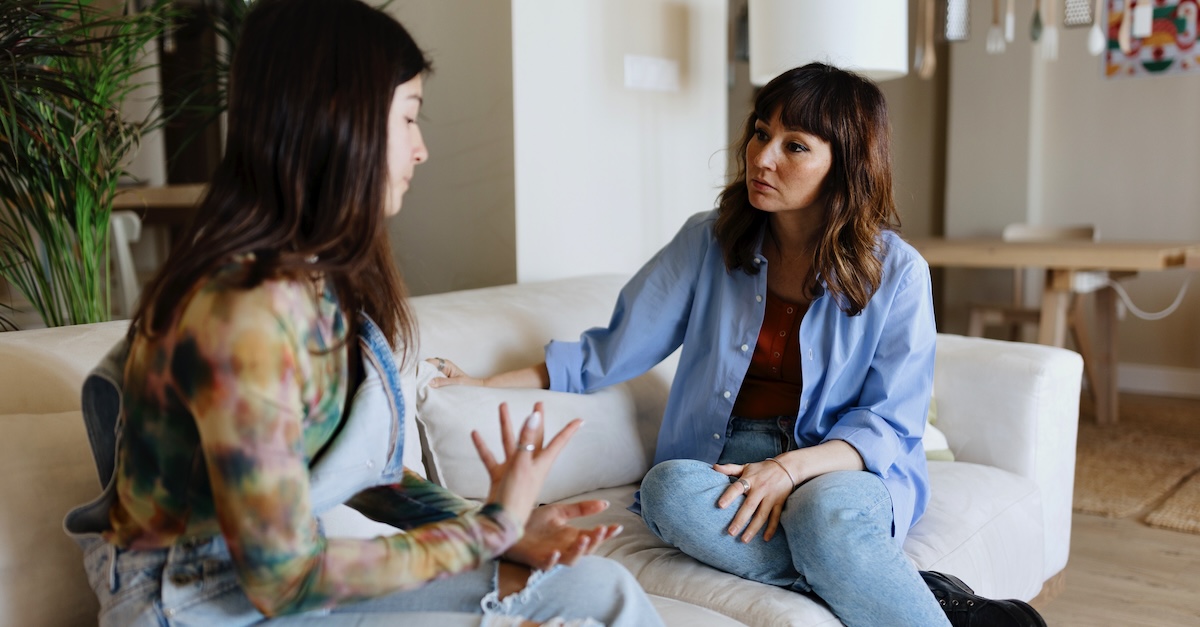
Adult daughter teen with toxic mom talking on couch upset

Photo credit: ©GettyImages/Anchiy

Between a Rock and a Hard Place

Sometimes a stepchild will inflict atrocious behavior on a stepparent. Examples are: making false accusations to the police (which could cost the stepparent their job), harming the other kids in the home, threatening to set the house on fire, stealing from the stepparent or stepsiblings, or bringing illegal items into the home. Those behaviors are unacceptable. The stepparent needs to explain to their spouse how they will disengage until the situation is rectified. Depending on the severity, the stepparent may need to temporarily leave the home. This is particularly true if the spouse refuses to implement a consequence for his/her child, or the parent in the other home prevents a beneficial outcome.

Even in these drastic circumstances, nothing in the Nacho Kids method encourages or validates an abusive or malicious response from the stepparent.

Whether the situation is extremely complex or a normal stepfamily dispute, the method is designed to teach the biological parent and the stepparent how to find wise solutions.

It’s not easy. It’s not usually quick. But it is effective and can build a beautiful bridge of unity.

Nacho Kids is not a faith-based program. However, its founders are Christians.

Related:

5 Principles for Stepfamilies When the Other Home Doesn’t Follow Jesus

4 Steps to Take When Your Stepkids Step Away

10 Ways the Church Can Support Stepparents

Photo credit: ©GettyImages/kupicoo

Laura Petherbridge is an international speaker, author, and life coach. She is the author of: When I Do Becomes I Don’t Practical Steps for Healing During Separation and Divorce, The Smart Stepmom (co-authored with Ron Deal), 101 Tips for The Smart Stepmom, Quiet Moments for the Stepmom Soul, Seeking a Silent Night: Unwrapping a Stepfamily Christmas, and Stepfamilies of the Bible: Timeless Wisdom for Blended Families. Her appearances include: The Billy Graham Training Center, Lifeway, Focus on the Family, Family Life, MomLife Today, MOPS, Christianity Today, iBelieve, Crosswalk and Celebrate Kids to name a few. She can be reached at www.TheSmartStepmom.com. March 2026, Laura is speaking at the Legacy Grandparenting Summit. Learn more at LegacyCoalition.com.


 

Salem News Channel Today

Sponsored Links


September 26 - Phoenix, AZ
Scottsdale Center for the Performing Arts


November 2 - Detroit, MI
Zion Christian Church in Troy


October 6 - Los Angeles, CA
Pasadena Convention Center


November 5 - San Antonio, TX
Norris Centers – The Grand Red Oak Ballroom


October 8 - Sacramento, CA
William Jessup University


November 7 - Tampa, FL
The Palladium at St. Pete College


October 22 - Minneapolis, MN
Crowne Plaza AiRE


November 15 - San Francisco, CA
Fremont Marriott Silicon Valley


October 23 - Philadelphia, PA
Green Valley Country Club


November 16 - Denver, CO
CU South Denver - Formerly Wildlife Experience


November 2 - Chicago, IL
Chicago Westin Northwest in Itasca


November 21 - Cleveland, OH
Holiday Inn Rockside in Independence


Salem Radio Network Speakers

Larry Elder is an American lawyer, writer, and radio and television personality who calls himself the "Sage of South Central" a district of Los Angeles, Larry says his philosophy is to entertain, inform, provoke and to hopefully uplift. His calling card is "we have a country to save" and to him this means returning to the bedrock Constitutional principles of limited government and maximum personal responsibility. Elder's iconoclastic wit and intellectual agility makes him a particularly attractive voice in a nation that seems weary of traditional racial dialogue.” – Los Angeles Times.

Mike Gallagher Mike Gallagher began his broadcasting career in 1978 in Dayton, Ohio. Today, he is one of the most listened-to talk radio show hosts in America, recently having been ranked in the Talkers Magazine “Heavy Hundred” list – the 100 most important talk radio hosts in America. Prior to being launched into national syndication in 1998, Mike hosted the morning show on WABC-AM in New York City. Today, Talkers Magazine reports that his show is heard by over 3.75 million weekly listeners. Besides his radio work, Mike is seen on Fox News Channel as an on-air contributor, frequently appearing on the cable news giant.

Hugh Hewitt is one of the nation’s leading bloggers and a genuine media revolutionary. He brings that expertise, his wit and what The New Yorker magazine calls his “amiable but relentless manner” to his nationally syndicated show each day.

When Dr. Sebastian Gorka was growing up, he listened to talk radio under his pillow with a transistor radio, dreaming that one day he would be behind the microphone. Beginning New Year’s Day 2019, he got his wish. Gorka now hosts America First every weekday afternoon 3 to 6pm ET. Gorka’s unique story works well on the radio. He is national security analyst for the Fox News Channel and author of two books: "Why We Fight" and "Defeating Jihad." His latest book releasing this fall is “War For America’s Soul.” He is uniquely qualified to fight the culture war and stand up for what is great about America, his adopted home country.

Broadcasting from his home station of KRLA in Los Angeles, the Dennis Prager Show is heard across the country. Everything in life – from politics to religion to relationships – is grist for Dennis’ mill. If it’s interesting, if it affects your life, then Dennis will be talking about it – with passion, humor, insight and wisdom.

Sean Hannity is a conservative radio and television host, and one of the original primetime hosts on the Fox News Channel, where he has appeared since 1996. Sean Hannity began his radio career at a college station in California, before moving on to markets in the Southeast and New York. Today, he’s one of the most listened to on-air voices. Hannity’s radio program went into national syndication on September 10, 2001, and airs on more than 500 stations. Talkers Magazine estimates Hannity’s weekly radio audience at 13.5 million. In 1996 he was hired as one of the original hosts on Fox News Channel. As host of several popular Fox programs, Hannity has become the highest-paid news anchor on television.

Michelle Malkin is a mother, wife, blogger, conservative syndicated columnist, longtime cable TV news commentator, and best-selling author of six books. She started her newspaper journalism career at the Los Angeles Daily News in 1992, moved to the Seattle Times in 1995, and has been penning nationally syndicated newspaper columns for Creators Syndicate since 1999. She is founder of conservative Internet start-ups Hot Air and Twitchy.com. Malkin has received numerous awards for her investigative journalism, including the Council on Governmental Ethics Laws (COGEL) national award for outstanding service for the cause of governmental ethics and leadership (1998), the Reed Irvine Accuracy in Media Award for Investigative Journalism (2006), the Heritage Foundation and Franklin Center for Government & Public Integrity's Breitbart Award for Excellence in Journalism (2013), the Center for Immigration Studies' Eugene Katz Award for Excellence in the Coverage of Immigration Award (2016), and the Manhattan Film Festival's Film Heals Award (2018). Married for 26 years and the mother of two teenage children, she lives with her family in Colorado. Follow her at michellemalkin.com. (Photo reprinted with kind permission from Peter Duke Photography.)

Sponsored by:

What Is "Nacho Parenting" in Blended Families?

Carbonatix Pre-Player Loader

Audio By Carbonatix

Because I’ve worked in stepfamily ministry for many years, I’m often asked about the term “Nacho Kids” or “Nacho Parenting.”

This phrase, created, owned, and trademarked in 2013 by David and Lori Sims, came after they attended a marriage counseling session. They were struggling to blend her son and his 4 children into one household.

“We explained to our counselor how the most challenging part of our blending was how to deal, or not deal, with each other’s kids,” Lori shared. “The counselor looked at me and said, ‘Lori, David’s kids are not your kids.”

Initially, we perceived his response as negative. However, after thinking about it, we came to realize it made perfect sense! As a stepmom, I was creating my own misery. I was trying to parent David’s kids in the way I felt they should be parented. So, I quickly took his advice and changed my mindset. Everything changed for the better. That’s how Nacho Kids was born.”

Because the phrase is often misunderstood as being destructive, here’s a definition directly from the founders.

Nacho Kid

noun \ ˈnä-chō kid \

1. A child in a blended family where the stepparent maintains a supportive, caring relationship but does not assume the primary parenting role. This allows the biological parents to handle discipline, rules, and major parenting decisions.

2. A concept within the Nacho Kids® method emphasizing healthy boundaries in stepfamilies by recognizing that a stepparent can care about a child, without carrying the responsibility of parenting them.

The method is designed to teach the biological parent and the stepparent how to:

-Learn their role

-Understand what’s normal in a blended family

-Let each parent be the parent

-Set a wise, healthy boundary with a spouse

-Step away from things they can’t control

-Let go of the need to be right

-Bring unity into the home

As a stepfamily coach, I use a different phrase. I call it “Stepping back without stepping out.” However, it means the same thing as Nacho Parenting.

Clearing up the Confusion

  1. Occasionally, when a stepfamily hears the phrase "nacho parenting," they become defensive. They assume it’s giving the stepparent permission or encouragement to dislike, dismiss, or ostracize their stepchild. Nothing could be further from the truth.
  2. Stepfamilies are complex. After a death, divorce, or uncoupling, there is pain and grief involved. Afterwards, the new couple dreams of how a stepfamily should operate. That vision, although well-intentioned, creates a narrative where the blending becomes an “instafamily." Our desire is for everyone in the home to view each other through the same family lens.
  3. Combining two homes into one takes time. Because the adults have a new love that is fresh and wonderful, they desire to recreate what was lost. They have a wholesome outlook on marriage and family. But once all the kids are under one roof, things can change—quickly.
  4. One of the biggest reasons stepfamilies fail is because the couple moved too quickly and/or the parent never became an emotionally stable single parent before getting remarried. The parent didn’t learn how to overcome the guilt, shame, fear, or exhaustion that comes with being a single parent. They place the stepparent into the parenting role they dodged to avoid being the “bad cop.” The kids, young or old, are forced to view and embrace the new stepfamily as biological family. Whenever you hear a parent say, “There are no steps in this house, we are all one family,” it’s an indication that the kids haven't been given the time and space needed to bond with the stepfamily.
  5. When a biological parent steps back and allows the stepparent to become the main disciplinarian, it usually backfires. The stepparent cannot—and should not—parent more than the biological parent. THIS is where the Nacho Kids method is brilliant. The method teaches the stepparent how to hand the reins of discipline back to the parent where they belong. Rules without relationship cause rebellion.
  6. A question I’m often asked is, ‘What if the parent refuses to parent’? This is a marriage problem, not a stepfamily problem. Pre-marriage counseling should have addressed this issue before anything else. Unfortunately, very few couples receive this information. If the marriage is going to survive, the couple must get help from professionals who specialize in stepfamilies.
  7. “Love them as your own” has become a common stepfamily mantra. The motive behind it is right; the method is incorrect. God gave parents a connection to their child, which is unlike any other love. He did that intentionally so we would have a glimpse of how much he loves us. No matter what we do, God won’t stop loving us. That’s typically how a parent or grandparent loves their own child— unconditionally. It’s indescribable. To tell a man or woman that they should have the same attachment and fascination with a child their spouse had with ANOTHER person is heartless and unrealistic. It sets them up for shame and failure. Blended family love forms over time. It’s not instantaneous. Most stepparents who have biological children will say, “I passionately love my stepkids. However, it is a different kind of love than I have for my biological children.” Why do we discredit or humiliate a stepparent because they experience a totally natural response? Isn’t a chosen love for a child that isn’t their own a greater sacrifice and devotion? Shouldn’t a stepparent be applauded instead of vilified because the tenderness occurred over time?

When it Goes Wrong

I am not naïve. I’ve worked in divorce recovery and stepfamily ministry for over 30 years. Plus, I’ve seen all the Disney movies. I meet stepparents who don’t love—or even like—their stepkids. Either they were naïve and/or underestimated the effort it would take to create a healthy blended family. Or they didn’t care.

Regardless, it’s the kids and grandkids who suffer.

Some went into the relationship knowing they had no desire to bond with or form a friendship with their partner’s kids. The kids were expendable. This is completely different than the stepparent who “didn’t know what they didn’t know.” This is an egocentric person who merely wanted a spouse and didn’t care if the kids were casualties. While dating, they pretend to enjoy the kids, but when the “I do” was spoken, their true colors shone brightly.

Those are the stepparents who pervert the term Nacho Kids. They use it as a weapon to humiliate, criticize, dismiss, or ostracize an innocent stepchild. For this stepparent, it’s a conquest or a competition. They force their spouse to choose, saying, “It’s your child or me.”

This is not the nacho parenting method, nor is it encouraged by the founders.

Adult daughter teen with toxic mom talking on couch upset

Photo credit: ©GettyImages/Anchiy

Between a Rock and a Hard Place

Sometimes a stepchild will inflict atrocious behavior on a stepparent. Examples are: making false accusations to the police (which could cost the stepparent their job), harming the other kids in the home, threatening to set the house on fire, stealing from the stepparent or stepsiblings, or bringing illegal items into the home. Those behaviors are unacceptable. The stepparent needs to explain to their spouse how they will disengage until the situation is rectified. Depending on the severity, the stepparent may need to temporarily leave the home. This is particularly true if the spouse refuses to implement a consequence for his/her child, or the parent in the other home prevents a beneficial outcome.

Even in these drastic circumstances, nothing in the Nacho Kids method encourages or validates an abusive or malicious response from the stepparent.

Whether the situation is extremely complex or a normal stepfamily dispute, the method is designed to teach the biological parent and the stepparent how to find wise solutions.

It’s not easy. It’s not usually quick. But it is effective and can build a beautiful bridge of unity.

Nacho Kids is not a faith-based program. However, its founders are Christians.

Related:

5 Principles for Stepfamilies When the Other Home Doesn’t Follow Jesus

4 Steps to Take When Your Stepkids Step Away

10 Ways the Church Can Support Stepparents

Photo credit: ©GettyImages/kupicoo

Laura Petherbridge is an international speaker, author, and life coach. She is the author of: When I Do Becomes I Don’t Practical Steps for Healing During Separation and Divorce, The Smart Stepmom (co-authored with Ron Deal), 101 Tips for The Smart Stepmom, Quiet Moments for the Stepmom Soul, Seeking a Silent Night: Unwrapping a Stepfamily Christmas, and Stepfamilies of the Bible: Timeless Wisdom for Blended Families. Her appearances include: The Billy Graham Training Center, Lifeway, Focus on the Family, Family Life, MomLife Today, MOPS, Christianity Today, iBelieve, Crosswalk and Celebrate Kids to name a few. She can be reached at www.TheSmartStepmom.com. March 2026, Laura is speaking at the Legacy Grandparenting Summit. Learn more at LegacyCoalition.com.

 

Salem News Channel Today

Sponsored Links

On Air & Up Next

See the Full Program Guide