How Should Christians Respond When Military Leaders Claim War Is “God’s Plan”?

Carbonatix Pre-Player Loader

Audio By Carbonatix

Brought to you by Christianity.com

On Saturday, February 28, the US and Israel launched strikes on Iran. They launched these strikes despite ongoing talks between Washington and Tehran over Iran’s nuclear program. While questions remain regarding the validity of these attacks, there is a narrative being shaped within the military ranks that makes this even more troubling.

Service members across multiple branches have reported to the Military Religious Freedom Foundation (MRFF) that some commanders are telling troops that the ongoing conflict with Iran is part of “God’s divine plan” and a sign of the imminent return of Jesus Christ, prompting more than 110 complaints in recent days.

One non-commissioned officer said a commander urged troops to see the war as fulfilling biblical prophecy, even citing passages from Revelation, and framed participation as part of that divine plan. Critics argue this conflates personal theological interpretations with official military duty and risks pressuring service members of diverse faiths or no faith into religious narratives they may not share. The MRFF, which defends constitutional religious freedom for all military personnel, has long challenged similar instances where religious language is used inappropriately in professional military settings, emphasizing the importance of respecting the conscience and constitutional rights of every service member. 

When military leaders describe modern conflict as Armageddon or part of God’s divine plan, how should Christians discern what Scripture truly teaches about Christ’s return, the nature of war, and the mission of the Church?

Is Armageddon Being Treated as a Goal Rather Than a Warning?

Fascination with Armageddon is nothing new in many evangelical Christian circles. Many view Israel as a critical participant in end times prophecy, so whenever there is a conflict in the Middle East, thoughts immediately turn towards the end of the world. This thinking has prevailed over time through different conflicts in the Middle East. Reports state that Ronald Reagan wondered during the Iran-Iraq War in 1980 if this would be the generation to see Armageddon. Many tied apocalyptic value to 9/11 and the response to it. While people have seen this as part of the framework, this time it is different. We now have people in positions of power who believe their actions can directly lead to Armageddon. That, my friends, is dangerous ground.

Quote from an article about military leaders claiming the war with Iran is an end of the world war

Why War Must Never Be Waged to Fulfill Armageddon

War is brutal, and leaders must approach the decision to engage in war with great caution, not lightly. One, because all wars come with casualties and loss of life. This should make any leader hesitant to enter a war. Second, wars may be easy to start, but they are often difficult to end. Choosing to go to war should be hard enough; however, choosing to go to war to fulfill or hasten Biblical prophecy feels misguided and even irresponsible. Wars that are fought on “religious” grounds can make casualties, be they civilian or military, to be seen as necessary to advance the cause. While I believe our military is charged with defending the freedoms we hold dear as Americans, they are not there to rush us into Armageddon or to influence the second coming of Jesus. Any military commander who promotes this is violating the Constitution they signed up to defend.

The Return of Christ Does Not Depend on Military Strategy

There are vastly different interpretations of Bible prophecy, especially among many of the symbolisms found in Revelation. One such interpretation would point to wars and unimaginable trouble happening on earth before the return of Jesus. Whether you hold that view or a different one, do you want military commanders deciding to send our troops into battle based on their understanding of biblical prophecy? Allowing your understanding of Bible prophecy to be the basis for military decisions opens the door to irrational decisions and questions what and why you are fighting.
 
Every soldier who dons a uniform to fight for this country takes an oath to defend the Constitution of the United States. They did not sign up to fight holy wars. These soldiers lay aside their personal and religious ideologies to come together as one unit to defend our nation. Bringing about Armageddon was not part of their oath.

Aside from that, there is nowhere in the Bible where Jesus tells us he needs our help to aid in his second coming. On the contrary, we are reminded that no one knows the day nor the hour of his return, so it seems foolish to make military decisions based on unknowns. From my limited military knowledge, that seems to fly in the face of sound military decision-making.

Christ Calls US to Make Disciples, Not Ignite Wars

In the email the officer wrote to MRFF, he spoke about the disposition of the commander. Here is part of what he said:

“This morning our commander opened up the combat readiness status briefing by urging us to not be “afraid” as to what is happening with our combat operations in Iran right now…He said that “President Trump has been anointed by Jesus to light the signal fire in Iran to cause Armageddon and mark his return to Earth”. He had a big grin on his face when he said all of this which made his message seem even more crazy.”

That a commander would be excited about going to war to hasten Christ’s return questions this person’s understanding of the heart of God. If God’s desire is to bring people to repentance, then why would I want to hasten Christ’s return by killing people, many of whom may not know Jesus, causing them to be lost forever. Does this sound anything like the mission Jesus would have for us?

Before Jesus left, he commissioned us to go and make disciples of all nations. He even empowered us with the Holy Spirit to be his witnesses to the ends of the earth. This is the work we are called to do, and this is the work we should be excited to do until Jesus comes back again. If we truly believe that the time is short and Jesus is returning soon, then that should be a huge motivation to share the gospel with more people. Jesus stated in Matthew 24,  

"And this gospel of the kingdom will be preached in the whole world as a testimony to all nations, and then the end will come." - Matthew 24:14

Instead of trying to hasten the return of Jesus through military action, which ultimately leads to death and bloodshed, why not hasten his return by preaching the gospel, which offers hope and life? Which one do you think reflects the heart of God more?

We Are Called to Be Ambassadors, Not Prophecy Activists

I grew up in the Assemblies of God church, and there has always been a strong focus on the second coming of Jesus. When I was younger, this teaching caused me to view things happening in the world solely through the lens of how it relates to the rapture and Jesus’ return. Instead of living with an expectant hope, I lived with a fear of missing out, afraid I would never get to take part in some of life’s experiences before Jesus came back. I realize now I was not living in freedom but fear, and this is not how Jesus wants us to live. What this taught me is that we don’t need to align every activity with where it fits on the prophetic calendar. This may be nice for debate, but ultimately it can distract you from what Jesus has called you to do. Yet looking for Jesus is nothing new.

After Jesus was taken into heaven in the book of Acts, the disciples were there staring into heaven. Here is what happened next. 

They were looking intently up into the sky as he was going, when suddenly two men dressed in white stood beside them. “Men of Galilee,” they said, “why do you stand here looking into the sky? This same Jesus, who has been taken from you into heaven, will come back in the same way you have seen him go into heaven.” - Acts 1:10-11

Our job is not to stare into heaven, wondering when he is coming, or to attempt to make Jesus’ return happen any faster. Our job is to get busy doing what he has called us to do. That means we remain faithful to preaching the gospel and making disciples until he comes. Fighting wars will not accomplish this mission.

I understand that in a political context, sometimes war is necessary. If I am honest, I don’t know if this one is, and I don’t say that to be judgmental, but because I don’t know enough to have the answer. Regardless, the job of the military is not to usher in the return of Jesus. He will come when he comes. Until then, our job is to be ambassadors and represent him well on earth. Instead of dropping bombs, how about loving your neighbor and sharing the gospel? It is far better to add one more life to the kingdom than to end one more life here on earth. I simply believe that is what Jesus would want us to do.
Photo Credit: ©Unsplash/Timon Studler
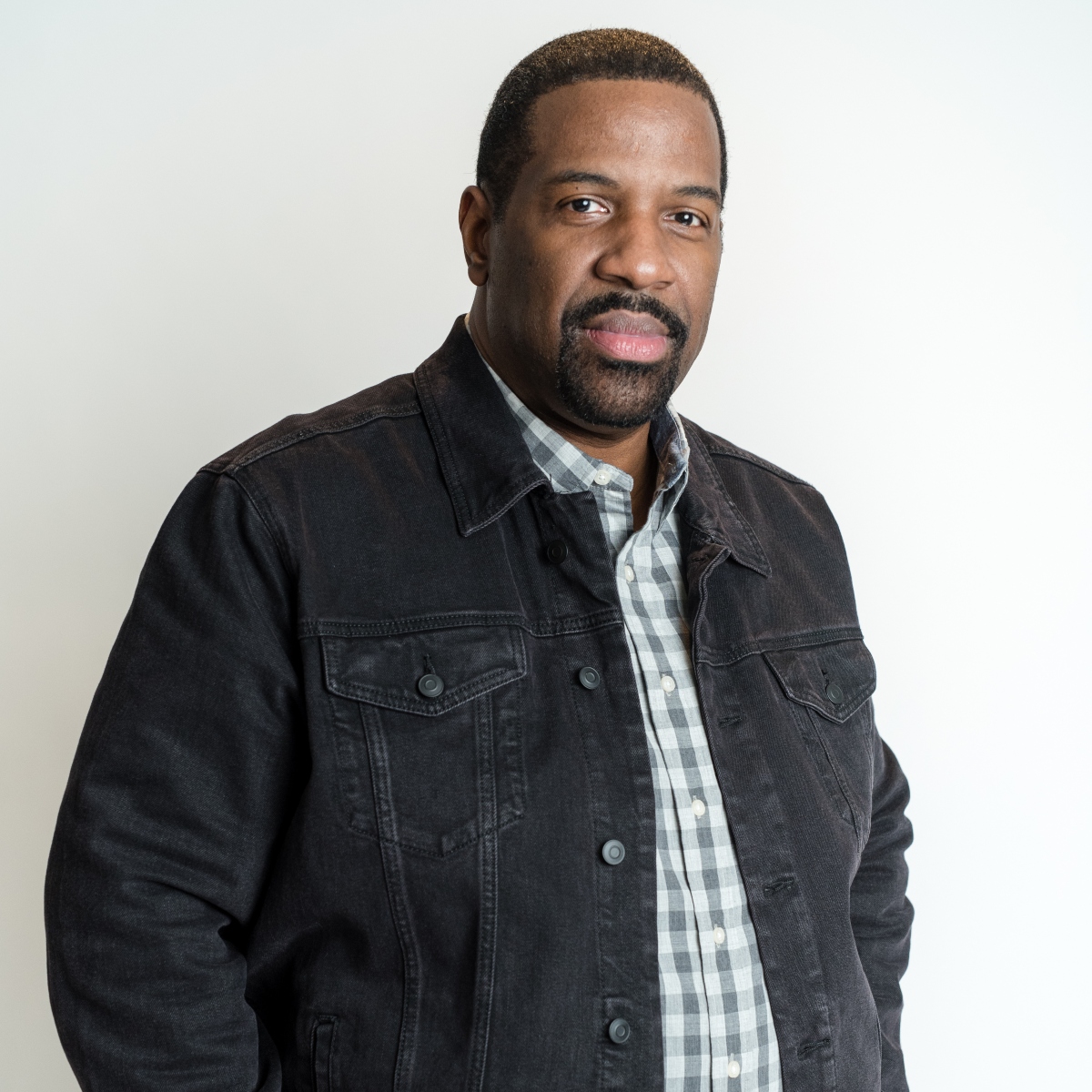
Clarence Haynes 1200x1200Clarence L. Haynes Jr. is a dynamic speaker, Bible teacher, and co-founder of The Bible Study Club, dedicated to helping people live with purpose and clarity. In addition to his ministry work, Clarence has spent the last 13 years as a trusted financial educator, guiding thousands of people across the country—including employees at many Fortune 500 companies—toward lasting financial wellness. His unique ability to blend practical wisdom with spiritual insight equips people to thrive in every area of life.

He is the author of The Pursuit of Purpose, which helps readers understand how God leads them into his will, and the author of The Pursuit of Victory: How To Conquer Your Greatest Challenges and Win In Your Christian Life. Clarence is also committed to helping 10,000 people learn how to study the Bible and has released his first course, Bible Study Basics, to achieve that goal. To learn more about his ministry and resources, please visit clarencehaynes.com.


This article originally appeared on Christianity.com. For more faith-building resources, visit Christianity.com. Christianity.com
 

Salem News Channel Today

Sponsored Links


September 26 - Phoenix, AZ
Scottsdale Center for the Performing Arts


November 2 - Detroit, MI
Zion Christian Church in Troy


October 6 - Los Angeles, CA
Pasadena Convention Center


November 5 - San Antonio, TX
Norris Centers – The Grand Red Oak Ballroom


October 8 - Sacramento, CA
William Jessup University


November 7 - Tampa, FL
The Palladium at St. Pete College


October 22 - Minneapolis, MN
Crowne Plaza AiRE


November 15 - San Francisco, CA
Fremont Marriott Silicon Valley


October 23 - Philadelphia, PA
Green Valley Country Club


November 16 - Denver, CO
CU South Denver - Formerly Wildlife Experience


November 2 - Chicago, IL
Chicago Westin Northwest in Itasca


November 21 - Cleveland, OH
Holiday Inn Rockside in Independence


Salem Radio Network Speakers

Larry Elder is an American lawyer, writer, and radio and television personality who calls himself the "Sage of South Central" a district of Los Angeles, Larry says his philosophy is to entertain, inform, provoke and to hopefully uplift. His calling card is "we have a country to save" and to him this means returning to the bedrock Constitutional principles of limited government and maximum personal responsibility. Elder's iconoclastic wit and intellectual agility makes him a particularly attractive voice in a nation that seems weary of traditional racial dialogue.” – Los Angeles Times.

Mike Gallagher Mike Gallagher began his broadcasting career in 1978 in Dayton, Ohio. Today, he is one of the most listened-to talk radio show hosts in America, recently having been ranked in the Talkers Magazine “Heavy Hundred” list – the 100 most important talk radio hosts in America. Prior to being launched into national syndication in 1998, Mike hosted the morning show on WABC-AM in New York City. Today, Talkers Magazine reports that his show is heard by over 3.75 million weekly listeners. Besides his radio work, Mike is seen on Fox News Channel as an on-air contributor, frequently appearing on the cable news giant.

Hugh Hewitt is one of the nation’s leading bloggers and a genuine media revolutionary. He brings that expertise, his wit and what The New Yorker magazine calls his “amiable but relentless manner” to his nationally syndicated show each day.

When Dr. Sebastian Gorka was growing up, he listened to talk radio under his pillow with a transistor radio, dreaming that one day he would be behind the microphone. Beginning New Year’s Day 2019, he got his wish. Gorka now hosts America First every weekday afternoon 3 to 6pm ET. Gorka’s unique story works well on the radio. He is national security analyst for the Fox News Channel and author of two books: "Why We Fight" and "Defeating Jihad." His latest book releasing this fall is “War For America’s Soul.” He is uniquely qualified to fight the culture war and stand up for what is great about America, his adopted home country.

Broadcasting from his home station of KRLA in Los Angeles, the Dennis Prager Show is heard across the country. Everything in life – from politics to religion to relationships – is grist for Dennis’ mill. If it’s interesting, if it affects your life, then Dennis will be talking about it – with passion, humor, insight and wisdom.

Sean Hannity is a conservative radio and television host, and one of the original primetime hosts on the Fox News Channel, where he has appeared since 1996. Sean Hannity began his radio career at a college station in California, before moving on to markets in the Southeast and New York. Today, he’s one of the most listened to on-air voices. Hannity’s radio program went into national syndication on September 10, 2001, and airs on more than 500 stations. Talkers Magazine estimates Hannity’s weekly radio audience at 13.5 million. In 1996 he was hired as one of the original hosts on Fox News Channel. As host of several popular Fox programs, Hannity has become the highest-paid news anchor on television.

Michelle Malkin is a mother, wife, blogger, conservative syndicated columnist, longtime cable TV news commentator, and best-selling author of six books. She started her newspaper journalism career at the Los Angeles Daily News in 1992, moved to the Seattle Times in 1995, and has been penning nationally syndicated newspaper columns for Creators Syndicate since 1999. She is founder of conservative Internet start-ups Hot Air and Twitchy.com. Malkin has received numerous awards for her investigative journalism, including the Council on Governmental Ethics Laws (COGEL) national award for outstanding service for the cause of governmental ethics and leadership (1998), the Reed Irvine Accuracy in Media Award for Investigative Journalism (2006), the Heritage Foundation and Franklin Center for Government & Public Integrity's Breitbart Award for Excellence in Journalism (2013), the Center for Immigration Studies' Eugene Katz Award for Excellence in the Coverage of Immigration Award (2016), and the Manhattan Film Festival's Film Heals Award (2018). Married for 26 years and the mother of two teenage children, she lives with her family in Colorado. Follow her at michellemalkin.com. (Photo reprinted with kind permission from Peter Duke Photography.)

Sponsored by:

How Should Christians Respond When Military Leaders Claim War Is “God’s Plan”?

Carbonatix Pre-Player Loader

Audio By Carbonatix

Brought to you by Christianity.com

On Saturday, February 28, the US and Israel launched strikes on Iran. They launched these strikes despite ongoing talks between Washington and Tehran over Iran’s nuclear program. While questions remain regarding the validity of these attacks, there is a narrative being shaped within the military ranks that makes this even more troubling.

Service members across multiple branches have reported to the Military Religious Freedom Foundation (MRFF) that some commanders are telling troops that the ongoing conflict with Iran is part of “God’s divine plan” and a sign of the imminent return of Jesus Christ, prompting more than 110 complaints in recent days.

One non-commissioned officer said a commander urged troops to see the war as fulfilling biblical prophecy, even citing passages from Revelation, and framed participation as part of that divine plan. Critics argue this conflates personal theological interpretations with official military duty and risks pressuring service members of diverse faiths or no faith into religious narratives they may not share. The MRFF, which defends constitutional religious freedom for all military personnel, has long challenged similar instances where religious language is used inappropriately in professional military settings, emphasizing the importance of respecting the conscience and constitutional rights of every service member. 

When military leaders describe modern conflict as Armageddon or part of God’s divine plan, how should Christians discern what Scripture truly teaches about Christ’s return, the nature of war, and the mission of the Church?

Is Armageddon Being Treated as a Goal Rather Than a Warning?

Fascination with Armageddon is nothing new in many evangelical Christian circles. Many view Israel as a critical participant in end times prophecy, so whenever there is a conflict in the Middle East, thoughts immediately turn towards the end of the world. This thinking has prevailed over time through different conflicts in the Middle East. Reports state that Ronald Reagan wondered during the Iran-Iraq War in 1980 if this would be the generation to see Armageddon. Many tied apocalyptic value to 9/11 and the response to it. While people have seen this as part of the framework, this time it is different. We now have people in positions of power who believe their actions can directly lead to Armageddon. That, my friends, is dangerous ground.

Quote from an article about military leaders claiming the war with Iran is an end of the world war

Why War Must Never Be Waged to Fulfill Armageddon

War is brutal, and leaders must approach the decision to engage in war with great caution, not lightly. One, because all wars come with casualties and loss of life. This should make any leader hesitant to enter a war. Second, wars may be easy to start, but they are often difficult to end. Choosing to go to war should be hard enough; however, choosing to go to war to fulfill or hasten Biblical prophecy feels misguided and even irresponsible. Wars that are fought on “religious” grounds can make casualties, be they civilian or military, to be seen as necessary to advance the cause. While I believe our military is charged with defending the freedoms we hold dear as Americans, they are not there to rush us into Armageddon or to influence the second coming of Jesus. Any military commander who promotes this is violating the Constitution they signed up to defend.

The Return of Christ Does Not Depend on Military Strategy

There are vastly different interpretations of Bible prophecy, especially among many of the symbolisms found in Revelation. One such interpretation would point to wars and unimaginable trouble happening on earth before the return of Jesus. Whether you hold that view or a different one, do you want military commanders deciding to send our troops into battle based on their understanding of biblical prophecy? Allowing your understanding of Bible prophecy to be the basis for military decisions opens the door to irrational decisions and questions what and why you are fighting.
 
Every soldier who dons a uniform to fight for this country takes an oath to defend the Constitution of the United States. They did not sign up to fight holy wars. These soldiers lay aside their personal and religious ideologies to come together as one unit to defend our nation. Bringing about Armageddon was not part of their oath.

Aside from that, there is nowhere in the Bible where Jesus tells us he needs our help to aid in his second coming. On the contrary, we are reminded that no one knows the day nor the hour of his return, so it seems foolish to make military decisions based on unknowns. From my limited military knowledge, that seems to fly in the face of sound military decision-making.

Christ Calls US to Make Disciples, Not Ignite Wars

In the email the officer wrote to MRFF, he spoke about the disposition of the commander. Here is part of what he said:

“This morning our commander opened up the combat readiness status briefing by urging us to not be “afraid” as to what is happening with our combat operations in Iran right now…He said that “President Trump has been anointed by Jesus to light the signal fire in Iran to cause Armageddon and mark his return to Earth”. He had a big grin on his face when he said all of this which made his message seem even more crazy.”

That a commander would be excited about going to war to hasten Christ’s return questions this person’s understanding of the heart of God. If God’s desire is to bring people to repentance, then why would I want to hasten Christ’s return by killing people, many of whom may not know Jesus, causing them to be lost forever. Does this sound anything like the mission Jesus would have for us?

Before Jesus left, he commissioned us to go and make disciples of all nations. He even empowered us with the Holy Spirit to be his witnesses to the ends of the earth. This is the work we are called to do, and this is the work we should be excited to do until Jesus comes back again. If we truly believe that the time is short and Jesus is returning soon, then that should be a huge motivation to share the gospel with more people. Jesus stated in Matthew 24,  

"And this gospel of the kingdom will be preached in the whole world as a testimony to all nations, and then the end will come." - Matthew 24:14

Instead of trying to hasten the return of Jesus through military action, which ultimately leads to death and bloodshed, why not hasten his return by preaching the gospel, which offers hope and life? Which one do you think reflects the heart of God more?

We Are Called to Be Ambassadors, Not Prophecy Activists

I grew up in the Assemblies of God church, and there has always been a strong focus on the second coming of Jesus. When I was younger, this teaching caused me to view things happening in the world solely through the lens of how it relates to the rapture and Jesus’ return. Instead of living with an expectant hope, I lived with a fear of missing out, afraid I would never get to take part in some of life’s experiences before Jesus came back. I realize now I was not living in freedom but fear, and this is not how Jesus wants us to live. What this taught me is that we don’t need to align every activity with where it fits on the prophetic calendar. This may be nice for debate, but ultimately it can distract you from what Jesus has called you to do. Yet looking for Jesus is nothing new.

After Jesus was taken into heaven in the book of Acts, the disciples were there staring into heaven. Here is what happened next. 

They were looking intently up into the sky as he was going, when suddenly two men dressed in white stood beside them. “Men of Galilee,” they said, “why do you stand here looking into the sky? This same Jesus, who has been taken from you into heaven, will come back in the same way you have seen him go into heaven.” - Acts 1:10-11

Our job is not to stare into heaven, wondering when he is coming, or to attempt to make Jesus’ return happen any faster. Our job is to get busy doing what he has called us to do. That means we remain faithful to preaching the gospel and making disciples until he comes. Fighting wars will not accomplish this mission.

I understand that in a political context, sometimes war is necessary. If I am honest, I don’t know if this one is, and I don’t say that to be judgmental, but because I don’t know enough to have the answer. Regardless, the job of the military is not to usher in the return of Jesus. He will come when he comes. Until then, our job is to be ambassadors and represent him well on earth. Instead of dropping bombs, how about loving your neighbor and sharing the gospel? It is far better to add one more life to the kingdom than to end one more life here on earth. I simply believe that is what Jesus would want us to do.
Photo Credit: ©Unsplash/Timon Studler

Clarence Haynes 1200x1200Clarence L. Haynes Jr. is a dynamic speaker, Bible teacher, and co-founder of The Bible Study Club, dedicated to helping people live with purpose and clarity. In addition to his ministry work, Clarence has spent the last 13 years as a trusted financial educator, guiding thousands of people across the country—including employees at many Fortune 500 companies—toward lasting financial wellness. His unique ability to blend practical wisdom with spiritual insight equips people to thrive in every area of life.

He is the author of The Pursuit of Purpose, which helps readers understand how God leads them into his will, and the author of The Pursuit of Victory: How To Conquer Your Greatest Challenges and Win In Your Christian Life. Clarence is also committed to helping 10,000 people learn how to study the Bible and has released his first course, Bible Study Basics, to achieve that goal. To learn more about his ministry and resources, please visit clarencehaynes.com.

This article originally appeared on Christianity.com. For more faith-building resources, visit Christianity.com. Christianity.com
 

Salem News Channel Today

Sponsored Links

On Air & Up Next

See the Full Program Guide