4 Motivating Examples of Godly Leadership in the Bible

Carbonatix Pre-Player Loader

Audio By Carbonatix

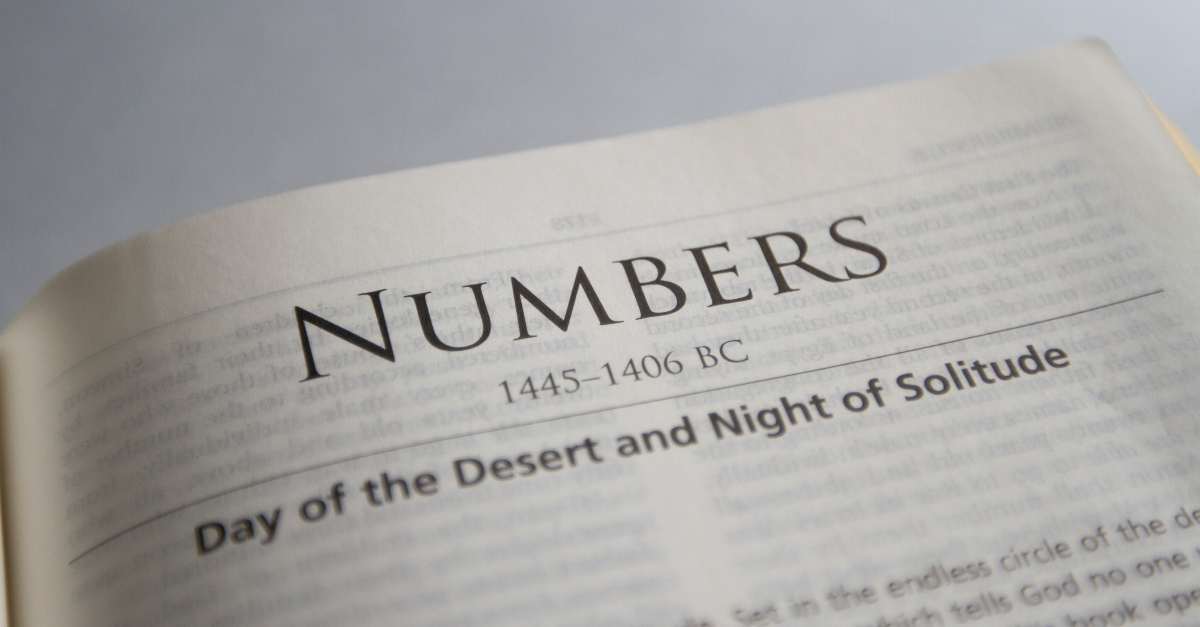
1. Joshua and Caleb (Numbers 13-14)

Israel had spent a long time wandering in the desert. They, at last, had reached the Promised Land, something they’d yearned for since their time in Egypt. When they reached the land, they noticed it already had some occupants.

Considering they’d waged war against a great deal of nations prior to that, they entered with caution. They sent 12 spies to scope the land and discover just what exactly they were up against.

The spies returned with this report in Numbers 13:27-28“They gave Moses this account: “We went into the land to which you sent us, and it does flow with milk and honey! Here is its fruit. But the people who live there are powerful, and the cities are fortified and very large. We even saw descendants of Anak there.”

The Good: The land had milk and honey. Not only have archeological excavations of Jericho proven this was literally the case, but it proved the land had abundance, just as God promised.

The Bad: The people who inhabited the land had a massive height.

Whether literal or figurative giants (you decide based on the interpretations of “descendants of Anak”), 10 of the spies said, “no go” to taking over the land.

Only Joshua and Caleb tried to convince the people to proceed with God’s instructions, asserting that God would provide and take care of them. Israel decided to listen to the majority, and this prevented a huge portion of them from entering the Promised Land. Only Joshua and Caleb, of the 10 spies, got to see themselves step foot and inhabit Jericho.

What they teach us about godly leadership: A godly leader doesn’t cave to peer pressure. They follow the path God has paved before them, no matter what giant (literal or metaphorical) appears to stand in their way.

Photo Credit: ©Sparrowstock


2. Nathan the Prophet, and King David (2 Samuel 12, Psalm 51)

Understatement of the millennia: King David had messed up. He had raped Bathsheba, the wife of one of his friends, and sent his friend Uriah to die in battle to cover up Uriah’s wife’s pregnancy. Just before this, David attempted to get Uriah to sleep with his wife to make the pregnancy less suspicious, but Uriah refused, considering there was a war going on and he needed to keep his head in the game.

But as we’ve seen in the history of kings (whether in the Bible or from extra-biblical sources) they can get away with whatever they want. And that appeared the case with David until the prophet Nathan stepped in.

Prophets had an infamous reputation in the Old Testament. They would often tell kings what they didn’t like to hear—sometimes earning themselves execution or exile. If you want some great examples of this, take a look at Elijah versus Ahab and Jezebel in 1 Kings.

Nathan, undeterred, tells David a parable about a man who had many sheep, but he slaughtered his neighbor’s one lamb (whom the neighbor treated like a son). David, enraged, says that they should kill this man. Where Nathan famously says, “Thou art the man.”

Nathan said what many people who advised David probably thought but didn’t have the guts to speak aloud. In our modern culture, we get skittish around the idea of calling people out for living in sin or committing acts of evil within the church. But as Christians, we cannot allow for evil to abide.

What he teaches about godly leadership: Leaders rebuke people who have committed a heinous wrong. They do not allow for sin to continue but spur one another on in doing good.

Photo Credit: ©GettyImages/BananaStock
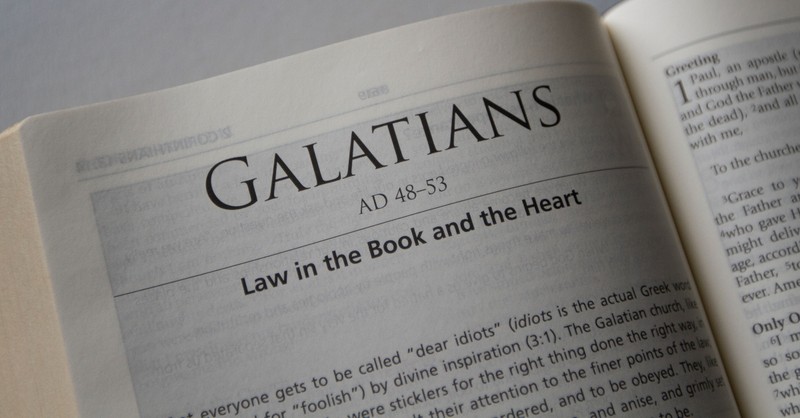

3. Paul (Galatians 2:11-14)

But when Cephas [Peter] came to Antioch, I opposed him to his face, because he stood condemned. For before certain men came from James, he used to eat with the Gentiles. But when they arrived, he began to draw back and separate himself from the Gentiles because he was afraid of those who belonged to the circumcision group. The other Jews joined him in his hypocrisy, so that by their hypocrisy even Barnabas was led astray. When I saw that they were not acting in line with the truth of the gospel, I said to Cephas in front of them all, “You are a Jew, yet you live like a Gentile and not like a Jew. How is it then, that you force Gentiles to follow Jewish customs?” –  Galatians 2:11-14

Paul had already run into a number of Christians dividing over issues like circumcision and whether Jewish versus Gentile widows received proper food rations (Acts 6). So you can imagine his frustration when Peter, one of the pillars of the Early Church, fell prey to these divisions.

Peter succumbed to peer pressure and refused to eat with the Gentiles. Because of Peter’s clout, others follow suit and avoid fellowshipping with Gentiles. Paul calls him out on this.

You can also imagine that Paul—although outspoken—may have still had to pluck up a little courage to do this. Peter had known Jesus for far longer, and it took people in the church community a while to warm up to Paul (considering Paul had killed many Christians before he became one). Still, he rebukes Peter, publicly, and steers him in the right direction.

What he teaches about godly leadership: We can often let a social hierarchy or someone’s authority deter us from speaking the truth to one another. But like Paul, godly leaders seek to unite, rather than divide and will alert one another to the truth, no matter how painful or socially uncouth.

Photo Credit: ©Sparrowstock


4. Jesus (Luke 5:16)

Of course, one cannot talk about godly leadership without pointing to the ultimate example: Jesus Christ.

But today, we want to focus on a passage the church doesn’t often talk about Luke 5:16. The verse says that Jesus often drew to places to be in solitude. Jesus rests, Jesus prays, and Jesus develops a divine rhythm.

Ask any pastor, and they can tell you that they feel stretched like taffy. Many churches have them playing the roles of counselor, youth leader, event organizer, budget planner, and pastor all in one. In fact, any godly leader probably feels burnt out, depressed, and in need of a vacation.

When we want to shepherd Christians and evangelize in our community, we can often forget that that also includes times of stepping away and being in solitude. Christ even had to get on a boat once because of the sheer size of a crowd. Still, he found ways to draw away and spend time with the Father.

What he teaches about godly leadership: Leadership requires a divine rhythm. We cannot go, go, go all the time. Our bodies need rest and need rejuvenation through the Word of God and spending time with our Lord.

Recommended for You:

The Important Biblical Meaning for Today of ‘Am I My Brother’s Keeper’

3 Things Leaders Should Know about Eli

8 Wonderful Ways to Bow Down and Worship Like David

9 Essential Qualities of a Godly Leader

What 7 Simple Lessons Are Hard for Leaders to Learn?

Photo Credit: ©GettyImages/Ryan Rad

 

Salem News Channel Today

Sponsored Links


September 26 - Phoenix, AZ
Scottsdale Center for the Performing Arts


November 2 - Detroit, MI
Zion Christian Church in Troy


October 6 - Los Angeles, CA
Pasadena Convention Center


November 5 - San Antonio, TX
Norris Centers – The Grand Red Oak Ballroom


October 8 - Sacramento, CA
William Jessup University


November 7 - Tampa, FL
The Palladium at St. Pete College


October 22 - Minneapolis, MN
Crowne Plaza AiRE


November 15 - San Francisco, CA
Fremont Marriott Silicon Valley


October 23 - Philadelphia, PA
Green Valley Country Club


November 16 - Denver, CO
CU South Denver - Formerly Wildlife Experience


November 2 - Chicago, IL
Chicago Westin Northwest in Itasca


November 21 - Cleveland, OH
Holiday Inn Rockside in Independence


Salem Radio Network Speakers

Larry Elder is an American lawyer, writer, and radio and television personality who calls himself the "Sage of South Central" a district of Los Angeles, Larry says his philosophy is to entertain, inform, provoke and to hopefully uplift. His calling card is "we have a country to save" and to him this means returning to the bedrock Constitutional principles of limited government and maximum personal responsibility. Elder's iconoclastic wit and intellectual agility makes him a particularly attractive voice in a nation that seems weary of traditional racial dialogue.” – Los Angeles Times.

Mike Gallagher Mike Gallagher began his broadcasting career in 1978 in Dayton, Ohio. Today, he is one of the most listened-to talk radio show hosts in America, recently having been ranked in the Talkers Magazine “Heavy Hundred” list – the 100 most important talk radio hosts in America. Prior to being launched into national syndication in 1998, Mike hosted the morning show on WABC-AM in New York City. Today, Talkers Magazine reports that his show is heard by over 3.75 million weekly listeners. Besides his radio work, Mike is seen on Fox News Channel as an on-air contributor, frequently appearing on the cable news giant.

Hugh Hewitt is one of the nation’s leading bloggers and a genuine media revolutionary. He brings that expertise, his wit and what The New Yorker magazine calls his “amiable but relentless manner” to his nationally syndicated show each day.

When Dr. Sebastian Gorka was growing up, he listened to talk radio under his pillow with a transistor radio, dreaming that one day he would be behind the microphone. Beginning New Year’s Day 2019, he got his wish. Gorka now hosts America First every weekday afternoon 3 to 6pm ET. Gorka’s unique story works well on the radio. He is national security analyst for the Fox News Channel and author of two books: "Why We Fight" and "Defeating Jihad." His latest book releasing this fall is “War For America’s Soul.” He is uniquely qualified to fight the culture war and stand up for what is great about America, his adopted home country.

Broadcasting from his home station of KRLA in Los Angeles, the Dennis Prager Show is heard across the country. Everything in life – from politics to religion to relationships – is grist for Dennis’ mill. If it’s interesting, if it affects your life, then Dennis will be talking about it – with passion, humor, insight and wisdom.

Sean Hannity is a conservative radio and television host, and one of the original primetime hosts on the Fox News Channel, where he has appeared since 1996. Sean Hannity began his radio career at a college station in California, before moving on to markets in the Southeast and New York. Today, he’s one of the most listened to on-air voices. Hannity’s radio program went into national syndication on September 10, 2001, and airs on more than 500 stations. Talkers Magazine estimates Hannity’s weekly radio audience at 13.5 million. In 1996 he was hired as one of the original hosts on Fox News Channel. As host of several popular Fox programs, Hannity has become the highest-paid news anchor on television.

Michelle Malkin is a mother, wife, blogger, conservative syndicated columnist, longtime cable TV news commentator, and best-selling author of six books. She started her newspaper journalism career at the Los Angeles Daily News in 1992, moved to the Seattle Times in 1995, and has been penning nationally syndicated newspaper columns for Creators Syndicate since 1999. She is founder of conservative Internet start-ups Hot Air and Twitchy.com. Malkin has received numerous awards for her investigative journalism, including the Council on Governmental Ethics Laws (COGEL) national award for outstanding service for the cause of governmental ethics and leadership (1998), the Reed Irvine Accuracy in Media Award for Investigative Journalism (2006), the Heritage Foundation and Franklin Center for Government & Public Integrity's Breitbart Award for Excellence in Journalism (2013), the Center for Immigration Studies' Eugene Katz Award for Excellence in the Coverage of Immigration Award (2016), and the Manhattan Film Festival's Film Heals Award (2018). Married for 26 years and the mother of two teenage children, she lives with her family in Colorado. Follow her at michellemalkin.com. (Photo reprinted with kind permission from Peter Duke Photography.)

Sponsored by:

4 Motivating Examples of Godly Leadership in the Bible

Carbonatix Pre-Player Loader

Audio By Carbonatix

1. Joshua and Caleb (Numbers 13-14)

Israel had spent a long time wandering in the desert. They, at last, had reached the Promised Land, something they’d yearned for since their time in Egypt. When they reached the land, they noticed it already had some occupants.

Considering they’d waged war against a great deal of nations prior to that, they entered with caution. They sent 12 spies to scope the land and discover just what exactly they were up against.

The spies returned with this report in Numbers 13:27-28“They gave Moses this account: “We went into the land to which you sent us, and it does flow with milk and honey! Here is its fruit. But the people who live there are powerful, and the cities are fortified and very large. We even saw descendants of Anak there.”

The Good: The land had milk and honey. Not only have archeological excavations of Jericho proven this was literally the case, but it proved the land had abundance, just as God promised.

The Bad: The people who inhabited the land had a massive height.

Whether literal or figurative giants (you decide based on the interpretations of “descendants of Anak”), 10 of the spies said, “no go” to taking over the land.

Only Joshua and Caleb tried to convince the people to proceed with God’s instructions, asserting that God would provide and take care of them. Israel decided to listen to the majority, and this prevented a huge portion of them from entering the Promised Land. Only Joshua and Caleb, of the 10 spies, got to see themselves step foot and inhabit Jericho.

What they teach us about godly leadership: A godly leader doesn’t cave to peer pressure. They follow the path God has paved before them, no matter what giant (literal or metaphorical) appears to stand in their way.

Photo Credit: ©Sparrowstock


2. Nathan the Prophet, and King David (2 Samuel 12, Psalm 51)

Understatement of the millennia: King David had messed up. He had raped Bathsheba, the wife of one of his friends, and sent his friend Uriah to die in battle to cover up Uriah’s wife’s pregnancy. Just before this, David attempted to get Uriah to sleep with his wife to make the pregnancy less suspicious, but Uriah refused, considering there was a war going on and he needed to keep his head in the game.

But as we’ve seen in the history of kings (whether in the Bible or from extra-biblical sources) they can get away with whatever they want. And that appeared the case with David until the prophet Nathan stepped in.

Prophets had an infamous reputation in the Old Testament. They would often tell kings what they didn’t like to hear—sometimes earning themselves execution or exile. If you want some great examples of this, take a look at Elijah versus Ahab and Jezebel in 1 Kings.

Nathan, undeterred, tells David a parable about a man who had many sheep, but he slaughtered his neighbor’s one lamb (whom the neighbor treated like a son). David, enraged, says that they should kill this man. Where Nathan famously says, “Thou art the man.”

Nathan said what many people who advised David probably thought but didn’t have the guts to speak aloud. In our modern culture, we get skittish around the idea of calling people out for living in sin or committing acts of evil within the church. But as Christians, we cannot allow for evil to abide.

What he teaches about godly leadership: Leaders rebuke people who have committed a heinous wrong. They do not allow for sin to continue but spur one another on in doing good.

Photo Credit: ©GettyImages/BananaStock


3. Paul (Galatians 2:11-14)

But when Cephas [Peter] came to Antioch, I opposed him to his face, because he stood condemned. For before certain men came from James, he used to eat with the Gentiles. But when they arrived, he began to draw back and separate himself from the Gentiles because he was afraid of those who belonged to the circumcision group. The other Jews joined him in his hypocrisy, so that by their hypocrisy even Barnabas was led astray. When I saw that they were not acting in line with the truth of the gospel, I said to Cephas in front of them all, “You are a Jew, yet you live like a Gentile and not like a Jew. How is it then, that you force Gentiles to follow Jewish customs?” –  Galatians 2:11-14

Paul had already run into a number of Christians dividing over issues like circumcision and whether Jewish versus Gentile widows received proper food rations (Acts 6). So you can imagine his frustration when Peter, one of the pillars of the Early Church, fell prey to these divisions.

Peter succumbed to peer pressure and refused to eat with the Gentiles. Because of Peter’s clout, others follow suit and avoid fellowshipping with Gentiles. Paul calls him out on this.

You can also imagine that Paul—although outspoken—may have still had to pluck up a little courage to do this. Peter had known Jesus for far longer, and it took people in the church community a while to warm up to Paul (considering Paul had killed many Christians before he became one). Still, he rebukes Peter, publicly, and steers him in the right direction.

What he teaches about godly leadership: We can often let a social hierarchy or someone’s authority deter us from speaking the truth to one another. But like Paul, godly leaders seek to unite, rather than divide and will alert one another to the truth, no matter how painful or socially uncouth.

Photo Credit: ©Sparrowstock


4. Jesus (Luke 5:16)

Of course, one cannot talk about godly leadership without pointing to the ultimate example: Jesus Christ.

But today, we want to focus on a passage the church doesn’t often talk about Luke 5:16. The verse says that Jesus often drew to places to be in solitude. Jesus rests, Jesus prays, and Jesus develops a divine rhythm.

Ask any pastor, and they can tell you that they feel stretched like taffy. Many churches have them playing the roles of counselor, youth leader, event organizer, budget planner, and pastor all in one. In fact, any godly leader probably feels burnt out, depressed, and in need of a vacation.

When we want to shepherd Christians and evangelize in our community, we can often forget that that also includes times of stepping away and being in solitude. Christ even had to get on a boat once because of the sheer size of a crowd. Still, he found ways to draw away and spend time with the Father.

What he teaches about godly leadership: Leadership requires a divine rhythm. We cannot go, go, go all the time. Our bodies need rest and need rejuvenation through the Word of God and spending time with our Lord.

Recommended for You:

The Important Biblical Meaning for Today of ‘Am I My Brother’s Keeper’

3 Things Leaders Should Know about Eli

8 Wonderful Ways to Bow Down and Worship Like David

9 Essential Qualities of a Godly Leader

What 7 Simple Lessons Are Hard for Leaders to Learn?

Photo Credit: ©GettyImages/Ryan Rad

 

Salem News Channel Today

Sponsored Links

On Air & Up Next

See the Full Program Guide