10 Questions about Mary and the Virgin Birth

Carbonatix Pre-Player Loader

Audio By Carbonatix

Editor's Note: Dr. Roger Barrier went to be with the Lord on February 16th, 2024. Dr. Barrier's family is honoring his legacy by continuing the ministry of Ask Roger and preachitteachit.org for years to come as they share more than two thousand still-unpublished sermons and Ask Roger articles. All articles authored by Dr. Barrier that are published and republished are done posthumously.

Dear Roger,
I have so many questions about Mary. Why is it important that Mary was a virgin when Jesus was born? Why do some people worship Mary? Can you help me learn more about her?
- Amanda

Hello Amanda,

Can you imagine that Mary, as the mother of Jesus, was a critical figure in His life? And that she might be an important person for us to understand as we come to know more about Jesus? 

I’d like to share with you the ten questions that I receive most often about Mary, the Virgin Birth, and how God used her in Jesus’s life and ministry. Let’s begin:

Question One: Why is the Virgin Birth so important?

The foundation of all Christianity rises or falls on the truth of the virgin birth.

If Mary were impregnated by a man—a Roman soldier, as many have claimed—then Jesus could not be fully God. He’d be like every other human on the earth; He would have died and His body would have decayed just like anyone else’s. But because Jesus was conceived in Mary by the Holy Spirit, He is able to be both fully God and fully human. 

This truth, called “the hypostatic union” by theologians, is a critical tenet of our faith. Because He is fully God and fully human, Jesus was able to pay the price for all our sin through His death and resurrection. (See Galatians 4:4; 1 Timothy 2:5.)

Question Two: Why are there so many different, even seemingly contradictory accounts of Jesus’s birth?

For example, Luke tells us that Jesus was born in a stable and placed in a manger (See Luke 2). Matthew describes Jesus and His family in a house (see Matthew 2). Luke tells us that the sky was filled with stars. Matthew tells us that there was only one star … and it moved.

Deciphering the puzzle is simple. The record in Matthew is from Matthew’s point of view. We find here kings and riches and expensive gifts, everything needed to sustain Jesus and his family for two years in Egypt. Luke shares the record of the birth of Christ from his perspective, describing that very first night in Bethlehem.

Each account is true, and when we pay close attention to the timeline and historical data, the puzzle pieces fit together. 

Question Three: Why did God choose Mary?

Gabriel brought to Mary the news that she had “found favor with God” and would give birth to a son to reign forever on David’s throne (Luke 1:30-33). 

Mary was of the right lineage. Luke traces her lineage through David, Boaz, Judah, Jacob, Isaac, and Abraham. Her son would be qualified to bear the title “Son of David” and be the righteous “Branch” that was to come from David’s family (Isaiah 11:1).
Next, Mary was engaged to a man whose heritage would require him to visit Bethlehem at just the right time. Micah 5:2 foretold the birthplace of the Messiah, pinpointing Bethlehem in Judah. Many virgins may have known God’s favor and may have descended from King David’s line, but not many would also be in the small town of Bethlehem when it was time for the Messiah to be born.
Also, Mary was from Nazareth. Prophecies given hundreds of years before Jesus’s birth declared that the Messiah would be of little reputation (Isaiah 53; Zechariah 9:9; cf. Matthew 2:23). To be called a Nazarene or a Galilean was something of an insult in those days (see John 1:46). Had Mary been wealthy, socially prestigious, or from an affluent city, Jesus could not have easily connected with lowly people, the ones He’d come to save (Luke 19:10; Mark 2:17). But because He was from Nazareth, Mary’s hometown, the humility and commonness prophesied about Him was fulfilled.

Question Four: Did Jesus have any brothers and sisters?

Mary remained a virgin until the Savior’s birth, but later she and Joseph gave Jesus four half-brothers: James, Joseph, Simon, and Judas (Matthew 13:55). Jesus also had at least two half-sisters, although they are not named or numbered (Matthew 13:55-56). 

Note that Jesus’s brother, Judas is not Judas the disciple who betrayed Jesus. In fact, before His death and resurrection, Jesus’s brothers didn’t believe He was who He said He was (John 7:5). But in remarkable evidence of Jesus’s resurrection, Jesus’s brothers all came to believe in Him. James even served as the leader of the early church in Jerusalem and wrote the book of James. 

Question Five: Did Mary need a Savior?

Yes! We all need a Savior. While the angel Gabriel declared that Mary was “highly favored” (Luke 1:28), even Mary herself recognized that she was a sinful human being who needed Jesus Christ as her savior (see Luke 1:46-47).

Question Six: Is there any biblical evidence that Mary was worshiped?

Nowhere in Scripture does Jesus or anyone else direct any praise, glory, or adoration toward Mary. Elizabeth, Mary’s relative, praised Mary in Luke 1:42-44, but her praise is based on the blessing of giving birth to the Messiah rather than any inherent glory in Mary. In fact, after this, Mary spoke a song of praise to the Lord, thanking Him for His faithfulness to her, even though she was a “humble servant” (Luke 1:46-55). 

Question Seven: Why was Mary present at the crucifixion of her Son?

She was present at the cross when Jesus died (John 19:25), no doubt feeling the “sword” that Simeon had prophesied. He said a sword would pierce her soul. Can you imagine the horror of seeing your Son brutally executed? She must have felt such agony. But God the Father witnessed the same scene. He must have grieved, too. It was there at the cross that Jesus asked John to serve as Mary’s son, and John took Mary into his home (John 19:26-27). 

If Mary had any doubts about her son’s deity after all the persecution He received, she would have been reassured by the darkness of the sky and the earthquake that accompanied His death. The centurion was convinced. He cried, “Truly this is the Son of God!” (Matthew 27:54).

Question Eight: What became of Mary after Jesus’s resurrection?

Mary was also with the apostles and her sons on the Day of Pentecost (Acts 1:14), when the Holy Spirit came down and filled Christ’s followers. However, Mary is never mentioned again after Acts 1. The apostles did not give Mary a prominent role. Mary’s death is not recorded in the Bible. Nothing is said about Mary ascending to heaven or having an exalted role there. 

I do hope that in heaven, I have the chance to ask her all of my own questions about what she experienced as Jesus’s mother. What a childhood He must have had!

Question Nine: Why do the Roman Catholics believe Mary remained a virgin throughout her life?

Roman Catholics believe that “Mary conceived and gave birth to her Son without any damage to her virginity and she remained a virgin also after the birth” (Denzenger’s Enchiridion Symbolorum).

The perpetual virginity of Mary is a major doctrine of the Catholic church. However, the Scriptures clearly teach the virgin birth of Jesus, but they do not support the idea that Mary was always a virgin. Mary and Joseph had many other children together (see question four above). For example, in Matthew 13:55-56 we read: “Isn’t this the carpenter’s son? Isn’t his mother’s name Mary, and aren’t his brothers James, Joseph, Simon, and Judas? Aren’t all his sisters with us?”  

Question Ten: Should Mary be venerated and worshiped?

The Bible nowhere indicates that Mary can hear our prayers or that she can mediate for us with God. Jesus is our only advocate and mediator in heaven (1 Timothy 2:5). If she were offered worship, adoration, or prayers in person, Mary would say the same as the angels: “Worship God!” (See Revelation 19:10; 22:9.) 

In fact, Mary herself sets the example for us, directing her worship, adoration, and praise to God alone: “My soul glorifies the Lord and my spirit rejoices in God my Savior, for he has been mindful of the humble state of his servant. From now on all generations will call me blessed, for the Mighty One has done great things for me — Holy is His Name” (Luke 1:46-49).

Well, Amanda,

I hope I’ve helped you understand more about Mary, her relationship with Jesus, and what we can learn from her. Please let me know if you have other questions. 

Love, Roger

Photo Credit: ©iStock/GettyImagesPlus/kipgodi 
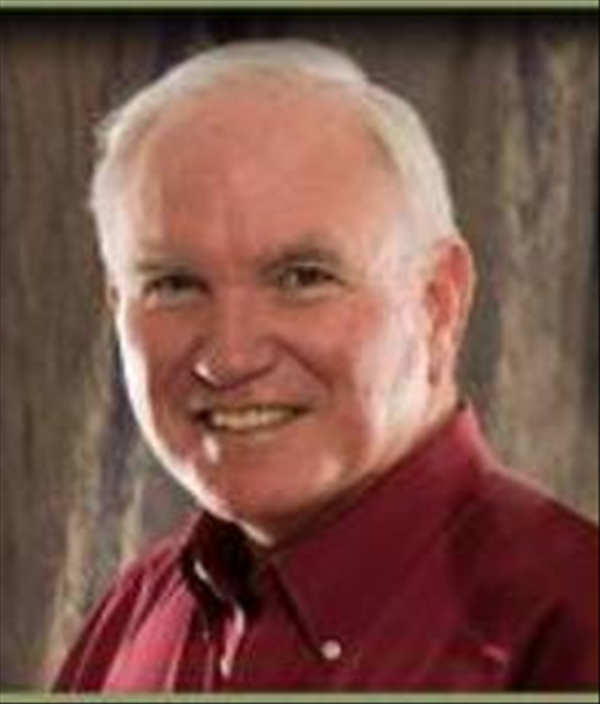
Ask RogerDr. Roger Barrier went to be with the Lord on Friday, February 16th, 2024. He was a faithful servant of Christ with a lifetime worth of ministry and mentorship. Dr. Barrier held degrees from Baylor University, Southwestern Baptist Theological Seminary, and Golden Gate Seminary in Greek, religion, theology, and pastoral care. He used his immense expertise daily to guide and mentor others in their spiritual walks. He had a global impact with his book Listening to the Voice of God, which is available in both Thai and Portuguese. His newest book, written with his daughter Brianna Barrier Wetherbee, is Look Like Jesus: A Guide to Spiritual Growth. He and his wife, Dr. Julie Barrier, founded Preach It, Teach It, a pastoral teaching site that provides countless resources, including articles, sermons, podcasts, sermon starters, Bible studies, and devotionals. His family will honor Dr. Barrier’s legacy by continuing the ministry of Ask Roger and preachitteachit.org for years to come as they share more than two thousand still-unpublished sermons and Ask Roger articles. 

This Ask Roger article may feature insights from Roger's wife, Dr. Julie Barrier, co-founder of Preach It, Teach It, worship minister, concert artist, and adjunct professor at Golden Gate Baptist Theological Seminary, or his daughter, Brie Barrier Wetherbee, a sought-after Bible teacher and conference speaker, author, analyst, and Christian theologian.


 

Salem News Channel Today

Sponsored Links


September 26 - Phoenix, AZ
Scottsdale Center for the Performing Arts


November 2 - Detroit, MI
Zion Christian Church in Troy


October 6 - Los Angeles, CA
Pasadena Convention Center


November 5 - San Antonio, TX
Norris Centers – The Grand Red Oak Ballroom


October 8 - Sacramento, CA
William Jessup University


November 7 - Tampa, FL
The Palladium at St. Pete College


October 22 - Minneapolis, MN
Crowne Plaza AiRE


November 15 - San Francisco, CA
Fremont Marriott Silicon Valley


October 23 - Philadelphia, PA
Green Valley Country Club


November 16 - Denver, CO
CU South Denver - Formerly Wildlife Experience


November 2 - Chicago, IL
Chicago Westin Northwest in Itasca


November 21 - Cleveland, OH
Holiday Inn Rockside in Independence


Salem Radio Network Speakers

Larry Elder is an American lawyer, writer, and radio and television personality who calls himself the "Sage of South Central" a district of Los Angeles, Larry says his philosophy is to entertain, inform, provoke and to hopefully uplift. His calling card is "we have a country to save" and to him this means returning to the bedrock Constitutional principles of limited government and maximum personal responsibility. Elder's iconoclastic wit and intellectual agility makes him a particularly attractive voice in a nation that seems weary of traditional racial dialogue.” – Los Angeles Times.

Mike Gallagher Mike Gallagher began his broadcasting career in 1978 in Dayton, Ohio. Today, he is one of the most listened-to talk radio show hosts in America, recently having been ranked in the Talkers Magazine “Heavy Hundred” list – the 100 most important talk radio hosts in America. Prior to being launched into national syndication in 1998, Mike hosted the morning show on WABC-AM in New York City. Today, Talkers Magazine reports that his show is heard by over 3.75 million weekly listeners. Besides his radio work, Mike is seen on Fox News Channel as an on-air contributor, frequently appearing on the cable news giant.

Hugh Hewitt is one of the nation’s leading bloggers and a genuine media revolutionary. He brings that expertise, his wit and what The New Yorker magazine calls his “amiable but relentless manner” to his nationally syndicated show each day.

When Dr. Sebastian Gorka was growing up, he listened to talk radio under his pillow with a transistor radio, dreaming that one day he would be behind the microphone. Beginning New Year’s Day 2019, he got his wish. Gorka now hosts America First every weekday afternoon 3 to 6pm ET. Gorka’s unique story works well on the radio. He is national security analyst for the Fox News Channel and author of two books: "Why We Fight" and "Defeating Jihad." His latest book releasing this fall is “War For America’s Soul.” He is uniquely qualified to fight the culture war and stand up for what is great about America, his adopted home country.

Broadcasting from his home station of KRLA in Los Angeles, the Dennis Prager Show is heard across the country. Everything in life – from politics to religion to relationships – is grist for Dennis’ mill. If it’s interesting, if it affects your life, then Dennis will be talking about it – with passion, humor, insight and wisdom.

Sean Hannity is a conservative radio and television host, and one of the original primetime hosts on the Fox News Channel, where he has appeared since 1996. Sean Hannity began his radio career at a college station in California, before moving on to markets in the Southeast and New York. Today, he’s one of the most listened to on-air voices. Hannity’s radio program went into national syndication on September 10, 2001, and airs on more than 500 stations. Talkers Magazine estimates Hannity’s weekly radio audience at 13.5 million. In 1996 he was hired as one of the original hosts on Fox News Channel. As host of several popular Fox programs, Hannity has become the highest-paid news anchor on television.

Michelle Malkin is a mother, wife, blogger, conservative syndicated columnist, longtime cable TV news commentator, and best-selling author of six books. She started her newspaper journalism career at the Los Angeles Daily News in 1992, moved to the Seattle Times in 1995, and has been penning nationally syndicated newspaper columns for Creators Syndicate since 1999. She is founder of conservative Internet start-ups Hot Air and Twitchy.com. Malkin has received numerous awards for her investigative journalism, including the Council on Governmental Ethics Laws (COGEL) national award for outstanding service for the cause of governmental ethics and leadership (1998), the Reed Irvine Accuracy in Media Award for Investigative Journalism (2006), the Heritage Foundation and Franklin Center for Government & Public Integrity's Breitbart Award for Excellence in Journalism (2013), the Center for Immigration Studies' Eugene Katz Award for Excellence in the Coverage of Immigration Award (2016), and the Manhattan Film Festival's Film Heals Award (2018). Married for 26 years and the mother of two teenage children, she lives with her family in Colorado. Follow her at michellemalkin.com. (Photo reprinted with kind permission from Peter Duke Photography.)

Sponsored by:

10 Questions about Mary and the Virgin Birth

Carbonatix Pre-Player Loader

Audio By Carbonatix

Editor's Note: Dr. Roger Barrier went to be with the Lord on February 16th, 2024. Dr. Barrier's family is honoring his legacy by continuing the ministry of Ask Roger and preachitteachit.org for years to come as they share more than two thousand still-unpublished sermons and Ask Roger articles. All articles authored by Dr. Barrier that are published and republished are done posthumously.

Dear Roger,
I have so many questions about Mary. Why is it important that Mary was a virgin when Jesus was born? Why do some people worship Mary? Can you help me learn more about her?
- Amanda

Hello Amanda,

Can you imagine that Mary, as the mother of Jesus, was a critical figure in His life? And that she might be an important person for us to understand as we come to know more about Jesus? 

I’d like to share with you the ten questions that I receive most often about Mary, the Virgin Birth, and how God used her in Jesus’s life and ministry. Let’s begin:

Question One: Why is the Virgin Birth so important?

The foundation of all Christianity rises or falls on the truth of the virgin birth.

If Mary were impregnated by a man—a Roman soldier, as many have claimed—then Jesus could not be fully God. He’d be like every other human on the earth; He would have died and His body would have decayed just like anyone else’s. But because Jesus was conceived in Mary by the Holy Spirit, He is able to be both fully God and fully human. 

This truth, called “the hypostatic union” by theologians, is a critical tenet of our faith. Because He is fully God and fully human, Jesus was able to pay the price for all our sin through His death and resurrection. (See Galatians 4:4; 1 Timothy 2:5.)

Question Two: Why are there so many different, even seemingly contradictory accounts of Jesus’s birth?

For example, Luke tells us that Jesus was born in a stable and placed in a manger (See Luke 2). Matthew describes Jesus and His family in a house (see Matthew 2). Luke tells us that the sky was filled with stars. Matthew tells us that there was only one star … and it moved.

Deciphering the puzzle is simple. The record in Matthew is from Matthew’s point of view. We find here kings and riches and expensive gifts, everything needed to sustain Jesus and his family for two years in Egypt. Luke shares the record of the birth of Christ from his perspective, describing that very first night in Bethlehem.

Each account is true, and when we pay close attention to the timeline and historical data, the puzzle pieces fit together. 

Question Three: Why did God choose Mary?

Gabriel brought to Mary the news that she had “found favor with God” and would give birth to a son to reign forever on David’s throne (Luke 1:30-33). 

Mary was of the right lineage. Luke traces her lineage through David, Boaz, Judah, Jacob, Isaac, and Abraham. Her son would be qualified to bear the title “Son of David” and be the righteous “Branch” that was to come from David’s family (Isaiah 11:1).
Next, Mary was engaged to a man whose heritage would require him to visit Bethlehem at just the right time. Micah 5:2 foretold the birthplace of the Messiah, pinpointing Bethlehem in Judah. Many virgins may have known God’s favor and may have descended from King David’s line, but not many would also be in the small town of Bethlehem when it was time for the Messiah to be born.
Also, Mary was from Nazareth. Prophecies given hundreds of years before Jesus’s birth declared that the Messiah would be of little reputation (Isaiah 53; Zechariah 9:9; cf. Matthew 2:23). To be called a Nazarene or a Galilean was something of an insult in those days (see John 1:46). Had Mary been wealthy, socially prestigious, or from an affluent city, Jesus could not have easily connected with lowly people, the ones He’d come to save (Luke 19:10; Mark 2:17). But because He was from Nazareth, Mary’s hometown, the humility and commonness prophesied about Him was fulfilled.

Question Four: Did Jesus have any brothers and sisters?

Mary remained a virgin until the Savior’s birth, but later she and Joseph gave Jesus four half-brothers: James, Joseph, Simon, and Judas (Matthew 13:55). Jesus also had at least two half-sisters, although they are not named or numbered (Matthew 13:55-56). 

Note that Jesus’s brother, Judas is not Judas the disciple who betrayed Jesus. In fact, before His death and resurrection, Jesus’s brothers didn’t believe He was who He said He was (John 7:5). But in remarkable evidence of Jesus’s resurrection, Jesus’s brothers all came to believe in Him. James even served as the leader of the early church in Jerusalem and wrote the book of James. 

Question Five: Did Mary need a Savior?

Yes! We all need a Savior. While the angel Gabriel declared that Mary was “highly favored” (Luke 1:28), even Mary herself recognized that she was a sinful human being who needed Jesus Christ as her savior (see Luke 1:46-47).

Question Six: Is there any biblical evidence that Mary was worshiped?

Nowhere in Scripture does Jesus or anyone else direct any praise, glory, or adoration toward Mary. Elizabeth, Mary’s relative, praised Mary in Luke 1:42-44, but her praise is based on the blessing of giving birth to the Messiah rather than any inherent glory in Mary. In fact, after this, Mary spoke a song of praise to the Lord, thanking Him for His faithfulness to her, even though she was a “humble servant” (Luke 1:46-55). 

Question Seven: Why was Mary present at the crucifixion of her Son?

She was present at the cross when Jesus died (John 19:25), no doubt feeling the “sword” that Simeon had prophesied. He said a sword would pierce her soul. Can you imagine the horror of seeing your Son brutally executed? She must have felt such agony. But God the Father witnessed the same scene. He must have grieved, too. It was there at the cross that Jesus asked John to serve as Mary’s son, and John took Mary into his home (John 19:26-27). 

If Mary had any doubts about her son’s deity after all the persecution He received, she would have been reassured by the darkness of the sky and the earthquake that accompanied His death. The centurion was convinced. He cried, “Truly this is the Son of God!” (Matthew 27:54).

Question Eight: What became of Mary after Jesus’s resurrection?

Mary was also with the apostles and her sons on the Day of Pentecost (Acts 1:14), when the Holy Spirit came down and filled Christ’s followers. However, Mary is never mentioned again after Acts 1. The apostles did not give Mary a prominent role. Mary’s death is not recorded in the Bible. Nothing is said about Mary ascending to heaven or having an exalted role there. 

I do hope that in heaven, I have the chance to ask her all of my own questions about what she experienced as Jesus’s mother. What a childhood He must have had!

Question Nine: Why do the Roman Catholics believe Mary remained a virgin throughout her life?

Roman Catholics believe that “Mary conceived and gave birth to her Son without any damage to her virginity and she remained a virgin also after the birth” (Denzenger’s Enchiridion Symbolorum).

The perpetual virginity of Mary is a major doctrine of the Catholic church. However, the Scriptures clearly teach the virgin birth of Jesus, but they do not support the idea that Mary was always a virgin. Mary and Joseph had many other children together (see question four above). For example, in Matthew 13:55-56 we read: “Isn’t this the carpenter’s son? Isn’t his mother’s name Mary, and aren’t his brothers James, Joseph, Simon, and Judas? Aren’t all his sisters with us?”  

Question Ten: Should Mary be venerated and worshiped?

The Bible nowhere indicates that Mary can hear our prayers or that she can mediate for us with God. Jesus is our only advocate and mediator in heaven (1 Timothy 2:5). If she were offered worship, adoration, or prayers in person, Mary would say the same as the angels: “Worship God!” (See Revelation 19:10; 22:9.) 

In fact, Mary herself sets the example for us, directing her worship, adoration, and praise to God alone: “My soul glorifies the Lord and my spirit rejoices in God my Savior, for he has been mindful of the humble state of his servant. From now on all generations will call me blessed, for the Mighty One has done great things for me — Holy is His Name” (Luke 1:46-49).

Well, Amanda,

I hope I’ve helped you understand more about Mary, her relationship with Jesus, and what we can learn from her. Please let me know if you have other questions. 

Love, Roger

Photo Credit: ©iStock/GettyImagesPlus/kipgodi 

Ask RogerDr. Roger Barrier went to be with the Lord on Friday, February 16th, 2024. He was a faithful servant of Christ with a lifetime worth of ministry and mentorship. Dr. Barrier held degrees from Baylor University, Southwestern Baptist Theological Seminary, and Golden Gate Seminary in Greek, religion, theology, and pastoral care. He used his immense expertise daily to guide and mentor others in their spiritual walks. He had a global impact with his book Listening to the Voice of God, which is available in both Thai and Portuguese. His newest book, written with his daughter Brianna Barrier Wetherbee, is Look Like Jesus: A Guide to Spiritual Growth. He and his wife, Dr. Julie Barrier, founded Preach It, Teach It, a pastoral teaching site that provides countless resources, including articles, sermons, podcasts, sermon starters, Bible studies, and devotionals. His family will honor Dr. Barrier’s legacy by continuing the ministry of Ask Roger and preachitteachit.org for years to come as they share more than two thousand still-unpublished sermons and Ask Roger articles. 

This Ask Roger article may feature insights from Roger's wife, Dr. Julie Barrier, co-founder of Preach It, Teach It, worship minister, concert artist, and adjunct professor at Golden Gate Baptist Theological Seminary, or his daughter, Brie Barrier Wetherbee, a sought-after Bible teacher and conference speaker, author, analyst, and Christian theologian.

 

Salem News Channel Today

Sponsored Links

On Air & Up Next

See the Full Program Guide






















