5 Reasons Christians Should Care about Black History Month

Carbonatix Pre-Player Loader

Audio By Carbonatix

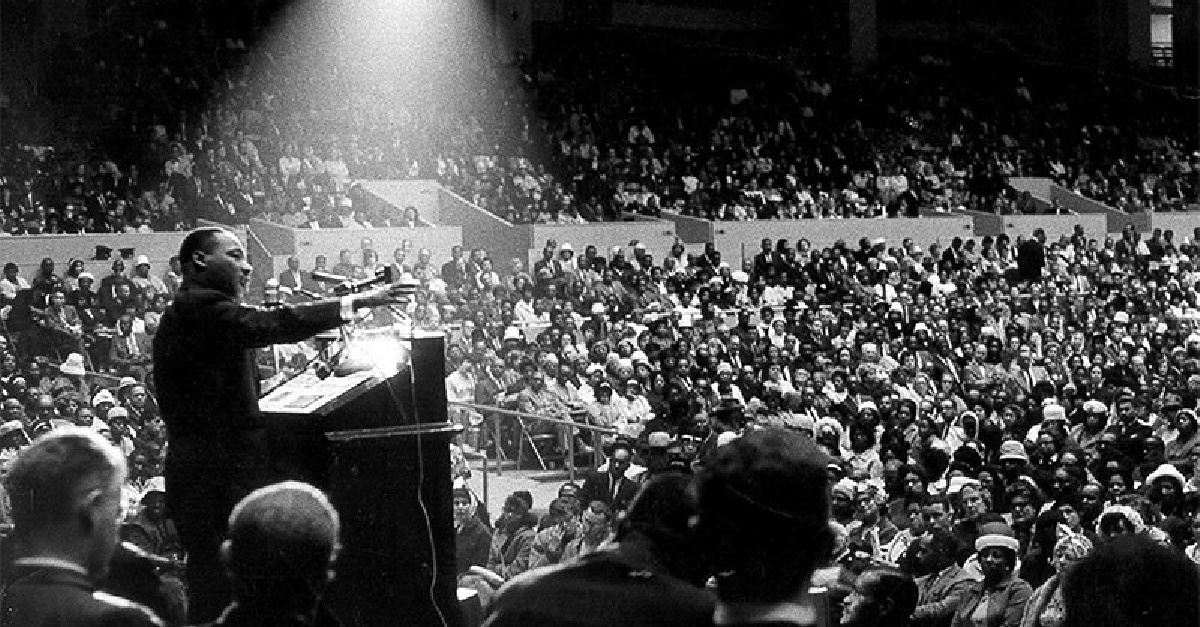
1. History Matters

For everything that was written in the past was written to teach us, so that through the endurance taught in the Scriptures and the encouragement they provide we might have hope. - Romans 15:4

History wasn’t always my favorite subject in school, even though Mr. Hocker in 11th grade made it somewhat interesting. As I have grown older, I have learned that history is more than just memorizing dates and events. It's about understanding the incredible story of how we got here and, more importantly, where we can go from here. When you know the history of a person, it gives you a greater appreciation for them. When you read about Abraham stepping out in faith, or David facing down Goliath with nothing but a slingshot and five smooth stones, something stirs in your spirit. That's because their stories give you hope and fuel for your journey of faith.

Now, let’s apply this to black history. While we're all familiar with the usual narrative of slavery, segregation, and Civil Rights, there's a whole treasure trove of black excellence that often gets left out of the history books. Consider this one for a moment. Every time you set your home security system before heading to bed, you're using technology pioneered by a Black woman named Marie Van Brittan Brown. A young Black woman from Queens, NY, came up with the first home security system and closed-circuit television.  

This is just one of countless stories that exist like this. When we uncover these stories, they spark hope. Just like reading about Moses parting the Red Sea or Paul's missionary journeys gives us spiritual inspiration, learning about these achievements reminds us that God has always used ordinary people to do extraordinary things. No, I'm not saying a security system is on par with parting the Red Sea or sharing the gospel. However, seeing what others have achieved against all odds inspires the thought that if God could use them, surely he can use me, too.

Photo Credit: RNS/George Conklin/Creative Commons 

2. It Shifts Perspectives

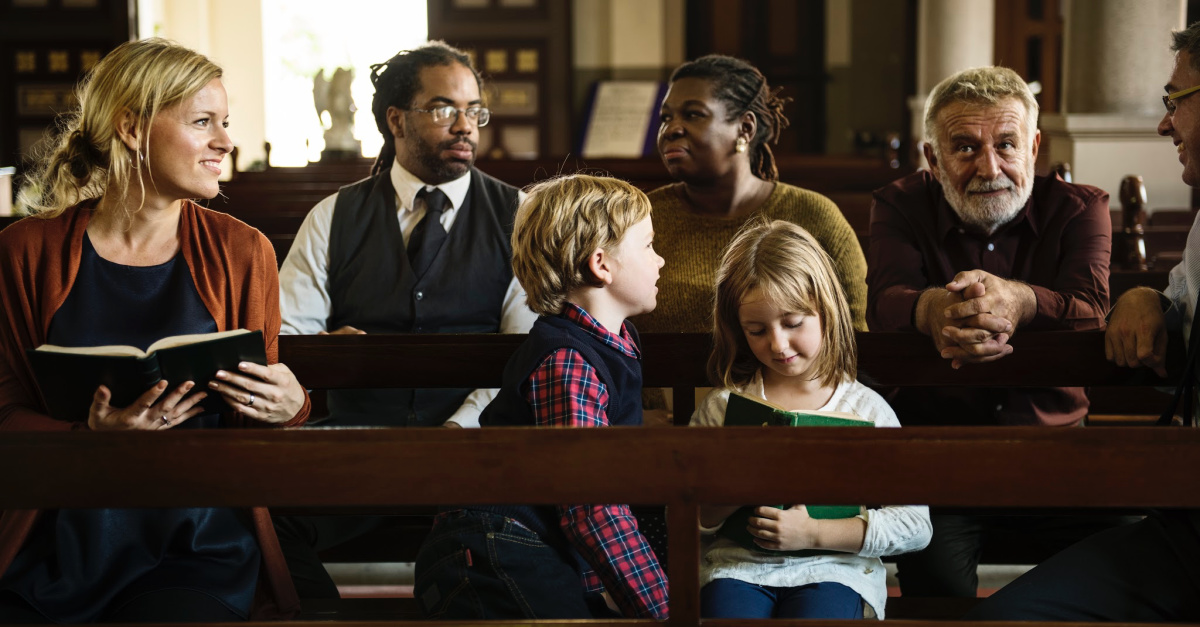
There is a truth that exists that we often tiptoe around in many churches. Yes, I'm talking about race. Now, I know it’s easier to pretend nothing is wrong and believe everything is fine and there is no issue. But, we must approach this topic honestly. There are still churches in America where it may say everyone is welcome on the outside, but when you walk inside the building, it does not reflect that. The welcome applies to some, but not all. This sad truth applies to churches of all ethnic and denominational persuasions. Now, if that hurts a little, or bothers you, then I would ask you not to lean back but to lean in.   

Sometimes we can become nervous or fearful about embracing people who may look different from us. But here's where something like Black History Month can be refreshing because it can help shift your perspective about others. For example, do you know about Garrett Morgan? Back in 1923, Garrett Morgan gave us something we use every single day, the three-position traffic light. The Department of Transportation says Morgan's invention, "greatly improved safety along America's streets and roadways." Think about that for a second. Every time you're sitting at a red light, checking your phone, or wondering why this light is taking forever to change, you're experiencing the legacy of a Black inventor who made all our lives safer.

When you learn these stories, hopefully, they help to tear down the walls we build and destroy the assumptions we make. These stories remind us that God gives his gifts of wisdom, creativity, and innovation to people of every nation and ethnicity, regardless of their color or background.

So the next time you are waiting at a traffic light, instead of getting annoyed at how long it's taking, maybe remember Garrett Morgan and recognize that our roads are a little safer because of him. Hopefully, when you think of it in that light, it will shift your perspective.

Photo Credit: ©Getty Images/Rawpixel 


3. God Cares about Culture

When you read the Bible, you discover God is particular in identifying people of various cultures and backgrounds.

Uriah was a Hittite (2 Sam. 11:3).

Ruth was a Moabite (Ruth 1:4).

Goliath was a champion fighter from Gath (1 Sam. 17:4).

Jesus spoke to a Samaritan woman (John 4:7).

Simon of Cyrene carried the cross (Matt. 27:32).

Philip ministered to an Ethiopian eunuch (Acts 8:27).

Peter went to the house of Cornelius, who was Italian (Acts 10:1).

This is just a small sample size, but this happens repeatedly throughout Scripture. So, why does this matter? It matters because God does not hide the culture or nationality of people. Instead, he puts those details front and center. These aren't merely random facts; they're a crucial acknowledgment that a person's background significantly shapes their narrative, demanding that we pay attention to their unique stories.

I often find it interesting, almost amusing, when someone says we should be colorblind or that color doesn't matter. I know what they are implying when they say this. However, while we say that about issues of race, we would never say that about anything else. I live in New England, and every fall, there is the most beautiful fall foliage where you get the wonderful hues of fall colors in the leaves. I have never heard anyone in that setting say just be colorblind because color doesn’t matter. When you open your Bible, you will see how God intentionally mentions people of different backgrounds. If it matters that much to him, then it should matter that much to us. If God took the time to spell out all these cultural details, maybe we should stop pretending they don't matter.

Ultimately, the Bible is not some bland, one-note message. The Bible is a beautiful tapestry of cultures, backgrounds, and nationalities, all working together to fulfill God’s plan in human history. When you celebrate Black History month, it gives you the opportunity to recognize the role one group of people has played in fulfilling that plan.

Photo Credit: © Getty Images/wildpixel 

4. It Can Open Doors to Reach More People

…I have become all things to all people so that by all possible means I might save some. - 1 Corinthians 9:22

I would like to share a heavy thought with you for a moment. There are some people of color who have rejected Christianity because they say the same people who were preaching the freedom found in Christ on Sunday were buying and selling people into slavery on Monday. This has appealed to a section of Black people who are looking for an outlet for their anger. I know that is an unpleasant truth, but again, don’t lean back; lean in. While some of these people may feel justified in how they feel, it does not mean we can’t reach them. The best way is to follow the example of Jesus.

Jesus had this uncanny ability to meet people where they are. He dealt with the issues of their heart and addressed them head on. He did this by listening and giving people the opportunity to know that he sees them and cares about them. So how could this apply to Black History month?

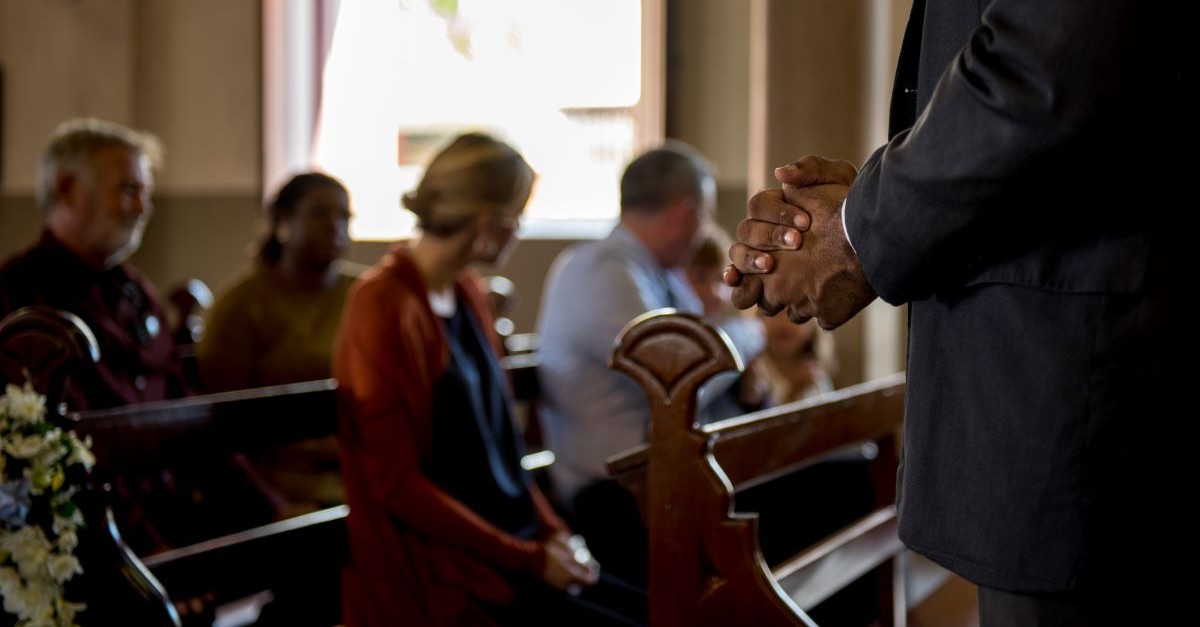
Imagine someone walks into your church during this month. Maybe they are unsure about the church and are looking for a place to feel welcome and find a genuine sense of community. On this Sunday, they hear something from the platform that acknowledges their history and celebrates their heritage. How do you think that would make that person feel? I am not saying you turn the entire service into a history lesson. However, offering a simple recognition could let people know we see you, we value you, and you matter here.

Some of you may wonder if doing that would put too much emphasis on race. Obviously, if you do that every Sunday, sure, but to do that during Black History Month or on other occasions is perfectly okay. We celebrate mothers on Mother's Day, veterans on Veterans Day, and fathers on Father’s Day (even though mothers get way more attention than fathers), and nobody complains about it. In that same fashion, why do we get nervous about acknowledging Black history in church? We shouldn’t be. Again, if that makes you a little uncomfortable, that’s why we need to have the conversation.

Remember, our job is to point people to Jesus. If taking a moment to acknowledge Black history makes somebody feel comfortable enough to stick around and hear about the saving grace of Jesus Christ, why would we not do this? Sometimes, before we can get to sharing the gospel, we need to let people know we care about them. If showing you care about Black History Month can be that starting point, isn't that one life worth it?

Photo Credit: ©GettyImages/Rawpixel 
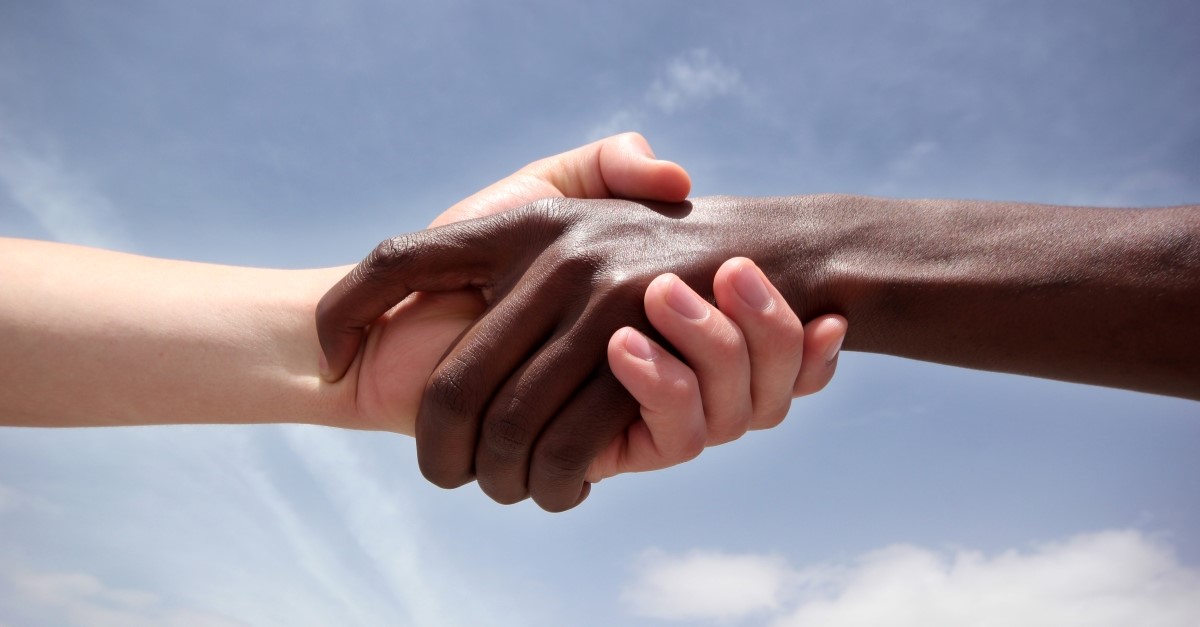

5. It Is an Opportunity to Highlight the Power of the Gospel

Black History Month isn't just about inventions, achievements, and overcoming obstacles. It's a powerful testimony to what God can do when the gospel gets hold of a people.

We cannot deny there have been dark moments in American history for people of color. Yet, for so many, that did not destroy their faith; it emboldened their faith. Whether they were dealing with the horrors of slavery or the challenges of segregation, they held on to their faith in Jesus. Many who fought for the abolition of slavery or the ending of Jim Crow did so in recognizing that the gospel makes us all one in Christ.

Their trust in Jesus transformed their lives, filling them with hope even when situations seemed hopeless. The spirituals they sang weren’t just songs; they were prayers sung to God, helping them endure their hardships. The most frequent messages conveyed love and forgiveness, not anger, hatred, or retribution toward their oppressors. They were not seeking an opportunity for revenge but pursuing a desire for freedom and equality. That speaks to the power of the gospel to change hearts even in the most challenging of circumstances.

Remembering these stories gives you an opportunity to highlight these powerful testimonies of faith in the face of crisis. I am not implying that only black people have had to endure, but there is an incredible heritage of a people trusting God through almost impossible situations. That is something that can be an encouragement to everyone.    

There is one more reality that we see as well. When you embrace culture and people from all ethnicities, you align yourself with the heart of God. The Bible tells us that God so loved the world (John 3:16), which means everyone is welcome. When you see people of different ethnic backgrounds coming under the banner of Christ, celebrating Jesus and loving each other, that makes the world take notice.

I know I have talked specifically about Black History Month, but these truths are not just about Black people. These are truths that all people should celebrate. Every culture has something to bring to the table that has affected the world and the church. Remembering these things strengthens us as we see God moving his hand throughout history and making advancements in the world and in his kingdom.

This article is about history, and the key part of that word is story. The truth is the stories of Black History are not more important than your story. They are equally important. That’s why we need to keep telling them. In the wonderful words of Mr. Rogers, here is what he said.  

"There isn't anyone you couldn't learn to love once you've heard their story."

Black History month is all about telling the stories and the more we hear them and know them then hopefully the more we will learn to love each other.

“By this everyone will know that you are my disciples, if you love one another.” - John 13:35

Photo Credit: ©GettyImages/SafakOguz 

 

Salem News Channel Today

Sponsored Links


September 26 - Phoenix, AZ
Scottsdale Center for the Performing Arts


November 2 - Detroit, MI
Zion Christian Church in Troy


October 6 - Los Angeles, CA
Pasadena Convention Center


November 5 - San Antonio, TX
Norris Centers – The Grand Red Oak Ballroom


October 8 - Sacramento, CA
William Jessup University


November 7 - Tampa, FL
The Palladium at St. Pete College


October 22 - Minneapolis, MN
Crowne Plaza AiRE


November 15 - San Francisco, CA
Fremont Marriott Silicon Valley


October 23 - Philadelphia, PA
Green Valley Country Club


November 16 - Denver, CO
CU South Denver - Formerly Wildlife Experience


November 2 - Chicago, IL
Chicago Westin Northwest in Itasca


November 21 - Cleveland, OH
Holiday Inn Rockside in Independence


Salem Radio Network Speakers

Larry Elder is an American lawyer, writer, and radio and television personality who calls himself the "Sage of South Central" a district of Los Angeles, Larry says his philosophy is to entertain, inform, provoke and to hopefully uplift. His calling card is "we have a country to save" and to him this means returning to the bedrock Constitutional principles of limited government and maximum personal responsibility. Elder's iconoclastic wit and intellectual agility makes him a particularly attractive voice in a nation that seems weary of traditional racial dialogue.” – Los Angeles Times.

Mike Gallagher Mike Gallagher began his broadcasting career in 1978 in Dayton, Ohio. Today, he is one of the most listened-to talk radio show hosts in America, recently having been ranked in the Talkers Magazine “Heavy Hundred” list – the 100 most important talk radio hosts in America. Prior to being launched into national syndication in 1998, Mike hosted the morning show on WABC-AM in New York City. Today, Talkers Magazine reports that his show is heard by over 3.75 million weekly listeners. Besides his radio work, Mike is seen on Fox News Channel as an on-air contributor, frequently appearing on the cable news giant.

Hugh Hewitt is one of the nation’s leading bloggers and a genuine media revolutionary. He brings that expertise, his wit and what The New Yorker magazine calls his “amiable but relentless manner” to his nationally syndicated show each day.

When Dr. Sebastian Gorka was growing up, he listened to talk radio under his pillow with a transistor radio, dreaming that one day he would be behind the microphone. Beginning New Year’s Day 2019, he got his wish. Gorka now hosts America First every weekday afternoon 3 to 6pm ET. Gorka’s unique story works well on the radio. He is national security analyst for the Fox News Channel and author of two books: "Why We Fight" and "Defeating Jihad." His latest book releasing this fall is “War For America’s Soul.” He is uniquely qualified to fight the culture war and stand up for what is great about America, his adopted home country.

Broadcasting from his home station of KRLA in Los Angeles, the Dennis Prager Show is heard across the country. Everything in life – from politics to religion to relationships – is grist for Dennis’ mill. If it’s interesting, if it affects your life, then Dennis will be talking about it – with passion, humor, insight and wisdom.

Sean Hannity is a conservative radio and television host, and one of the original primetime hosts on the Fox News Channel, where he has appeared since 1996. Sean Hannity began his radio career at a college station in California, before moving on to markets in the Southeast and New York. Today, he’s one of the most listened to on-air voices. Hannity’s radio program went into national syndication on September 10, 2001, and airs on more than 500 stations. Talkers Magazine estimates Hannity’s weekly radio audience at 13.5 million. In 1996 he was hired as one of the original hosts on Fox News Channel. As host of several popular Fox programs, Hannity has become the highest-paid news anchor on television.

Michelle Malkin is a mother, wife, blogger, conservative syndicated columnist, longtime cable TV news commentator, and best-selling author of six books. She started her newspaper journalism career at the Los Angeles Daily News in 1992, moved to the Seattle Times in 1995, and has been penning nationally syndicated newspaper columns for Creators Syndicate since 1999. She is founder of conservative Internet start-ups Hot Air and Twitchy.com. Malkin has received numerous awards for her investigative journalism, including the Council on Governmental Ethics Laws (COGEL) national award for outstanding service for the cause of governmental ethics and leadership (1998), the Reed Irvine Accuracy in Media Award for Investigative Journalism (2006), the Heritage Foundation and Franklin Center for Government & Public Integrity's Breitbart Award for Excellence in Journalism (2013), the Center for Immigration Studies' Eugene Katz Award for Excellence in the Coverage of Immigration Award (2016), and the Manhattan Film Festival's Film Heals Award (2018). Married for 26 years and the mother of two teenage children, she lives with her family in Colorado. Follow her at michellemalkin.com. (Photo reprinted with kind permission from Peter Duke Photography.)

Sponsored by:

5 Reasons Christians Should Care about Black History Month

Carbonatix Pre-Player Loader

Audio By Carbonatix

1. History Matters

For everything that was written in the past was written to teach us, so that through the endurance taught in the Scriptures and the encouragement they provide we might have hope. - Romans 15:4

History wasn’t always my favorite subject in school, even though Mr. Hocker in 11th grade made it somewhat interesting. As I have grown older, I have learned that history is more than just memorizing dates and events. It's about understanding the incredible story of how we got here and, more importantly, where we can go from here. When you know the history of a person, it gives you a greater appreciation for them. When you read about Abraham stepping out in faith, or David facing down Goliath with nothing but a slingshot and five smooth stones, something stirs in your spirit. That's because their stories give you hope and fuel for your journey of faith.

Now, let’s apply this to black history. While we're all familiar with the usual narrative of slavery, segregation, and Civil Rights, there's a whole treasure trove of black excellence that often gets left out of the history books. Consider this one for a moment. Every time you set your home security system before heading to bed, you're using technology pioneered by a Black woman named Marie Van Brittan Brown. A young Black woman from Queens, NY, came up with the first home security system and closed-circuit television.  

This is just one of countless stories that exist like this. When we uncover these stories, they spark hope. Just like reading about Moses parting the Red Sea or Paul's missionary journeys gives us spiritual inspiration, learning about these achievements reminds us that God has always used ordinary people to do extraordinary things. No, I'm not saying a security system is on par with parting the Red Sea or sharing the gospel. However, seeing what others have achieved against all odds inspires the thought that if God could use them, surely he can use me, too.

Photo Credit: RNS/George Conklin/Creative Commons 


2. It Shifts Perspectives

There is a truth that exists that we often tiptoe around in many churches. Yes, I'm talking about race. Now, I know it’s easier to pretend nothing is wrong and believe everything is fine and there is no issue. But, we must approach this topic honestly. There are still churches in America where it may say everyone is welcome on the outside, but when you walk inside the building, it does not reflect that. The welcome applies to some, but not all. This sad truth applies to churches of all ethnic and denominational persuasions. Now, if that hurts a little, or bothers you, then I would ask you not to lean back but to lean in.   

Sometimes we can become nervous or fearful about embracing people who may look different from us. But here's where something like Black History Month can be refreshing because it can help shift your perspective about others. For example, do you know about Garrett Morgan? Back in 1923, Garrett Morgan gave us something we use every single day, the three-position traffic light. The Department of Transportation says Morgan's invention, "greatly improved safety along America's streets and roadways." Think about that for a second. Every time you're sitting at a red light, checking your phone, or wondering why this light is taking forever to change, you're experiencing the legacy of a Black inventor who made all our lives safer.

When you learn these stories, hopefully, they help to tear down the walls we build and destroy the assumptions we make. These stories remind us that God gives his gifts of wisdom, creativity, and innovation to people of every nation and ethnicity, regardless of their color or background.

So the next time you are waiting at a traffic light, instead of getting annoyed at how long it's taking, maybe remember Garrett Morgan and recognize that our roads are a little safer because of him. Hopefully, when you think of it in that light, it will shift your perspective.

Photo Credit: ©Getty Images/Rawpixel 


3. God Cares about Culture

When you read the Bible, you discover God is particular in identifying people of various cultures and backgrounds.

Uriah was a Hittite (2 Sam. 11:3).

Ruth was a Moabite (Ruth 1:4).

Goliath was a champion fighter from Gath (1 Sam. 17:4).

Jesus spoke to a Samaritan woman (John 4:7).

Simon of Cyrene carried the cross (Matt. 27:32).

Philip ministered to an Ethiopian eunuch (Acts 8:27).

Peter went to the house of Cornelius, who was Italian (Acts 10:1).

This is just a small sample size, but this happens repeatedly throughout Scripture. So, why does this matter? It matters because God does not hide the culture or nationality of people. Instead, he puts those details front and center. These aren't merely random facts; they're a crucial acknowledgment that a person's background significantly shapes their narrative, demanding that we pay attention to their unique stories.

I often find it interesting, almost amusing, when someone says we should be colorblind or that color doesn't matter. I know what they are implying when they say this. However, while we say that about issues of race, we would never say that about anything else. I live in New England, and every fall, there is the most beautiful fall foliage where you get the wonderful hues of fall colors in the leaves. I have never heard anyone in that setting say just be colorblind because color doesn’t matter. When you open your Bible, you will see how God intentionally mentions people of different backgrounds. If it matters that much to him, then it should matter that much to us. If God took the time to spell out all these cultural details, maybe we should stop pretending they don't matter.

Ultimately, the Bible is not some bland, one-note message. The Bible is a beautiful tapestry of cultures, backgrounds, and nationalities, all working together to fulfill God’s plan in human history. When you celebrate Black History month, it gives you the opportunity to recognize the role one group of people has played in fulfilling that plan.

Photo Credit: © Getty Images/wildpixel 


4. It Can Open Doors to Reach More People

…I have become all things to all people so that by all possible means I might save some. - 1 Corinthians 9:22

I would like to share a heavy thought with you for a moment. There are some people of color who have rejected Christianity because they say the same people who were preaching the freedom found in Christ on Sunday were buying and selling people into slavery on Monday. This has appealed to a section of Black people who are looking for an outlet for their anger. I know that is an unpleasant truth, but again, don’t lean back; lean in. While some of these people may feel justified in how they feel, it does not mean we can’t reach them. The best way is to follow the example of Jesus.

Jesus had this uncanny ability to meet people where they are. He dealt with the issues of their heart and addressed them head on. He did this by listening and giving people the opportunity to know that he sees them and cares about them. So how could this apply to Black History month?

Imagine someone walks into your church during this month. Maybe they are unsure about the church and are looking for a place to feel welcome and find a genuine sense of community. On this Sunday, they hear something from the platform that acknowledges their history and celebrates their heritage. How do you think that would make that person feel? I am not saying you turn the entire service into a history lesson. However, offering a simple recognition could let people know we see you, we value you, and you matter here.

Some of you may wonder if doing that would put too much emphasis on race. Obviously, if you do that every Sunday, sure, but to do that during Black History Month or on other occasions is perfectly okay. We celebrate mothers on Mother's Day, veterans on Veterans Day, and fathers on Father’s Day (even though mothers get way more attention than fathers), and nobody complains about it. In that same fashion, why do we get nervous about acknowledging Black history in church? We shouldn’t be. Again, if that makes you a little uncomfortable, that’s why we need to have the conversation.

Remember, our job is to point people to Jesus. If taking a moment to acknowledge Black history makes somebody feel comfortable enough to stick around and hear about the saving grace of Jesus Christ, why would we not do this? Sometimes, before we can get to sharing the gospel, we need to let people know we care about them. If showing you care about Black History Month can be that starting point, isn't that one life worth it?

Photo Credit: ©GettyImages/Rawpixel 


5. It Is an Opportunity to Highlight the Power of the Gospel

Black History Month isn't just about inventions, achievements, and overcoming obstacles. It's a powerful testimony to what God can do when the gospel gets hold of a people.

We cannot deny there have been dark moments in American history for people of color. Yet, for so many, that did not destroy their faith; it emboldened their faith. Whether they were dealing with the horrors of slavery or the challenges of segregation, they held on to their faith in Jesus. Many who fought for the abolition of slavery or the ending of Jim Crow did so in recognizing that the gospel makes us all one in Christ.

Their trust in Jesus transformed their lives, filling them with hope even when situations seemed hopeless. The spirituals they sang weren’t just songs; they were prayers sung to God, helping them endure their hardships. The most frequent messages conveyed love and forgiveness, not anger, hatred, or retribution toward their oppressors. They were not seeking an opportunity for revenge but pursuing a desire for freedom and equality. That speaks to the power of the gospel to change hearts even in the most challenging of circumstances.

Remembering these stories gives you an opportunity to highlight these powerful testimonies of faith in the face of crisis. I am not implying that only black people have had to endure, but there is an incredible heritage of a people trusting God through almost impossible situations. That is something that can be an encouragement to everyone.    

There is one more reality that we see as well. When you embrace culture and people from all ethnicities, you align yourself with the heart of God. The Bible tells us that God so loved the world (John 3:16), which means everyone is welcome. When you see people of different ethnic backgrounds coming under the banner of Christ, celebrating Jesus and loving each other, that makes the world take notice.

I know I have talked specifically about Black History Month, but these truths are not just about Black people. These are truths that all people should celebrate. Every culture has something to bring to the table that has affected the world and the church. Remembering these things strengthens us as we see God moving his hand throughout history and making advancements in the world and in his kingdom.

This article is about history, and the key part of that word is story. The truth is the stories of Black History are not more important than your story. They are equally important. That’s why we need to keep telling them. In the wonderful words of Mr. Rogers, here is what he said.  

"There isn't anyone you couldn't learn to love once you've heard their story."

Black History month is all about telling the stories and the more we hear them and know them then hopefully the more we will learn to love each other.

“By this everyone will know that you are my disciples, if you love one another.” - John 13:35

Photo Credit: ©GettyImages/SafakOguz 

 

Salem News Channel Today

Sponsored Links

On Air & Up Next

See the Full Program Guide