11 Ways Gen Z Is Redefining the Church

Carbonatix Pre-Player Loader

Audio By Carbonatix

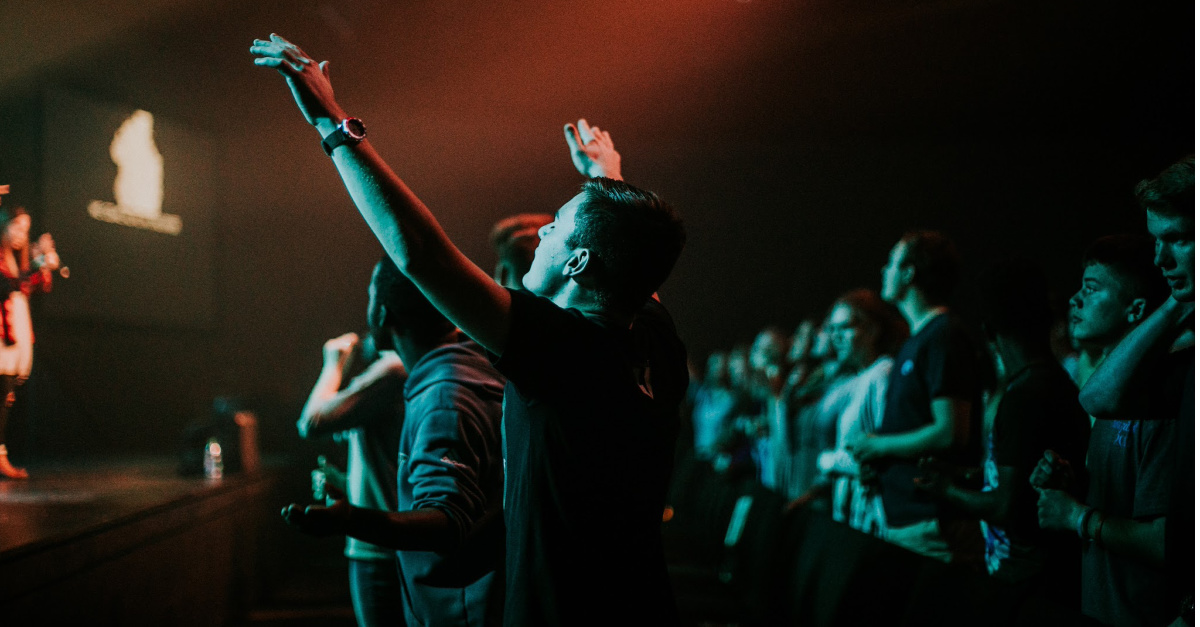
1. A desire for authentic worship.

For many churches, worship has become a spectator sport. Churches will often seek the best singers and most talented musicians and let them lead the way in singing and engaging the congregation in worship. However, worship was never meant to be exercised in this way. It is supposed to be a corporate experience that allows everyone who desires the ability to connect with God intimately. This is the type of authentic worship that Gen Z desires. Worship in this fashion is not so much about the style of music, but the genuine opportunity to connect their heart with the living God.

2. Creativity in worship.

Coupled with the need for authentic worship, there is the need for creative expressions within the worship experience. For many in the Gen Z community, worship is not just reserved for Sunday morning. In addition, there are different ways you can offer your worship to the Lord. You can worship God through dance, spoken word, art, or other creative expressions. Instead of seeing them as inappropriate or separate from the corporate worship service, there is a desire to incorporate them into the service. Many who are more traditional or conservative can sometimes fall into the trap of thinking there is only one way worship can happen, and for them, this is not it. Unfortunately, churches that hold that point of view will not be attractive for those who are in Gen Z.

Photo Credit: Hannah Busing/Unsplash 


3. Embracing technology.

It used to be if you weren’t in the building on Sunday, then you could not be part of the Sunday morning service. If you couldn’t make it, then someone could always bring you the cassette recording of the sermon from that Sunday (most Gen Z’s have no idea what I am talking about). Church is no longer relegated to those inside the sanctuary and Gen Z knows this. They welcome and encourage the use of social media, apps, streaming and other methods to share the gospel with others. For some people, not only is this an important way to share the gospel, but it may also be the best way to reach them.

4. Welcoming doubts and questions.

Somewhere in the church annals (not sure when this happened), having doubts and asking questions became shameful. To ask meant you were not sure of your faith, or maybe not even saved at all. Somehow, we missed the amount of questions the disciples asked Jesus. Gen Z is different. They believe everyone has doubts and questions in their journey with Jesus. The difference is Gen Z is not afraid to ask them out loud and neither should we. For Gen Z, it is necessary for people to express their struggles with faith and theological questions without fear of judgment, condemnation, or being ostracized. Gen Z is correct in this area, and I believe the church should welcome this change wholeheartedly.

Photo Credit: Unsplash/Jae Park 


5. Requiring humble leaders who practice what they preach.

For Gen Z, what you say matters, but how you live matters more (sounds a lot like Jesus to me). With this generation, hypocrisy is simply not acceptable. They want servant leaders whose lives off the platform match what they say on the platform. Sadly, we have seen far too many examples of leaders who say one thing publicly, but live another reality privately. Gen Z rejects that, and we should, too. Gen Z is not looking for perfect leaders, but authentic ones, who are humble enough to admit they struggle too. This makes their leaders humble, approachable, and ones who can identify with the realities they face every day.

6. Engaging with social issues.

There have always been social issues in our society. Unfortunately, in the church, we either reject these issues or we create environments where people can only have one opinion about them. There is no room given for different thoughts on a topic. Gen Z cares about bringing these things to the forefront and welcomes open discussion about them. They see this as part of living out their faith in the culture. Gen Z is not interested in living in a Christian bubble waiting for Jesus to return. They want to get outside the walls of the church and engage those around them with the life found in the gospel of Jesus Christ.

Issues like racial justice, abuse, mental health, the treatment of immigrants, how we treat the poor, and others matter to this generation. By the way, they should because they mattered to Jesus too. Gen Z is not afraid to have these conversations because they see the problem and want to confront it head on. Also, as we described earlier, they are friends and in contact with many people who are dealing with these issues.

Photo Credit: ©SparrowStock 


7. They don’t want bigger churches, but deeper connections.

For Gen Z, especially in a church setting, relationships matter. In the years when the mega-church model became popular, many people could come to church and hide. They could be in the building but never engage with anyone because, many times, no one even knew they were there. When you hear the cry of the heart of the Gen Z Christian, it all goes back to building authentic relationships. This group may welcome smaller groups, which can help build deeper connections. These kinds of relational ties keep them connected to the church and their faith and challenge them to go deeper in their walk with Jesus.

8. The LGBTQ+ challenge.

The LGBTQ+ issue is one the church has been wrestling with for quite some time now. While there is a Biblical position on this issue, in the eyes of Gen Z, this message has often been communicated without grace and without compassion. It is also possible Gen Z may see people in this community differently because many of them are classmates and work colleagues. While this is and will remain a delicate issue because it is more prevalent, I don’t believe Gen Z disagrees with scripture. They are looking for the church to take a different approach to how they address people who identify in this community.

Photo Credit: ©GettyImages/DGLimages 


9. Breaking down denominational walls.

I was having a conversation with a friend recently, and denominations came up. Here is how he defined denominations. “One group having a viewpoint that their understanding of the truth is better than someone else’s.” Gen Z will reject this type of thinking. For Gen Z, denominations don’t matter. If we are all serving and worshipping the same Jesus, then why does it matter what denomination you belong to?     

10. A need for biblical literacy.

For Gen Z, studying the Bible is not just about acquiring knowledge. It is about the practical application of that knowledge and how it translates to their daily lives. It is more than just breaking down the Greek or the Hebrew, but how do you make scripture relevant to your life? If you think about how Jesus taught, he told stories and spoke in ways that the people he was teaching could understand. This is what Gen Z desires. Teaching that goes beyond the surface, that is practical, that is accurate, that gives them a deeper understanding of scripture, and that works to transform their hearts and lives.

11. A personal faith.

Gen Z does not reject tradition, but there must be a connection between the tradition and how it relates to their personal relationship with God. That’s because they want a faith that is expressed publicly, but that flows from a personal relationship. That’s why they may reject tradition if they can’t see the connection. However, when that connection is clear, they will embrace the tradition, but when it is not, then traditions can feel hollow.

As you can see, Gen Z has a lot to say, and with a lot of it, they are correct. With any generation, the desire should be to bridge the gaps because they will be the ones to carry the message of the gospel forward. This means we must pay attention to how we build this bridge. The methods may look different than previous generations, but we must reach the point where we acknowledge that is okay. Do you want young people on fire for Jesus, even if it looks a little different? For me, that is a tradeoff that is absolutely worth it.

Photo Credit: ©iStock/Getty Images Plus/Khanchit Khirisutchalual 

 

Salem News Channel Today

Sponsored Links


September 26 - Phoenix, AZ
Scottsdale Center for the Performing Arts


November 2 - Detroit, MI
Zion Christian Church in Troy


October 6 - Los Angeles, CA
Pasadena Convention Center


November 5 - San Antonio, TX
Norris Centers – The Grand Red Oak Ballroom


October 8 - Sacramento, CA
William Jessup University


November 7 - Tampa, FL
The Palladium at St. Pete College


October 22 - Minneapolis, MN
Crowne Plaza AiRE


November 15 - San Francisco, CA
Fremont Marriott Silicon Valley


October 23 - Philadelphia, PA
Green Valley Country Club


November 16 - Denver, CO
CU South Denver - Formerly Wildlife Experience


November 2 - Chicago, IL
Chicago Westin Northwest in Itasca


November 21 - Cleveland, OH
Holiday Inn Rockside in Independence


Salem Radio Network Speakers

Larry Elder is an American lawyer, writer, and radio and television personality who calls himself the "Sage of South Central" a district of Los Angeles, Larry says his philosophy is to entertain, inform, provoke and to hopefully uplift. His calling card is "we have a country to save" and to him this means returning to the bedrock Constitutional principles of limited government and maximum personal responsibility. Elder's iconoclastic wit and intellectual agility makes him a particularly attractive voice in a nation that seems weary of traditional racial dialogue.” – Los Angeles Times.

Mike Gallagher Mike Gallagher began his broadcasting career in 1978 in Dayton, Ohio. Today, he is one of the most listened-to talk radio show hosts in America, recently having been ranked in the Talkers Magazine “Heavy Hundred” list – the 100 most important talk radio hosts in America. Prior to being launched into national syndication in 1998, Mike hosted the morning show on WABC-AM in New York City. Today, Talkers Magazine reports that his show is heard by over 3.75 million weekly listeners. Besides his radio work, Mike is seen on Fox News Channel as an on-air contributor, frequently appearing on the cable news giant.

Hugh Hewitt is one of the nation’s leading bloggers and a genuine media revolutionary. He brings that expertise, his wit and what The New Yorker magazine calls his “amiable but relentless manner” to his nationally syndicated show each day.

When Dr. Sebastian Gorka was growing up, he listened to talk radio under his pillow with a transistor radio, dreaming that one day he would be behind the microphone. Beginning New Year’s Day 2019, he got his wish. Gorka now hosts America First every weekday afternoon 3 to 6pm ET. Gorka’s unique story works well on the radio. He is national security analyst for the Fox News Channel and author of two books: "Why We Fight" and "Defeating Jihad." His latest book releasing this fall is “War For America’s Soul.” He is uniquely qualified to fight the culture war and stand up for what is great about America, his adopted home country.

Broadcasting from his home station of KRLA in Los Angeles, the Dennis Prager Show is heard across the country. Everything in life – from politics to religion to relationships – is grist for Dennis’ mill. If it’s interesting, if it affects your life, then Dennis will be talking about it – with passion, humor, insight and wisdom.

Sean Hannity is a conservative radio and television host, and one of the original primetime hosts on the Fox News Channel, where he has appeared since 1996. Sean Hannity began his radio career at a college station in California, before moving on to markets in the Southeast and New York. Today, he’s one of the most listened to on-air voices. Hannity’s radio program went into national syndication on September 10, 2001, and airs on more than 500 stations. Talkers Magazine estimates Hannity’s weekly radio audience at 13.5 million. In 1996 he was hired as one of the original hosts on Fox News Channel. As host of several popular Fox programs, Hannity has become the highest-paid news anchor on television.

Michelle Malkin is a mother, wife, blogger, conservative syndicated columnist, longtime cable TV news commentator, and best-selling author of six books. She started her newspaper journalism career at the Los Angeles Daily News in 1992, moved to the Seattle Times in 1995, and has been penning nationally syndicated newspaper columns for Creators Syndicate since 1999. She is founder of conservative Internet start-ups Hot Air and Twitchy.com. Malkin has received numerous awards for her investigative journalism, including the Council on Governmental Ethics Laws (COGEL) national award for outstanding service for the cause of governmental ethics and leadership (1998), the Reed Irvine Accuracy in Media Award for Investigative Journalism (2006), the Heritage Foundation and Franklin Center for Government & Public Integrity's Breitbart Award for Excellence in Journalism (2013), the Center for Immigration Studies' Eugene Katz Award for Excellence in the Coverage of Immigration Award (2016), and the Manhattan Film Festival's Film Heals Award (2018). Married for 26 years and the mother of two teenage children, she lives with her family in Colorado. Follow her at michellemalkin.com. (Photo reprinted with kind permission from Peter Duke Photography.)

Sponsored by:

11 Ways Gen Z Is Redefining the Church

Carbonatix Pre-Player Loader

Audio By Carbonatix

1. A desire for authentic worship.

For many churches, worship has become a spectator sport. Churches will often seek the best singers and most talented musicians and let them lead the way in singing and engaging the congregation in worship. However, worship was never meant to be exercised in this way. It is supposed to be a corporate experience that allows everyone who desires the ability to connect with God intimately. This is the type of authentic worship that Gen Z desires. Worship in this fashion is not so much about the style of music, but the genuine opportunity to connect their heart with the living God.

2. Creativity in worship.

Coupled with the need for authentic worship, there is the need for creative expressions within the worship experience. For many in the Gen Z community, worship is not just reserved for Sunday morning. In addition, there are different ways you can offer your worship to the Lord. You can worship God through dance, spoken word, art, or other creative expressions. Instead of seeing them as inappropriate or separate from the corporate worship service, there is a desire to incorporate them into the service. Many who are more traditional or conservative can sometimes fall into the trap of thinking there is only one way worship can happen, and for them, this is not it. Unfortunately, churches that hold that point of view will not be attractive for those who are in Gen Z.

Photo Credit: Hannah Busing/Unsplash 


3. Embracing technology.

It used to be if you weren’t in the building on Sunday, then you could not be part of the Sunday morning service. If you couldn’t make it, then someone could always bring you the cassette recording of the sermon from that Sunday (most Gen Z’s have no idea what I am talking about). Church is no longer relegated to those inside the sanctuary and Gen Z knows this. They welcome and encourage the use of social media, apps, streaming and other methods to share the gospel with others. For some people, not only is this an important way to share the gospel, but it may also be the best way to reach them.

4. Welcoming doubts and questions.

Somewhere in the church annals (not sure when this happened), having doubts and asking questions became shameful. To ask meant you were not sure of your faith, or maybe not even saved at all. Somehow, we missed the amount of questions the disciples asked Jesus. Gen Z is different. They believe everyone has doubts and questions in their journey with Jesus. The difference is Gen Z is not afraid to ask them out loud and neither should we. For Gen Z, it is necessary for people to express their struggles with faith and theological questions without fear of judgment, condemnation, or being ostracized. Gen Z is correct in this area, and I believe the church should welcome this change wholeheartedly.

Photo Credit: Unsplash/Jae Park 


5. Requiring humble leaders who practice what they preach.

For Gen Z, what you say matters, but how you live matters more (sounds a lot like Jesus to me). With this generation, hypocrisy is simply not acceptable. They want servant leaders whose lives off the platform match what they say on the platform. Sadly, we have seen far too many examples of leaders who say one thing publicly, but live another reality privately. Gen Z rejects that, and we should, too. Gen Z is not looking for perfect leaders, but authentic ones, who are humble enough to admit they struggle too. This makes their leaders humble, approachable, and ones who can identify with the realities they face every day.

6. Engaging with social issues.

There have always been social issues in our society. Unfortunately, in the church, we either reject these issues or we create environments where people can only have one opinion about them. There is no room given for different thoughts on a topic. Gen Z cares about bringing these things to the forefront and welcomes open discussion about them. They see this as part of living out their faith in the culture. Gen Z is not interested in living in a Christian bubble waiting for Jesus to return. They want to get outside the walls of the church and engage those around them with the life found in the gospel of Jesus Christ.

Issues like racial justice, abuse, mental health, the treatment of immigrants, how we treat the poor, and others matter to this generation. By the way, they should because they mattered to Jesus too. Gen Z is not afraid to have these conversations because they see the problem and want to confront it head on. Also, as we described earlier, they are friends and in contact with many people who are dealing with these issues.

Photo Credit: ©SparrowStock 


7. They don’t want bigger churches, but deeper connections.

For Gen Z, especially in a church setting, relationships matter. In the years when the mega-church model became popular, many people could come to church and hide. They could be in the building but never engage with anyone because, many times, no one even knew they were there. When you hear the cry of the heart of the Gen Z Christian, it all goes back to building authentic relationships. This group may welcome smaller groups, which can help build deeper connections. These kinds of relational ties keep them connected to the church and their faith and challenge them to go deeper in their walk with Jesus.

8. The LGBTQ+ challenge.

The LGBTQ+ issue is one the church has been wrestling with for quite some time now. While there is a Biblical position on this issue, in the eyes of Gen Z, this message has often been communicated without grace and without compassion. It is also possible Gen Z may see people in this community differently because many of them are classmates and work colleagues. While this is and will remain a delicate issue because it is more prevalent, I don’t believe Gen Z disagrees with scripture. They are looking for the church to take a different approach to how they address people who identify in this community.

Photo Credit: ©GettyImages/DGLimages 


9. Breaking down denominational walls.

I was having a conversation with a friend recently, and denominations came up. Here is how he defined denominations. “One group having a viewpoint that their understanding of the truth is better than someone else’s.” Gen Z will reject this type of thinking. For Gen Z, denominations don’t matter. If we are all serving and worshipping the same Jesus, then why does it matter what denomination you belong to?     

10. A need for biblical literacy.

For Gen Z, studying the Bible is not just about acquiring knowledge. It is about the practical application of that knowledge and how it translates to their daily lives. It is more than just breaking down the Greek or the Hebrew, but how do you make scripture relevant to your life? If you think about how Jesus taught, he told stories and spoke in ways that the people he was teaching could understand. This is what Gen Z desires. Teaching that goes beyond the surface, that is practical, that is accurate, that gives them a deeper understanding of scripture, and that works to transform their hearts and lives.

11. A personal faith.

Gen Z does not reject tradition, but there must be a connection between the tradition and how it relates to their personal relationship with God. That’s because they want a faith that is expressed publicly, but that flows from a personal relationship. That’s why they may reject tradition if they can’t see the connection. However, when that connection is clear, they will embrace the tradition, but when it is not, then traditions can feel hollow.

As you can see, Gen Z has a lot to say, and with a lot of it, they are correct. With any generation, the desire should be to bridge the gaps because they will be the ones to carry the message of the gospel forward. This means we must pay attention to how we build this bridge. The methods may look different than previous generations, but we must reach the point where we acknowledge that is okay. Do you want young people on fire for Jesus, even if it looks a little different? For me, that is a tradeoff that is absolutely worth it.

Photo Credit: ©iStock/Getty Images Plus/Khanchit Khirisutchalual 

 

Salem News Channel Today

Sponsored Links

On Air & Up Next

See the Full Program Guide