3 Ways Your Church Can Be a Haven for Mental Health

Carbonatix Pre-Player Loader

Audio By Carbonatix

Those who call themselves followers of Jesus live in a strange paradox: we serve a God who lacks nothing, yet we live in a world where so many feel mentally broken. 

As a nonprofit mental health specialist, I get a sobering window into the daily realities of children living in poverty. Mental health is a difficult area to tackle on its own, let alone amidst a daily battle for survival.

As God’s Church is often the first port of call for those who are suffering, we, as His Body, have a unique opportunity: to be a community where people can experience wholeness and well-being. As Proverbs 11:14 says, “Where there is no guidance, a people falls, but in an abundance of counselors there is safety” (ESV). Any local church can become a place of wise, effective counsel — a place to encounter a Savior who loves them and a congregation that suffers and celebrates alongside them. But how?

In our work building mental health curriculums for children in poverty, my Compassion International team and I train global staff and church partners to bring a trauma-informed, strengths-based, and community-owned lens. We believe this approach gives us a unique opportunity to lead young people to still waters — mental spaces of rest and healing.  

Here is how this approach can be incorporated to help any church, in almost any country, become a safe haven for individuals struggling with mental health:

1. Learn the Warning Signs

You don’t need an advanced degree in psychology to be a trusted voice for someone who struggles. You just need to be willing to pay attention, offer encouragement and understand how mental health affects the ways people enter your doors.

Lucia, the director of a Compassion child development center in Honduras, developed a keen eye for mental health warning signs. She took notice when 14-year-old Jose Angel started skipping classes, showing discouragement, and withdrawing from the community. Lucia and her staff visited Jose Angel at home to check in and mentor him, offering words of hope to help him through a hard season of anxiety

“Being a teenager is challenging, especially when growing up in a dangerous community like ours, surrounded by poverty and limitations,” says Lucia. “Depression, anxiety, low self-esteem, academic pressures, and uncertainty about the future are daily struggles.” 

 Armed with a basic understanding of the red flags of mental struggle, Lucia was able to support Jose Angel — and we can do the same. The more we know about the telltale signs to look for, the more we can apply a knowledgeable and compassionate eye toward people who need encouragement. 

Resources from organizations such as Trauma Healing Institute, Spiritual First Aid and Sanctuary Mental Health ( all of which are Compassion partners) provide a great place to start in learning how to come alongside others with care.
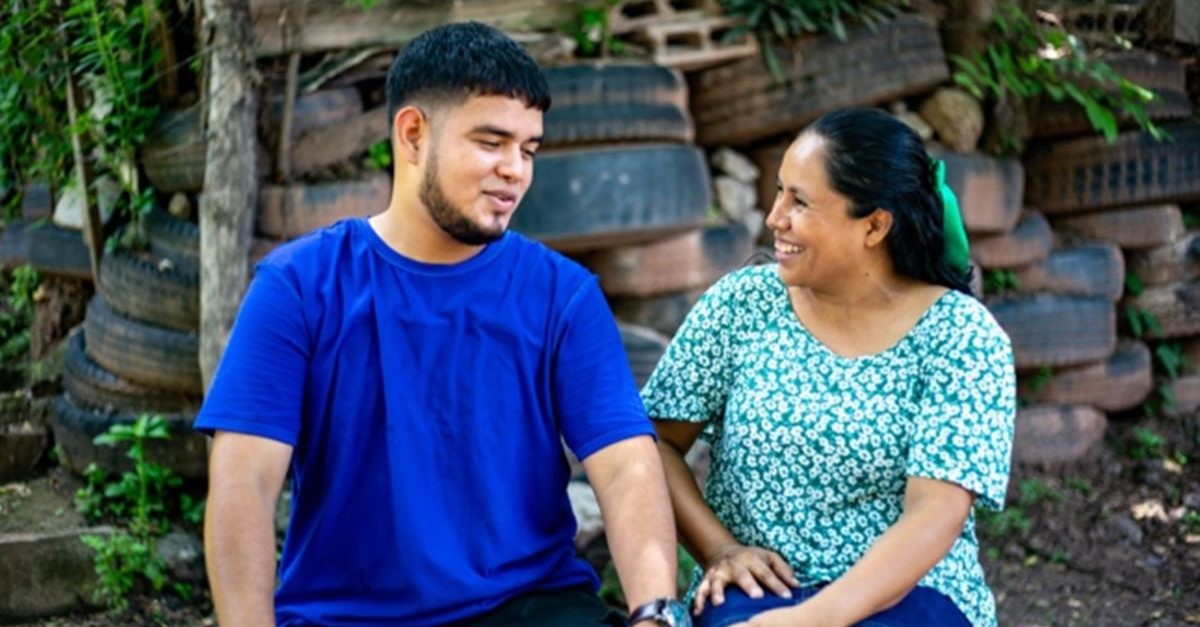
Lucia and Jose Angel Compassion International mental health
Any church can follow the example of Lucia (right), who used an awareness of mental health warning signs to encourage and strengthen Jose Angel (left). Photo Credit: ©Compassion International

2. Call Out the Gifts of Others

Too often, when mental health conditions arise, people are made to feel as if they are deficient and abnormal. Stigmas against mental health diagnoses tempt many followers of Jesus away from seeing themselves or others in their wholeness. A 2022 study by Kintsugi Hope found that 91% of Christians believe mental health is still stigmatized.

While it’s true that we all have areas in which we need to grow, psychological data confirms what many of us know to be true: that we often flourish when we’re reminded of the good gifts God has created in us.

As a clinical counselor, I would often encourage my clients to reframe negative self-talk in ways that acknowledge their gifts. Similarly, in a child development setting, we seek to build a strengths-based mindset into our programming — to remind children that each of them is “fearfully and wonderfully made” (Psalm 139:14).

We don’t need to deny the challenges of a mental health condition to live out the message of Philippians 4:8 — to focus on someone’s lovely, admirable, excellent, or praiseworthy qualities. For example, scientific study and human experience show us that people with ADHD often possess extraordinary creativity, energy, focus, and resilience. Similarly, those with anxiety or depression often display remarkable empathy. The same mind that may be prone to a mental health struggle is the same mind that God can use to unleash extraordinary gifts in his kingdom.

In Colombia, 17-year-old Luis’ gifts were masked by his depression. Years of grief, poverty, and family trauma caused lasting hopelessness as he disengaged from his studies and isolated from his family. After Compassion Center staff identified Luis as one of a few young people who were at risk of suicide, he began one-on-one sessions with a psychologist at the center. 

Gradually, Luis learned that he was not defined by his depression. He learned he had incredible strengths — such as bravery to let his family know when he was struggling, and tenacity to study on the weekend so he could graduate from high school. Most of all, he learned to redirect the beautiful mind God gave him in new and positive ways: “When I have thoughts like quitting school, I stop myself and give myself reasons to continue,” Luis says. 

In our churches, we’re called to encourage others’ giftings as they learn to harness the unique ways God has created their minds. In this, we can help others unleash the full beauty of who God made them to be. 

Luis Compassion International mental health depression
Luis (name changed to protect identity) learned to channel disengagement and depression into bravery and tenacity. Photo Credit: ©Compassion International

3. Keep Context in Mind

One of the things I love most about working for an international organization is that I get a window into the beautiful differences of how people eat, drink, pray and worship. God created each community and person to reflect a different aspect of his nature. I believe we honor God’s nature by addressing mental health in the beautifully unique context of each community. 

That means the ways each church approaches mental health will be different from region to region, city to city, congregation to congregation. And that’s okay. In fact, it’s necessary. 

One example of an effective contextual approach can be seen in Kilifi County, Kenya. Here, a group of young adults formed “Hope for Future,” a peer-led mental health group that tackled locally prevalent issues like substance abuse and depression. As of recently, they had trained 32 mental health ambassadors to ensure that young people at each church in their area had access to support. Neighboring regions have reached out, wanting to replicate the model. 

A continent away, in Honduras, a contextualized “train the trainer” intervention empowered tutors and staff at 70 churches to learn about suicide prevention. In an area where substance abuse and mental health issues are all too common, this intervention helped save the lives of children like Luis (above).

And in the Dominican Republic, where baseball is a favorite sport of many, 500-plus children from Compassion child development centers nationwide came together for a 41-team baseball tournament last July. While this may not sound like a mental health intervention, participation in team sports has myriad mental and physical health benefits — while helping kids learn teamwork, dignity and self-worth. 

You don’t need to be a counselor, psychologist or data scientist to provide support right where you are. Simply being present in your church gives you an irreplaceable lens into what your community needs.

Consider joining with your small group, missions committee, or Bible study group to discuss what you notice about the mental health of your community. If you have kids or participate in youth ministry, ask the students you serve for their perspectives on what they need in their mental health journeys. 

If you work in the church, consider gathering your staff to compile a referral list of trusted mental health providers in your community. Most likely, there are multiple mental health professionals already present in your congregation. For members of your church who come to you seeking urgent help or prayer, a list of local providers may be the most important sheet of paper they’ll ever receive. 

By bringing a contextual, personal approach to the ways we speak, pray, care, and show up for others, we become part of God’s restoration project in our own corner of the world.
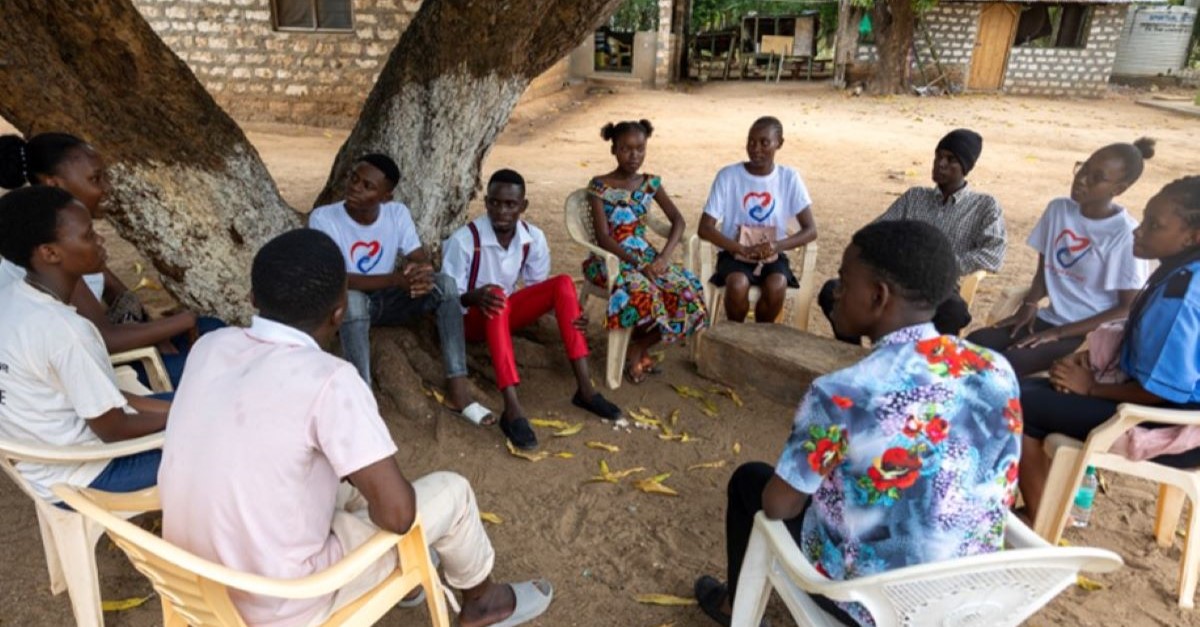
peer-led group in Kenya Compassion International mental health
This peer-led group in Kenya, which came together to address locally relevant mental health issues, provides an example of how any church can apply a community-owned approach to mental health. Photo Credit: ©Compassion International

Jesus didn’t commission the Church to prevent mental health struggles from ever arising. Instead, he taught us to be vessels of healing right where we are. By being trauma-informed, strengths-based, and community-owned, we can help our churches become places of healing and safety instead of shame and judgment. If we do this well, those who need hope will “see [our] good deeds and glorify God” (Matthew 5:16) — experiencing through us what the surpassing love of the Father truly looks like. 

Photo Credit: ©iStock/Getty Images Plus/artplus  

Bryan Gouge, Ph.D., LPC, works to support Compassion International’s mental health programming and provides strategic and technical support to all of Compassion’s National Offices and church partners. With over 15 years of experience working at the nexus point between community and clinical mental health and international development, he holds a master’s degree in Clinical Psychology and a doctorate in Trauma.


 

Salem News Channel Today

Sponsored Links


September 26 - Phoenix, AZ
Scottsdale Center for the Performing Arts


November 2 - Detroit, MI
Zion Christian Church in Troy


October 6 - Los Angeles, CA
Pasadena Convention Center


November 5 - San Antonio, TX
Norris Centers – The Grand Red Oak Ballroom


October 8 - Sacramento, CA
William Jessup University


November 7 - Tampa, FL
The Palladium at St. Pete College


October 22 - Minneapolis, MN
Crowne Plaza AiRE


November 15 - San Francisco, CA
Fremont Marriott Silicon Valley


October 23 - Philadelphia, PA
Green Valley Country Club


November 16 - Denver, CO
CU South Denver - Formerly Wildlife Experience


November 2 - Chicago, IL
Chicago Westin Northwest in Itasca


November 21 - Cleveland, OH
Holiday Inn Rockside in Independence


Salem Radio Network Speakers

Larry Elder is an American lawyer, writer, and radio and television personality who calls himself the "Sage of South Central" a district of Los Angeles, Larry says his philosophy is to entertain, inform, provoke and to hopefully uplift. His calling card is "we have a country to save" and to him this means returning to the bedrock Constitutional principles of limited government and maximum personal responsibility. Elder's iconoclastic wit and intellectual agility makes him a particularly attractive voice in a nation that seems weary of traditional racial dialogue.” – Los Angeles Times.

Mike Gallagher Mike Gallagher began his broadcasting career in 1978 in Dayton, Ohio. Today, he is one of the most listened-to talk radio show hosts in America, recently having been ranked in the Talkers Magazine “Heavy Hundred” list – the 100 most important talk radio hosts in America. Prior to being launched into national syndication in 1998, Mike hosted the morning show on WABC-AM in New York City. Today, Talkers Magazine reports that his show is heard by over 3.75 million weekly listeners. Besides his radio work, Mike is seen on Fox News Channel as an on-air contributor, frequently appearing on the cable news giant.

Hugh Hewitt is one of the nation’s leading bloggers and a genuine media revolutionary. He brings that expertise, his wit and what The New Yorker magazine calls his “amiable but relentless manner” to his nationally syndicated show each day.

When Dr. Sebastian Gorka was growing up, he listened to talk radio under his pillow with a transistor radio, dreaming that one day he would be behind the microphone. Beginning New Year’s Day 2019, he got his wish. Gorka now hosts America First every weekday afternoon 3 to 6pm ET. Gorka’s unique story works well on the radio. He is national security analyst for the Fox News Channel and author of two books: "Why We Fight" and "Defeating Jihad." His latest book releasing this fall is “War For America’s Soul.” He is uniquely qualified to fight the culture war and stand up for what is great about America, his adopted home country.

Broadcasting from his home station of KRLA in Los Angeles, the Dennis Prager Show is heard across the country. Everything in life – from politics to religion to relationships – is grist for Dennis’ mill. If it’s interesting, if it affects your life, then Dennis will be talking about it – with passion, humor, insight and wisdom.

Sean Hannity is a conservative radio and television host, and one of the original primetime hosts on the Fox News Channel, where he has appeared since 1996. Sean Hannity began his radio career at a college station in California, before moving on to markets in the Southeast and New York. Today, he’s one of the most listened to on-air voices. Hannity’s radio program went into national syndication on September 10, 2001, and airs on more than 500 stations. Talkers Magazine estimates Hannity’s weekly radio audience at 13.5 million. In 1996 he was hired as one of the original hosts on Fox News Channel. As host of several popular Fox programs, Hannity has become the highest-paid news anchor on television.

Michelle Malkin is a mother, wife, blogger, conservative syndicated columnist, longtime cable TV news commentator, and best-selling author of six books. She started her newspaper journalism career at the Los Angeles Daily News in 1992, moved to the Seattle Times in 1995, and has been penning nationally syndicated newspaper columns for Creators Syndicate since 1999. She is founder of conservative Internet start-ups Hot Air and Twitchy.com. Malkin has received numerous awards for her investigative journalism, including the Council on Governmental Ethics Laws (COGEL) national award for outstanding service for the cause of governmental ethics and leadership (1998), the Reed Irvine Accuracy in Media Award for Investigative Journalism (2006), the Heritage Foundation and Franklin Center for Government & Public Integrity's Breitbart Award for Excellence in Journalism (2013), the Center for Immigration Studies' Eugene Katz Award for Excellence in the Coverage of Immigration Award (2016), and the Manhattan Film Festival's Film Heals Award (2018). Married for 26 years and the mother of two teenage children, she lives with her family in Colorado. Follow her at michellemalkin.com. (Photo reprinted with kind permission from Peter Duke Photography.)

Sponsored by:

3 Ways Your Church Can Be a Haven for Mental Health

Carbonatix Pre-Player Loader

Audio By Carbonatix

Those who call themselves followers of Jesus live in a strange paradox: we serve a God who lacks nothing, yet we live in a world where so many feel mentally broken. 

As a nonprofit mental health specialist, I get a sobering window into the daily realities of children living in poverty. Mental health is a difficult area to tackle on its own, let alone amidst a daily battle for survival.

As God’s Church is often the first port of call for those who are suffering, we, as His Body, have a unique opportunity: to be a community where people can experience wholeness and well-being. As Proverbs 11:14 says, “Where there is no guidance, a people falls, but in an abundance of counselors there is safety” (ESV). Any local church can become a place of wise, effective counsel — a place to encounter a Savior who loves them and a congregation that suffers and celebrates alongside them. But how?

In our work building mental health curriculums for children in poverty, my Compassion International team and I train global staff and church partners to bring a trauma-informed, strengths-based, and community-owned lens. We believe this approach gives us a unique opportunity to lead young people to still waters — mental spaces of rest and healing.  

Here is how this approach can be incorporated to help any church, in almost any country, become a safe haven for individuals struggling with mental health:

1. Learn the Warning Signs

You don’t need an advanced degree in psychology to be a trusted voice for someone who struggles. You just need to be willing to pay attention, offer encouragement and understand how mental health affects the ways people enter your doors.

Lucia, the director of a Compassion child development center in Honduras, developed a keen eye for mental health warning signs. She took notice when 14-year-old Jose Angel started skipping classes, showing discouragement, and withdrawing from the community. Lucia and her staff visited Jose Angel at home to check in and mentor him, offering words of hope to help him through a hard season of anxiety

“Being a teenager is challenging, especially when growing up in a dangerous community like ours, surrounded by poverty and limitations,” says Lucia. “Depression, anxiety, low self-esteem, academic pressures, and uncertainty about the future are daily struggles.” 

 Armed with a basic understanding of the red flags of mental struggle, Lucia was able to support Jose Angel — and we can do the same. The more we know about the telltale signs to look for, the more we can apply a knowledgeable and compassionate eye toward people who need encouragement. 

Resources from organizations such as Trauma Healing Institute, Spiritual First Aid and Sanctuary Mental Health ( all of which are Compassion partners) provide a great place to start in learning how to come alongside others with care.

Lucia and Jose Angel Compassion International mental health
Any church can follow the example of Lucia (right), who used an awareness of mental health warning signs to encourage and strengthen Jose Angel (left). Photo Credit: ©Compassion International

2. Call Out the Gifts of Others

Too often, when mental health conditions arise, people are made to feel as if they are deficient and abnormal. Stigmas against mental health diagnoses tempt many followers of Jesus away from seeing themselves or others in their wholeness. A 2022 study by Kintsugi Hope found that 91% of Christians believe mental health is still stigmatized.

While it’s true that we all have areas in which we need to grow, psychological data confirms what many of us know to be true: that we often flourish when we’re reminded of the good gifts God has created in us.

As a clinical counselor, I would often encourage my clients to reframe negative self-talk in ways that acknowledge their gifts. Similarly, in a child development setting, we seek to build a strengths-based mindset into our programming — to remind children that each of them is “fearfully and wonderfully made” (Psalm 139:14).

We don’t need to deny the challenges of a mental health condition to live out the message of Philippians 4:8 — to focus on someone’s lovely, admirable, excellent, or praiseworthy qualities. For example, scientific study and human experience show us that people with ADHD often possess extraordinary creativity, energy, focus, and resilience. Similarly, those with anxiety or depression often display remarkable empathy. The same mind that may be prone to a mental health struggle is the same mind that God can use to unleash extraordinary gifts in his kingdom.

In Colombia, 17-year-old Luis’ gifts were masked by his depression. Years of grief, poverty, and family trauma caused lasting hopelessness as he disengaged from his studies and isolated from his family. After Compassion Center staff identified Luis as one of a few young people who were at risk of suicide, he began one-on-one sessions with a psychologist at the center. 

Gradually, Luis learned that he was not defined by his depression. He learned he had incredible strengths — such as bravery to let his family know when he was struggling, and tenacity to study on the weekend so he could graduate from high school. Most of all, he learned to redirect the beautiful mind God gave him in new and positive ways: “When I have thoughts like quitting school, I stop myself and give myself reasons to continue,” Luis says. 

In our churches, we’re called to encourage others’ giftings as they learn to harness the unique ways God has created their minds. In this, we can help others unleash the full beauty of who God made them to be. 

Luis Compassion International mental health depression
Luis (name changed to protect identity) learned to channel disengagement and depression into bravery and tenacity. Photo Credit: ©Compassion International

3. Keep Context in Mind

One of the things I love most about working for an international organization is that I get a window into the beautiful differences of how people eat, drink, pray and worship. God created each community and person to reflect a different aspect of his nature. I believe we honor God’s nature by addressing mental health in the beautifully unique context of each community. 

That means the ways each church approaches mental health will be different from region to region, city to city, congregation to congregation. And that’s okay. In fact, it’s necessary. 

One example of an effective contextual approach can be seen in Kilifi County, Kenya. Here, a group of young adults formed “Hope for Future,” a peer-led mental health group that tackled locally prevalent issues like substance abuse and depression. As of recently, they had trained 32 mental health ambassadors to ensure that young people at each church in their area had access to support. Neighboring regions have reached out, wanting to replicate the model. 

A continent away, in Honduras, a contextualized “train the trainer” intervention empowered tutors and staff at 70 churches to learn about suicide prevention. In an area where substance abuse and mental health issues are all too common, this intervention helped save the lives of children like Luis (above).

And in the Dominican Republic, where baseball is a favorite sport of many, 500-plus children from Compassion child development centers nationwide came together for a 41-team baseball tournament last July. While this may not sound like a mental health intervention, participation in team sports has myriad mental and physical health benefits — while helping kids learn teamwork, dignity and self-worth. 

You don’t need to be a counselor, psychologist or data scientist to provide support right where you are. Simply being present in your church gives you an irreplaceable lens into what your community needs.

Consider joining with your small group, missions committee, or Bible study group to discuss what you notice about the mental health of your community. If you have kids or participate in youth ministry, ask the students you serve for their perspectives on what they need in their mental health journeys. 

If you work in the church, consider gathering your staff to compile a referral list of trusted mental health providers in your community. Most likely, there are multiple mental health professionals already present in your congregation. For members of your church who come to you seeking urgent help or prayer, a list of local providers may be the most important sheet of paper they’ll ever receive. 

By bringing a contextual, personal approach to the ways we speak, pray, care, and show up for others, we become part of God’s restoration project in our own corner of the world.

peer-led group in Kenya Compassion International mental health
This peer-led group in Kenya, which came together to address locally relevant mental health issues, provides an example of how any church can apply a community-owned approach to mental health. Photo Credit: ©Compassion International

Jesus didn’t commission the Church to prevent mental health struggles from ever arising. Instead, he taught us to be vessels of healing right where we are. By being trauma-informed, strengths-based, and community-owned, we can help our churches become places of healing and safety instead of shame and judgment. If we do this well, those who need hope will “see [our] good deeds and glorify God” (Matthew 5:16) — experiencing through us what the surpassing love of the Father truly looks like. 

Photo Credit: ©iStock/Getty Images Plus/artplus  

Bryan Gouge, Ph.D., LPC, works to support Compassion International’s mental health programming and provides strategic and technical support to all of Compassion’s National Offices and church partners. With over 15 years of experience working at the nexus point between community and clinical mental health and international development, he holds a master’s degree in Clinical Psychology and a doctorate in Trauma.

 

Salem News Channel Today

Sponsored Links

On Air & Up Next

See the Full Program Guide