Why Do So Many Megachurches Seem Corrupt?

Carbonatix Pre-Player Loader

Audio By Carbonatix

Brought to you by Christianity.com

Megachurches have become a lightning rod for criticism in recent years, and let’s be honest, some of that criticism is entirely warranted. To many people, these churches seem less like places of worship and more like corporate enterprises with big budgets, flashy productions, and, in some cases, pastors whose families dominate the payroll. It’s easy to see why the question arises: Are megachurches corrupt? It’s a fair question, and one that deserves a thoughtful answer. But before we jump to conclusions, we need to take a deeper look beyond the surface, because it is there you will find the answer to this question.

What Is a Megachurch? How Do You Define It?

A megachurch is defined as a church that has a congregation of more than 2,000 members or attendees. Less than one percent of the churches in America meet that criteria. The average church has less than 100 members and close to about 60 show up on a weekly basis. While megachurches may be more well-known and can potentially reach more people when compared to all the churches in America, only a small number of Americans attend a megachurch.

One reason megachurches grow is because there is a broad appeal and usually something they do well. It could be the music, the preaching, or the programs that cause people to gravitate to these churches. However, these things alone are not a reason to label a megachurch as bad or even corrupt. When people look for churches, they usually look for something that appeals to them. They typically want a place where they can have community, and if they have a family, then they want their entire family to fit in. Enter the megachurch. Because they have more resources, there is a higher likelihood they will meet those desires.

Why Do Some People Question the Integrity of Megachurches?

I have been a member of three megachurches in my life. The largest church I ever attended had about 10,000 members. Because I served in ministry in all of them, I can tell you that some of the concerns people have are valid. Whether it’s the perception that it is all about greed and money, the senior pastor who has no real accountability, or the star-like celebrity treatment of the pastor, these things happen. While I can’t speak for all megachurches, I have seen some of these issues arise in two of the megachurches where I have been a member.

The challenge with many of these churches is that they are often personality-driven, and the senior pastor often has the last word on everything. These churches often lack accountability and are more prone to corruption. I am not saying the pastors of these churches set out to do this, but when you have power and authority with no accountability, then the potential for pride, corruption, or abuse of that power increases substantially.

Another common concern is whether there is too much focus on entertainment and not enough on genuine spiritual growth. Honestly, some megachurches are only interested in counting numbers—the number of people coming through the door and the number of dollars they bring with them. Again, this does not apply to all megachurches.

When a church is this large, you can feel disconnected and wonder if you can experience genuine spiritual growth. For this, you must take some accountability because your spiritual growth is not solely dependent on the church. They should encourage you to grow in your walk with Jesus and even provide resources and opportunities outside the Sunday service to help you. If they have provided those opportunities, then you need to seek them out. After all, you are ultimately responsible for your relationship with Jesus, and you can’t expect the church to do everything for you.

It can be tempting to judge the many based on the actions of a few. Over the years, we have seen pastors of megachurches fall into sinful scandals. When you see this, you may conclude all megachurches are corrupt. Honestly, this is not necessarily a failure of the church, but a failure of the individual leader. While there could be measures in place to help, the decision to sin falls on the character of the individual and is not necessarily a byproduct of the megachurch. Sinful scandals happen in churches of all sizes, but since megachurches are more visible, and get more attention, then it seems to happen in those to a higher degree, even though that is not true.

Does the Bible Warn against Large Churches?

The command to build a big church cannot be found anywhere in the Bible. This does not mean having a megachurch is wrong, it just means that should not be the mission of the church. Too much focus on building the population of the church can lead you to making poor decisions because you sacrifice quality in pursuit of quantity. Seeking to grow the number of people who attend and seeking to help people grow deeper in their walk with Jesus is not the same goal. The decisions you would make around each of those objectives are vastly different.  

While most pastors I know want their churches to grow, it’s what you focus on to achieve that growth that matters. Rather than seeking to grow the population of the church, pastors should seek to grow the people of the church. When you do that, then it is possible you will experience population growth.

An excellent model to consider is what happened in the early church. Acts 2 tells us that the early believers committed themselves to the word, to prayer, to fellowship, to caring for each other, and to building community. When they did this, the Lord added to their number daily. That's why genuinely caring about people and their spiritual growth is the best way to grow your church. When people know and feel that, they will come back. The challenge of the megachurch is making your church feel small enough that those who attend can feel that genuine care for them and their development in the Lord.

Potential Pitfalls of Megachurches

One huge pitfall I have seen in megachurches is accountability. Before you think I am just talking about leadership, know that this goes both ways. When a church is big, it is easy for you to slip in and out and never engage with anyone. You can do what you want and still come to church like everything is okay. You can be part of a church and live with no accountability. Again, this can happen in a small church too, but it is a little harder to hide.

The accountability issue can also affect leadership, unless there is a real accountability structure in place. In two of the megachurches I attended, there was no accountability structure and the pastor basically could do what he wanted. While on the surface everything looked wonderful in these churches, there were many hurt people who got overlooked or pushed aside. Because there was no accountability, the pastor had the final say on who was hired or fired, how the money that came into the church was spent, and basically every decision that needed to be made. There was no transparency, and no one knew how or why he made these decisions. The pastor determined this was what he wanted, and that is what he did. No one could question him on it.

Again, I am not trying to lump all megachurches together and say all megachurches are corrupt or that they even operate in this manner. However, being part of a megachurch that has accountability and ones that don’t, I have seen that there is an incredible difference in the way decisions are made. If you attend one or are thinking of attending a megachurch, then look for what level of accountability exists in the leadership structure. If it does not exist, that should be a warning sign.

How Can Megachurches Stay True to Biblical Principles?

If a megachurch, or any church for that matter, wants to stay true to Biblical principles, then they will focus on the structure of the church. There are three things I look for as a basic indicator that this church has a solid foundation.

1. Transparency - This is critical, especially pertaining to people giving money and how they make decisions. When people give money to the church, they deserve to know how much is given and where it goes. I know we put trust in our pastors, but if the pastor is doing the right thing with the money, there should be no reason to not share that with the members of the church. This is not only good practice, but it builds trust among those who give.   

2. Accountability - Anyone who has unchecked power will most likely abuse it at some point. This does not mean they are going to sin, but they may do things because they can, even if it is not in the best interest of the church. Having a structure of accountability helps people stay grounded and where they don’t just move according to their own whims.

3. Servant Leadership - Many times in megachurches, pastors get treated as if they are celebrities, and some churches feed into it. The pastor gets their own parking spot, along with a special entrance that is separate from everyone else. Security may surround them, and in some churches, unless you are part of the “in” crowd, you will never speak to the pastor. This goes against the heart of Jesus. Jesus came to serve people, and he never rejected the crowd or prevented people from coming near to him. He was there to serve them, not the other way around. All pastors should take note of that.

How Should Christians Approach the Issue of Megachurches?

When you think about a megachurch it’s easy to think all megachurches are corrupt. However, it’s just not true. Megachurches have their issues, but all churches have issues. That’s why size can matter, but it should not be the number one factor. The mission, the doctrine, the outreach, the love, the commitment to the gospel and discipleship, the heart and humility of the leaders, and the community of the church are weightier factors.

So treat the megachurch like every other church and give them a fair chance. Before you make a judgment or offer an opinion, see what the church is about. I can tell you now it won’t be perfect, but neither is any other church. By the way, if you find the church that is perfect, then don’t join that church because you are going to mess it up.

Related Resource: Shrinking the Integrity Gap: Helping Leaders Live Out What They Preach

There’s an old quote that still rings true today, “More than 70% of leaders do not finish well.” Unfortunately, we so often see those with big followings, platforms, and pedestals fall or stumble due to something being done in private. If you're a leader in your church or a friend to a leader, this is an episode of The Built Different Podcast that you do not want to miss. If you like what you hear, be sure to subscribe to The Built Different Podcast on Apple, Spotify or YouTube so you never miss an episode!

Photo credit: ©GettyImages/SplashofPhotography
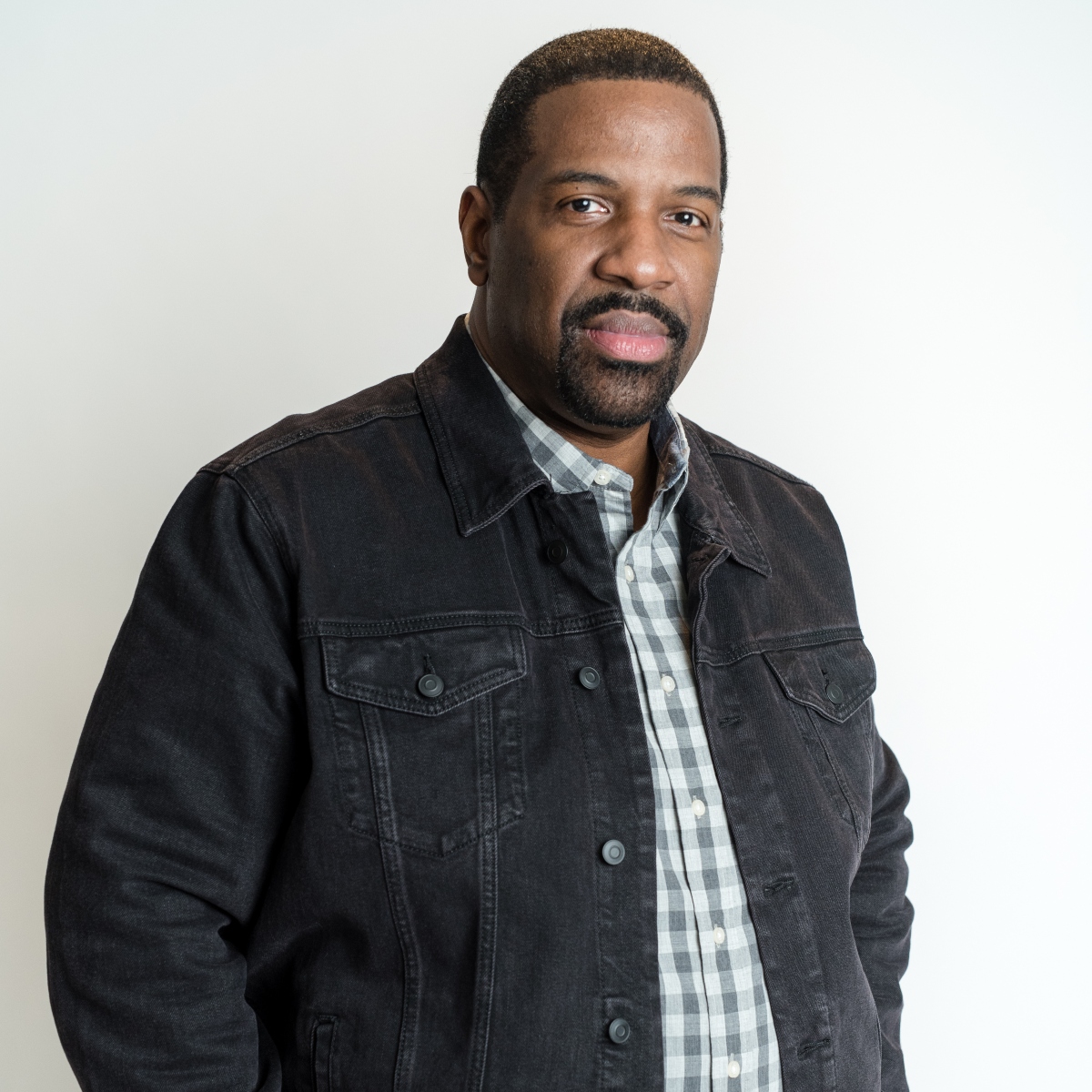
Clarence Haynes 1200x1200Clarence L. Haynes Jr. is a dynamic speaker, Bible teacher, and co-founder of The Bible Study Club, dedicated to helping people live with purpose and clarity. In addition to his ministry work, Clarence has spent the last 13 years as a trusted financial educator, guiding thousands of people across the country—including employees at many Fortune 500 companies—toward lasting financial wellness. His unique ability to blend practical wisdom with spiritual insight equips people to thrive in every area of life.

He is the author of The Pursuit of Purpose, which helps readers understand how God leads them into his will, and the author of The Pursuit of Victory: How To Conquer Your Greatest Challenges and Win In Your Christian Life. Clarence is also committed to helping 10,000 people learn how to study the Bible and has released his first course, Bible Study Basics, to achieve that goal. To learn more about his ministry and resources, please visit clarencehaynes.com.


This article originally appeared on Christianity.com. For more faith-building resources, visit Christianity.com. Christianity.com
 

Salem News Channel Today

Sponsored Links


September 26 - Phoenix, AZ
Scottsdale Center for the Performing Arts


November 2 - Detroit, MI
Zion Christian Church in Troy


October 6 - Los Angeles, CA
Pasadena Convention Center


November 5 - San Antonio, TX
Norris Centers – The Grand Red Oak Ballroom


October 8 - Sacramento, CA
William Jessup University


November 7 - Tampa, FL
The Palladium at St. Pete College


October 22 - Minneapolis, MN
Crowne Plaza AiRE


November 15 - San Francisco, CA
Fremont Marriott Silicon Valley


October 23 - Philadelphia, PA
Green Valley Country Club


November 16 - Denver, CO
CU South Denver - Formerly Wildlife Experience


November 2 - Chicago, IL
Chicago Westin Northwest in Itasca


November 21 - Cleveland, OH
Holiday Inn Rockside in Independence


Salem Radio Network Speakers

Larry Elder is an American lawyer, writer, and radio and television personality who calls himself the "Sage of South Central" a district of Los Angeles, Larry says his philosophy is to entertain, inform, provoke and to hopefully uplift. His calling card is "we have a country to save" and to him this means returning to the bedrock Constitutional principles of limited government and maximum personal responsibility. Elder's iconoclastic wit and intellectual agility makes him a particularly attractive voice in a nation that seems weary of traditional racial dialogue.” – Los Angeles Times.

Mike Gallagher Mike Gallagher began his broadcasting career in 1978 in Dayton, Ohio. Today, he is one of the most listened-to talk radio show hosts in America, recently having been ranked in the Talkers Magazine “Heavy Hundred” list – the 100 most important talk radio hosts in America. Prior to being launched into national syndication in 1998, Mike hosted the morning show on WABC-AM in New York City. Today, Talkers Magazine reports that his show is heard by over 3.75 million weekly listeners. Besides his radio work, Mike is seen on Fox News Channel as an on-air contributor, frequently appearing on the cable news giant.

Hugh Hewitt is one of the nation’s leading bloggers and a genuine media revolutionary. He brings that expertise, his wit and what The New Yorker magazine calls his “amiable but relentless manner” to his nationally syndicated show each day.

When Dr. Sebastian Gorka was growing up, he listened to talk radio under his pillow with a transistor radio, dreaming that one day he would be behind the microphone. Beginning New Year’s Day 2019, he got his wish. Gorka now hosts America First every weekday afternoon 3 to 6pm ET. Gorka’s unique story works well on the radio. He is national security analyst for the Fox News Channel and author of two books: "Why We Fight" and "Defeating Jihad." His latest book releasing this fall is “War For America’s Soul.” He is uniquely qualified to fight the culture war and stand up for what is great about America, his adopted home country.

Broadcasting from his home station of KRLA in Los Angeles, the Dennis Prager Show is heard across the country. Everything in life – from politics to religion to relationships – is grist for Dennis’ mill. If it’s interesting, if it affects your life, then Dennis will be talking about it – with passion, humor, insight and wisdom.

Sean Hannity is a conservative radio and television host, and one of the original primetime hosts on the Fox News Channel, where he has appeared since 1996. Sean Hannity began his radio career at a college station in California, before moving on to markets in the Southeast and New York. Today, he’s one of the most listened to on-air voices. Hannity’s radio program went into national syndication on September 10, 2001, and airs on more than 500 stations. Talkers Magazine estimates Hannity’s weekly radio audience at 13.5 million. In 1996 he was hired as one of the original hosts on Fox News Channel. As host of several popular Fox programs, Hannity has become the highest-paid news anchor on television.

Michelle Malkin is a mother, wife, blogger, conservative syndicated columnist, longtime cable TV news commentator, and best-selling author of six books. She started her newspaper journalism career at the Los Angeles Daily News in 1992, moved to the Seattle Times in 1995, and has been penning nationally syndicated newspaper columns for Creators Syndicate since 1999. She is founder of conservative Internet start-ups Hot Air and Twitchy.com. Malkin has received numerous awards for her investigative journalism, including the Council on Governmental Ethics Laws (COGEL) national award for outstanding service for the cause of governmental ethics and leadership (1998), the Reed Irvine Accuracy in Media Award for Investigative Journalism (2006), the Heritage Foundation and Franklin Center for Government & Public Integrity's Breitbart Award for Excellence in Journalism (2013), the Center for Immigration Studies' Eugene Katz Award for Excellence in the Coverage of Immigration Award (2016), and the Manhattan Film Festival's Film Heals Award (2018). Married for 26 years and the mother of two teenage children, she lives with her family in Colorado. Follow her at michellemalkin.com. (Photo reprinted with kind permission from Peter Duke Photography.)

Sponsored by:

Why Do So Many Megachurches Seem Corrupt?

Carbonatix Pre-Player Loader

Audio By Carbonatix

Brought to you by Christianity.com

Megachurches have become a lightning rod for criticism in recent years, and let’s be honest, some of that criticism is entirely warranted. To many people, these churches seem less like places of worship and more like corporate enterprises with big budgets, flashy productions, and, in some cases, pastors whose families dominate the payroll. It’s easy to see why the question arises: Are megachurches corrupt? It’s a fair question, and one that deserves a thoughtful answer. But before we jump to conclusions, we need to take a deeper look beyond the surface, because it is there you will find the answer to this question.

What Is a Megachurch? How Do You Define It?

A megachurch is defined as a church that has a congregation of more than 2,000 members or attendees. Less than one percent of the churches in America meet that criteria. The average church has less than 100 members and close to about 60 show up on a weekly basis. While megachurches may be more well-known and can potentially reach more people when compared to all the churches in America, only a small number of Americans attend a megachurch.

One reason megachurches grow is because there is a broad appeal and usually something they do well. It could be the music, the preaching, or the programs that cause people to gravitate to these churches. However, these things alone are not a reason to label a megachurch as bad or even corrupt. When people look for churches, they usually look for something that appeals to them. They typically want a place where they can have community, and if they have a family, then they want their entire family to fit in. Enter the megachurch. Because they have more resources, there is a higher likelihood they will meet those desires.

Why Do Some People Question the Integrity of Megachurches?

I have been a member of three megachurches in my life. The largest church I ever attended had about 10,000 members. Because I served in ministry in all of them, I can tell you that some of the concerns people have are valid. Whether it’s the perception that it is all about greed and money, the senior pastor who has no real accountability, or the star-like celebrity treatment of the pastor, these things happen. While I can’t speak for all megachurches, I have seen some of these issues arise in two of the megachurches where I have been a member.

The challenge with many of these churches is that they are often personality-driven, and the senior pastor often has the last word on everything. These churches often lack accountability and are more prone to corruption. I am not saying the pastors of these churches set out to do this, but when you have power and authority with no accountability, then the potential for pride, corruption, or abuse of that power increases substantially.

Another common concern is whether there is too much focus on entertainment and not enough on genuine spiritual growth. Honestly, some megachurches are only interested in counting numbers—the number of people coming through the door and the number of dollars they bring with them. Again, this does not apply to all megachurches.

When a church is this large, you can feel disconnected and wonder if you can experience genuine spiritual growth. For this, you must take some accountability because your spiritual growth is not solely dependent on the church. They should encourage you to grow in your walk with Jesus and even provide resources and opportunities outside the Sunday service to help you. If they have provided those opportunities, then you need to seek them out. After all, you are ultimately responsible for your relationship with Jesus, and you can’t expect the church to do everything for you.

It can be tempting to judge the many based on the actions of a few. Over the years, we have seen pastors of megachurches fall into sinful scandals. When you see this, you may conclude all megachurches are corrupt. Honestly, this is not necessarily a failure of the church, but a failure of the individual leader. While there could be measures in place to help, the decision to sin falls on the character of the individual and is not necessarily a byproduct of the megachurch. Sinful scandals happen in churches of all sizes, but since megachurches are more visible, and get more attention, then it seems to happen in those to a higher degree, even though that is not true.

Does the Bible Warn against Large Churches?

The command to build a big church cannot be found anywhere in the Bible. This does not mean having a megachurch is wrong, it just means that should not be the mission of the church. Too much focus on building the population of the church can lead you to making poor decisions because you sacrifice quality in pursuit of quantity. Seeking to grow the number of people who attend and seeking to help people grow deeper in their walk with Jesus is not the same goal. The decisions you would make around each of those objectives are vastly different.  

While most pastors I know want their churches to grow, it’s what you focus on to achieve that growth that matters. Rather than seeking to grow the population of the church, pastors should seek to grow the people of the church. When you do that, then it is possible you will experience population growth.

An excellent model to consider is what happened in the early church. Acts 2 tells us that the early believers committed themselves to the word, to prayer, to fellowship, to caring for each other, and to building community. When they did this, the Lord added to their number daily. That's why genuinely caring about people and their spiritual growth is the best way to grow your church. When people know and feel that, they will come back. The challenge of the megachurch is making your church feel small enough that those who attend can feel that genuine care for them and their development in the Lord.

Potential Pitfalls of Megachurches

One huge pitfall I have seen in megachurches is accountability. Before you think I am just talking about leadership, know that this goes both ways. When a church is big, it is easy for you to slip in and out and never engage with anyone. You can do what you want and still come to church like everything is okay. You can be part of a church and live with no accountability. Again, this can happen in a small church too, but it is a little harder to hide.

The accountability issue can also affect leadership, unless there is a real accountability structure in place. In two of the megachurches I attended, there was no accountability structure and the pastor basically could do what he wanted. While on the surface everything looked wonderful in these churches, there were many hurt people who got overlooked or pushed aside. Because there was no accountability, the pastor had the final say on who was hired or fired, how the money that came into the church was spent, and basically every decision that needed to be made. There was no transparency, and no one knew how or why he made these decisions. The pastor determined this was what he wanted, and that is what he did. No one could question him on it.

Again, I am not trying to lump all megachurches together and say all megachurches are corrupt or that they even operate in this manner. However, being part of a megachurch that has accountability and ones that don’t, I have seen that there is an incredible difference in the way decisions are made. If you attend one or are thinking of attending a megachurch, then look for what level of accountability exists in the leadership structure. If it does not exist, that should be a warning sign.

How Can Megachurches Stay True to Biblical Principles?

If a megachurch, or any church for that matter, wants to stay true to Biblical principles, then they will focus on the structure of the church. There are three things I look for as a basic indicator that this church has a solid foundation.

1. Transparency - This is critical, especially pertaining to people giving money and how they make decisions. When people give money to the church, they deserve to know how much is given and where it goes. I know we put trust in our pastors, but if the pastor is doing the right thing with the money, there should be no reason to not share that with the members of the church. This is not only good practice, but it builds trust among those who give.   

2. Accountability - Anyone who has unchecked power will most likely abuse it at some point. This does not mean they are going to sin, but they may do things because they can, even if it is not in the best interest of the church. Having a structure of accountability helps people stay grounded and where they don’t just move according to their own whims.

3. Servant Leadership - Many times in megachurches, pastors get treated as if they are celebrities, and some churches feed into it. The pastor gets their own parking spot, along with a special entrance that is separate from everyone else. Security may surround them, and in some churches, unless you are part of the “in” crowd, you will never speak to the pastor. This goes against the heart of Jesus. Jesus came to serve people, and he never rejected the crowd or prevented people from coming near to him. He was there to serve them, not the other way around. All pastors should take note of that.

How Should Christians Approach the Issue of Megachurches?

When you think about a megachurch it’s easy to think all megachurches are corrupt. However, it’s just not true. Megachurches have their issues, but all churches have issues. That’s why size can matter, but it should not be the number one factor. The mission, the doctrine, the outreach, the love, the commitment to the gospel and discipleship, the heart and humility of the leaders, and the community of the church are weightier factors.

So treat the megachurch like every other church and give them a fair chance. Before you make a judgment or offer an opinion, see what the church is about. I can tell you now it won’t be perfect, but neither is any other church. By the way, if you find the church that is perfect, then don’t join that church because you are going to mess it up.

Related Resource: Shrinking the Integrity Gap: Helping Leaders Live Out What They Preach

There’s an old quote that still rings true today, “More than 70% of leaders do not finish well.” Unfortunately, we so often see those with big followings, platforms, and pedestals fall or stumble due to something being done in private. If you're a leader in your church or a friend to a leader, this is an episode of The Built Different Podcast that you do not want to miss. If you like what you hear, be sure to subscribe to The Built Different Podcast on Apple, Spotify or YouTube so you never miss an episode!

Photo credit: ©GettyImages/SplashofPhotography

Clarence Haynes 1200x1200Clarence L. Haynes Jr. is a dynamic speaker, Bible teacher, and co-founder of The Bible Study Club, dedicated to helping people live with purpose and clarity. In addition to his ministry work, Clarence has spent the last 13 years as a trusted financial educator, guiding thousands of people across the country—including employees at many Fortune 500 companies—toward lasting financial wellness. His unique ability to blend practical wisdom with spiritual insight equips people to thrive in every area of life.

He is the author of The Pursuit of Purpose, which helps readers understand how God leads them into his will, and the author of The Pursuit of Victory: How To Conquer Your Greatest Challenges and Win In Your Christian Life. Clarence is also committed to helping 10,000 people learn how to study the Bible and has released his first course, Bible Study Basics, to achieve that goal. To learn more about his ministry and resources, please visit clarencehaynes.com.

This article originally appeared on Christianity.com. For more faith-building resources, visit Christianity.com. Christianity.com
 

Salem News Channel Today

Sponsored Links

On Air & Up Next

See the Full Program Guide