5 Ways a Visit to Israel Can Bring Us Closer to God

Carbonatix Pre-Player Loader

Audio By Carbonatix

1. We can understand the value of our spiritual roots.

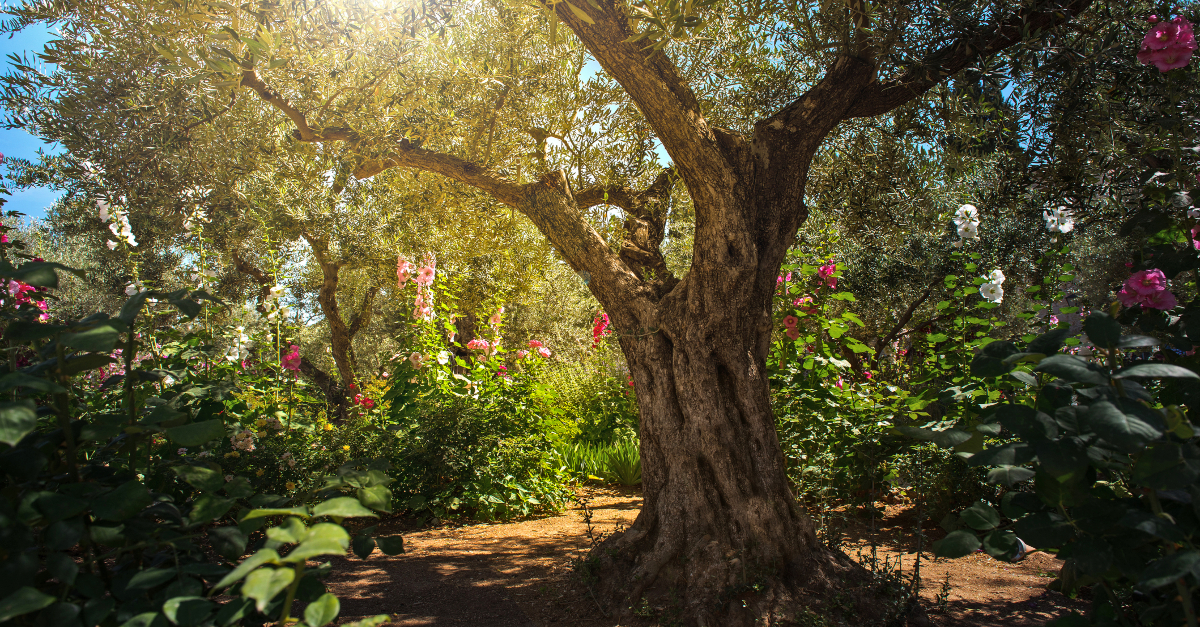
In our stressful world today, it’s easy to become disconnected from the history of our faith. A visit to Israel helps us slow down and reflect on the ancient roots of Christianity. Standing in the place where our faith began connects us directly to Jesus and everyone else who lived in biblical times. I remember how seeing the physical roots of olive trees in the Garden of Gethsemane helped me feel powerfully connected to the spiritual roots of my faith.

Since olive trees regenerate, the trees that stand there today are the direct descendants of those that stood in the same places when Jesus prayed there the night before his ultimate sacrifice on the cross to save the world. The trees gave me tangible connections back to that time, long before I was born, when Jesus loved the future me and made a way to save my soul. They literally rooted me in the reality of God’s wondrous plan that transcended all of space and time.

A visit to Israel can help us see ourselves as part of God’s massive global family that spans generations throughout history. God keeps his promises from age to age and continues his plan to redeem our world throughout history. Understanding this rich heritage can strengthen our faith by giving us a strong foundation to stand on while our surrounding culture constantly changes around us. We can also learn to treasure the spiritual legacy of those who came before us and recognize our responsibility to pass that faith along to the next generation by sharing the Gospel message.

Visiting Israel helps us see the truth of Psalm 100:5’s words: “For the LORD is good and his love endures forever; his faithfulness continues through all generations.” We realize that the same God who was faithful to the people in the Bible is also faithful to us in our lives right now. 

Photo Credit: GettyImages/salajean


2. We can experience the Bible come to life.

Reading the Bible after walking through Israel in real life makes the words in the Bible come to life in ways we’ll remember every time we read the Bible after the trip. I often recall what it was like to see the house in Nazareth, Israel, where Jesus grew up. It was a small home inside a cave. When God came to earth, he could have chosen to live in a huge, fancy palace. But he specifically chose to come to live with Joseph and Mary in their humble home in the small town of Nazareth.

Standing inside the church that had been built over the cave where the holy family had once lived, it struck me that the size of a home doesn’t matter at all compared to the amount of love within it. Ever since visiting Nazareth, I haven’t longed for a bigger house myself – and I regularly pray over my house, as well. When we walk in the same places where Jesus walked, we can connect in new ways with every single Bible verse we read about Jesus from then on. For instance, after experiencing the intense, dry heat of the Israeli desert, I understand the urgent longing that Psalm 42:1 expresses: “As the deer pants for streams of water, so my soul pants for you, my God.”

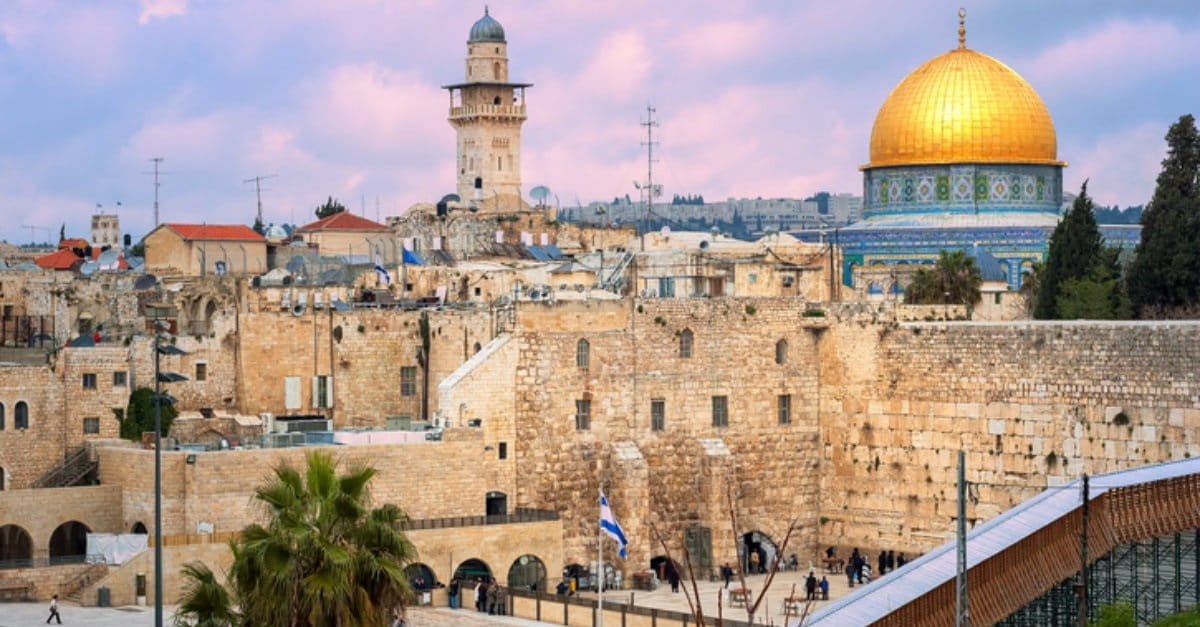
God chose to reveal what he’s like through real people, real geography, and real historical eras described in the Bible. Walking on the ancient city walls in Jerusalem and walking on the streets – including the Via Dolorosa path that Jesus walked before being crucified – is like going back to biblical times. It’s also a feast for the senses, which can help us imagine what it was like to be there when Jesus was there.

I saw donkeys around town and thought of Jesus riding into Jerusalem on a donkey. I heard people praying out loud at the Western Wall of the temple and thought of famous biblical prayers. I smelled incense inside the Church of the Holy Sepulchre and thought of God receiving prayers in heaven, like Revelation 8:4 describes: “The smoke of the incense, together with the prayers of God’s people, went up before God from the angel’s hand.” I tasted fresh pita bread and thought of Jesus’ words in John 6:35: “I am the bread of life. Whoever comes to me will never go hungry, and whoever believes in me will never be thirsty.”

Physically visiting the places where God incarnated on earth reminds us that God meets us exactly where we are, in the realities of our everyday environments, in every situation we encounter. It can help us notice God’s presence with us every day.

Photo Credit: ©Getty Images/Massimo Borchi/Atlantide Phototravel 

3. We can appreciate God’s patience and grace for humanity.

One of the most sobering parts of traveling through Israel is feeling all the tension that exists there because of ongoing conflicts between people. I saw soldiers carrying guns and rifles everywhere I traveled in Israel. As I write this article, Israel has been involved in wars for several years. Visiting Israel reveals that the peaceful unity God wants humanity to enjoy has not yet fully happened in this fallen world.

In the old city of Jerusalem, conflict is especially apparent, since different religions, cultures, and political groups have to share the same few, highly contested square miles. Israel and the surrounding Middle East region experience a heartbreaking amount of conflict. Luke 19:41-44 records Jesus’ sorrow and concern for Jerusalem, both during biblical times and in the future times we’re living in: “As he approached Jerusalem and saw the city, he wept over it and said, ‘If you, even you, had only known on this day what would bring you peace – but now it is hidden from your eyes. The days will come upon you when your enemies will build an embankment against you and encircle you and hem you in on every side. They will dash you to the ground, you and the children within your walls. They will not leave one stone on another, because you did not recognize the time of God’s coming to you.”

In Matthew 23:37-39, we can feel Jesus’ grief over how the people he loves don’t listen to him, when he says: “Jerusalem, Jerusalem, you who kill the prophets and stone those sent to you, how often I have longed to gather your children together, as a hen gathers her chicks under her wings, and you were not willing. Look, your house is left to you desolate. For I tell you, you will not see me again until you say, ‘Blessed is he who comes in the name of the Lord.’”

Despite how heartbreaking it is to see conflict in Israel, the painful reality of it can help us appreciate God’s immense patience and grace toward humanity. Seeing the ongoing brokenness of our world up close in Israel shows us how much everyone in our world needs a Savior. Despite thousands of years of human rebellion and hostility, God has not abandoned his creation. Instead, God patiently gives us grace, and we have time to turn away from hatred and grow in holiness. As 2 Peter 3:9 states: “The Lord is not slow in keeping his promise, as some understand slowness. Instead, he is patient with you, not wanting anyone to perish, but everyone to come to repentance.”

Visiting Israel teaches us that our loving God loves us patiently and gracefully.

Photo Credit: ©GettyImages/Xantana 

4. Feel awe from visiting the sites of Jesus’ miracles.

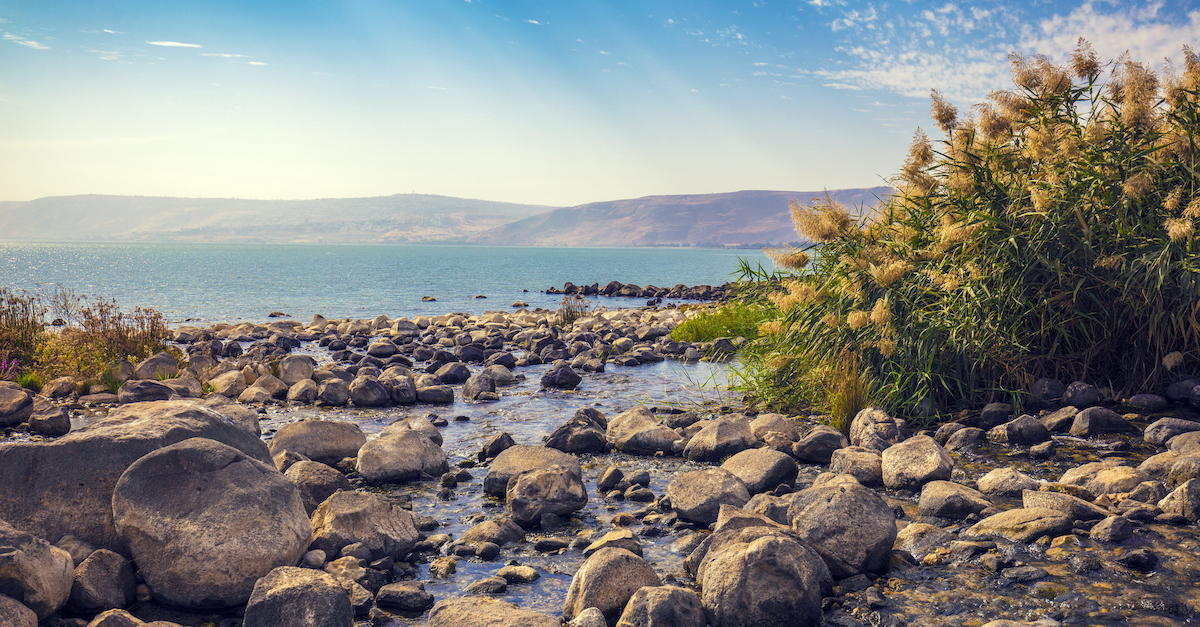
When we stand on the shores of the Sea of Galilee or look out over the ruins of a biblical city like Capernaum, the miracles of the New Testament suddenly feel incredibly real and tangible to us. Standing in the same places where Jesus displayed his supernatural authority over creation can inspire a strong sense of awe as we connect to God’s wonders personally.

I’ll never forget riding in a boat on the Sea of Galilee while reflecting on the Bible’s reports of how Jesus walked on water there (Matthew 14:22-33, Mark 6:45-52, and John 6:16-21). As I looked at the surface of the water in the place where that happened, I realized that I was like Jesus’ disciple Peter (in Matthew 14:28-31) too often – wanting to trust Jesus enough to walk on water toward him, but letting myself sink because of doubt and worry. I prayed in that boat that I would be more committed to turning worries into prayers, so I could trust Jesus in deeper ways.

As we walk through biblical sites, we can remember a powerful conversation Jesus had with his followers. In Matthew 19:26, Jesus looked at his disciples and declared: “With man this is impossible, but with God all things are possible.” This truth becomes real to us when we stand in the ruins of ancient synagogues where the blind received their sight, and the paralyzed stood up and walked. Witnessing these historical locations helps us truly internalize the reality that God’s power is limitless. It encourages us to trust that the same Savior who healed the sick, cast out demons, and multiplied bread and fish in Israel is fully capable of working miracles in our lives today.

Photo Credit: ©GettyImages/vvvita 

5. Discover hope from the reality of the resurrection.

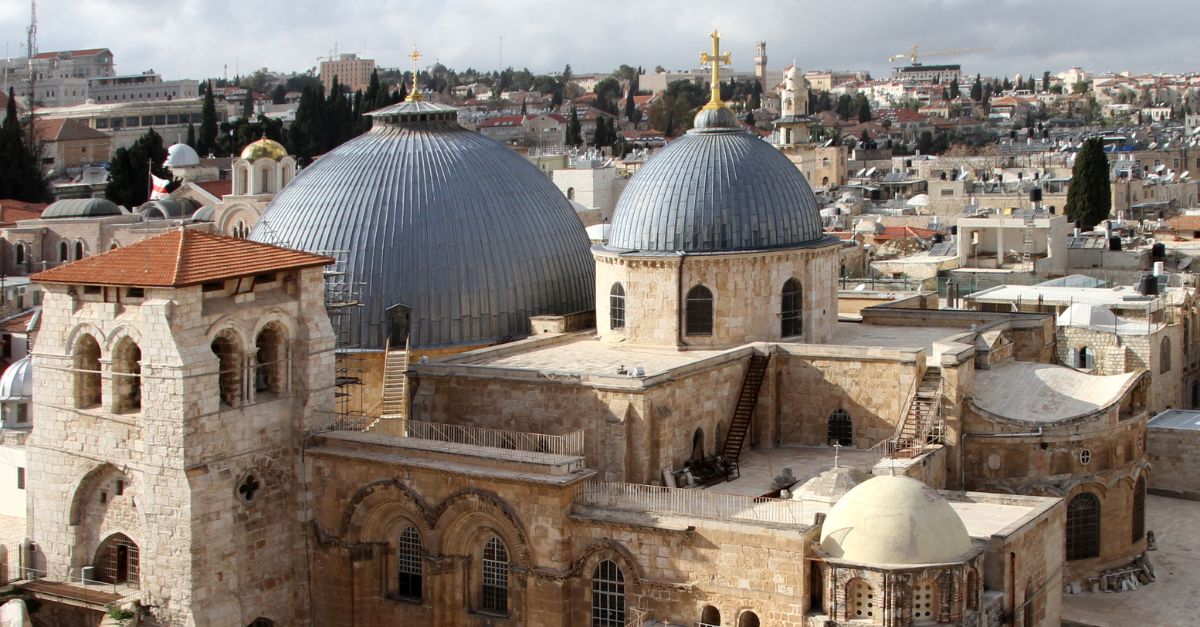
Perhaps the most powerful experience we can have while visiting Israel is to go to where Jesus’ crucifixion and resurrection happened. Seeing sacred sites like the Church of the Holy Sepulchre and the garden tomb confronts us with the ultimate, undeniable proof of God’s love and victory. Visiting where Jesus’ work to save us took place can help us overcome doubts and give us a fresh sense of hope. The physical reality of the empty tomb stands as a historic monument to the fact that God’s power has completely defeated sin and death. It reminds us that our current challenges and even our eventual deaths are not the final chapter of our stories.

Because God physically raised Jesus from the dead in a specific moment in human history, we can live with a certain and eternal hope that far outlasts our suffering in this fallen world. As 1 Peter 1:3 says: “In his great mercy he has given us new birth into a living hope through the resurrection of Jesus Christ from the dead.” Visiting Israel assures us that our future resurrection is just as real as the one that took place in Jerusalem more than 2,000 years ago.

In conclusion, a pilgrimage to Israel is the most powerful spiritual trip we can take, because it allows us to personally experience the same places where Jesus lived and worked. We can connect with the roots of our faith and with the Bible’s stories, appreciate God’s patient and graceful love for us despite our mistakes, feel awe, and discover hope. Long after visiting Israel, the lessons we’ve learned about God there will continue to strengthen our faith and draw us into closer relationships with God!

Photo Credit: ©Wikimedia Commons/Gerd Eichmann 

 

Salem News Channel Today

Sponsored Links


September 26 - Phoenix, AZ
Scottsdale Center for the Performing Arts


November 2 - Detroit, MI
Zion Christian Church in Troy


October 6 - Los Angeles, CA
Pasadena Convention Center


November 5 - San Antonio, TX
Norris Centers – The Grand Red Oak Ballroom


October 8 - Sacramento, CA
William Jessup University


November 7 - Tampa, FL
The Palladium at St. Pete College


October 22 - Minneapolis, MN
Crowne Plaza AiRE


November 15 - San Francisco, CA
Fremont Marriott Silicon Valley


October 23 - Philadelphia, PA
Green Valley Country Club


November 16 - Denver, CO
CU South Denver - Formerly Wildlife Experience


November 2 - Chicago, IL
Chicago Westin Northwest in Itasca


November 21 - Cleveland, OH
Holiday Inn Rockside in Independence


Salem Radio Network Speakers

Larry Elder is an American lawyer, writer, and radio and television personality who calls himself the "Sage of South Central" a district of Los Angeles, Larry says his philosophy is to entertain, inform, provoke and to hopefully uplift. His calling card is "we have a country to save" and to him this means returning to the bedrock Constitutional principles of limited government and maximum personal responsibility. Elder's iconoclastic wit and intellectual agility makes him a particularly attractive voice in a nation that seems weary of traditional racial dialogue.” – Los Angeles Times.

Mike Gallagher Mike Gallagher began his broadcasting career in 1978 in Dayton, Ohio. Today, he is one of the most listened-to talk radio show hosts in America, recently having been ranked in the Talkers Magazine “Heavy Hundred” list – the 100 most important talk radio hosts in America. Prior to being launched into national syndication in 1998, Mike hosted the morning show on WABC-AM in New York City. Today, Talkers Magazine reports that his show is heard by over 3.75 million weekly listeners. Besides his radio work, Mike is seen on Fox News Channel as an on-air contributor, frequently appearing on the cable news giant.

Hugh Hewitt is one of the nation’s leading bloggers and a genuine media revolutionary. He brings that expertise, his wit and what The New Yorker magazine calls his “amiable but relentless manner” to his nationally syndicated show each day.

When Dr. Sebastian Gorka was growing up, he listened to talk radio under his pillow with a transistor radio, dreaming that one day he would be behind the microphone. Beginning New Year’s Day 2019, he got his wish. Gorka now hosts America First every weekday afternoon 3 to 6pm ET. Gorka’s unique story works well on the radio. He is national security analyst for the Fox News Channel and author of two books: "Why We Fight" and "Defeating Jihad." His latest book releasing this fall is “War For America’s Soul.” He is uniquely qualified to fight the culture war and stand up for what is great about America, his adopted home country.

Broadcasting from his home station of KRLA in Los Angeles, the Dennis Prager Show is heard across the country. Everything in life – from politics to religion to relationships – is grist for Dennis’ mill. If it’s interesting, if it affects your life, then Dennis will be talking about it – with passion, humor, insight and wisdom.

Sean Hannity is a conservative radio and television host, and one of the original primetime hosts on the Fox News Channel, where he has appeared since 1996. Sean Hannity began his radio career at a college station in California, before moving on to markets in the Southeast and New York. Today, he’s one of the most listened to on-air voices. Hannity’s radio program went into national syndication on September 10, 2001, and airs on more than 500 stations. Talkers Magazine estimates Hannity’s weekly radio audience at 13.5 million. In 1996 he was hired as one of the original hosts on Fox News Channel. As host of several popular Fox programs, Hannity has become the highest-paid news anchor on television.

Michelle Malkin is a mother, wife, blogger, conservative syndicated columnist, longtime cable TV news commentator, and best-selling author of six books. She started her newspaper journalism career at the Los Angeles Daily News in 1992, moved to the Seattle Times in 1995, and has been penning nationally syndicated newspaper columns for Creators Syndicate since 1999. She is founder of conservative Internet start-ups Hot Air and Twitchy.com. Malkin has received numerous awards for her investigative journalism, including the Council on Governmental Ethics Laws (COGEL) national award for outstanding service for the cause of governmental ethics and leadership (1998), the Reed Irvine Accuracy in Media Award for Investigative Journalism (2006), the Heritage Foundation and Franklin Center for Government & Public Integrity's Breitbart Award for Excellence in Journalism (2013), the Center for Immigration Studies' Eugene Katz Award for Excellence in the Coverage of Immigration Award (2016), and the Manhattan Film Festival's Film Heals Award (2018). Married for 26 years and the mother of two teenage children, she lives with her family in Colorado. Follow her at michellemalkin.com. (Photo reprinted with kind permission from Peter Duke Photography.)

Sponsored by:

5 Ways a Visit to Israel Can Bring Us Closer to God

Carbonatix Pre-Player Loader

Audio By Carbonatix

1. We can understand the value of our spiritual roots.

In our stressful world today, it’s easy to become disconnected from the history of our faith. A visit to Israel helps us slow down and reflect on the ancient roots of Christianity. Standing in the place where our faith began connects us directly to Jesus and everyone else who lived in biblical times. I remember how seeing the physical roots of olive trees in the Garden of Gethsemane helped me feel powerfully connected to the spiritual roots of my faith.

Since olive trees regenerate, the trees that stand there today are the direct descendants of those that stood in the same places when Jesus prayed there the night before his ultimate sacrifice on the cross to save the world. The trees gave me tangible connections back to that time, long before I was born, when Jesus loved the future me and made a way to save my soul. They literally rooted me in the reality of God’s wondrous plan that transcended all of space and time.

A visit to Israel can help us see ourselves as part of God’s massive global family that spans generations throughout history. God keeps his promises from age to age and continues his plan to redeem our world throughout history. Understanding this rich heritage can strengthen our faith by giving us a strong foundation to stand on while our surrounding culture constantly changes around us. We can also learn to treasure the spiritual legacy of those who came before us and recognize our responsibility to pass that faith along to the next generation by sharing the Gospel message.

Visiting Israel helps us see the truth of Psalm 100:5’s words: “For the LORD is good and his love endures forever; his faithfulness continues through all generations.” We realize that the same God who was faithful to the people in the Bible is also faithful to us in our lives right now. 

Photo Credit: GettyImages/salajean


2. We can experience the Bible come to life.

Reading the Bible after walking through Israel in real life makes the words in the Bible come to life in ways we’ll remember every time we read the Bible after the trip. I often recall what it was like to see the house in Nazareth, Israel, where Jesus grew up. It was a small home inside a cave. When God came to earth, he could have chosen to live in a huge, fancy palace. But he specifically chose to come to live with Joseph and Mary in their humble home in the small town of Nazareth.

Standing inside the church that had been built over the cave where the holy family had once lived, it struck me that the size of a home doesn’t matter at all compared to the amount of love within it. Ever since visiting Nazareth, I haven’t longed for a bigger house myself – and I regularly pray over my house, as well. When we walk in the same places where Jesus walked, we can connect in new ways with every single Bible verse we read about Jesus from then on. For instance, after experiencing the intense, dry heat of the Israeli desert, I understand the urgent longing that Psalm 42:1 expresses: “As the deer pants for streams of water, so my soul pants for you, my God.”

God chose to reveal what he’s like through real people, real geography, and real historical eras described in the Bible. Walking on the ancient city walls in Jerusalem and walking on the streets – including the Via Dolorosa path that Jesus walked before being crucified – is like going back to biblical times. It’s also a feast for the senses, which can help us imagine what it was like to be there when Jesus was there.

I saw donkeys around town and thought of Jesus riding into Jerusalem on a donkey. I heard people praying out loud at the Western Wall of the temple and thought of famous biblical prayers. I smelled incense inside the Church of the Holy Sepulchre and thought of God receiving prayers in heaven, like Revelation 8:4 describes: “The smoke of the incense, together with the prayers of God’s people, went up before God from the angel’s hand.” I tasted fresh pita bread and thought of Jesus’ words in John 6:35: “I am the bread of life. Whoever comes to me will never go hungry, and whoever believes in me will never be thirsty.”

Physically visiting the places where God incarnated on earth reminds us that God meets us exactly where we are, in the realities of our everyday environments, in every situation we encounter. It can help us notice God’s presence with us every day.

Photo Credit: ©Getty Images/Massimo Borchi/Atlantide Phototravel 


3. We can appreciate God’s patience and grace for humanity.

One of the most sobering parts of traveling through Israel is feeling all the tension that exists there because of ongoing conflicts between people. I saw soldiers carrying guns and rifles everywhere I traveled in Israel. As I write this article, Israel has been involved in wars for several years. Visiting Israel reveals that the peaceful unity God wants humanity to enjoy has not yet fully happened in this fallen world.

In the old city of Jerusalem, conflict is especially apparent, since different religions, cultures, and political groups have to share the same few, highly contested square miles. Israel and the surrounding Middle East region experience a heartbreaking amount of conflict. Luke 19:41-44 records Jesus’ sorrow and concern for Jerusalem, both during biblical times and in the future times we’re living in: “As he approached Jerusalem and saw the city, he wept over it and said, ‘If you, even you, had only known on this day what would bring you peace – but now it is hidden from your eyes. The days will come upon you when your enemies will build an embankment against you and encircle you and hem you in on every side. They will dash you to the ground, you and the children within your walls. They will not leave one stone on another, because you did not recognize the time of God’s coming to you.”

In Matthew 23:37-39, we can feel Jesus’ grief over how the people he loves don’t listen to him, when he says: “Jerusalem, Jerusalem, you who kill the prophets and stone those sent to you, how often I have longed to gather your children together, as a hen gathers her chicks under her wings, and you were not willing. Look, your house is left to you desolate. For I tell you, you will not see me again until you say, ‘Blessed is he who comes in the name of the Lord.’”

Despite how heartbreaking it is to see conflict in Israel, the painful reality of it can help us appreciate God’s immense patience and grace toward humanity. Seeing the ongoing brokenness of our world up close in Israel shows us how much everyone in our world needs a Savior. Despite thousands of years of human rebellion and hostility, God has not abandoned his creation. Instead, God patiently gives us grace, and we have time to turn away from hatred and grow in holiness. As 2 Peter 3:9 states: “The Lord is not slow in keeping his promise, as some understand slowness. Instead, he is patient with you, not wanting anyone to perish, but everyone to come to repentance.”

Visiting Israel teaches us that our loving God loves us patiently and gracefully.

Photo Credit: ©GettyImages/Xantana 


4. Feel awe from visiting the sites of Jesus’ miracles.

When we stand on the shores of the Sea of Galilee or look out over the ruins of a biblical city like Capernaum, the miracles of the New Testament suddenly feel incredibly real and tangible to us. Standing in the same places where Jesus displayed his supernatural authority over creation can inspire a strong sense of awe as we connect to God’s wonders personally.

I’ll never forget riding in a boat on the Sea of Galilee while reflecting on the Bible’s reports of how Jesus walked on water there (Matthew 14:22-33, Mark 6:45-52, and John 6:16-21). As I looked at the surface of the water in the place where that happened, I realized that I was like Jesus’ disciple Peter (in Matthew 14:28-31) too often – wanting to trust Jesus enough to walk on water toward him, but letting myself sink because of doubt and worry. I prayed in that boat that I would be more committed to turning worries into prayers, so I could trust Jesus in deeper ways.

As we walk through biblical sites, we can remember a powerful conversation Jesus had with his followers. In Matthew 19:26, Jesus looked at his disciples and declared: “With man this is impossible, but with God all things are possible.” This truth becomes real to us when we stand in the ruins of ancient synagogues where the blind received their sight, and the paralyzed stood up and walked. Witnessing these historical locations helps us truly internalize the reality that God’s power is limitless. It encourages us to trust that the same Savior who healed the sick, cast out demons, and multiplied bread and fish in Israel is fully capable of working miracles in our lives today.

Photo Credit: ©GettyImages/vvvita 


5. Discover hope from the reality of the resurrection.

Perhaps the most powerful experience we can have while visiting Israel is to go to where Jesus’ crucifixion and resurrection happened. Seeing sacred sites like the Church of the Holy Sepulchre and the garden tomb confronts us with the ultimate, undeniable proof of God’s love and victory. Visiting where Jesus’ work to save us took place can help us overcome doubts and give us a fresh sense of hope. The physical reality of the empty tomb stands as a historic monument to the fact that God’s power has completely defeated sin and death. It reminds us that our current challenges and even our eventual deaths are not the final chapter of our stories.

Because God physically raised Jesus from the dead in a specific moment in human history, we can live with a certain and eternal hope that far outlasts our suffering in this fallen world. As 1 Peter 1:3 says: “In his great mercy he has given us new birth into a living hope through the resurrection of Jesus Christ from the dead.” Visiting Israel assures us that our future resurrection is just as real as the one that took place in Jerusalem more than 2,000 years ago.

In conclusion, a pilgrimage to Israel is the most powerful spiritual trip we can take, because it allows us to personally experience the same places where Jesus lived and worked. We can connect with the roots of our faith and with the Bible’s stories, appreciate God’s patient and graceful love for us despite our mistakes, feel awe, and discover hope. Long after visiting Israel, the lessons we’ve learned about God there will continue to strengthen our faith and draw us into closer relationships with God!

Photo Credit: ©Wikimedia Commons/Gerd Eichmann 

 

Salem News Channel Today

Sponsored Links

On Air & Up Next

See the Full Program Guide