World Governments Watch Australia for Outcome of Social Media Ban

Carbonatix Pre-Player Loader

Audio By Carbonatix

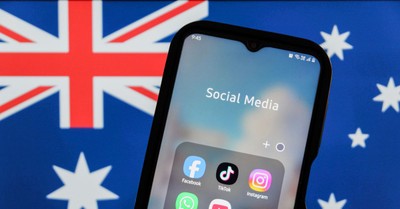
Last week Australia became the first country to take the bold step of implementing a social media ban for minors. Kids under the age of 16 had their social media accounts deactivated on platforms such as TikTok, Instagram, Snapchat, X, Reddit, and Facebook, to name just a few, according to WNG.

Australia’s Communications Minister Anika Wells gave a deeply moving speech in which she acknowledged a movement started by Australian parents who were fed up with having their children mentally and emotionally kidnapped by social media platforms, and algorithms designed by platform creators with the intent of being addictive to teens.

In a 2025 study that Australia conducted, it was discovered that 96 percent of children between the ages of 10-15 used social media content, and that seven out of 10 of them had been exposed to content that was harmful. Over half of them were victims of cyberbullying, to name just a few of the discoveries, according to the BBC.

Hundreds of Thousands of Australian Parents Speak Out

When Wells opened her speech, she made a point of acknowledging “the hundreds of thousands of parents who campaigned for this law, NewsCorp’s Let Them Be Kids campaign and Wippa and the 36 Months group.”

It was the hard work, persistence, and determination of these courageous parents who were able to make their voices heard by Australian lawmakers. The lawmakers in turn then made a point of creating the legislation that would serve as a platform to begin a long journey of protecting Australian children.
 
 “…Australia will become the first country in the world to ban under-16s from having social media accounts. With one law, we can protect Generation Alpha from being sucked into purgatory by predatory algorithms described by the man who created the feature as ‘behavioral cocaine.’ Through one reform, more kids will have their time back to learn an instrument or a language, or walk their dog, master a torpedo punt or the perfect lob pass,” she said.
 
 She referenced only a few of the reports she said she has seen, which apparently revealed that social media platforms were damaging to the mental health of children and teens, and were created with the intent of being addictive to them.

“Most parents, carers,and teachers I talk to don’t expect perfection,” Wells said, “but what they do say to me is ‘thank you for trying this – do not back down!’”

A few of several ways that social media platforms are being told they must make certain underage minors aren’t getting accounts include age-verification via online activity, account surveillance, and uploaded materials, according to CNBC. If social media platforms violate any of the rules laid out by the Australian government, then they will incur fines of over $30 million, according to WNG.

Creating a Supportive 3D Community of Kids

Dany Elachi, a Catholic father of five, is one of those hundreds of thousands of parents to whom Wells was referring who helped get the law passed. After he and his wife gave a phone to their 10-year-old daughter, they quickly saw “how that device transformed her childhood,” Elachi told Catholic News Agency (CNA).

“It left her with little time to play, to connect with siblings and us, her parents, to read, and to rest. It even intruded on her sleep time,” he said, adding that it also interfered with her prayer time.

As a result, the duo started an alliance of parents in their community who wanted to delay allowing their children to have a smartphone and social media accounts. Their intent was that the children would then have a community of supportive friends with whom they could play and enjoy other childhood activities. They eventually named their alliance The Heads Up Alliance.

Response of U.S. and other Countries to Australia’s Social Media Ban.

As the U.S. Congress looked on regarding Australia’s bold move, the question was definitely raised on both sides of the aisle regarding why the U.S. hasn’t done something similar.

“I imagine it's the opposition from the tech industry,” Rep. Ritchie Torres, D-N.Y. told Fox News. “I see social media as a catastrophe for the mental health of the next generation, and I feel like society is conducting an unprecedented experiment on the psyche of young Americans.”

Rep. Ralph Norman, R-S.C. told Fox News that he believed people were unaware of the dangers, which have been underreported. He also said he believes the dangers “have gotten worse.”

“I do think more congressional action would be wise,” Rep. Dusty Johnson, R-S.D., told Fox News Digital. “Obviously, we're a country that values freedom, and so a lot of people feel like that would be either power better exercised by the state, or power better exercised by parents.”

At the same time, Johnson admitted that, “We need to hold some of these platforms accountable,” and that, “they have technological tools that they could very easily use to keep kids safe.”

“They keep kids locked into reward loops that heighten anxiety, shorten attention spans, and create a constant sense of comparison. I’m also seeing more teens who struggle with face-to-face communication because so much of their social life has moved online,” New York City-based psychotherapist Jonathan Alpert and author of Therapy Nation told The Independent.

Several countries in Europe that are watching Australia’s progress or are already working toward their own bans include Denmark, Norway, Ireland, Spain, France, the U.K., and the Netherlands. The EU has passed a non-binding resolution regarding banning social media for minors, according to The Guardian.

A Few States Attempting to Take Initiative

California Governor Gavin Newsom signed a bill last year that restricts social media platforms from intentionally making feeds available to children without the consent of their parents. Then, in October, he signed a bill demanding that social media apps check the ages of children and display a health warning regarding minors, according to The Independent.

Maryland Governor Wes More began to implement policy last year that limited the kind of data online platforms could collect about children, but tech groups have fought it, claiming that their free speech rights are being hindered by the move, according to The Independent.

Other states that are working toward putting such bans in place include Florida, Virginia, Georgia, Tennessee, and Louisiana, according to The Guardian.

Related Article

4 Ways to Set Limits on Your Teen’s Screen Time

Photo Credit: ©Getty Images / SOPA Images / Contributor
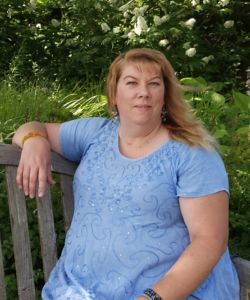
Elizabeth Delaney Author HeadshotElizabeth Delaney has been a freelance content writer for over 20 years and has enjoyed having her prose published in both the non-fiction and fiction markets. She has written various types of content, including Christian articles, healthy lifestyle, blog posts, business topics, news articles, product descriptions, and some fiction. She is also a singer-songwriter-musician. When she is not busy with writing or music, she enjoys spending time with friends or family and doing fun social activities such as hiking, swing dancing, concerts, and other activities. 

 

Salem News Channel Today

Sponsored Links


September 26 - Phoenix, AZ
Scottsdale Center for the Performing Arts


November 2 - Detroit, MI
Zion Christian Church in Troy


October 6 - Los Angeles, CA
Pasadena Convention Center


November 5 - San Antonio, TX
Norris Centers – The Grand Red Oak Ballroom


October 8 - Sacramento, CA
William Jessup University


November 7 - Tampa, FL
The Palladium at St. Pete College


October 22 - Minneapolis, MN
Crowne Plaza AiRE


November 15 - San Francisco, CA
Fremont Marriott Silicon Valley


October 23 - Philadelphia, PA
Green Valley Country Club


November 16 - Denver, CO
CU South Denver - Formerly Wildlife Experience


November 2 - Chicago, IL
Chicago Westin Northwest in Itasca


November 21 - Cleveland, OH
Holiday Inn Rockside in Independence


Salem Radio Network Speakers

Larry Elder is an American lawyer, writer, and radio and television personality who calls himself the "Sage of South Central" a district of Los Angeles, Larry says his philosophy is to entertain, inform, provoke and to hopefully uplift. His calling card is "we have a country to save" and to him this means returning to the bedrock Constitutional principles of limited government and maximum personal responsibility. Elder's iconoclastic wit and intellectual agility makes him a particularly attractive voice in a nation that seems weary of traditional racial dialogue.” – Los Angeles Times.

Mike Gallagher Mike Gallagher began his broadcasting career in 1978 in Dayton, Ohio. Today, he is one of the most listened-to talk radio show hosts in America, recently having been ranked in the Talkers Magazine “Heavy Hundred” list – the 100 most important talk radio hosts in America. Prior to being launched into national syndication in 1998, Mike hosted the morning show on WABC-AM in New York City. Today, Talkers Magazine reports that his show is heard by over 3.75 million weekly listeners. Besides his radio work, Mike is seen on Fox News Channel as an on-air contributor, frequently appearing on the cable news giant.

Hugh Hewitt is one of the nation’s leading bloggers and a genuine media revolutionary. He brings that expertise, his wit and what The New Yorker magazine calls his “amiable but relentless manner” to his nationally syndicated show each day.

When Dr. Sebastian Gorka was growing up, he listened to talk radio under his pillow with a transistor radio, dreaming that one day he would be behind the microphone. Beginning New Year’s Day 2019, he got his wish. Gorka now hosts America First every weekday afternoon 3 to 6pm ET. Gorka’s unique story works well on the radio. He is national security analyst for the Fox News Channel and author of two books: "Why We Fight" and "Defeating Jihad." His latest book releasing this fall is “War For America’s Soul.” He is uniquely qualified to fight the culture war and stand up for what is great about America, his adopted home country.

Broadcasting from his home station of KRLA in Los Angeles, the Dennis Prager Show is heard across the country. Everything in life – from politics to religion to relationships – is grist for Dennis’ mill. If it’s interesting, if it affects your life, then Dennis will be talking about it – with passion, humor, insight and wisdom.

Sean Hannity is a conservative radio and television host, and one of the original primetime hosts on the Fox News Channel, where he has appeared since 1996. Sean Hannity began his radio career at a college station in California, before moving on to markets in the Southeast and New York. Today, he’s one of the most listened to on-air voices. Hannity’s radio program went into national syndication on September 10, 2001, and airs on more than 500 stations. Talkers Magazine estimates Hannity’s weekly radio audience at 13.5 million. In 1996 he was hired as one of the original hosts on Fox News Channel. As host of several popular Fox programs, Hannity has become the highest-paid news anchor on television.

Michelle Malkin is a mother, wife, blogger, conservative syndicated columnist, longtime cable TV news commentator, and best-selling author of six books. She started her newspaper journalism career at the Los Angeles Daily News in 1992, moved to the Seattle Times in 1995, and has been penning nationally syndicated newspaper columns for Creators Syndicate since 1999. She is founder of conservative Internet start-ups Hot Air and Twitchy.com. Malkin has received numerous awards for her investigative journalism, including the Council on Governmental Ethics Laws (COGEL) national award for outstanding service for the cause of governmental ethics and leadership (1998), the Reed Irvine Accuracy in Media Award for Investigative Journalism (2006), the Heritage Foundation and Franklin Center for Government & Public Integrity's Breitbart Award for Excellence in Journalism (2013), the Center for Immigration Studies' Eugene Katz Award for Excellence in the Coverage of Immigration Award (2016), and the Manhattan Film Festival's Film Heals Award (2018). Married for 26 years and the mother of two teenage children, she lives with her family in Colorado. Follow her at michellemalkin.com. (Photo reprinted with kind permission from Peter Duke Photography.)

Sponsored by:

World Governments Watch Australia for Outcome of Social Media Ban

Carbonatix Pre-Player Loader

Audio By Carbonatix

Last week Australia became the first country to take the bold step of implementing a social media ban for minors. Kids under the age of 16 had their social media accounts deactivated on platforms such as TikTok, Instagram, Snapchat, X, Reddit, and Facebook, to name just a few, according to WNG.

Australia’s Communications Minister Anika Wells gave a deeply moving speech in which she acknowledged a movement started by Australian parents who were fed up with having their children mentally and emotionally kidnapped by social media platforms, and algorithms designed by platform creators with the intent of being addictive to teens.

In a 2025 study that Australia conducted, it was discovered that 96 percent of children between the ages of 10-15 used social media content, and that seven out of 10 of them had been exposed to content that was harmful. Over half of them were victims of cyberbullying, to name just a few of the discoveries, according to the BBC.

Hundreds of Thousands of Australian Parents Speak Out

When Wells opened her speech, she made a point of acknowledging “the hundreds of thousands of parents who campaigned for this law, NewsCorp’s Let Them Be Kids campaign and Wippa and the 36 Months group.”

It was the hard work, persistence, and determination of these courageous parents who were able to make their voices heard by Australian lawmakers. The lawmakers in turn then made a point of creating the legislation that would serve as a platform to begin a long journey of protecting Australian children.
 
 “…Australia will become the first country in the world to ban under-16s from having social media accounts. With one law, we can protect Generation Alpha from being sucked into purgatory by predatory algorithms described by the man who created the feature as ‘behavioral cocaine.’ Through one reform, more kids will have their time back to learn an instrument or a language, or walk their dog, master a torpedo punt or the perfect lob pass,” she said.
 
 She referenced only a few of the reports she said she has seen, which apparently revealed that social media platforms were damaging to the mental health of children and teens, and were created with the intent of being addictive to them.

“Most parents, carers,and teachers I talk to don’t expect perfection,” Wells said, “but what they do say to me is ‘thank you for trying this – do not back down!’”

A few of several ways that social media platforms are being told they must make certain underage minors aren’t getting accounts include age-verification via online activity, account surveillance, and uploaded materials, according to CNBC. If social media platforms violate any of the rules laid out by the Australian government, then they will incur fines of over $30 million, according to WNG.

Creating a Supportive 3D Community of Kids

Dany Elachi, a Catholic father of five, is one of those hundreds of thousands of parents to whom Wells was referring who helped get the law passed. After he and his wife gave a phone to their 10-year-old daughter, they quickly saw “how that device transformed her childhood,” Elachi told Catholic News Agency (CNA).

“It left her with little time to play, to connect with siblings and us, her parents, to read, and to rest. It even intruded on her sleep time,” he said, adding that it also interfered with her prayer time.

As a result, the duo started an alliance of parents in their community who wanted to delay allowing their children to have a smartphone and social media accounts. Their intent was that the children would then have a community of supportive friends with whom they could play and enjoy other childhood activities. They eventually named their alliance The Heads Up Alliance.

Response of U.S. and other Countries to Australia’s Social Media Ban.

As the U.S. Congress looked on regarding Australia’s bold move, the question was definitely raised on both sides of the aisle regarding why the U.S. hasn’t done something similar.

“I imagine it's the opposition from the tech industry,” Rep. Ritchie Torres, D-N.Y. told Fox News. “I see social media as a catastrophe for the mental health of the next generation, and I feel like society is conducting an unprecedented experiment on the psyche of young Americans.”

Rep. Ralph Norman, R-S.C. told Fox News that he believed people were unaware of the dangers, which have been underreported. He also said he believes the dangers “have gotten worse.”

“I do think more congressional action would be wise,” Rep. Dusty Johnson, R-S.D., told Fox News Digital. “Obviously, we're a country that values freedom, and so a lot of people feel like that would be either power better exercised by the state, or power better exercised by parents.”

At the same time, Johnson admitted that, “We need to hold some of these platforms accountable,” and that, “they have technological tools that they could very easily use to keep kids safe.”

“They keep kids locked into reward loops that heighten anxiety, shorten attention spans, and create a constant sense of comparison. I’m also seeing more teens who struggle with face-to-face communication because so much of their social life has moved online,” New York City-based psychotherapist Jonathan Alpert and author of Therapy Nation told The Independent.

Several countries in Europe that are watching Australia’s progress or are already working toward their own bans include Denmark, Norway, Ireland, Spain, France, the U.K., and the Netherlands. The EU has passed a non-binding resolution regarding banning social media for minors, according to The Guardian.

A Few States Attempting to Take Initiative

California Governor Gavin Newsom signed a bill last year that restricts social media platforms from intentionally making feeds available to children without the consent of their parents. Then, in October, he signed a bill demanding that social media apps check the ages of children and display a health warning regarding minors, according to The Independent.

Maryland Governor Wes More began to implement policy last year that limited the kind of data online platforms could collect about children, but tech groups have fought it, claiming that their free speech rights are being hindered by the move, according to The Independent.

Other states that are working toward putting such bans in place include Florida, Virginia, Georgia, Tennessee, and Louisiana, according to The Guardian.

Related Article

4 Ways to Set Limits on Your Teen’s Screen Time

Photo Credit: ©Getty Images / SOPA Images / Contributor

Elizabeth Delaney Author HeadshotElizabeth Delaney has been a freelance content writer for over 20 years and has enjoyed having her prose published in both the non-fiction and fiction markets. She has written various types of content, including Christian articles, healthy lifestyle, blog posts, business topics, news articles, product descriptions, and some fiction. She is also a singer-songwriter-musician. When she is not busy with writing or music, she enjoys spending time with friends or family and doing fun social activities such as hiking, swing dancing, concerts, and other activities. 

 

Salem News Channel Today

Sponsored Links

On Air & Up Next

See the Full Program Guide