Are Black People Mentioned in the Bible?

Carbonatix Pre-Player Loader

Audio By Carbonatix

Brought to you by Christianity.com

You might wonder why talking about black people in the Bible is important. This topic can feel uncomfortable, especially in our racially charged American culture. If you fall into that uncomfortable category, I invite you not to run away from those feelings but to lean into them. There might be something God wants to reveal and change in you.

How Does the Bible Define People?

The Bible does not define people by skin color. That is something our modern culture has done. The Bible does not speak of any advantage or disadvantage based on your skin color. The closest it gets to discussing skin color as a disadvantage is in contexts where white skin indicates people had leprosy (Exodus 4:6).

The Bible defines people by tribal affiliations and ethnicities. It does not hide people’s ethnicities or origins but highlights them. By doing this, the Bible emphasizes the importance of all people groups and the roles many of them played in the unfolding of history—whether that be the history of humanity, the history of Israel, or the history of the church.

Before we dive deeper, I want to make one point crystal clear. Salvation is not about culture; it is about Christ. God did not give us the Bible to rally one culture around a certain theme. The Bible reveals who God is and shows all humanity our sinfulness and need for a savior. This is true of everyone, regardless of where they come from. However, seeing the wide range of ethnicities mentioned in Scripture makes the gospel’s message relatable to people of all nationalities.

One more point of clarity, when I talk about black people in the Bible, don’t think in terms of the racial construct that we have become familiar with. I want you to think simply about the countries these people came from and the likelihood they were people of darker skin.

Why Can You Be Certain There Are Black People in the Bible?

There are multiple ethnicities represented within Scripture. Most are familiar with Israel and the nations they engaged with, such as the Philistines, the Canaanites, the Amorites, the Hittites, etc. However, there were many more ethnicities represented. Since we are talking about black people in the Bible, let me share why it is logical that you would find them in the Bible.

When you read the Bible, much of what happened in the Old Testament occurred in Northern Africa and the Middle East. When you enter the New Testament, the gospel spreads from the central location of Jerusalem and moves into Rome, Greece, Turkey, and further into Africa.

When you consider the history of the Israelites, they spent 400 years in slavery in Egypt, which is in Northern Africa. Even Jesus spent a few years in Egypt to escape Herod after being born in Bethlehem. So yes, even Jesus spent part of his life living in Africa. Aside from Egypt, we find people in Scripture from Libya, Ethiopia, and Sudan—all countries in northern Africa. Considering what races appear in those nations, it is logical to conclude that black people were in the Bible.

Who Are Some Important Black People Mentioned in the Bible?

There are black people in the Bible in the Old and New Testaments. Here are four notable references.

Moses’ Wife

We learn from Numbers 12 that Moses married a Cushite woman. In Biblical times, Cush has always been associated with Africa; some have placed it in modern-day Sudan or Ethiopia.

The Queen of Sheba

In 1 Kings 10 and 2 Chronicles 9, the queen of Sheba, a notable woman from Africa, heard of Solomon’s wisdom and came to test him with hard questions. Scholars have long debated the exact location of Sheba, but many believe it was in Ethiopia, Yemen, or southern Arabia.

Simon of Cyrene

Simon of Cyrene had the arduous task of helping Jesus carry his cross. Mark 15:21 and Luke 23:26 tell us Roman soldiers forced Simon to walk behind Jesus, carrying the cross to Golgotha. The Bible notes where Simon was from, drawing attention to his nationality—the ancient city of Cyrene was in modern-day Libya. This further points to the ethnic diversity you discover in significant biblical events.

The Ethiopian Eunuch

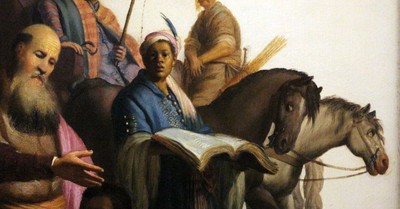
In the book of Acts, Philip encountered an Ethiopian eunuch, a high-ranking official serving in the court of Candace, queen of the Ethiopians. Again, notice how particular the Bible was in identifying the nationality of this eunuch. The Bible does not hide from ethnicity but embraces it.

What Is it Important to Highlight Black People in the Bible?

I grew up in an all-black neighborhood, yet I have lived in multicultural churches and environments all my life. Honestly, I love it because it is such a wonderful expression of who God is.

Growing up, I would occasionally encounter people who would call Christianity the white man’s religion, and some may still do that today. One major reason for saying this was based on our nation’s history. Christianity was the primary religion of most American slave owners. Instead of teaching the freedom in Christ available to everyone, it was used to oppress black people. During slavery, the Bible was used to justify slavery and keep people enslaved. Black traveling ministers allowed to preach in Sunday services to slaves could not discuss the parts of the gospel that highlight our freedom in Christ. Slave owners feared slaves would hear that and revolt, demanding their freedom. They also neglected to tell slaves the stories of the Israelites when they were enslaved in Egypt. They conveniently left out the story of the enslaved Israelites crying out to God for their freedom. They also did not mention that God heard their prayer and delivered them. Coupled with many portrayals of Biblical figures that assume a European look, many misunderstood Christianity as “the white man’s religion.”

The irony is most of the central figures in the Scriptures were people from Africa and the Middle East. This means they were brown or dark-skinned people.

These misuses of Scripture and mischaracterization of people in Scripture make it necessary to accurately portray the people in the Bible. We do this not because we are trying to make it about race or black and white but because we want to address the scriptures truthfully and accurately. This does not change the message of the gospel or the hope we find in Christ. On the contrary, it helps to break down barriers and show the true ethnic diversity that is common throughout Scripture. When you consider how the Bible was used against black people in the past, it becomes necessary to highlight black people in the Bible, to destroy those past destructive narratives.

How Can Churches Emphasize There Are Black People in the Bible?

I have always loved how the Bible doesn’t try to cover things up. We see our heroes of the faith with all their strengths and weaknesses. Thankfully, the Bible does the same thing with the ethnicity of people.

Churches don’t have to go overboard to emphasize black people in the Bible. However, you should not downplay their existence either. When you see it in the pages of Scripture, say it, and don’t pretend like it is not there. Remember, it is not a black and white thing but a truth and accuracy thing.

Knowing the various cultures of people represented in the Bible and that exist in the church today makes our faith even more attractive. I pray that we tear down all the racial divides and embrace Scripture’s view of ethnicity. After all, heaven will be filled with people from every nationality because that is exactly how God wants it.

“After this I looked, and there before me was a great multitude that no one could count, from every nation, tribe, people and language, standing before the throne and before the Lamb. They were wearing white robes and were holding palm branches in their hands.” (Revelation 7:9)

Photo Credit: “The Baptism of the Eunuch” by Rembrandt via Wikimedia Commons
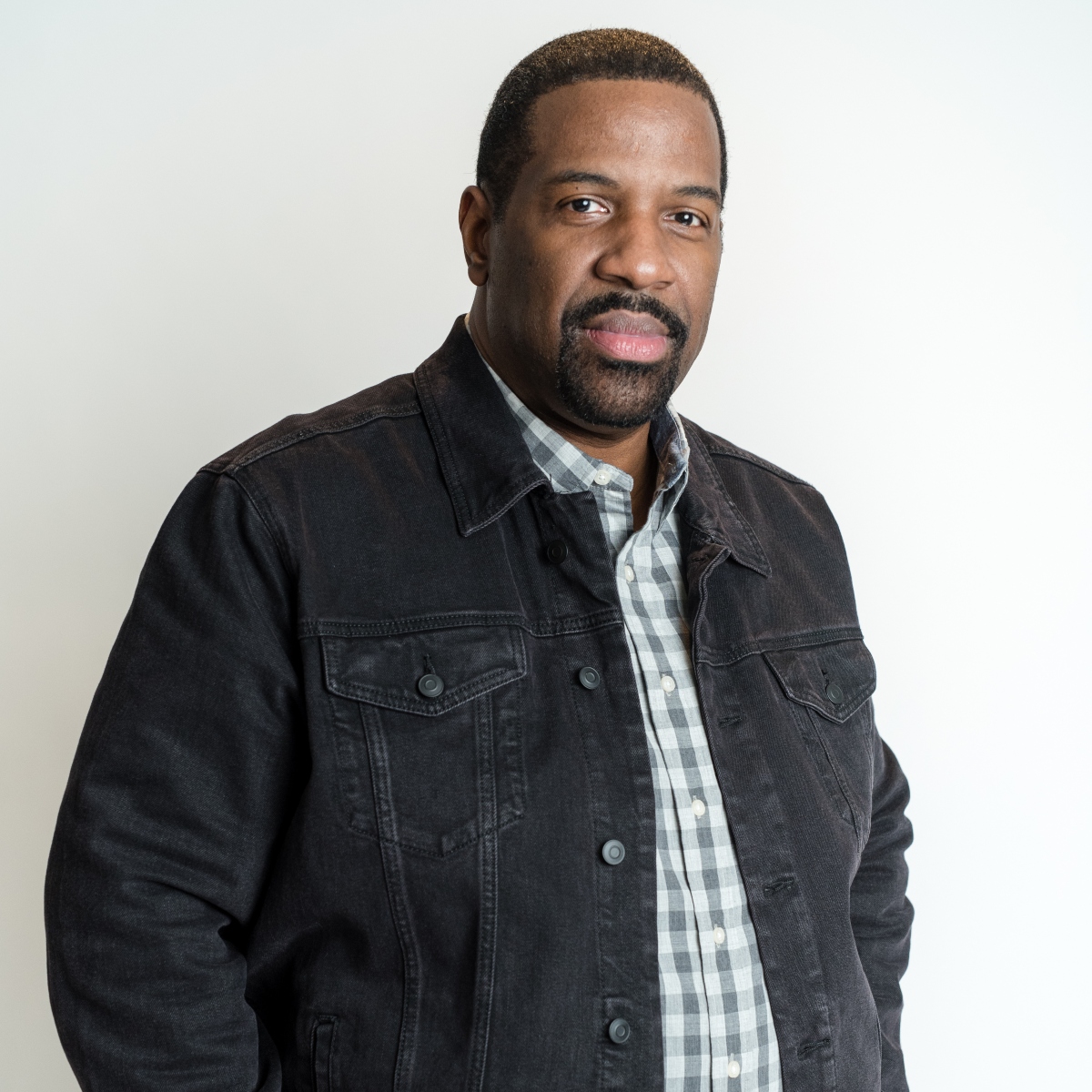
Clarence Haynes 1200x1200Clarence L. Haynes Jr. is a dynamic speaker, Bible teacher, and co-founder of The Bible Study Club, dedicated to helping people live with purpose and clarity. In addition to his ministry work, Clarence has spent the last 13 years as a trusted financial educator, guiding thousands of people across the country—including employees at many Fortune 500 companies—toward lasting financial wellness. His unique ability to blend practical wisdom with spiritual insight equips people to thrive in every area of life.

He is the author of The Pursuit of Purpose, which helps readers understand how God leads them into his will, and the author of The Pursuit of Victory: How To Conquer Your Greatest Challenges and Win In Your Christian Life. Clarence is also committed to helping 10,000 people learn how to study the Bible and has released his first course, Bible Study Basics, to achieve that goal. To learn more about his ministry and resources, please visit clarencehaynes.com.


This article is part of our Bible resource for understanding the significance and meaning of biblical phrases and ideas. Here are our most popular Bible articles to grow in your knowledge of God's Word:

Promises of God in the Bible
Is "This Too Shall Pass" in the Bible?
What Was the Ark of the Covenant?
Top 10 Bible Stories for Kids

“Iron Sharpens Iron” in Proverbs 27:17
"Fearfully and Wonderfully Made" in Psalm 139
“Be Still and Know That I am God” in Psalm 46:10
"No Weapon Formed Against Me Shall Prosper" - Isaiah 54:17


This article originally appeared on Christianity.com. For more faith-building resources, visit Christianity.com. Christianity.com
 

Salem News Channel Today

Sponsored Links


September 26 - Phoenix, AZ
Scottsdale Center for the Performing Arts


November 2 - Detroit, MI
Zion Christian Church in Troy


October 6 - Los Angeles, CA
Pasadena Convention Center


November 5 - San Antonio, TX
Norris Centers – The Grand Red Oak Ballroom


October 8 - Sacramento, CA
William Jessup University


November 7 - Tampa, FL
The Palladium at St. Pete College


October 22 - Minneapolis, MN
Crowne Plaza AiRE


November 15 - San Francisco, CA
Fremont Marriott Silicon Valley


October 23 - Philadelphia, PA
Green Valley Country Club


November 16 - Denver, CO
CU South Denver - Formerly Wildlife Experience


November 2 - Chicago, IL
Chicago Westin Northwest in Itasca


November 21 - Cleveland, OH
Holiday Inn Rockside in Independence


Salem Radio Network Speakers

Larry Elder is an American lawyer, writer, and radio and television personality who calls himself the "Sage of South Central" a district of Los Angeles, Larry says his philosophy is to entertain, inform, provoke and to hopefully uplift. His calling card is "we have a country to save" and to him this means returning to the bedrock Constitutional principles of limited government and maximum personal responsibility. Elder's iconoclastic wit and intellectual agility makes him a particularly attractive voice in a nation that seems weary of traditional racial dialogue.” – Los Angeles Times.

Mike Gallagher Mike Gallagher began his broadcasting career in 1978 in Dayton, Ohio. Today, he is one of the most listened-to talk radio show hosts in America, recently having been ranked in the Talkers Magazine “Heavy Hundred” list – the 100 most important talk radio hosts in America. Prior to being launched into national syndication in 1998, Mike hosted the morning show on WABC-AM in New York City. Today, Talkers Magazine reports that his show is heard by over 3.75 million weekly listeners. Besides his radio work, Mike is seen on Fox News Channel as an on-air contributor, frequently appearing on the cable news giant.

Hugh Hewitt is one of the nation’s leading bloggers and a genuine media revolutionary. He brings that expertise, his wit and what The New Yorker magazine calls his “amiable but relentless manner” to his nationally syndicated show each day.

When Dr. Sebastian Gorka was growing up, he listened to talk radio under his pillow with a transistor radio, dreaming that one day he would be behind the microphone. Beginning New Year’s Day 2019, he got his wish. Gorka now hosts America First every weekday afternoon 3 to 6pm ET. Gorka’s unique story works well on the radio. He is national security analyst for the Fox News Channel and author of two books: "Why We Fight" and "Defeating Jihad." His latest book releasing this fall is “War For America’s Soul.” He is uniquely qualified to fight the culture war and stand up for what is great about America, his adopted home country.

Broadcasting from his home station of KRLA in Los Angeles, the Dennis Prager Show is heard across the country. Everything in life – from politics to religion to relationships – is grist for Dennis’ mill. If it’s interesting, if it affects your life, then Dennis will be talking about it – with passion, humor, insight and wisdom.

Sean Hannity is a conservative radio and television host, and one of the original primetime hosts on the Fox News Channel, where he has appeared since 1996. Sean Hannity began his radio career at a college station in California, before moving on to markets in the Southeast and New York. Today, he’s one of the most listened to on-air voices. Hannity’s radio program went into national syndication on September 10, 2001, and airs on more than 500 stations. Talkers Magazine estimates Hannity’s weekly radio audience at 13.5 million. In 1996 he was hired as one of the original hosts on Fox News Channel. As host of several popular Fox programs, Hannity has become the highest-paid news anchor on television.

Michelle Malkin is a mother, wife, blogger, conservative syndicated columnist, longtime cable TV news commentator, and best-selling author of six books. She started her newspaper journalism career at the Los Angeles Daily News in 1992, moved to the Seattle Times in 1995, and has been penning nationally syndicated newspaper columns for Creators Syndicate since 1999. She is founder of conservative Internet start-ups Hot Air and Twitchy.com. Malkin has received numerous awards for her investigative journalism, including the Council on Governmental Ethics Laws (COGEL) national award for outstanding service for the cause of governmental ethics and leadership (1998), the Reed Irvine Accuracy in Media Award for Investigative Journalism (2006), the Heritage Foundation and Franklin Center for Government & Public Integrity's Breitbart Award for Excellence in Journalism (2013), the Center for Immigration Studies' Eugene Katz Award for Excellence in the Coverage of Immigration Award (2016), and the Manhattan Film Festival's Film Heals Award (2018). Married for 26 years and the mother of two teenage children, she lives with her family in Colorado. Follow her at michellemalkin.com. (Photo reprinted with kind permission from Peter Duke Photography.)

Sponsored by:

Are Black People Mentioned in the Bible?

Carbonatix Pre-Player Loader

Audio By Carbonatix

Brought to you by Christianity.com

You might wonder why talking about black people in the Bible is important. This topic can feel uncomfortable, especially in our racially charged American culture. If you fall into that uncomfortable category, I invite you not to run away from those feelings but to lean into them. There might be something God wants to reveal and change in you.

How Does the Bible Define People?

The Bible does not define people by skin color. That is something our modern culture has done. The Bible does not speak of any advantage or disadvantage based on your skin color. The closest it gets to discussing skin color as a disadvantage is in contexts where white skin indicates people had leprosy (Exodus 4:6).

The Bible defines people by tribal affiliations and ethnicities. It does not hide people’s ethnicities or origins but highlights them. By doing this, the Bible emphasizes the importance of all people groups and the roles many of them played in the unfolding of history—whether that be the history of humanity, the history of Israel, or the history of the church.

Before we dive deeper, I want to make one point crystal clear. Salvation is not about culture; it is about Christ. God did not give us the Bible to rally one culture around a certain theme. The Bible reveals who God is and shows all humanity our sinfulness and need for a savior. This is true of everyone, regardless of where they come from. However, seeing the wide range of ethnicities mentioned in Scripture makes the gospel’s message relatable to people of all nationalities.

One more point of clarity, when I talk about black people in the Bible, don’t think in terms of the racial construct that we have become familiar with. I want you to think simply about the countries these people came from and the likelihood they were people of darker skin.

Why Can You Be Certain There Are Black People in the Bible?

There are multiple ethnicities represented within Scripture. Most are familiar with Israel and the nations they engaged with, such as the Philistines, the Canaanites, the Amorites, the Hittites, etc. However, there were many more ethnicities represented. Since we are talking about black people in the Bible, let me share why it is logical that you would find them in the Bible.

When you read the Bible, much of what happened in the Old Testament occurred in Northern Africa and the Middle East. When you enter the New Testament, the gospel spreads from the central location of Jerusalem and moves into Rome, Greece, Turkey, and further into Africa.

When you consider the history of the Israelites, they spent 400 years in slavery in Egypt, which is in Northern Africa. Even Jesus spent a few years in Egypt to escape Herod after being born in Bethlehem. So yes, even Jesus spent part of his life living in Africa. Aside from Egypt, we find people in Scripture from Libya, Ethiopia, and Sudan—all countries in northern Africa. Considering what races appear in those nations, it is logical to conclude that black people were in the Bible.

Who Are Some Important Black People Mentioned in the Bible?

There are black people in the Bible in the Old and New Testaments. Here are four notable references.

Moses’ Wife

We learn from Numbers 12 that Moses married a Cushite woman. In Biblical times, Cush has always been associated with Africa; some have placed it in modern-day Sudan or Ethiopia.

The Queen of Sheba

In 1 Kings 10 and 2 Chronicles 9, the queen of Sheba, a notable woman from Africa, heard of Solomon’s wisdom and came to test him with hard questions. Scholars have long debated the exact location of Sheba, but many believe it was in Ethiopia, Yemen, or southern Arabia.

Simon of Cyrene

Simon of Cyrene had the arduous task of helping Jesus carry his cross. Mark 15:21 and Luke 23:26 tell us Roman soldiers forced Simon to walk behind Jesus, carrying the cross to Golgotha. The Bible notes where Simon was from, drawing attention to his nationality—the ancient city of Cyrene was in modern-day Libya. This further points to the ethnic diversity you discover in significant biblical events.

The Ethiopian Eunuch

In the book of Acts, Philip encountered an Ethiopian eunuch, a high-ranking official serving in the court of Candace, queen of the Ethiopians. Again, notice how particular the Bible was in identifying the nationality of this eunuch. The Bible does not hide from ethnicity but embraces it.

What Is it Important to Highlight Black People in the Bible?

I grew up in an all-black neighborhood, yet I have lived in multicultural churches and environments all my life. Honestly, I love it because it is such a wonderful expression of who God is.

Growing up, I would occasionally encounter people who would call Christianity the white man’s religion, and some may still do that today. One major reason for saying this was based on our nation’s history. Christianity was the primary religion of most American slave owners. Instead of teaching the freedom in Christ available to everyone, it was used to oppress black people. During slavery, the Bible was used to justify slavery and keep people enslaved. Black traveling ministers allowed to preach in Sunday services to slaves could not discuss the parts of the gospel that highlight our freedom in Christ. Slave owners feared slaves would hear that and revolt, demanding their freedom. They also neglected to tell slaves the stories of the Israelites when they were enslaved in Egypt. They conveniently left out the story of the enslaved Israelites crying out to God for their freedom. They also did not mention that God heard their prayer and delivered them. Coupled with many portrayals of Biblical figures that assume a European look, many misunderstood Christianity as “the white man’s religion.”

The irony is most of the central figures in the Scriptures were people from Africa and the Middle East. This means they were brown or dark-skinned people.

These misuses of Scripture and mischaracterization of people in Scripture make it necessary to accurately portray the people in the Bible. We do this not because we are trying to make it about race or black and white but because we want to address the scriptures truthfully and accurately. This does not change the message of the gospel or the hope we find in Christ. On the contrary, it helps to break down barriers and show the true ethnic diversity that is common throughout Scripture. When you consider how the Bible was used against black people in the past, it becomes necessary to highlight black people in the Bible, to destroy those past destructive narratives.

How Can Churches Emphasize There Are Black People in the Bible?

I have always loved how the Bible doesn’t try to cover things up. We see our heroes of the faith with all their strengths and weaknesses. Thankfully, the Bible does the same thing with the ethnicity of people.

Churches don’t have to go overboard to emphasize black people in the Bible. However, you should not downplay their existence either. When you see it in the pages of Scripture, say it, and don’t pretend like it is not there. Remember, it is not a black and white thing but a truth and accuracy thing.

Knowing the various cultures of people represented in the Bible and that exist in the church today makes our faith even more attractive. I pray that we tear down all the racial divides and embrace Scripture’s view of ethnicity. After all, heaven will be filled with people from every nationality because that is exactly how God wants it.

“After this I looked, and there before me was a great multitude that no one could count, from every nation, tribe, people and language, standing before the throne and before the Lamb. They were wearing white robes and were holding palm branches in their hands.” (Revelation 7:9)

Photo Credit: “The Baptism of the Eunuch” by Rembrandt via Wikimedia Commons

Clarence Haynes 1200x1200Clarence L. Haynes Jr. is a dynamic speaker, Bible teacher, and co-founder of The Bible Study Club, dedicated to helping people live with purpose and clarity. In addition to his ministry work, Clarence has spent the last 13 years as a trusted financial educator, guiding thousands of people across the country—including employees at many Fortune 500 companies—toward lasting financial wellness. His unique ability to blend practical wisdom with spiritual insight equips people to thrive in every area of life.

He is the author of The Pursuit of Purpose, which helps readers understand how God leads them into his will, and the author of The Pursuit of Victory: How To Conquer Your Greatest Challenges and Win In Your Christian Life. Clarence is also committed to helping 10,000 people learn how to study the Bible and has released his first course, Bible Study Basics, to achieve that goal. To learn more about his ministry and resources, please visit clarencehaynes.com.


This article is part of our Bible resource for understanding the significance and meaning of biblical phrases and ideas. Here are our most popular Bible articles to grow in your knowledge of God's Word:

Promises of God in the Bible
Is "This Too Shall Pass" in the Bible?
What Was the Ark of the Covenant?
Top 10 Bible Stories for Kids

“Iron Sharpens Iron” in Proverbs 27:17
"Fearfully and Wonderfully Made" in Psalm 139
“Be Still and Know That I am God” in Psalm 46:10
"No Weapon Formed Against Me Shall Prosper" - Isaiah 54:17

This article originally appeared on Christianity.com. For more faith-building resources, visit Christianity.com. Christianity.com
 

Salem News Channel Today

Sponsored Links

On Air & Up Next

See the Full Program Guide