10 Traditional Beliefs about Christmas That Aren’t in the Bible

Carbonatix Pre-Player Loader

Audio By Carbonatix

Christmas. This word brings to mind thoughts of snowflakes, peppermint mochas, evergreen trees, baking, parties, and lots and lots of lights. Most of all, Christmas reminds us of Jesus because He is what Christmas is all about.

The beauty of our December celebration outshines any other holiday observance. Each year, the decorating activities begin earlier than the year before. (Although I can do without leftover Halloween skeletons wearing Santa suits!) In some stores, glittery decor is on the shelves along with the back-to-school supplies.

Travel is at an all-time high during the holiday season. Our family customs are part of what makes these times special. Recipes handed down from grandmas, heirloom ornaments, favorite shows, and even look-alike pajamas. But what about the traditions we have adopted from decades of made-up beliefs that aren’t biblical?

Movies, cards, plays, and songs have given us images about the Nativity based on assumptions or wrong interpretations of the scriptures. These presumptions create nice stories, but if we want the truth about Jesus’ birth, we need to examine the record with open eyes.

Here are 10 traditions we believe about Christmas that aren’t accurate according to the biblical account.

Photo Credit: Unsplash/Jonathan Meyer 
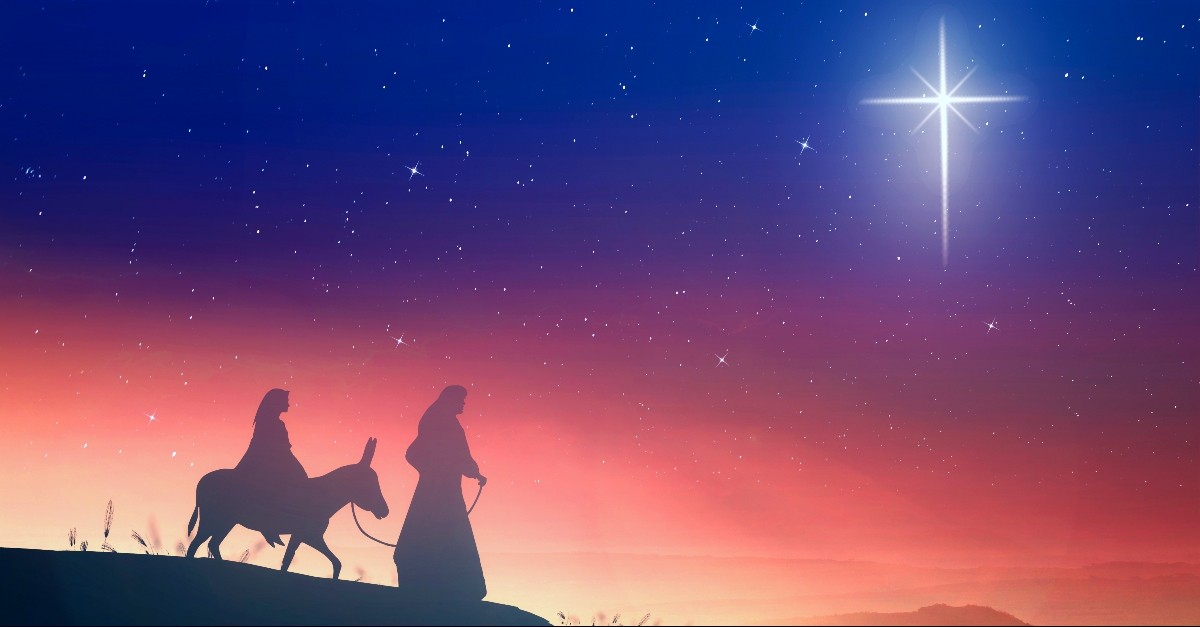
1. Mary rode a donkey.

1. Mary rode a donkey.

Hollywood scenes create the drama of Mary and Joseph on the way to Bethlehem, with Mary sitting on a donkey that Joseph leads. Maybe she did ride an animal, but the Bible doesn’t indicate any mode of travel. They could have walked or been given aid from other travelers who shared wagons and offered rides to women who may have accompanied their husbands. 

Anytime we see this silhouette on display, our minds immediately connect it to Mary and Joseph. There’s nothing wrong with thinking about Mary riding on a donkey. But this picture just tells us it’s an assumption derived from old ideas. 

The idea probably stems from the Protoevangelium of James. This writing is not considered scripture as much of it disagrees with what the Word of God has already declared. 

So Joseph also went up from the town of Nazareth in Galilee to Judea, to Bethlehem the town of David, because he belonged to the house and line of David. (Luke 2:4 NIV)

2. Mary traveled alone to visit Elizabeth.

Scenes from some films indicate Mary steps out the door and takes off walking on her own. No one, especially a young girl, would take a trip without protection. She would have traveled with a group of people for safety. Without the modern vehicles we have today, a journey of sixty-five miles or more would require stopping to rest for the night. People who were alone were prey for criminals. Remember the story of the Good Samaritan. He got hijacked by robbers and beaten. 

At that time Mary got ready and hurried to a town in the hill country of Judea, where she entered Zechariah’s home and greeted Elizabeth. (Luke 1:39-40 NIV)

Photo Credit: ©iStock/Getty Images Plus/Boonyachoat 
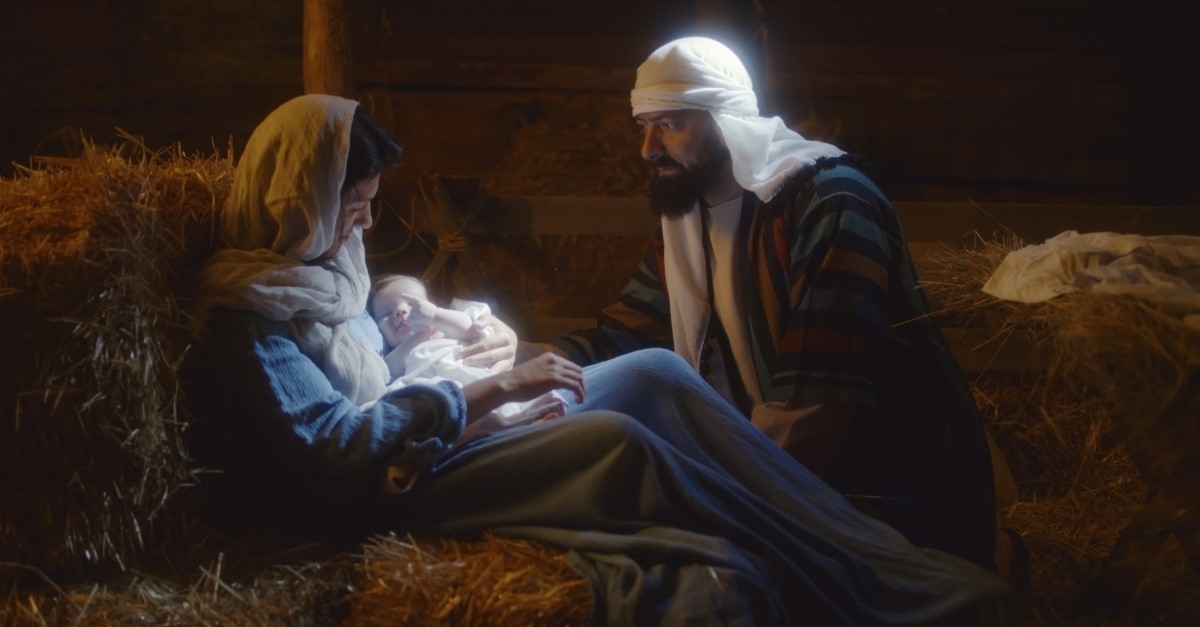
3. Mary went into labor on the way to Bethlehem.

3. Mary went into labor on the way to Bethlehem.

Another dramatic image from the entertainment industry is Mary bent over in labor pains while riding the donkey. When they finally arrive in Bethlehem, poor, frantic Joseph goes from door to door seeking shelter for his pregnant wife, who is about to give birth. 

While they were there, the time came for the baby to be born. (Luke 2:6 NIV, emphasis mine)

This scripture tells us Jesus was born while they were there, not the day they arrived. This could have been a few days or even weeks after they settled in Bethlehem. We also see Joseph portrayed as delivering the baby. Men in ancient culture didn’t attend childbirth. He would have most certainly gone to find a midwife.

4. Joseph created and repaired things out of wood.

The Bible refers to Joseph’s occupation as a carpenter. This brings to mind pictures of a man creating or repairing items and furniture out of wood. Other than olive and sycamore trees, there wasn’t a lot of material for woodworking in those days. Solomon sought cedars from Lebanon to build the temple because this is where the best lumber could be obtained. 

The word that was translated carpenter in the New Testament comes from the Greek tekton, which means any craftsman or builder. Joseph, more than likely, was a stone mason. 

Isn’t this the carpenter? Isn’t this Mary’s son and the brother of James, Joseph, Judas and Simon? Aren’t his sisters here with us? And they took offense at him. (Mark 6:3 NIV)

Joseph also may have used wood, but most of his work could have been from stone, and he probably worked in the city of Sepphoris, close to Nazareth. Rocks, stones, and caves cover the land of Israel. This material would give any artisan plenty of supplies for their given trade. 

Photo Credit: ©Getty Images/EvgeniyShkolenko
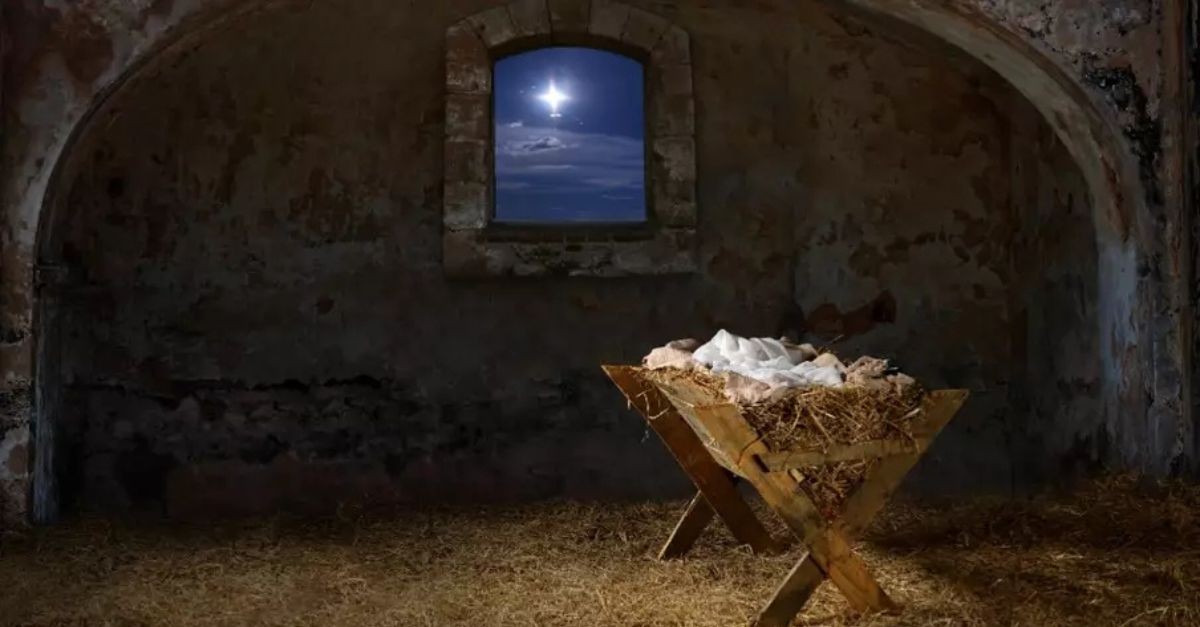
5. The inn was a hotel.

5. The inn was a hotel.

The word translated as inn makes us think of a hotel with certain amenities for guests. The word katalyma just means guest chamber. In the Middle Eastern culture, hospitality was a way of life. Travelers were often put up in people’s homes, especially relatives. Joseph’s lineage was from Bethlehem, and some of his family line could have remained in the village. By the time the couple arrived, all these rooms were filled. That’s why there was no more space in the extra rooms. 

Theories vary as to the location of Jesus’ birth. Sometimes animal dwellings were attached to homes where people placed their livestock at night to keep them safe, and this could be where the couple found lodging. Also, shepherd’s caves gave wandering pilgrims shelter. The historical location is marked by the Church of the Nativity in Bethlehem. Either place outfitted for animals would have contained a manger.

And she gave birth to her firstborn, a son. She wrapped him in cloths and placed him in a manger, because there was no guest room available for them. (Luke 2:7 NIV)

6. The manger was a wooden box of hay.

Again, we have the conventional view of Jesus lying in a box of hay. As shepherds brought their flocks in for the night, they provided water for them. They could have also provided some type of grain for the animals, but the flocks mostly ate from the fields during the day. Water was provided in a trough, or manger, carved from some type of stone. This was Jesus’ baby bed. 

This will be a sign to you: You will find a baby wrapped in cloths and lying in a manger. (Luke 2:12 NIV)

Photo Credit: © Getty Images/ginosphotos 
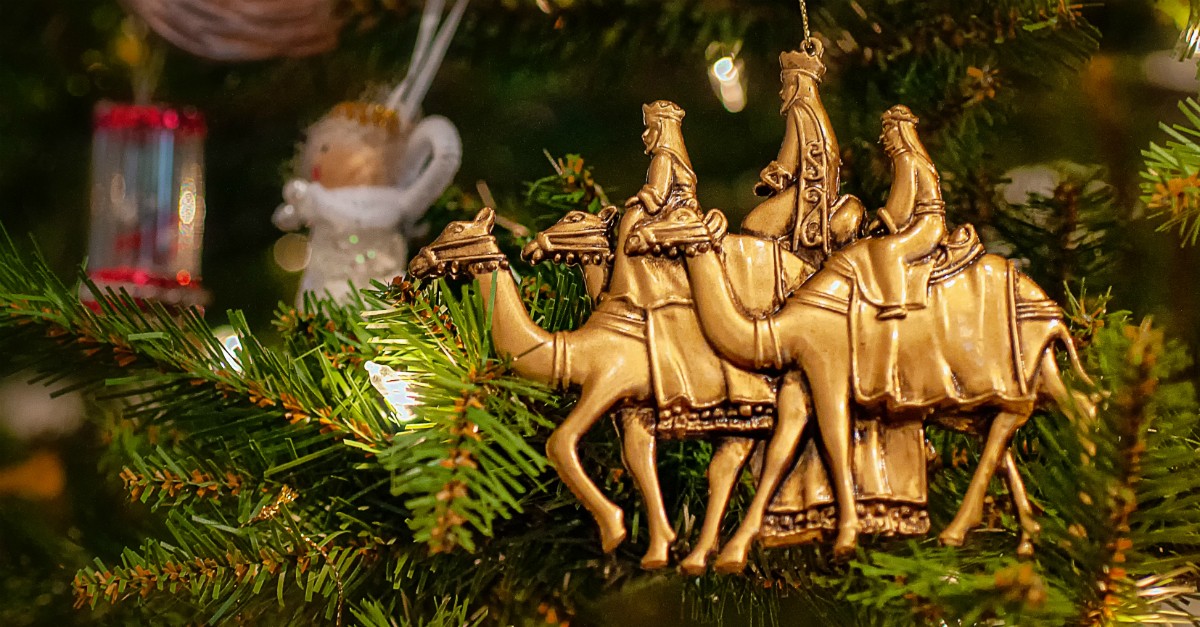
7. The wise men were kings.

7. The wise men were kings.

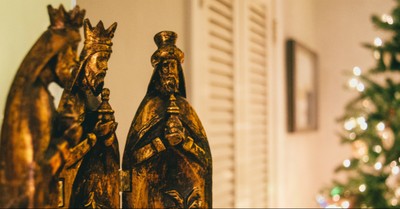
Most theologians suggest that the Magi were Zoroastrian priests, possibly from the land of Babylon, where Daniel and his three friends were enslaved by Nebuchadnezzar. The song “We Three Kings” has embedded the image of three men wearing crowns coming to see Jesus with their gifts. They were probably astrologers who studied the sky. God used a miraculous light to lead men who didn’t know Him to worship the King of the Jews. 

The term wise men is derived from the Greek magos, which is where we get the word Magi (short for magician).

After Jesus was born in Bethlehem in Judea, during the time of King Herod, Magi from the east came to Jerusalem. (Matthew 2:1 NIV)

8. There were three wise men.

Because three gifts are mentioned in Matthew’s account of Jesus’ birth, stories have grown about three men traveling to see the Christ Child. Some movies have even given these men names, but the Bible never does. The scripture mentions these offerings, but doesn’t indicate the number of worshippers who brought gifts. Because the word men is used, we can know there was more than one. 

Then they opened their treasures and presented him with gifts of gold, frankincense, and myrrh. (Matthew 2:11b)

Photo Credit: ©Unsplash/Robert Thiemann 
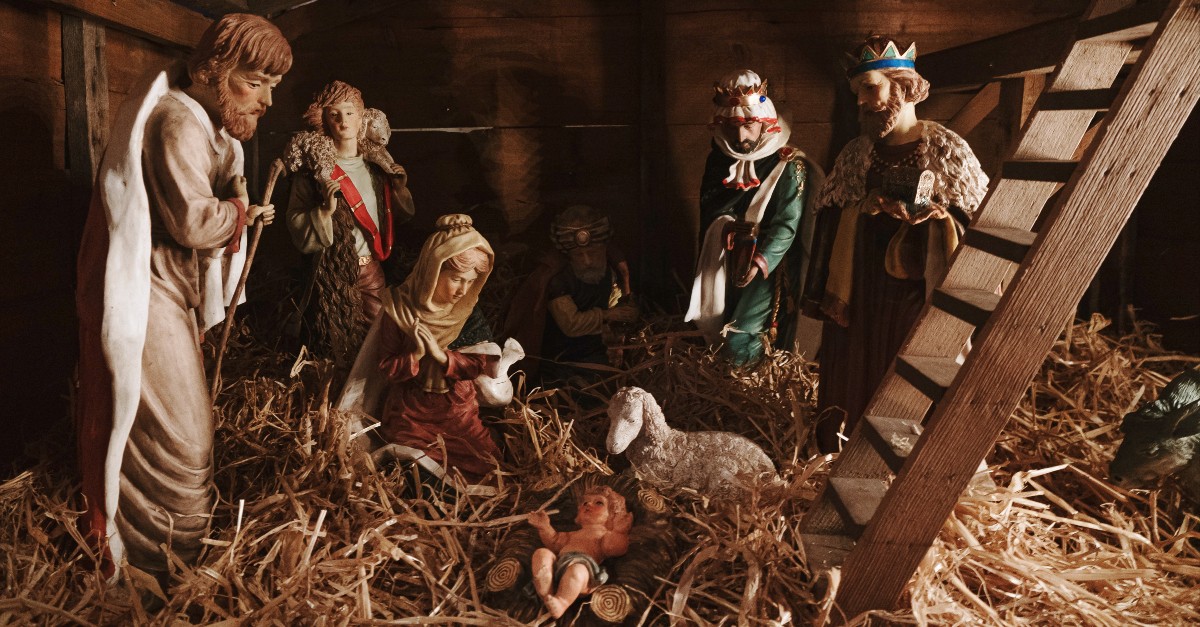
9. The wise men visited Jesus at the manger.

9. The wise men visited Jesus at the manger.

Nativity scenes usually depict the wise men kneeling before Jesus as He lies in His manger bed. Shepherds surround the family with gifts of lambs. 

Because Herod killed baby boys two years of age and under, we assume Jesus was close to two years old at the appearance of the Magi. Mary and Joseph took Jesus to the temple when he was forty days old to dedicate Him to the Lord according to the Law of Moses. After this was accomplished, they went home to Nazareth. 

When Joseph and Mary had done everything required by the Law of the Lord, they returned to Galilee to their own town of Nazareth. (Luke 2:39)

For the wise men to have visited Jesus in Bethlehem, they had to be there when He was a month old or less. Matthew 2:11 tells us they saw the child in a house. 

10. Mary was an unwed mother.

It’s assumed Mary faced a scandal due to her pregnancy. Different words are used in various translations for the state of Mary and Joseph’s relationship, such as espoused or betrothed. But these words meant something different in biblical times than what we think about an engagement. In our day, engagements can be broken, but betrothals were binding agreements. Betrothed couples were considered married; they just didn’t live together for a year. 

The verses in Matthew tell us that when Joseph found out about Mary’s condition, he thought about divorcing her. You don’t get a divorce unless you are married. The King James Version states, “put her away.” One of the definitions of Strong’s G630 is to release from bonds, to divorce.

Then Joseph, her husband, being a just man, and not willing to make her a public example, was minded to put her away privily. (Matthew 1:19 KJV, emphasis mine)

We don’t know the time that Gabriel appeared to Mary with the news of Jesus’ impending birth. The message could have come to her shortly before she and Joseph would have finalized their marriage agreement by living together. In this way, the public would assume Joseph was the father of her baby (John 6:42). Before Jesus’ birth, they went to Bethlehem to obey Caesar’s edict. The sequence of events could have prevented the scandal usually associated with Mary’s condition. Since Mary and Joseph’s betrothal contract meant they were married, she was not an unwed mother.

Photo Credit: ©Unsplash/Alasdair Elmes 

Does it matter what we believe about these traditions?

Does it matter what we believe about these traditions?

Holding on to these age-old customs doesn’t threaten our salvation. We may continue to view these legends because they create stories we don’t want to let go of. 

But what if we absorb incorrect theories about something handed down for decades that affects our relationship with God? This can teach us to examine the scriptures for accuracy and truth according to any doctrine or ideology before we let these opinions affect our lives. 

All Scripture is God-breathed and is useful for teaching, rebuking, correcting and training in righteousness, so that the servant of God may be thoroughly equipped for every good work. (2 Timothy 3:16-17 NIV)

This doesn’t mean we have to stop watching seasonal films or applauding children’s plays. We can still enjoy customary depictions of the accounts in Matthew and Luke. But pulling back the curtain on legendary beliefs can help us celebrate with greater clarity. 

In my new book, Redemption, the Heartbeat of Christmas: What the Birth of Christ Means to the World, I explore some of these traditional beliefs along with the redemptive connection of the Nativity to our lives. 

May this Christmas and all others bring you the peace and joy Jesus was born to give you.

Photo Credit: ©Unsplash/Jessica Fadal 

 

Salem News Channel Today

Sponsored Links


September 26 - Phoenix, AZ
Scottsdale Center for the Performing Arts


November 2 - Detroit, MI
Zion Christian Church in Troy


October 6 - Los Angeles, CA
Pasadena Convention Center


November 5 - San Antonio, TX
Norris Centers – The Grand Red Oak Ballroom


October 8 - Sacramento, CA
William Jessup University


November 7 - Tampa, FL
The Palladium at St. Pete College


October 22 - Minneapolis, MN
Crowne Plaza AiRE


November 15 - San Francisco, CA
Fremont Marriott Silicon Valley


October 23 - Philadelphia, PA
Green Valley Country Club


November 16 - Denver, CO
CU South Denver - Formerly Wildlife Experience


November 2 - Chicago, IL
Chicago Westin Northwest in Itasca


November 21 - Cleveland, OH
Holiday Inn Rockside in Independence


Salem Radio Network Speakers

Larry Elder is an American lawyer, writer, and radio and television personality who calls himself the "Sage of South Central" a district of Los Angeles, Larry says his philosophy is to entertain, inform, provoke and to hopefully uplift. His calling card is "we have a country to save" and to him this means returning to the bedrock Constitutional principles of limited government and maximum personal responsibility. Elder's iconoclastic wit and intellectual agility makes him a particularly attractive voice in a nation that seems weary of traditional racial dialogue.” – Los Angeles Times.

Mike Gallagher Mike Gallagher began his broadcasting career in 1978 in Dayton, Ohio. Today, he is one of the most listened-to talk radio show hosts in America, recently having been ranked in the Talkers Magazine “Heavy Hundred” list – the 100 most important talk radio hosts in America. Prior to being launched into national syndication in 1998, Mike hosted the morning show on WABC-AM in New York City. Today, Talkers Magazine reports that his show is heard by over 3.75 million weekly listeners. Besides his radio work, Mike is seen on Fox News Channel as an on-air contributor, frequently appearing on the cable news giant.

Hugh Hewitt is one of the nation’s leading bloggers and a genuine media revolutionary. He brings that expertise, his wit and what The New Yorker magazine calls his “amiable but relentless manner” to his nationally syndicated show each day.

When Dr. Sebastian Gorka was growing up, he listened to talk radio under his pillow with a transistor radio, dreaming that one day he would be behind the microphone. Beginning New Year’s Day 2019, he got his wish. Gorka now hosts America First every weekday afternoon 3 to 6pm ET. Gorka’s unique story works well on the radio. He is national security analyst for the Fox News Channel and author of two books: "Why We Fight" and "Defeating Jihad." His latest book releasing this fall is “War For America’s Soul.” He is uniquely qualified to fight the culture war and stand up for what is great about America, his adopted home country.

Broadcasting from his home station of KRLA in Los Angeles, the Dennis Prager Show is heard across the country. Everything in life – from politics to religion to relationships – is grist for Dennis’ mill. If it’s interesting, if it affects your life, then Dennis will be talking about it – with passion, humor, insight and wisdom.

Sean Hannity is a conservative radio and television host, and one of the original primetime hosts on the Fox News Channel, where he has appeared since 1996. Sean Hannity began his radio career at a college station in California, before moving on to markets in the Southeast and New York. Today, he’s one of the most listened to on-air voices. Hannity’s radio program went into national syndication on September 10, 2001, and airs on more than 500 stations. Talkers Magazine estimates Hannity’s weekly radio audience at 13.5 million. In 1996 he was hired as one of the original hosts on Fox News Channel. As host of several popular Fox programs, Hannity has become the highest-paid news anchor on television.

Michelle Malkin is a mother, wife, blogger, conservative syndicated columnist, longtime cable TV news commentator, and best-selling author of six books. She started her newspaper journalism career at the Los Angeles Daily News in 1992, moved to the Seattle Times in 1995, and has been penning nationally syndicated newspaper columns for Creators Syndicate since 1999. She is founder of conservative Internet start-ups Hot Air and Twitchy.com. Malkin has received numerous awards for her investigative journalism, including the Council on Governmental Ethics Laws (COGEL) national award for outstanding service for the cause of governmental ethics and leadership (1998), the Reed Irvine Accuracy in Media Award for Investigative Journalism (2006), the Heritage Foundation and Franklin Center for Government & Public Integrity's Breitbart Award for Excellence in Journalism (2013), the Center for Immigration Studies' Eugene Katz Award for Excellence in the Coverage of Immigration Award (2016), and the Manhattan Film Festival's Film Heals Award (2018). Married for 26 years and the mother of two teenage children, she lives with her family in Colorado. Follow her at michellemalkin.com. (Photo reprinted with kind permission from Peter Duke Photography.)

Sponsored by:

10 Traditional Beliefs about Christmas That Aren’t in the Bible

Carbonatix Pre-Player Loader

Audio By Carbonatix

Christmas. This word brings to mind thoughts of snowflakes, peppermint mochas, evergreen trees, baking, parties, and lots and lots of lights. Most of all, Christmas reminds us of Jesus because He is what Christmas is all about.

The beauty of our December celebration outshines any other holiday observance. Each year, the decorating activities begin earlier than the year before. (Although I can do without leftover Halloween skeletons wearing Santa suits!) In some stores, glittery decor is on the shelves along with the back-to-school supplies.

Travel is at an all-time high during the holiday season. Our family customs are part of what makes these times special. Recipes handed down from grandmas, heirloom ornaments, favorite shows, and even look-alike pajamas. But what about the traditions we have adopted from decades of made-up beliefs that aren’t biblical?

Movies, cards, plays, and songs have given us images about the Nativity based on assumptions or wrong interpretations of the scriptures. These presumptions create nice stories, but if we want the truth about Jesus’ birth, we need to examine the record with open eyes.

Here are 10 traditions we believe about Christmas that aren’t accurate according to the biblical account.

Photo Credit: Unsplash/Jonathan Meyer 

1. Mary rode a donkey.

1. Mary rode a donkey.

Hollywood scenes create the drama of Mary and Joseph on the way to Bethlehem, with Mary sitting on a donkey that Joseph leads. Maybe she did ride an animal, but the Bible doesn’t indicate any mode of travel. They could have walked or been given aid from other travelers who shared wagons and offered rides to women who may have accompanied their husbands. 

Anytime we see this silhouette on display, our minds immediately connect it to Mary and Joseph. There’s nothing wrong with thinking about Mary riding on a donkey. But this picture just tells us it’s an assumption derived from old ideas. 

The idea probably stems from the Protoevangelium of James. This writing is not considered scripture as much of it disagrees with what the Word of God has already declared. 

So Joseph also went up from the town of Nazareth in Galilee to Judea, to Bethlehem the town of David, because he belonged to the house and line of David. (Luke 2:4 NIV)

2. Mary traveled alone to visit Elizabeth.

Scenes from some films indicate Mary steps out the door and takes off walking on her own. No one, especially a young girl, would take a trip without protection. She would have traveled with a group of people for safety. Without the modern vehicles we have today, a journey of sixty-five miles or more would require stopping to rest for the night. People who were alone were prey for criminals. Remember the story of the Good Samaritan. He got hijacked by robbers and beaten. 

At that time Mary got ready and hurried to a town in the hill country of Judea, where she entered Zechariah’s home and greeted Elizabeth. (Luke 1:39-40 NIV)

Photo Credit: ©iStock/Getty Images Plus/Boonyachoat 

3. Mary went into labor on the way to Bethlehem.

3. Mary went into labor on the way to Bethlehem.

Another dramatic image from the entertainment industry is Mary bent over in labor pains while riding the donkey. When they finally arrive in Bethlehem, poor, frantic Joseph goes from door to door seeking shelter for his pregnant wife, who is about to give birth. 

While they were there, the time came for the baby to be born. (Luke 2:6 NIV, emphasis mine)

This scripture tells us Jesus was born while they were there, not the day they arrived. This could have been a few days or even weeks after they settled in Bethlehem. We also see Joseph portrayed as delivering the baby. Men in ancient culture didn’t attend childbirth. He would have most certainly gone to find a midwife.

4. Joseph created and repaired things out of wood.

The Bible refers to Joseph’s occupation as a carpenter. This brings to mind pictures of a man creating or repairing items and furniture out of wood. Other than olive and sycamore trees, there wasn’t a lot of material for woodworking in those days. Solomon sought cedars from Lebanon to build the temple because this is where the best lumber could be obtained. 

The word that was translated carpenter in the New Testament comes from the Greek tekton, which means any craftsman or builder. Joseph, more than likely, was a stone mason. 

Isn’t this the carpenter? Isn’t this Mary’s son and the brother of James, Joseph, Judas and Simon? Aren’t his sisters here with us? And they took offense at him. (Mark 6:3 NIV)

Joseph also may have used wood, but most of his work could have been from stone, and he probably worked in the city of Sepphoris, close to Nazareth. Rocks, stones, and caves cover the land of Israel. This material would give any artisan plenty of supplies for their given trade. 

Photo Credit: ©Getty Images/EvgeniyShkolenko

5. The inn was a hotel.

5. The inn was a hotel.

The word translated as inn makes us think of a hotel with certain amenities for guests. The word katalyma just means guest chamber. In the Middle Eastern culture, hospitality was a way of life. Travelers were often put up in people’s homes, especially relatives. Joseph’s lineage was from Bethlehem, and some of his family line could have remained in the village. By the time the couple arrived, all these rooms were filled. That’s why there was no more space in the extra rooms. 

Theories vary as to the location of Jesus’ birth. Sometimes animal dwellings were attached to homes where people placed their livestock at night to keep them safe, and this could be where the couple found lodging. Also, shepherd’s caves gave wandering pilgrims shelter. The historical location is marked by the Church of the Nativity in Bethlehem. Either place outfitted for animals would have contained a manger.

And she gave birth to her firstborn, a son. She wrapped him in cloths and placed him in a manger, because there was no guest room available for them. (Luke 2:7 NIV)

6. The manger was a wooden box of hay.

Again, we have the conventional view of Jesus lying in a box of hay. As shepherds brought their flocks in for the night, they provided water for them. They could have also provided some type of grain for the animals, but the flocks mostly ate from the fields during the day. Water was provided in a trough, or manger, carved from some type of stone. This was Jesus’ baby bed. 

This will be a sign to you: You will find a baby wrapped in cloths and lying in a manger. (Luke 2:12 NIV)

Photo Credit: © Getty Images/ginosphotos 

7. The wise men were kings.

7. The wise men were kings.

Most theologians suggest that the Magi were Zoroastrian priests, possibly from the land of Babylon, where Daniel and his three friends were enslaved by Nebuchadnezzar. The song “We Three Kings” has embedded the image of three men wearing crowns coming to see Jesus with their gifts. They were probably astrologers who studied the sky. God used a miraculous light to lead men who didn’t know Him to worship the King of the Jews. 

The term wise men is derived from the Greek magos, which is where we get the word Magi (short for magician).

After Jesus was born in Bethlehem in Judea, during the time of King Herod, Magi from the east came to Jerusalem. (Matthew 2:1 NIV)

8. There were three wise men.

Because three gifts are mentioned in Matthew’s account of Jesus’ birth, stories have grown about three men traveling to see the Christ Child. Some movies have even given these men names, but the Bible never does. The scripture mentions these offerings, but doesn’t indicate the number of worshippers who brought gifts. Because the word men is used, we can know there was more than one. 

Then they opened their treasures and presented him with gifts of gold, frankincense, and myrrh. (Matthew 2:11b)

Photo Credit: ©Unsplash/Robert Thiemann 

9. The wise men visited Jesus at the manger.

9. The wise men visited Jesus at the manger.

Nativity scenes usually depict the wise men kneeling before Jesus as He lies in His manger bed. Shepherds surround the family with gifts of lambs. 

Because Herod killed baby boys two years of age and under, we assume Jesus was close to two years old at the appearance of the Magi. Mary and Joseph took Jesus to the temple when he was forty days old to dedicate Him to the Lord according to the Law of Moses. After this was accomplished, they went home to Nazareth. 

When Joseph and Mary had done everything required by the Law of the Lord, they returned to Galilee to their own town of Nazareth. (Luke 2:39)

For the wise men to have visited Jesus in Bethlehem, they had to be there when He was a month old or less. Matthew 2:11 tells us they saw the child in a house. 

10. Mary was an unwed mother.

It’s assumed Mary faced a scandal due to her pregnancy. Different words are used in various translations for the state of Mary and Joseph’s relationship, such as espoused or betrothed. But these words meant something different in biblical times than what we think about an engagement. In our day, engagements can be broken, but betrothals were binding agreements. Betrothed couples were considered married; they just didn’t live together for a year. 

The verses in Matthew tell us that when Joseph found out about Mary’s condition, he thought about divorcing her. You don’t get a divorce unless you are married. The King James Version states, “put her away.” One of the definitions of Strong’s G630 is to release from bonds, to divorce.

Then Joseph, her husband, being a just man, and not willing to make her a public example, was minded to put her away privily. (Matthew 1:19 KJV, emphasis mine)

We don’t know the time that Gabriel appeared to Mary with the news of Jesus’ impending birth. The message could have come to her shortly before she and Joseph would have finalized their marriage agreement by living together. In this way, the public would assume Joseph was the father of her baby (John 6:42). Before Jesus’ birth, they went to Bethlehem to obey Caesar’s edict. The sequence of events could have prevented the scandal usually associated with Mary’s condition. Since Mary and Joseph’s betrothal contract meant they were married, she was not an unwed mother.

Photo Credit: ©Unsplash/Alasdair Elmes 

Does it matter what we believe about these traditions?

Does it matter what we believe about these traditions?

Holding on to these age-old customs doesn’t threaten our salvation. We may continue to view these legends because they create stories we don’t want to let go of. 

But what if we absorb incorrect theories about something handed down for decades that affects our relationship with God? This can teach us to examine the scriptures for accuracy and truth according to any doctrine or ideology before we let these opinions affect our lives. 

All Scripture is God-breathed and is useful for teaching, rebuking, correcting and training in righteousness, so that the servant of God may be thoroughly equipped for every good work. (2 Timothy 3:16-17 NIV)

This doesn’t mean we have to stop watching seasonal films or applauding children’s plays. We can still enjoy customary depictions of the accounts in Matthew and Luke. But pulling back the curtain on legendary beliefs can help us celebrate with greater clarity. 

In my new book, Redemption, the Heartbeat of Christmas: What the Birth of Christ Means to the World, I explore some of these traditional beliefs along with the redemptive connection of the Nativity to our lives. 

May this Christmas and all others bring you the peace and joy Jesus was born to give you.

Photo Credit: ©Unsplash/Jessica Fadal 

 

Salem News Channel Today

Sponsored Links

On Air & Up Next

See the Full Program Guide