Why Is the Book of Enoch Not Part of the Bible?

Carbonatix Pre-Player Loader

Audio By Carbonatix

The Book of Enoch is an ancient Hebrew apocalyptic religious text and contains stories of the origins of the demons and Nephilim. Some of the stories have influenced certain theological ideas (such as those about angels and demons, specifically the Watchers) and are consistent with the references made in Genesis 6:1-2 regarding the fall of the sons of God.

What is most commonly known as the Book of Enoch is only the first book. The entire text is actually a collection of three different books. 2 and 3 Enoch are much shorter and thought to have been written at a different time. Copies of the earliest sections of the first Book of Enoch were found among the Dead Sea Scrolls, indicating that while they are not a part of the Biblical Canon, they were used as historical books for teaching and learning. In fact, it is referenced by Jude, the half-brother of Jesus, in Jude 14-15.

Because only sections of 1 Enoch were found in the Dead Sea Scrolls, there is debate on when the Book of Enoch was written and who the author is. Some think it was written between 200-300 AD, which would be after the book of Malachi, and before the New Testament. Others believe the first Book of Enoch was written much earlier by the patriarch Enoch, who was the father of Methuselah and the great-grandfather of Noah. Because it is a compilation of several separate works, there could be several different authors over a time span of many years. 

Why Was the Book of Enoch Not Included in the Biblical Canon?

The Book of Enoch is not recognized as the inspired Word of God or a part of the Biblical Canon. The word canon, in classical Greek, means straight rod or ruler and refers to any officially recognized collection of authoritative writings for a religion or group. To be included in the Canon of Scripture, a book has to fit into certain parameters set by early church leaders.

“These books were largely decided on by virtue of three factors: their divine qualities, reception by the churches, and connection to an apostle,” writes Michael J. Kruger at The Gospel Coalition.

There were a variety of reasons for a book to be rejected as a part of the Canon. Some of those include shifts in tone that don’t fit the style and narrative of the book and could have been added later. The extra stories of Esther are a clear example of this one. Another reason is the lack of manuscript evidence.

The Biblical Canon was ratified by the third Council of Carthage around 397 A.D, and the Book of Enoch was not included as a part of the Canon. While some parts of the Book of Enoch contain value, at some point, the book diverges from a biblical view, and the early church did not consider it consistent with other books of scripture. Therefore, it was not included in the Biblical Canon, or what we know to be the Holy Bible today.

Did Early Christians Read and Quote the Book of Enoch?

Early Christians did read and quote the Book of Enoch. As mentioned before, it is referenced in the Book of Jude, and it appears the early church was familiar with teachings from the book. In fact, Tertullian and Origen, both early Christian writers, wrote about it, so we can confidently say it was well known within the early church. 

We can also assuredly say that while it’s clear the Book of Enoch was not a part of the Biblical Canon, it was used as a historical book for teaching and learning because copies of the earliest sections of 1 Enoch were found among the Dead Sea Scrolls. The early church would have been familiar with the teachings and understood them. In fact, some of its contents, especially that of Noah in book three, could have been legendary for early Christians. 

While the early church would have known it as a historical and literary book, they would not have recognized it as sound theological teaching, and we shouldn’t either.

Which Churches Still Recognize the Book of Enoch Today?

Today, the Ethiopian Orthodox Church is the only Church that considers the Book of Enoch to be scripture, and makes that recognition because of its appearance in Jude, but no other major denomination considers it to be inspired Scripture.

The Book of Enoch is identified in the Pseudepigrapha, which is a large collection of Jewish writings not included in the Biblical Canon, and they are generally considered to have been written between the Old Testament and the New Testament. 

Pseudepigrapha comes from the Greek word pseudo, which means false, and ephigraphein, which means to inscribe or write falsely. This doesn’t mean these are false teachings, only that they are not a part of the Biblical Canon. 

These are not to be confused with the books of the Apocrypha (Greek for “secret”), which are generally recognized by the Roman Catholic Church, the Eastern Orthodox Church, and a few other groups as scripture, but not by the Protestant church. 

What Does the Bible Say about Extra-Biblical Writings? 

While extra-biblical writings can offer valuable insights and context, they are not divinely inspired and should be read with discernment, serving as a tool to understand Scripture, not a replacement. 

2 Timothy 3:16 states, “All Scripture is God-breathed and useful for teaching, rebuking, correcting, and training in righteousness…” 

John offers a warning in Revelation to those who add or subtract from the Inspired Word of God. Revelation 22:18-19 states, “If anyone adds anything to them, God will add to that person the plagues described in this scroll. And if anyone takes words away from this scroll of prophecy, God will take away from that person any share in the tree of life and in the Holy City, which are described in this scroll.” 

Ultimately, the Holy Bible is the final authority for believers and should always be used as the final “ruler” by which we interpret other texts. 

Conclusion: Is It Okay for Christians to Read the Book of Enoch? 

Yes, it is okay for Christians to read the Book of Enoch, as long as it is read within the context of historical documents, and not as the inspired Word of God. Christians should read it with a discerning heart, understanding it is not authoritative or doctrinal. 

The world has always had a large number of ideas, religions, and agendas, from early in the Old Testament to today. A Christian’s job is to read the Holy Bible as the ultimate standard and use other teachings, including the Book of Enoch, as a way to discern the differences between the inspired Word of God and other religious books. 

The Book of Enoch is not included in the Biblical Canon for good reason, and Christians should reject it as the inspired Word of God. But Christians should not be afraid to read it because it’s not a part of the Canon. In fact, Christians read countless other books that are not a part of the Canon, and the Book of Enoch should be treated the same. It is another book to add to your tools to understand and speak intelligently with others.

Remember, the Book of Enoch was read by the early Church and known well enough to be referenced by Jude, and therefore, Christians can read it as we read all other books—with discernment.

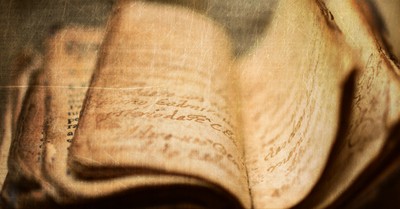
Photo credit: ©Getty Images/BlackQuetzal

Kate Huff headshotKate Huff is an author, freelance writer, and newsletter specialist who helps entrepreneurs and creatives share their stories with the world. By day, she crafts content and strategy for others; by night, she dives into her own fictional worlds, chasing down characters who rarely behave as planned.

A firm believer that well-written stories have the power to change the world, Kate blends her love of storytelling with her passion for community. When she’s not writing, you can find her teaching workshops, sipping coffee, or dreaming up new ways to connect readers and writers through her brand Newsletters Made Simple.

 

Salem News Channel Today

Sponsored Links


September 26 - Phoenix, AZ
Scottsdale Center for the Performing Arts


November 2 - Detroit, MI
Zion Christian Church in Troy


October 6 - Los Angeles, CA
Pasadena Convention Center


November 5 - San Antonio, TX
Norris Centers – The Grand Red Oak Ballroom


October 8 - Sacramento, CA
William Jessup University


November 7 - Tampa, FL
The Palladium at St. Pete College


October 22 - Minneapolis, MN
Crowne Plaza AiRE


November 15 - San Francisco, CA
Fremont Marriott Silicon Valley


October 23 - Philadelphia, PA
Green Valley Country Club


November 16 - Denver, CO
CU South Denver - Formerly Wildlife Experience


November 2 - Chicago, IL
Chicago Westin Northwest in Itasca


November 21 - Cleveland, OH
Holiday Inn Rockside in Independence


Salem Radio Network Speakers

Larry Elder is an American lawyer, writer, and radio and television personality who calls himself the "Sage of South Central" a district of Los Angeles, Larry says his philosophy is to entertain, inform, provoke and to hopefully uplift. His calling card is "we have a country to save" and to him this means returning to the bedrock Constitutional principles of limited government and maximum personal responsibility. Elder's iconoclastic wit and intellectual agility makes him a particularly attractive voice in a nation that seems weary of traditional racial dialogue.” – Los Angeles Times.

Mike Gallagher Mike Gallagher began his broadcasting career in 1978 in Dayton, Ohio. Today, he is one of the most listened-to talk radio show hosts in America, recently having been ranked in the Talkers Magazine “Heavy Hundred” list – the 100 most important talk radio hosts in America. Prior to being launched into national syndication in 1998, Mike hosted the morning show on WABC-AM in New York City. Today, Talkers Magazine reports that his show is heard by over 3.75 million weekly listeners. Besides his radio work, Mike is seen on Fox News Channel as an on-air contributor, frequently appearing on the cable news giant.

Hugh Hewitt is one of the nation’s leading bloggers and a genuine media revolutionary. He brings that expertise, his wit and what The New Yorker magazine calls his “amiable but relentless manner” to his nationally syndicated show each day.

When Dr. Sebastian Gorka was growing up, he listened to talk radio under his pillow with a transistor radio, dreaming that one day he would be behind the microphone. Beginning New Year’s Day 2019, he got his wish. Gorka now hosts America First every weekday afternoon 3 to 6pm ET. Gorka’s unique story works well on the radio. He is national security analyst for the Fox News Channel and author of two books: "Why We Fight" and "Defeating Jihad." His latest book releasing this fall is “War For America’s Soul.” He is uniquely qualified to fight the culture war and stand up for what is great about America, his adopted home country.

Broadcasting from his home station of KRLA in Los Angeles, the Dennis Prager Show is heard across the country. Everything in life – from politics to religion to relationships – is grist for Dennis’ mill. If it’s interesting, if it affects your life, then Dennis will be talking about it – with passion, humor, insight and wisdom.

Sean Hannity is a conservative radio and television host, and one of the original primetime hosts on the Fox News Channel, where he has appeared since 1996. Sean Hannity began his radio career at a college station in California, before moving on to markets in the Southeast and New York. Today, he’s one of the most listened to on-air voices. Hannity’s radio program went into national syndication on September 10, 2001, and airs on more than 500 stations. Talkers Magazine estimates Hannity’s weekly radio audience at 13.5 million. In 1996 he was hired as one of the original hosts on Fox News Channel. As host of several popular Fox programs, Hannity has become the highest-paid news anchor on television.

Michelle Malkin is a mother, wife, blogger, conservative syndicated columnist, longtime cable TV news commentator, and best-selling author of six books. She started her newspaper journalism career at the Los Angeles Daily News in 1992, moved to the Seattle Times in 1995, and has been penning nationally syndicated newspaper columns for Creators Syndicate since 1999. She is founder of conservative Internet start-ups Hot Air and Twitchy.com. Malkin has received numerous awards for her investigative journalism, including the Council on Governmental Ethics Laws (COGEL) national award for outstanding service for the cause of governmental ethics and leadership (1998), the Reed Irvine Accuracy in Media Award for Investigative Journalism (2006), the Heritage Foundation and Franklin Center for Government & Public Integrity's Breitbart Award for Excellence in Journalism (2013), the Center for Immigration Studies' Eugene Katz Award for Excellence in the Coverage of Immigration Award (2016), and the Manhattan Film Festival's Film Heals Award (2018). Married for 26 years and the mother of two teenage children, she lives with her family in Colorado. Follow her at michellemalkin.com. (Photo reprinted with kind permission from Peter Duke Photography.)

Sponsored by:

Why Is the Book of Enoch Not Part of the Bible?

Carbonatix Pre-Player Loader

Audio By Carbonatix

The Book of Enoch is an ancient Hebrew apocalyptic religious text and contains stories of the origins of the demons and Nephilim. Some of the stories have influenced certain theological ideas (such as those about angels and demons, specifically the Watchers) and are consistent with the references made in Genesis 6:1-2 regarding the fall of the sons of God.

What is most commonly known as the Book of Enoch is only the first book. The entire text is actually a collection of three different books. 2 and 3 Enoch are much shorter and thought to have been written at a different time. Copies of the earliest sections of the first Book of Enoch were found among the Dead Sea Scrolls, indicating that while they are not a part of the Biblical Canon, they were used as historical books for teaching and learning. In fact, it is referenced by Jude, the half-brother of Jesus, in Jude 14-15.

Because only sections of 1 Enoch were found in the Dead Sea Scrolls, there is debate on when the Book of Enoch was written and who the author is. Some think it was written between 200-300 AD, which would be after the book of Malachi, and before the New Testament. Others believe the first Book of Enoch was written much earlier by the patriarch Enoch, who was the father of Methuselah and the great-grandfather of Noah. Because it is a compilation of several separate works, there could be several different authors over a time span of many years. 

Why Was the Book of Enoch Not Included in the Biblical Canon?

The Book of Enoch is not recognized as the inspired Word of God or a part of the Biblical Canon. The word canon, in classical Greek, means straight rod or ruler and refers to any officially recognized collection of authoritative writings for a religion or group. To be included in the Canon of Scripture, a book has to fit into certain parameters set by early church leaders.

“These books were largely decided on by virtue of three factors: their divine qualities, reception by the churches, and connection to an apostle,” writes Michael J. Kruger at The Gospel Coalition.

There were a variety of reasons for a book to be rejected as a part of the Canon. Some of those include shifts in tone that don’t fit the style and narrative of the book and could have been added later. The extra stories of Esther are a clear example of this one. Another reason is the lack of manuscript evidence.

The Biblical Canon was ratified by the third Council of Carthage around 397 A.D, and the Book of Enoch was not included as a part of the Canon. While some parts of the Book of Enoch contain value, at some point, the book diverges from a biblical view, and the early church did not consider it consistent with other books of scripture. Therefore, it was not included in the Biblical Canon, or what we know to be the Holy Bible today.

Did Early Christians Read and Quote the Book of Enoch?

Early Christians did read and quote the Book of Enoch. As mentioned before, it is referenced in the Book of Jude, and it appears the early church was familiar with teachings from the book. In fact, Tertullian and Origen, both early Christian writers, wrote about it, so we can confidently say it was well known within the early church. 

We can also assuredly say that while it’s clear the Book of Enoch was not a part of the Biblical Canon, it was used as a historical book for teaching and learning because copies of the earliest sections of 1 Enoch were found among the Dead Sea Scrolls. The early church would have been familiar with the teachings and understood them. In fact, some of its contents, especially that of Noah in book three, could have been legendary for early Christians. 

While the early church would have known it as a historical and literary book, they would not have recognized it as sound theological teaching, and we shouldn’t either.

Which Churches Still Recognize the Book of Enoch Today?

Today, the Ethiopian Orthodox Church is the only Church that considers the Book of Enoch to be scripture, and makes that recognition because of its appearance in Jude, but no other major denomination considers it to be inspired Scripture.

The Book of Enoch is identified in the Pseudepigrapha, which is a large collection of Jewish writings not included in the Biblical Canon, and they are generally considered to have been written between the Old Testament and the New Testament. 

Pseudepigrapha comes from the Greek word pseudo, which means false, and ephigraphein, which means to inscribe or write falsely. This doesn’t mean these are false teachings, only that they are not a part of the Biblical Canon. 

These are not to be confused with the books of the Apocrypha (Greek for “secret”), which are generally recognized by the Roman Catholic Church, the Eastern Orthodox Church, and a few other groups as scripture, but not by the Protestant church. 

What Does the Bible Say about Extra-Biblical Writings? 

While extra-biblical writings can offer valuable insights and context, they are not divinely inspired and should be read with discernment, serving as a tool to understand Scripture, not a replacement. 

2 Timothy 3:16 states, “All Scripture is God-breathed and useful for teaching, rebuking, correcting, and training in righteousness…” 

John offers a warning in Revelation to those who add or subtract from the Inspired Word of God. Revelation 22:18-19 states, “If anyone adds anything to them, God will add to that person the plagues described in this scroll. And if anyone takes words away from this scroll of prophecy, God will take away from that person any share in the tree of life and in the Holy City, which are described in this scroll.” 

Ultimately, the Holy Bible is the final authority for believers and should always be used as the final “ruler” by which we interpret other texts. 

Conclusion: Is It Okay for Christians to Read the Book of Enoch? 

Yes, it is okay for Christians to read the Book of Enoch, as long as it is read within the context of historical documents, and not as the inspired Word of God. Christians should read it with a discerning heart, understanding it is not authoritative or doctrinal. 

The world has always had a large number of ideas, religions, and agendas, from early in the Old Testament to today. A Christian’s job is to read the Holy Bible as the ultimate standard and use other teachings, including the Book of Enoch, as a way to discern the differences between the inspired Word of God and other religious books. 

The Book of Enoch is not included in the Biblical Canon for good reason, and Christians should reject it as the inspired Word of God. But Christians should not be afraid to read it because it’s not a part of the Canon. In fact, Christians read countless other books that are not a part of the Canon, and the Book of Enoch should be treated the same. It is another book to add to your tools to understand and speak intelligently with others.

Remember, the Book of Enoch was read by the early Church and known well enough to be referenced by Jude, and therefore, Christians can read it as we read all other books—with discernment.

Photo credit: ©Getty Images/BlackQuetzal

Kate Huff headshotKate Huff is an author, freelance writer, and newsletter specialist who helps entrepreneurs and creatives share their stories with the world. By day, she crafts content and strategy for others; by night, she dives into her own fictional worlds, chasing down characters who rarely behave as planned.

A firm believer that well-written stories have the power to change the world, Kate blends her love of storytelling with her passion for community. When she’s not writing, you can find her teaching workshops, sipping coffee, or dreaming up new ways to connect readers and writers through her brand Newsletters Made Simple.

 

Salem News Channel Today

Sponsored Links

On Air & Up Next

See the Full Program Guide