Can Knowing about the Enneagram Help Me in My Christian Journey?

Carbonatix Pre-Player Loader

Audio By Carbonatix

I heard about the Enneagram a few years ago when people started posting things on social media asking, “Which number are you?” I figured it was some new pop-culture personality test and didn’t give it much thought. Until various authors I respect in the writers group I belong to, the American Christian Fiction Writers, started posting things about how the Enneagram was helping them craft their characters. That made me pay attention.

Then I heard about a faith-based book titled The Road Back To You, by Ian Morgan Cron and Suzanne Stabile, and began to read. In practical, authentic, and highly personal ways, the authors unpack what each number on the Enneagram is all about, and most importantly, why knowing our number can help lead to stronger discipleship for those who follow Jesus.

The authors’ valid and thought-provoking argument says that knowing oneself helps us know our weaknesses, and it can help us understand why we fall into temptation traps. It can also help us understand what motivates us at a core level, why we develop certain relationships, perhaps even why we gravitate towards certain careers — and how all of this knowledge can help us know Jesus on a deeper and more intimate level.

I’ve always enjoyed personality tests, such as the Myers-Briggs Type Indicator, but I never considered before reading The Road Back To You how personality tests can help from a Christian perspective. But it makes sense — Christians are all called to discipleship, and understanding ourselves better helps us become stronger, better disciples.

Here, I explore what is the Enneagram, what the various numbers mean, and how this can help us in our Christian walk as believers.

What Is the Enneagram?

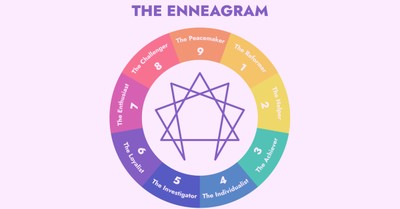
In very basic terms, the Enneagram is an ancient personality typing system. Picture a big circle with the numbers one through nine on it. By answering a number of questions, Enneagram personality tests help us narrow down which numbered personality we fall into — that is, whether we have a One personality, a Two, and so on, all the way up to Nine.

Some of these numbers do overlap with the numbers next to them. For example, I am supposedly a Three wing Two, which means that while I identify as a Three (also known as the overachiever), I also strongly identify with the number next to me, a Two (also known as the helper). It perhaps explains why I’m motivated by a deep need to help others in the very best way I possibly can.

Here is a simplistic rundown of what each of the types are:

Number 1: The Perfectionist

The Perfectionist is someone who feels a deep desire to do everything the right way. They sense a lot of unrighteousness in the world and want to do what they can to set things right. This personality tells to have a lot of self-discipline and self-control, to live by principles and with purpose. They often feel that if they can just get things right, be as perfect and principled as possible, then all will be well. Their self-worth is tied up in this.

Number 2: The Helper 

The Helper personality tends to be just that: helpful. Caring and with a tendency toward people-pleasing, this is the type of person who goes to great lengths to make you feel welcome and hospitable in their home, and they seem to do a great deal of thinking about what it takes to make people feel comfortable, loved, and cared for. They also tend to feel like their value comes from this. They often feel that as long as they can be helpful, they are lovable and worthy.

Number 3: The Overachiever 

This personality tends to be very driven to achieve and do things well. Whether they are a stay-at-home mom or the chief executive of a Fortune 500 company, whatever they do, they give it their all. They’re often concerned with how they are perceived and go to great lengths to represent their role or profession well. They often feel their value is rooted in what they do in this world and how well they do it rather than who they are.

Number 4: The Individual 

This personality type relishes being a little bit different. They know who they are and appreciate this. At times they can be dramatic, sensitive, and temperamental. They often feel their value is in their ability to stand out from the crowd and be different.

Number 5: The Skeptic/The Investigator 

This personality type tends to be thoughtful, reserved, and extremely interested in knowing the facts. They tend to keep a lot of personal details about themselves private, and they can sometimes be compartmentalized in certain areas of their lives. They often have a deep desire to learn and know as much as possible, and they can sometimes be isolated. They are usually extremely perceptive.

Number 6: The Loyalist 

This personality type is security-oriented. Extremely responsible and loyal, they tend to be committed, and they often explore all options and analyze everything that can possibly go wrong before jumping into a task. The type can also experience a lot of anxiety.

Number 7: The Enthusiast

This personality type can be a ton of fun. They’re enthusiastic and excitable, with much curiosity about many different types of things. There often on the go, and sometimes can appear scattered or distracted. They can be spontaneous and love having the freedom to explore and do many different things.

Number 8: The Challenger

The personality type of The Challenger is one who feels deep dissatisfaction with injustice and oppression and often feels compelled to stand up for what they believe in. This type often jumps in for the underdog or speaks up when no one else will. They can be determined and sometimes come across as oppositional, but it’s not because they are “a bully” by any means. Rather, they want to set things right in the world and believe they can play an important role in justice.

Number 9: The Peacemaker

This personality type is all about going with the flow. They often agree with others simply to make peace. They mediate situations, smooth over disgruntled feelings in group dynamics, and tend to be very easy-going.

What Does This Say about Me? 

Obviously these are types, not boxes or compartments we are locked into. We — God-designed, beautiful, precious souls — are so much more than mere “personality traits.” But most of us do fall into a particular type, or at least one type more than others.

How Can Knowing about Our Personality Type Help Us?

Knowing how we tend to be in life and among people can teach us a lot about ourselves. It can help us recognize what motivates us and understand what can often tempt us. For example, some types are motivated by feelings, pride, or selfish desires more than others. Others are motivated by fear, or have trouble controlling their anger, even if they don’t think they’re angry about anything at all. Knowing ourselves deeply can help us dig into why we experience certain temptations.

It also helps us love ourselves better. It’s important to remember that God created humans in God’s image. Therefore, each of these personality types is, in essence, part of God’s master personality. God is all of these things and more, and together we all comprise one big multifaceted person — that is, the body of Christ. As the apostle Paul reminds us in 1 Corinthians 12:27, “Now you are the body of Christ, and each one of you is a part of it."

How Else Can Knowing Our Personality Types Help Us?

Knowing our personality types can also help us understand how we relate to others in our world. It can explain the behavior of those close to us, or help us address conflicts in our relationships. For example, we might realize our spouse is a certain type, our parent is another type, and our child is a third. Understanding their types can help make us more patient and tolerant of who they are, and also perhaps help us hold them accountable in a better way.

Reading over my basic rundown is not meant to tell you everything you need to know about the Enneagram, but rather to whet your appetite to know more if you feel God nudging you toward greater self-exploration or greater understanding about your relationships. In addition to The Road Back To You, there are a host of other Enneagram books available.

I encourage you to visit your local library or bookseller to learn more.

More from this author:
7 Tips to Make – and Keep – Good Christian Friends
6 Ways to Embrace Rest as a Spiritual Discipline
7 Ways to Ease Loneliness and Cultivate Christian Friendships

Photo credit: ©Getty Images/Daniela Designs


Jessica Brodie author photo headshotJessica Brodie is an award-winning Christian novelist, journalist, editor, blogger, and writing coach. She is also the editor of the South Carolina United Methodist Advocate, the oldest newspaper in Methodism. Her Christian contemporary novel, The Memory Garden, released this spring and has been in the top ten Christian women’s fiction and Christian contemporary books on Amazon; book two in the series releases this fall. Learn more about Jessica’s writing ministry and read her faith blog at https://jessicabrodie.com. She has a YouTube devotional, and you can also connect with her on Facebook, Instagram, and more. She’s also produced a free eBook, A God-Centered Life: 10 Faith-Based Practices When You’re Feeling Anxious, Grumpy, or Stressed


Salem News Channel Today

Sponsored Links


September 26 - Phoenix, AZ
Scottsdale Center for the Performing Arts


November 2 - Detroit, MI
Zion Christian Church in Troy


October 6 - Los Angeles, CA
Pasadena Convention Center


November 5 - San Antonio, TX
Norris Centers – The Grand Red Oak Ballroom


October 8 - Sacramento, CA
William Jessup University


November 7 - Tampa, FL
The Palladium at St. Pete College


October 22 - Minneapolis, MN
Crowne Plaza AiRE


November 15 - San Francisco, CA
Fremont Marriott Silicon Valley


October 23 - Philadelphia, PA
Green Valley Country Club


November 16 - Denver, CO
CU South Denver - Formerly Wildlife Experience


November 2 - Chicago, IL
Chicago Westin Northwest in Itasca


November 21 - Cleveland, OH
Holiday Inn Rockside in Independence


Salem Radio Network Speakers

Larry Elder is an American lawyer, writer, and radio and television personality who calls himself the "Sage of South Central" a district of Los Angeles, Larry says his philosophy is to entertain, inform, provoke and to hopefully uplift. His calling card is "we have a country to save" and to him this means returning to the bedrock Constitutional principles of limited government and maximum personal responsibility. Elder's iconoclastic wit and intellectual agility makes him a particularly attractive voice in a nation that seems weary of traditional racial dialogue.” – Los Angeles Times.

Mike Gallagher Mike Gallagher began his broadcasting career in 1978 in Dayton, Ohio. Today, he is one of the most listened-to talk radio show hosts in America, recently having been ranked in the Talkers Magazine “Heavy Hundred” list – the 100 most important talk radio hosts in America. Prior to being launched into national syndication in 1998, Mike hosted the morning show on WABC-AM in New York City. Today, Talkers Magazine reports that his show is heard by over 3.75 million weekly listeners. Besides his radio work, Mike is seen on Fox News Channel as an on-air contributor, frequently appearing on the cable news giant.

Hugh Hewitt is one of the nation’s leading bloggers and a genuine media revolutionary. He brings that expertise, his wit and what The New Yorker magazine calls his “amiable but relentless manner” to his nationally syndicated show each day.

When Dr. Sebastian Gorka was growing up, he listened to talk radio under his pillow with a transistor radio, dreaming that one day he would be behind the microphone. Beginning New Year’s Day 2019, he got his wish. Gorka now hosts America First every weekday afternoon 3 to 6pm ET. Gorka’s unique story works well on the radio. He is national security analyst for the Fox News Channel and author of two books: "Why We Fight" and "Defeating Jihad." His latest book releasing this fall is “War For America’s Soul.” He is uniquely qualified to fight the culture war and stand up for what is great about America, his adopted home country.

Broadcasting from his home station of KRLA in Los Angeles, the Dennis Prager Show is heard across the country. Everything in life – from politics to religion to relationships – is grist for Dennis’ mill. If it’s interesting, if it affects your life, then Dennis will be talking about it – with passion, humor, insight and wisdom.

Sean Hannity is a conservative radio and television host, and one of the original primetime hosts on the Fox News Channel, where he has appeared since 1996. Sean Hannity began his radio career at a college station in California, before moving on to markets in the Southeast and New York. Today, he’s one of the most listened to on-air voices. Hannity’s radio program went into national syndication on September 10, 2001, and airs on more than 500 stations. Talkers Magazine estimates Hannity’s weekly radio audience at 13.5 million. In 1996 he was hired as one of the original hosts on Fox News Channel. As host of several popular Fox programs, Hannity has become the highest-paid news anchor on television.

Michelle Malkin is a mother, wife, blogger, conservative syndicated columnist, longtime cable TV news commentator, and best-selling author of six books. She started her newspaper journalism career at the Los Angeles Daily News in 1992, moved to the Seattle Times in 1995, and has been penning nationally syndicated newspaper columns for Creators Syndicate since 1999. She is founder of conservative Internet start-ups Hot Air and Twitchy.com. Malkin has received numerous awards for her investigative journalism, including the Council on Governmental Ethics Laws (COGEL) national award for outstanding service for the cause of governmental ethics and leadership (1998), the Reed Irvine Accuracy in Media Award for Investigative Journalism (2006), the Heritage Foundation and Franklin Center for Government & Public Integrity's Breitbart Award for Excellence in Journalism (2013), the Center for Immigration Studies' Eugene Katz Award for Excellence in the Coverage of Immigration Award (2016), and the Manhattan Film Festival's Film Heals Award (2018). Married for 26 years and the mother of two teenage children, she lives with her family in Colorado. Follow her at michellemalkin.com. (Photo reprinted with kind permission from Peter Duke Photography.)

Sponsored by:

Can Knowing about the Enneagram Help Me in My Christian Journey?

Carbonatix Pre-Player Loader

Audio By Carbonatix

I heard about the Enneagram a few years ago when people started posting things on social media asking, “Which number are you?” I figured it was some new pop-culture personality test and didn’t give it much thought. Until various authors I respect in the writers group I belong to, the American Christian Fiction Writers, started posting things about how the Enneagram was helping them craft their characters. That made me pay attention.

Then I heard about a faith-based book titled The Road Back To You, by Ian Morgan Cron and Suzanne Stabile, and began to read. In practical, authentic, and highly personal ways, the authors unpack what each number on the Enneagram is all about, and most importantly, why knowing our number can help lead to stronger discipleship for those who follow Jesus.

The authors’ valid and thought-provoking argument says that knowing oneself helps us know our weaknesses, and it can help us understand why we fall into temptation traps. It can also help us understand what motivates us at a core level, why we develop certain relationships, perhaps even why we gravitate towards certain careers — and how all of this knowledge can help us know Jesus on a deeper and more intimate level.

I’ve always enjoyed personality tests, such as the Myers-Briggs Type Indicator, but I never considered before reading The Road Back To You how personality tests can help from a Christian perspective. But it makes sense — Christians are all called to discipleship, and understanding ourselves better helps us become stronger, better disciples.

Here, I explore what is the Enneagram, what the various numbers mean, and how this can help us in our Christian walk as believers.

What Is the Enneagram?

In very basic terms, the Enneagram is an ancient personality typing system. Picture a big circle with the numbers one through nine on it. By answering a number of questions, Enneagram personality tests help us narrow down which numbered personality we fall into — that is, whether we have a One personality, a Two, and so on, all the way up to Nine.

Some of these numbers do overlap with the numbers next to them. For example, I am supposedly a Three wing Two, which means that while I identify as a Three (also known as the overachiever), I also strongly identify with the number next to me, a Two (also known as the helper). It perhaps explains why I’m motivated by a deep need to help others in the very best way I possibly can.

Here is a simplistic rundown of what each of the types are:

Number 1: The Perfectionist

The Perfectionist is someone who feels a deep desire to do everything the right way. They sense a lot of unrighteousness in the world and want to do what they can to set things right. This personality tells to have a lot of self-discipline and self-control, to live by principles and with purpose. They often feel that if they can just get things right, be as perfect and principled as possible, then all will be well. Their self-worth is tied up in this.

Number 2: The Helper 

The Helper personality tends to be just that: helpful. Caring and with a tendency toward people-pleasing, this is the type of person who goes to great lengths to make you feel welcome and hospitable in their home, and they seem to do a great deal of thinking about what it takes to make people feel comfortable, loved, and cared for. They also tend to feel like their value comes from this. They often feel that as long as they can be helpful, they are lovable and worthy.

Number 3: The Overachiever 

This personality tends to be very driven to achieve and do things well. Whether they are a stay-at-home mom or the chief executive of a Fortune 500 company, whatever they do, they give it their all. They’re often concerned with how they are perceived and go to great lengths to represent their role or profession well. They often feel their value is rooted in what they do in this world and how well they do it rather than who they are.

Number 4: The Individual 

This personality type relishes being a little bit different. They know who they are and appreciate this. At times they can be dramatic, sensitive, and temperamental. They often feel their value is in their ability to stand out from the crowd and be different.

Number 5: The Skeptic/The Investigator 

This personality type tends to be thoughtful, reserved, and extremely interested in knowing the facts. They tend to keep a lot of personal details about themselves private, and they can sometimes be compartmentalized in certain areas of their lives. They often have a deep desire to learn and know as much as possible, and they can sometimes be isolated. They are usually extremely perceptive.

Number 6: The Loyalist 

This personality type is security-oriented. Extremely responsible and loyal, they tend to be committed, and they often explore all options and analyze everything that can possibly go wrong before jumping into a task. The type can also experience a lot of anxiety.

Number 7: The Enthusiast

This personality type can be a ton of fun. They’re enthusiastic and excitable, with much curiosity about many different types of things. There often on the go, and sometimes can appear scattered or distracted. They can be spontaneous and love having the freedom to explore and do many different things.

Number 8: The Challenger

The personality type of The Challenger is one who feels deep dissatisfaction with injustice and oppression and often feels compelled to stand up for what they believe in. This type often jumps in for the underdog or speaks up when no one else will. They can be determined and sometimes come across as oppositional, but it’s not because they are “a bully” by any means. Rather, they want to set things right in the world and believe they can play an important role in justice.

Number 9: The Peacemaker

This personality type is all about going with the flow. They often agree with others simply to make peace. They mediate situations, smooth over disgruntled feelings in group dynamics, and tend to be very easy-going.

What Does This Say about Me? 

Obviously these are types, not boxes or compartments we are locked into. We — God-designed, beautiful, precious souls — are so much more than mere “personality traits.” But most of us do fall into a particular type, or at least one type more than others.

How Can Knowing about Our Personality Type Help Us?

Knowing how we tend to be in life and among people can teach us a lot about ourselves. It can help us recognize what motivates us and understand what can often tempt us. For example, some types are motivated by feelings, pride, or selfish desires more than others. Others are motivated by fear, or have trouble controlling their anger, even if they don’t think they’re angry about anything at all. Knowing ourselves deeply can help us dig into why we experience certain temptations.

It also helps us love ourselves better. It’s important to remember that God created humans in God’s image. Therefore, each of these personality types is, in essence, part of God’s master personality. God is all of these things and more, and together we all comprise one big multifaceted person — that is, the body of Christ. As the apostle Paul reminds us in 1 Corinthians 12:27, “Now you are the body of Christ, and each one of you is a part of it."

How Else Can Knowing Our Personality Types Help Us?

Knowing our personality types can also help us understand how we relate to others in our world. It can explain the behavior of those close to us, or help us address conflicts in our relationships. For example, we might realize our spouse is a certain type, our parent is another type, and our child is a third. Understanding their types can help make us more patient and tolerant of who they are, and also perhaps help us hold them accountable in a better way.

Reading over my basic rundown is not meant to tell you everything you need to know about the Enneagram, but rather to whet your appetite to know more if you feel God nudging you toward greater self-exploration or greater understanding about your relationships. In addition to The Road Back To You, there are a host of other Enneagram books available.

I encourage you to visit your local library or bookseller to learn more.

More from this author:
7 Tips to Make – and Keep – Good Christian Friends
6 Ways to Embrace Rest as a Spiritual Discipline
7 Ways to Ease Loneliness and Cultivate Christian Friendships

Photo credit: ©Getty Images/Daniela Designs


Jessica Brodie author photo headshotJessica Brodie is an award-winning Christian novelist, journalist, editor, blogger, and writing coach. She is also the editor of the South Carolina United Methodist Advocate, the oldest newspaper in Methodism. Her Christian contemporary novel, The Memory Garden, released this spring and has been in the top ten Christian women’s fiction and Christian contemporary books on Amazon; book two in the series releases this fall. Learn more about Jessica’s writing ministry and read her faith blog at https://jessicabrodie.com. She has a YouTube devotional, and you can also connect with her on Facebook, Instagram, and more. She’s also produced a free eBook, A God-Centered Life: 10 Faith-Based Practices When You’re Feeling Anxious, Grumpy, or Stressed


Salem News Channel Today

Sponsored Links

On Air & Up Next

See the Full Program Guide