Can You Follow Christ and Reject Religion?

Carbonatix Pre-Player Loader

Audio By Carbonatix

Brought to you by Christianity.com

Can you have faith in Jesus and be anti-religion? In a recent Fox News interview, famous TV host and author Kathie Lee Gifford claimed just that. 

"It's not a religion. I am very anti-religion,” she told Fox News. “Religion puts people in chains, and Jesus takes them away. So I've always tried to be, and I am, the exact same person."

Gifford, a defender of Scripture and truth, hardly seems a poor model of Christianity, so it only makes sense that many would deeply consider her negative views concerning religion. 

"I went to therapy for years to recover from the psychological hurt the church caused my heart and mind. 'Religious abuse' was coined as part of my diagnosis, so much so that my therapist looked at me and bluntly said, “I’m surprised you even go to church at all.” 

I certainly understand Gifford’s distaste for the idea of religion when it’s controlled and manipulated by sinful people. However, as someone who has made great strides in healing from religious hurt, I can look back and not only be free of church bitterness but drawn back to the original roots the Christian religion intended to sustain and grow in me as a believer.  If you have Jesus, you have everything. So I certainly can’t say that a person whose heart and soul are devoted to Jesus is “wrong” in their wariness of religion. But, ironically, I have found that particular pieces of “religion” keep me tethered to my faith, even and especially when healing from religious hurt. 

What Is the Definition of Religion?

In essence, religion is a set of principles and morals that shape how one responds to their faith. It’s an outward practice of an inward loyalty to the thing or deity that defines an individual’s all-encompassing perspective of life, people, and meaning. This makes religion sound a bit weighty and, at times, time-consuming. Many people find it intimidating, intense, and/or rigid. That makes sense when our natural human response is often to avoid being controlled by anyone or anything outside ourselves. We feel we can best trust ourselves and stay safe if we don’t surrender who we are and how we function to an outside institution. 

Ironically, I’ve discovered religion is life-giving and freeing when I allow it to keep me tethered to my faith. When I show up to church on Sunday because it’s just what I’m supposed to do, I always receive a blessing. When I read my Bible, just because that’s one of those “Christian living” rules, I’ve kept the lines of communication open between God and me. Religion holds me accountable to my faith when my faith doesn’t feel able or willing to participate. Religion requires my life, regardless of the season, to establish rhythms and routines that center on bringing God glory. 

I often think of the old hymn, Come Thou Fount, especially the verse that begs, “bind my wandering heart to Thee.” Our human hearts will not always feel faith-filled, and our human minds will not always be bent towards total devotion to God. Regardless, when we allow the routine of religion to keep us committed to what we know to be true, it sustains us until we willfully, joyfully feel the truth, too.

Quote from an article about whether we can follow Jesus and reject religion

What Was Jesus’ Approach to "Religion?"

When I’m unsure concerning my Christian response to gray areas like Gifford’s attitude towards religion, I glean the Gospel’s red words. Christ’s teachings didn’t explicitly address modern dilemmas, like monitoring a child’s screentime or debating secular humanism, but His response to the emotions, sins, and uncertainties we encounter is our unfailing blueprint for any situation. In the Gospels, Christ doesn’t mention “religion” as we consider it today. His discussions surrounding religion were more centered on the destruction of manipulative legalism, the root traditions of Judaism, and His purpose in fulfilling the Jewish law. In Matthew 5:17-19, Jesus says, 

“Do not think that I have come to abolish the Law or the Prophets; I have not come to abolish them but to fulfill them. For truly I tell you, until heaven and earth disappear, not the smallest letter, not the least stroke of a pen, will by any means disappear from the Law until everything is accomplished. Therefore anyone who sets aside one of the least of these commands and teaches others accordingly will be called least in the kingdom of heaven, but whoever practices and teaches these commands will be called great in the kingdom of heaven.”

Here, Scripture reveals that Jesus gave merit to the law and, rather than doing away with it, allowed His mercy and grace to fulfill it. Thus, the rules and regulations were granted a meaningful purpose, a way to keep human fickleness postured towards the hope of lasting faith. So often, people associate religion with rules and nothing more. However, when religion centers on the commands established by God and on the eternal purposes fulfilled through Christ’s love, the Christian religion is life-giving, even soul-saving. 

The Necessary Divide of Religion

Moral relativism has not only bled into our society but also infected our approach to evangelism. In the name of cultural relevance, we have allowed what feels right in our own hearts and minds to bend the meaning of Scripture. The natural byproduct of this lukewarm living is that many believe Christianity’s principles, particularly concerning love, mesh well with other religious ideas concerning charity. Thus, Christianity doesn’t stand alone. It isn’t the sole truth. It’s simply a nice idea to believe in, just like any other religion that promotes service, sacrifice, and loving (aka, tolerating) other people’s lifestyles and personal choices. 

The danger in adopting Gifford’s idea towards religion is that the morals and principles that sustain Christianity’s truth lose their dividing line. Religion and its dividing precepts lose meaning because religion is, apparently, always destructive. However, Scripture is clear that Christ is the only truth, and He will draw an undeniable line in the sand:

“Jesus answered, ‘I am the way and the truth and the life. No one comes to the Father except through me.’” -  John 14:16 (NIV)
Whoever acknowledges me before others, I will also acknowledge before my Father in heaven. But whoever disowns me before others, I will disown before my Father in heaven. Do not suppose that I have come to bring peace to the earth. I did not come to bring peace, but a sword.” Matthew 10:32-34 (NIV)

Truth cannot be suppressed by lies. Truth will always rise to the surface. If truth didn’t divide, it wouldn’t be truth. It would be another “do what feels right” idea that leads people away from the gospel. Thus, religion, when it explicitly divides foundational beliefs, keeps Christianity separate. It allows truth to stand on her own two feet, separate from the rest of the world’s falsehoods and watered-down precepts. 

A Return to the Religious Rewards of Christian Living

As believers, we know there is only one true religion, Christianity. If we lean into its religious foundation, we are offered a bedrock for our salvation, a reason for our breathing, and practices that consistently reinforce these truths into our hearts and minds when we feel lost. 

I’m certainly not God, and I’m no biblical scholar, but I am a woman who had a bitter taste in her mouth for religion and many Christian religious practices for years. However, as a woman who has found that God’s mercy and grace heal her wounds, and as a human who has accepted that any institution in human hands will crack and cave at times, I’ve found that it’s the religious practices that God has used to speak the loudest to me when I can’t hear Him at all. 

It’s reciting Psalm 23 when I am so overwhelmed with grief that I don’t want to believe God is good, yet I can’t shake the feeling that His shepherding presence is, indeed, steady. It’s going to church when I don’t trust half the people there because my child needs a constant reminder of the gospel. It’s praying and reading my Bible when they feel like lifeless, boring habits because nothing else has an antidote for my spiraling emotions. It’s religious practices that, if we have faith in the God they point to, keep us bound to Him, come hell or high water. 

Christ saved my soul, and the religious guidance He has offered through His loving commands has preserved my heart. What more could I need, let alone want, in such an unsure world? 

Photo Credit: ©Getty Images/Paul Archuleta/Stringer

Peyton GarlandPeyton Garland is an author, editor, and boy mama who lives in the beautiful foothills of East Tennessee. Subscribe to her blog Uncured+Okay for more encouragement.


This article originally appeared on Christianity.com. For more faith-building resources, visit Christianity.com. Christianity.com
 

Salem News Channel Today

Sponsored Links


September 26 - Phoenix, AZ
Scottsdale Center for the Performing Arts


November 2 - Detroit, MI
Zion Christian Church in Troy


October 6 - Los Angeles, CA
Pasadena Convention Center


November 5 - San Antonio, TX
Norris Centers – The Grand Red Oak Ballroom


October 8 - Sacramento, CA
William Jessup University


November 7 - Tampa, FL
The Palladium at St. Pete College


October 22 - Minneapolis, MN
Crowne Plaza AiRE


November 15 - San Francisco, CA
Fremont Marriott Silicon Valley


October 23 - Philadelphia, PA
Green Valley Country Club


November 16 - Denver, CO
CU South Denver - Formerly Wildlife Experience


November 2 - Chicago, IL
Chicago Westin Northwest in Itasca


November 21 - Cleveland, OH
Holiday Inn Rockside in Independence


Salem Radio Network Speakers

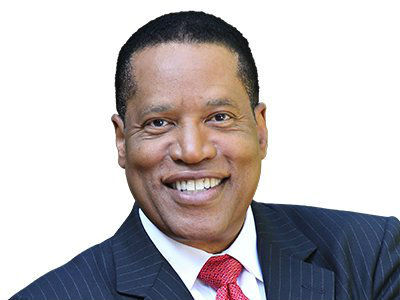
Larry Elder is an American lawyer, writer, and radio and television personality who calls himself the "Sage of South Central" a district of Los Angeles, Larry says his philosophy is to entertain, inform, provoke and to hopefully uplift. His calling card is "we have a country to save" and to him this means returning to the bedrock Constitutional principles of limited government and maximum personal responsibility. Elder's iconoclastic wit and intellectual agility makes him a particularly attractive voice in a nation that seems weary of traditional racial dialogue.” – Los Angeles Times.

Mike Gallagher Mike Gallagher began his broadcasting career in 1978 in Dayton, Ohio. Today, he is one of the most listened-to talk radio show hosts in America, recently having been ranked in the Talkers Magazine “Heavy Hundred” list – the 100 most important talk radio hosts in America. Prior to being launched into national syndication in 1998, Mike hosted the morning show on WABC-AM in New York City. Today, Talkers Magazine reports that his show is heard by over 3.75 million weekly listeners. Besides his radio work, Mike is seen on Fox News Channel as an on-air contributor, frequently appearing on the cable news giant.

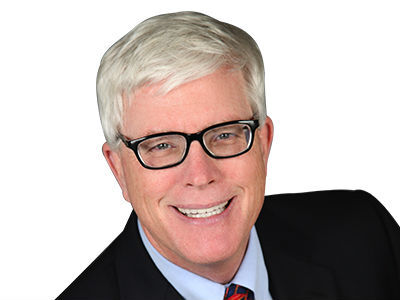
Hugh Hewitt is one of the nation’s leading bloggers and a genuine media revolutionary. He brings that expertise, his wit and what The New Yorker magazine calls his “amiable but relentless manner” to his nationally syndicated show each day.

When Dr. Sebastian Gorka was growing up, he listened to talk radio under his pillow with a transistor radio, dreaming that one day he would be behind the microphone. Beginning New Year’s Day 2019, he got his wish. Gorka now hosts America First every weekday afternoon 3 to 6pm ET. Gorka’s unique story works well on the radio. He is national security analyst for the Fox News Channel and author of two books: "Why We Fight" and "Defeating Jihad." His latest book releasing this fall is “War For America’s Soul.” He is uniquely qualified to fight the culture war and stand up for what is great about America, his adopted home country.

Broadcasting from his home station of KRLA in Los Angeles, the Dennis Prager Show is heard across the country. Everything in life – from politics to religion to relationships – is grist for Dennis’ mill. If it’s interesting, if it affects your life, then Dennis will be talking about it – with passion, humor, insight and wisdom.

Sean Hannity is a conservative radio and television host, and one of the original primetime hosts on the Fox News Channel, where he has appeared since 1996. Sean Hannity began his radio career at a college station in California, before moving on to markets in the Southeast and New York. Today, he’s one of the most listened to on-air voices. Hannity’s radio program went into national syndication on September 10, 2001, and airs on more than 500 stations. Talkers Magazine estimates Hannity’s weekly radio audience at 13.5 million. In 1996 he was hired as one of the original hosts on Fox News Channel. As host of several popular Fox programs, Hannity has become the highest-paid news anchor on television.

Michelle Malkin is a mother, wife, blogger, conservative syndicated columnist, longtime cable TV news commentator, and best-selling author of six books. She started her newspaper journalism career at the Los Angeles Daily News in 1992, moved to the Seattle Times in 1995, and has been penning nationally syndicated newspaper columns for Creators Syndicate since 1999. She is founder of conservative Internet start-ups Hot Air and Twitchy.com. Malkin has received numerous awards for her investigative journalism, including the Council on Governmental Ethics Laws (COGEL) national award for outstanding service for the cause of governmental ethics and leadership (1998), the Reed Irvine Accuracy in Media Award for Investigative Journalism (2006), the Heritage Foundation and Franklin Center for Government & Public Integrity's Breitbart Award for Excellence in Journalism (2013), the Center for Immigration Studies' Eugene Katz Award for Excellence in the Coverage of Immigration Award (2016), and the Manhattan Film Festival's Film Heals Award (2018). Married for 26 years and the mother of two teenage children, she lives with her family in Colorado. Follow her at michellemalkin.com. (Photo reprinted with kind permission from Peter Duke Photography.)

Sponsored by:

Can You Follow Christ and Reject Religion?

Carbonatix Pre-Player Loader

Audio By Carbonatix

Brought to you by Christianity.com

Can you have faith in Jesus and be anti-religion? In a recent Fox News interview, famous TV host and author Kathie Lee Gifford claimed just that. 

"It's not a religion. I am very anti-religion,” she told Fox News. “Religion puts people in chains, and Jesus takes them away. So I've always tried to be, and I am, the exact same person."

Gifford, a defender of Scripture and truth, hardly seems a poor model of Christianity, so it only makes sense that many would deeply consider her negative views concerning religion. 

"I went to therapy for years to recover from the psychological hurt the church caused my heart and mind. 'Religious abuse' was coined as part of my diagnosis, so much so that my therapist looked at me and bluntly said, “I’m surprised you even go to church at all.” 

I certainly understand Gifford’s distaste for the idea of religion when it’s controlled and manipulated by sinful people. However, as someone who has made great strides in healing from religious hurt, I can look back and not only be free of church bitterness but drawn back to the original roots the Christian religion intended to sustain and grow in me as a believer.  If you have Jesus, you have everything. So I certainly can’t say that a person whose heart and soul are devoted to Jesus is “wrong” in their wariness of religion. But, ironically, I have found that particular pieces of “religion” keep me tethered to my faith, even and especially when healing from religious hurt. 

What Is the Definition of Religion?

In essence, religion is a set of principles and morals that shape how one responds to their faith. It’s an outward practice of an inward loyalty to the thing or deity that defines an individual’s all-encompassing perspective of life, people, and meaning. This makes religion sound a bit weighty and, at times, time-consuming. Many people find it intimidating, intense, and/or rigid. That makes sense when our natural human response is often to avoid being controlled by anyone or anything outside ourselves. We feel we can best trust ourselves and stay safe if we don’t surrender who we are and how we function to an outside institution. 

Ironically, I’ve discovered religion is life-giving and freeing when I allow it to keep me tethered to my faith. When I show up to church on Sunday because it’s just what I’m supposed to do, I always receive a blessing. When I read my Bible, just because that’s one of those “Christian living” rules, I’ve kept the lines of communication open between God and me. Religion holds me accountable to my faith when my faith doesn’t feel able or willing to participate. Religion requires my life, regardless of the season, to establish rhythms and routines that center on bringing God glory. 

I often think of the old hymn, Come Thou Fount, especially the verse that begs, “bind my wandering heart to Thee.” Our human hearts will not always feel faith-filled, and our human minds will not always be bent towards total devotion to God. Regardless, when we allow the routine of religion to keep us committed to what we know to be true, it sustains us until we willfully, joyfully feel the truth, too.

Quote from an article about whether we can follow Jesus and reject religion

What Was Jesus’ Approach to "Religion?"

When I’m unsure concerning my Christian response to gray areas like Gifford’s attitude towards religion, I glean the Gospel’s red words. Christ’s teachings didn’t explicitly address modern dilemmas, like monitoring a child’s screentime or debating secular humanism, but His response to the emotions, sins, and uncertainties we encounter is our unfailing blueprint for any situation. In the Gospels, Christ doesn’t mention “religion” as we consider it today. His discussions surrounding religion were more centered on the destruction of manipulative legalism, the root traditions of Judaism, and His purpose in fulfilling the Jewish law. In Matthew 5:17-19, Jesus says, 

“Do not think that I have come to abolish the Law or the Prophets; I have not come to abolish them but to fulfill them. For truly I tell you, until heaven and earth disappear, not the smallest letter, not the least stroke of a pen, will by any means disappear from the Law until everything is accomplished. Therefore anyone who sets aside one of the least of these commands and teaches others accordingly will be called least in the kingdom of heaven, but whoever practices and teaches these commands will be called great in the kingdom of heaven.”

Here, Scripture reveals that Jesus gave merit to the law and, rather than doing away with it, allowed His mercy and grace to fulfill it. Thus, the rules and regulations were granted a meaningful purpose, a way to keep human fickleness postured towards the hope of lasting faith. So often, people associate religion with rules and nothing more. However, when religion centers on the commands established by God and on the eternal purposes fulfilled through Christ’s love, the Christian religion is life-giving, even soul-saving. 

The Necessary Divide of Religion

Moral relativism has not only bled into our society but also infected our approach to evangelism. In the name of cultural relevance, we have allowed what feels right in our own hearts and minds to bend the meaning of Scripture. The natural byproduct of this lukewarm living is that many believe Christianity’s principles, particularly concerning love, mesh well with other religious ideas concerning charity. Thus, Christianity doesn’t stand alone. It isn’t the sole truth. It’s simply a nice idea to believe in, just like any other religion that promotes service, sacrifice, and loving (aka, tolerating) other people’s lifestyles and personal choices. 

The danger in adopting Gifford’s idea towards religion is that the morals and principles that sustain Christianity’s truth lose their dividing line. Religion and its dividing precepts lose meaning because religion is, apparently, always destructive. However, Scripture is clear that Christ is the only truth, and He will draw an undeniable line in the sand:

“Jesus answered, ‘I am the way and the truth and the life. No one comes to the Father except through me.’” -  John 14:16 (NIV)
Whoever acknowledges me before others, I will also acknowledge before my Father in heaven. But whoever disowns me before others, I will disown before my Father in heaven. Do not suppose that I have come to bring peace to the earth. I did not come to bring peace, but a sword.” Matthew 10:32-34 (NIV)

Truth cannot be suppressed by lies. Truth will always rise to the surface. If truth didn’t divide, it wouldn’t be truth. It would be another “do what feels right” idea that leads people away from the gospel. Thus, religion, when it explicitly divides foundational beliefs, keeps Christianity separate. It allows truth to stand on her own two feet, separate from the rest of the world’s falsehoods and watered-down precepts. 

A Return to the Religious Rewards of Christian Living

As believers, we know there is only one true religion, Christianity. If we lean into its religious foundation, we are offered a bedrock for our salvation, a reason for our breathing, and practices that consistently reinforce these truths into our hearts and minds when we feel lost. 

I’m certainly not God, and I’m no biblical scholar, but I am a woman who had a bitter taste in her mouth for religion and many Christian religious practices for years. However, as a woman who has found that God’s mercy and grace heal her wounds, and as a human who has accepted that any institution in human hands will crack and cave at times, I’ve found that it’s the religious practices that God has used to speak the loudest to me when I can’t hear Him at all. 

It’s reciting Psalm 23 when I am so overwhelmed with grief that I don’t want to believe God is good, yet I can’t shake the feeling that His shepherding presence is, indeed, steady. It’s going to church when I don’t trust half the people there because my child needs a constant reminder of the gospel. It’s praying and reading my Bible when they feel like lifeless, boring habits because nothing else has an antidote for my spiraling emotions. It’s religious practices that, if we have faith in the God they point to, keep us bound to Him, come hell or high water. 

Christ saved my soul, and the religious guidance He has offered through His loving commands has preserved my heart. What more could I need, let alone want, in such an unsure world? 

Photo Credit: ©Getty Images/Paul Archuleta/Stringer

Peyton GarlandPeyton Garland is an author, editor, and boy mama who lives in the beautiful foothills of East Tennessee. Subscribe to her blog Uncured+Okay for more encouragement.

This article originally appeared on Christianity.com. For more faith-building resources, visit Christianity.com. Christianity.com
 

Salem News Channel Today

Sponsored Links

On Air & Up Next

See the Full Program Guide