4 Ways Christians Should Rethink How to Approach Foster Care and Adoption

Carbonatix Pre-Player Loader

Audio By Carbonatix

There is an anti-adoption trend growing in our culture. This is a reaction to adoptees voicing their hurts, trauma, and feelings of being misunderstood by their adoptive families. The voices of adoptees need to be heard and should be informative for those of us engaged in the Foster and Adoptive world.

What is problematic is the idea that adoption is somehow inherently wrong or unnecessary. The reality is that while we live in a broken world there will always be cases where adoption is necessary. Currently, about 26% of youth that enter foster care are not able to safely be reunified with their families and are adopted. These children deserve the stability that comes with having a forever family, even if that family doesn’t share the same DNA.

In many other cases, birth moms are unable to care for their babies and feel the best way to care for them is through adoption. Orphans worldwide benefit from the love and security that an adoptive home can offer. The idea that adoption is harmful can push a mom who feels overwhelmed at the prospect of parenting towards abortion rather than giving their unborn baby the gift of life. Giving a child a life in a loving home, that is eager to parent, is such a beautiful blessing for both these unborn children and their forever families.

What is necessary is not a shift away from adoption, but a new framework on how Christians approach this topic. We need to enter the lives of birth families, adoptees, and foster care with so much humility. We are there to love and serve, not push and take. Here are a few ways we can better address foster care and adoption.

1. Support Reunification

When we decided to become Foster Parents, I came into the role with a lot of pride. I felt that any child would be better off being raised by me than by their birth family. Thankfully, as we have grown into this role, we have learned to see the immense value of supporting intact families whenever and however possible. There is trauma that comes with every adoption story. There is also healing, family, love, joy, and redemption, but we cannot let our eagerness to step in and parent overshadow biological families that need to be connected.

When we step into the role of foster and adoptive parent, we have to be willing to fight for a family's ability to remain connected. Even if reunification is not possible, which oftentimes is the case, we have to create ways to connect the children in our care to their biological families. Collect pictures, stories, letters, and when they are ready share with them as much of their story as you can. Their need to hear about the family they were born into has nothing to do with them not loving you but has everything to do with their need to understand their story. They need the chance to process the loss that comes with adoption. Even the happiest, loved, and well-adjusted adopted kids need space to process their stories.

2. Support Birth Moms

If we as a church are going to be known for our pro-life stance then we need to be about supporting birth Moms. Adoption is a great option for a woman who feels like they are not in the right place in their life to parent but many women would love the opportunity to parent even in less-than-ideal circumstances if they felt they had the needed support. Being a parent is hard! It takes a village to make sure you have the funds to give your child a home, food, clothing, childcare, and more!

The church should not only be willing to offer our homes as safe haven for children in need of forever homes, but we should be willing to walk alongside moms that are in need of extra help on their parenting journey.

Even in adoption, it is possible for a birth mom to be an involved member of your family. To the degree that you feel comfortable, make space for birth moms in your life. Find ways for them to open the connection between them and their biological child. This can look like sending letters and updates, inviting them to birthday parties, or just allowing your child to freely inquire about the woman who helped give them the gift of life.

foster parents smiling with foster child
Photo Credit: ©GettyImages/Zinkevych

3. Be Trauma-Informed

All children that get placed into foster care or are adopted experience some level of trauma. Even infants adopted at birth experience relinquishment trauma at varying degrees. If we want to steward our role as adoptive parents well, we have to do the work to be informed on how to parent through trauma. For children that have experienced more tangible or prolonged abuse or neglect, this may be an even more daunting task, and it is essential that we understand how trauma rewires the brain so we can approach our kids with the care they deserve.

As adoptive parents, we can’t just parent on instinct alone. Many times our instinct can actually point us away from what is truly most beneficial for our kids. We have to take advantage of the many parenting resources that exist for foster and adoptive parents so that we can love our kids well. It’s so easy in this world of intense parenting to let the urgency of the moment stop us from thoughtfully responding to our kids, but our kids have lost so much! They absolutely deserve adults in their lives that are willing to understand the reasons why they may behave in a more difficult way.

4. Be an Open Book

Adoptive kids have the right to own their stories. I think so much of the backlash we are now hearing from adoptees about their experiences comes from an era of secrecy and a lack of understanding about how adoptees need to grieve openly and connect freely with their biological roots. These needs do not mean that adoptees don’t love and cherish their adoptive family. Adoptee’s need space to verbalize their truth in order to avoid shame and isolation that can come with the trauma associated with adoption.

Make intentional space to help your child ask hard questions, share their story in a way that feels positive with them from birth, and keep the door of conversation about how their story as an adoptee affects how they see the world open. Do your best to connect your child to their racial heritage, especially if it is different from your own. Basically, love them through the trauma and uncertainty. Relationships are the best for healing from the wounds of trauma, but our kids can’t heal if they feel they have to keep their questions and concerns to themselves.

There is probably so much more to this conversation that I am missing, as I am on my own journey to learn and grow as a Foster and Adoptive mom! Ultimately, in every relationship grace and forgiveness are so important for us to be able to thrive. I know as a biological, foster, and adoptive mom I am not always going to get it all right, but if I am showing up to learn, grow, and say sorry I trust God will help us through this journey.

I love that the Christian community sees and gathers around the plight of the orphan. I think this issue is close to the heart of God, but we have to go into their role with humility. We have to be there to love families in crisis with open hands trusting God to do a good work that only he can accomplish! Being a foster/adoptive parent is the best lesson in loving just for the sake of loving, because there is such an added element of unpredictability that you have to embrace to step into these roles. While your heart can be on the line, God is faithful to strengthen us when we are asked to grieve for the sake of one of his precious children.

Photo Credit: ©Getty Images/Ridofranz 

Amanda Idleman is a writer whose passion is encouraging others to live joyfully. She writes devotions for Your Nightly Prayer, Crosswalk Couples Devotional, Your Daily Prayer, and more. She has work published with Her View from Home, on the MOPS Blog, and is a regular contributor for Crosswalk.comBiblestudytools.com, and Christianity.com. She has most recently published a devotional, Comfort: A 30 Day Devotional Exploring God's Heart of Love for Mommas, alongside her husband’s companion devotional, Shepherd. You can find out more about Amanda on her Facebook Page or follow her on Instagram.

 

Salem News Channel Today

Sponsored Links


September 26 - Phoenix, AZ
Scottsdale Center for the Performing Arts


November 2 - Detroit, MI
Zion Christian Church in Troy


October 6 - Los Angeles, CA
Pasadena Convention Center


November 5 - San Antonio, TX
Norris Centers – The Grand Red Oak Ballroom


October 8 - Sacramento, CA
William Jessup University


November 7 - Tampa, FL
The Palladium at St. Pete College


October 22 - Minneapolis, MN
Crowne Plaza AiRE


November 15 - San Francisco, CA
Fremont Marriott Silicon Valley


October 23 - Philadelphia, PA
Green Valley Country Club


November 16 - Denver, CO
CU South Denver - Formerly Wildlife Experience


November 2 - Chicago, IL
Chicago Westin Northwest in Itasca


November 21 - Cleveland, OH
Holiday Inn Rockside in Independence


Salem Radio Network Speakers

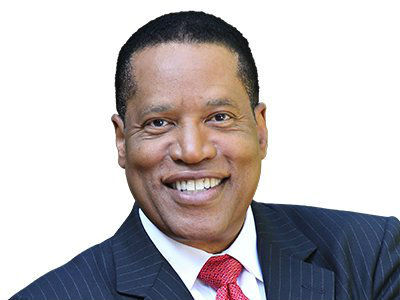
Larry Elder is an American lawyer, writer, and radio and television personality who calls himself the "Sage of South Central" a district of Los Angeles, Larry says his philosophy is to entertain, inform, provoke and to hopefully uplift. His calling card is "we have a country to save" and to him this means returning to the bedrock Constitutional principles of limited government and maximum personal responsibility. Elder's iconoclastic wit and intellectual agility makes him a particularly attractive voice in a nation that seems weary of traditional racial dialogue.” – Los Angeles Times.

Mike Gallagher Mike Gallagher began his broadcasting career in 1978 in Dayton, Ohio. Today, he is one of the most listened-to talk radio show hosts in America, recently having been ranked in the Talkers Magazine “Heavy Hundred” list – the 100 most important talk radio hosts in America. Prior to being launched into national syndication in 1998, Mike hosted the morning show on WABC-AM in New York City. Today, Talkers Magazine reports that his show is heard by over 3.75 million weekly listeners. Besides his radio work, Mike is seen on Fox News Channel as an on-air contributor, frequently appearing on the cable news giant.

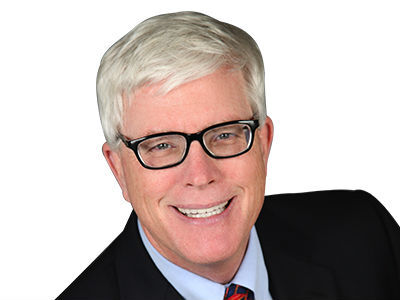
Hugh Hewitt is one of the nation’s leading bloggers and a genuine media revolutionary. He brings that expertise, his wit and what The New Yorker magazine calls his “amiable but relentless manner” to his nationally syndicated show each day.

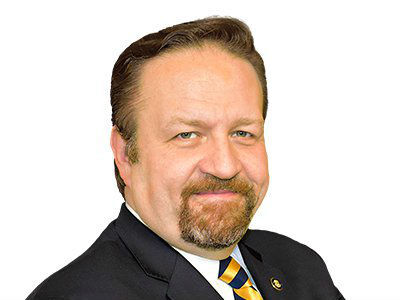
When Dr. Sebastian Gorka was growing up, he listened to talk radio under his pillow with a transistor radio, dreaming that one day he would be behind the microphone. Beginning New Year’s Day 2019, he got his wish. Gorka now hosts America First every weekday afternoon 3 to 6pm ET. Gorka’s unique story works well on the radio. He is national security analyst for the Fox News Channel and author of two books: "Why We Fight" and "Defeating Jihad." His latest book releasing this fall is “War For America’s Soul.” He is uniquely qualified to fight the culture war and stand up for what is great about America, his adopted home country.

Broadcasting from his home station of KRLA in Los Angeles, the Dennis Prager Show is heard across the country. Everything in life – from politics to religion to relationships – is grist for Dennis’ mill. If it’s interesting, if it affects your life, then Dennis will be talking about it – with passion, humor, insight and wisdom.

Sean Hannity is a conservative radio and television host, and one of the original primetime hosts on the Fox News Channel, where he has appeared since 1996. Sean Hannity began his radio career at a college station in California, before moving on to markets in the Southeast and New York. Today, he’s one of the most listened to on-air voices. Hannity’s radio program went into national syndication on September 10, 2001, and airs on more than 500 stations. Talkers Magazine estimates Hannity’s weekly radio audience at 13.5 million. In 1996 he was hired as one of the original hosts on Fox News Channel. As host of several popular Fox programs, Hannity has become the highest-paid news anchor on television.

Michelle Malkin is a mother, wife, blogger, conservative syndicated columnist, longtime cable TV news commentator, and best-selling author of six books. She started her newspaper journalism career at the Los Angeles Daily News in 1992, moved to the Seattle Times in 1995, and has been penning nationally syndicated newspaper columns for Creators Syndicate since 1999. She is founder of conservative Internet start-ups Hot Air and Twitchy.com. Malkin has received numerous awards for her investigative journalism, including the Council on Governmental Ethics Laws (COGEL) national award for outstanding service for the cause of governmental ethics and leadership (1998), the Reed Irvine Accuracy in Media Award for Investigative Journalism (2006), the Heritage Foundation and Franklin Center for Government & Public Integrity's Breitbart Award for Excellence in Journalism (2013), the Center for Immigration Studies' Eugene Katz Award for Excellence in the Coverage of Immigration Award (2016), and the Manhattan Film Festival's Film Heals Award (2018). Married for 26 years and the mother of two teenage children, she lives with her family in Colorado. Follow her at michellemalkin.com. (Photo reprinted with kind permission from Peter Duke Photography.)

Sponsored by:

4 Ways Christians Should Rethink How to Approach Foster Care and Adoption

Carbonatix Pre-Player Loader

Audio By Carbonatix

There is an anti-adoption trend growing in our culture. This is a reaction to adoptees voicing their hurts, trauma, and feelings of being misunderstood by their adoptive families. The voices of adoptees need to be heard and should be informative for those of us engaged in the Foster and Adoptive world.

What is problematic is the idea that adoption is somehow inherently wrong or unnecessary. The reality is that while we live in a broken world there will always be cases where adoption is necessary. Currently, about 26% of youth that enter foster care are not able to safely be reunified with their families and are adopted. These children deserve the stability that comes with having a forever family, even if that family doesn’t share the same DNA.

In many other cases, birth moms are unable to care for their babies and feel the best way to care for them is through adoption. Orphans worldwide benefit from the love and security that an adoptive home can offer. The idea that adoption is harmful can push a mom who feels overwhelmed at the prospect of parenting towards abortion rather than giving their unborn baby the gift of life. Giving a child a life in a loving home, that is eager to parent, is such a beautiful blessing for both these unborn children and their forever families.

What is necessary is not a shift away from adoption, but a new framework on how Christians approach this topic. We need to enter the lives of birth families, adoptees, and foster care with so much humility. We are there to love and serve, not push and take. Here are a few ways we can better address foster care and adoption.

1. Support Reunification

When we decided to become Foster Parents, I came into the role with a lot of pride. I felt that any child would be better off being raised by me than by their birth family. Thankfully, as we have grown into this role, we have learned to see the immense value of supporting intact families whenever and however possible. There is trauma that comes with every adoption story. There is also healing, family, love, joy, and redemption, but we cannot let our eagerness to step in and parent overshadow biological families that need to be connected.

When we step into the role of foster and adoptive parent, we have to be willing to fight for a family's ability to remain connected. Even if reunification is not possible, which oftentimes is the case, we have to create ways to connect the children in our care to their biological families. Collect pictures, stories, letters, and when they are ready share with them as much of their story as you can. Their need to hear about the family they were born into has nothing to do with them not loving you but has everything to do with their need to understand their story. They need the chance to process the loss that comes with adoption. Even the happiest, loved, and well-adjusted adopted kids need space to process their stories.

2. Support Birth Moms

If we as a church are going to be known for our pro-life stance then we need to be about supporting birth Moms. Adoption is a great option for a woman who feels like they are not in the right place in their life to parent but many women would love the opportunity to parent even in less-than-ideal circumstances if they felt they had the needed support. Being a parent is hard! It takes a village to make sure you have the funds to give your child a home, food, clothing, childcare, and more!

The church should not only be willing to offer our homes as safe haven for children in need of forever homes, but we should be willing to walk alongside moms that are in need of extra help on their parenting journey.

Even in adoption, it is possible for a birth mom to be an involved member of your family. To the degree that you feel comfortable, make space for birth moms in your life. Find ways for them to open the connection between them and their biological child. This can look like sending letters and updates, inviting them to birthday parties, or just allowing your child to freely inquire about the woman who helped give them the gift of life.

foster parents smiling with foster child
Photo Credit: ©GettyImages/Zinkevych

3. Be Trauma-Informed

All children that get placed into foster care or are adopted experience some level of trauma. Even infants adopted at birth experience relinquishment trauma at varying degrees. If we want to steward our role as adoptive parents well, we have to do the work to be informed on how to parent through trauma. For children that have experienced more tangible or prolonged abuse or neglect, this may be an even more daunting task, and it is essential that we understand how trauma rewires the brain so we can approach our kids with the care they deserve.

As adoptive parents, we can’t just parent on instinct alone. Many times our instinct can actually point us away from what is truly most beneficial for our kids. We have to take advantage of the many parenting resources that exist for foster and adoptive parents so that we can love our kids well. It’s so easy in this world of intense parenting to let the urgency of the moment stop us from thoughtfully responding to our kids, but our kids have lost so much! They absolutely deserve adults in their lives that are willing to understand the reasons why they may behave in a more difficult way.

4. Be an Open Book

Adoptive kids have the right to own their stories. I think so much of the backlash we are now hearing from adoptees about their experiences comes from an era of secrecy and a lack of understanding about how adoptees need to grieve openly and connect freely with their biological roots. These needs do not mean that adoptees don’t love and cherish their adoptive family. Adoptee’s need space to verbalize their truth in order to avoid shame and isolation that can come with the trauma associated with adoption.

Make intentional space to help your child ask hard questions, share their story in a way that feels positive with them from birth, and keep the door of conversation about how their story as an adoptee affects how they see the world open. Do your best to connect your child to their racial heritage, especially if it is different from your own. Basically, love them through the trauma and uncertainty. Relationships are the best for healing from the wounds of trauma, but our kids can’t heal if they feel they have to keep their questions and concerns to themselves.

There is probably so much more to this conversation that I am missing, as I am on my own journey to learn and grow as a Foster and Adoptive mom! Ultimately, in every relationship grace and forgiveness are so important for us to be able to thrive. I know as a biological, foster, and adoptive mom I am not always going to get it all right, but if I am showing up to learn, grow, and say sorry I trust God will help us through this journey.

I love that the Christian community sees and gathers around the plight of the orphan. I think this issue is close to the heart of God, but we have to go into their role with humility. We have to be there to love families in crisis with open hands trusting God to do a good work that only he can accomplish! Being a foster/adoptive parent is the best lesson in loving just for the sake of loving, because there is such an added element of unpredictability that you have to embrace to step into these roles. While your heart can be on the line, God is faithful to strengthen us when we are asked to grieve for the sake of one of his precious children.

Photo Credit: ©Getty Images/Ridofranz 

Amanda Idleman is a writer whose passion is encouraging others to live joyfully. She writes devotions for Your Nightly Prayer, Crosswalk Couples Devotional, Your Daily Prayer, and more. She has work published with Her View from Home, on the MOPS Blog, and is a regular contributor for Crosswalk.comBiblestudytools.com, and Christianity.com. She has most recently published a devotional, Comfort: A 30 Day Devotional Exploring God's Heart of Love for Mommas, alongside her husband’s companion devotional, Shepherd. You can find out more about Amanda on her Facebook Page or follow her on Instagram.

 

Salem News Channel Today

Sponsored Links

On Air & Up Next

See the Full Program Guide