5 Ways to Lovingly Deal with Difficult People

Carbonatix Pre-Player Loader

Audio By Carbonatix

We live in a world that hoards a myriad of problems. You will be thrilled to know I have discovered the biggest problem of all--people!

In my opinion, if there were fewer people, there would be fewer problems. Let’s be honest! Some people are more difficult to get along with than others; they “rub” us the wrong way! I call them “Sandpaper People.” Sandpaper people come in all shapes, sizes and colors and sometimes they are us!

We try to change them, run from them, ignore them and even take a stab at fixing them. If only it were that simple. It rarely is.

Getting along with sandpaper people requires a new point of view, seeing them as God sees them. We cannot base love for difficult people on feelings, but on God’s love that is released by choices we make in dealing with sandpaper people. 

1. Choose Love

Ephesians 2:10 “We are God’s workmanship.” 

The artist came to the park every day when the light was just right, positioning his easel and paints under the same familiar shade tree. For hours, he watched people strolling by, searching for just the right face to paint. A beggar sitting across the path caught his eye.

Thinking of God’s handiwork in every human being, the artist resolved to paint the man as he imagined he could be. With the last stroke, the artist breathed a sigh of satisfaction. It was done. And it was some of his best work. The artist then called the beggar over to see the painting. “Is that me?’ the beggar asked. “That is the “you” I see!” replied the artist.

The beggar stared at the painting, and with tears in his eyes, softly spoke, “If that’s the man you see in me, then that’s the man I shall be!”

Sandpaper people desperately need someone who will look beyond their abrasive behavior to recognize their worth. Sandpaper people have allowed someone or something to assign an identity to them that is false. As a result, they live a life they were never intended to live, bound to an unhealthy self-image, having no concept of who they really are or what they can become.

Desperate to fit in, they try on different identities like trying on new clothes, wondering why none of them fit. Sandpaper people fail to understand that their identity was established before the world began, in the heart and mind of God. That’s where we come in.

When we make the deliberate choice to love a sandpaper person, we are inviting God to work in us and through us to bring about change; to create His image in us so we can then see His image in others. Difficult relationships find it hard to survive in an atmosphere of love because stubborn wills yield to love as the worth of a soul is recognized and valued.

2. Choose Patience

2 Timothy 2:24 “They must be patient with difficult people.”

Patience is vital when dealing with sandpaper people. Instead of trying to control them, we must be patient because patience is more powerful than control can ever be. “It is better to be patient than powerful.” Proverbs 16:32 Patience comes from within and is not dependent upon external circumstances. Patience empowers us to embrace difficult people with joy.

If you are like me, you tend to consider it pure joy when you escape, rather than embrace abrasive people. Sandpaper people are not sent into our lives as punishment but as opportunities for patience to work.

My daughter and I are exactly alike, which means we can really push each other’s buttons. I remember a particularly rough day when everything was a battle, none of which I seemed to win. Everything I asked Danna to do was met with opposition and multiple reasons why she didn’t want to comply with my wishes.

With rapidly waning patience, I threw up my hands and announced, “Fine, Danna! Just do whatever you want. Now let me see you disobey that!” The look of surprise on Danna’s face was priceless as was the lesson I learned that day. The greatest patience is best refined in the midst of the greatest conflict. When those conflicts come, use them, learn from them and embrace them as a tool for good in the hands of God.

3. Choose Forgiveness

Ephesians 4:32 “And be kind to one another, tenderhearted, forgiving one another, even as God in Christ forgave you.”

Sandpaper people are hard to forgive – but need forgiveness the most and most often. Sandpaper may conceal an old wound, a wrong never forgiven or a sin never confessed. Sandpaper people orchestrate difficult circumstances and broken relationships in an unconscious attempt to prove they don’t deserve and should never dare to expect forgiveness.

In other words, sandpaper people will deliberately set themselves up to fail. That’s where forgiveness comes in.

When sandpaper people experience forgiveness, their innate plan of self-destruction is thwarted. Guilt and blame feed their hellish insecurity, determining coarse actions, dictating grating words and opinions while corroding relationships until someone chooses to see that difficult person through the eyes of God, until someone chooses to forgive them, sandpaper and all.

Because sandpaper people often unknowingly inflict pain, they may never ask to be forgiven. Forgiveness doesn’t wait on an invitation. It simply works - an independent act between you and God totally separates from the way a difficult person responds or reacts.

Forgiveness is a demonstration of love that leads first to action and then to an attitude. True forgiveness is a powerful weapon in the war against emotional pain and is a key part of every relationship--especially those relationships with sandpaper people. In fact, I suspect many sandpaper people exist to teach us how to forgive the way God forgives.

4. Choose Encouragement

1 Thessalonians 5:11 “Encourage one another.”

If you want to disarm a sandpaper person, become their cheerleader! By focusing on their good points, your perspective of that person will change. Other people’s perspective of that person will change and even that person’s own perspective will change.

When our son, Jered, was in second grade, he had a classmate, Kyle, who definitely qualified as a first-class sandpaper person. One morning, Kyle came to school with both arms in a cast from wrist to elbow. The teacher explained that Kyle would need a friend to help him do classwork, eat lunch, go to the restroom, and in short, be his personal slave for eight weeks. In the silent, tension-filled classroom, it seemed as if everyone was holding their breath, hoping Kyle would somehow disappear. He didn’t. Disappointment clouded the teacher’s face until Jered said, “I’ll do it, Miss Chism.” A sigh of relief erupted as everyone stared at Jered in gratitude, unable to understand why he would link himself to this abrasive kid, but clearly glad he had.

Over the next few weeks, Jered discovered that Kyle wasn’t so bad after all. In fact, they became friends. Then Kyle’s behavior began to change. The other children, watching this unlikely friendship unfold, surmised that if Jered liked the sandpaper boy, there must be something worth liking. After eight weeks, the class of now-wiser children included Kyle in every activity. When the casts came off, so did the old sandpaper person. All he needed was a cheerleader. Maybe that’s all your sandpaper person needs.

5. Choose Thankfulness

Philippians 4:6b “Always be thankful, for this is God’s will.”

Choosing to be thankful for sandpaper people is one of the most important choices we can make, as well as one of the most difficult choices we must make to bring any measure of health to a difficult relationship. Thankfulness is a foreign language to sandpaper people, their native tongue criticism and displeasure. The last thing any sandpaper person expects to encounter is an attitude of thankfulness. Yet, it is the first step God commands us to take.

Right now, begin thanking God for allowing you to experience pain at the hand of a sandpaper person. Praise Him for the shattered dreams and crushed hopes that have come through that difficult relationship. Trust Him to take what the enemy meant for bad and use it for good in your life. If you want to experience victory in your most difficult relationships, thank God for each one.

Sandpaper people are not only a certainty but opportunities from the heart of God. God uses difficult relationships as catalysts through which He lovingly upsets my comfortable plans and purposefully redirects my safe, calculated steps. Every relationship, difficult or easy, is wrapped in God’s love, faithfully delivered with His permission and wrapped in His plan.

The world is watching, as is every sandpaper person in our lives, pushing every limit to see how we will respond. It is through these difficult relationships that we grow and mature in Christ. The rough edges fall away as we welcome the lessons sandpaper people bring.

Photo Credit: ©Unsplash/Tim Gouw

Mary Southerland is also the Co-founder of Girlfriends in God, a conference and devotion ministry for women. Mary’s books include, Hope in the Midst of Depression, Sandpaper People, Escaping the Stress Trap, Experiencing God’s Power in Your Ministry, 10-Day Trust Adventure, You Make Me So Angry, How to Study the Bible, Fit for Life, Joy for the Journey, and Life Is So Daily. Mary relishes her ministry as a wife, a mother to their two children, Jered and Danna, and Mimi to her six grandchildren – Jaydan, Lelia, Justus, Hudson, Mo, and Nori.


 

Salem News Channel Today

Sponsored Links


September 26 - Phoenix, AZ
Scottsdale Center for the Performing Arts


November 2 - Detroit, MI
Zion Christian Church in Troy


October 6 - Los Angeles, CA
Pasadena Convention Center


November 5 - San Antonio, TX
Norris Centers – The Grand Red Oak Ballroom


October 8 - Sacramento, CA
William Jessup University


November 7 - Tampa, FL
The Palladium at St. Pete College


October 22 - Minneapolis, MN
Crowne Plaza AiRE


November 15 - San Francisco, CA
Fremont Marriott Silicon Valley


October 23 - Philadelphia, PA
Green Valley Country Club


November 16 - Denver, CO
CU South Denver - Formerly Wildlife Experience


November 2 - Chicago, IL
Chicago Westin Northwest in Itasca


November 21 - Cleveland, OH
Holiday Inn Rockside in Independence


Salem Radio Network Speakers

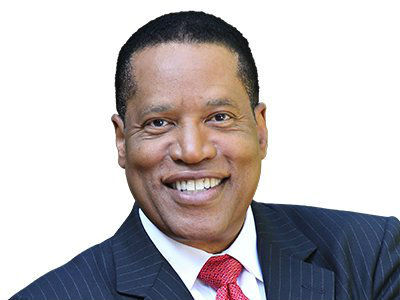
Larry Elder is an American lawyer, writer, and radio and television personality who calls himself the "Sage of South Central" a district of Los Angeles, Larry says his philosophy is to entertain, inform, provoke and to hopefully uplift. His calling card is "we have a country to save" and to him this means returning to the bedrock Constitutional principles of limited government and maximum personal responsibility. Elder's iconoclastic wit and intellectual agility makes him a particularly attractive voice in a nation that seems weary of traditional racial dialogue.” – Los Angeles Times.

Mike Gallagher Mike Gallagher began his broadcasting career in 1978 in Dayton, Ohio. Today, he is one of the most listened-to talk radio show hosts in America, recently having been ranked in the Talkers Magazine “Heavy Hundred” list – the 100 most important talk radio hosts in America. Prior to being launched into national syndication in 1998, Mike hosted the morning show on WABC-AM in New York City. Today, Talkers Magazine reports that his show is heard by over 3.75 million weekly listeners. Besides his radio work, Mike is seen on Fox News Channel as an on-air contributor, frequently appearing on the cable news giant.

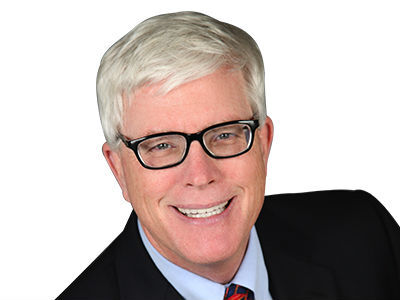
Hugh Hewitt is one of the nation’s leading bloggers and a genuine media revolutionary. He brings that expertise, his wit and what The New Yorker magazine calls his “amiable but relentless manner” to his nationally syndicated show each day.

When Dr. Sebastian Gorka was growing up, he listened to talk radio under his pillow with a transistor radio, dreaming that one day he would be behind the microphone. Beginning New Year’s Day 2019, he got his wish. Gorka now hosts America First every weekday afternoon 3 to 6pm ET. Gorka’s unique story works well on the radio. He is national security analyst for the Fox News Channel and author of two books: "Why We Fight" and "Defeating Jihad." His latest book releasing this fall is “War For America’s Soul.” He is uniquely qualified to fight the culture war and stand up for what is great about America, his adopted home country.

Broadcasting from his home station of KRLA in Los Angeles, the Dennis Prager Show is heard across the country. Everything in life – from politics to religion to relationships – is grist for Dennis’ mill. If it’s interesting, if it affects your life, then Dennis will be talking about it – with passion, humor, insight and wisdom.

Sean Hannity is a conservative radio and television host, and one of the original primetime hosts on the Fox News Channel, where he has appeared since 1996. Sean Hannity began his radio career at a college station in California, before moving on to markets in the Southeast and New York. Today, he’s one of the most listened to on-air voices. Hannity’s radio program went into national syndication on September 10, 2001, and airs on more than 500 stations. Talkers Magazine estimates Hannity’s weekly radio audience at 13.5 million. In 1996 he was hired as one of the original hosts on Fox News Channel. As host of several popular Fox programs, Hannity has become the highest-paid news anchor on television.

Michelle Malkin is a mother, wife, blogger, conservative syndicated columnist, longtime cable TV news commentator, and best-selling author of six books. She started her newspaper journalism career at the Los Angeles Daily News in 1992, moved to the Seattle Times in 1995, and has been penning nationally syndicated newspaper columns for Creators Syndicate since 1999. She is founder of conservative Internet start-ups Hot Air and Twitchy.com. Malkin has received numerous awards for her investigative journalism, including the Council on Governmental Ethics Laws (COGEL) national award for outstanding service for the cause of governmental ethics and leadership (1998), the Reed Irvine Accuracy in Media Award for Investigative Journalism (2006), the Heritage Foundation and Franklin Center for Government & Public Integrity's Breitbart Award for Excellence in Journalism (2013), the Center for Immigration Studies' Eugene Katz Award for Excellence in the Coverage of Immigration Award (2016), and the Manhattan Film Festival's Film Heals Award (2018). Married for 26 years and the mother of two teenage children, she lives with her family in Colorado. Follow her at michellemalkin.com. (Photo reprinted with kind permission from Peter Duke Photography.)

Sponsored by:

5 Ways to Lovingly Deal with Difficult People

Carbonatix Pre-Player Loader

Audio By Carbonatix

We live in a world that hoards a myriad of problems. You will be thrilled to know I have discovered the biggest problem of all--people!

In my opinion, if there were fewer people, there would be fewer problems. Let’s be honest! Some people are more difficult to get along with than others; they “rub” us the wrong way! I call them “Sandpaper People.” Sandpaper people come in all shapes, sizes and colors and sometimes they are us!

We try to change them, run from them, ignore them and even take a stab at fixing them. If only it were that simple. It rarely is.

Getting along with sandpaper people requires a new point of view, seeing them as God sees them. We cannot base love for difficult people on feelings, but on God’s love that is released by choices we make in dealing with sandpaper people. 

1. Choose Love

Ephesians 2:10 “We are God’s workmanship.” 

The artist came to the park every day when the light was just right, positioning his easel and paints under the same familiar shade tree. For hours, he watched people strolling by, searching for just the right face to paint. A beggar sitting across the path caught his eye.

Thinking of God’s handiwork in every human being, the artist resolved to paint the man as he imagined he could be. With the last stroke, the artist breathed a sigh of satisfaction. It was done. And it was some of his best work. The artist then called the beggar over to see the painting. “Is that me?’ the beggar asked. “That is the “you” I see!” replied the artist.

The beggar stared at the painting, and with tears in his eyes, softly spoke, “If that’s the man you see in me, then that’s the man I shall be!”

Sandpaper people desperately need someone who will look beyond their abrasive behavior to recognize their worth. Sandpaper people have allowed someone or something to assign an identity to them that is false. As a result, they live a life they were never intended to live, bound to an unhealthy self-image, having no concept of who they really are or what they can become.

Desperate to fit in, they try on different identities like trying on new clothes, wondering why none of them fit. Sandpaper people fail to understand that their identity was established before the world began, in the heart and mind of God. That’s where we come in.

When we make the deliberate choice to love a sandpaper person, we are inviting God to work in us and through us to bring about change; to create His image in us so we can then see His image in others. Difficult relationships find it hard to survive in an atmosphere of love because stubborn wills yield to love as the worth of a soul is recognized and valued.

2. Choose Patience

2 Timothy 2:24 “They must be patient with difficult people.”

Patience is vital when dealing with sandpaper people. Instead of trying to control them, we must be patient because patience is more powerful than control can ever be. “It is better to be patient than powerful.” Proverbs 16:32 Patience comes from within and is not dependent upon external circumstances. Patience empowers us to embrace difficult people with joy.

If you are like me, you tend to consider it pure joy when you escape, rather than embrace abrasive people. Sandpaper people are not sent into our lives as punishment but as opportunities for patience to work.

My daughter and I are exactly alike, which means we can really push each other’s buttons. I remember a particularly rough day when everything was a battle, none of which I seemed to win. Everything I asked Danna to do was met with opposition and multiple reasons why she didn’t want to comply with my wishes.

With rapidly waning patience, I threw up my hands and announced, “Fine, Danna! Just do whatever you want. Now let me see you disobey that!” The look of surprise on Danna’s face was priceless as was the lesson I learned that day. The greatest patience is best refined in the midst of the greatest conflict. When those conflicts come, use them, learn from them and embrace them as a tool for good in the hands of God.

3. Choose Forgiveness

Ephesians 4:32 “And be kind to one another, tenderhearted, forgiving one another, even as God in Christ forgave you.”

Sandpaper people are hard to forgive – but need forgiveness the most and most often. Sandpaper may conceal an old wound, a wrong never forgiven or a sin never confessed. Sandpaper people orchestrate difficult circumstances and broken relationships in an unconscious attempt to prove they don’t deserve and should never dare to expect forgiveness.

In other words, sandpaper people will deliberately set themselves up to fail. That’s where forgiveness comes in.

When sandpaper people experience forgiveness, their innate plan of self-destruction is thwarted. Guilt and blame feed their hellish insecurity, determining coarse actions, dictating grating words and opinions while corroding relationships until someone chooses to see that difficult person through the eyes of God, until someone chooses to forgive them, sandpaper and all.

Because sandpaper people often unknowingly inflict pain, they may never ask to be forgiven. Forgiveness doesn’t wait on an invitation. It simply works - an independent act between you and God totally separates from the way a difficult person responds or reacts.

Forgiveness is a demonstration of love that leads first to action and then to an attitude. True forgiveness is a powerful weapon in the war against emotional pain and is a key part of every relationship--especially those relationships with sandpaper people. In fact, I suspect many sandpaper people exist to teach us how to forgive the way God forgives.

4. Choose Encouragement

1 Thessalonians 5:11 “Encourage one another.”

If you want to disarm a sandpaper person, become their cheerleader! By focusing on their good points, your perspective of that person will change. Other people’s perspective of that person will change and even that person’s own perspective will change.

When our son, Jered, was in second grade, he had a classmate, Kyle, who definitely qualified as a first-class sandpaper person. One morning, Kyle came to school with both arms in a cast from wrist to elbow. The teacher explained that Kyle would need a friend to help him do classwork, eat lunch, go to the restroom, and in short, be his personal slave for eight weeks. In the silent, tension-filled classroom, it seemed as if everyone was holding their breath, hoping Kyle would somehow disappear. He didn’t. Disappointment clouded the teacher’s face until Jered said, “I’ll do it, Miss Chism.” A sigh of relief erupted as everyone stared at Jered in gratitude, unable to understand why he would link himself to this abrasive kid, but clearly glad he had.

Over the next few weeks, Jered discovered that Kyle wasn’t so bad after all. In fact, they became friends. Then Kyle’s behavior began to change. The other children, watching this unlikely friendship unfold, surmised that if Jered liked the sandpaper boy, there must be something worth liking. After eight weeks, the class of now-wiser children included Kyle in every activity. When the casts came off, so did the old sandpaper person. All he needed was a cheerleader. Maybe that’s all your sandpaper person needs.

5. Choose Thankfulness

Philippians 4:6b “Always be thankful, for this is God’s will.”

Choosing to be thankful for sandpaper people is one of the most important choices we can make, as well as one of the most difficult choices we must make to bring any measure of health to a difficult relationship. Thankfulness is a foreign language to sandpaper people, their native tongue criticism and displeasure. The last thing any sandpaper person expects to encounter is an attitude of thankfulness. Yet, it is the first step God commands us to take.

Right now, begin thanking God for allowing you to experience pain at the hand of a sandpaper person. Praise Him for the shattered dreams and crushed hopes that have come through that difficult relationship. Trust Him to take what the enemy meant for bad and use it for good in your life. If you want to experience victory in your most difficult relationships, thank God for each one.

Sandpaper people are not only a certainty but opportunities from the heart of God. God uses difficult relationships as catalysts through which He lovingly upsets my comfortable plans and purposefully redirects my safe, calculated steps. Every relationship, difficult or easy, is wrapped in God’s love, faithfully delivered with His permission and wrapped in His plan.

The world is watching, as is every sandpaper person in our lives, pushing every limit to see how we will respond. It is through these difficult relationships that we grow and mature in Christ. The rough edges fall away as we welcome the lessons sandpaper people bring.

Photo Credit: ©Unsplash/Tim Gouw

Mary Southerland is also the Co-founder of Girlfriends in God, a conference and devotion ministry for women. Mary’s books include, Hope in the Midst of Depression, Sandpaper People, Escaping the Stress Trap, Experiencing God’s Power in Your Ministry, 10-Day Trust Adventure, You Make Me So Angry, How to Study the Bible, Fit for Life, Joy for the Journey, and Life Is So Daily. Mary relishes her ministry as a wife, a mother to their two children, Jered and Danna, and Mimi to her six grandchildren – Jaydan, Lelia, Justus, Hudson, Mo, and Nori.

 

Salem News Channel Today

Sponsored Links

On Air & Up Next

See the Full Program Guide