How Could God Let This Happen?

Carbonatix Pre-Player Loader

Audio By Carbonatix

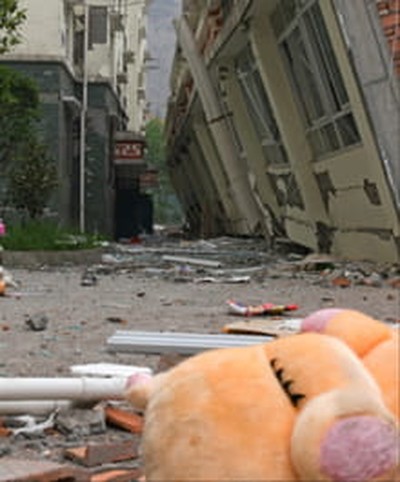
The terrible details of Japan’s tsunami can be overwhelming. The Prime Minister of Japan described this tragedy as the worst event to happen to Japan since the second world war. As new reports about rising death tolls and possible nuclear dangers continue to develop, the faces of different Japanese students I taught over the years flash before my mind’s eye. I can’t help but wonder about their safety. But the tragedy there is so great that even those with no personal connection to Japan are still affected.

When something this catastrophic happens, questions naturally arise for people of faith. How could God let this happen? Why did God let this happen? How can any thinking person call God “good” when something like this happens?

All those questions are legitimate, and for me, still beyond my ability to answer with an emotionally satisfactory reply. The faith-crisis questions cause me to remember my own faith-crisis after the Indonesian Tsunami of 2004.

That night I rocked my infant daughter to sleep as I did every night, singing “God is so good.” Yet something was very different this time. Only one day after celebrating Christmas, I literally choked out words about God’s goodness. My mind raced, asking over and over again, “How can the God who allowed this be ‘good’?” I had no answer. Thankfully, that night’s despondency did not last indefinitely. A few days later, another question from that tragedy was answered, and it is being answered now as well.

WHERE IS GOD IN THE MIDST OF THIS TRAGEDY?

I was heartsick for the Indonesian people in 2004 and likewise now for those in Japan. Yet something happened in 2004 that changed the way I understood how God worked in the world.

I truly beg the reader’s pardon if any of what follows seems trite; I again confess that suffering of this magnitude boggles the mind and challenges faith. Yet I want to share a small insight I gained in 2004 and its practical applications for 2011.

The Sunday after the Indonesian tsunami, I arrived at church still emotionally stinging from what seemed an unanswerable challenge to God’s goodness. Had He simply abandoned the 200,000-plus people that died? Were they somehow not worthy of His love? So many questions confronted me that I literally felt depressed. My faith was not up to this challenge.

Then something happened. That morning, before the worship service started, one of our pastors got up to make an announcement about the people of the several nations who were affected by the tsunami. Our church was already partnering with organizations overseas, providing blankets, tents, food, and counseling. Like a flash of lightning, the insight struck me that began to resolve my faith-crisis: here was the body of Christ in action. God had not abandoned these people, instead he empowered his Church to do His work.

For some readers, this insight may be obvious, but for me, it changed the way I look at the Church. The Church was not just an organization, it was also an embodiment of God’s grace in the midst of suffering. Remember, human beings were made in the image of God, and Paul called believers “the body of Christ.” So the 2004 tragedy became an opportunity for that Christ-body to reflect God’s image in powerful ways. This year’s tragedy in Japan provides the same opportunities.

THE CHURCH IS GOD’S PRESENCE IN THE MIDST OF TRAGEDY

Readers may object to my assessment. Am I arguing that God caused the quake and tsunami to happen so that ministry opportunities might abound? Do I believe that God purposefully caused the deaths of thousands of Japanese so that a fortunate few might be evangelized?

Those concepts are shocking, and I answer them the same way Paul did when he was asked the shocking question “should we sin all the more so that grace may abound?” His answer and mine: “by no means.”

I don’t claim to know God’s purposes in allowing the quake to happen a few days ago, but I do know His purpose for the body of Christ - His representatives in the world today. He expects us to minister to a hurting world the same way Christ ministered to a hurting world: with healing acts (miraculous or medical), words of compassion, tears of grief, and words of truth.

Because of globalization, we live in an increasingly connected world - so connected that  within moments of the event, we know about tragedies that occur on the other side of the globe. That global awareness causes us to ask difficult questions about our faith, but it also provides us opportunities for service.

These insights are nothing new, but they are relevant. Whenever tragedy strikes and you have the opportunity to minister to hurting people (locally or globally), please see this as an opportunity to work with other believers and show people that God is still at work in this world of grief. God has neither abandoned us nor is He watching from a distance. He is in our midst, and after the tragedy in Japan this week, He once again calls us to serve. Pray for those suffering in Japan. Pray also for those who are ministering to the suffering. And support them in whatever way you are able.

On a final note, readers who want to think through the issue of Christian faith and suffering even further might enjoy this Napkin Theology video...

Stanley J. Ward serves as the Biblical Worldview Drector at The Brook Hill School (www.brookhill.org) and frequently speaks at conferences (www.stanleyjward.com). He is also a PhD candidate and napkin theologian (www.napkinvideo.com).

Publication date: March 15, 2011

Please join us on Facebook in prayer for Japan.

Visit our Crosswalk Forums thread on the disaster in Japan.

Donate to Samaritan's Purse Japan Relief Fund

 

Salem News Channel Today

Sponsored Links


September 26 - Phoenix, AZ
Scottsdale Center for the Performing Arts


November 2 - Detroit, MI
Zion Christian Church in Troy


October 6 - Los Angeles, CA
Pasadena Convention Center


November 5 - San Antonio, TX
Norris Centers – The Grand Red Oak Ballroom


October 8 - Sacramento, CA
William Jessup University


November 7 - Tampa, FL
The Palladium at St. Pete College


October 22 - Minneapolis, MN
Crowne Plaza AiRE


November 15 - San Francisco, CA
Fremont Marriott Silicon Valley


October 23 - Philadelphia, PA
Green Valley Country Club


November 16 - Denver, CO
CU South Denver - Formerly Wildlife Experience


November 2 - Chicago, IL
Chicago Westin Northwest in Itasca


November 21 - Cleveland, OH
Holiday Inn Rockside in Independence


Salem Radio Network Speakers

Larry Elder is an American lawyer, writer, and radio and television personality who calls himself the "Sage of South Central" a district of Los Angeles, Larry says his philosophy is to entertain, inform, provoke and to hopefully uplift. His calling card is "we have a country to save" and to him this means returning to the bedrock Constitutional principles of limited government and maximum personal responsibility. Elder's iconoclastic wit and intellectual agility makes him a particularly attractive voice in a nation that seems weary of traditional racial dialogue.” – Los Angeles Times.

Mike Gallagher Mike Gallagher began his broadcasting career in 1978 in Dayton, Ohio. Today, he is one of the most listened-to talk radio show hosts in America, recently having been ranked in the Talkers Magazine “Heavy Hundred” list – the 100 most important talk radio hosts in America. Prior to being launched into national syndication in 1998, Mike hosted the morning show on WABC-AM in New York City. Today, Talkers Magazine reports that his show is heard by over 3.75 million weekly listeners. Besides his radio work, Mike is seen on Fox News Channel as an on-air contributor, frequently appearing on the cable news giant.

Hugh Hewitt is one of the nation’s leading bloggers and a genuine media revolutionary. He brings that expertise, his wit and what The New Yorker magazine calls his “amiable but relentless manner” to his nationally syndicated show each day.

When Dr. Sebastian Gorka was growing up, he listened to talk radio under his pillow with a transistor radio, dreaming that one day he would be behind the microphone. Beginning New Year’s Day 2019, he got his wish. Gorka now hosts America First every weekday afternoon 3 to 6pm ET. Gorka’s unique story works well on the radio. He is national security analyst for the Fox News Channel and author of two books: "Why We Fight" and "Defeating Jihad." His latest book releasing this fall is “War For America’s Soul.” He is uniquely qualified to fight the culture war and stand up for what is great about America, his adopted home country.

Broadcasting from his home station of KRLA in Los Angeles, the Dennis Prager Show is heard across the country. Everything in life – from politics to religion to relationships – is grist for Dennis’ mill. If it’s interesting, if it affects your life, then Dennis will be talking about it – with passion, humor, insight and wisdom.

Sean Hannity is a conservative radio and television host, and one of the original primetime hosts on the Fox News Channel, where he has appeared since 1996. Sean Hannity began his radio career at a college station in California, before moving on to markets in the Southeast and New York. Today, he’s one of the most listened to on-air voices. Hannity’s radio program went into national syndication on September 10, 2001, and airs on more than 500 stations. Talkers Magazine estimates Hannity’s weekly radio audience at 13.5 million. In 1996 he was hired as one of the original hosts on Fox News Channel. As host of several popular Fox programs, Hannity has become the highest-paid news anchor on television.

Michelle Malkin is a mother, wife, blogger, conservative syndicated columnist, longtime cable TV news commentator, and best-selling author of six books. She started her newspaper journalism career at the Los Angeles Daily News in 1992, moved to the Seattle Times in 1995, and has been penning nationally syndicated newspaper columns for Creators Syndicate since 1999. She is founder of conservative Internet start-ups Hot Air and Twitchy.com. Malkin has received numerous awards for her investigative journalism, including the Council on Governmental Ethics Laws (COGEL) national award for outstanding service for the cause of governmental ethics and leadership (1998), the Reed Irvine Accuracy in Media Award for Investigative Journalism (2006), the Heritage Foundation and Franklin Center for Government & Public Integrity's Breitbart Award for Excellence in Journalism (2013), the Center for Immigration Studies' Eugene Katz Award for Excellence in the Coverage of Immigration Award (2016), and the Manhattan Film Festival's Film Heals Award (2018). Married for 26 years and the mother of two teenage children, she lives with her family in Colorado. Follow her at michellemalkin.com. (Photo reprinted with kind permission from Peter Duke Photography.)

Sponsored by:

How Could God Let This Happen?

Carbonatix Pre-Player Loader

Audio By Carbonatix

The terrible details of Japan’s tsunami can be overwhelming. The Prime Minister of Japan described this tragedy as the worst event to happen to Japan since the second world war. As new reports about rising death tolls and possible nuclear dangers continue to develop, the faces of different Japanese students I taught over the years flash before my mind’s eye. I can’t help but wonder about their safety. But the tragedy there is so great that even those with no personal connection to Japan are still affected.

When something this catastrophic happens, questions naturally arise for people of faith. How could God let this happen? Why did God let this happen? How can any thinking person call God “good” when something like this happens?

All those questions are legitimate, and for me, still beyond my ability to answer with an emotionally satisfactory reply. The faith-crisis questions cause me to remember my own faith-crisis after the Indonesian Tsunami of 2004.

That night I rocked my infant daughter to sleep as I did every night, singing “God is so good.” Yet something was very different this time. Only one day after celebrating Christmas, I literally choked out words about God’s goodness. My mind raced, asking over and over again, “How can the God who allowed this be ‘good’?” I had no answer. Thankfully, that night’s despondency did not last indefinitely. A few days later, another question from that tragedy was answered, and it is being answered now as well.

WHERE IS GOD IN THE MIDST OF THIS TRAGEDY?

I was heartsick for the Indonesian people in 2004 and likewise now for those in Japan. Yet something happened in 2004 that changed the way I understood how God worked in the world.

I truly beg the reader’s pardon if any of what follows seems trite; I again confess that suffering of this magnitude boggles the mind and challenges faith. Yet I want to share a small insight I gained in 2004 and its practical applications for 2011.

The Sunday after the Indonesian tsunami, I arrived at church still emotionally stinging from what seemed an unanswerable challenge to God’s goodness. Had He simply abandoned the 200,000-plus people that died? Were they somehow not worthy of His love? So many questions confronted me that I literally felt depressed. My faith was not up to this challenge.

Then something happened. That morning, before the worship service started, one of our pastors got up to make an announcement about the people of the several nations who were affected by the tsunami. Our church was already partnering with organizations overseas, providing blankets, tents, food, and counseling. Like a flash of lightning, the insight struck me that began to resolve my faith-crisis: here was the body of Christ in action. God had not abandoned these people, instead he empowered his Church to do His work.

For some readers, this insight may be obvious, but for me, it changed the way I look at the Church. The Church was not just an organization, it was also an embodiment of God’s grace in the midst of suffering. Remember, human beings were made in the image of God, and Paul called believers “the body of Christ.” So the 2004 tragedy became an opportunity for that Christ-body to reflect God’s image in powerful ways. This year’s tragedy in Japan provides the same opportunities.

THE CHURCH IS GOD’S PRESENCE IN THE MIDST OF TRAGEDY

Readers may object to my assessment. Am I arguing that God caused the quake and tsunami to happen so that ministry opportunities might abound? Do I believe that God purposefully caused the deaths of thousands of Japanese so that a fortunate few might be evangelized?

Those concepts are shocking, and I answer them the same way Paul did when he was asked the shocking question “should we sin all the more so that grace may abound?” His answer and mine: “by no means.”

I don’t claim to know God’s purposes in allowing the quake to happen a few days ago, but I do know His purpose for the body of Christ - His representatives in the world today. He expects us to minister to a hurting world the same way Christ ministered to a hurting world: with healing acts (miraculous or medical), words of compassion, tears of grief, and words of truth.

Because of globalization, we live in an increasingly connected world - so connected that  within moments of the event, we know about tragedies that occur on the other side of the globe. That global awareness causes us to ask difficult questions about our faith, but it also provides us opportunities for service.

These insights are nothing new, but they are relevant. Whenever tragedy strikes and you have the opportunity to minister to hurting people (locally or globally), please see this as an opportunity to work with other believers and show people that God is still at work in this world of grief. God has neither abandoned us nor is He watching from a distance. He is in our midst, and after the tragedy in Japan this week, He once again calls us to serve. Pray for those suffering in Japan. Pray also for those who are ministering to the suffering. And support them in whatever way you are able.

On a final note, readers who want to think through the issue of Christian faith and suffering even further might enjoy this Napkin Theology video...

Stanley J. Ward serves as the Biblical Worldview Drector at The Brook Hill School (www.brookhill.org) and frequently speaks at conferences (www.stanleyjward.com). He is also a PhD candidate and napkin theologian (www.napkinvideo.com).

Publication date: March 15, 2011

Please join us on Facebook in prayer for Japan.

Visit our Crosswalk Forums thread on the disaster in Japan.

Donate to Samaritan's Purse Japan Relief Fund

 

Salem News Channel Today

Sponsored Links

On Air & Up Next

See the Full Program Guide