A Lenten Study on the 14 Stations of the Cross

Carbonatix Pre-Player Loader

Audio By Carbonatix

Wednesday, February 18, 2026, is Ash Wednesday, a holy day that marks the beginning of Lent. Lent is a 40-day season in the Christian calendar (excluding Sundays) that serves as a time of repentance, fasting, and preparation for the coming of Easter. It is a time of self-examination and reflection.

Lent begins on Ash Wednesday and runs through Thursday, April 2, which is also known as Maundy, or Holy, Thursday — the Christian holy day that commemorates the Last Supper and the washing of the disciples’ feet.

Lent is 40 days long to represent the 40 days Jesus spent fasting and praying in the desert before starting his own ministry.

Christians observe Lent in many different ways, and in Protestant churches there are no strict guidelines. The emphasis is on a person’s unique spiritual journey to become more like Christ and remember the sacrifices of Christ. Some abstain from certain foods or certain habits, while others adopt increased prayer, do intentional acts of service, or study Scripture. 

For some Christians, praying over the 14 stations of the cross can be a good way to draw closer to Christ and meditate on the suffering and grace of God that leads to our salvation.

Let’s take a look at the 14 stations of the cross, what they are, and why knowing about them can help us become better disciples of Jesus Christ.

Photo credit: Pexels/geralt

What Are the Stations of the Cross?

What Are the Stations of the Cross?

The stations of the cross are various images that depict the path Jesus walked on the day of his crucifixion. This walk, which is intended to be a journey through passion and prayer, is also known as the Way of the Cross or Via Crucis. 

Some scholars believe that early Christians used to make a pilgrimage to Jerusalem and walk the path of Jesus’s last day before the crucifixion, as recounted in the gospels. Essentially, they walked from what they believed to have been Pontius Pilate’s house to Calvary, or Golgotha, where Jesus was nailed to a cross and hung to die. Franciscans were given custody of the holy sites in Jerusalem in 1342, and in what became known as the Via Dolorosa, Christians would literally follow the way to the cross as best as they could, processional style, in an effort to understand and meditate upon Christ’s suffering and sacrifice. 

Artists later painted visual representations of this agonizing day, inspired by this pilgrimage, and in many churches, the 14 images are arranged in order along a path, along which worshippers walk, stopping at each station to say prayers and reflect. For more than 1,000 years, Roman Catholics have been devoted to this practice. 

For years, many Protestants rejected the practice of the stations of the cross, believing the images to be idolatrous. Some even considered the depiction biblically inaccurate. But many Protestants today have come to recognize the value of understanding the stations in a more biblical, less imagery-focused practice.

Many Protestant denominations, including Anglicans, Lutherans, and Methodists, have incorporated adapted versions of this practice as a way for people to reflect on the suffering of Christ as they prepare for Easter.

What Are the 14 Stations of the Cross?

The 14 stations of the cross take a person through the various actions Jesus took on the day of his crucifixion:

1. Jesus prays alone 

2. Jesus is arrested

3. The Sanhedrin try Jesus

4. Pilate tries Jesus

5. Pilate sentences Jesus

6. Jesus wears the crown

7. Jesus carries his cross

8. Simon carries the cross

9. Jesus speaks to the women

10. Jesus is crucified

11. Criminals speak to Jesus

12. Jesus speaks to Mary and John

13. Jesus dies on the cross

14. Jesus is laid in the tomb

Photo credit: ©Getty Images/shuang paul wang

Station One: Jesus Prays Alone

Station One: Jesus Prays Alone

Luke 22:39-44, Matthew 26:36-41

This station recounts how after the Last Supper, Jesus was troubled and went to the Garden of Gethsemane to pray. He asked his friends to stay awake and wait for him, and he poured his heart out to God, asking, “My Father, if it is possible, may this cup be taken from me. Yet not as I will, but as you will” (Matthew 26:39). He prayed so hard he sweated drops of blood. 

As we consider this station and this action of Jesus, let us remember that Jesus always looked to the Father first. He knew the terrible ordeal awaiting him, yet he prayed and committed himself to obedience, trusting God foremost.

Station Two: Jesus Is Arrested

Mark 14:43-46, Matthew 26:47-56

This station recounts how Judas — one of Jesus’s inner circle of closest friends and followers — betrayed him. Yet at the time of his arrest, Jesus went willingly, urging his other disciples to remain peaceful.

As we consider this station and this action of Jesus, let us remember the actions of Judas and how important it is to remain strong in our faith and not fall away when things get hard. Let us also remember how Jesus cooperated with his arrest, willingly going with his captors in obedience to what God desired of him.

Station Three: The Sanhedrin Try Jesus

Mark 14:61-64, Luke 22:66-71

This station recounts how this group of religious priests and experts judged Jesus and condemned him to die. 

As we consider this station and this action of Jesus, let us remember that there is no room for self-righteous judgment. Only God is the judge. It is dangerous when we entrust a group of all-too-human people to make judgments only God should do. It is also wrong to pridefully believe we know best.

Photo credit: ©Getty Images/rudall30

Station Four: Peter Denies Jesus

Station Four: Peter Denies Jesus

Matthew 26:69-75, Luke 22:54-62

This station recounts how Peter — a devoted disciple of Jesus — denied three times that he knew him. 

As we consider this station and this action of Jesus, let us remember that, like Peter, we too can be imperfect Christians, yet we are given the opportunity to repent and step up in faith. Peter did just this, ultimately helping to found the church. We can do the same.

Station Five: Pilate Sentences Jesus

Mark 15:1-5, 15, Matthew 27:11-26

This station recounts how Jesus was taken before the governor, Pilate. With no real evidence to execute him, Pilate wanted to release Jesus, but the Sanhedrin insisted on his execution. Aware that “an uproar was starting” (Matthew 11:24), Pilate conceded to the crowd and sentenced him to death.

As we consider this station and this action of Jesus, let us remember that choosing the truth — the way of Christ — might be unpopular. Yet we answer to God, not other people.

Station Six: Jesus Wears the Crown

John 19:1-5, Luke 22:63-65

This station recounts how the soldiers mocked Jesus and taunted him, forcing him to wear a crown of thorns on his head and falsely hailing him as king of the Jews.

As we consider this station and this action of Jesus, let us remember that Jesus endured harsh treatment and much pain, yet he did so willingly.

Photo credit: ©Getty Images/stevanovicigor

Station Seven: Jesus Carries His Cross

Station Seven: Jesus Carries His Cross

John 19:6, 15-17

This station recounts how Jesus was forced to carry his own cross to his execution.

As we consider this station and this action of Jesus, let us remember what Jesus said to his disciples in Matthew 16:24-25: “Whoever wants to be my disciple must deny themselves and take up their cross and follow me. For whoever wants to save their life will lose it, but whoever loses their life for me will find it.” Here, we read that Jesus did this literally; he picked up his own cross and willingly walked to his death so that God’s will could be done through him. We should do the same.

Station Eight: Simon Carries His Cross

Luke 23:26

This station recounts how the soldiers forced a man named Simon of Cyrene to carry Jesus’s cross on the way to Golgotha.

As we consider this station and this action of Jesus, let us remember that just as Simon carried the cross provided for Jesus, we must do the same today. In humility, we must suffer and endure what we must for God’s kingdom.

Station Nine: Jesus Speaks to the Women

Luke 23:27-31

This station recounts how women were weeping at Jesus’s suffering, and he told them not to cry for him but for themselves and the evil of the world they would soon face. He focused on them, not on his own pain. 

As we consider this station and this action of Jesus, let us remember that we must consider others before ourselves.

Photo credit: ©Getty Images/Rudall30

Station Ten: Jesus Is Crucified

Station Ten: Jesus Is Crucified

Luke 23:33-47

This station recounts how Jesus was nailed to a cross with great spikes driven into his hands and feet. There, he hung and died. 

As we consider this station and this action of Jesus, let us remember the pain and anguish our Lord endured for our sake. His suffering and sacrifice were great.

Station Eleven: Criminals Speak to Jesus

Luke 23:39-43

This station recounts how Jesus was crucified between two criminals. One of them acknowledged Jesus as lord, and Jesus told him he would be in paradise that day with him because he accepted and believed in the Son of God.

As we consider this station and this action of Jesus, let us remember that we are saved through our repentant belief and God’s grace only — not because of anything we can possibly do.

Station Twelve: Jesus Speaks to Mary and John

John 19:25-27

This station recounts how Jesus — dying on the cross — took a moment to speak to his mother and his beloved friend John, entrusting his mother to John’s care.

As we consider this station and this action of Jesus, let us remember how even in his own agony, Jesus thought of others before himself.

Photo credit: ©Getty Images/Wheatfield
Station Thirteen: Jesus Dies on the Cross

Station Thirteen: Jesus Dies on the Cross

Luke 23:44-46, Matthew 27:45-54

This station recounts how Jesus cried out and then died. At that moment, the curtain in the temple was torn from top to bottom.

As we consider this station and this action of Jesus, let us remember how, just like the curtain was torn, with Jesus the barrier dividing us and our sin from God is removed. Jesus is our way to the Father, and his sacrifice for us made this possible.

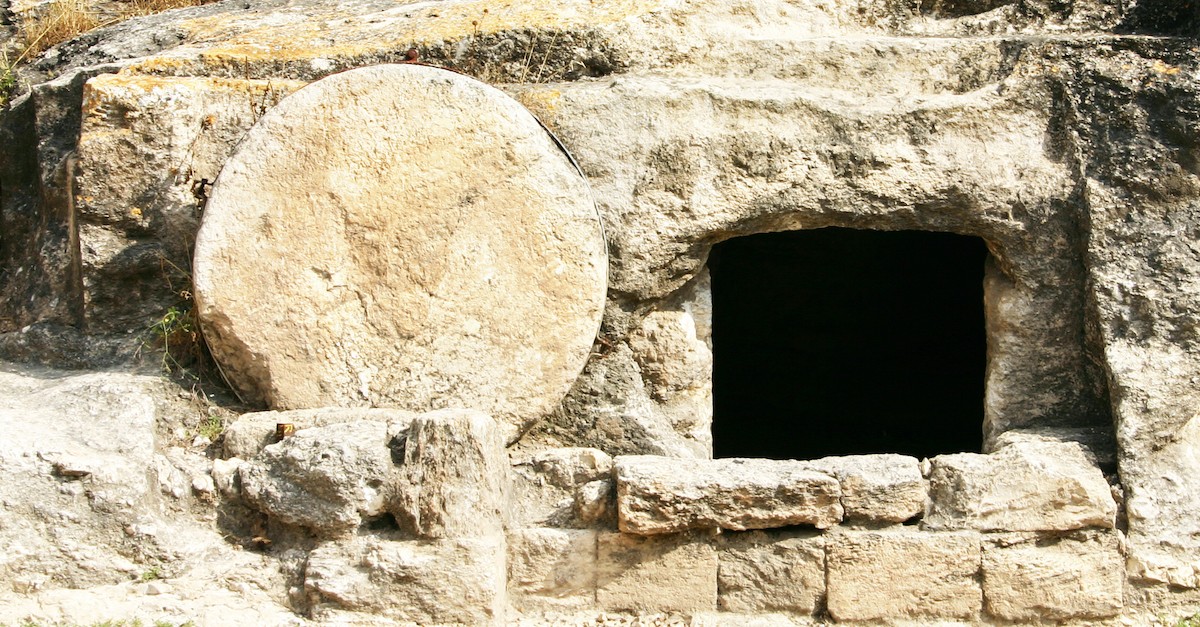
Station Fourteen: Jesus Is Laid in the Tomb

Matthew 27:5-61, Luke 23:50-54

This station recounts how after Jesus died on the cross, he was taken down and laid in a tomb owned by Joseph of Arimathea, a member of the Sanhedrin who secretly followed Jesus.

As we consider this station and this action of Jesus, let us remember the importance of caring for and honoring each other in loving ways.

Going back to Scripture to thoughtfully reflect on the day of Christ’s crucifixion — all the pain and suffering he endured, as well as all the other things that happened along the way to the cross — is a good Lenten exercise because it helps us reflect on the extravagant, generous love Jesus had for us. We owe him absolutely everything. 

Whether you reflect on the stations of the cross or some other aspect of Jesus’s life, be sure to spend time reflecting, repenting, and drawing closer to God as you prepare your heart for Easter.

Photo credit: ©Getty Images/doulos

 

Salem News Channel Today

Sponsored Links


September 26 - Phoenix, AZ
Scottsdale Center for the Performing Arts


November 2 - Detroit, MI
Zion Christian Church in Troy


October 6 - Los Angeles, CA
Pasadena Convention Center


November 5 - San Antonio, TX
Norris Centers – The Grand Red Oak Ballroom


October 8 - Sacramento, CA
William Jessup University


November 7 - Tampa, FL
The Palladium at St. Pete College


October 22 - Minneapolis, MN
Crowne Plaza AiRE


November 15 - San Francisco, CA
Fremont Marriott Silicon Valley


October 23 - Philadelphia, PA
Green Valley Country Club


November 16 - Denver, CO
CU South Denver - Formerly Wildlife Experience


November 2 - Chicago, IL
Chicago Westin Northwest in Itasca


November 21 - Cleveland, OH
Holiday Inn Rockside in Independence


Salem Radio Network Speakers

Larry Elder is an American lawyer, writer, and radio and television personality who calls himself the "Sage of South Central" a district of Los Angeles, Larry says his philosophy is to entertain, inform, provoke and to hopefully uplift. His calling card is "we have a country to save" and to him this means returning to the bedrock Constitutional principles of limited government and maximum personal responsibility. Elder's iconoclastic wit and intellectual agility makes him a particularly attractive voice in a nation that seems weary of traditional racial dialogue.” – Los Angeles Times.

Mike Gallagher Mike Gallagher began his broadcasting career in 1978 in Dayton, Ohio. Today, he is one of the most listened-to talk radio show hosts in America, recently having been ranked in the Talkers Magazine “Heavy Hundred” list – the 100 most important talk radio hosts in America. Prior to being launched into national syndication in 1998, Mike hosted the morning show on WABC-AM in New York City. Today, Talkers Magazine reports that his show is heard by over 3.75 million weekly listeners. Besides his radio work, Mike is seen on Fox News Channel as an on-air contributor, frequently appearing on the cable news giant.

Hugh Hewitt is one of the nation’s leading bloggers and a genuine media revolutionary. He brings that expertise, his wit and what The New Yorker magazine calls his “amiable but relentless manner” to his nationally syndicated show each day.

When Dr. Sebastian Gorka was growing up, he listened to talk radio under his pillow with a transistor radio, dreaming that one day he would be behind the microphone. Beginning New Year’s Day 2019, he got his wish. Gorka now hosts America First every weekday afternoon 3 to 6pm ET. Gorka’s unique story works well on the radio. He is national security analyst for the Fox News Channel and author of two books: "Why We Fight" and "Defeating Jihad." His latest book releasing this fall is “War For America’s Soul.” He is uniquely qualified to fight the culture war and stand up for what is great about America, his adopted home country.

Broadcasting from his home station of KRLA in Los Angeles, the Dennis Prager Show is heard across the country. Everything in life – from politics to religion to relationships – is grist for Dennis’ mill. If it’s interesting, if it affects your life, then Dennis will be talking about it – with passion, humor, insight and wisdom.

Sean Hannity is a conservative radio and television host, and one of the original primetime hosts on the Fox News Channel, where he has appeared since 1996. Sean Hannity began his radio career at a college station in California, before moving on to markets in the Southeast and New York. Today, he’s one of the most listened to on-air voices. Hannity’s radio program went into national syndication on September 10, 2001, and airs on more than 500 stations. Talkers Magazine estimates Hannity’s weekly radio audience at 13.5 million. In 1996 he was hired as one of the original hosts on Fox News Channel. As host of several popular Fox programs, Hannity has become the highest-paid news anchor on television.

Michelle Malkin is a mother, wife, blogger, conservative syndicated columnist, longtime cable TV news commentator, and best-selling author of six books. She started her newspaper journalism career at the Los Angeles Daily News in 1992, moved to the Seattle Times in 1995, and has been penning nationally syndicated newspaper columns for Creators Syndicate since 1999. She is founder of conservative Internet start-ups Hot Air and Twitchy.com. Malkin has received numerous awards for her investigative journalism, including the Council on Governmental Ethics Laws (COGEL) national award for outstanding service for the cause of governmental ethics and leadership (1998), the Reed Irvine Accuracy in Media Award for Investigative Journalism (2006), the Heritage Foundation and Franklin Center for Government & Public Integrity's Breitbart Award for Excellence in Journalism (2013), the Center for Immigration Studies' Eugene Katz Award for Excellence in the Coverage of Immigration Award (2016), and the Manhattan Film Festival's Film Heals Award (2018). Married for 26 years and the mother of two teenage children, she lives with her family in Colorado. Follow her at michellemalkin.com. (Photo reprinted with kind permission from Peter Duke Photography.)

Sponsored by:

A Lenten Study on the 14 Stations of the Cross

Carbonatix Pre-Player Loader

Audio By Carbonatix

Wednesday, February 18, 2026, is Ash Wednesday, a holy day that marks the beginning of Lent. Lent is a 40-day season in the Christian calendar (excluding Sundays) that serves as a time of repentance, fasting, and preparation for the coming of Easter. It is a time of self-examination and reflection.

Lent begins on Ash Wednesday and runs through Thursday, April 2, which is also known as Maundy, or Holy, Thursday — the Christian holy day that commemorates the Last Supper and the washing of the disciples’ feet.

Lent is 40 days long to represent the 40 days Jesus spent fasting and praying in the desert before starting his own ministry.

Christians observe Lent in many different ways, and in Protestant churches there are no strict guidelines. The emphasis is on a person’s unique spiritual journey to become more like Christ and remember the sacrifices of Christ. Some abstain from certain foods or certain habits, while others adopt increased prayer, do intentional acts of service, or study Scripture. 

For some Christians, praying over the 14 stations of the cross can be a good way to draw closer to Christ and meditate on the suffering and grace of God that leads to our salvation.

Let’s take a look at the 14 stations of the cross, what they are, and why knowing about them can help us become better disciples of Jesus Christ.

Photo credit: Pexels/geralt

What Are the Stations of the Cross?

What Are the Stations of the Cross?

The stations of the cross are various images that depict the path Jesus walked on the day of his crucifixion. This walk, which is intended to be a journey through passion and prayer, is also known as the Way of the Cross or Via Crucis. 

Some scholars believe that early Christians used to make a pilgrimage to Jerusalem and walk the path of Jesus’s last day before the crucifixion, as recounted in the gospels. Essentially, they walked from what they believed to have been Pontius Pilate’s house to Calvary, or Golgotha, where Jesus was nailed to a cross and hung to die. Franciscans were given custody of the holy sites in Jerusalem in 1342, and in what became known as the Via Dolorosa, Christians would literally follow the way to the cross as best as they could, processional style, in an effort to understand and meditate upon Christ’s suffering and sacrifice. 

Artists later painted visual representations of this agonizing day, inspired by this pilgrimage, and in many churches, the 14 images are arranged in order along a path, along which worshippers walk, stopping at each station to say prayers and reflect. For more than 1,000 years, Roman Catholics have been devoted to this practice. 

For years, many Protestants rejected the practice of the stations of the cross, believing the images to be idolatrous. Some even considered the depiction biblically inaccurate. But many Protestants today have come to recognize the value of understanding the stations in a more biblical, less imagery-focused practice.

Many Protestant denominations, including Anglicans, Lutherans, and Methodists, have incorporated adapted versions of this practice as a way for people to reflect on the suffering of Christ as they prepare for Easter.

What Are the 14 Stations of the Cross?

The 14 stations of the cross take a person through the various actions Jesus took on the day of his crucifixion:

1. Jesus prays alone 

2. Jesus is arrested

3. The Sanhedrin try Jesus

4. Pilate tries Jesus

5. Pilate sentences Jesus

6. Jesus wears the crown

7. Jesus carries his cross

8. Simon carries the cross

9. Jesus speaks to the women

10. Jesus is crucified

11. Criminals speak to Jesus

12. Jesus speaks to Mary and John

13. Jesus dies on the cross

14. Jesus is laid in the tomb

Photo credit: ©Getty Images/shuang paul wang

Station One: Jesus Prays Alone

Station One: Jesus Prays Alone

Luke 22:39-44, Matthew 26:36-41

This station recounts how after the Last Supper, Jesus was troubled and went to the Garden of Gethsemane to pray. He asked his friends to stay awake and wait for him, and he poured his heart out to God, asking, “My Father, if it is possible, may this cup be taken from me. Yet not as I will, but as you will” (Matthew 26:39). He prayed so hard he sweated drops of blood. 

As we consider this station and this action of Jesus, let us remember that Jesus always looked to the Father first. He knew the terrible ordeal awaiting him, yet he prayed and committed himself to obedience, trusting God foremost.

Station Two: Jesus Is Arrested

Mark 14:43-46, Matthew 26:47-56

This station recounts how Judas — one of Jesus’s inner circle of closest friends and followers — betrayed him. Yet at the time of his arrest, Jesus went willingly, urging his other disciples to remain peaceful.

As we consider this station and this action of Jesus, let us remember the actions of Judas and how important it is to remain strong in our faith and not fall away when things get hard. Let us also remember how Jesus cooperated with his arrest, willingly going with his captors in obedience to what God desired of him.

Station Three: The Sanhedrin Try Jesus

Mark 14:61-64, Luke 22:66-71

This station recounts how this group of religious priests and experts judged Jesus and condemned him to die. 

As we consider this station and this action of Jesus, let us remember that there is no room for self-righteous judgment. Only God is the judge. It is dangerous when we entrust a group of all-too-human people to make judgments only God should do. It is also wrong to pridefully believe we know best.

Photo credit: ©Getty Images/rudall30

Station Four: Peter Denies Jesus

Station Four: Peter Denies Jesus

Matthew 26:69-75, Luke 22:54-62

This station recounts how Peter — a devoted disciple of Jesus — denied three times that he knew him. 

As we consider this station and this action of Jesus, let us remember that, like Peter, we too can be imperfect Christians, yet we are given the opportunity to repent and step up in faith. Peter did just this, ultimately helping to found the church. We can do the same.

Station Five: Pilate Sentences Jesus

Mark 15:1-5, 15, Matthew 27:11-26

This station recounts how Jesus was taken before the governor, Pilate. With no real evidence to execute him, Pilate wanted to release Jesus, but the Sanhedrin insisted on his execution. Aware that “an uproar was starting” (Matthew 11:24), Pilate conceded to the crowd and sentenced him to death.

As we consider this station and this action of Jesus, let us remember that choosing the truth — the way of Christ — might be unpopular. Yet we answer to God, not other people.

Station Six: Jesus Wears the Crown

John 19:1-5, Luke 22:63-65

This station recounts how the soldiers mocked Jesus and taunted him, forcing him to wear a crown of thorns on his head and falsely hailing him as king of the Jews.

As we consider this station and this action of Jesus, let us remember that Jesus endured harsh treatment and much pain, yet he did so willingly.

Photo credit: ©Getty Images/stevanovicigor

Station Seven: Jesus Carries His Cross

Station Seven: Jesus Carries His Cross

John 19:6, 15-17

This station recounts how Jesus was forced to carry his own cross to his execution.

As we consider this station and this action of Jesus, let us remember what Jesus said to his disciples in Matthew 16:24-25: “Whoever wants to be my disciple must deny themselves and take up their cross and follow me. For whoever wants to save their life will lose it, but whoever loses their life for me will find it.” Here, we read that Jesus did this literally; he picked up his own cross and willingly walked to his death so that God’s will could be done through him. We should do the same.

Station Eight: Simon Carries His Cross

Luke 23:26

This station recounts how the soldiers forced a man named Simon of Cyrene to carry Jesus’s cross on the way to Golgotha.

As we consider this station and this action of Jesus, let us remember that just as Simon carried the cross provided for Jesus, we must do the same today. In humility, we must suffer and endure what we must for God’s kingdom.

Station Nine: Jesus Speaks to the Women

Luke 23:27-31

This station recounts how women were weeping at Jesus’s suffering, and he told them not to cry for him but for themselves and the evil of the world they would soon face. He focused on them, not on his own pain. 

As we consider this station and this action of Jesus, let us remember that we must consider others before ourselves.

Photo credit: ©Getty Images/Rudall30

Station Ten: Jesus Is Crucified

Station Ten: Jesus Is Crucified

Luke 23:33-47

This station recounts how Jesus was nailed to a cross with great spikes driven into his hands and feet. There, he hung and died. 

As we consider this station and this action of Jesus, let us remember the pain and anguish our Lord endured for our sake. His suffering and sacrifice were great.

Station Eleven: Criminals Speak to Jesus

Luke 23:39-43

This station recounts how Jesus was crucified between two criminals. One of them acknowledged Jesus as lord, and Jesus told him he would be in paradise that day with him because he accepted and believed in the Son of God.

As we consider this station and this action of Jesus, let us remember that we are saved through our repentant belief and God’s grace only — not because of anything we can possibly do.

Station Twelve: Jesus Speaks to Mary and John

John 19:25-27

This station recounts how Jesus — dying on the cross — took a moment to speak to his mother and his beloved friend John, entrusting his mother to John’s care.

As we consider this station and this action of Jesus, let us remember how even in his own agony, Jesus thought of others before himself.

Photo credit: ©Getty Images/Wheatfield

Station Thirteen: Jesus Dies on the Cross

Station Thirteen: Jesus Dies on the Cross

Luke 23:44-46, Matthew 27:45-54

This station recounts how Jesus cried out and then died. At that moment, the curtain in the temple was torn from top to bottom.

As we consider this station and this action of Jesus, let us remember how, just like the curtain was torn, with Jesus the barrier dividing us and our sin from God is removed. Jesus is our way to the Father, and his sacrifice for us made this possible.

Station Fourteen: Jesus Is Laid in the Tomb

Matthew 27:5-61, Luke 23:50-54

This station recounts how after Jesus died on the cross, he was taken down and laid in a tomb owned by Joseph of Arimathea, a member of the Sanhedrin who secretly followed Jesus.

As we consider this station and this action of Jesus, let us remember the importance of caring for and honoring each other in loving ways.

Going back to Scripture to thoughtfully reflect on the day of Christ’s crucifixion — all the pain and suffering he endured, as well as all the other things that happened along the way to the cross — is a good Lenten exercise because it helps us reflect on the extravagant, generous love Jesus had for us. We owe him absolutely everything. 

Whether you reflect on the stations of the cross or some other aspect of Jesus’s life, be sure to spend time reflecting, repenting, and drawing closer to God as you prepare your heart for Easter.

Photo credit: ©Getty Images/doulos

 

Salem News Channel Today

Sponsored Links

On Air & Up Next

See the Full Program Guide