7 Fun Facts about Why Green Is the Official Saint Patrick's Day Color

Carbonatix Pre-Player Loader

Audio By Carbonatix

It’s been said that “the whole world becomes Irish” during St. Patrick's Day. And while Christians celebrate St. Patrick for his beloved sharing of the Gospel throughout Ireland, one of the ways all people join in the celebration is by wearing green.

But did you ever wonder how ‘green’ came to be such a symbol of the Irish? Understanding more about how this hue became connected with the country's heritage adds a bit of extra meaning to the 'Wearin’ of the Green.”

Here are seven fun facts about why green is traditional on St. Patrick’s Day:

Photo Credit: ©GettyImages/gpointstudio
1. St. Patrick Symbolically Adopted Ireland’s Green

1. St. Patrick Symbolically Adopted Ireland’s Green

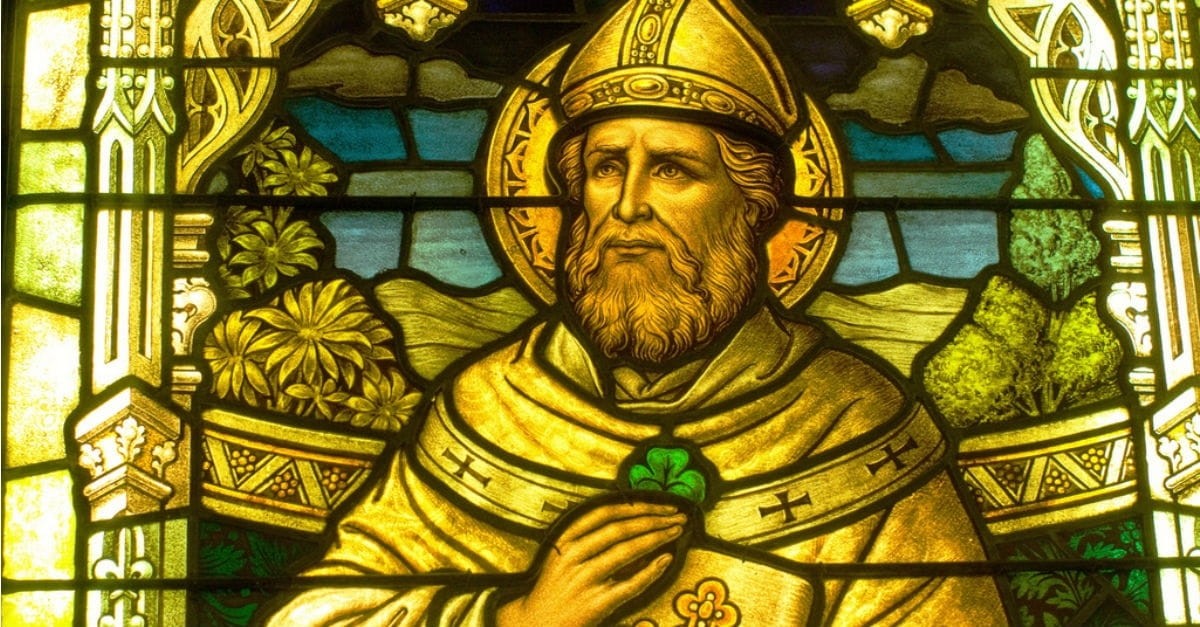
St. Patrick, the primary patron saint of Ireland, was not originally associated with the color green at all. Images of him from before the 1600s show the saint in a sky-blue shade, known then as “St. Patrick's blue,” which was the official color of the Order named for him. Blue was also the main color used in Ireland’s flag while the country was under English rule, and since St. Patrick was born in England, the connection made sense.

At 16 years of age, Patrick was taken from his home and made a slave in Ireland for several years. During that time of exile, Patrick’s passion for God grew. He escaped back to England, but years later received a vision that he was being called to return to Ireland. He travelled through the country, persevering through hardships and dangers to bring a saving knowledge of God to many. Eventually, St. Patrick became a beloved figure in Ireland, and when their symbols shifted to green, St. Patrick’s clothing took on the same color.

Photo Credit: ©flickr/thadzajdowicz

2. St. Patrick Used a Green Shamrock to Explain the Trinity

2. St. Patrick Used a Green Shamrock to Explain the Trinity

One of the inspirations for the color green was actually the shamrock sprig. St. Patrick used the three-leafed shamrock as a tool to explain the Holy Trinity. The Trinity is a concept that all Christians need to know, but it is often confusing. Though it is founded in Scripture, the idea of the Trinity, or the Godhead, has never been fully understood by man. Genesis 1:26, For instance, quotes God as saying, “Let us make man in our image, after our likeness.”

One of the simplest ways to state the doctrine is to say that there is One God who exists in three Persons: God the Father, Christ the Son, and The Holy Spirit. They are all equal and eternal, yet acting as One. St. Patrick discovered the shamrock to be an effective visual to use when teaching on such an important but complex topic. People could better remember the separate Persons of the Trinity while looking at the sprig’s three leaves.

3. Colors Can Signify Religious Heritage

Wearing green is sometimes a statement about religious heritage as well. One of Ireland’s two major faiths is Roman Catholicism. This took root during St. Patrick's ministry. The authority of the Pope and the church priesthood, as well as the holy rites of baptism and confirmation, are emphasized. As Ireland started to oppose English rule, many saw following the Catholic faith as a way of showing resistance, and putting on green signified an allegiance with the cause.

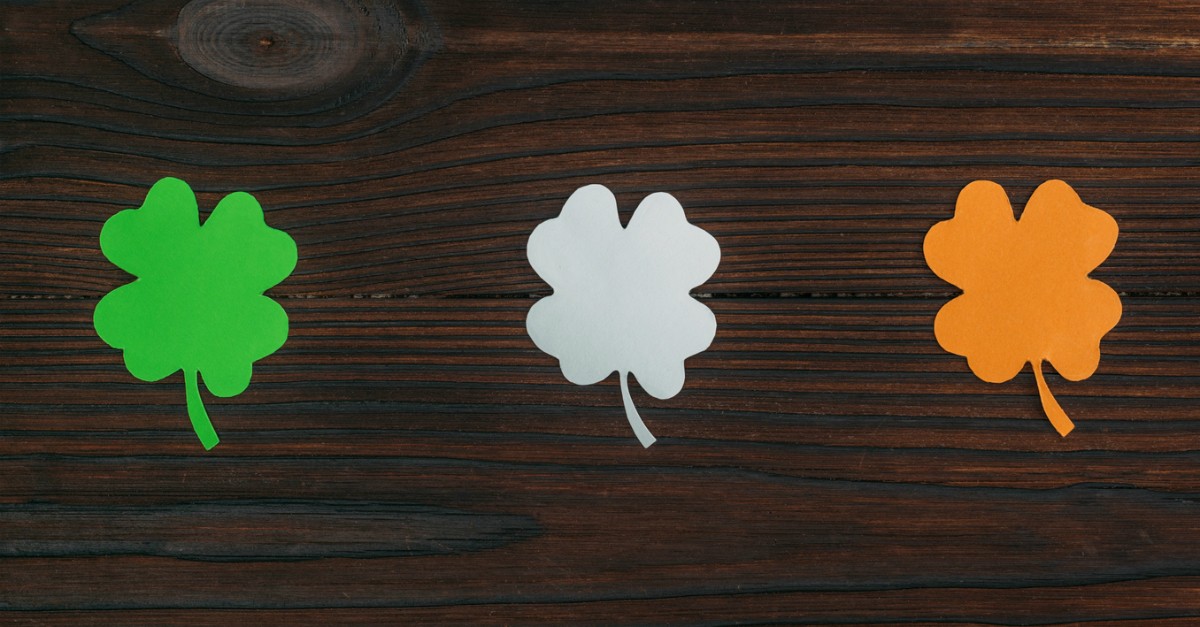
Another color, orange, came to signify the Protestant faith. As in many places, religion became entwined with politics in Ireland. So while both Catholics and Protestants are technically considered Christians, a divide grew between the two. Some people began to wear white to  indicate a desire for peace between the two faiths.

Photo Credit: ©GettyImages/Chinnapong
4. Green Flags and Uniforms Portrayed Political Passions

4. Green Flags and Uniforms Portrayed Political Passions

Green had an important role to play in the struggle for Irish independence from England. Starting with the Great Irish Rebellion of 1641, the color was intentionally used in the flags of several revolutionary groups to display the longing for self-government.

Later, green replaced the traditional blue of England in the country’s flag design. It mirrored the color scheme the two major religions practiced in the land then: a green stripe to represent Catholicism, an orange one for the Protestant faith, and white as a call for unity between them.

The practice of wearing green to symbolize Irish national pride took on steam in the 1790s. The Society of United Irishmen, a political group inspired by the American Revolution, designed a uniform of green felt hats, green shirts, and pants with green and white stripes. Wearing these was a bold and risky declaration against the English who still ruled them, and emboldened others to join their movement.

Photo Credit: ©GettyImages/LightFieldStudios
5. Ireland’s Lush Landscape is Referred to as ‘The Emerald Isle’

5. Ireland’s Lush Landscape is Referred to as ‘The Emerald Isle’

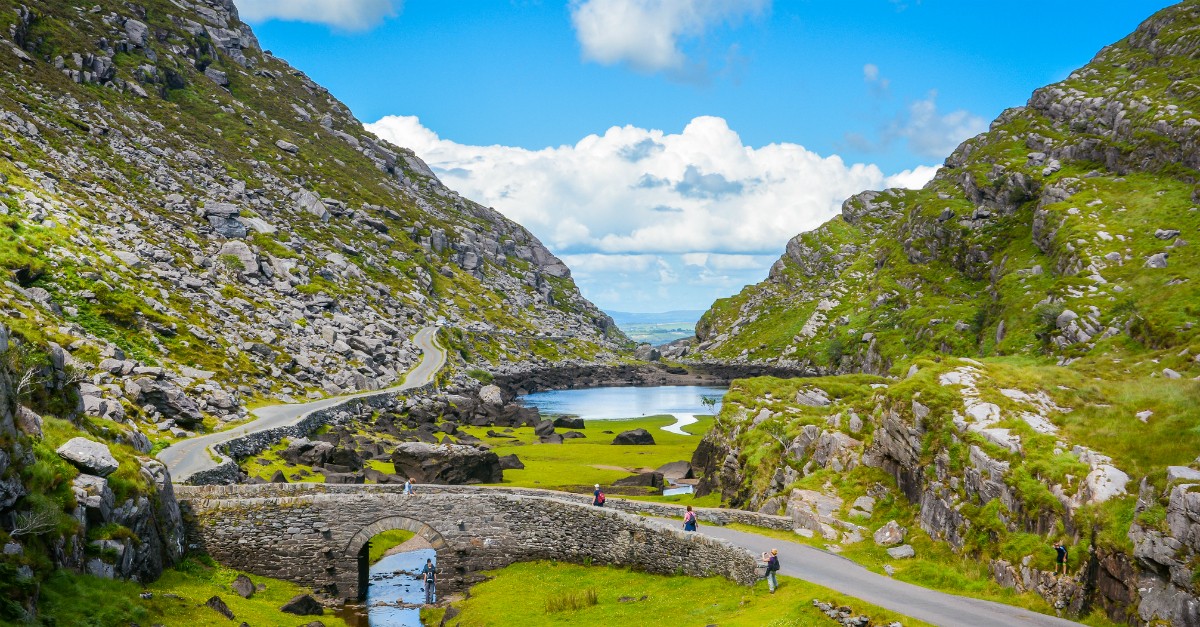
The connection between Ireland and green has also been encouraged by a poem that grew in popularity throughout Ireland and beyond. “When Erin First Rose,”  was penned by Dr. William Drennan, a leader of the Society of United Irishmen, in 1795. The phrase “The emerald isle” is used to paint a loving picture of his country’s lush landscape:

When Erin first Rose from the dark swelling flood, God blessed the green island, he saw it was good. The Emerald of Europe it sparkled and shone, in the ring of this world, the most precious stone. Arm of Erin, be strong! But be gentle as brave; and uplifted to strike, be still ready to save; let no feeling of vengeance presume to defile the cause of, or men of, the Emerald Isle. 

6. The Song ‘Wearing of the Green’ Became a National Standard

Dion Bouicicault, a playwright in the mid 1800’s, composed a song called “Wearing of the Green” for one of his shows. This short tune quickly became a national standard that is now known all around the world through many recordings and performances. The lyrics are both a joyful expression of Irish pride in and a declaration of personal dedication to the homeland.

O Paddy dear, and did ye hear the news that’s goin’ round? The shamrock is by law forbid to grow on Irish ground! No more St. Patrick's Day we’ll keep, his color can’t be seen for there’s a cruel law ag’in the Wearin’ o’ the Green…

When laws can stop the blades of grass from growin’ as they grow and when the leaves in summer-time their color dare not show then I will change the color too I wear in my caubeen but till that day, please God, I’ll stick to the Wearin’ o’ the Green.

Photo Credit: ©GettyImages/e55evu
7. Leprechaun Lore Makes Green a ‘Lucky’ Color

7. Leprechaun Lore Makes Green a ‘Lucky’ Color

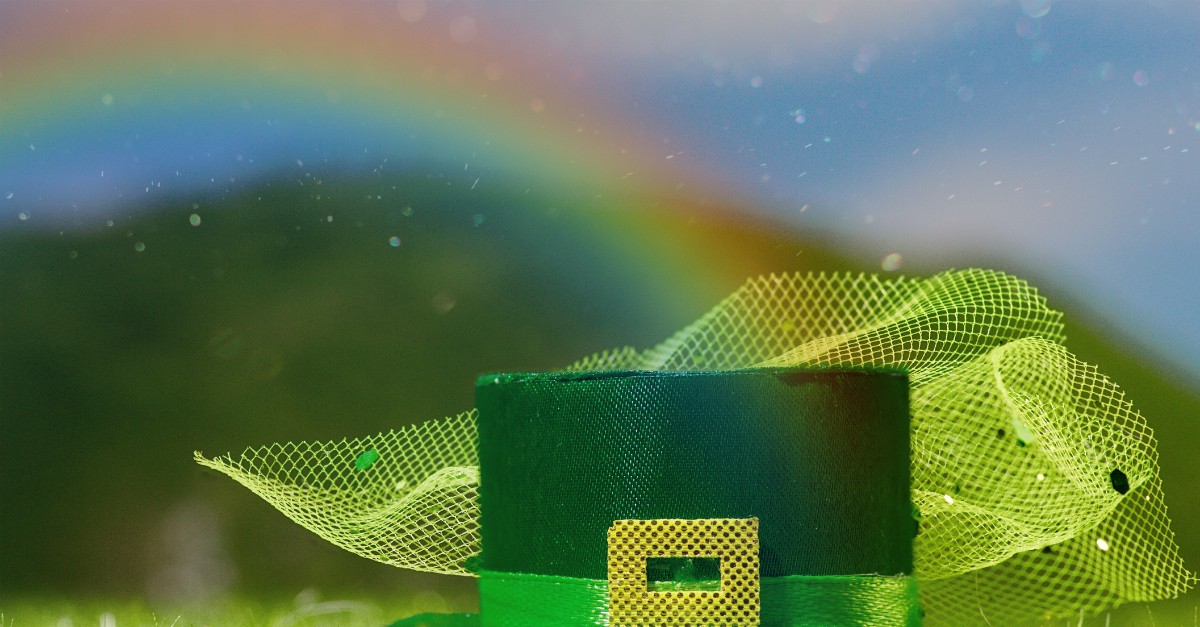
One of the most beloved of mythical creatures, the leprechaun, comes out on St. Patrick's Day proudly wearing green. The earliest writings claim that solitary leprechauns wore red, but those who traveled together in herds wore green. Over time, all became clothed in the same hue. In fact, it’s said that if one of them sees a person not dressed in green, they’ll give them a pinch.

The original folklore about these types of fairies has been traced back to the eighth century. Some believe that “luchorpans”, or water sprites, were the beginning of the legend, while others think it came from “leath bhrogan,” the Irish word for shoemaker.

Many are convinced that leprechauns have treasure stashed away, or that they have the power to grant wishes. In either case, lots of people try to find, trap and catch them to gain luck and riches, so building “leprechaun traps” is an annual event in some homes.

So as you pull out your green shirts, hats, or pins to wear this St. Patrick’s Day, take a moment to remember all unique ways the color is connected to Ireland. Green represents the truly rich history of a strong and special people, and a persevering Saint Patrick who shared the Gospel far and wide.

Photo Credit: ©GettyImages/jacqylaw

 

Salem News Channel Today

Sponsored Links


September 26 - Phoenix, AZ
Scottsdale Center for the Performing Arts


November 2 - Detroit, MI
Zion Christian Church in Troy


October 6 - Los Angeles, CA
Pasadena Convention Center


November 5 - San Antonio, TX
Norris Centers – The Grand Red Oak Ballroom


October 8 - Sacramento, CA
William Jessup University


November 7 - Tampa, FL
The Palladium at St. Pete College


October 22 - Minneapolis, MN
Crowne Plaza AiRE


November 15 - San Francisco, CA
Fremont Marriott Silicon Valley


October 23 - Philadelphia, PA
Green Valley Country Club


November 16 - Denver, CO
CU South Denver - Formerly Wildlife Experience


November 2 - Chicago, IL
Chicago Westin Northwest in Itasca


November 21 - Cleveland, OH
Holiday Inn Rockside in Independence


Salem Radio Network Speakers

Larry Elder is an American lawyer, writer, and radio and television personality who calls himself the "Sage of South Central" a district of Los Angeles, Larry says his philosophy is to entertain, inform, provoke and to hopefully uplift. His calling card is "we have a country to save" and to him this means returning to the bedrock Constitutional principles of limited government and maximum personal responsibility. Elder's iconoclastic wit and intellectual agility makes him a particularly attractive voice in a nation that seems weary of traditional racial dialogue.” – Los Angeles Times.

Mike Gallagher Mike Gallagher began his broadcasting career in 1978 in Dayton, Ohio. Today, he is one of the most listened-to talk radio show hosts in America, recently having been ranked in the Talkers Magazine “Heavy Hundred” list – the 100 most important talk radio hosts in America. Prior to being launched into national syndication in 1998, Mike hosted the morning show on WABC-AM in New York City. Today, Talkers Magazine reports that his show is heard by over 3.75 million weekly listeners. Besides his radio work, Mike is seen on Fox News Channel as an on-air contributor, frequently appearing on the cable news giant.

Hugh Hewitt is one of the nation’s leading bloggers and a genuine media revolutionary. He brings that expertise, his wit and what The New Yorker magazine calls his “amiable but relentless manner” to his nationally syndicated show each day.

When Dr. Sebastian Gorka was growing up, he listened to talk radio under his pillow with a transistor radio, dreaming that one day he would be behind the microphone. Beginning New Year’s Day 2019, he got his wish. Gorka now hosts America First every weekday afternoon 3 to 6pm ET. Gorka’s unique story works well on the radio. He is national security analyst for the Fox News Channel and author of two books: "Why We Fight" and "Defeating Jihad." His latest book releasing this fall is “War For America’s Soul.” He is uniquely qualified to fight the culture war and stand up for what is great about America, his adopted home country.

Broadcasting from his home station of KRLA in Los Angeles, the Dennis Prager Show is heard across the country. Everything in life – from politics to religion to relationships – is grist for Dennis’ mill. If it’s interesting, if it affects your life, then Dennis will be talking about it – with passion, humor, insight and wisdom.

Sean Hannity is a conservative radio and television host, and one of the original primetime hosts on the Fox News Channel, where he has appeared since 1996. Sean Hannity began his radio career at a college station in California, before moving on to markets in the Southeast and New York. Today, he’s one of the most listened to on-air voices. Hannity’s radio program went into national syndication on September 10, 2001, and airs on more than 500 stations. Talkers Magazine estimates Hannity’s weekly radio audience at 13.5 million. In 1996 he was hired as one of the original hosts on Fox News Channel. As host of several popular Fox programs, Hannity has become the highest-paid news anchor on television.

Michelle Malkin is a mother, wife, blogger, conservative syndicated columnist, longtime cable TV news commentator, and best-selling author of six books. She started her newspaper journalism career at the Los Angeles Daily News in 1992, moved to the Seattle Times in 1995, and has been penning nationally syndicated newspaper columns for Creators Syndicate since 1999. She is founder of conservative Internet start-ups Hot Air and Twitchy.com. Malkin has received numerous awards for her investigative journalism, including the Council on Governmental Ethics Laws (COGEL) national award for outstanding service for the cause of governmental ethics and leadership (1998), the Reed Irvine Accuracy in Media Award for Investigative Journalism (2006), the Heritage Foundation and Franklin Center for Government & Public Integrity's Breitbart Award for Excellence in Journalism (2013), the Center for Immigration Studies' Eugene Katz Award for Excellence in the Coverage of Immigration Award (2016), and the Manhattan Film Festival's Film Heals Award (2018). Married for 26 years and the mother of two teenage children, she lives with her family in Colorado. Follow her at michellemalkin.com. (Photo reprinted with kind permission from Peter Duke Photography.)

Sponsored by:

7 Fun Facts about Why Green Is the Official Saint Patrick's Day Color

Carbonatix Pre-Player Loader

Audio By Carbonatix

It’s been said that “the whole world becomes Irish” during St. Patrick's Day. And while Christians celebrate St. Patrick for his beloved sharing of the Gospel throughout Ireland, one of the ways all people join in the celebration is by wearing green.

But did you ever wonder how ‘green’ came to be such a symbol of the Irish? Understanding more about how this hue became connected with the country's heritage adds a bit of extra meaning to the 'Wearin’ of the Green.”

Here are seven fun facts about why green is traditional on St. Patrick’s Day:

Photo Credit: ©GettyImages/gpointstudio

1. St. Patrick Symbolically Adopted Ireland’s Green

1. St. Patrick Symbolically Adopted Ireland’s Green

St. Patrick, the primary patron saint of Ireland, was not originally associated with the color green at all. Images of him from before the 1600s show the saint in a sky-blue shade, known then as “St. Patrick's blue,” which was the official color of the Order named for him. Blue was also the main color used in Ireland’s flag while the country was under English rule, and since St. Patrick was born in England, the connection made sense.

At 16 years of age, Patrick was taken from his home and made a slave in Ireland for several years. During that time of exile, Patrick’s passion for God grew. He escaped back to England, but years later received a vision that he was being called to return to Ireland. He travelled through the country, persevering through hardships and dangers to bring a saving knowledge of God to many. Eventually, St. Patrick became a beloved figure in Ireland, and when their symbols shifted to green, St. Patrick’s clothing took on the same color.

Photo Credit: ©flickr/thadzajdowicz

2. St. Patrick Used a Green Shamrock to Explain the Trinity

2. St. Patrick Used a Green Shamrock to Explain the Trinity

One of the inspirations for the color green was actually the shamrock sprig. St. Patrick used the three-leafed shamrock as a tool to explain the Holy Trinity. The Trinity is a concept that all Christians need to know, but it is often confusing. Though it is founded in Scripture, the idea of the Trinity, or the Godhead, has never been fully understood by man. Genesis 1:26, For instance, quotes God as saying, “Let us make man in our image, after our likeness.”

One of the simplest ways to state the doctrine is to say that there is One God who exists in three Persons: God the Father, Christ the Son, and The Holy Spirit. They are all equal and eternal, yet acting as One. St. Patrick discovered the shamrock to be an effective visual to use when teaching on such an important but complex topic. People could better remember the separate Persons of the Trinity while looking at the sprig’s three leaves.

3. Colors Can Signify Religious Heritage

Wearing green is sometimes a statement about religious heritage as well. One of Ireland’s two major faiths is Roman Catholicism. This took root during St. Patrick's ministry. The authority of the Pope and the church priesthood, as well as the holy rites of baptism and confirmation, are emphasized. As Ireland started to oppose English rule, many saw following the Catholic faith as a way of showing resistance, and putting on green signified an allegiance with the cause.

Another color, orange, came to signify the Protestant faith. As in many places, religion became entwined with politics in Ireland. So while both Catholics and Protestants are technically considered Christians, a divide grew between the two. Some people began to wear white to  indicate a desire for peace between the two faiths.

Photo Credit: ©GettyImages/Chinnapong

4. Green Flags and Uniforms Portrayed Political Passions

4. Green Flags and Uniforms Portrayed Political Passions

Green had an important role to play in the struggle for Irish independence from England. Starting with the Great Irish Rebellion of 1641, the color was intentionally used in the flags of several revolutionary groups to display the longing for self-government.

Later, green replaced the traditional blue of England in the country’s flag design. It mirrored the color scheme the two major religions practiced in the land then: a green stripe to represent Catholicism, an orange one for the Protestant faith, and white as a call for unity between them.

The practice of wearing green to symbolize Irish national pride took on steam in the 1790s. The Society of United Irishmen, a political group inspired by the American Revolution, designed a uniform of green felt hats, green shirts, and pants with green and white stripes. Wearing these was a bold and risky declaration against the English who still ruled them, and emboldened others to join their movement.

Photo Credit: ©GettyImages/LightFieldStudios

5. Ireland’s Lush Landscape is Referred to as ‘The Emerald Isle’

5. Ireland’s Lush Landscape is Referred to as ‘The Emerald Isle’

The connection between Ireland and green has also been encouraged by a poem that grew in popularity throughout Ireland and beyond. “When Erin First Rose,”  was penned by Dr. William Drennan, a leader of the Society of United Irishmen, in 1795. The phrase “The emerald isle” is used to paint a loving picture of his country’s lush landscape:

When Erin first Rose from the dark swelling flood, God blessed the green island, he saw it was good. The Emerald of Europe it sparkled and shone, in the ring of this world, the most precious stone. Arm of Erin, be strong! But be gentle as brave; and uplifted to strike, be still ready to save; let no feeling of vengeance presume to defile the cause of, or men of, the Emerald Isle. 

6. The Song ‘Wearing of the Green’ Became a National Standard

Dion Bouicicault, a playwright in the mid 1800’s, composed a song called “Wearing of the Green” for one of his shows. This short tune quickly became a national standard that is now known all around the world through many recordings and performances. The lyrics are both a joyful expression of Irish pride in and a declaration of personal dedication to the homeland.

O Paddy dear, and did ye hear the news that’s goin’ round? The shamrock is by law forbid to grow on Irish ground! No more St. Patrick's Day we’ll keep, his color can’t be seen for there’s a cruel law ag’in the Wearin’ o’ the Green…

When laws can stop the blades of grass from growin’ as they grow and when the leaves in summer-time their color dare not show then I will change the color too I wear in my caubeen but till that day, please God, I’ll stick to the Wearin’ o’ the Green.

Photo Credit: ©GettyImages/e55evu

7. Leprechaun Lore Makes Green a ‘Lucky’ Color

7. Leprechaun Lore Makes Green a ‘Lucky’ Color

One of the most beloved of mythical creatures, the leprechaun, comes out on St. Patrick's Day proudly wearing green. The earliest writings claim that solitary leprechauns wore red, but those who traveled together in herds wore green. Over time, all became clothed in the same hue. In fact, it’s said that if one of them sees a person not dressed in green, they’ll give them a pinch.

The original folklore about these types of fairies has been traced back to the eighth century. Some believe that “luchorpans”, or water sprites, were the beginning of the legend, while others think it came from “leath bhrogan,” the Irish word for shoemaker.

Many are convinced that leprechauns have treasure stashed away, or that they have the power to grant wishes. In either case, lots of people try to find, trap and catch them to gain luck and riches, so building “leprechaun traps” is an annual event in some homes.

So as you pull out your green shirts, hats, or pins to wear this St. Patrick’s Day, take a moment to remember all unique ways the color is connected to Ireland. Green represents the truly rich history of a strong and special people, and a persevering Saint Patrick who shared the Gospel far and wide.

Photo Credit: ©GettyImages/jacqylaw

 

Salem News Channel Today

Sponsored Links

On Air & Up Next

See the Full Program Guide