4 Key Things to Consider in the Ten Commandments School Debate

Carbonatix Pre-Player Loader

Audio By Carbonatix

1. What the Ten Commandments Originally Meant in Scripture

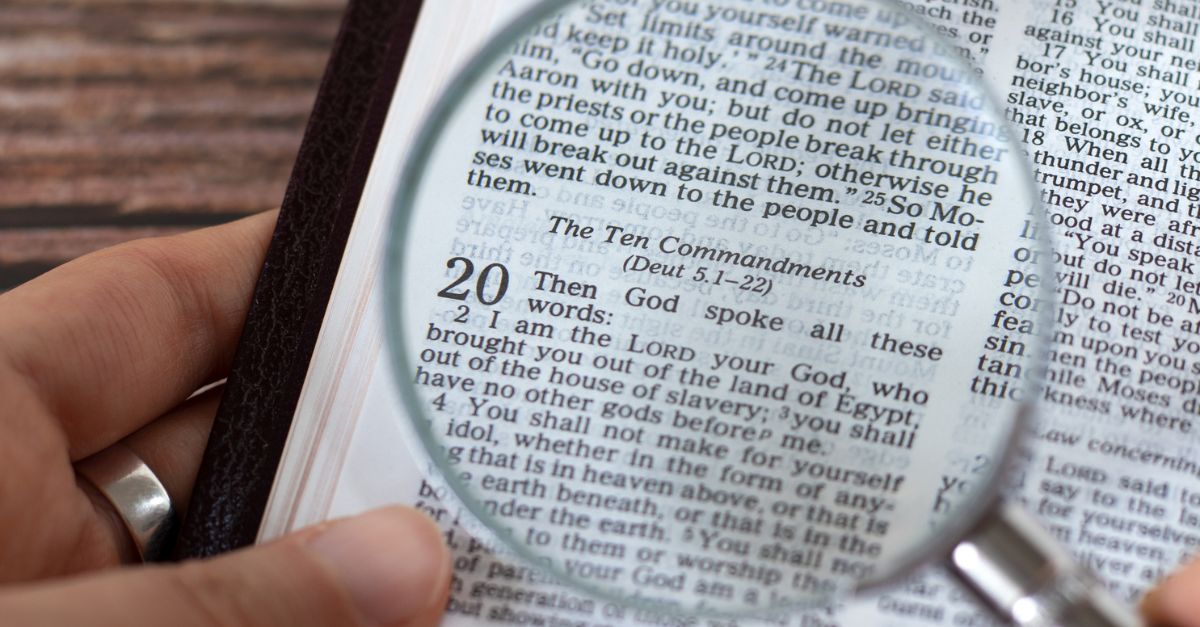
If we trace the 10 Commandments back to their origin, these biblical principles were given in Exodus 20 and Deuteronomy 5 as part of God’s covenant with Israel. They were intended for a specific group of people at a specific time, in a specific covenant relationship. This wasn’t necessarily a universal civic code for all nations, but the words Moses gave the Israelites to keep them close to God’s heart. As we read the commands, we see things that highlight dedication, surrender, and obedience to God. The purpose of these laws wasn’t to control these people, but to help them live the best lives possible. Think of it like this: A good parent gives a child rules to help protect them, not control them for no reason.

The 10 Commandments reveal God’s character as holy, just, and relational. But they also expose human sin and our need for God (Romans 3:20). At the time, these guidelines served as a moral foundation pointing to Jesus and the need for salvation. When Jesus came, He fulfilled the Law (Matthew 5:17), emphasizing internal transformation over external obedience. Because the Law was always about the heart. Underneath the rules and regulations, it summarizes the commands into two key principles: Love God and Love others (Matthew 22:37-40).

Today, you and I live in a world much different than the Israelites. While the Ten Commandments are foundational, they were never meant to function as a standalone tool for societal transformation apart from a relationship with God. Mike Leake, lead pastor at Calvary of Neosho, MO, explains it this way:

“As we reflect on these commandments for our day, we should remember their fulfillment in Christ. His role in this is not just a passing thought but the center of our interaction with these commandments. We, as humans, have already broken the covenant; we have already broken the law. As such, we stand as condemned law-breakers. But this is not true of Christ. He has kept each commandment perfectly, not only by letter but, more importantly, in the heart and spirit. Thankfully, His record becomes ours. As we reflect upon these commandments, we don’t attempt to fulfill them alone or for a right standing with God. That has already been secured through the work of Christ. No, we pursue these because we are accepted. We pursue these because we agree with God about how we should live. We live out the Ten Commandments because we are enthralled with the kingdom of God, and we want to love God and people, fostering a sense of connection and compassion.”

Photo Credit: Getty Images/Marinela Malcheva

2. Why Some Christians Support Posting the Ten Commandments in Schools

Now that we’ve gotten some needed context on the purpose and history of the 10 Commandments, let’s look at why posting them in classrooms has become such a major debate.

On the one hand, the desire to reintroduce these commands brings about objective moral standards. Our generation has concerns about relativism (the view that truth is subjective). Providing these commands would offer some moral clarity in a confusing culture, given their historical influence. For decades, biblical principles have shaped Western law and ethics in the past (for example, the Bill of Rights). Many individuals believe that removing practices like the Ten Commandments, the pledge of allegiance, or prayer directly contributes to moral decline.

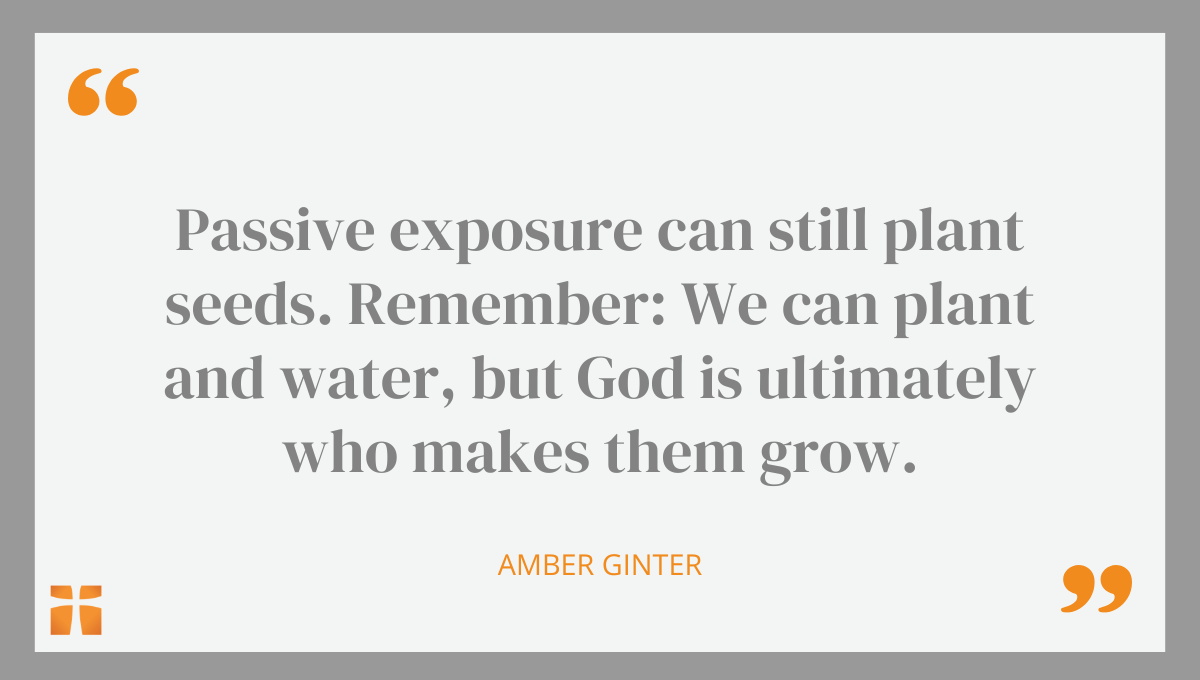
Those same individuals believe that reintroducing the commandments in schools could create further evangelistic opportunities. They hope that exposure to some Scripture, even through a poster or a brief teaching, could spark curiosity or faith among the most secular students. Passive exposure can still plant seeds. Remember: We can plant and water, but God is ultimately who makes them grow.

3 Questions to Help You Reflect On this Debate:

  1. Could reintegrating the commandments reclaim Christian heritage in America? 
  2. Even in spaces where faith is being pushed out of public spaces? 
  3. While these motivations may come from a sincere place, they do raise the question: Can morality be restored through visibility alone?

Photo Credit: SWN Design


3. Biblical Concerns About Displaying the Ten Commandments in Public Schools

Christians remain on the fence about this issue, equally divided. On one hand, faith can’t be legislated. Genuine and authentic faith requires personal conviction, not external forced means. Even when the Israelites had the 10 Commandments, it wasn’t about outward appearance, but the condition of their hearts. Romans 10:9 emphasizes this belief and confession over exposure or mere intellectual knowledge. Sadly, posting commandments in schools won’t automatically produce hearts of transformation. It’s a good start, but not the final solution.

When we place all of our eggs in this basket, students may see Christianity as a list of rules rather than a personal and intimate relationship. We risk them viewing Christianity as superficial, which could reinforce legalism rather than grace. Instead of appreciating the Gospel for what it is, they may see it as behavior modification for “good rewards.”

Since the 1980s, public schools have served students of many different faiths, cultures, and backgrounds. Part of that uniqueness is that these schools aren’t built on any one particular religion, but are supportive of many. If schools begin mandating one religious text, it could create division, resentment, or the requirement to integrate all religious texts when asked.

No matter the decision, we as Christians are called to love our neighbors regardless of their beliefs. Especially in a world where Scripture has often been used as a tool of control rather than liberation, we must be careful not to damage the credibility of our Christian witness. This doesn’t mean backing down or not standing up for our beliefs, but doing so respectfully in a way that makes sense. Because when Christianity is tied too closely to government enforcement, it can distort the message of Jesus, and that’s the last thing we want to happen.

Photo Credit: ©Unsplash/ Jeswin Thomas


4. What the Ten Commandments Still Mean for Christians Today

Regardless of whether the Ten Commandments are placed in schools today, they do still reveal God’s design for human growth and flourishing. They point to values that matter, such as honesty, faithfulness, and respect. They also show us where we fall short and need grace, and lead us toward dependence on Jesus.

As Christians, we must live out the spirit of the Law, and not just the letter. We must live with love and allow love itself to guide us into obedience. The commandments are powerful, but they’re most powerful when they’re lived out, and not just merely posted.

How Christians Can Learn to Pursue an Effective Response 

  • Live a life marked by the attributes of these commands— a life full of integrity, humility, and love.
  • Invest in discipleship—teach young adults what it means to follow these commands and why it matters. Create safe spaces for asking questions and engaging in honest conversations.
  • Engage with culture, but don’t become consumed by it. Speak truth with gentleness and respect, and always avoid fear-driven or combative approaches.
  • Keep the Gospel front and center. The Gospel changes hearts, but the Law alone cannot.

Questions to Consider Before Responding

  • Am I more passionate about displaying Scripture or living it?
  • Do my actions reflect the heart behind the commandments, or am I seeking cultural power?

The Ten Commandments are incredibly powerful, but they were never meant to stand alone. Without context, love, and a personal relationship with Jesus, we risk portraying the Lord as a dictator. Our world will be transformed not by what’s posted, but by the love they receive. As Maya Angelou once wrote, 

“People will forget what you said, people will forget what you did, but people will never forget how you made them feel.”

In a culture watching us closely, Christians have an opportunity to show that God’s commands are not burdens, but pathways to life. And maybe the bigger question isn’t whether we should post these in schools, but whether these commands are visible in us?

To answer frequently asked questions on this topic, refer to the following articles:

Photo Credit: ©Unsplash/ Brooke Cagle

This article originally appeared on Christianity.com. For more faith-building resources, visit Christianity.com. Christianity.com
 

Salem News Channel Today

Sponsored Links


September 26 - Phoenix, AZ
Scottsdale Center for the Performing Arts


November 2 - Detroit, MI
Zion Christian Church in Troy


October 6 - Los Angeles, CA
Pasadena Convention Center


November 5 - San Antonio, TX
Norris Centers – The Grand Red Oak Ballroom


October 8 - Sacramento, CA
William Jessup University


November 7 - Tampa, FL
The Palladium at St. Pete College


October 22 - Minneapolis, MN
Crowne Plaza AiRE


November 15 - San Francisco, CA
Fremont Marriott Silicon Valley


October 23 - Philadelphia, PA
Green Valley Country Club


November 16 - Denver, CO
CU South Denver - Formerly Wildlife Experience


November 2 - Chicago, IL
Chicago Westin Northwest in Itasca


November 21 - Cleveland, OH
Holiday Inn Rockside in Independence


Salem Radio Network Speakers

Larry Elder is an American lawyer, writer, and radio and television personality who calls himself the "Sage of South Central" a district of Los Angeles, Larry says his philosophy is to entertain, inform, provoke and to hopefully uplift. His calling card is "we have a country to save" and to him this means returning to the bedrock Constitutional principles of limited government and maximum personal responsibility. Elder's iconoclastic wit and intellectual agility makes him a particularly attractive voice in a nation that seems weary of traditional racial dialogue.” – Los Angeles Times.

Mike Gallagher Mike Gallagher began his broadcasting career in 1978 in Dayton, Ohio. Today, he is one of the most listened-to talk radio show hosts in America, recently having been ranked in the Talkers Magazine “Heavy Hundred” list – the 100 most important talk radio hosts in America. Prior to being launched into national syndication in 1998, Mike hosted the morning show on WABC-AM in New York City. Today, Talkers Magazine reports that his show is heard by over 3.75 million weekly listeners. Besides his radio work, Mike is seen on Fox News Channel as an on-air contributor, frequently appearing on the cable news giant.

Hugh Hewitt is one of the nation’s leading bloggers and a genuine media revolutionary. He brings that expertise, his wit and what The New Yorker magazine calls his “amiable but relentless manner” to his nationally syndicated show each day.

When Dr. Sebastian Gorka was growing up, he listened to talk radio under his pillow with a transistor radio, dreaming that one day he would be behind the microphone. Beginning New Year’s Day 2019, he got his wish. Gorka now hosts America First every weekday afternoon 3 to 6pm ET. Gorka’s unique story works well on the radio. He is national security analyst for the Fox News Channel and author of two books: "Why We Fight" and "Defeating Jihad." His latest book releasing this fall is “War For America’s Soul.” He is uniquely qualified to fight the culture war and stand up for what is great about America, his adopted home country.

Broadcasting from his home station of KRLA in Los Angeles, the Dennis Prager Show is heard across the country. Everything in life – from politics to religion to relationships – is grist for Dennis’ mill. If it’s interesting, if it affects your life, then Dennis will be talking about it – with passion, humor, insight and wisdom.

Sean Hannity is a conservative radio and television host, and one of the original primetime hosts on the Fox News Channel, where he has appeared since 1996. Sean Hannity began his radio career at a college station in California, before moving on to markets in the Southeast and New York. Today, he’s one of the most listened to on-air voices. Hannity’s radio program went into national syndication on September 10, 2001, and airs on more than 500 stations. Talkers Magazine estimates Hannity’s weekly radio audience at 13.5 million. In 1996 he was hired as one of the original hosts on Fox News Channel. As host of several popular Fox programs, Hannity has become the highest-paid news anchor on television.

Michelle Malkin is a mother, wife, blogger, conservative syndicated columnist, longtime cable TV news commentator, and best-selling author of six books. She started her newspaper journalism career at the Los Angeles Daily News in 1992, moved to the Seattle Times in 1995, and has been penning nationally syndicated newspaper columns for Creators Syndicate since 1999. She is founder of conservative Internet start-ups Hot Air and Twitchy.com. Malkin has received numerous awards for her investigative journalism, including the Council on Governmental Ethics Laws (COGEL) national award for outstanding service for the cause of governmental ethics and leadership (1998), the Reed Irvine Accuracy in Media Award for Investigative Journalism (2006), the Heritage Foundation and Franklin Center for Government & Public Integrity's Breitbart Award for Excellence in Journalism (2013), the Center for Immigration Studies' Eugene Katz Award for Excellence in the Coverage of Immigration Award (2016), and the Manhattan Film Festival's Film Heals Award (2018). Married for 26 years and the mother of two teenage children, she lives with her family in Colorado. Follow her at michellemalkin.com. (Photo reprinted with kind permission from Peter Duke Photography.)

Sponsored by:

4 Key Things to Consider in the Ten Commandments School Debate

Carbonatix Pre-Player Loader

Audio By Carbonatix

1. What the Ten Commandments Originally Meant in Scripture

If we trace the 10 Commandments back to their origin, these biblical principles were given in Exodus 20 and Deuteronomy 5 as part of God’s covenant with Israel. They were intended for a specific group of people at a specific time, in a specific covenant relationship. This wasn’t necessarily a universal civic code for all nations, but the words Moses gave the Israelites to keep them close to God’s heart. As we read the commands, we see things that highlight dedication, surrender, and obedience to God. The purpose of these laws wasn’t to control these people, but to help them live the best lives possible. Think of it like this: A good parent gives a child rules to help protect them, not control them for no reason.

The 10 Commandments reveal God’s character as holy, just, and relational. But they also expose human sin and our need for God (Romans 3:20). At the time, these guidelines served as a moral foundation pointing to Jesus and the need for salvation. When Jesus came, He fulfilled the Law (Matthew 5:17), emphasizing internal transformation over external obedience. Because the Law was always about the heart. Underneath the rules and regulations, it summarizes the commands into two key principles: Love God and Love others (Matthew 22:37-40).

Today, you and I live in a world much different than the Israelites. While the Ten Commandments are foundational, they were never meant to function as a standalone tool for societal transformation apart from a relationship with God. Mike Leake, lead pastor at Calvary of Neosho, MO, explains it this way:

“As we reflect on these commandments for our day, we should remember their fulfillment in Christ. His role in this is not just a passing thought but the center of our interaction with these commandments. We, as humans, have already broken the covenant; we have already broken the law. As such, we stand as condemned law-breakers. But this is not true of Christ. He has kept each commandment perfectly, not only by letter but, more importantly, in the heart and spirit. Thankfully, His record becomes ours. As we reflect upon these commandments, we don’t attempt to fulfill them alone or for a right standing with God. That has already been secured through the work of Christ. No, we pursue these because we are accepted. We pursue these because we agree with God about how we should live. We live out the Ten Commandments because we are enthralled with the kingdom of God, and we want to love God and people, fostering a sense of connection and compassion.”

Photo Credit: Getty Images/Marinela Malcheva


2. Why Some Christians Support Posting the Ten Commandments in Schools

Now that we’ve gotten some needed context on the purpose and history of the 10 Commandments, let’s look at why posting them in classrooms has become such a major debate.

On the one hand, the desire to reintroduce these commands brings about objective moral standards. Our generation has concerns about relativism (the view that truth is subjective). Providing these commands would offer some moral clarity in a confusing culture, given their historical influence. For decades, biblical principles have shaped Western law and ethics in the past (for example, the Bill of Rights). Many individuals believe that removing practices like the Ten Commandments, the pledge of allegiance, or prayer directly contributes to moral decline.

Those same individuals believe that reintroducing the commandments in schools could create further evangelistic opportunities. They hope that exposure to some Scripture, even through a poster or a brief teaching, could spark curiosity or faith among the most secular students. Passive exposure can still plant seeds. Remember: We can plant and water, but God is ultimately who makes them grow.

3 Questions to Help You Reflect On this Debate:

  1. Could reintegrating the commandments reclaim Christian heritage in America? 
  2. Even in spaces where faith is being pushed out of public spaces? 
  3. While these motivations may come from a sincere place, they do raise the question: Can morality be restored through visibility alone?

Photo Credit: SWN Design


3. Biblical Concerns About Displaying the Ten Commandments in Public Schools

Christians remain on the fence about this issue, equally divided. On one hand, faith can’t be legislated. Genuine and authentic faith requires personal conviction, not external forced means. Even when the Israelites had the 10 Commandments, it wasn’t about outward appearance, but the condition of their hearts. Romans 10:9 emphasizes this belief and confession over exposure or mere intellectual knowledge. Sadly, posting commandments in schools won’t automatically produce hearts of transformation. It’s a good start, but not the final solution.

When we place all of our eggs in this basket, students may see Christianity as a list of rules rather than a personal and intimate relationship. We risk them viewing Christianity as superficial, which could reinforce legalism rather than grace. Instead of appreciating the Gospel for what it is, they may see it as behavior modification for “good rewards.”

Since the 1980s, public schools have served students of many different faiths, cultures, and backgrounds. Part of that uniqueness is that these schools aren’t built on any one particular religion, but are supportive of many. If schools begin mandating one religious text, it could create division, resentment, or the requirement to integrate all religious texts when asked.

No matter the decision, we as Christians are called to love our neighbors regardless of their beliefs. Especially in a world where Scripture has often been used as a tool of control rather than liberation, we must be careful not to damage the credibility of our Christian witness. This doesn’t mean backing down or not standing up for our beliefs, but doing so respectfully in a way that makes sense. Because when Christianity is tied too closely to government enforcement, it can distort the message of Jesus, and that’s the last thing we want to happen.

Photo Credit: ©Unsplash/ Jeswin Thomas


4. What the Ten Commandments Still Mean for Christians Today

Regardless of whether the Ten Commandments are placed in schools today, they do still reveal God’s design for human growth and flourishing. They point to values that matter, such as honesty, faithfulness, and respect. They also show us where we fall short and need grace, and lead us toward dependence on Jesus.

As Christians, we must live out the spirit of the Law, and not just the letter. We must live with love and allow love itself to guide us into obedience. The commandments are powerful, but they’re most powerful when they’re lived out, and not just merely posted.

How Christians Can Learn to Pursue an Effective Response 

  • Live a life marked by the attributes of these commands— a life full of integrity, humility, and love.
  • Invest in discipleship—teach young adults what it means to follow these commands and why it matters. Create safe spaces for asking questions and engaging in honest conversations.
  • Engage with culture, but don’t become consumed by it. Speak truth with gentleness and respect, and always avoid fear-driven or combative approaches.
  • Keep the Gospel front and center. The Gospel changes hearts, but the Law alone cannot.

Questions to Consider Before Responding

  • Am I more passionate about displaying Scripture or living it?
  • Do my actions reflect the heart behind the commandments, or am I seeking cultural power?

The Ten Commandments are incredibly powerful, but they were never meant to stand alone. Without context, love, and a personal relationship with Jesus, we risk portraying the Lord as a dictator. Our world will be transformed not by what’s posted, but by the love they receive. As Maya Angelou once wrote, 

“People will forget what you said, people will forget what you did, but people will never forget how you made them feel.”

In a culture watching us closely, Christians have an opportunity to show that God’s commands are not burdens, but pathways to life. And maybe the bigger question isn’t whether we should post these in schools, but whether these commands are visible in us?

To answer frequently asked questions on this topic, refer to the following articles:

Photo Credit: ©Unsplash/ Brooke Cagle

This article originally appeared on Christianity.com. For more faith-building resources, visit Christianity.com. Christianity.com
 

Salem News Channel Today

Sponsored Links

On Air & Up Next

See the Full Program Guide