The Uncomfortable Truth about the Rise in Global Antisemitic Sentiment

Carbonatix Pre-Player Loader

Audio By Carbonatix

Brought to you by Christianity.com

Key Points

  • Rising antisemitism is not only a political or cultural issue, but a moral and spiritual concern for Christians.
  • The October 7 Hamas attack accelerated global antisemitism, fueling online hate, campus unrest, and hostility toward Jewish communities.
  • Recent surveys show antisemitic attitudes are increasing worldwide, especially among younger generations.
  • Holocaust denial and historical ignorance make antisemitism more dangerous by weakening society’s ability to recognize and resist hatred.
  • Christians are called to speak truth, reject anti-Jewish hatred, pray, teach accurate history, and stand with Jewish people against violence and evil.

Why Is Rising Antisemitism a Christian Concern

Antisemitism is surging around the world. It is at epidemic levels throughout the Middle East where Jew-hatred is entrenched in everyday life. Europe is experiencing pre-Holocaust levels of hostility due to far-right parties and an influx of immigrants from Muslim countries. And the United States is experiencing a deeply terrifying surge on the internet, on college campuses, and within both the far right and progressive political movements. 

For Christians, rising antisemitism is not only a political or cultural crisis but a moral and spiritual call to defend truth, oppose hatred, and stand with the Jewish people. This crisis did not happen overnight; it is the culmination of a steady, concerning climb. 

How Did October 7 Accelerate Global Antisemitism

The definitive turning point for this recent surge in antisemitism was October 7, 2023, when Hamas infiltrated southern Israel, massacring more than 1,200 people and taking over 250 hostages into Gaza. In the wake of Israel’s military response, anti-Israel protests skyrocketed across American college campuses and globally on social media.

What Did the Data Show before October 7

However, before October 7, signs of trouble were already percolating. A January 2023 study published by The London Centre for the Study of Contemporary Antisemitism—in partnership with the Anti-Defamation League and the National Opinion Research Center at the University of Chicago—revealed the number of Americans harboring extensive antisemitic prejudice has doubled since 2019, reaching the “highest levels in decades.”[1] Interestingly, that report showed a strong correlation between anti-Israel sentiments and antisemitism, with the younger, more progressive generation proving particularly susceptible to the rhetoric.[2] 

That hatred has quickly spread across the Atlantic, seen in a November 2025 European Commission survey that revealed that 55 percent of Europeans now view antisemitism as a glaring national problem, with nearly 7 in 10 stating that Middle East conflicts directly skew how Jewish people are perceived in their home countries.[3]
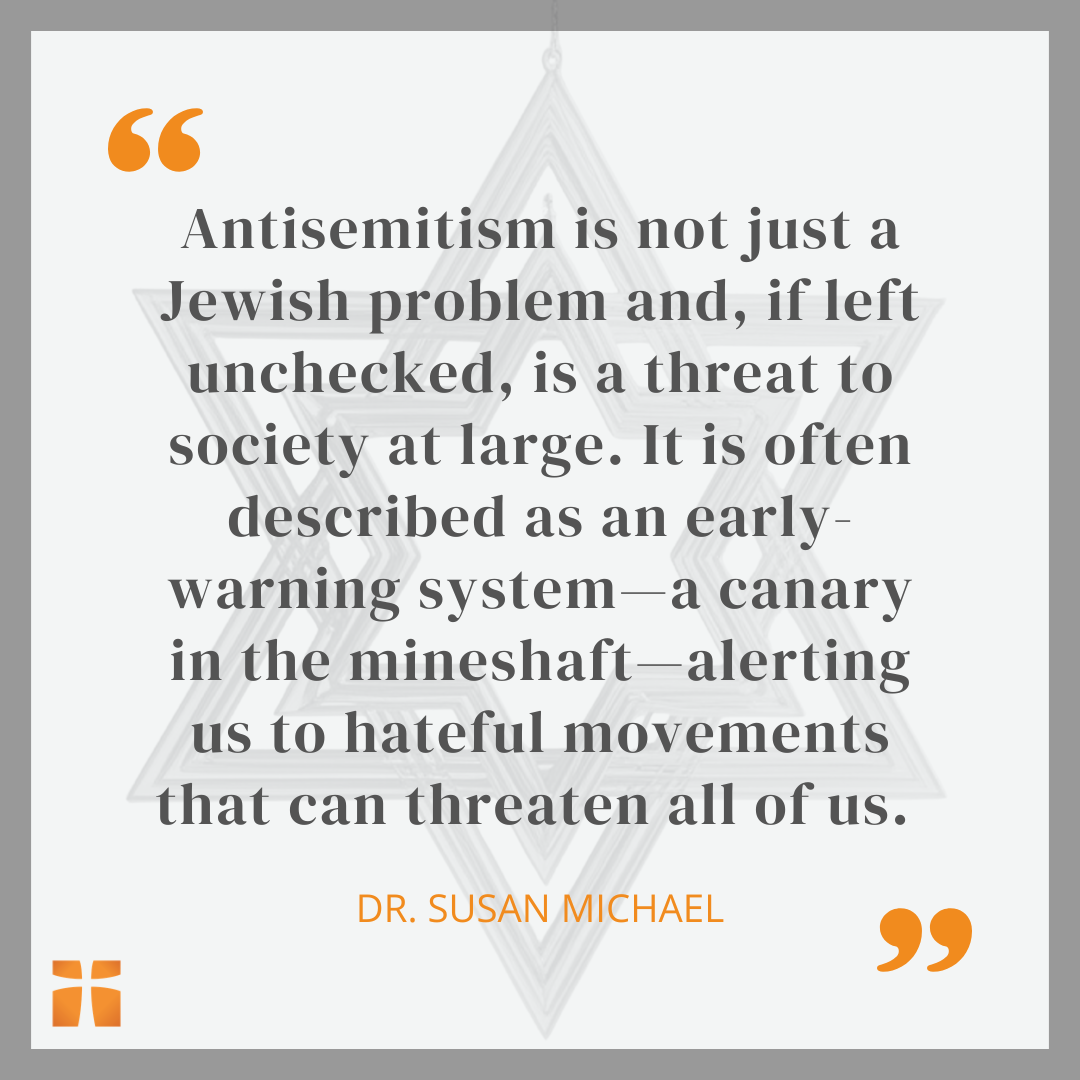
Quote graphic featuring a statement by Dr. Susan Michael that reads, “Antisemitism is not just a Jewish problem and, if left unchecked, is a threat to society at large. It is often described as an early-warning system—a canary in the mineshaft—alerting us to hateful movements that can threaten all of us,” displayed over a faded Star of David background.

What Do Recent Surveys Reveal about Antisemitic Attitudes

The latest ADL Global 100 data shows that antisemitic attitudes have reached alarming global levels. A January 2025 survey by the Anti-Defamation League (ADL) found that nearly half of the global adult population—46 percent—exhibits elevated levels of antisemitic attitudes. This means about 2.2 billion people harbor deeply entrenched antisemitic beliefs, more than double compared to ADL’s first worldwide survey in 2014. It’s the highest level on record since ADL started tracking these trends globally. Additionally, the survey found that younger respondents worldwide show a greater prevalence of antisemitic attitudes: 40 percent of respondents under age 35 affirm that “Jews are responsible for most of the world’s wars,” while it is 29 percent for those over the age of 50.[4]

Why Holocaust Denial Makes Antisemitism More Dangerous

Just as alarming is the widespread erasure of history. The 2025 survey also found that 20 percent of the global respondents had never heard of the Holocaust, and less than half (48 percent) recognize the Holocaust’s historical accuracy. Of those who had heard of it, one-third thought it was either a myth or greatly exaggerated. Geographically, the denial is troubling: only 16 percent of the respondents in the Middle East and North Africa and 23 percent in Sub-Saharan Africa recognize the historical accuracy of the Holocaust.[5]

Why Antisemitism Threatens More Than Jewish Communities

Antisemitism is not just a Jewish problem and, if left unchecked, is a threat to society at large. It is often described as an early-warning system—a canary in the mineshaft—alerting us to hateful movements that can threaten all of us. When Hitler unleashed antisemitism and built the Nazi movement on hatred of Jews, he plunged the world headlong on a path of destruction. Not only were 6 million Jews exterminated, but some 50 million people died in World War II. 

How Should Christians Respond to Rising Antisemitism

Christians have a moral obligation to withstand hatred and violence directed toward any group, including Jews. But our responsibility goes beyond that. Knowing the history of centuries of church-sanctioned antisemitism that paved the way for the Holocaust, we particularly need to stand with the Jewish people in their modern battle against this evil.

The Evangelical Christian demographic in America has the political and moral weight to push back against this evil invasion of our society. We can no longer remain passive or silent; we must learn how to come against its influence vocally, politically, and prayerfully. The canary in the mineshaft is sounding its call of alarm, and it’s time for the church to act. 

Frequently Asked Questions about Christians and Rising Antisemitism

  • Why should Christians care about antisemitism?
     Christians should care about antisemitism because hatred toward Jewish people is morally evil, historically dangerous, and spiritually connected to the roots of the Christian faith.
  • How did October 7 affect global antisemitism?
     The October 7 Hamas attack intensified global antisemitism by fueling anti-Israel hostility, online hate, campus unrest, and renewed threats against Jewish communities around the world.
  • Is anti-Israel sentiment always antisemitism?
     No. Criticism of any government can be legitimate, but anti-Israel rhetoric becomes antisemitic when it denies Jewish people dignity, safety, self-determination, or uses classic anti-Jewish stereotypes.
  • How can Christians respond to antisemitism?
     Christians can respond by speaking truth, rejecting anti-Jewish theology, praying for Jewish communities, teaching accurate history, opposing hatred publicly, and standing against violence wherever it appears.

 For Further Reading

[1] Anti-Defamation League, “Antisemitic Attitudes in America: Topline Findings,” 12 January 2023.
[2] World Israel News, “Whopping Majority of Americans Believe in Antisemitic Tropes, New Poll Finds,” January 2023.
[3] https://combatantisemitism.org/cam-news/eu-survey-antisemitism-rising-and-holocaust-awareness-lagging-in-europe/
[4] Anti-Defamation League, “46% of Adults Worldwide Hold Significant Antisemitic Beliefs, ADL Poll Finds,” 20 February 2025.
[5] Anti-Defamation League, “46% of Adults,” 20 February 2025.

Photo Credit: ©Unsplash/Levi Meir Clancy
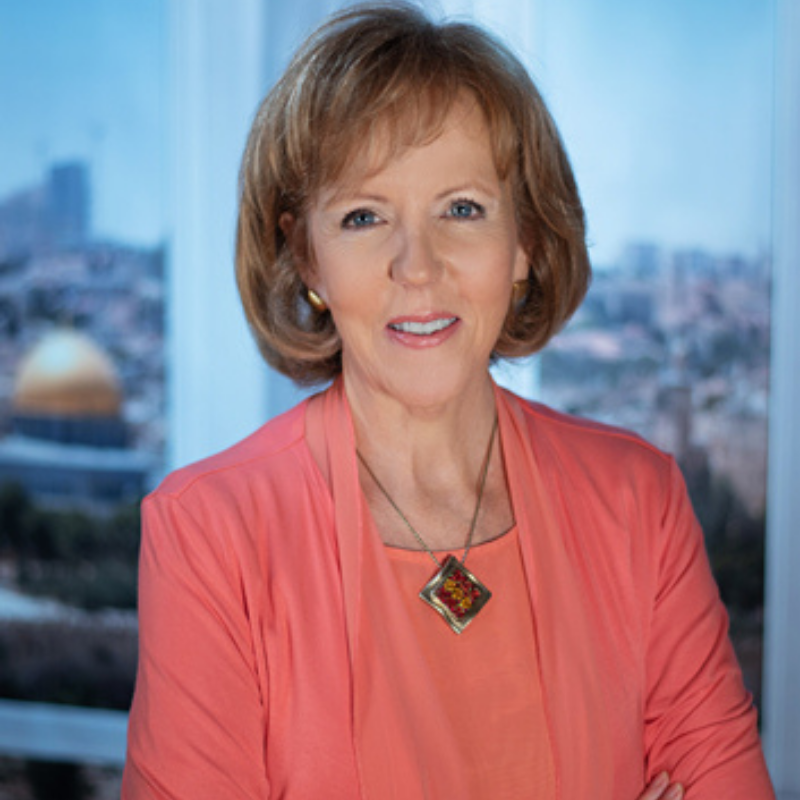

Dr. Susan MichaelFor over 40 years, Dr. Susan Michael has advanced the International Christian Embassy Jerusalem (ICEJ) in the USA and worldwide. She serves as the USA President and sits on the ICEJ’s international Board of Directors. She is frequently asked to address complex issues to diverse audiences—including antisemitism, Jewish-Christian relations, and Middle East affairs—and does so with clarity and grace. Dr. Michael leads the American Christian Leaders for Israel (ACLI) network, has authored books, such as Encounter the 3D Bible: How to Read the Bible so It Comes to Life, and has developed educational resources, including the IsraelAnswers website, ICEJ U online courses, and curricula for Christian colleges.
This article originally appeared on Christianity.com. For more faith-building resources, visit Christianity.com. Christianity.com
 

Salem News Channel Today

Sponsored Links


September 26 - Phoenix, AZ
Scottsdale Center for the Performing Arts


November 2 - Detroit, MI
Zion Christian Church in Troy


October 6 - Los Angeles, CA
Pasadena Convention Center


November 5 - San Antonio, TX
Norris Centers – The Grand Red Oak Ballroom


October 8 - Sacramento, CA
William Jessup University


November 7 - Tampa, FL
The Palladium at St. Pete College


October 22 - Minneapolis, MN
Crowne Plaza AiRE


November 15 - San Francisco, CA
Fremont Marriott Silicon Valley


October 23 - Philadelphia, PA
Green Valley Country Club


November 16 - Denver, CO
CU South Denver - Formerly Wildlife Experience


November 2 - Chicago, IL
Chicago Westin Northwest in Itasca


November 21 - Cleveland, OH
Holiday Inn Rockside in Independence


Salem Radio Network Speakers

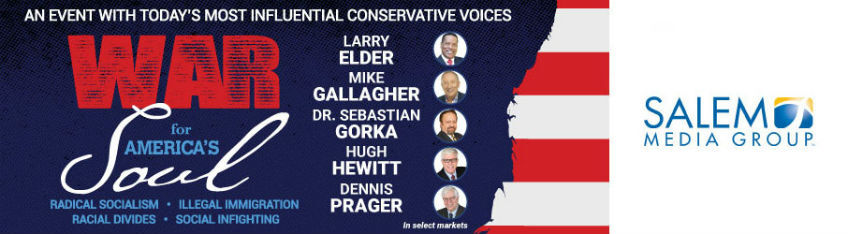
Larry Elder is an American lawyer, writer, and radio and television personality who calls himself the "Sage of South Central" a district of Los Angeles, Larry says his philosophy is to entertain, inform, provoke and to hopefully uplift. His calling card is "we have a country to save" and to him this means returning to the bedrock Constitutional principles of limited government and maximum personal responsibility. Elder's iconoclastic wit and intellectual agility makes him a particularly attractive voice in a nation that seems weary of traditional racial dialogue.” – Los Angeles Times.

Mike Gallagher Mike Gallagher began his broadcasting career in 1978 in Dayton, Ohio. Today, he is one of the most listened-to talk radio show hosts in America, recently having been ranked in the Talkers Magazine “Heavy Hundred” list – the 100 most important talk radio hosts in America. Prior to being launched into national syndication in 1998, Mike hosted the morning show on WABC-AM in New York City. Today, Talkers Magazine reports that his show is heard by over 3.75 million weekly listeners. Besides his radio work, Mike is seen on Fox News Channel as an on-air contributor, frequently appearing on the cable news giant.

Hugh Hewitt is one of the nation’s leading bloggers and a genuine media revolutionary. He brings that expertise, his wit and what The New Yorker magazine calls his “amiable but relentless manner” to his nationally syndicated show each day.

When Dr. Sebastian Gorka was growing up, he listened to talk radio under his pillow with a transistor radio, dreaming that one day he would be behind the microphone. Beginning New Year’s Day 2019, he got his wish. Gorka now hosts America First every weekday afternoon 3 to 6pm ET. Gorka’s unique story works well on the radio. He is national security analyst for the Fox News Channel and author of two books: "Why We Fight" and "Defeating Jihad." His latest book releasing this fall is “War For America’s Soul.” He is uniquely qualified to fight the culture war and stand up for what is great about America, his adopted home country.

Broadcasting from his home station of KRLA in Los Angeles, the Dennis Prager Show is heard across the country. Everything in life – from politics to religion to relationships – is grist for Dennis’ mill. If it’s interesting, if it affects your life, then Dennis will be talking about it – with passion, humor, insight and wisdom.

Sean Hannity is a conservative radio and television host, and one of the original primetime hosts on the Fox News Channel, where he has appeared since 1996. Sean Hannity began his radio career at a college station in California, before moving on to markets in the Southeast and New York. Today, he’s one of the most listened to on-air voices. Hannity’s radio program went into national syndication on September 10, 2001, and airs on more than 500 stations. Talkers Magazine estimates Hannity’s weekly radio audience at 13.5 million. In 1996 he was hired as one of the original hosts on Fox News Channel. As host of several popular Fox programs, Hannity has become the highest-paid news anchor on television.

Michelle Malkin is a mother, wife, blogger, conservative syndicated columnist, longtime cable TV news commentator, and best-selling author of six books. She started her newspaper journalism career at the Los Angeles Daily News in 1992, moved to the Seattle Times in 1995, and has been penning nationally syndicated newspaper columns for Creators Syndicate since 1999. She is founder of conservative Internet start-ups Hot Air and Twitchy.com. Malkin has received numerous awards for her investigative journalism, including the Council on Governmental Ethics Laws (COGEL) national award for outstanding service for the cause of governmental ethics and leadership (1998), the Reed Irvine Accuracy in Media Award for Investigative Journalism (2006), the Heritage Foundation and Franklin Center for Government & Public Integrity's Breitbart Award for Excellence in Journalism (2013), the Center for Immigration Studies' Eugene Katz Award for Excellence in the Coverage of Immigration Award (2016), and the Manhattan Film Festival's Film Heals Award (2018). Married for 26 years and the mother of two teenage children, she lives with her family in Colorado. Follow her at michellemalkin.com. (Photo reprinted with kind permission from Peter Duke Photography.)

Sponsored by:

The Uncomfortable Truth about the Rise in Global Antisemitic Sentiment

Carbonatix Pre-Player Loader

Audio By Carbonatix

Brought to you by Christianity.com

Key Points

  • Rising antisemitism is not only a political or cultural issue, but a moral and spiritual concern for Christians.
  • The October 7 Hamas attack accelerated global antisemitism, fueling online hate, campus unrest, and hostility toward Jewish communities.
  • Recent surveys show antisemitic attitudes are increasing worldwide, especially among younger generations.
  • Holocaust denial and historical ignorance make antisemitism more dangerous by weakening society’s ability to recognize and resist hatred.
  • Christians are called to speak truth, reject anti-Jewish hatred, pray, teach accurate history, and stand with Jewish people against violence and evil.

Why Is Rising Antisemitism a Christian Concern

Antisemitism is surging around the world. It is at epidemic levels throughout the Middle East where Jew-hatred is entrenched in everyday life. Europe is experiencing pre-Holocaust levels of hostility due to far-right parties and an influx of immigrants from Muslim countries. And the United States is experiencing a deeply terrifying surge on the internet, on college campuses, and within both the far right and progressive political movements. 

For Christians, rising antisemitism is not only a political or cultural crisis but a moral and spiritual call to defend truth, oppose hatred, and stand with the Jewish people. This crisis did not happen overnight; it is the culmination of a steady, concerning climb. 

How Did October 7 Accelerate Global Antisemitism

The definitive turning point for this recent surge in antisemitism was October 7, 2023, when Hamas infiltrated southern Israel, massacring more than 1,200 people and taking over 250 hostages into Gaza. In the wake of Israel’s military response, anti-Israel protests skyrocketed across American college campuses and globally on social media.

What Did the Data Show before October 7

However, before October 7, signs of trouble were already percolating. A January 2023 study published by The London Centre for the Study of Contemporary Antisemitism—in partnership with the Anti-Defamation League and the National Opinion Research Center at the University of Chicago—revealed the number of Americans harboring extensive antisemitic prejudice has doubled since 2019, reaching the “highest levels in decades.”[1] Interestingly, that report showed a strong correlation between anti-Israel sentiments and antisemitism, with the younger, more progressive generation proving particularly susceptible to the rhetoric.[2] 

That hatred has quickly spread across the Atlantic, seen in a November 2025 European Commission survey that revealed that 55 percent of Europeans now view antisemitism as a glaring national problem, with nearly 7 in 10 stating that Middle East conflicts directly skew how Jewish people are perceived in their home countries.[3]

Quote graphic featuring a statement by Dr. Susan Michael that reads, “Antisemitism is not just a Jewish problem and, if left unchecked, is a threat to society at large. It is often described as an early-warning system—a canary in the mineshaft—alerting us to hateful movements that can threaten all of us,” displayed over a faded Star of David background.

What Do Recent Surveys Reveal about Antisemitic Attitudes

The latest ADL Global 100 data shows that antisemitic attitudes have reached alarming global levels. A January 2025 survey by the Anti-Defamation League (ADL) found that nearly half of the global adult population—46 percent—exhibits elevated levels of antisemitic attitudes. This means about 2.2 billion people harbor deeply entrenched antisemitic beliefs, more than double compared to ADL’s first worldwide survey in 2014. It’s the highest level on record since ADL started tracking these trends globally. Additionally, the survey found that younger respondents worldwide show a greater prevalence of antisemitic attitudes: 40 percent of respondents under age 35 affirm that “Jews are responsible for most of the world’s wars,” while it is 29 percent for those over the age of 50.[4]

Why Holocaust Denial Makes Antisemitism More Dangerous

Just as alarming is the widespread erasure of history. The 2025 survey also found that 20 percent of the global respondents had never heard of the Holocaust, and less than half (48 percent) recognize the Holocaust’s historical accuracy. Of those who had heard of it, one-third thought it was either a myth or greatly exaggerated. Geographically, the denial is troubling: only 16 percent of the respondents in the Middle East and North Africa and 23 percent in Sub-Saharan Africa recognize the historical accuracy of the Holocaust.[5]

Why Antisemitism Threatens More Than Jewish Communities

Antisemitism is not just a Jewish problem and, if left unchecked, is a threat to society at large. It is often described as an early-warning system—a canary in the mineshaft—alerting us to hateful movements that can threaten all of us. When Hitler unleashed antisemitism and built the Nazi movement on hatred of Jews, he plunged the world headlong on a path of destruction. Not only were 6 million Jews exterminated, but some 50 million people died in World War II. 

How Should Christians Respond to Rising Antisemitism

Christians have a moral obligation to withstand hatred and violence directed toward any group, including Jews. But our responsibility goes beyond that. Knowing the history of centuries of church-sanctioned antisemitism that paved the way for the Holocaust, we particularly need to stand with the Jewish people in their modern battle against this evil.

The Evangelical Christian demographic in America has the political and moral weight to push back against this evil invasion of our society. We can no longer remain passive or silent; we must learn how to come against its influence vocally, politically, and prayerfully. The canary in the mineshaft is sounding its call of alarm, and it’s time for the church to act. 

Frequently Asked Questions about Christians and Rising Antisemitism

  • Why should Christians care about antisemitism?
     Christians should care about antisemitism because hatred toward Jewish people is morally evil, historically dangerous, and spiritually connected to the roots of the Christian faith.
  • How did October 7 affect global antisemitism?
     The October 7 Hamas attack intensified global antisemitism by fueling anti-Israel hostility, online hate, campus unrest, and renewed threats against Jewish communities around the world.
  • Is anti-Israel sentiment always antisemitism?
     No. Criticism of any government can be legitimate, but anti-Israel rhetoric becomes antisemitic when it denies Jewish people dignity, safety, self-determination, or uses classic anti-Jewish stereotypes.
  • How can Christians respond to antisemitism?
     Christians can respond by speaking truth, rejecting anti-Jewish theology, praying for Jewish communities, teaching accurate history, opposing hatred publicly, and standing against violence wherever it appears.

 For Further Reading

[1] Anti-Defamation League, “Antisemitic Attitudes in America: Topline Findings,” 12 January 2023.
[2] World Israel News, “Whopping Majority of Americans Believe in Antisemitic Tropes, New Poll Finds,” January 2023.
[3] https://combatantisemitism.org/cam-news/eu-survey-antisemitism-rising-and-holocaust-awareness-lagging-in-europe/
[4] Anti-Defamation League, “46% of Adults Worldwide Hold Significant Antisemitic Beliefs, ADL Poll Finds,” 20 February 2025.
[5] Anti-Defamation League, “46% of Adults,” 20 February 2025.

Photo Credit: ©Unsplash/Levi Meir Clancy


Dr. Susan MichaelFor over 40 years, Dr. Susan Michael has advanced the International Christian Embassy Jerusalem (ICEJ) in the USA and worldwide. She serves as the USA President and sits on the ICEJ’s international Board of Directors. She is frequently asked to address complex issues to diverse audiences—including antisemitism, Jewish-Christian relations, and Middle East affairs—and does so with clarity and grace. Dr. Michael leads the American Christian Leaders for Israel (ACLI) network, has authored books, such as Encounter the 3D Bible: How to Read the Bible so It Comes to Life, and has developed educational resources, including the IsraelAnswers website, ICEJ U online courses, and curricula for Christian colleges.

This article originally appeared on Christianity.com. For more faith-building resources, visit Christianity.com. Christianity.com
 

Salem News Channel Today

Sponsored Links

On Air & Up Next

See the Full Program Guide