24 spring home maintenance tasks to add to your to-do list

Carbonatix Pre-Player Loader

Audio By Carbonatix

24 spring home maintenance tasks to add to your to-do list

Spring Home Maintenance

People have been spring cleaning for thousands of years, and for good reason. After winter’s harsh conditions, addressing necessary repairs and preparing your home for the warmer months ahead is crucial. Spring is an ideal time for property upkeep for several key reasons.

This guide from Keystone Custom Homes provides essential tips for your spring home maintenance needs.

Why Is Spring a Good Time for Home Maintenance?

After winter weather, spring’s milder conditions make it perfect for addressing important upkeep tasks around the interior and exterior of your home. Proactive maintenance helps prevent minor issues from escalating into bigger and more expensive problems. Proper care also safeguards your property’s long-term condition and value, while making your home more enjoyable.

12 Interior Spring Home Maintenance Tasks

Kick-start your spring cleaning indoors. Tackling interior maintenance allows you to get a head start on improving your space before the last signs of winter have faded outside.
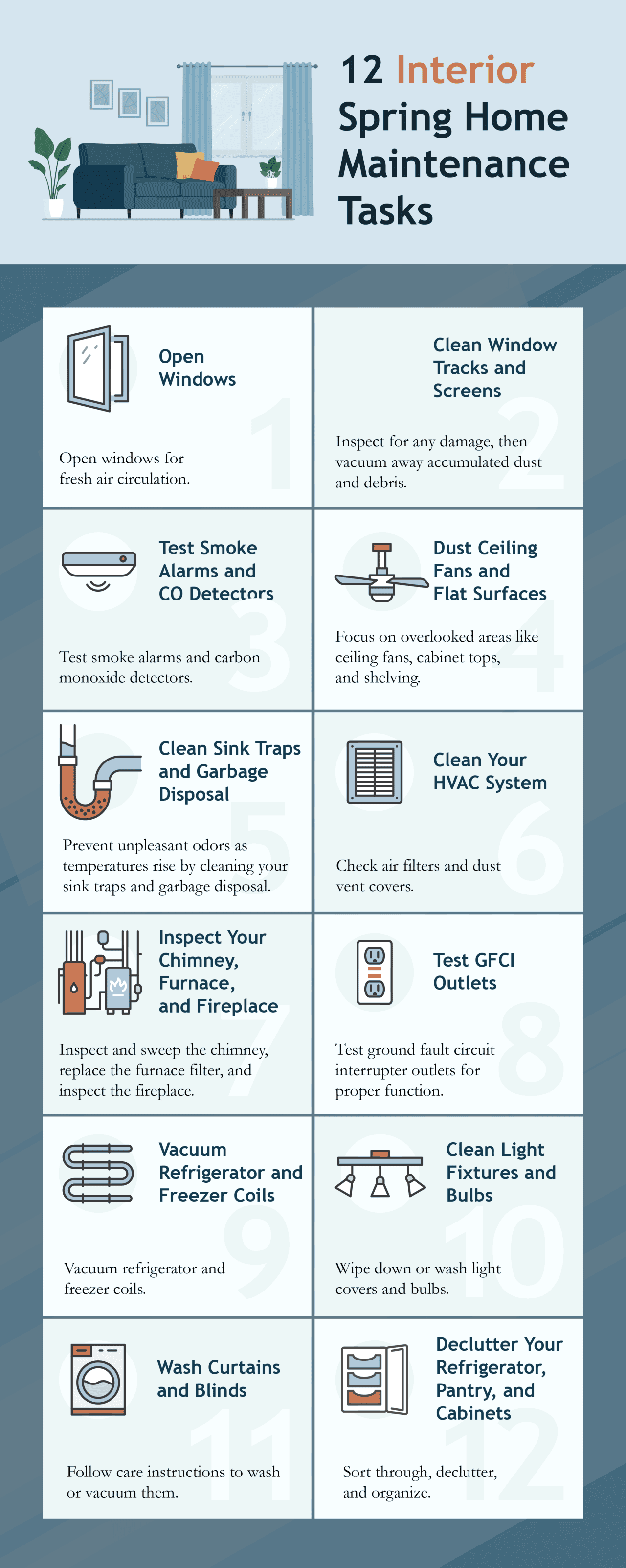
An infographic showing 12 interior spring home maintenance tasks.
Keystone Custom Homes


1. Open Windows

Start with the simple yet effective task of opening your windows. Once outdoor temperatures are mild, allow fresh air to circulate and replace stale indoor air. For optimal ventilation, create a cross breeze by opening windows on opposite sides of your home.

Opening your windows for five to 10 minutes at a time can freshen up your space and help boost air quality.

2. Clean Window Tracks and Screens

Spring is a great time to clean your window tracks and screens. Inspect for any damage, then vacuum away accumulated dust and debris for smoother operation and clearer views. This can make using and enjoying your windows easier as the weather warms up.

3. Test Smoke Alarms and Carbon Monoxide Detectors

Though ideally tested monthly, spring is an excellent reminder to check your smoke alarms and carbon monoxide detectors. Simply press the test button — if they don’t sound, replace the batteries by removing the cover and swapping the old ones for new.

4. Dust Ceiling Fans and Flat Surfaces

Winter often leaves behind a fine layer of dust. With fresh air now circulating, spring is the perfect time for a thorough dusting, focusing on overlooked areas like ceiling fans, cabinet tops, and shelving.

5. Clean Sink Traps and Garbage Disposal

Prevent unpleasant odors as temperatures rise by cleaning your sink traps and garbage disposal.

To clean your sink trap, run a mixture of baking soda and vinegar down the drain. Allow this mixture to sit for 10 minutes before flushing it out with hot water. Clean your garbage disposal by running ice and a cleaning agent like dish soap or peeled lemon slices through it. The ice and cleaning agent will dislodge any trapped food and clear the blades.

6. Clean Your HVAC System

Prepare your HVAC system for increased use as the weather warms. This basic maintenance improves air quality, reduces energy costs, and prevents potential repairs.

Check your air filters, typically located in the return air duct found in ceilings, walls, or utility closets. Dirty filters increase dust, aggravate allergies, and strain your system. Turn off the HVAC, remove the old filter, noting the airflow arrow, then insert the new filter with the arrow pointing in the same direction. Replace filters every few months.

Dust vent covers and visually inspect air ducts for leaks, mold, pests, or damage. Call a professional for any serious damage you can’t repair yourself.

7. Inspect Your Chimney, Furnace, and Fireplace

After winter’s use, spring is the perfect time to inspect your heating elements and address any issues proactively. Address the following cleaning tasks:

  • Chimney: Check for winter damage and obstructions. Clean it out to prepare for next season, allowing ample time for any necessary repairs. Consider professional chimney sweep services to clear buildup and minimize unwanted odors.
  • Furnace: Ensure clean air by replacing the furnace filter, typically found near the unit in your attic, Basement, or utility closet. The replacement process is similar to that of your HVAC air filter.
  • Fireplace: Inspect for damage and thoroughly clean it. Store any fuel safely in a pest-proof location if not planning to use it soon.

8. Test GFCI Outlets

You should regularly test your ground fault circuit interrupter (GFCI) outlets, as they’re a key safety feature in many homes. Spring is a good time to ensure they’re working correctly.

To test your GFCI outlets, plug an appliance into the outlet and turn it on. Next, press the “test” button on the outlet. The appliance should turn off immediately, and the “reset” button should eject, showing that the GFCI outlet works as designed. If the appliance remains powered on, you may need to repair or replace the GFCI outlet.

9. Vacuum Refrigerator and Freezer Coils

Dirty refrigerator or freezer coils make your appliance less efficient, meaning it has to expend more energy to stay cool. Beyond improving your appliance’s performance, cleaning it can also extend its longevity.

Cleaning these coils is straightforward. Locate them underneath or behind your appliance — some are exposed, and many newer refrigerators and freezers hide them behind a panel.

Vacuum to remove dust and debris around the coils and the surrounding area. For a deep clean, use a duster or purpose-built refrigerator coil brush.

10. Clean Light Fixtures and Bulbs

Dust accumulation on light fixtures and bulbs can significantly impact your home’s illumination. Carefully wipe down or wash light covers and bulbs to maximize light output and improve indoor air quality.

11. Wash Curtains and Blinds

Fabrics like curtains and blinds trap dust, pet dander, and allergens over time. Follow care instructions to wash or vacuum them. This simple task can significantly refresh your home’s air.

12. Declutter Your Refrigerator, Pantry, and Cabinets

Spring is ideal for clearing out expired items from your pantry, refrigerator, and kitchen cabinets. Sort through everything from your spices and seasoning to your snacks. Organize remaining contents and wipe down shelves to ensure a clean, efficient cooking space.

12 Exterior Spring Home Maintenance Jobs

While there is plenty of fall maintenance you can do, winter isn’t the best time for most outdoor tasks. Instead, many exterior jobs are best left until spring’s milder weather.
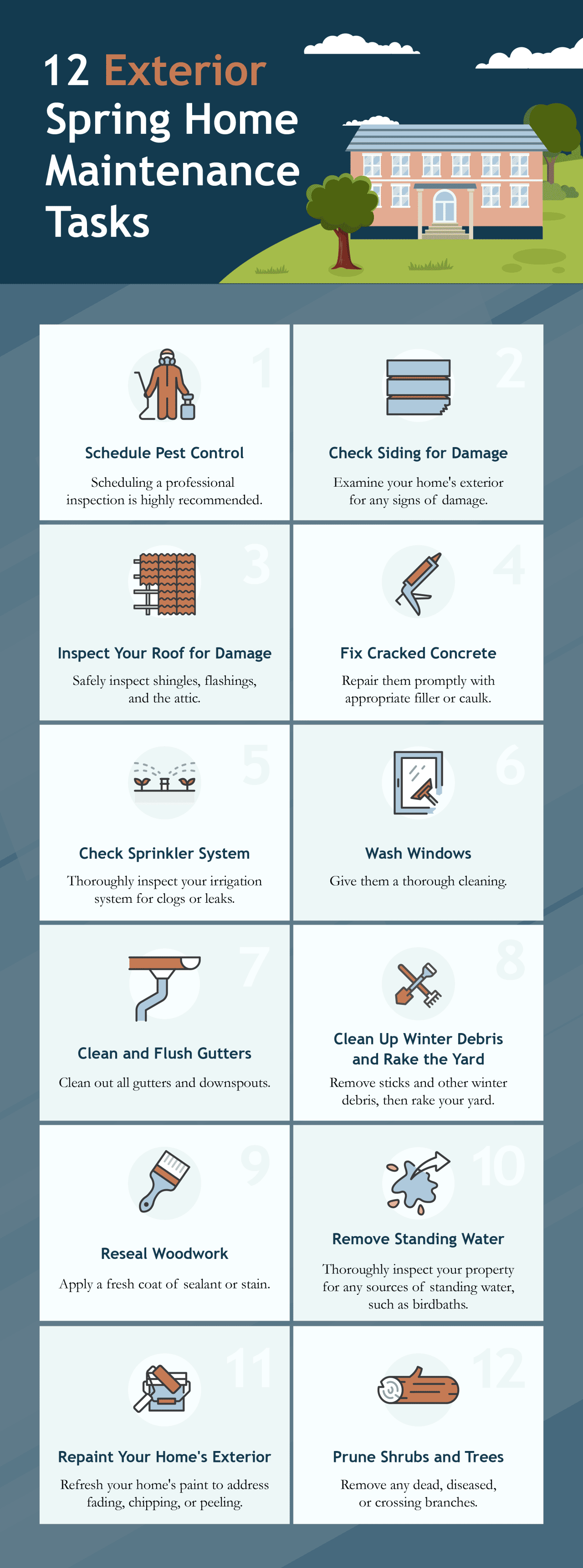
An infographic showing 12 exterior spring home maintenance jobs.
Keystone Custom Homes


1. Schedule Pest Control

As temperatures rise, pests become more active in and around your home. Spring is the ideal time to ensure you do not have unwanted guests. While you can perform a visual check, scheduling a professional inspection from the start is highly recommended to detect subtle signs and effectively manage any infestations.

2. Check Siding for Damage

Winter weather can inflict significant wear on your home’s siding, making spring the critical time for a thorough inspection. Carefully examine your home’s exterior for any signs of damage that could compromise its integrity and insulation.

Look for the following:

  • Cracks or holes: These can allow moisture intrusion and pests.
  • Warping or buckling: Indicative of water damage or improper installation.
  • Loose or missing panels: Creates openings for water and reduces protection.
  • Mold, algae, or mildew: Suggests moisture problems and can degrade siding material.
  • Fading, peeling, or discolored surfacing: May indicate a need for resealing or repainting, affecting curb appeal and protection.

Unaddressed siding issues can lead to costly issues like wood rot, interior water damage, and reduced energy efficiency. Promptly repair any problems you discover, and consider consulting a professional for extensive issues to prevent further deterioration and protect your home’s structure.

3. Inspect Your Roof for Damage

Winter can take a toll on your roof, making spring the ideal time for a thorough inspection once the weather improves. Proactive checks can prevent significant water damage and structural issues.

Key areas to inspect include:

  • Shingles: Safely inspect for damaged, loose, or missing shingles. These are common entry points for water and can lead to heat loss. Replace any compromised shingles.
  • Flashings: Examine the metal strips around chimneys, vents, and skylights for cracks or lifting.
  • Attic: Check the underside of your roof from the attic for any water stains or signs of leaks.

A qualified roofing professional can inspect your roof, clean off debris, and address any repairs needed.

4. Fix Cracked Concrete

Winter’s freeze-thaw cycles can significantly worsen even tiny concrete cracks by expanding them. In spring, inspect all concrete surfaces for these widened fissures. Repair them promptly with appropriate filler or caulk to prevent further deterioration and more extensive damage.

5. Check Sprinkler System

After winter, thoroughly inspect your irrigation system for clogs or leaks, which are common issues in pipes exposed to harsh conditions. Verify that each sprinkler head extends and retracts correctly, replacing any damaged or crooked ones. This ensures your system is primed for efficient watering, contributing to a lush lawn and simpler landscaping throughout warmer months.

6. Wash Windows

With brighter spring days, the accumulated grime on your windows becomes more noticeable. Give them a thorough cleaning using a window washing solution or warm water with dish soap.

Follow these steps to clean the exterior of your home’s windows:

  1. Clean and dry frames and hardware first.
  2. Use a dry cloth to remove loose dirt from the glass.
  3. Apply cleaning solution with a sponge or scrubber, rinsing it frequently, to clean the glass surface.

7. Clean and Flush Gutters

Gutters often accumulate debris during fall and winter, leading to blockages. Before heavy spring rains, clean out all gutters and downspouts to protect your home from leaks, algae, and pests. This task involves safely climbing a ladder to scoop out debris and then rinsing the channels. If you’re not comfortable or able to perform this task, hire a professional.

8. Clean Up Winter Debris and Rake the Yard

Lay the groundwork for easier summer lawn maintenance by cleaning up your yard in spring. Remove sticks and other winter debris, then rake your yard. This prepares your lawn for healthy growth and simplifies future mowing.

Collect any remaining leaves, pinecones, fallen branches, or even trash that may have accumulated. This not only improves your yard’s appearance but also prevents mold and disease from developing under decaying organic matter, which can smother new grass growth and create hiding spots for pests.

Rake your entire lawn. This process helps remove excess thatch and lightly aerates the soil surface. Raking allows air, water, and nutrients to better penetrate the soil, encouraging healthier grass growth and a denser lawn.

9. Reseal Woodwork

Winter’s moisture, snow, and dirt can severely damage exterior wooden structures like decking, fences, and trim, leading to warping, stains, or discoloration. As spring brings milder weather, thoroughly inspect all outdoor woodwork for these signs of wear.

Resealing is crucial for protecting the wood from moisture, UV damage, and rot, extending its lifespan and maintaining its appearance.

For decks, a simple water test can indicate whether the surface needs resealing. Pour a small amount of water onto the surface. If the water beads up, your current sealant is likely still effective. If it soaks in, the wood is exposed and needs resealing promptly.

Address these areas by cleaning, sanding if necessary, and applying a fresh coat of sealant or stain to ensure your exterior woodwork remains protected and beautiful throughout the year.

10. Remove Standing Water

Standing water in your yard is more than an aesthetic issue. It’s a significant health and pest hazard. It serves as an ideal breeding ground for mosquitoes, which can transmit diseases, and also attracts other unwanted insects.

Thoroughly inspect your property for any sources of standing water, including:

  • Clogged gutters and downspouts: Ensure they are clean and draining properly.
  • Bird baths: Change water frequently.
  • Upturned tarps or covers: Drain any puddles that collect.
  • Buckets, or planters: Empty and store them properly or dispose of them.
  • Children’s toys or pet water dishes: Empty and clean regularly.
  • Uneven landscaping: Address low spots in your yard that collect water.

Making a habit of regularly checking for and eliminating standing water is a simple yet highly effective way to reduce pest populations, safeguard your household’s health, and keep your yard more enjoyable throughout the warmer months.

11. Repaint Your Home’s Exterior

Spring is a great time to refresh your home’s paint, addressing fading, chipping, or peeling. Spring, with its milder temperatures, is an excellent time to assess your paintwork.

For minor discoloration or small marks, spot painting can often suffice to refresh your home’s appearance and protect underlying surfaces. Depending on your home’s material, the quality of the previous exterior painting job, and local climate, a complete exterior repaint is typically needed every few years. This maintenance task enhances curb appeal and provides a critical protective barrier against the elements.

12. Prune Shrubs and Trees

Winter can leave shrubs and trees with dead or damaged branches, and early spring is the ideal time for pruning. This maintenance task promotes healthy new growth, improves the plant’s shape, and prevents branches from rubbing against your home or roof, which can cause damage.

Remove any dead, diseased, or crossing branches. For larger trees or complex pruning, consider hiring a professional arborist to ensure proper technique and safety.

Keep Your Home at Its Best This Spring

Proactive spring maintenance is an investment in your home’s longevity, value, and your overall comfort. By tackling these essential tasks, you address winter’s impact, prevent minor issues from becoming major problems, and prepare your home to thrive throughout the year. The more thoroughly you approach this seasonal reset, the better your home will perform and the more enjoyable it will be for your household.

This story was produced by Keystone Custom Homes and reviewed and distributed by Stacker.

 

Salem News Channel Today

Sponsored Links


September 26 - Phoenix, AZ
Scottsdale Center for the Performing Arts


November 2 - Detroit, MI
Zion Christian Church in Troy


October 6 - Los Angeles, CA
Pasadena Convention Center


November 5 - San Antonio, TX
Norris Centers – The Grand Red Oak Ballroom


October 8 - Sacramento, CA
William Jessup University


November 7 - Tampa, FL
The Palladium at St. Pete College


October 22 - Minneapolis, MN
Crowne Plaza AiRE


November 15 - San Francisco, CA
Fremont Marriott Silicon Valley


October 23 - Philadelphia, PA
Green Valley Country Club


November 16 - Denver, CO
CU South Denver - Formerly Wildlife Experience


November 2 - Chicago, IL
Chicago Westin Northwest in Itasca


November 21 - Cleveland, OH
Holiday Inn Rockside in Independence


Salem Radio Network Speakers

Larry Elder is an American lawyer, writer, and radio and television personality who calls himself the "Sage of South Central" a district of Los Angeles, Larry says his philosophy is to entertain, inform, provoke and to hopefully uplift. His calling card is "we have a country to save" and to him this means returning to the bedrock Constitutional principles of limited government and maximum personal responsibility. Elder's iconoclastic wit and intellectual agility makes him a particularly attractive voice in a nation that seems weary of traditional racial dialogue.” – Los Angeles Times.

Mike Gallagher Mike Gallagher began his broadcasting career in 1978 in Dayton, Ohio. Today, he is one of the most listened-to talk radio show hosts in America, recently having been ranked in the Talkers Magazine “Heavy Hundred” list – the 100 most important talk radio hosts in America. Prior to being launched into national syndication in 1998, Mike hosted the morning show on WABC-AM in New York City. Today, Talkers Magazine reports that his show is heard by over 3.75 million weekly listeners. Besides his radio work, Mike is seen on Fox News Channel as an on-air contributor, frequently appearing on the cable news giant.

Hugh Hewitt is one of the nation’s leading bloggers and a genuine media revolutionary. He brings that expertise, his wit and what The New Yorker magazine calls his “amiable but relentless manner” to his nationally syndicated show each day.

When Dr. Sebastian Gorka was growing up, he listened to talk radio under his pillow with a transistor radio, dreaming that one day he would be behind the microphone. Beginning New Year’s Day 2019, he got his wish. Gorka now hosts America First every weekday afternoon 3 to 6pm ET. Gorka’s unique story works well on the radio. He is national security analyst for the Fox News Channel and author of two books: "Why We Fight" and "Defeating Jihad." His latest book releasing this fall is “War For America’s Soul.” He is uniquely qualified to fight the culture war and stand up for what is great about America, his adopted home country.

Broadcasting from his home station of KRLA in Los Angeles, the Dennis Prager Show is heard across the country. Everything in life – from politics to religion to relationships – is grist for Dennis’ mill. If it’s interesting, if it affects your life, then Dennis will be talking about it – with passion, humor, insight and wisdom.

Sean Hannity is a conservative radio and television host, and one of the original primetime hosts on the Fox News Channel, where he has appeared since 1996. Sean Hannity began his radio career at a college station in California, before moving on to markets in the Southeast and New York. Today, he’s one of the most listened to on-air voices. Hannity’s radio program went into national syndication on September 10, 2001, and airs on more than 500 stations. Talkers Magazine estimates Hannity’s weekly radio audience at 13.5 million. In 1996 he was hired as one of the original hosts on Fox News Channel. As host of several popular Fox programs, Hannity has become the highest-paid news anchor on television.

Michelle Malkin is a mother, wife, blogger, conservative syndicated columnist, longtime cable TV news commentator, and best-selling author of six books. She started her newspaper journalism career at the Los Angeles Daily News in 1992, moved to the Seattle Times in 1995, and has been penning nationally syndicated newspaper columns for Creators Syndicate since 1999. She is founder of conservative Internet start-ups Hot Air and Twitchy.com. Malkin has received numerous awards for her investigative journalism, including the Council on Governmental Ethics Laws (COGEL) national award for outstanding service for the cause of governmental ethics and leadership (1998), the Reed Irvine Accuracy in Media Award for Investigative Journalism (2006), the Heritage Foundation and Franklin Center for Government & Public Integrity's Breitbart Award for Excellence in Journalism (2013), the Center for Immigration Studies' Eugene Katz Award for Excellence in the Coverage of Immigration Award (2016), and the Manhattan Film Festival's Film Heals Award (2018). Married for 26 years and the mother of two teenage children, she lives with her family in Colorado. Follow her at michellemalkin.com. (Photo reprinted with kind permission from Peter Duke Photography.)

Sponsored by:

24 spring home maintenance tasks to add to your to-do list

Carbonatix Pre-Player Loader

Audio By Carbonatix

24 spring home maintenance tasks to add to your to-do list

Spring Home Maintenance

People have been spring cleaning for thousands of years, and for good reason. After winter’s harsh conditions, addressing necessary repairs and preparing your home for the warmer months ahead is crucial. Spring is an ideal time for property upkeep for several key reasons.

This guide from Keystone Custom Homes provides essential tips for your spring home maintenance needs.

Why Is Spring a Good Time for Home Maintenance?

After winter weather, spring’s milder conditions make it perfect for addressing important upkeep tasks around the interior and exterior of your home. Proactive maintenance helps prevent minor issues from escalating into bigger and more expensive problems. Proper care also safeguards your property’s long-term condition and value, while making your home more enjoyable.

12 Interior Spring Home Maintenance Tasks

Kick-start your spring cleaning indoors. Tackling interior maintenance allows you to get a head start on improving your space before the last signs of winter have faded outside.

An infographic showing 12 interior spring home maintenance tasks.
Keystone Custom Homes


1. Open Windows

Start with the simple yet effective task of opening your windows. Once outdoor temperatures are mild, allow fresh air to circulate and replace stale indoor air. For optimal ventilation, create a cross breeze by opening windows on opposite sides of your home.

Opening your windows for five to 10 minutes at a time can freshen up your space and help boost air quality.

2. Clean Window Tracks and Screens

Spring is a great time to clean your window tracks and screens. Inspect for any damage, then vacuum away accumulated dust and debris for smoother operation and clearer views. This can make using and enjoying your windows easier as the weather warms up.

3. Test Smoke Alarms and Carbon Monoxide Detectors

Though ideally tested monthly, spring is an excellent reminder to check your smoke alarms and carbon monoxide detectors. Simply press the test button — if they don’t sound, replace the batteries by removing the cover and swapping the old ones for new.

4. Dust Ceiling Fans and Flat Surfaces

Winter often leaves behind a fine layer of dust. With fresh air now circulating, spring is the perfect time for a thorough dusting, focusing on overlooked areas like ceiling fans, cabinet tops, and shelving.

5. Clean Sink Traps and Garbage Disposal

Prevent unpleasant odors as temperatures rise by cleaning your sink traps and garbage disposal.

To clean your sink trap, run a mixture of baking soda and vinegar down the drain. Allow this mixture to sit for 10 minutes before flushing it out with hot water. Clean your garbage disposal by running ice and a cleaning agent like dish soap or peeled lemon slices through it. The ice and cleaning agent will dislodge any trapped food and clear the blades.

6. Clean Your HVAC System

Prepare your HVAC system for increased use as the weather warms. This basic maintenance improves air quality, reduces energy costs, and prevents potential repairs.

Check your air filters, typically located in the return air duct found in ceilings, walls, or utility closets. Dirty filters increase dust, aggravate allergies, and strain your system. Turn off the HVAC, remove the old filter, noting the airflow arrow, then insert the new filter with the arrow pointing in the same direction. Replace filters every few months.

Dust vent covers and visually inspect air ducts for leaks, mold, pests, or damage. Call a professional for any serious damage you can’t repair yourself.

7. Inspect Your Chimney, Furnace, and Fireplace

After winter’s use, spring is the perfect time to inspect your heating elements and address any issues proactively. Address the following cleaning tasks:

  • Chimney: Check for winter damage and obstructions. Clean it out to prepare for next season, allowing ample time for any necessary repairs. Consider professional chimney sweep services to clear buildup and minimize unwanted odors.
  • Furnace: Ensure clean air by replacing the furnace filter, typically found near the unit in your attic, Basement, or utility closet. The replacement process is similar to that of your HVAC air filter.
  • Fireplace: Inspect for damage and thoroughly clean it. Store any fuel safely in a pest-proof location if not planning to use it soon.

8. Test GFCI Outlets

You should regularly test your ground fault circuit interrupter (GFCI) outlets, as they’re a key safety feature in many homes. Spring is a good time to ensure they’re working correctly.

To test your GFCI outlets, plug an appliance into the outlet and turn it on. Next, press the “test” button on the outlet. The appliance should turn off immediately, and the “reset” button should eject, showing that the GFCI outlet works as designed. If the appliance remains powered on, you may need to repair or replace the GFCI outlet.

9. Vacuum Refrigerator and Freezer Coils

Dirty refrigerator or freezer coils make your appliance less efficient, meaning it has to expend more energy to stay cool. Beyond improving your appliance’s performance, cleaning it can also extend its longevity.

Cleaning these coils is straightforward. Locate them underneath or behind your appliance — some are exposed, and many newer refrigerators and freezers hide them behind a panel.

Vacuum to remove dust and debris around the coils and the surrounding area. For a deep clean, use a duster or purpose-built refrigerator coil brush.

10. Clean Light Fixtures and Bulbs

Dust accumulation on light fixtures and bulbs can significantly impact your home’s illumination. Carefully wipe down or wash light covers and bulbs to maximize light output and improve indoor air quality.

11. Wash Curtains and Blinds

Fabrics like curtains and blinds trap dust, pet dander, and allergens over time. Follow care instructions to wash or vacuum them. This simple task can significantly refresh your home’s air.

12. Declutter Your Refrigerator, Pantry, and Cabinets

Spring is ideal for clearing out expired items from your pantry, refrigerator, and kitchen cabinets. Sort through everything from your spices and seasoning to your snacks. Organize remaining contents and wipe down shelves to ensure a clean, efficient cooking space.

12 Exterior Spring Home Maintenance Jobs

While there is plenty of fall maintenance you can do, winter isn’t the best time for most outdoor tasks. Instead, many exterior jobs are best left until spring’s milder weather.

An infographic showing 12 exterior spring home maintenance jobs.
Keystone Custom Homes


1. Schedule Pest Control

As temperatures rise, pests become more active in and around your home. Spring is the ideal time to ensure you do not have unwanted guests. While you can perform a visual check, scheduling a professional inspection from the start is highly recommended to detect subtle signs and effectively manage any infestations.

2. Check Siding for Damage

Winter weather can inflict significant wear on your home’s siding, making spring the critical time for a thorough inspection. Carefully examine your home’s exterior for any signs of damage that could compromise its integrity and insulation.

Look for the following:

  • Cracks or holes: These can allow moisture intrusion and pests.
  • Warping or buckling: Indicative of water damage or improper installation.
  • Loose or missing panels: Creates openings for water and reduces protection.
  • Mold, algae, or mildew: Suggests moisture problems and can degrade siding material.
  • Fading, peeling, or discolored surfacing: May indicate a need for resealing or repainting, affecting curb appeal and protection.

Unaddressed siding issues can lead to costly issues like wood rot, interior water damage, and reduced energy efficiency. Promptly repair any problems you discover, and consider consulting a professional for extensive issues to prevent further deterioration and protect your home’s structure.

3. Inspect Your Roof for Damage

Winter can take a toll on your roof, making spring the ideal time for a thorough inspection once the weather improves. Proactive checks can prevent significant water damage and structural issues.

Key areas to inspect include:

  • Shingles: Safely inspect for damaged, loose, or missing shingles. These are common entry points for water and can lead to heat loss. Replace any compromised shingles.
  • Flashings: Examine the metal strips around chimneys, vents, and skylights for cracks or lifting.
  • Attic: Check the underside of your roof from the attic for any water stains or signs of leaks.

A qualified roofing professional can inspect your roof, clean off debris, and address any repairs needed.

4. Fix Cracked Concrete

Winter’s freeze-thaw cycles can significantly worsen even tiny concrete cracks by expanding them. In spring, inspect all concrete surfaces for these widened fissures. Repair them promptly with appropriate filler or caulk to prevent further deterioration and more extensive damage.

5. Check Sprinkler System

After winter, thoroughly inspect your irrigation system for clogs or leaks, which are common issues in pipes exposed to harsh conditions. Verify that each sprinkler head extends and retracts correctly, replacing any damaged or crooked ones. This ensures your system is primed for efficient watering, contributing to a lush lawn and simpler landscaping throughout warmer months.

6. Wash Windows

With brighter spring days, the accumulated grime on your windows becomes more noticeable. Give them a thorough cleaning using a window washing solution or warm water with dish soap.

Follow these steps to clean the exterior of your home’s windows:

  1. Clean and dry frames and hardware first.
  2. Use a dry cloth to remove loose dirt from the glass.
  3. Apply cleaning solution with a sponge or scrubber, rinsing it frequently, to clean the glass surface.

7. Clean and Flush Gutters

Gutters often accumulate debris during fall and winter, leading to blockages. Before heavy spring rains, clean out all gutters and downspouts to protect your home from leaks, algae, and pests. This task involves safely climbing a ladder to scoop out debris and then rinsing the channels. If you’re not comfortable or able to perform this task, hire a professional.

8. Clean Up Winter Debris and Rake the Yard

Lay the groundwork for easier summer lawn maintenance by cleaning up your yard in spring. Remove sticks and other winter debris, then rake your yard. This prepares your lawn for healthy growth and simplifies future mowing.

Collect any remaining leaves, pinecones, fallen branches, or even trash that may have accumulated. This not only improves your yard’s appearance but also prevents mold and disease from developing under decaying organic matter, which can smother new grass growth and create hiding spots for pests.

Rake your entire lawn. This process helps remove excess thatch and lightly aerates the soil surface. Raking allows air, water, and nutrients to better penetrate the soil, encouraging healthier grass growth and a denser lawn.

9. Reseal Woodwork

Winter’s moisture, snow, and dirt can severely damage exterior wooden structures like decking, fences, and trim, leading to warping, stains, or discoloration. As spring brings milder weather, thoroughly inspect all outdoor woodwork for these signs of wear.

Resealing is crucial for protecting the wood from moisture, UV damage, and rot, extending its lifespan and maintaining its appearance.

For decks, a simple water test can indicate whether the surface needs resealing. Pour a small amount of water onto the surface. If the water beads up, your current sealant is likely still effective. If it soaks in, the wood is exposed and needs resealing promptly.

Address these areas by cleaning, sanding if necessary, and applying a fresh coat of sealant or stain to ensure your exterior woodwork remains protected and beautiful throughout the year.

10. Remove Standing Water

Standing water in your yard is more than an aesthetic issue. It’s a significant health and pest hazard. It serves as an ideal breeding ground for mosquitoes, which can transmit diseases, and also attracts other unwanted insects.

Thoroughly inspect your property for any sources of standing water, including:

  • Clogged gutters and downspouts: Ensure they are clean and draining properly.
  • Bird baths: Change water frequently.
  • Upturned tarps or covers: Drain any puddles that collect.
  • Buckets, or planters: Empty and store them properly or dispose of them.
  • Children’s toys or pet water dishes: Empty and clean regularly.
  • Uneven landscaping: Address low spots in your yard that collect water.

Making a habit of regularly checking for and eliminating standing water is a simple yet highly effective way to reduce pest populations, safeguard your household’s health, and keep your yard more enjoyable throughout the warmer months.

11. Repaint Your Home’s Exterior

Spring is a great time to refresh your home’s paint, addressing fading, chipping, or peeling. Spring, with its milder temperatures, is an excellent time to assess your paintwork.

For minor discoloration or small marks, spot painting can often suffice to refresh your home’s appearance and protect underlying surfaces. Depending on your home’s material, the quality of the previous exterior painting job, and local climate, a complete exterior repaint is typically needed every few years. This maintenance task enhances curb appeal and provides a critical protective barrier against the elements.

12. Prune Shrubs and Trees

Winter can leave shrubs and trees with dead or damaged branches, and early spring is the ideal time for pruning. This maintenance task promotes healthy new growth, improves the plant’s shape, and prevents branches from rubbing against your home or roof, which can cause damage.

Remove any dead, diseased, or crossing branches. For larger trees or complex pruning, consider hiring a professional arborist to ensure proper technique and safety.

Keep Your Home at Its Best This Spring

Proactive spring maintenance is an investment in your home’s longevity, value, and your overall comfort. By tackling these essential tasks, you address winter’s impact, prevent minor issues from becoming major problems, and prepare your home to thrive throughout the year. The more thoroughly you approach this seasonal reset, the better your home will perform and the more enjoyable it will be for your household.

This story was produced by Keystone Custom Homes and reviewed and distributed by Stacker.

 

Salem News Channel Today

Sponsored Links

On Air & Up Next

See the Full Program Guide