Easy protein wins: Why cottage cheese works

Carbonatix Pre-Player Loader

Audio By Carbonatix

Easy protein wins: Why cottage cheese works

Protein has broken out of the gym and into everyday life, becoming a cornerstone of the American diet and reshaping how people think about meals, snacks, and overall wellness.

Research consistently points to the benefits of eating more protein, including improved muscle mass, maintaining a healthy weight and bone strength. Whether it’s the rise in popularity of on-the-go protein snacks or the addition of protein-rich menu items at your favorite restaurants and takeout spots, protein is at the forefront of nutrition in 2026.

In this article, Daisy Brand examines how protein consumption patterns are evolving and why consumers should prioritize choosing whole-food, high-quality protein sources to meet daily protein needs.

Americans are eating protein, but not all day long

The focus on protein has steadily increased over the last decade, particularly among adults prioritizing active aging, metabolic health, and weight maintenance.

According to the US Proteins and Protein Alternatives Market Report published in 2024 by Mintel Market Intelligence, over 90% of U.S. consumers have eaten animal-based protein in the past six months. Almost half included plant-based proteins in their diet.

Americans are eating protein, but when and how it’s eaten may matter just as much as total intake.

While many Americans meet or exceed minimum protein recommendations, distribution across the day is often uneven, with breakfast and snacks underrepresented in protein.

What are high-quality protein options?

Protein serving goals in the 2025–2030 Dietary Guidelines for Americans increased nearly 50%-100% from previous recommendations, to 1.2-1.6 grams of protein per kilogram of body weight per day, adjusting as needed based on your individual caloric requirements.

The guidelines advise Americans to: “Prioritize high-quality, nutrient-dense protein foods as part of a healthy dietary pattern.”

But how do you know which proteins to choose?

The focus should be on whole foods: foods that are minimally processed and as close to their natural form as possible.

There are many whole food protein options readily available in grocery stores and specialty markets across America, including poultry, seafood, dairy (milk, yogurt, cottage cheese), whole grains (quinoa, rice, farro), beans and nuts.
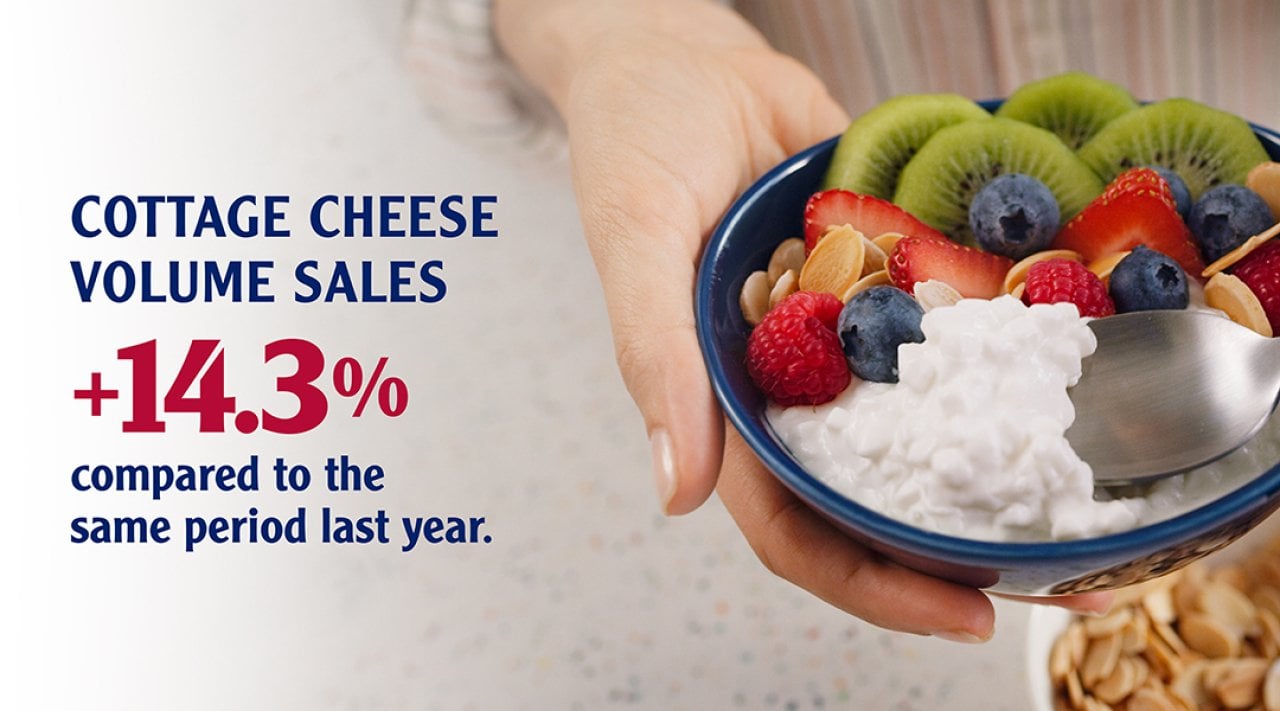
A graphic stating the fact that cottage cheese volume sales rose to +14.3% compared to the same period last year.
Daisy Brand


High-quality proteins are “complete proteins” that contain all nine essential amino acids — the building blocks of protein — necessary for the body’s needs. Dairy, eggs, meat, and soy are examples of complete proteins.

Today’s protein options also include supplements, fortified foods, and ultra-processed products that require little preparation. While convenience goes a long way in today’s hectic society, these are not considered minimally processed or high-quality protein options.

Versatility matters: How cottage cheese can help

Consuming a variety of protein sources at each meal, including breakfast, snacks, and even dessert, can support muscle maintenance, steady energy levels, and overall metabolic health.

Dairy foods are commonly incorporated into savory and sweet dishes to up the protein content, from blended batters to spreads and toppings, without requiring complicated preparation. One popular trend that went viral on social media is incorporating protein-rich cottage cheese into dessert recipes. It’s also an easy, protein-rich ingredient in savory dishes.

These recipes show how easily cottage cheese can fit into any meal:

A simple approach to daily protein

Successfully adopting a diet prioritizing whole food, high-quality protein sources depends on planning as much as awareness. As interest in wellness continues to shift toward manageable habits rather than extremes, foods that are simple, versatile, and easy to take on the go may help close the gap between intention and routine.

Start small and commit to incorporating at least one whole food protein option into each meal every day. Following this simple step will help high-quality protein become an achievable part of your daily routine.

This story was produced by Daisy Brand and reviewed and distributed by Stacker.

 

Salem News Channel Today

Sponsored Links


September 26 - Phoenix, AZ
Scottsdale Center for the Performing Arts


November 2 - Detroit, MI
Zion Christian Church in Troy


October 6 - Los Angeles, CA
Pasadena Convention Center


November 5 - San Antonio, TX
Norris Centers – The Grand Red Oak Ballroom


October 8 - Sacramento, CA
William Jessup University


November 7 - Tampa, FL
The Palladium at St. Pete College


October 22 - Minneapolis, MN
Crowne Plaza AiRE


November 15 - San Francisco, CA
Fremont Marriott Silicon Valley


October 23 - Philadelphia, PA
Green Valley Country Club


November 16 - Denver, CO
CU South Denver - Formerly Wildlife Experience


November 2 - Chicago, IL
Chicago Westin Northwest in Itasca


November 21 - Cleveland, OH
Holiday Inn Rockside in Independence


Salem Radio Network Speakers

Larry Elder is an American lawyer, writer, and radio and television personality who calls himself the "Sage of South Central" a district of Los Angeles, Larry says his philosophy is to entertain, inform, provoke and to hopefully uplift. His calling card is "we have a country to save" and to him this means returning to the bedrock Constitutional principles of limited government and maximum personal responsibility. Elder's iconoclastic wit and intellectual agility makes him a particularly attractive voice in a nation that seems weary of traditional racial dialogue.” – Los Angeles Times.

Mike Gallagher Mike Gallagher began his broadcasting career in 1978 in Dayton, Ohio. Today, he is one of the most listened-to talk radio show hosts in America, recently having been ranked in the Talkers Magazine “Heavy Hundred” list – the 100 most important talk radio hosts in America. Prior to being launched into national syndication in 1998, Mike hosted the morning show on WABC-AM in New York City. Today, Talkers Magazine reports that his show is heard by over 3.75 million weekly listeners. Besides his radio work, Mike is seen on Fox News Channel as an on-air contributor, frequently appearing on the cable news giant.

Hugh Hewitt is one of the nation’s leading bloggers and a genuine media revolutionary. He brings that expertise, his wit and what The New Yorker magazine calls his “amiable but relentless manner” to his nationally syndicated show each day.

When Dr. Sebastian Gorka was growing up, he listened to talk radio under his pillow with a transistor radio, dreaming that one day he would be behind the microphone. Beginning New Year’s Day 2019, he got his wish. Gorka now hosts America First every weekday afternoon 3 to 6pm ET. Gorka’s unique story works well on the radio. He is national security analyst for the Fox News Channel and author of two books: "Why We Fight" and "Defeating Jihad." His latest book releasing this fall is “War For America’s Soul.” He is uniquely qualified to fight the culture war and stand up for what is great about America, his adopted home country.

Broadcasting from his home station of KRLA in Los Angeles, the Dennis Prager Show is heard across the country. Everything in life – from politics to religion to relationships – is grist for Dennis’ mill. If it’s interesting, if it affects your life, then Dennis will be talking about it – with passion, humor, insight and wisdom.

Sean Hannity is a conservative radio and television host, and one of the original primetime hosts on the Fox News Channel, where he has appeared since 1996. Sean Hannity began his radio career at a college station in California, before moving on to markets in the Southeast and New York. Today, he’s one of the most listened to on-air voices. Hannity’s radio program went into national syndication on September 10, 2001, and airs on more than 500 stations. Talkers Magazine estimates Hannity’s weekly radio audience at 13.5 million. In 1996 he was hired as one of the original hosts on Fox News Channel. As host of several popular Fox programs, Hannity has become the highest-paid news anchor on television.

Michelle Malkin is a mother, wife, blogger, conservative syndicated columnist, longtime cable TV news commentator, and best-selling author of six books. She started her newspaper journalism career at the Los Angeles Daily News in 1992, moved to the Seattle Times in 1995, and has been penning nationally syndicated newspaper columns for Creators Syndicate since 1999. She is founder of conservative Internet start-ups Hot Air and Twitchy.com. Malkin has received numerous awards for her investigative journalism, including the Council on Governmental Ethics Laws (COGEL) national award for outstanding service for the cause of governmental ethics and leadership (1998), the Reed Irvine Accuracy in Media Award for Investigative Journalism (2006), the Heritage Foundation and Franklin Center for Government & Public Integrity's Breitbart Award for Excellence in Journalism (2013), the Center for Immigration Studies' Eugene Katz Award for Excellence in the Coverage of Immigration Award (2016), and the Manhattan Film Festival's Film Heals Award (2018). Married for 26 years and the mother of two teenage children, she lives with her family in Colorado. Follow her at michellemalkin.com. (Photo reprinted with kind permission from Peter Duke Photography.)

Sponsored by:

Easy protein wins: Why cottage cheese works

Carbonatix Pre-Player Loader

Audio By Carbonatix

Easy protein wins: Why cottage cheese works

Protein has broken out of the gym and into everyday life, becoming a cornerstone of the American diet and reshaping how people think about meals, snacks, and overall wellness.

Research consistently points to the benefits of eating more protein, including improved muscle mass, maintaining a healthy weight and bone strength. Whether it’s the rise in popularity of on-the-go protein snacks or the addition of protein-rich menu items at your favorite restaurants and takeout spots, protein is at the forefront of nutrition in 2026.

In this article, Daisy Brand examines how protein consumption patterns are evolving and why consumers should prioritize choosing whole-food, high-quality protein sources to meet daily protein needs.

Americans are eating protein, but not all day long

The focus on protein has steadily increased over the last decade, particularly among adults prioritizing active aging, metabolic health, and weight maintenance.

According to the US Proteins and Protein Alternatives Market Report published in 2024 by Mintel Market Intelligence, over 90% of U.S. consumers have eaten animal-based protein in the past six months. Almost half included plant-based proteins in their diet.

Americans are eating protein, but when and how it’s eaten may matter just as much as total intake.

While many Americans meet or exceed minimum protein recommendations, distribution across the day is often uneven, with breakfast and snacks underrepresented in protein.

What are high-quality protein options?

Protein serving goals in the 2025–2030 Dietary Guidelines for Americans increased nearly 50%-100% from previous recommendations, to 1.2-1.6 grams of protein per kilogram of body weight per day, adjusting as needed based on your individual caloric requirements.

The guidelines advise Americans to: “Prioritize high-quality, nutrient-dense protein foods as part of a healthy dietary pattern.”

But how do you know which proteins to choose?

The focus should be on whole foods: foods that are minimally processed and as close to their natural form as possible.

There are many whole food protein options readily available in grocery stores and specialty markets across America, including poultry, seafood, dairy (milk, yogurt, cottage cheese), whole grains (quinoa, rice, farro), beans and nuts.

A graphic stating the fact that cottage cheese volume sales rose to +14.3% compared to the same period last year.
Daisy Brand


High-quality proteins are “complete proteins” that contain all nine essential amino acids — the building blocks of protein — necessary for the body’s needs. Dairy, eggs, meat, and soy are examples of complete proteins.

Today’s protein options also include supplements, fortified foods, and ultra-processed products that require little preparation. While convenience goes a long way in today’s hectic society, these are not considered minimally processed or high-quality protein options.

Versatility matters: How cottage cheese can help

Consuming a variety of protein sources at each meal, including breakfast, snacks, and even dessert, can support muscle maintenance, steady energy levels, and overall metabolic health.

Dairy foods are commonly incorporated into savory and sweet dishes to up the protein content, from blended batters to spreads and toppings, without requiring complicated preparation. One popular trend that went viral on social media is incorporating protein-rich cottage cheese into dessert recipes. It’s also an easy, protein-rich ingredient in savory dishes.

These recipes show how easily cottage cheese can fit into any meal:

A simple approach to daily protein

Successfully adopting a diet prioritizing whole food, high-quality protein sources depends on planning as much as awareness. As interest in wellness continues to shift toward manageable habits rather than extremes, foods that are simple, versatile, and easy to take on the go may help close the gap between intention and routine.

Start small and commit to incorporating at least one whole food protein option into each meal every day. Following this simple step will help high-quality protein become an achievable part of your daily routine.

This story was produced by Daisy Brand and reviewed and distributed by Stacker.

 

Salem News Channel Today

Sponsored Links

On Air & Up Next

See the Full Program Guide