How Americans are rethinking wellness in 2026

Carbonatix Pre-Player Loader

Audio By Carbonatix

How Americans are rethinking wellness in 2026

Every January, millions of Americans set resolutions, hoping a new calendar year will bring new control. But as 2026 rolls into March, the reset feels different.

Instead of chasing fleeting fads, people have been responding to a deep-seated burnout fueled by economic instability and the relentless demands of hybrid work. This exhaustion is steering many away from generic fitness trends and toward the precision of wearables, health apps, and AI-driven tools.

Rather than following broad influencer advice, Americans are now using their own biometric data to map a wellness plan that reflects their actual lives. This article from Elk Marketing explores these shifting attitudes to wellness.

Why does the New Year still trigger health overhauls?

Behavioral scientists describe January 1st as a “temporal landmark,” a psychological dividing line that creates distance between past failures and future possibilities. By creating a distinct boundary between time periods, the new year provides the psychological clearance needed to initiate ambitious changes that might otherwise feel overwhelming.

It’s also socially reinforced. When an entire culture moves in sync to pursue health resets, the high social visibility provides a form of “social proof” that validates the effort. This collective momentum lowers the friction of starting over, making the start of a new year a rare window where personal motivation aligns with shared expectation.

What’s different about health kicks in 2026?

The rigid fitness plans and extreme dieting protocols that once defined new year’s resolutions are losing their grip. Years of burnout from unsustainable all-or-nothing approaches have taught people that willpower alone rarely sustains change, prompting a recalibration toward what actually endures.

Rather than demanding sweeping lifestyle overhauls, the 2026 approach emphasizes micro-habits — small, repeatable actions that build real momentum over time.

“The 2026 health kick isn’t fading, it’s maturing,” said Alyssa Marafino, VP of Growth at real-food supplement company Equip Foods. “Instead of chasing dramatic reinventions, Americans are building quieter systems that actually fit into daily life.”

This downsizing has made space for new priorities, with sleep optimization, stress management, and nervous system regulation moving to the center rather than lingering as secondary concerns.

This focus has shifted toward what researchers call “healthspan” — the preservation of strength, mobility, and mental clarity across decades rather than months.

And personalization drives this evolution, as wearable devices and at-home biomarker testing allow individuals to tailor routines based on their specific physiological responses rather than adhering to generic protocols. The ambition remains intact, but the path forward is smarter, quieter, and more responsive to how change actually unfolds.

The role of technology in shaping modern wellness

Technology has quietly reshaped modern wellness, and wearables now sit at the center of that shift. According to the National Institutes of Health (NIH), about one in three U.S. adults regularly uses a fitness tracker or smartwatch — tools that passively monitor sleep, movement, and recovery without disrupting daily life.

AI-powered platforms build on those signals, offering adaptive feedback that helps people adjust routines based on how they feel, not just what they planned.

And telehealth has followed a similar trajectory. Once viewed as a temporary fix, remote care is now routine. By 2022, nearly 40% of Americans had used it, with usage reaching 57% for those seeking mental health support, according to the CDC and NIH. This has made access to care more flexible, especially for those managing stress, sleep, and recovery.

Still, the flood of health metrics has created fatigue. As The Good Trade notes, “The shift we’re seeing for 2026 is intentional, strategic use of data, not constant monitoring.” However, that fatigue is not only cognitive. It’s also financial.

The economic reality behind modern health goals

According to a KFF Health Tracking Poll, healthcare costs have become the top economic worry for American households, with 32% reporting they are “very worried” about affording care.

These anxieties are already reshaping behavior as rising premiums and deductibles push individuals toward prevention rather than treatment. This move is less about wellness idealism and more about the cold reality that catching problems early costs significantly less than managing them later.

Johns Hopkins reports that only 2% to 3% of U.S. healthcare spending goes toward prevention. Yet preventive care remains the most affordable entry point for people trying to avoid the medical debt tied to as many as 65% of personal bankruptcies.

Time scarcity compounds the issue, forcing a choice of sustainable routines over dramatic transformations because consistency requires less daily effort than constant reinvention.

That shift has quietly replaced perfectionism with pragmatism, where “good enough” health becomes the realistic goal rather than an optimized ideal. And these constraints are now fueling broader skepticism toward an industry that has long prioritized profit over accessibility.

The backlash against traditional wellness culture

Now valued at $6.8 trillion, the wellness industry has become a target of its own success. Influencers promoting miracle supplements and unproven protocols have eroded trust, often providing little evidence to support their claims.

In fact, NPR reports that science communicators now spend most of their time countering wellness misinformation rather than advancing public health knowledge. This erosion of credibility has killed patience for performative health challenges designed more for social media engagement than actual physiological improvement.

The Global Wellness Institute identifies this as “over-optimization backlash,” where people reject the pressure that “wellbeing must be constantly engineered, displayed and perfected to be legitimate.” That rejection has redirected attention toward mental balance and nervous system regulation rather than visible transformation.

Success is now being redefined around how people feel rather than how they look, prioritizing functional capacity over aesthetics. And this shift reflects a deeper cultural reckoning about whether wellness was ever designed to serve the people or merely the industry profiting from their pursuit.

Broader Cultural Implications

As 2026 unfolds, the high-pressure New Year health kick is entering a long-overdue evolution.

What once revolved around extreme, January-only resolutions is giving way to a more realistic model, one where wellness is woven into daily life rather than treated as a seasonal, all-or-nothing event. This shift suggests that the familiar “new year, new you” promise is being replaced by “new year, same me, just better supported” routines.

This movement is heavily driven by aging Millennials and emerging Gen Z, who are challenging old norms by prioritizing mental balance and using wellness as a tool to manage the high stress of their careers. Health is no longer a frantic reinvention of the self; it is a sustainable form of self-expression.

As we look forward, Americans are increasingly defining "healthy" through the lens of functional resilience and metabolic health. The 2026 health kick isn't fading; it is transforming into something more intentional and flexible, proving that the most effective wellness resolution is the one that actually fits into everyday life.

This story was produced by Elk Marketing and reviewed and distributed by Stacker.

 

Salem News Channel Today

Sponsored Links


September 26 - Phoenix, AZ
Scottsdale Center for the Performing Arts


November 2 - Detroit, MI
Zion Christian Church in Troy


October 6 - Los Angeles, CA
Pasadena Convention Center


November 5 - San Antonio, TX
Norris Centers – The Grand Red Oak Ballroom


October 8 - Sacramento, CA
William Jessup University


November 7 - Tampa, FL
The Palladium at St. Pete College


October 22 - Minneapolis, MN
Crowne Plaza AiRE


November 15 - San Francisco, CA
Fremont Marriott Silicon Valley


October 23 - Philadelphia, PA
Green Valley Country Club


November 16 - Denver, CO
CU South Denver - Formerly Wildlife Experience


November 2 - Chicago, IL
Chicago Westin Northwest in Itasca


November 21 - Cleveland, OH
Holiday Inn Rockside in Independence


Salem Radio Network Speakers

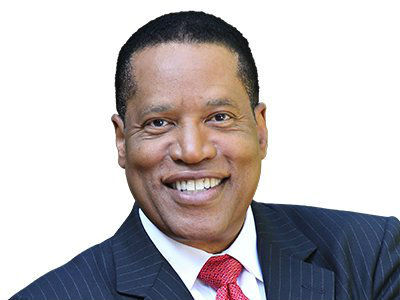
Larry Elder is an American lawyer, writer, and radio and television personality who calls himself the "Sage of South Central" a district of Los Angeles, Larry says his philosophy is to entertain, inform, provoke and to hopefully uplift. His calling card is "we have a country to save" and to him this means returning to the bedrock Constitutional principles of limited government and maximum personal responsibility. Elder's iconoclastic wit and intellectual agility makes him a particularly attractive voice in a nation that seems weary of traditional racial dialogue.” – Los Angeles Times.

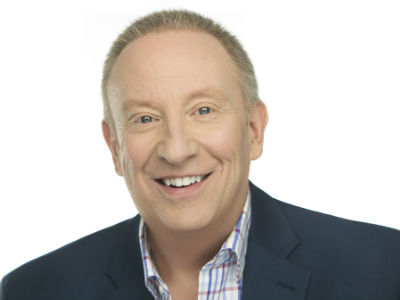
Mike Gallagher Mike Gallagher began his broadcasting career in 1978 in Dayton, Ohio. Today, he is one of the most listened-to talk radio show hosts in America, recently having been ranked in the Talkers Magazine “Heavy Hundred” list – the 100 most important talk radio hosts in America. Prior to being launched into national syndication in 1998, Mike hosted the morning show on WABC-AM in New York City. Today, Talkers Magazine reports that his show is heard by over 3.75 million weekly listeners. Besides his radio work, Mike is seen on Fox News Channel as an on-air contributor, frequently appearing on the cable news giant.

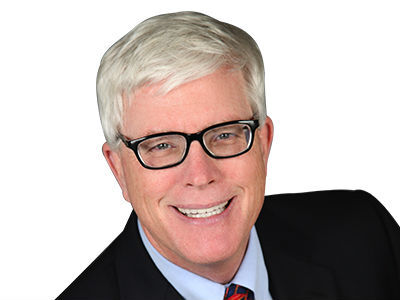
Hugh Hewitt is one of the nation’s leading bloggers and a genuine media revolutionary. He brings that expertise, his wit and what The New Yorker magazine calls his “amiable but relentless manner” to his nationally syndicated show each day.

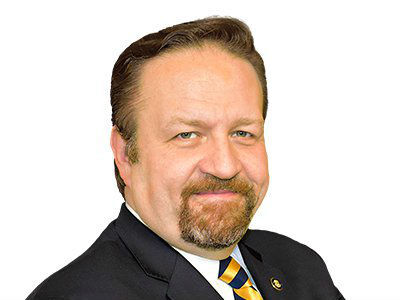
When Dr. Sebastian Gorka was growing up, he listened to talk radio under his pillow with a transistor radio, dreaming that one day he would be behind the microphone. Beginning New Year’s Day 2019, he got his wish. Gorka now hosts America First every weekday afternoon 3 to 6pm ET. Gorka’s unique story works well on the radio. He is national security analyst for the Fox News Channel and author of two books: "Why We Fight" and "Defeating Jihad." His latest book releasing this fall is “War For America’s Soul.” He is uniquely qualified to fight the culture war and stand up for what is great about America, his adopted home country.

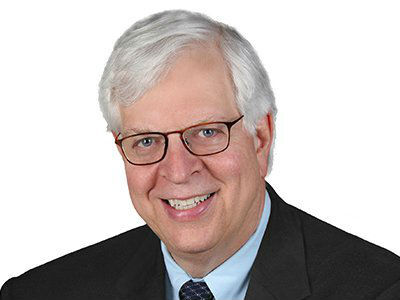
Broadcasting from his home station of KRLA in Los Angeles, the Dennis Prager Show is heard across the country. Everything in life – from politics to religion to relationships – is grist for Dennis’ mill. If it’s interesting, if it affects your life, then Dennis will be talking about it – with passion, humor, insight and wisdom.

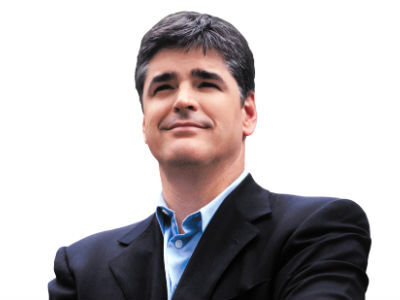
Sean Hannity is a conservative radio and television host, and one of the original primetime hosts on the Fox News Channel, where he has appeared since 1996. Sean Hannity began his radio career at a college station in California, before moving on to markets in the Southeast and New York. Today, he’s one of the most listened to on-air voices. Hannity’s radio program went into national syndication on September 10, 2001, and airs on more than 500 stations. Talkers Magazine estimates Hannity’s weekly radio audience at 13.5 million. In 1996 he was hired as one of the original hosts on Fox News Channel. As host of several popular Fox programs, Hannity has become the highest-paid news anchor on television.

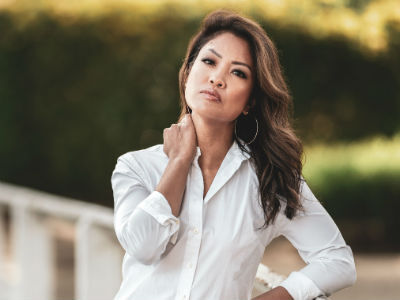
Michelle Malkin is a mother, wife, blogger, conservative syndicated columnist, longtime cable TV news commentator, and best-selling author of six books. She started her newspaper journalism career at the Los Angeles Daily News in 1992, moved to the Seattle Times in 1995, and has been penning nationally syndicated newspaper columns for Creators Syndicate since 1999. She is founder of conservative Internet start-ups Hot Air and Twitchy.com. Malkin has received numerous awards for her investigative journalism, including the Council on Governmental Ethics Laws (COGEL) national award for outstanding service for the cause of governmental ethics and leadership (1998), the Reed Irvine Accuracy in Media Award for Investigative Journalism (2006), the Heritage Foundation and Franklin Center for Government & Public Integrity's Breitbart Award for Excellence in Journalism (2013), the Center for Immigration Studies' Eugene Katz Award for Excellence in the Coverage of Immigration Award (2016), and the Manhattan Film Festival's Film Heals Award (2018). Married for 26 years and the mother of two teenage children, she lives with her family in Colorado. Follow her at michellemalkin.com. (Photo reprinted with kind permission from Peter Duke Photography.)

Sponsored by:

How Americans are rethinking wellness in 2026

Carbonatix Pre-Player Loader

Audio By Carbonatix

How Americans are rethinking wellness in 2026

Every January, millions of Americans set resolutions, hoping a new calendar year will bring new control. But as 2026 rolls into March, the reset feels different.

Instead of chasing fleeting fads, people have been responding to a deep-seated burnout fueled by economic instability and the relentless demands of hybrid work. This exhaustion is steering many away from generic fitness trends and toward the precision of wearables, health apps, and AI-driven tools.

Rather than following broad influencer advice, Americans are now using their own biometric data to map a wellness plan that reflects their actual lives. This article from Elk Marketing explores these shifting attitudes to wellness.

Why does the New Year still trigger health overhauls?

Behavioral scientists describe January 1st as a “temporal landmark,” a psychological dividing line that creates distance between past failures and future possibilities. By creating a distinct boundary between time periods, the new year provides the psychological clearance needed to initiate ambitious changes that might otherwise feel overwhelming.

It’s also socially reinforced. When an entire culture moves in sync to pursue health resets, the high social visibility provides a form of “social proof” that validates the effort. This collective momentum lowers the friction of starting over, making the start of a new year a rare window where personal motivation aligns with shared expectation.

What’s different about health kicks in 2026?

The rigid fitness plans and extreme dieting protocols that once defined new year’s resolutions are losing their grip. Years of burnout from unsustainable all-or-nothing approaches have taught people that willpower alone rarely sustains change, prompting a recalibration toward what actually endures.

Rather than demanding sweeping lifestyle overhauls, the 2026 approach emphasizes micro-habits — small, repeatable actions that build real momentum over time.

“The 2026 health kick isn’t fading, it’s maturing,” said Alyssa Marafino, VP of Growth at real-food supplement company Equip Foods. “Instead of chasing dramatic reinventions, Americans are building quieter systems that actually fit into daily life.”

This downsizing has made space for new priorities, with sleep optimization, stress management, and nervous system regulation moving to the center rather than lingering as secondary concerns.

This focus has shifted toward what researchers call “healthspan” — the preservation of strength, mobility, and mental clarity across decades rather than months.

And personalization drives this evolution, as wearable devices and at-home biomarker testing allow individuals to tailor routines based on their specific physiological responses rather than adhering to generic protocols. The ambition remains intact, but the path forward is smarter, quieter, and more responsive to how change actually unfolds.

The role of technology in shaping modern wellness

Technology has quietly reshaped modern wellness, and wearables now sit at the center of that shift. According to the National Institutes of Health (NIH), about one in three U.S. adults regularly uses a fitness tracker or smartwatch — tools that passively monitor sleep, movement, and recovery without disrupting daily life.

AI-powered platforms build on those signals, offering adaptive feedback that helps people adjust routines based on how they feel, not just what they planned.

And telehealth has followed a similar trajectory. Once viewed as a temporary fix, remote care is now routine. By 2022, nearly 40% of Americans had used it, with usage reaching 57% for those seeking mental health support, according to the CDC and NIH. This has made access to care more flexible, especially for those managing stress, sleep, and recovery.

Still, the flood of health metrics has created fatigue. As The Good Trade notes, “The shift we’re seeing for 2026 is intentional, strategic use of data, not constant monitoring.” However, that fatigue is not only cognitive. It’s also financial.

The economic reality behind modern health goals

According to a KFF Health Tracking Poll, healthcare costs have become the top economic worry for American households, with 32% reporting they are “very worried” about affording care.

These anxieties are already reshaping behavior as rising premiums and deductibles push individuals toward prevention rather than treatment. This move is less about wellness idealism and more about the cold reality that catching problems early costs significantly less than managing them later.

Johns Hopkins reports that only 2% to 3% of U.S. healthcare spending goes toward prevention. Yet preventive care remains the most affordable entry point for people trying to avoid the medical debt tied to as many as 65% of personal bankruptcies.

Time scarcity compounds the issue, forcing a choice of sustainable routines over dramatic transformations because consistency requires less daily effort than constant reinvention.

That shift has quietly replaced perfectionism with pragmatism, where “good enough” health becomes the realistic goal rather than an optimized ideal. And these constraints are now fueling broader skepticism toward an industry that has long prioritized profit over accessibility.

The backlash against traditional wellness culture

Now valued at $6.8 trillion, the wellness industry has become a target of its own success. Influencers promoting miracle supplements and unproven protocols have eroded trust, often providing little evidence to support their claims.

In fact, NPR reports that science communicators now spend most of their time countering wellness misinformation rather than advancing public health knowledge. This erosion of credibility has killed patience for performative health challenges designed more for social media engagement than actual physiological improvement.

The Global Wellness Institute identifies this as “over-optimization backlash,” where people reject the pressure that “wellbeing must be constantly engineered, displayed and perfected to be legitimate.” That rejection has redirected attention toward mental balance and nervous system regulation rather than visible transformation.

Success is now being redefined around how people feel rather than how they look, prioritizing functional capacity over aesthetics. And this shift reflects a deeper cultural reckoning about whether wellness was ever designed to serve the people or merely the industry profiting from their pursuit.

Broader Cultural Implications

As 2026 unfolds, the high-pressure New Year health kick is entering a long-overdue evolution.

What once revolved around extreme, January-only resolutions is giving way to a more realistic model, one where wellness is woven into daily life rather than treated as a seasonal, all-or-nothing event. This shift suggests that the familiar “new year, new you” promise is being replaced by “new year, same me, just better supported” routines.

This movement is heavily driven by aging Millennials and emerging Gen Z, who are challenging old norms by prioritizing mental balance and using wellness as a tool to manage the high stress of their careers. Health is no longer a frantic reinvention of the self; it is a sustainable form of self-expression.

As we look forward, Americans are increasingly defining "healthy" through the lens of functional resilience and metabolic health. The 2026 health kick isn't fading; it is transforming into something more intentional and flexible, proving that the most effective wellness resolution is the one that actually fits into everyday life.

This story was produced by Elk Marketing and reviewed and distributed by Stacker.

 

Salem News Channel Today

Sponsored Links

On Air & Up Next

See the Full Program Guide