How water filtration systems improve water quality

Carbonatix Pre-Player Loader

Audio By Carbonatix

How water filtration systems improve water quality

Filtration plays a vital role in ensuring the water we use every day is clean, safe, and enjoyable. Home water sources can contain contaminants that have entered the water either at its source or on its journey to your home, many of which can be detrimental to your health when consumed.

By removing impurities such as sediment, harmful microbes, and chemicals, water filtration systems enhance the overall quality and safety of your water.

In this guide from Ingram's Water & Air Equipment, you will learn about different types of filter systems — from activated carbon to reverse osmosis — and the unique benefits each method provides.

Summary

  • Water contaminants can have adverse health effects and include microbial, chemical, physical, and radiological contaminants.
  • Water can become contaminated through both natural processes and human-induced causes.
  • Risks associated with water contamination include gastrointestinal issues, skin problems, organ damage, and more severe health complications.
  • Types of water filtration systems include activated charcoal filters, reverse osmosis systems, UV purifiers, mechanical filters, and ion exchange softeners.
  • Benefits of using a water filtration system include reduced health risks, improved taste and odor, and multiple environmental benefits.
  • To choose the right water filter for your home, you must test your home water, identify present contaminants, and compare filter models and providers.

What Are the Common Contaminants Found in Drinking Water?

The most common types of water contaminants present in drinking water can be split into four categories:

  • Microbial contaminants: These include microorganisms like bacteria and viruses, such as E. coli, Giardia, and noroviruses.
  • Chemical contaminants: These comprise both organic and inorganic chemicals, microplastics, disinfectant by-products, and more.
  • Physical contaminants: Physical impurities tend to be visible particles, such as sediment, dirt, debris, and organic matter.
  • Radiological contaminants: These encompass both naturally occurring radioactive substances, like radium and uranium, and artificially produced substances, such as runoff from nuclear power plants.

How Does Water Become Contaminated?

There are many ways water can become contaminated, through both natural and human-induced processes. Water contamination can occur either at the initial water source or during its journey to your faucets.

Common causes of water contamination include:

  • Agricultural runoff, such as nitrates from soil fertilizers.
  • Industrial pollution.
  • Manufacturing by-products.
  • Decomposition of organic matter, including decaying plants and animals.
  • Sewer overflow.
  • Septic system disruptions.
  • Soil or rocks that naturally contain chemicals like arsenic and chlorine.

What Are the Health Risks Associated With Contaminated Water?

There are numerous short- and long-term health risks associated with consuming contaminated water, including:

  • Gastrointestinal illnesses: Many contaminants found in water can cause gastrointestinal issues, such as diarrhea, cholera, and dysentery.
  • Skin problems: Skin issues caused by contaminated water can range from mild to severe, and include fungal infections, rashes, and infections that can lead to life-threatening illnesses, such as sepsis.
  • Organ damage: High consumption of water containing heavy metals, pesticides, and other harmful impurities can lead to kidney and liver damage, among other potentially fatal issues.

Types of Water Filtration Systems and How They Work

There are many types of water filtration systems to choose from that utilize varying technologies or methods to remove different contaminants.
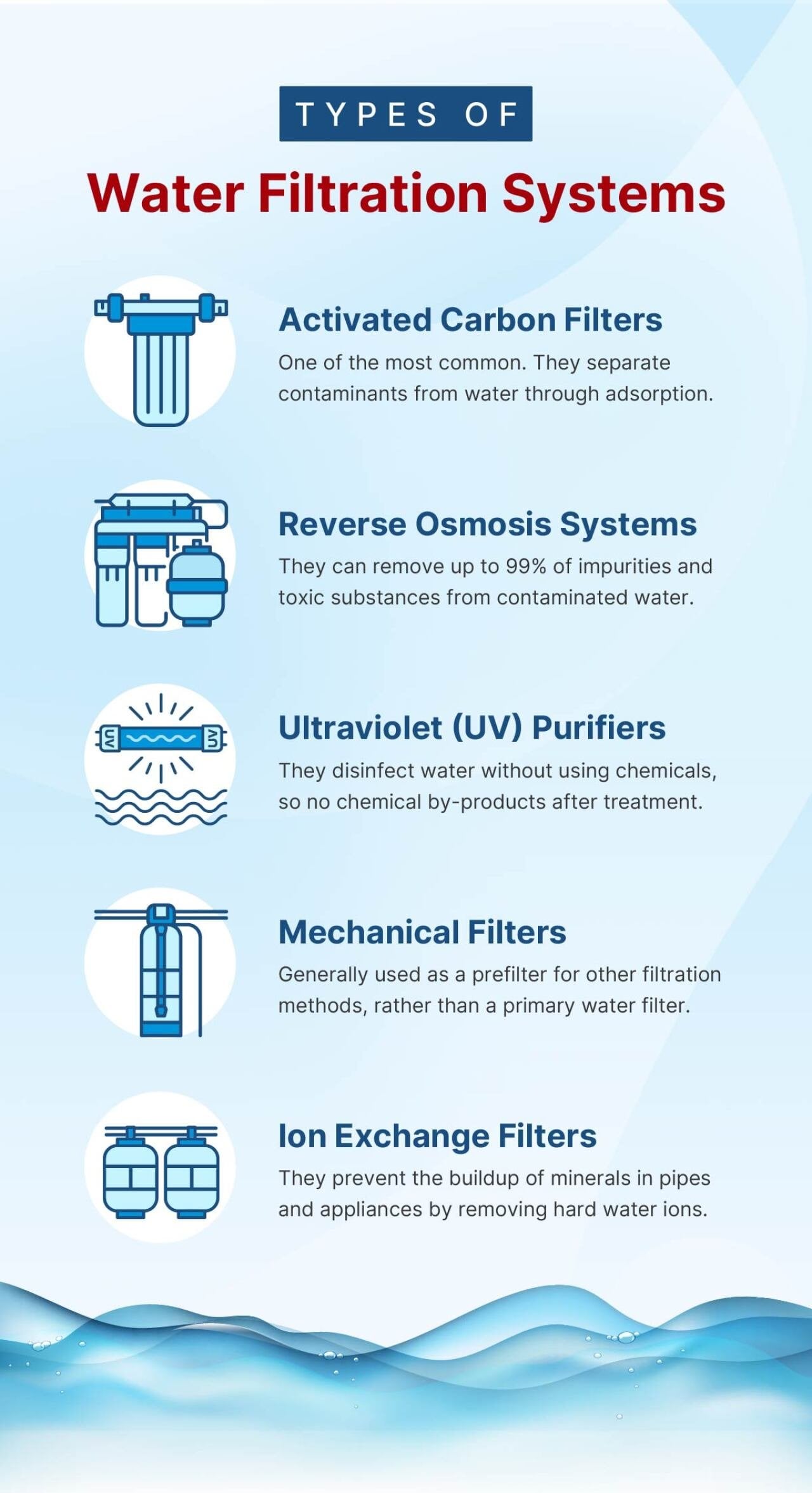
An infographic listing the types of water filtration systems.
Ingram's Water & Air Equipment


Activated Carbon Filters

Activated carbon filters are one of the most common types of water filters. They effectively remove an array of contaminants from household water, including:

  • Organic substances and sediment.
  • Some heavy metals, such as magnesium.
  • Agricultural chemicals, such as pesticides and herbicides.
  • Other chemicals and chemical compounds, such as chlorine and hydrogen peroxide.

Activated carbon filters work by separating contaminants from water through adsorption. The carbon used to create this type of water filter is specially processed to make it porous and capable of catching — or adsorbing — toxins and impurities. As contaminated water flows through an activated carbon filter, the contaminants bind to the porous carbon as the clean water flows through it.

Benefits of activated carbon filters:

  • No electricity required: Adsorption is a passive process that requires no electricity, meaning these filters remain functional even when a power supply is unavailable.
  • Effective contaminant reduction: Carbon filters remove a wide range of contaminants, reducing the health risks associated with drinking impure water.
  • Improved taste and odor: By removing an array of chemicals and substances, activated carbon filters can improve the smell and taste of your drinking water.

Disadvantages of activated carbon filters:

  • Unsuitable for hot water: Carbon filters are limited to treating cold water, as hot water can damage the filter material and reduce its effectiveness.
  • Cannot remove all contaminants: Although they can remove many substances from water, activated carbon filters cannot remove microorganisms or viruses, such as bacteria, nitrates, or many heavy metals, including mercury.

Reverse Osmosis Systems

Reverse osmosis systems effectively remove a high percentage of toxins from contaminated water. Toxins that can be removed or reduced by reverse osmosis include:

  • Many heavy metals, such as arsenic, hexavalent chromium, and copper
  • Organic compounds, such as pesticides
  • Sediment
  • Microplastics
  • Fluoride
  • Nitrates
  • Dissolved materials, such as salts
  • Bacteria

The steps to removing impurities by reverse osmosis are as follows:

  1. Before coming into contact with the reverse osmosis membrane, contaminated water is directed through prefilters to remove larger particles, such as sediment and organic matter, that could block or damage the membrane.
  2. Once the larger molecules have been filtered out, a high amount of pressure is applied to the water, pushing it toward the system's semipermeable membrane.
  3. The membrane has microscopic holes that are too small for any toxins or contaminants to pass through. As the water is forced against the membrane, only water passes through it.
  4. The contaminants left behind are then expelled from the system and disposed of as wastewater.

Benefits of reverse osmosis filtration systems:

  • High contaminant removal: Reverse osmosis can remove up to 99% of impurities and toxic substances from contaminated water.
  • Ability to block microscopic impurities: The semipermeable membrane in reverse osmosis systems can block microscopic particles and soluble contaminants that other filtration systems cannot remove.

Disadvantages of reverse osmosis:

  • Reliance on additional filters: To protect the membrane, the reverse osmosis process requires additional filters, which can incur extra costs and maintenance.

Ultraviolet (UV) Purifiers

UV purifiers are particularly effective at removing or disarming microorganisms that exist in water, including bacteria, viruses, and mold. For example, they can inactivate:

  • Giardia
  • Salmonella
  • Streptococcus
  • Cholera
  • Fungi
  • Hepatitis B
  • Dysentery bacilli
  • E. coli

The steps to removing impurities using UV purification are as follows:

  1. Contaminated water passes through prefilters, which remove sediment and larger molecules that might obstruct the UV and prevent it from reaching the microorganisms.
  2. The filtered water enters a chamber that is specially equipped with a UV lamp.
  3. The lamp emits UV-C light, which penetrates the cells of microorganisms in the water and damages their DNA, essentially killing them and rendering them incapable of reproducing. This limits their ability to cause disease or illness when consumed.

Benefits of UV purifiers:

  • No chemicals: UV-C light disinfects water without using any chemicals, meaning no chemical by-products remain in the water after decontamination.
  • Sustainable process: UV purifiers are an eco-friendly filtration option as they create minimal water waste.
  • Effectively neutralizes microorganisms: By disarming almost every type of microorganism, UV purifiers can make contaminated water much safer to drink and dramatically reduce the risk of bacterial and viral illnesses.

Disadvantages of UV purifiers:

  • Dependence on electricity: UV lamps require electricity to function and therefore cannot be used in instances where power is unavailable, such as during an outage.
  • Reliance on prefilters: Similar to reverse osmosis systems, UV purifying systems require prefilters, which can incur additional costs and maintenance.

Mechanical Filters

Mechanical filters effectively separate physical contaminants and some larger microbial contaminants from water. Depending on the size of a filter's pores, a mechanical filter can remove:

  • Sediment
  • Dirt
  • Organic waste
  • Larger microorganisms, such as Giardia

A mechanical filter acts as a physical barrier for contaminants. As water flows through the filter, contaminants that cannot fit through its pores are separated from the water.

Depending on the micron rating of mechanical filters, they can filter out a range of particle types and sizes. The lower a filter's micron rating, the smaller its filtration holes are, and the smaller the particles it can separate from water. For example, a mechanical filter with a rating of 5 microns can filter out particles like dirt and dust, while a filter with a rating of 0.5 microns can filter out much smaller particles, such as viruses.

Mechanical filters are generally used as a prefilter for other filtration methods, rather than being relied on as a primary water filter.

Benefits of mechanical filters:

  • Removes solid particles: Mechanical filters effectively remove larger contaminants that might otherwise damage more delicate filters or negatively affect the taste of water.
  • Simple design: The function of these filters is straightforward, making them an inexpensive, low-maintenance option.

Disadvantages of mechanical filters:

  • Ineffective: Aside from large, physical contaminants, mechanical filters are incapable of removing a wide array of harmful pollutants, including most chemical contaminants and many smaller microbes.
  • Reliance on other filters: For thorough water filtration, mechanical filters need to be used in addition to other, finer filters.

Ion Exchange Filters

Ions are atoms that have either a positive or negative electrical charge, due to having an unequal number of protons and electrons. When ions are present in water, they can affect its taste and quality.

Ion exchange filters effectively remove a wide range of dissolved minerals and other ions, including:

  • Potassium
  • Magnesium
  • Sodium
  • Calcium
  • Nitrate
  • Fluoride
  • Chloride
  • Heavy metals, such as mercury

Many of these ions contribute to the hardness of water, and ion exchange filters are a type of water softener. They work by substituting hard ions for soft sodium ions. Hard water flows into a chamber that contains resin beads coated with sodium. As hard water passes through this chamber, the unwanted ions, such as calcium and magnesium, bind to the resin, displacing the sodium ions and releasing them into the water instead.

Benefits of ion exchange softeners:

  • Extends plumbing and appliance lifetime: By removing hard water ions, ion exchange softeners prevent mineral buildup in pipes and appliances, minimizing maintenance requirements, improving efficiency, and extending lifespan.
  • Enhances water quality: Softer water often tastes better and is healthier for your skin and hair, as hard minerals can cause irritation and strip away our natural oils.

Disadvantages of ion exchange softeners:

  • Removal limitations: Ion exchange filters cannot remove harmful microorganisms or physical contaminants, and are therefore not a comprehensive water filter option.
  • Removal of beneficial minerals: While hard minerals can be detrimental to water quality, low levels of healthy minerals can be beneficial in water
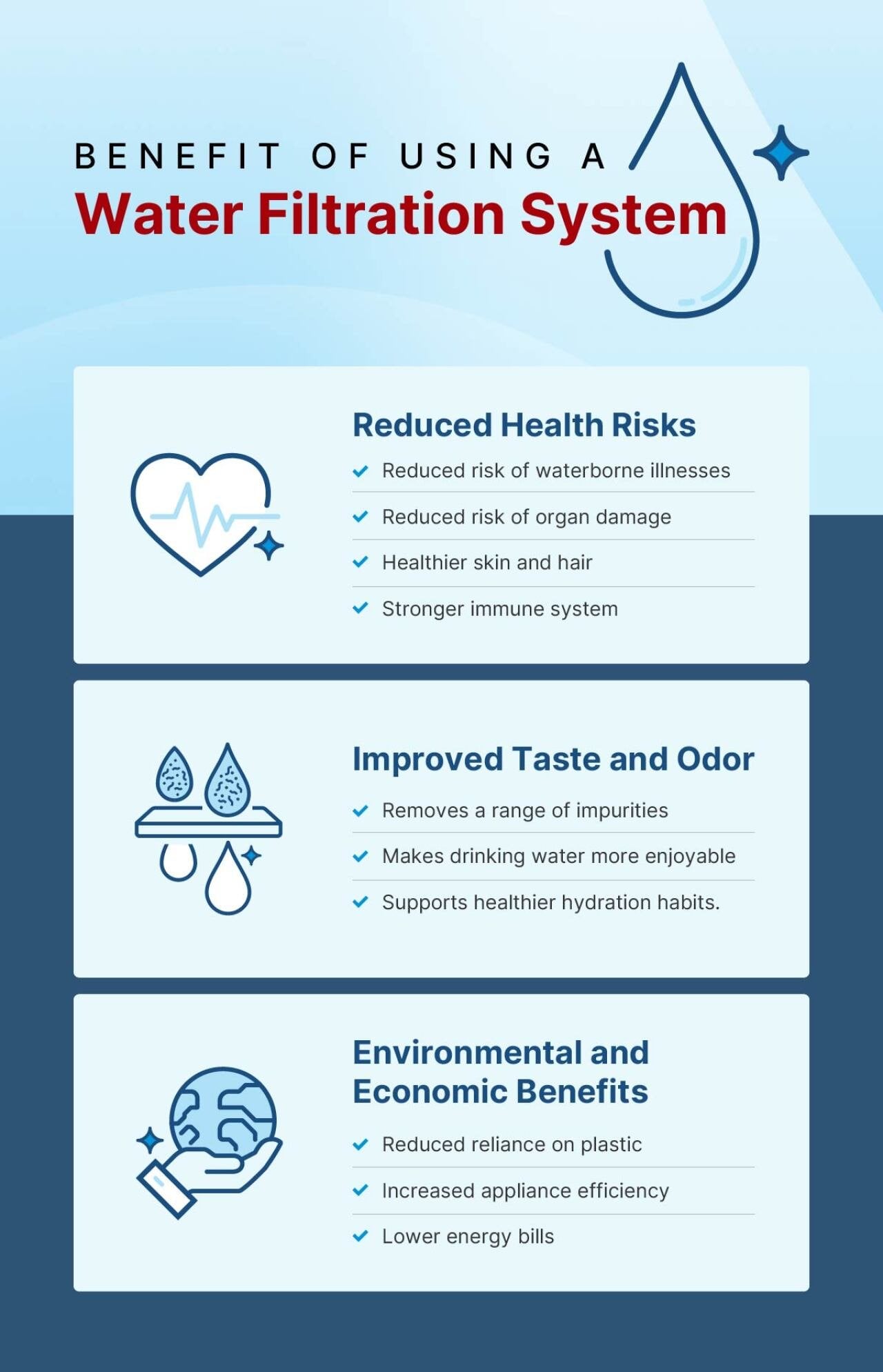
An infographic listing the benefits of using a water filtration system.
Ingram's Water & Air Equipment


Benefits of Using a Water Filtration System

Each type of filter has its advantages. The overall benefits of using a water filtration system are undeniable, with positive impacts on our health, the environment, and the taste of drinking water.

Reduced Health Risks

Using a water filter or a combination of filtration systems can reduce the health risks associated with using or consuming contaminated water. The health benefits of using water filters include:

  • Reduced risk of waterborne illnesses: By removing microbial contaminants, water filters reduce the spread of bacteria and viruses, such as Giardia and E. coli. This decreases the risk of waterborne gastrointestinal issues and other illnesses.
  • Reduced risk of organ damage: By removing heavy metals and chemicals from contaminated water, many water filters effectively reduce the risk of developing organ damage and other life-threatening health issues.
  • Healthier skin and hair: By removing harmful chemicals and hard minerals, water filters can reduce damage to your skin and hair.
  • Stronger immune system: Filtered water that is free from contaminants and toxins can improve immune system function.

Improved Taste and Odor

Contaminants often blemish the taste and smell of unfiltered water. By removing a range of impurities, chemicals, and unwanted substances, water filters can improve the taste and odor of your drinking water. This makes drinking water a more enjoyable experience and supports healthier hydration habits.

Environmental and Economic Benefits

By improving water quality, water filtration systems can benefit the environment and limit your costs by reducing reliance on bottled water, increasing appliance efficiency, and more.

Environmental benefits of water filtration systems include:

  • Reduced reliance on plastic: The production and disposal of plastic water bottles contribute significantly to environmental pollution, and limiting their use can improve your carbon footprint.
  • Increased appliance efficiency: By reducing the buildup of chemicals, hard water ions, and other harmful substances, water filters can increase the efficiency and lifespan of your appliances and water systems. This decreases energy consumption, replacements, and maintenance costs.
  • Lower energy bills: By increasing the efficiency of your appliances, water filtration systems can lead to long-term energy savings.

How to Choose the Right Water Filter for Your Home

As you now know, different filters are designed to remove or reduce different contaminants. From filter pore size to filtration technology, there are many options to consider when choosing your new water filtration system.

If you want to improve your home's water quality and invest in a filter, follow these steps to determine which type of water filtration system is best suited to your home.

1. Test Your Water

To ascertain which type of filter you need, it is essential to identify the types of contaminants present in your home's water. Contact your local health department for guidance on testing your water and how to find a state-certified lab to do the testing for you

2. Compare Options

Once you know which contaminants to remove from your water, you can start comparing filters. Consider these factors when comparing filters:

  • Micron rating: Depending on your filtration requirements and the size of contaminants you're removing, you need to determine how fine your filter and its pores must be.
  • Brand certifications: Purchase systems from companies certified by organizations, like NSF, WQA, or IAMPO.
  • System type: Determine whether you need a whole-house system or an under-the-sink filter just for drinking water.
  • Maintenance requirements: Different filtration systems require different standards of upkeep. Try to choose a system that aligns with your maintenance preferences.
  • Cost: Depending on their type and scale, water filtration system costs can vary dramatically between models.

3. Arrange Installation

To ensure optimal performance of your new water filter, proper installation is essential. While you can install some water systems at home yourself, more complex filtration systems require professional assistance. For these types of systems, try to purchase your filter from a company that provides installation support and contractor assistance.

Frequently Asked Questions

Here are some other common questions about water filtration.

How do water filtration systems remove contaminants?

Methods for contamination removal depend on the type of water filtration system. For example, while UV purifiers use UV-C light to kill unwanted microorganisms, mechanical filters simply separate larger contaminants from water using a physical barrier with small holes or pores.

Is it better to buy bottled water or a water filter?

It is always optimal to invest in a water filter instead of relying on bottled water. The production and disposal of plastic bottles are major sources of pollution. Reliance on bottled water is not only detrimental to the environment, but it is also much less cost-effective in the long run.

Is it OK to drink reverse osmosis water every day?

Yes, it is generally safe to drink reverse osmosis water every day. Water that has been filtered using a reverse osmosis system is free from harmful contaminants. However, due to its high level of effectiveness, reverse osmosis can also remove beneficial minerals from water, such as calcium. Provided you are consuming healthy minerals from other sources in your diet, drinking reverse osmosis water daily is perfectly safe.

Conclusion

Investing in the right water filtration system is an essential step to ensuring your household water is safe to use and consume. By removing harmful contaminants, such as microorganisms, chemicals, and physical impurities, water filters can reduce the health risks associated with drinking contaminated water and enable you to enjoy the benefits of cleaner, high-quality water.

If you want to reduce your reliance on bottled water and reap the rewards of having clean water in the home, investing in an effective water filtration system is an excellent option.

This story was produced by Ingram's Water & Air Equipment and reviewed and distributed by Stacker.


 

Salem News Channel Today

Sponsored Links


September 26 - Phoenix, AZ
Scottsdale Center for the Performing Arts


November 2 - Detroit, MI
Zion Christian Church in Troy


October 6 - Los Angeles, CA
Pasadena Convention Center


November 5 - San Antonio, TX
Norris Centers – The Grand Red Oak Ballroom


October 8 - Sacramento, CA
William Jessup University


November 7 - Tampa, FL
The Palladium at St. Pete College


October 22 - Minneapolis, MN
Crowne Plaza AiRE


November 15 - San Francisco, CA
Fremont Marriott Silicon Valley


October 23 - Philadelphia, PA
Green Valley Country Club


November 16 - Denver, CO
CU South Denver - Formerly Wildlife Experience


November 2 - Chicago, IL
Chicago Westin Northwest in Itasca


November 21 - Cleveland, OH
Holiday Inn Rockside in Independence


Salem Radio Network Speakers

Larry Elder is an American lawyer, writer, and radio and television personality who calls himself the "Sage of South Central" a district of Los Angeles, Larry says his philosophy is to entertain, inform, provoke and to hopefully uplift. His calling card is "we have a country to save" and to him this means returning to the bedrock Constitutional principles of limited government and maximum personal responsibility. Elder's iconoclastic wit and intellectual agility makes him a particularly attractive voice in a nation that seems weary of traditional racial dialogue.” – Los Angeles Times.

Mike Gallagher Mike Gallagher began his broadcasting career in 1978 in Dayton, Ohio. Today, he is one of the most listened-to talk radio show hosts in America, recently having been ranked in the Talkers Magazine “Heavy Hundred” list – the 100 most important talk radio hosts in America. Prior to being launched into national syndication in 1998, Mike hosted the morning show on WABC-AM in New York City. Today, Talkers Magazine reports that his show is heard by over 3.75 million weekly listeners. Besides his radio work, Mike is seen on Fox News Channel as an on-air contributor, frequently appearing on the cable news giant.

Hugh Hewitt is one of the nation’s leading bloggers and a genuine media revolutionary. He brings that expertise, his wit and what The New Yorker magazine calls his “amiable but relentless manner” to his nationally syndicated show each day.

When Dr. Sebastian Gorka was growing up, he listened to talk radio under his pillow with a transistor radio, dreaming that one day he would be behind the microphone. Beginning New Year’s Day 2019, he got his wish. Gorka now hosts America First every weekday afternoon 3 to 6pm ET. Gorka’s unique story works well on the radio. He is national security analyst for the Fox News Channel and author of two books: "Why We Fight" and "Defeating Jihad." His latest book releasing this fall is “War For America’s Soul.” He is uniquely qualified to fight the culture war and stand up for what is great about America, his adopted home country.

Broadcasting from his home station of KRLA in Los Angeles, the Dennis Prager Show is heard across the country. Everything in life – from politics to religion to relationships – is grist for Dennis’ mill. If it’s interesting, if it affects your life, then Dennis will be talking about it – with passion, humor, insight and wisdom.

Sean Hannity is a conservative radio and television host, and one of the original primetime hosts on the Fox News Channel, where he has appeared since 1996. Sean Hannity began his radio career at a college station in California, before moving on to markets in the Southeast and New York. Today, he’s one of the most listened to on-air voices. Hannity’s radio program went into national syndication on September 10, 2001, and airs on more than 500 stations. Talkers Magazine estimates Hannity’s weekly radio audience at 13.5 million. In 1996 he was hired as one of the original hosts on Fox News Channel. As host of several popular Fox programs, Hannity has become the highest-paid news anchor on television.

Michelle Malkin is a mother, wife, blogger, conservative syndicated columnist, longtime cable TV news commentator, and best-selling author of six books. She started her newspaper journalism career at the Los Angeles Daily News in 1992, moved to the Seattle Times in 1995, and has been penning nationally syndicated newspaper columns for Creators Syndicate since 1999. She is founder of conservative Internet start-ups Hot Air and Twitchy.com. Malkin has received numerous awards for her investigative journalism, including the Council on Governmental Ethics Laws (COGEL) national award for outstanding service for the cause of governmental ethics and leadership (1998), the Reed Irvine Accuracy in Media Award for Investigative Journalism (2006), the Heritage Foundation and Franklin Center for Government & Public Integrity's Breitbart Award for Excellence in Journalism (2013), the Center for Immigration Studies' Eugene Katz Award for Excellence in the Coverage of Immigration Award (2016), and the Manhattan Film Festival's Film Heals Award (2018). Married for 26 years and the mother of two teenage children, she lives with her family in Colorado. Follow her at michellemalkin.com. (Photo reprinted with kind permission from Peter Duke Photography.)

Sponsored by:

How water filtration systems improve water quality

Carbonatix Pre-Player Loader

Audio By Carbonatix

How water filtration systems improve water quality

Filtration plays a vital role in ensuring the water we use every day is clean, safe, and enjoyable. Home water sources can contain contaminants that have entered the water either at its source or on its journey to your home, many of which can be detrimental to your health when consumed.

By removing impurities such as sediment, harmful microbes, and chemicals, water filtration systems enhance the overall quality and safety of your water.

In this guide from Ingram's Water & Air Equipment, you will learn about different types of filter systems — from activated carbon to reverse osmosis — and the unique benefits each method provides.

Summary

  • Water contaminants can have adverse health effects and include microbial, chemical, physical, and radiological contaminants.
  • Water can become contaminated through both natural processes and human-induced causes.
  • Risks associated with water contamination include gastrointestinal issues, skin problems, organ damage, and more severe health complications.
  • Types of water filtration systems include activated charcoal filters, reverse osmosis systems, UV purifiers, mechanical filters, and ion exchange softeners.
  • Benefits of using a water filtration system include reduced health risks, improved taste and odor, and multiple environmental benefits.
  • To choose the right water filter for your home, you must test your home water, identify present contaminants, and compare filter models and providers.

What Are the Common Contaminants Found in Drinking Water?

The most common types of water contaminants present in drinking water can be split into four categories:

  • Microbial contaminants: These include microorganisms like bacteria and viruses, such as E. coli, Giardia, and noroviruses.
  • Chemical contaminants: These comprise both organic and inorganic chemicals, microplastics, disinfectant by-products, and more.
  • Physical contaminants: Physical impurities tend to be visible particles, such as sediment, dirt, debris, and organic matter.
  • Radiological contaminants: These encompass both naturally occurring radioactive substances, like radium and uranium, and artificially produced substances, such as runoff from nuclear power plants.

How Does Water Become Contaminated?

There are many ways water can become contaminated, through both natural and human-induced processes. Water contamination can occur either at the initial water source or during its journey to your faucets.

Common causes of water contamination include:

  • Agricultural runoff, such as nitrates from soil fertilizers.
  • Industrial pollution.
  • Manufacturing by-products.
  • Decomposition of organic matter, including decaying plants and animals.
  • Sewer overflow.
  • Septic system disruptions.
  • Soil or rocks that naturally contain chemicals like arsenic and chlorine.

What Are the Health Risks Associated With Contaminated Water?

There are numerous short- and long-term health risks associated with consuming contaminated water, including:

  • Gastrointestinal illnesses: Many contaminants found in water can cause gastrointestinal issues, such as diarrhea, cholera, and dysentery.
  • Skin problems: Skin issues caused by contaminated water can range from mild to severe, and include fungal infections, rashes, and infections that can lead to life-threatening illnesses, such as sepsis.
  • Organ damage: High consumption of water containing heavy metals, pesticides, and other harmful impurities can lead to kidney and liver damage, among other potentially fatal issues.

Types of Water Filtration Systems and How They Work

There are many types of water filtration systems to choose from that utilize varying technologies or methods to remove different contaminants.

An infographic listing the types of water filtration systems.
Ingram's Water & Air Equipment


Activated Carbon Filters

Activated carbon filters are one of the most common types of water filters. They effectively remove an array of contaminants from household water, including:

  • Organic substances and sediment.
  • Some heavy metals, such as magnesium.
  • Agricultural chemicals, such as pesticides and herbicides.
  • Other chemicals and chemical compounds, such as chlorine and hydrogen peroxide.

Activated carbon filters work by separating contaminants from water through adsorption. The carbon used to create this type of water filter is specially processed to make it porous and capable of catching — or adsorbing — toxins and impurities. As contaminated water flows through an activated carbon filter, the contaminants bind to the porous carbon as the clean water flows through it.

Benefits of activated carbon filters:

  • No electricity required: Adsorption is a passive process that requires no electricity, meaning these filters remain functional even when a power supply is unavailable.
  • Effective contaminant reduction: Carbon filters remove a wide range of contaminants, reducing the health risks associated with drinking impure water.
  • Improved taste and odor: By removing an array of chemicals and substances, activated carbon filters can improve the smell and taste of your drinking water.

Disadvantages of activated carbon filters:

  • Unsuitable for hot water: Carbon filters are limited to treating cold water, as hot water can damage the filter material and reduce its effectiveness.
  • Cannot remove all contaminants: Although they can remove many substances from water, activated carbon filters cannot remove microorganisms or viruses, such as bacteria, nitrates, or many heavy metals, including mercury.

Reverse Osmosis Systems

Reverse osmosis systems effectively remove a high percentage of toxins from contaminated water. Toxins that can be removed or reduced by reverse osmosis include:

  • Many heavy metals, such as arsenic, hexavalent chromium, and copper
  • Organic compounds, such as pesticides
  • Sediment
  • Microplastics
  • Fluoride
  • Nitrates
  • Dissolved materials, such as salts
  • Bacteria

The steps to removing impurities by reverse osmosis are as follows:

  1. Before coming into contact with the reverse osmosis membrane, contaminated water is directed through prefilters to remove larger particles, such as sediment and organic matter, that could block or damage the membrane.
  2. Once the larger molecules have been filtered out, a high amount of pressure is applied to the water, pushing it toward the system's semipermeable membrane.
  3. The membrane has microscopic holes that are too small for any toxins or contaminants to pass through. As the water is forced against the membrane, only water passes through it.
  4. The contaminants left behind are then expelled from the system and disposed of as wastewater.

Benefits of reverse osmosis filtration systems:

  • High contaminant removal: Reverse osmosis can remove up to 99% of impurities and toxic substances from contaminated water.
  • Ability to block microscopic impurities: The semipermeable membrane in reverse osmosis systems can block microscopic particles and soluble contaminants that other filtration systems cannot remove.

Disadvantages of reverse osmosis:

  • Reliance on additional filters: To protect the membrane, the reverse osmosis process requires additional filters, which can incur extra costs and maintenance.

Ultraviolet (UV) Purifiers

UV purifiers are particularly effective at removing or disarming microorganisms that exist in water, including bacteria, viruses, and mold. For example, they can inactivate:

  • Giardia
  • Salmonella
  • Streptococcus
  • Cholera
  • Fungi
  • Hepatitis B
  • Dysentery bacilli
  • E. coli

The steps to removing impurities using UV purification are as follows:

  1. Contaminated water passes through prefilters, which remove sediment and larger molecules that might obstruct the UV and prevent it from reaching the microorganisms.
  2. The filtered water enters a chamber that is specially equipped with a UV lamp.
  3. The lamp emits UV-C light, which penetrates the cells of microorganisms in the water and damages their DNA, essentially killing them and rendering them incapable of reproducing. This limits their ability to cause disease or illness when consumed.

Benefits of UV purifiers:

  • No chemicals: UV-C light disinfects water without using any chemicals, meaning no chemical by-products remain in the water after decontamination.
  • Sustainable process: UV purifiers are an eco-friendly filtration option as they create minimal water waste.
  • Effectively neutralizes microorganisms: By disarming almost every type of microorganism, UV purifiers can make contaminated water much safer to drink and dramatically reduce the risk of bacterial and viral illnesses.

Disadvantages of UV purifiers:

  • Dependence on electricity: UV lamps require electricity to function and therefore cannot be used in instances where power is unavailable, such as during an outage.
  • Reliance on prefilters: Similar to reverse osmosis systems, UV purifying systems require prefilters, which can incur additional costs and maintenance.

Mechanical Filters

Mechanical filters effectively separate physical contaminants and some larger microbial contaminants from water. Depending on the size of a filter's pores, a mechanical filter can remove:

  • Sediment
  • Dirt
  • Organic waste
  • Larger microorganisms, such as Giardia

A mechanical filter acts as a physical barrier for contaminants. As water flows through the filter, contaminants that cannot fit through its pores are separated from the water.

Depending on the micron rating of mechanical filters, they can filter out a range of particle types and sizes. The lower a filter's micron rating, the smaller its filtration holes are, and the smaller the particles it can separate from water. For example, a mechanical filter with a rating of 5 microns can filter out particles like dirt and dust, while a filter with a rating of 0.5 microns can filter out much smaller particles, such as viruses.

Mechanical filters are generally used as a prefilter for other filtration methods, rather than being relied on as a primary water filter.

Benefits of mechanical filters:

  • Removes solid particles: Mechanical filters effectively remove larger contaminants that might otherwise damage more delicate filters or negatively affect the taste of water.
  • Simple design: The function of these filters is straightforward, making them an inexpensive, low-maintenance option.

Disadvantages of mechanical filters:

  • Ineffective: Aside from large, physical contaminants, mechanical filters are incapable of removing a wide array of harmful pollutants, including most chemical contaminants and many smaller microbes.
  • Reliance on other filters: For thorough water filtration, mechanical filters need to be used in addition to other, finer filters.

Ion Exchange Filters

Ions are atoms that have either a positive or negative electrical charge, due to having an unequal number of protons and electrons. When ions are present in water, they can affect its taste and quality.

Ion exchange filters effectively remove a wide range of dissolved minerals and other ions, including:

  • Potassium
  • Magnesium
  • Sodium
  • Calcium
  • Nitrate
  • Fluoride
  • Chloride
  • Heavy metals, such as mercury

Many of these ions contribute to the hardness of water, and ion exchange filters are a type of water softener. They work by substituting hard ions for soft sodium ions. Hard water flows into a chamber that contains resin beads coated with sodium. As hard water passes through this chamber, the unwanted ions, such as calcium and magnesium, bind to the resin, displacing the sodium ions and releasing them into the water instead.

Benefits of ion exchange softeners:

  • Extends plumbing and appliance lifetime: By removing hard water ions, ion exchange softeners prevent mineral buildup in pipes and appliances, minimizing maintenance requirements, improving efficiency, and extending lifespan.
  • Enhances water quality: Softer water often tastes better and is healthier for your skin and hair, as hard minerals can cause irritation and strip away our natural oils.

Disadvantages of ion exchange softeners:

  • Removal limitations: Ion exchange filters cannot remove harmful microorganisms or physical contaminants, and are therefore not a comprehensive water filter option.
  • Removal of beneficial minerals: While hard minerals can be detrimental to water quality, low levels of healthy minerals can be beneficial in water
An infographic listing the benefits of using a water filtration system.
Ingram's Water & Air Equipment


Benefits of Using a Water Filtration System

Each type of filter has its advantages. The overall benefits of using a water filtration system are undeniable, with positive impacts on our health, the environment, and the taste of drinking water.

Reduced Health Risks

Using a water filter or a combination of filtration systems can reduce the health risks associated with using or consuming contaminated water. The health benefits of using water filters include:

  • Reduced risk of waterborne illnesses: By removing microbial contaminants, water filters reduce the spread of bacteria and viruses, such as Giardia and E. coli. This decreases the risk of waterborne gastrointestinal issues and other illnesses.
  • Reduced risk of organ damage: By removing heavy metals and chemicals from contaminated water, many water filters effectively reduce the risk of developing organ damage and other life-threatening health issues.
  • Healthier skin and hair: By removing harmful chemicals and hard minerals, water filters can reduce damage to your skin and hair.
  • Stronger immune system: Filtered water that is free from contaminants and toxins can improve immune system function.

Improved Taste and Odor

Contaminants often blemish the taste and smell of unfiltered water. By removing a range of impurities, chemicals, and unwanted substances, water filters can improve the taste and odor of your drinking water. This makes drinking water a more enjoyable experience and supports healthier hydration habits.

Environmental and Economic Benefits

By improving water quality, water filtration systems can benefit the environment and limit your costs by reducing reliance on bottled water, increasing appliance efficiency, and more.

Environmental benefits of water filtration systems include:

  • Reduced reliance on plastic: The production and disposal of plastic water bottles contribute significantly to environmental pollution, and limiting their use can improve your carbon footprint.
  • Increased appliance efficiency: By reducing the buildup of chemicals, hard water ions, and other harmful substances, water filters can increase the efficiency and lifespan of your appliances and water systems. This decreases energy consumption, replacements, and maintenance costs.
  • Lower energy bills: By increasing the efficiency of your appliances, water filtration systems can lead to long-term energy savings.

How to Choose the Right Water Filter for Your Home

As you now know, different filters are designed to remove or reduce different contaminants. From filter pore size to filtration technology, there are many options to consider when choosing your new water filtration system.

If you want to improve your home's water quality and invest in a filter, follow these steps to determine which type of water filtration system is best suited to your home.

1. Test Your Water

To ascertain which type of filter you need, it is essential to identify the types of contaminants present in your home's water. Contact your local health department for guidance on testing your water and how to find a state-certified lab to do the testing for you

2. Compare Options

Once you know which contaminants to remove from your water, you can start comparing filters. Consider these factors when comparing filters:

  • Micron rating: Depending on your filtration requirements and the size of contaminants you're removing, you need to determine how fine your filter and its pores must be.
  • Brand certifications: Purchase systems from companies certified by organizations, like NSF, WQA, or IAMPO.
  • System type: Determine whether you need a whole-house system or an under-the-sink filter just for drinking water.
  • Maintenance requirements: Different filtration systems require different standards of upkeep. Try to choose a system that aligns with your maintenance preferences.
  • Cost: Depending on their type and scale, water filtration system costs can vary dramatically between models.

3. Arrange Installation

To ensure optimal performance of your new water filter, proper installation is essential. While you can install some water systems at home yourself, more complex filtration systems require professional assistance. For these types of systems, try to purchase your filter from a company that provides installation support and contractor assistance.

Frequently Asked Questions

Here are some other common questions about water filtration.

How do water filtration systems remove contaminants?

Methods for contamination removal depend on the type of water filtration system. For example, while UV purifiers use UV-C light to kill unwanted microorganisms, mechanical filters simply separate larger contaminants from water using a physical barrier with small holes or pores.

Is it better to buy bottled water or a water filter?

It is always optimal to invest in a water filter instead of relying on bottled water. The production and disposal of plastic bottles are major sources of pollution. Reliance on bottled water is not only detrimental to the environment, but it is also much less cost-effective in the long run.

Is it OK to drink reverse osmosis water every day?

Yes, it is generally safe to drink reverse osmosis water every day. Water that has been filtered using a reverse osmosis system is free from harmful contaminants. However, due to its high level of effectiveness, reverse osmosis can also remove beneficial minerals from water, such as calcium. Provided you are consuming healthy minerals from other sources in your diet, drinking reverse osmosis water daily is perfectly safe.

Conclusion

Investing in the right water filtration system is an essential step to ensuring your household water is safe to use and consume. By removing harmful contaminants, such as microorganisms, chemicals, and physical impurities, water filters can reduce the health risks associated with drinking contaminated water and enable you to enjoy the benefits of cleaner, high-quality water.

If you want to reduce your reliance on bottled water and reap the rewards of having clean water in the home, investing in an effective water filtration system is an excellent option.

This story was produced by Ingram's Water & Air Equipment and reviewed and distributed by Stacker.

 

Salem News Channel Today

Sponsored Links

On Air & Up Next

See the Full Program Guide






















