Say what? The most baffling slang terms of each generation

Carbonatix Pre-Player Loader

Audio By Carbonatix

Say what? The most baffling slang terms of each generation.

The words and phrases people use in casual conversation are a dead giveaway for the generation they’re a part of. Whether it’s “gnarly” or “6-7,” the slang that sneaks into your everyday life reveals a little something about your true identity. 

Slang is a pillar of every culture, and it can evolve. It has always been a part of the human experience, and it’s present with all generations. It can even be the linguistic glue that holds contemporaries together. However, some slang terms are outright baffling. Spokeo broke down the most interesting slang terms of Gen Alphas, Gen Zers, millennials, Gen Xers, and baby boomers.

Gen Alpha: The brain-rot generation

Nonsensical phrases are the hallmark of Gen Alphas, kids born between 2010 and 2024. Looking closely, however, Gen Alpha slang has just as much context as any other generation.

  • “6-7”: 6-7 is the most recent slang phrase that has seemed to confuse and upset older generations. But as an NPR “It’s Been a Minute” podcast episode describes, 6-7 doesn’t really mean anything at all. It’s almost an inside joke between kids, a “if you know, you know.” It’s a trend to repeat these numbers and make a comparative gesture with the hands.
  • “Rizz”: Rizz is a bit more intuitive. It’s a shortened version of “charisma.” If someone has rizz, it means they have romantic appeal or charm, according to Merriam-Webster.
  • “Ohio”: Forbes reports that using Ohio as a slang term became popular in the summer of 2024, when people started posting video clips of weird things that happened in Ohio. Like “Florida man,” “Ohio” refers to a person or event that’s weird and bizarre.

Gen Z: The social media addicts

Gen Zers, those born between 1997 and 2009, grew up with social media right in their pockets. As a result, much of their cultural slang was developed, popularized, and spread through online content.

  • “Bet”: Bet has a long origin in Black American English. It likely stemmed from longer phrases like “you bet,” or “you can bet on it,” according to Merriam-Webster. It’s been universally adopted by all Gen Z cultures after gaining prominence on social media in the early 2020s.
  • “Cringe”: Cringe is used to describe a thing or person that is “cringy.” It denotes awkwardness and describes the physical reaction a person’s face or body might have to witnessing something that is socially uncomfortable.
  • “NPC”: As Today describes, NPC, or “nonplayable character,” is a video game term Gen Z uses to call people boring or uninteresting. An NPC is an entity in a video game that is not controlled by anyone, a background character who doesn’t add much to the story.

Millennials: The avocado toast generation

Millennials, born between 1981 and 1996, witnessed the widespread adoption of the internet firsthand. As a result, this generation is strongly bound by references and slang terms that have evolved from media and digital trends.

  • “Salty”: Picture the characteristics of salt. Coarse and maybe even a little bitter. Millennials have adopted the term salty to describe someone who exhibits these characteristics, often after someone gets upset.
  • “Clap Back”: Merriam-Webster defines clap back clearly: a witty comeback to criticism. This slang became popularized after Ja Rule’s 2003 song “Clap Back.”
  • “Woke”: Millennials became adults in an age of social justice. Woke originated in Black culture and describes a person who is informed and educated about social equality, according to ABC News. However, it’s also been used pejoratively to describe people seen as overly focused on these social issues.

Gen X: The latchkey kids

Gen X, born between 1965 and 1980, raised themselves independently, often going home from school with their own set of keys, earning the nickname latchkey kids. This independence gave rise to a flurry of unique slang terms that the entire age group came to understand.

  • “Take a chill pill”: This slang is a reference to anti-anxiety medications that were common during the benzodiazepine era of the 1970s and 1980s. This phrase was used to tell people to calm down.
  • “Gnarly”: The use of gnarly began with surfers in the 1970s to describe challenging waves. It was later picked up by popular culture in the early 80s and used to describe anything dangerous, disgusting, and exciting, according to Etymonline.
  • “Yuppie”: A word that’s used to describe the young, urban, professional people of the 1980s who were often seen as affluent and successful. Investopedia mentions that it can be used derogatorily.

Baby boomers: The far-out folks

Boomers, born between 1945 and 1964, were the groovy generation, born during the hippie era. Their slang is often used to redescribe ordinary events with flair. Today, these terms seem like they’re straight out of Hollywood, but for boomers, they’re a part of everyday vernacular.

  • “Right on”: Right on was used regularly by baby boomers as a way of saying they agreed with something.
  • “Dig it”: Dig it was used when a baby boomer liked or approved of something. For example, if they thought a song sounded cool, they might say, “I dig that song.”
  • “Groovy”: Groovy is one of the most iconic slang words of this generation. It’s a direct product of the hippies and the psychedelic music scene at the time. As the Bozeman Daily Chronicle describes, “groovy” was adapted from musicians who used to say “in the groove.” For baby boomers, it means excellent or fine.

Generations change, but slang is here to stay

Slang words are used by culture to simultaneously bring people together and alienate them. Those who know and use the words are accepted by peers. Those who don’t are left out, forced to mingle amongst their own generation.

Society will continue to birth new generations, but one thing is certain. Slang is going nowhere. Try to keep up.

This story was produced by Spokeo and reviewed and distributed by Stacker.
 

Salem News Channel Today

Sponsored Links


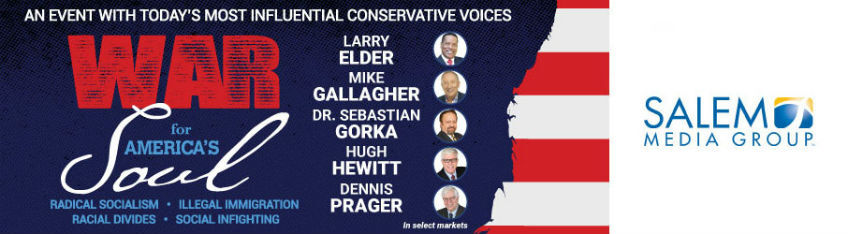
September 26 - Phoenix, AZ
Scottsdale Center for the Performing Arts


November 2 - Detroit, MI
Zion Christian Church in Troy


October 6 - Los Angeles, CA
Pasadena Convention Center


November 5 - San Antonio, TX
Norris Centers – The Grand Red Oak Ballroom


October 8 - Sacramento, CA
William Jessup University


November 7 - Tampa, FL
The Palladium at St. Pete College


October 22 - Minneapolis, MN
Crowne Plaza AiRE


November 15 - San Francisco, CA
Fremont Marriott Silicon Valley


October 23 - Philadelphia, PA
Green Valley Country Club


November 16 - Denver, CO
CU South Denver - Formerly Wildlife Experience


November 2 - Chicago, IL
Chicago Westin Northwest in Itasca


November 21 - Cleveland, OH
Holiday Inn Rockside in Independence


Salem Radio Network Speakers

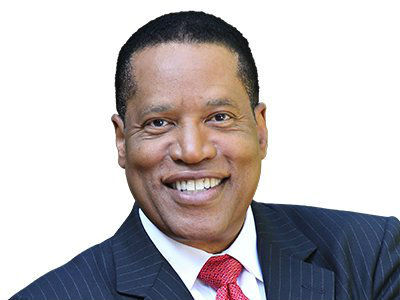
Larry Elder is an American lawyer, writer, and radio and television personality who calls himself the "Sage of South Central" a district of Los Angeles, Larry says his philosophy is to entertain, inform, provoke and to hopefully uplift. His calling card is "we have a country to save" and to him this means returning to the bedrock Constitutional principles of limited government and maximum personal responsibility. Elder's iconoclastic wit and intellectual agility makes him a particularly attractive voice in a nation that seems weary of traditional racial dialogue.” – Los Angeles Times.

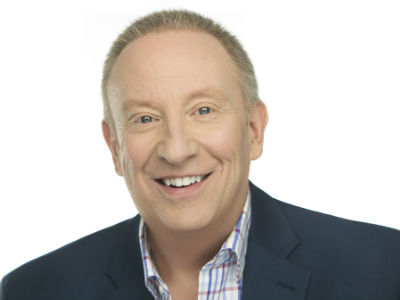
Mike Gallagher Mike Gallagher began his broadcasting career in 1978 in Dayton, Ohio. Today, he is one of the most listened-to talk radio show hosts in America, recently having been ranked in the Talkers Magazine “Heavy Hundred” list – the 100 most important talk radio hosts in America. Prior to being launched into national syndication in 1998, Mike hosted the morning show on WABC-AM in New York City. Today, Talkers Magazine reports that his show is heard by over 3.75 million weekly listeners. Besides his radio work, Mike is seen on Fox News Channel as an on-air contributor, frequently appearing on the cable news giant.

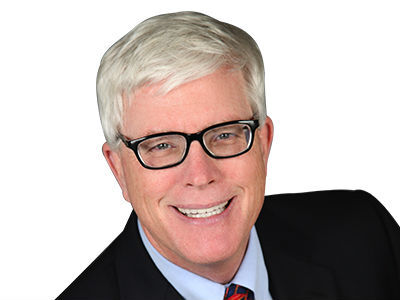
Hugh Hewitt is one of the nation’s leading bloggers and a genuine media revolutionary. He brings that expertise, his wit and what The New Yorker magazine calls his “amiable but relentless manner” to his nationally syndicated show each day.

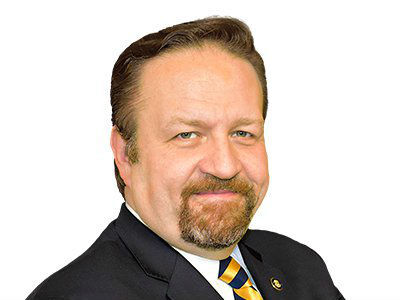
When Dr. Sebastian Gorka was growing up, he listened to talk radio under his pillow with a transistor radio, dreaming that one day he would be behind the microphone. Beginning New Year’s Day 2019, he got his wish. Gorka now hosts America First every weekday afternoon 3 to 6pm ET. Gorka’s unique story works well on the radio. He is national security analyst for the Fox News Channel and author of two books: "Why We Fight" and "Defeating Jihad." His latest book releasing this fall is “War For America’s Soul.” He is uniquely qualified to fight the culture war and stand up for what is great about America, his adopted home country.

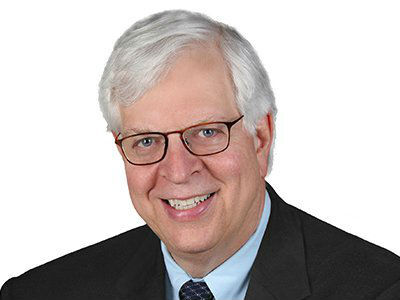
Broadcasting from his home station of KRLA in Los Angeles, the Dennis Prager Show is heard across the country. Everything in life – from politics to religion to relationships – is grist for Dennis’ mill. If it’s interesting, if it affects your life, then Dennis will be talking about it – with passion, humor, insight and wisdom.

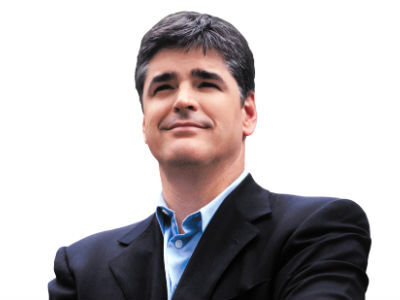
Sean Hannity is a conservative radio and television host, and one of the original primetime hosts on the Fox News Channel, where he has appeared since 1996. Sean Hannity began his radio career at a college station in California, before moving on to markets in the Southeast and New York. Today, he’s one of the most listened to on-air voices. Hannity’s radio program went into national syndication on September 10, 2001, and airs on more than 500 stations. Talkers Magazine estimates Hannity’s weekly radio audience at 13.5 million. In 1996 he was hired as one of the original hosts on Fox News Channel. As host of several popular Fox programs, Hannity has become the highest-paid news anchor on television.

Michelle Malkin is a mother, wife, blogger, conservative syndicated columnist, longtime cable TV news commentator, and best-selling author of six books. She started her newspaper journalism career at the Los Angeles Daily News in 1992, moved to the Seattle Times in 1995, and has been penning nationally syndicated newspaper columns for Creators Syndicate since 1999. She is founder of conservative Internet start-ups Hot Air and Twitchy.com. Malkin has received numerous awards for her investigative journalism, including the Council on Governmental Ethics Laws (COGEL) national award for outstanding service for the cause of governmental ethics and leadership (1998), the Reed Irvine Accuracy in Media Award for Investigative Journalism (2006), the Heritage Foundation and Franklin Center for Government & Public Integrity's Breitbart Award for Excellence in Journalism (2013), the Center for Immigration Studies' Eugene Katz Award for Excellence in the Coverage of Immigration Award (2016), and the Manhattan Film Festival's Film Heals Award (2018). Married for 26 years and the mother of two teenage children, she lives with her family in Colorado. Follow her at michellemalkin.com. (Photo reprinted with kind permission from Peter Duke Photography.)

Sponsored by:

Say what? The most baffling slang terms of each generation

Carbonatix Pre-Player Loader

Audio By Carbonatix

Say what? The most baffling slang terms of each generation.

The words and phrases people use in casual conversation are a dead giveaway for the generation they’re a part of. Whether it’s “gnarly” or “6-7,” the slang that sneaks into your everyday life reveals a little something about your true identity. 

Slang is a pillar of every culture, and it can evolve. It has always been a part of the human experience, and it’s present with all generations. It can even be the linguistic glue that holds contemporaries together. However, some slang terms are outright baffling. Spokeo broke down the most interesting slang terms of Gen Alphas, Gen Zers, millennials, Gen Xers, and baby boomers.

Gen Alpha: The brain-rot generation

Nonsensical phrases are the hallmark of Gen Alphas, kids born between 2010 and 2024. Looking closely, however, Gen Alpha slang has just as much context as any other generation.

  • “6-7”: 6-7 is the most recent slang phrase that has seemed to confuse and upset older generations. But as an NPR “It’s Been a Minute” podcast episode describes, 6-7 doesn’t really mean anything at all. It’s almost an inside joke between kids, a “if you know, you know.” It’s a trend to repeat these numbers and make a comparative gesture with the hands.
  • “Rizz”: Rizz is a bit more intuitive. It’s a shortened version of “charisma.” If someone has rizz, it means they have romantic appeal or charm, according to Merriam-Webster.
  • “Ohio”: Forbes reports that using Ohio as a slang term became popular in the summer of 2024, when people started posting video clips of weird things that happened in Ohio. Like “Florida man,” “Ohio” refers to a person or event that’s weird and bizarre.

Gen Z: The social media addicts

Gen Zers, those born between 1997 and 2009, grew up with social media right in their pockets. As a result, much of their cultural slang was developed, popularized, and spread through online content.

  • “Bet”: Bet has a long origin in Black American English. It likely stemmed from longer phrases like “you bet,” or “you can bet on it,” according to Merriam-Webster. It’s been universally adopted by all Gen Z cultures after gaining prominence on social media in the early 2020s.
  • “Cringe”: Cringe is used to describe a thing or person that is “cringy.” It denotes awkwardness and describes the physical reaction a person’s face or body might have to witnessing something that is socially uncomfortable.
  • “NPC”: As Today describes, NPC, or “nonplayable character,” is a video game term Gen Z uses to call people boring or uninteresting. An NPC is an entity in a video game that is not controlled by anyone, a background character who doesn’t add much to the story.

Millennials: The avocado toast generation

Millennials, born between 1981 and 1996, witnessed the widespread adoption of the internet firsthand. As a result, this generation is strongly bound by references and slang terms that have evolved from media and digital trends.

  • “Salty”: Picture the characteristics of salt. Coarse and maybe even a little bitter. Millennials have adopted the term salty to describe someone who exhibits these characteristics, often after someone gets upset.
  • “Clap Back”: Merriam-Webster defines clap back clearly: a witty comeback to criticism. This slang became popularized after Ja Rule’s 2003 song “Clap Back.”
  • “Woke”: Millennials became adults in an age of social justice. Woke originated in Black culture and describes a person who is informed and educated about social equality, according to ABC News. However, it’s also been used pejoratively to describe people seen as overly focused on these social issues.

Gen X: The latchkey kids

Gen X, born between 1965 and 1980, raised themselves independently, often going home from school with their own set of keys, earning the nickname latchkey kids. This independence gave rise to a flurry of unique slang terms that the entire age group came to understand.

  • “Take a chill pill”: This slang is a reference to anti-anxiety medications that were common during the benzodiazepine era of the 1970s and 1980s. This phrase was used to tell people to calm down.
  • “Gnarly”: The use of gnarly began with surfers in the 1970s to describe challenging waves. It was later picked up by popular culture in the early 80s and used to describe anything dangerous, disgusting, and exciting, according to Etymonline.
  • “Yuppie”: A word that’s used to describe the young, urban, professional people of the 1980s who were often seen as affluent and successful. Investopedia mentions that it can be used derogatorily.

Baby boomers: The far-out folks

Boomers, born between 1945 and 1964, were the groovy generation, born during the hippie era. Their slang is often used to redescribe ordinary events with flair. Today, these terms seem like they’re straight out of Hollywood, but for boomers, they’re a part of everyday vernacular.

  • “Right on”: Right on was used regularly by baby boomers as a way of saying they agreed with something.
  • “Dig it”: Dig it was used when a baby boomer liked or approved of something. For example, if they thought a song sounded cool, they might say, “I dig that song.”
  • “Groovy”: Groovy is one of the most iconic slang words of this generation. It’s a direct product of the hippies and the psychedelic music scene at the time. As the Bozeman Daily Chronicle describes, “groovy” was adapted from musicians who used to say “in the groove.” For baby boomers, it means excellent or fine.

Generations change, but slang is here to stay

Slang words are used by culture to simultaneously bring people together and alienate them. Those who know and use the words are accepted by peers. Those who don’t are left out, forced to mingle amongst their own generation.

Society will continue to birth new generations, but one thing is certain. Slang is going nowhere. Try to keep up.

This story was produced by Spokeo and reviewed and distributed by Stacker.

 

Salem News Channel Today

Sponsored Links

On Air & Up Next

See the Full Program Guide