The ultimate guide to caviar

Carbonatix Pre-Player Loader

Audio By Carbonatix

The ultimate guide to caviar

Caviar is raw sturgeon roe, prized for its unique, briny, buttery taste and smooth texture. Labor-intensive harvesting and sturgeon scarcity make it a luxury, high-cost item. It's a nutritious food packed with omega-3s and vitamins. To preserve its delicate flavor, serve it directly from the can on crushed ice using a nonmetallic utensil. Enjoy with blinis, crème fraîche, and freshly sliced veggies.

Are you interested in experiencing the bliss of creamy, briny, luxurious caviar but unsure what to look for? Caviar offers an unparalleled culinary experience, providing rich flavors and a delightful texture. To truly enjoy the best caviar experience, it's essential to know the available options and how to serve them.

This guide from Petrusco Caviar unpacks everything you need to know about caviar, from the different types available to their health benefits and serving recommendations.

What Is Caviar?

Caviar refers specifically to raw sturgeon eggs or roe. This family of fish is a large and ancient species native to the Caspian and Black Sea regions, having inhabited them for millions of years.

This particular type of roe is celebrated for its unique textures and flavors, which are extracted using a hint of salt and a maturing process. As they approach maturity, which can take anywhere from a couple of weeks to a couple of months, the salt binds with the caviar, influencing its flavor spectrum and legendary texture.

This careful process is pivotal to making the sturgeon roe such a delicacy and the only one worthy of the caviar title. However, this distinction also exists because while all female fish lay eggs, many fish eggs aren't suitable for human consumption. Additionally, other popular types of fish roe — such as trout, flying fish, and salmon — are commonly used in sushi, on toast, and as cheaper substitutes for caviar. However, they aren't caviar and lack the unparalleled texture and flavors caviar offers.

What Does Caviar Taste Like?

Caviar has a salty, briny flavor, like the ocean in a bite that bursts in your mouth. The inside offers a velvety, buttery texture that melts in your mouth, delivering a rich and decadent feel. With that comes surprisingly meaty and umami flavors, uncommon to seafood.
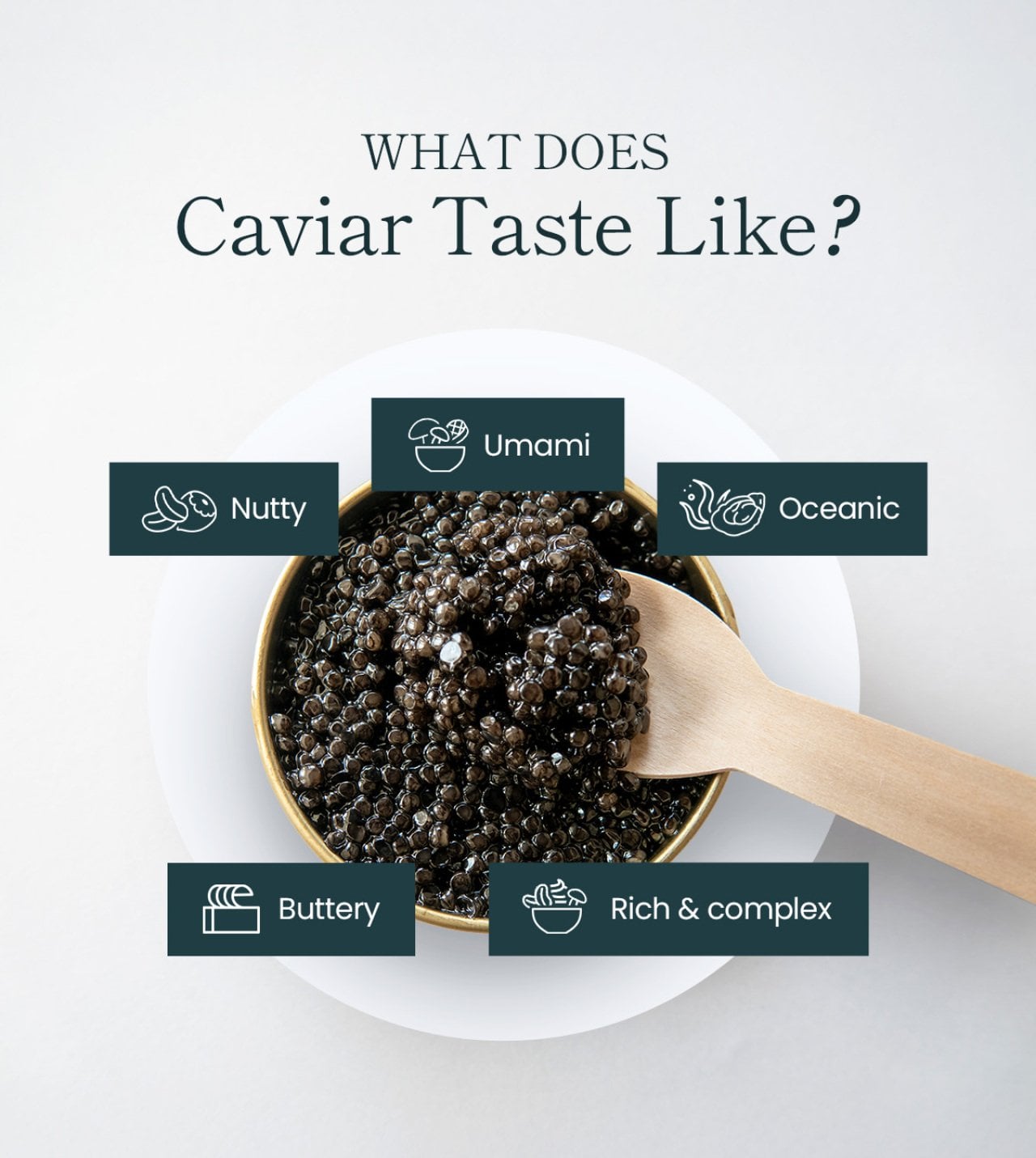
An infographic of caviar labeled with flavors it tastes like.
Petrusco Caviar


However, caviar's flavors exist on a spectrum, varying by the type of sturgeon from which it was harvested. Its complex flavor profile can offer subtle notes of earthiness, sweetness, or even fruitiness, depending on the maturation process and the quality of the eggs. To truly appreciate the nuances of caviar and its subtle differences, you need to try its varieties. Here are the five most common flavors associated with caviar:

  • Nutty: Kaluga and Ossetra caviar, among others, are well-known for their nutty undertones, which add complexity to the flavor profile, ranging from mild to pronounced.
  • Umami: One of the most appealing taste sensations of caviar is its savory, umami flavor, which stems from its rich glutamate content.
  • Oceanic: People often compare the taste of caviar to that of fresh seaweed or oysters, highlighting the subtle flavor of the sea.
  • Buttery: A common texture that enhances the flavor of caviar, particularly high-quality caviar, is characterized by a creamy, smooth, or buttery flavor, most notable in Kaluga and Beluga caviar.
  • Rich and complex: Caviar offers a nuanced flavor profile, with variations like Baika caviar delivering a nutty, mildly earthy flavor with subtle notes of sweetness and a finish that lingers in the mouth. On the other hand, Sevruga caviar presents a slight minerality and a clean finish. Alverta is creamy and subtle, and Ossetra embraces you with a rich flavor and aromatic scent.

Health Benefits of Caviar

While caviar has a reputation for being a luxurious delicacy, it offers more than just decadent flavors — it also provides various health benefits for your mind and body. A single serving is packed with over double the vitamin B12 you need in a day, which is essential for your nervous system and your body's red blood cell and DNA production.

However, the secret sauce responsible for most of caviar's potential health benefits is omega-3 fatty acids, specifically docosahexaenoic acid (DHA) and eicosapentaenoic acid (EPA). Here are the main potential health benefits of caviar:

Supports Heart Health

Caviar is rich in nutrients, with one in particular that's known to promote long-term heart health — omega-3 fatty acids. These fats are increasingly being used to manage, prevent, and improve heart disease risk factors by helping reduce triglycerides, lower blood pressure, support healthy cholesterol levels, and improve circulation.

Boosts Brain Function
The rich omega-3s in caviar are linked to improved memory, cognitive performance, and mental clarity. Omega-3 fatty acids may also help reduce inflammation and oxidative stress in the brain, which contributes to diseases like Alzheimer's.

Enhances Skin
Caviar is rich in vitamins A and E that help boost skin regeneration and reduce the appearance of fine lines and wrinkles. It can also improve skin elasticity and protect your skin against environmental damage that could cause premature aging. Regularly consuming foods high in vitamins A and E can contribute to a smooth, glowing complexion, and the omega-3s prevent the breakdown of collagen fiber.

Strengthens Immunity
The combination of vitamins D and B12, iron, and selenium can help boost defense against inflammation and illness. These nutrients are pivotal to supporting cellular repair, regulating immune response, and maintaining a resilient immune system, especially during seasonal changes or periods of stress.

The omega-3s in caviar may also support your immune system. They help lower inflammation, repair damaged white blood cells, and rebuild your skin's, lungs', and intestines' barrier functions, which aid in the prevention of harmful bacteria and disease.

Supports Mental Well-Being
Among the many nutrients found in caviar, several have brain-boosting properties that help enhance cognitive health and regulate mood. These include vitamin D, B12, and omega-3, which may help support mental clarity, reduce anxiety, regulate stress response, and promote mental focus and balance. Studies show a link between depression and lower levels of omega-3s, suggesting that increasing omega-3 intake could improve symptoms.

Why Is Caviar Expensive?

Caviar is expensive because of its scarcity and labor-intensive production. The delicate eggs provide an indulgent taste that's typically reserved for special occasions. Caviar has long been associated with luxury, lavishness, and high price tags. The delicate flavor and creamy texture provide an eating experience that tastes and feels luxurious, so many are willing to pay top dollar for caviar. Here are some of the factors contributing to the high cost:

  • Limited availability of the sturgeon fish: It takes around 15 years for male lake sturgeon to reach reproductive maturity and 20-25 years for females to reach sexual maturity. Females don't lay eggs annually and, despite having existed for millennia, are now an endangered species because of pollution, overfishing, and habitat loss. This unpredictable and limited availability has contributed to the high prices of caviar.
  • Unique taste and texture of caviar: Caviar is considered a multisensory experience by critics, as it bursts with nutty, sweet, umami, and briny flavors. It also delivers an indulgent, velvety, buttery texture. These complex characteristics make each type of caviar unique and exquisite — a true mark of luxury.
  • Labor-intensive harvesting process: Raising sturgeon and harvesting and processing their eggs is an incredibly delicate and labor-intensive endeavor. They're raised in pristine conditions until their eggs are ripe and ready to be harvested, which is a brief window that workers must identify before extracting the eggs by hand. Cleaning, processing, grading, and packing them also demands meticulousness to minimize loss and maximize quality, making caviar extremely valuable and scarce.
  • Strict quality control standards: Maintaining the quality of caviar requires strict processes, which begin with gently rinsing the harvested eggs multiple times with cold water to remove impurities. From there, the caviar is sorted by size and color and then packaged following the malossol method, which highlights the roe's subtle brininess. Caviar is also sensitive to temperature fluctuations, making proper refrigeration essential.

Different Types of Caviar
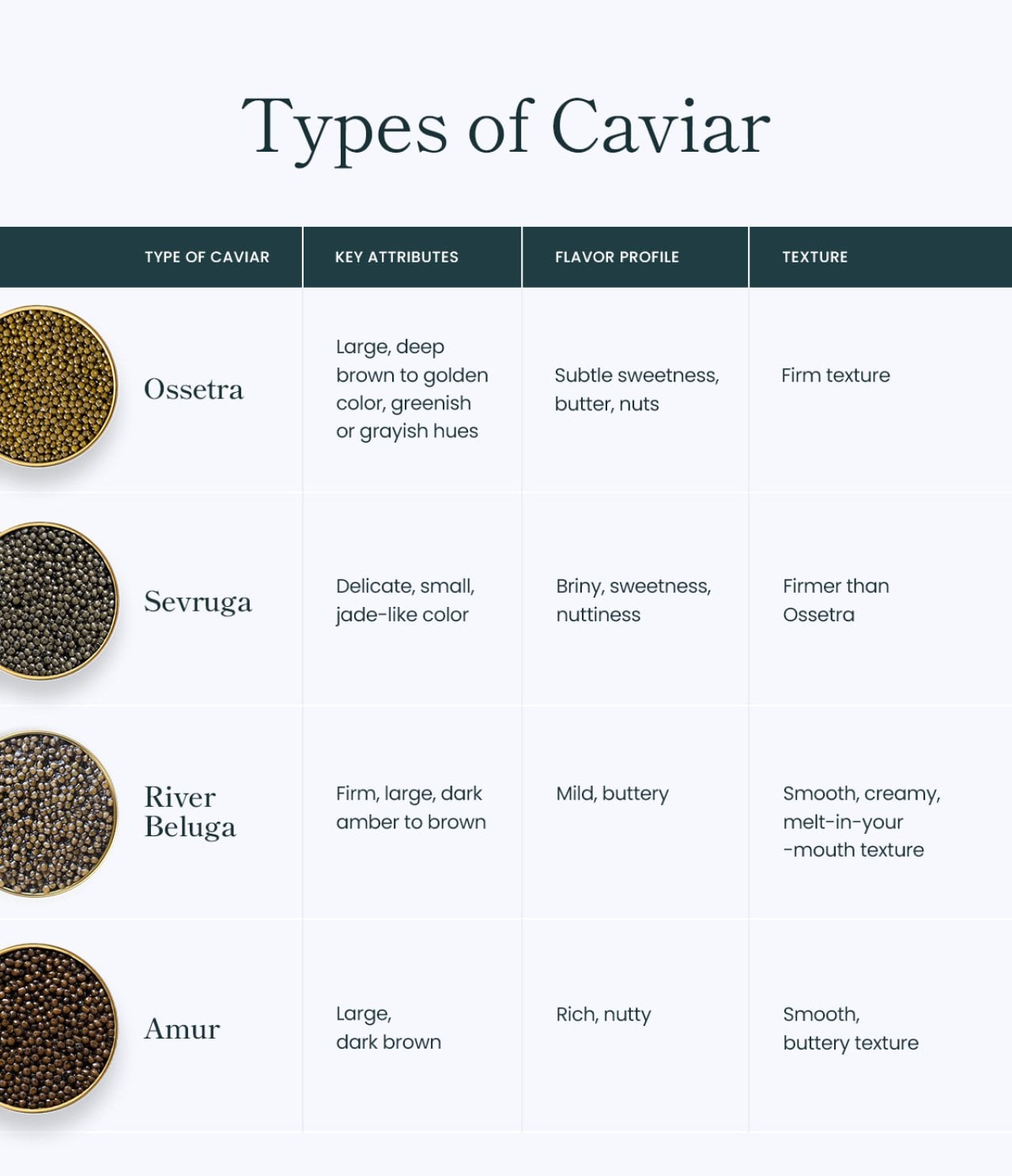
Table listing the different types of caviar.
Petrusco Caviar


Caviar is renowned for its unique flavors and texture, prized by connoisseurs worldwide. This acclaim also exists because it comes in several grades and varieties, each displaying distinct characteristics and culinary applications. Below is a breakdown of the different types of caviar and their varying textures, colors, and flavor profiles.

Ossetra
Ossetra sturgeon, native to the Caspian Sea, spawns one of the top-ranked caviars, recognized by its large, deep brown to golden color, often adorned by greenish or grayish hues under certain lighting. This type of caviar offers a complex flavor profile, characterized by subtle sweetness and notes of butter and nuts. It has a firm texture that melts on your tongue.

Sevruga
Sevruga caviar comes from the Sevruga sturgeon of the Black and Caspian Seas. Their eggs are delicate and small, often displaying a jade-like color. They are known for their distinctly briny flavor and notes of sweetness and nuttiness. Their texture is typically a bit firmer in comparison to Ossetra caviar, making that bite all the more satisfying.

River Beluga
River Beluga or Kaluga caviar comes from the Kaluga sturgeon of the Amur River basin that flows between China and Russia. Its eggs are firm and large, featuring colors ranging from dark amber to brown. They offer a smooth, creamy, melt-in-your-mouth texture that delivers a mild, buttery flavor.

Amur
The Amur River basin is also home to the Amur sturgeon, which features large, dark brown caviar that bursts with rich, nutty flavors. Its flavor profile is paired with a smooth, buttery texture that melts on your tongue.

How to Store and Serve Caviar

Caviar is a luxury food item that's very perishable, and storing and serving it correctly can help preserve its delicate flavor and texture. Store caviar in the coldest part of your refrigerator. You should never freeze caviar, as this can destroy its delicate, buttery texture. Once you've opened the jar, cover the container with plastic wrap to minimize its exposure to air and consume within a few days.

Improper storage and serving of caviar can compromise its luxurious flavor, resulting in a fishy or metallic taste. The spoon you use to serve it is just as crucial as correct storage. Use nonreactive materials, such as bone or mother-of-pearl, to protect the purity of the flavor and bring a traditional caviar experience.

The thin casing of caviar can easily absorb flavors, and the salt in the roe causes a subtle chemical reaction with metals, so it's crucial to use the proper utensils to truly enjoy the pure taste and texture.

What to Eat With Caviar

The golden rule when eating caviar is to keep it cold but not frozen. The classic way to do this is by serving it in its original tin and nestling it in a bowl of crushed ice. When serving caviar at an event, aim to serve 1 to 3 ounces per guest, allowing them to appreciate the nuances of each variety fully.

You could eat it the purist's way by doing a caviar bump on your hand and enjoying the pure flavor. Alternatively, you can enjoy it with these popular accompaniments:

  • Blinis: These traditional Russian pancakes offer a neutral, slightly tangy base that pairs well with the buttery, briny mouthfeel of caviar.
  • Cheese: Mild, soft cheeses like goat cheese or unsalted mascarpone perfectly complement and enhance the richness of caviar.
  • Crème fraîche: For the ultimate creamy and tangy bite, enjoy caviar with crème fraîche and blinis, endive leaves, or toast points.
  • Potato chips: If you enjoy a more casual feel or are looking for a crunchy texture, plain salted potato chips provide a delicious contrast to the buttery, briny caviar.
  • Chocolate: For an adventurous pairing, try dark chocolate with 70% cocoa or more, which offers a beautiful balance of rich, bitter, and briny flavors.
  • Fruits and veggies: For a healthy touch to your caviar pairings, include some crisp apple slices, cucumber rounds, avocado, or grilled avocado.

Where to Buy Caviar

For the ultimate caviar experience, it's essential to select the right place to purchase from. Online stores make purchasing more convenient, and free shipping options can make it more affordable. Look for popular types of caviar, such as Royal Ossetra and River Beluga Hybrid Caviar, to verify it's authentic and not a cheaper alternative. If purchasing online, look for cold chain handling to ensure your caviar stays in perfect condition.

Companies with ethical harvesting practices indicate sustainable caviar, so you can enjoy caviar that's farmed with kindness and for maximum flavor. Look for traditional tins as an indicator of premium quality and examine images for glistening eggs. The process of producing high-quality caviar is laborious and expensive, so look for pricing that reflects a premium product and consider bundle buys for the best deal. Another good indicator of a reputable company is multiple channels for customer support.

Enjoy Your Caviar Experience

Caviar is more than a meal — it's an experience. It's buttery, creamy, and bursting with the symphony of the ocean. To enjoy caviar at its best, ensure that you serve it cold but not frozen and avoid metal utensils. Its briny, umami flavor makes it the perfect pairing to an array of accompaniments, including blinis, potato chips, and even chocolate. Whether you're a seasoned caviar connoisseur or a newbie, if you follow the tips in this guide, you're sure to enjoy the rich, luxurious taste of caviar.

This story was produced by Petrusco Caviar and reviewed and distributed by Stacker.

 

Salem News Channel Today

Sponsored Links


September 26 - Phoenix, AZ
Scottsdale Center for the Performing Arts


November 2 - Detroit, MI
Zion Christian Church in Troy


October 6 - Los Angeles, CA
Pasadena Convention Center


November 5 - San Antonio, TX
Norris Centers – The Grand Red Oak Ballroom


October 8 - Sacramento, CA
William Jessup University


November 7 - Tampa, FL
The Palladium at St. Pete College


October 22 - Minneapolis, MN
Crowne Plaza AiRE


November 15 - San Francisco, CA
Fremont Marriott Silicon Valley


October 23 - Philadelphia, PA
Green Valley Country Club


November 16 - Denver, CO
CU South Denver - Formerly Wildlife Experience


November 2 - Chicago, IL
Chicago Westin Northwest in Itasca


November 21 - Cleveland, OH
Holiday Inn Rockside in Independence


Salem Radio Network Speakers

Larry Elder is an American lawyer, writer, and radio and television personality who calls himself the "Sage of South Central" a district of Los Angeles, Larry says his philosophy is to entertain, inform, provoke and to hopefully uplift. His calling card is "we have a country to save" and to him this means returning to the bedrock Constitutional principles of limited government and maximum personal responsibility. Elder's iconoclastic wit and intellectual agility makes him a particularly attractive voice in a nation that seems weary of traditional racial dialogue.” – Los Angeles Times.

Mike Gallagher Mike Gallagher began his broadcasting career in 1978 in Dayton, Ohio. Today, he is one of the most listened-to talk radio show hosts in America, recently having been ranked in the Talkers Magazine “Heavy Hundred” list – the 100 most important talk radio hosts in America. Prior to being launched into national syndication in 1998, Mike hosted the morning show on WABC-AM in New York City. Today, Talkers Magazine reports that his show is heard by over 3.75 million weekly listeners. Besides his radio work, Mike is seen on Fox News Channel as an on-air contributor, frequently appearing on the cable news giant.

Hugh Hewitt is one of the nation’s leading bloggers and a genuine media revolutionary. He brings that expertise, his wit and what The New Yorker magazine calls his “amiable but relentless manner” to his nationally syndicated show each day.

When Dr. Sebastian Gorka was growing up, he listened to talk radio under his pillow with a transistor radio, dreaming that one day he would be behind the microphone. Beginning New Year’s Day 2019, he got his wish. Gorka now hosts America First every weekday afternoon 3 to 6pm ET. Gorka’s unique story works well on the radio. He is national security analyst for the Fox News Channel and author of two books: "Why We Fight" and "Defeating Jihad." His latest book releasing this fall is “War For America’s Soul.” He is uniquely qualified to fight the culture war and stand up for what is great about America, his adopted home country.

Broadcasting from his home station of KRLA in Los Angeles, the Dennis Prager Show is heard across the country. Everything in life – from politics to religion to relationships – is grist for Dennis’ mill. If it’s interesting, if it affects your life, then Dennis will be talking about it – with passion, humor, insight and wisdom.

Sean Hannity is a conservative radio and television host, and one of the original primetime hosts on the Fox News Channel, where he has appeared since 1996. Sean Hannity began his radio career at a college station in California, before moving on to markets in the Southeast and New York. Today, he’s one of the most listened to on-air voices. Hannity’s radio program went into national syndication on September 10, 2001, and airs on more than 500 stations. Talkers Magazine estimates Hannity’s weekly radio audience at 13.5 million. In 1996 he was hired as one of the original hosts on Fox News Channel. As host of several popular Fox programs, Hannity has become the highest-paid news anchor on television.

Michelle Malkin is a mother, wife, blogger, conservative syndicated columnist, longtime cable TV news commentator, and best-selling author of six books. She started her newspaper journalism career at the Los Angeles Daily News in 1992, moved to the Seattle Times in 1995, and has been penning nationally syndicated newspaper columns for Creators Syndicate since 1999. She is founder of conservative Internet start-ups Hot Air and Twitchy.com. Malkin has received numerous awards for her investigative journalism, including the Council on Governmental Ethics Laws (COGEL) national award for outstanding service for the cause of governmental ethics and leadership (1998), the Reed Irvine Accuracy in Media Award for Investigative Journalism (2006), the Heritage Foundation and Franklin Center for Government & Public Integrity's Breitbart Award for Excellence in Journalism (2013), the Center for Immigration Studies' Eugene Katz Award for Excellence in the Coverage of Immigration Award (2016), and the Manhattan Film Festival's Film Heals Award (2018). Married for 26 years and the mother of two teenage children, she lives with her family in Colorado. Follow her at michellemalkin.com. (Photo reprinted with kind permission from Peter Duke Photography.)

Sponsored by:

The ultimate guide to caviar

Carbonatix Pre-Player Loader

Audio By Carbonatix

The ultimate guide to caviar

Caviar is raw sturgeon roe, prized for its unique, briny, buttery taste and smooth texture. Labor-intensive harvesting and sturgeon scarcity make it a luxury, high-cost item. It's a nutritious food packed with omega-3s and vitamins. To preserve its delicate flavor, serve it directly from the can on crushed ice using a nonmetallic utensil. Enjoy with blinis, crème fraîche, and freshly sliced veggies.

Are you interested in experiencing the bliss of creamy, briny, luxurious caviar but unsure what to look for? Caviar offers an unparalleled culinary experience, providing rich flavors and a delightful texture. To truly enjoy the best caviar experience, it's essential to know the available options and how to serve them.

This guide from Petrusco Caviar unpacks everything you need to know about caviar, from the different types available to their health benefits and serving recommendations.

What Is Caviar?

Caviar refers specifically to raw sturgeon eggs or roe. This family of fish is a large and ancient species native to the Caspian and Black Sea regions, having inhabited them for millions of years.

This particular type of roe is celebrated for its unique textures and flavors, which are extracted using a hint of salt and a maturing process. As they approach maturity, which can take anywhere from a couple of weeks to a couple of months, the salt binds with the caviar, influencing its flavor spectrum and legendary texture.

This careful process is pivotal to making the sturgeon roe such a delicacy and the only one worthy of the caviar title. However, this distinction also exists because while all female fish lay eggs, many fish eggs aren't suitable for human consumption. Additionally, other popular types of fish roe — such as trout, flying fish, and salmon — are commonly used in sushi, on toast, and as cheaper substitutes for caviar. However, they aren't caviar and lack the unparalleled texture and flavors caviar offers.

What Does Caviar Taste Like?

Caviar has a salty, briny flavor, like the ocean in a bite that bursts in your mouth. The inside offers a velvety, buttery texture that melts in your mouth, delivering a rich and decadent feel. With that comes surprisingly meaty and umami flavors, uncommon to seafood.

An infographic of caviar labeled with flavors it tastes like.
Petrusco Caviar


However, caviar's flavors exist on a spectrum, varying by the type of sturgeon from which it was harvested. Its complex flavor profile can offer subtle notes of earthiness, sweetness, or even fruitiness, depending on the maturation process and the quality of the eggs. To truly appreciate the nuances of caviar and its subtle differences, you need to try its varieties. Here are the five most common flavors associated with caviar:

  • Nutty: Kaluga and Ossetra caviar, among others, are well-known for their nutty undertones, which add complexity to the flavor profile, ranging from mild to pronounced.
  • Umami: One of the most appealing taste sensations of caviar is its savory, umami flavor, which stems from its rich glutamate content.
  • Oceanic: People often compare the taste of caviar to that of fresh seaweed or oysters, highlighting the subtle flavor of the sea.
  • Buttery: A common texture that enhances the flavor of caviar, particularly high-quality caviar, is characterized by a creamy, smooth, or buttery flavor, most notable in Kaluga and Beluga caviar.
  • Rich and complex: Caviar offers a nuanced flavor profile, with variations like Baika caviar delivering a nutty, mildly earthy flavor with subtle notes of sweetness and a finish that lingers in the mouth. On the other hand, Sevruga caviar presents a slight minerality and a clean finish. Alverta is creamy and subtle, and Ossetra embraces you with a rich flavor and aromatic scent.

Health Benefits of Caviar

While caviar has a reputation for being a luxurious delicacy, it offers more than just decadent flavors — it also provides various health benefits for your mind and body. A single serving is packed with over double the vitamin B12 you need in a day, which is essential for your nervous system and your body's red blood cell and DNA production.

However, the secret sauce responsible for most of caviar's potential health benefits is omega-3 fatty acids, specifically docosahexaenoic acid (DHA) and eicosapentaenoic acid (EPA). Here are the main potential health benefits of caviar:

Supports Heart Health

Caviar is rich in nutrients, with one in particular that's known to promote long-term heart health — omega-3 fatty acids. These fats are increasingly being used to manage, prevent, and improve heart disease risk factors by helping reduce triglycerides, lower blood pressure, support healthy cholesterol levels, and improve circulation.

Boosts Brain Function
The rich omega-3s in caviar are linked to improved memory, cognitive performance, and mental clarity. Omega-3 fatty acids may also help reduce inflammation and oxidative stress in the brain, which contributes to diseases like Alzheimer's.

Enhances Skin
Caviar is rich in vitamins A and E that help boost skin regeneration and reduce the appearance of fine lines and wrinkles. It can also improve skin elasticity and protect your skin against environmental damage that could cause premature aging. Regularly consuming foods high in vitamins A and E can contribute to a smooth, glowing complexion, and the omega-3s prevent the breakdown of collagen fiber.

Strengthens Immunity
The combination of vitamins D and B12, iron, and selenium can help boost defense against inflammation and illness. These nutrients are pivotal to supporting cellular repair, regulating immune response, and maintaining a resilient immune system, especially during seasonal changes or periods of stress.

The omega-3s in caviar may also support your immune system. They help lower inflammation, repair damaged white blood cells, and rebuild your skin's, lungs', and intestines' barrier functions, which aid in the prevention of harmful bacteria and disease.

Supports Mental Well-Being
Among the many nutrients found in caviar, several have brain-boosting properties that help enhance cognitive health and regulate mood. These include vitamin D, B12, and omega-3, which may help support mental clarity, reduce anxiety, regulate stress response, and promote mental focus and balance. Studies show a link between depression and lower levels of omega-3s, suggesting that increasing omega-3 intake could improve symptoms.

Why Is Caviar Expensive?

Caviar is expensive because of its scarcity and labor-intensive production. The delicate eggs provide an indulgent taste that's typically reserved for special occasions. Caviar has long been associated with luxury, lavishness, and high price tags. The delicate flavor and creamy texture provide an eating experience that tastes and feels luxurious, so many are willing to pay top dollar for caviar. Here are some of the factors contributing to the high cost:

  • Limited availability of the sturgeon fish: It takes around 15 years for male lake sturgeon to reach reproductive maturity and 20-25 years for females to reach sexual maturity. Females don't lay eggs annually and, despite having existed for millennia, are now an endangered species because of pollution, overfishing, and habitat loss. This unpredictable and limited availability has contributed to the high prices of caviar.
  • Unique taste and texture of caviar: Caviar is considered a multisensory experience by critics, as it bursts with nutty, sweet, umami, and briny flavors. It also delivers an indulgent, velvety, buttery texture. These complex characteristics make each type of caviar unique and exquisite — a true mark of luxury.
  • Labor-intensive harvesting process: Raising sturgeon and harvesting and processing their eggs is an incredibly delicate and labor-intensive endeavor. They're raised in pristine conditions until their eggs are ripe and ready to be harvested, which is a brief window that workers must identify before extracting the eggs by hand. Cleaning, processing, grading, and packing them also demands meticulousness to minimize loss and maximize quality, making caviar extremely valuable and scarce.
  • Strict quality control standards: Maintaining the quality of caviar requires strict processes, which begin with gently rinsing the harvested eggs multiple times with cold water to remove impurities. From there, the caviar is sorted by size and color and then packaged following the malossol method, which highlights the roe's subtle brininess. Caviar is also sensitive to temperature fluctuations, making proper refrigeration essential.

Different Types of Caviar

Table listing the different types of caviar.
Petrusco Caviar


Caviar is renowned for its unique flavors and texture, prized by connoisseurs worldwide. This acclaim also exists because it comes in several grades and varieties, each displaying distinct characteristics and culinary applications. Below is a breakdown of the different types of caviar and their varying textures, colors, and flavor profiles.

Ossetra
Ossetra sturgeon, native to the Caspian Sea, spawns one of the top-ranked caviars, recognized by its large, deep brown to golden color, often adorned by greenish or grayish hues under certain lighting. This type of caviar offers a complex flavor profile, characterized by subtle sweetness and notes of butter and nuts. It has a firm texture that melts on your tongue.

Sevruga
Sevruga caviar comes from the Sevruga sturgeon of the Black and Caspian Seas. Their eggs are delicate and small, often displaying a jade-like color. They are known for their distinctly briny flavor and notes of sweetness and nuttiness. Their texture is typically a bit firmer in comparison to Ossetra caviar, making that bite all the more satisfying.

River Beluga
River Beluga or Kaluga caviar comes from the Kaluga sturgeon of the Amur River basin that flows between China and Russia. Its eggs are firm and large, featuring colors ranging from dark amber to brown. They offer a smooth, creamy, melt-in-your-mouth texture that delivers a mild, buttery flavor.

Amur
The Amur River basin is also home to the Amur sturgeon, which features large, dark brown caviar that bursts with rich, nutty flavors. Its flavor profile is paired with a smooth, buttery texture that melts on your tongue.

How to Store and Serve Caviar

Caviar is a luxury food item that's very perishable, and storing and serving it correctly can help preserve its delicate flavor and texture. Store caviar in the coldest part of your refrigerator. You should never freeze caviar, as this can destroy its delicate, buttery texture. Once you've opened the jar, cover the container with plastic wrap to minimize its exposure to air and consume within a few days.

Improper storage and serving of caviar can compromise its luxurious flavor, resulting in a fishy or metallic taste. The spoon you use to serve it is just as crucial as correct storage. Use nonreactive materials, such as bone or mother-of-pearl, to protect the purity of the flavor and bring a traditional caviar experience.

The thin casing of caviar can easily absorb flavors, and the salt in the roe causes a subtle chemical reaction with metals, so it's crucial to use the proper utensils to truly enjoy the pure taste and texture.

What to Eat With Caviar

The golden rule when eating caviar is to keep it cold but not frozen. The classic way to do this is by serving it in its original tin and nestling it in a bowl of crushed ice. When serving caviar at an event, aim to serve 1 to 3 ounces per guest, allowing them to appreciate the nuances of each variety fully.

You could eat it the purist's way by doing a caviar bump on your hand and enjoying the pure flavor. Alternatively, you can enjoy it with these popular accompaniments:

  • Blinis: These traditional Russian pancakes offer a neutral, slightly tangy base that pairs well with the buttery, briny mouthfeel of caviar.
  • Cheese: Mild, soft cheeses like goat cheese or unsalted mascarpone perfectly complement and enhance the richness of caviar.
  • Crème fraîche: For the ultimate creamy and tangy bite, enjoy caviar with crème fraîche and blinis, endive leaves, or toast points.
  • Potato chips: If you enjoy a more casual feel or are looking for a crunchy texture, plain salted potato chips provide a delicious contrast to the buttery, briny caviar.
  • Chocolate: For an adventurous pairing, try dark chocolate with 70% cocoa or more, which offers a beautiful balance of rich, bitter, and briny flavors.
  • Fruits and veggies: For a healthy touch to your caviar pairings, include some crisp apple slices, cucumber rounds, avocado, or grilled avocado.

Where to Buy Caviar

For the ultimate caviar experience, it's essential to select the right place to purchase from. Online stores make purchasing more convenient, and free shipping options can make it more affordable. Look for popular types of caviar, such as Royal Ossetra and River Beluga Hybrid Caviar, to verify it's authentic and not a cheaper alternative. If purchasing online, look for cold chain handling to ensure your caviar stays in perfect condition.

Companies with ethical harvesting practices indicate sustainable caviar, so you can enjoy caviar that's farmed with kindness and for maximum flavor. Look for traditional tins as an indicator of premium quality and examine images for glistening eggs. The process of producing high-quality caviar is laborious and expensive, so look for pricing that reflects a premium product and consider bundle buys for the best deal. Another good indicator of a reputable company is multiple channels for customer support.

Enjoy Your Caviar Experience

Caviar is more than a meal — it's an experience. It's buttery, creamy, and bursting with the symphony of the ocean. To enjoy caviar at its best, ensure that you serve it cold but not frozen and avoid metal utensils. Its briny, umami flavor makes it the perfect pairing to an array of accompaniments, including blinis, potato chips, and even chocolate. Whether you're a seasoned caviar connoisseur or a newbie, if you follow the tips in this guide, you're sure to enjoy the rich, luxurious taste of caviar.

This story was produced by Petrusco Caviar and reviewed and distributed by Stacker.

 

Salem News Channel Today

Sponsored Links

On Air & Up Next

See the Full Program Guide























