How to tell if your dog really loves you

Carbonatix Pre-Player Loader

Audio By Carbonatix

How to tell if your dog really loves you

Your dog loves you, and not just because you’re the one who fills the food bowl every day (though that certainly doesn’t hurt). Dogs are social creatures and hard-wired to connect with humans. Over thousands of years, they’ve learned to read our emotions, respond to our cues, and form real emotional bonds. So that attachment you feel to your pup? It’s genuine—and reciprocated.

You probably already recognize the obvious signs of love: the tail wags when you walk in, the happy spins, the face licks. But there are also plenty of science-backed ways your pup shows they care. Below, Ollie breaks down the signs your dog loves you, what’s happening in their brain and body, and how everyday care—like feeding and play—helps that bond grow even stronger.

Core signs of affection

If you’ve ever wondered, “How do I know if my dog loves me?”—these behaviors are some of the clearest, science-backed signs your dog is bonded to you.

The gaze
In humans, babies bond with their parents through sustained eye contact. With dogs, it’s surprisingly similar, which gives new meaning to the idea that dogs are part of the family. If your dog holds your gaze for several seconds in a relaxed way, it’s a strong sign of trust and attachment. And that’s because of oxytocin.

Oxytocin is well-studied in humans as a hormone linked to emotional closeness. And its presence is also a key indicator of bonding in your relationship with your dog. A study from Azabu University in Japan found that when dogs and their owners engage in sustained eye contact, oxytocin levels increase in both species. In science, this is known as a positive feedback loop. And in real life, it means that every time you and your dog share a moment of eye contact, you’re building up that mutual, trusting bond.

The eyebrow lift
Puppy eyes are a real thing, and they’re more than just cute. Like humans, dogs use facial expressions to communicate and convey how they feel. One of the most telling is the eyebrow raise, which gives dogs that adorable, wide-eyed, expressive look.

Another study from Japan’s Azabu University found that dogs raised their left eyebrow significantly more when looking at their owners than when looking at strangers. Interestingly, no extra eyebrow movement was detected when dogs were shown toys. You can take that to mean what you’re hoping it means: a sign that your dog loves you even more than their favorite stuffed animal.

Physical touch
Dogs can’t hug you or hold your hand, but they have their own ways of showing affection. When your dog leans against you, rests their head on you, or chooses to lie next to you, it’s a sign of deep trust. Leaning puts dogs in a more vulnerable position physically, which means they only do it when they feel safe and secure. Sometimes, leaning can indicate your dog wants something (like food, especially around mealtime).

Contagious yawning
Yawning is famously contagious among humans, but here’s a fun fact: It can also happen with your pup, too. Research from the University of Tokyo found that dogs were more likely to yawn after seeing their owners yawn, versus after watching a stranger yawn. This suggests that dogs are emotionally attuned to the people they’re bonded with, and may even experience a form of empathy. So, catching your yawn doesn’t mean your dog is tired. It’s a subtle sign your dog loves you and, on some level, shares your emotional state.

Deep dive: bonding vs. imprinting

When people talk about dog imprinting signs or signs your dog is bonded to you, they’re usually describing the same thing: that deep emotional attachment you and your pup share. Scientifically, however, imprinting and bonding aren’t the same.

Imprinting, also called filial imprinting, happens with certain animal species where a newborn forms an attachment almost immediately after birth. Some birds, for example, imprint on the first moving figure they see, regardless of species. (That’s why you see all those cute videos online of baby ducks imprinting on humans.)

With dogs, though, it doesn’t work the same way. Instead, they form attachments gradually through a process known as bonding. Puppies are especially receptive to bonding during the socialization period between about 7 and 12 weeks of age, when they’re learning who makes them feel safe and cared for. But that window isn’t a deadline. Dogs adopted later in life, including rescue dogs, are fully capable of forming strong and secure bonds.

So while hormones like oxytocin play a role in the strength of your relationship with your pup, shared routines and everyday care are just as important. Think of it as mutual “acts of service.” On your part, that could include going on walks, plenty of playtime, and feeding them nutritious food that supports their specific health concerns. And for your dog, that can mean bringing you their favorite toy, seeking out physical closeness, sleeping near you, or wagging their tail the second you walk into the room. These aren’t just random habits. They’re signals of trust, safety, and connection—and clear signs your dog really does love you.

The mood-food connection

Science shows that a healthy dog is a happier dog. What’s in your pup’s bowl doesn’t just affect their physical health. It affects their mood and emotional well-being, too. A poor diet can lead to all sorts of issues, including sluggishness from weight gain, itching and discomfort from food sensitivities, or energy highs and crashes from imbalanced nutrients.

That’s why feeding your dog food that’s thoughtfully tailored to their individual needs matters. When your pup is getting the right nutrients and feels good in their body, they have the energy to be themselves—whether that’s playing, learning, or spending time with their favorite human (you!).

FAQs

Does my dog know when I kiss them?
Your dog probably doesn’t understand what a kiss is in the same way that humans do. But they do learn what it means. Over time, your dog associates kissing with moments of affection: your tone of voice, your attention, your gentle touch. Since kisses usually happen during positive interactions, dogs learn to interpret them as a loving gesture.

Why does my dog follow me to the bathroom?
If you feel like you have a constant shadow, you’re not alone. Many pups operate on a strict “no closed doors” policy and don’t understand the concept of privacy.

Dogs are pack animals, and staying close to the people they’re bonded with feels safe and natural. Following you from room to room—including into the bathroom—is often just another sign your dog is bonded to you. Mild separation anxiety can play a role for some dogs, but curiosity does too. Bathrooms are full of interesting smells, sounds, and sights.

Do dogs feel “guilt” or just “love”?
Dogs experience emotions, but not with the same complexity as humans. Most experts believe dogs feel emotions roughly comparable to those of a 2-year-old child.

But what about that “guilty look” you see after your dog gets into the treats? It’s likely not guilt or shame, but an expression of fear or anticipation of punishment based on past experiences. What dogs do clearly feel is affection, trust, and attachment, which is why the signs your dog loves you are consistent and easy to recognize once you know what to look for.

This story was produced by Ollie and reviewed and distributed by Stacker.

 

Salem News Channel Today

Sponsored Links


September 26 - Phoenix, AZ
Scottsdale Center for the Performing Arts


November 2 - Detroit, MI
Zion Christian Church in Troy


October 6 - Los Angeles, CA
Pasadena Convention Center


November 5 - San Antonio, TX
Norris Centers – The Grand Red Oak Ballroom


October 8 - Sacramento, CA
William Jessup University


November 7 - Tampa, FL
The Palladium at St. Pete College


October 22 - Minneapolis, MN
Crowne Plaza AiRE


November 15 - San Francisco, CA
Fremont Marriott Silicon Valley


October 23 - Philadelphia, PA
Green Valley Country Club


November 16 - Denver, CO
CU South Denver - Formerly Wildlife Experience


November 2 - Chicago, IL
Chicago Westin Northwest in Itasca


November 21 - Cleveland, OH
Holiday Inn Rockside in Independence


Salem Radio Network Speakers

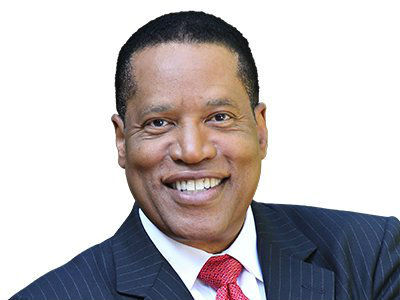
Larry Elder is an American lawyer, writer, and radio and television personality who calls himself the "Sage of South Central" a district of Los Angeles, Larry says his philosophy is to entertain, inform, provoke and to hopefully uplift. His calling card is "we have a country to save" and to him this means returning to the bedrock Constitutional principles of limited government and maximum personal responsibility. Elder's iconoclastic wit and intellectual agility makes him a particularly attractive voice in a nation that seems weary of traditional racial dialogue.” – Los Angeles Times.

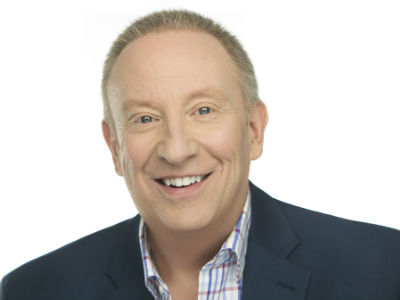
Mike Gallagher Mike Gallagher began his broadcasting career in 1978 in Dayton, Ohio. Today, he is one of the most listened-to talk radio show hosts in America, recently having been ranked in the Talkers Magazine “Heavy Hundred” list – the 100 most important talk radio hosts in America. Prior to being launched into national syndication in 1998, Mike hosted the morning show on WABC-AM in New York City. Today, Talkers Magazine reports that his show is heard by over 3.75 million weekly listeners. Besides his radio work, Mike is seen on Fox News Channel as an on-air contributor, frequently appearing on the cable news giant.

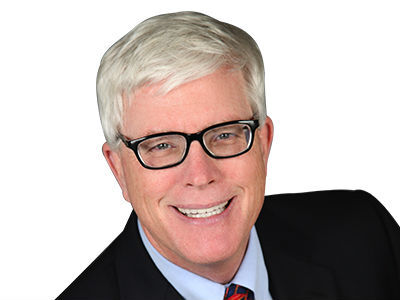
Hugh Hewitt is one of the nation’s leading bloggers and a genuine media revolutionary. He brings that expertise, his wit and what The New Yorker magazine calls his “amiable but relentless manner” to his nationally syndicated show each day.

When Dr. Sebastian Gorka was growing up, he listened to talk radio under his pillow with a transistor radio, dreaming that one day he would be behind the microphone. Beginning New Year’s Day 2019, he got his wish. Gorka now hosts America First every weekday afternoon 3 to 6pm ET. Gorka’s unique story works well on the radio. He is national security analyst for the Fox News Channel and author of two books: "Why We Fight" and "Defeating Jihad." His latest book releasing this fall is “War For America’s Soul.” He is uniquely qualified to fight the culture war and stand up for what is great about America, his adopted home country.

Broadcasting from his home station of KRLA in Los Angeles, the Dennis Prager Show is heard across the country. Everything in life – from politics to religion to relationships – is grist for Dennis’ mill. If it’s interesting, if it affects your life, then Dennis will be talking about it – with passion, humor, insight and wisdom.

Sean Hannity is a conservative radio and television host, and one of the original primetime hosts on the Fox News Channel, where he has appeared since 1996. Sean Hannity began his radio career at a college station in California, before moving on to markets in the Southeast and New York. Today, he’s one of the most listened to on-air voices. Hannity’s radio program went into national syndication on September 10, 2001, and airs on more than 500 stations. Talkers Magazine estimates Hannity’s weekly radio audience at 13.5 million. In 1996 he was hired as one of the original hosts on Fox News Channel. As host of several popular Fox programs, Hannity has become the highest-paid news anchor on television.

Michelle Malkin is a mother, wife, blogger, conservative syndicated columnist, longtime cable TV news commentator, and best-selling author of six books. She started her newspaper journalism career at the Los Angeles Daily News in 1992, moved to the Seattle Times in 1995, and has been penning nationally syndicated newspaper columns for Creators Syndicate since 1999. She is founder of conservative Internet start-ups Hot Air and Twitchy.com. Malkin has received numerous awards for her investigative journalism, including the Council on Governmental Ethics Laws (COGEL) national award for outstanding service for the cause of governmental ethics and leadership (1998), the Reed Irvine Accuracy in Media Award for Investigative Journalism (2006), the Heritage Foundation and Franklin Center for Government & Public Integrity's Breitbart Award for Excellence in Journalism (2013), the Center for Immigration Studies' Eugene Katz Award for Excellence in the Coverage of Immigration Award (2016), and the Manhattan Film Festival's Film Heals Award (2018). Married for 26 years and the mother of two teenage children, she lives with her family in Colorado. Follow her at michellemalkin.com. (Photo reprinted with kind permission from Peter Duke Photography.)

Sponsored by:

How to tell if your dog really loves you

Carbonatix Pre-Player Loader

Audio By Carbonatix

How to tell if your dog really loves you

Your dog loves you, and not just because you’re the one who fills the food bowl every day (though that certainly doesn’t hurt). Dogs are social creatures and hard-wired to connect with humans. Over thousands of years, they’ve learned to read our emotions, respond to our cues, and form real emotional bonds. So that attachment you feel to your pup? It’s genuine—and reciprocated.

You probably already recognize the obvious signs of love: the tail wags when you walk in, the happy spins, the face licks. But there are also plenty of science-backed ways your pup shows they care. Below, Ollie breaks down the signs your dog loves you, what’s happening in their brain and body, and how everyday care—like feeding and play—helps that bond grow even stronger.

Core signs of affection

If you’ve ever wondered, “How do I know if my dog loves me?”—these behaviors are some of the clearest, science-backed signs your dog is bonded to you.

The gaze
In humans, babies bond with their parents through sustained eye contact. With dogs, it’s surprisingly similar, which gives new meaning to the idea that dogs are part of the family. If your dog holds your gaze for several seconds in a relaxed way, it’s a strong sign of trust and attachment. And that’s because of oxytocin.

Oxytocin is well-studied in humans as a hormone linked to emotional closeness. And its presence is also a key indicator of bonding in your relationship with your dog. A study from Azabu University in Japan found that when dogs and their owners engage in sustained eye contact, oxytocin levels increase in both species. In science, this is known as a positive feedback loop. And in real life, it means that every time you and your dog share a moment of eye contact, you’re building up that mutual, trusting bond.

The eyebrow lift
Puppy eyes are a real thing, and they’re more than just cute. Like humans, dogs use facial expressions to communicate and convey how they feel. One of the most telling is the eyebrow raise, which gives dogs that adorable, wide-eyed, expressive look.

Another study from Japan’s Azabu University found that dogs raised their left eyebrow significantly more when looking at their owners than when looking at strangers. Interestingly, no extra eyebrow movement was detected when dogs were shown toys. You can take that to mean what you’re hoping it means: a sign that your dog loves you even more than their favorite stuffed animal.

Physical touch
Dogs can’t hug you or hold your hand, but they have their own ways of showing affection. When your dog leans against you, rests their head on you, or chooses to lie next to you, it’s a sign of deep trust. Leaning puts dogs in a more vulnerable position physically, which means they only do it when they feel safe and secure. Sometimes, leaning can indicate your dog wants something (like food, especially around mealtime).

Contagious yawning
Yawning is famously contagious among humans, but here’s a fun fact: It can also happen with your pup, too. Research from the University of Tokyo found that dogs were more likely to yawn after seeing their owners yawn, versus after watching a stranger yawn. This suggests that dogs are emotionally attuned to the people they’re bonded with, and may even experience a form of empathy. So, catching your yawn doesn’t mean your dog is tired. It’s a subtle sign your dog loves you and, on some level, shares your emotional state.

Deep dive: bonding vs. imprinting

When people talk about dog imprinting signs or signs your dog is bonded to you, they’re usually describing the same thing: that deep emotional attachment you and your pup share. Scientifically, however, imprinting and bonding aren’t the same.

Imprinting, also called filial imprinting, happens with certain animal species where a newborn forms an attachment almost immediately after birth. Some birds, for example, imprint on the first moving figure they see, regardless of species. (That’s why you see all those cute videos online of baby ducks imprinting on humans.)

With dogs, though, it doesn’t work the same way. Instead, they form attachments gradually through a process known as bonding. Puppies are especially receptive to bonding during the socialization period between about 7 and 12 weeks of age, when they’re learning who makes them feel safe and cared for. But that window isn’t a deadline. Dogs adopted later in life, including rescue dogs, are fully capable of forming strong and secure bonds.

So while hormones like oxytocin play a role in the strength of your relationship with your pup, shared routines and everyday care are just as important. Think of it as mutual “acts of service.” On your part, that could include going on walks, plenty of playtime, and feeding them nutritious food that supports their specific health concerns. And for your dog, that can mean bringing you their favorite toy, seeking out physical closeness, sleeping near you, or wagging their tail the second you walk into the room. These aren’t just random habits. They’re signals of trust, safety, and connection—and clear signs your dog really does love you.

The mood-food connection

Science shows that a healthy dog is a happier dog. What’s in your pup’s bowl doesn’t just affect their physical health. It affects their mood and emotional well-being, too. A poor diet can lead to all sorts of issues, including sluggishness from weight gain, itching and discomfort from food sensitivities, or energy highs and crashes from imbalanced nutrients.

That’s why feeding your dog food that’s thoughtfully tailored to their individual needs matters. When your pup is getting the right nutrients and feels good in their body, they have the energy to be themselves—whether that’s playing, learning, or spending time with their favorite human (you!).

FAQs

Does my dog know when I kiss them?
Your dog probably doesn’t understand what a kiss is in the same way that humans do. But they do learn what it means. Over time, your dog associates kissing with moments of affection: your tone of voice, your attention, your gentle touch. Since kisses usually happen during positive interactions, dogs learn to interpret them as a loving gesture.

Why does my dog follow me to the bathroom?
If you feel like you have a constant shadow, you’re not alone. Many pups operate on a strict “no closed doors” policy and don’t understand the concept of privacy.

Dogs are pack animals, and staying close to the people they’re bonded with feels safe and natural. Following you from room to room—including into the bathroom—is often just another sign your dog is bonded to you. Mild separation anxiety can play a role for some dogs, but curiosity does too. Bathrooms are full of interesting smells, sounds, and sights.

Do dogs feel “guilt” or just “love”?
Dogs experience emotions, but not with the same complexity as humans. Most experts believe dogs feel emotions roughly comparable to those of a 2-year-old child.

But what about that “guilty look” you see after your dog gets into the treats? It’s likely not guilt or shame, but an expression of fear or anticipation of punishment based on past experiences. What dogs do clearly feel is affection, trust, and attachment, which is why the signs your dog loves you are consistent and easy to recognize once you know what to look for.

This story was produced by Ollie and reviewed and distributed by Stacker.

 

Salem News Channel Today

Sponsored Links

On Air & Up Next

See the Full Program Guide