









Salem News Channel

RSS Feed

Re-Opening The Strait Of Hormuz

With Chris Burnett, Retired USMC, Candidate for U.S. Congress (MD-6).

Read More...

Faith & Freedom 250 - Episode 17: George Washington’s Warning: Morality & Religion Are Essential

Faith & Freedom 250 - Episode 17: George Washington’s Warning: Morality & Religion Are Essential Courtesy of The Herzog Foundation.

Read More...

Birthright Citizenship In SCOTUS

Birthright Citizenship In SCOTUS

Read More...

The Origins Of The Red-Green Alliance To Destroy The West

On today’s show, Josh takes a deep dive into the historical roots of Left-wing political violence. He explains how these movements stretch back to the late 1700s and highlights some of the violent episodes that shaped their legacy. Josh is also joined by Jamie Glazov, author of the new book United in Hate. Together, they discuss why elements of the modern Left often gravitate toward authoritarian ideas and how that tension intersects with debates over human rights and democracy.

Read More...

Magnitude 4.6 Earthquake Hits Northern California

A magnitude 4.6 earthquake shook Northern California early Thursday morning, awakening residents across a 100-mile area, including San Francisco. The U.S. Geological Survey reported that the quake was centered near Boulder Creek in the Santa Cruz Mountains at around 1:40 a.m. Residents as far north as Petaluma also reported feeling the tremor. There are no immediate reports of serious damage, and authorities say the region is assessing the impact. This follows a series of smaller quakes in the San Francisco Bay Area earlier this year, the largest of which was a magnitude 4.2 in February.

Read More...

Senate Moves To Fund DHS Amid Shutdown

The Senate is expected to move quickly Thursday to pass a measure funding most of the Department of Homeland Security, as lawmakers work to end the longest partial government shutdown in U.S. history. House Speaker Mike Johnson and Senate Majority Leader John Thune announced a two-step plan Wednesday aimed at fully funding DHS. While the measure has support from President Donald Trump, it remains unclear how soon the House will act, and some Republican lawmakers are expected to oppose parts of the proposal. Under the plan, the Senate would fund most DHS operations immediately, while Republicans plan to address U.S. Immigration and Customs Enforcement (ICE) and Border Patrol funding separately in later legislation. Lawmakers say the two-step approach is designed to restore funding quickly while navigating internal party disagreements. The shutdown, now the longest in U.S. history, has left thousands of DHS employees working without pay, contributing to delays and disruptions in services, including airport security.

Read More...

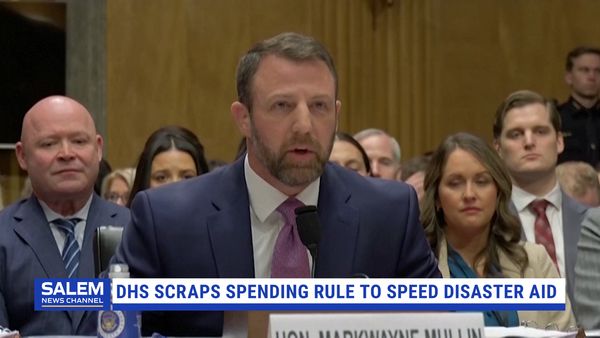
DHS Scraps Spending Rule to Speed Disaster Aid

Homeland Security Secretary Markwayne Mullin has rescinded a policy that required his office to personally approve Department of Homeland Security spending over $100,000. The rule, implemented by former Secretary Kristi Noem, faced criticism for slowing disaster response efforts, particularly at the Federal Emergency Management Agency (FEMA). Critics said it created unnecessary delays in delivering relief to communities affected by hurricanes, floods, and other emergencies. Mullin, who was sworn in last week, said the change will help speed up funding and improve response times for states and local agencies. “We want to make sure relief gets to the people who need it as quickly and efficiently as possible,” Mullin said in a statement. The move represents Mullin’s first major policy adjustment since taking office and is seen as a step toward reducing bureaucratic bottlenecks that had hampered disaster recovery operations.

Read More...

Safety failures cited in deadly Los Angeles grenade blast

A state investigation has found that the deaths of three Los Angeles County sheriff’s deputies in a 2025 grenade explosion involved serious and willful safety violations. Officials said the department failed to provide proper training and left explosives unattended, contributing to one of the department’s deadliest single-incident losses. The July 2025 explosion at a training facility killed detectives Joshua Kelley-Eklund, Victor Lemus, and William Osborn, members of the arson and explosives team. The deputies had recovered two grenades the previous day, believing them to be inert. One detonated at the training site, while the second remains missing. California’s Division of Occupational Safety and Health issued eight citations totaling about $350,000 in fines in January. The sheriff’s department is appealing the fines, citing limited access to federal training materials and ongoing investigations. The department has said it is cooperating with state authorities while updating its training protocols and equipment to prevent future tragedies.

Read More...

Trump Threatens to Pull U.S. Out Of NATO

President Donald Trump is once again threatening to pull the United States out of NATO, describing the alliance as a “paper tiger.” His comments come amid ongoing debates over U.S. defense commitments and the role of NATO in global security. White House correspondent Greg Clugston reports that Trump’s remarks signal a continuation of his critical stance toward the alliance, which has long been a cornerstone of American foreign policy. The president did not provide a clear timeline for any potential withdrawal but emphasized that he believes NATO member countries are not contributing enough to the collective defense. Trump’s threat raises questions about how allies in Europe might respond and whether the United States would face diplomatic or strategic repercussions. Analysts say such statements could heighten uncertainty about Washington’s long-term commitments to the alliance, though past administrations have stressed that the U.S. remains a key NATO partner.

Read More...

How is the War Perceived in the Tar Heel State

How is the War Perceived in the Tar Heel State

Read More...

Trump Says 'Core Strategic Objectives' In Iran War Are Nearing Completion

U.S. President Donald Trump said on Wednesday Washington's "core strategic objectives" in the Iran war were nearing completion. "I'm pleased to say that these core strategic objectives are nearing completion," Trump said in a primetime address. Trump said on Wednesday Washington will strike Iran "extremely hard" over the next two to three weeks and hit the country into the "Stone Ages." "We are going to hit them extremely hard over the next two to three weeks. We are going to bring them back to the Stone Ages, where they belong," Trump said in a nationally televised address.

Read More...

This Won't Be a Forever War

This Won't Be a Forever War

Read More...

Artemis 2 Has Launched!

Back to the Moon!

Read More...

Baby Dies From Gunshot Wound In Brooklyn

Police responded to shots fired in Brooklyn, NY Wednesday afternoon around 1 p.m. Authorities say a 7-month-old girl in a stroller was shot in the head and killed. She was pronounced dead at a hospital soon after. An investigation is underway, with ballistic evidence recovered at the scene.

Read More...

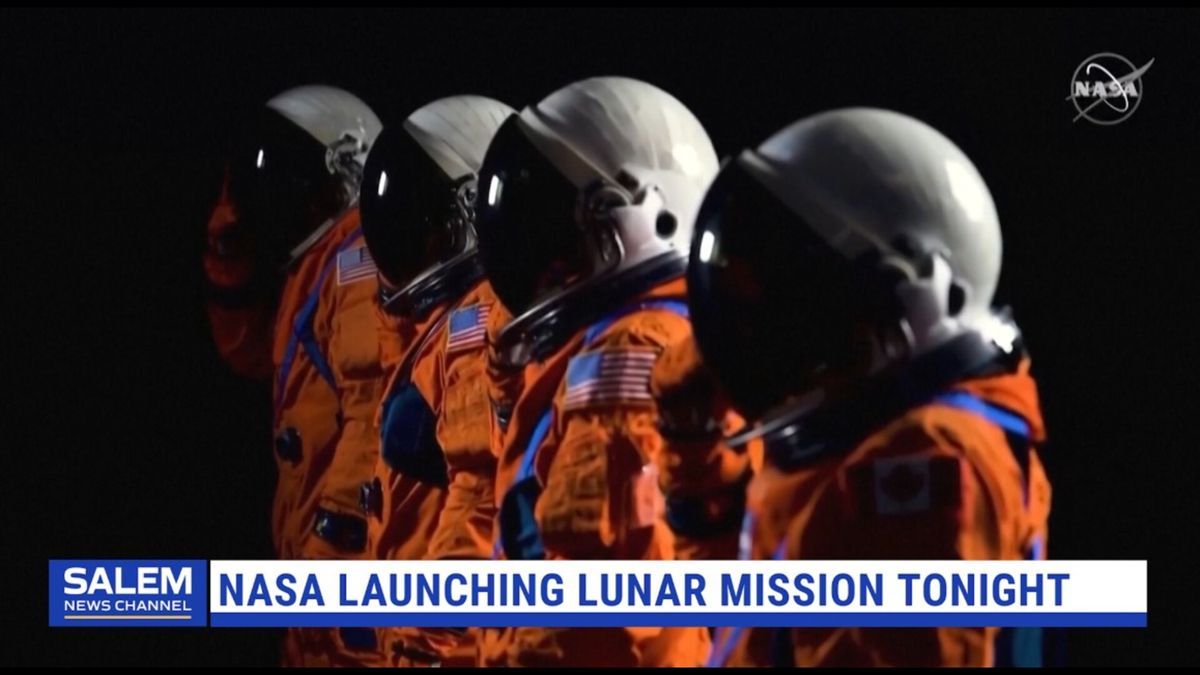
NASA’s Artemis II crew launches to the moon

NASA is preparing to launch the first crew of astronauts toward the moon in over 53 years with its second Artemis mission, a critical test flight in humanity's broader lunar goals as the U.S. races to reassert leadership in space faced with growing competition from China. Three U.S. and one Canadian astronaut are due for liftoff aboard NASA's Orion capsule and Space Launch System rocket on Wednesday for a 10-day test mission swinging around the moon and back, a winding journey taking them deeper into space than humans have ever gone before. The mission is the first crewed test flight in NASA's Artemis program, the flagship U.S. effort to begin regular flights to the moon, at an estimated cost of at least $93 billion since 2012. Not since Apollo 17 in 1972 have humans touched down on the moon's surface, a tricky feat NASA aims to repeat in 2028 at the rugged lunar south pole. The U.S. is the only country to have put humans on another celestial body with its six lunar landings of the Apollo program, driven by competition with the former Soviet Union. U.S. officials have more recently focused on China, a formidable technological rival that has made steady progress in its own moon program in recent years with a string of robotic lunar landings and a 2030 goal to put its own crew on the surface. NASA astronaut Christina Koch, Artemis II mission specialist, on Sunday said the moon is a "witness plate" to the solar system's formation, and a stepping stone to Mars, "where we might have the most likelihood of finding evidence of past life." "Many, many countries have recognized the value that there is in exploring further into the solar system, to the moon and on to Mars," she told reporters. "They recognize that not only can we gain all these extremely tangible benefits, but that we have the opportunity to answer the question that could be the question of our lifetime, which is, are we alone?" "Answering that question starts at the moon," she said. "The question is not should we go, but should we lead, or should we follow?" Through a series of increasingly advanced Artemis missions extending into the next decade, the U.S. aims to set precedent for how others will operate and coexist on the moon's surface, where someday countries and companies can exploit rocky lunar resources and practice for much more difficult missions to Mars. The other crew members are NASA astronauts Victor Glover and Reid Wiseman, and Jeremy Hansen, who will be the first Canadian astronaut to reach the lunar vicinity. Hansen's participation was part of a 2020 agreement between NASA and the Canadian Space Agency. "It was the result of decades of contribution and strategic investment on our part that led to this participation," said Mathieu Caron, head of CSA's astronaut office, citing Canadian robotics contributions on the International Space Station. COMMERCIAL LUNAR MARKET NASA is relying on an array of companies in its moon program, hoping to stimulate a commercial lunar market in the future, the value of which is hard to estimate, analysts say. Boeing and Northrop Grumman lead SLS and Lockheed Martin builds Orion for NASA. SpaceX and Blue Origin are developing their own landers with NASA funding, but under contracts that allow them to offer the spacecraft to other customers. A January PricewaterhouseCoopers report estimates $127 billion in revenues by 2050 from lunar surface activities, with investments potentially reaching $72 billion to $88 billion through the same period. For now, and in the near future, governments will drive companies' lunar strategies and revenue. It will be a long time before key infrastructure, such as energy and communications systems, develop to the point where commercial growth exists on the moon independently of government funding, said Akhil Rao, an economist at analysis firm Rational Futures who was a research economist at NASA. Rao, who was among the group of NASA economists and space policy staff laid off last year during the Trump administration's sweeping federal workforce cuts, said he does "not see a short-run economic value that companies would be able to derive that would allow NASA to be hands-off." The Artemis II mission will pose a greater test of NASA's Orion capsule and SLS, which conducted a similar uncrewed mission in 2022. The astronauts on board will test critical life-support systems, crew interfaces, navigation and communications. Liftoff is scheduled for April 1, though it could happen any day after until April 6, depending on weather conditions in Florida and any last-minute snags with the rocket. Thereafter, another launch window, determined largely by orbital mechanics between Earth and the moon, opens on April 30. Artemis III, planned for 2027, will involve the Orion capsule docking in Earth's orbit with NASA's two lunar landers - the Blue Moon system from Jeff Bezos' Blue Origin and Starship from Elon Musk's SpaceX. The delicate tag-up will demonstrate how the landers will pick up astronauts before heading for the moon's surface. That mission was added to the program in February by NASA's new administrator, Jared Isaacman, a billionaire private astronaut who has more broadly shaken up the program with new objectives. His decision pushed the program's first crewed lunar landing to Artemis IV.

Read More...

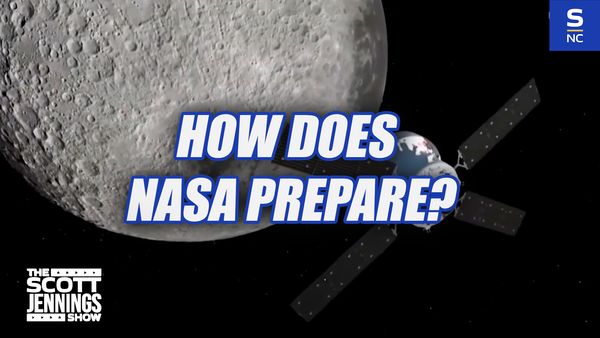
NASA Set For First Crewed Moon Return In Over Half A Century

NASA is preparing to launch the first crew of astronauts toward the moon in over 53 years with its second Artemis mission, a critical test flight in humanity's broader lunar goals as the U.S. races to reassert leadership in space faced with growing competition from China. Three U.S. and one Canadian astronaut are due for liftoff aboard NASA's Orion capsule and Space Launch System rocket on Wednesday for a 10-day test mission swinging around the moon and back, a winding journey taking them deeper into space than humans have ever gone before. The mission is the first crewed test flight in NASA's Artemis program, the flagship U.S. effort to begin regular flights to the moon, at an estimated cost of at least $93 billion since 2012. Not since Apollo 17 in 1972 have humans touched down on the moon's surface, a tricky feat NASA aims to repeat in 2028 at the rugged lunar south pole. The U.S. is the only country to have put humans on another celestial body with its six lunar landings of the Apollo program, driven by competition with the former Soviet Union. U.S. officials have more recently focused on China, a formidable technological rival that has made steady progress in its own moon program in recent years with a string of robotic lunar landings and a 2030 goal to put its own crew on the surface. NASA astronaut Christina Koch, Artemis II mission specialist, on Sunday said the moon is a "witness plate" to the solar system's formation, and a stepping stone to Mars, "where we might have the most likelihood of finding evidence of past life." "Many, many countries have recognized the value that there is in exploring further into the solar system, to the moon and on to Mars," she told reporters. "They recognize that not only can we gain all these extremely tangible benefits, but that we have the opportunity to answer the question that could be the question of our lifetime, which is, are we alone?" "Answering that question starts at the moon," she said. "The question is not should we go, but should we lead, or should we follow?" Through a series of increasingly advanced Artemis missions extending into the next decade, the U.S. aims to set precedent for how others will operate and coexist on the moon's surface, where someday countries and companies can exploit rocky lunar resources and practice for much more difficult missions to Mars. The other crew members are NASA astronauts Victor Glover and Reid Wiseman, and Jeremy Hansen, who will be the first Canadian astronaut to reach the lunar vicinity. Hansen's participation was part of a 2020 agreement between NASA and the Canadian Space Agency. "It was the result of decades of contribution and strategic investment on our part that led to this participation," said Mathieu Caron, head of CSA's astronaut office, citing Canadian robotics contributions on the International Space Station. COMMERCIAL LUNAR MARKET NASA is relying on an array of companies in its moon program, hoping to stimulate a commercial lunar market in the future, the value of which is hard to estimate, analysts say. Boeing and Northrop Grumman lead SLS and Lockheed Martin builds Orion for NASA. SpaceX and Blue Origin are developing their own landers with NASA funding, but under contracts that allow them to offer the spacecraft to other customers. A January PricewaterhouseCoopers report estimates $127 billion in revenues by 2050 from lunar surface activities, with investments potentially reaching $72 billion to $88 billion through the same period. For now, and in the near future, governments will drive companies' lunar strategies and revenue. It will be a long time before key infrastructure, such as energy and communications systems, develop to the point where commercial growth exists on the moon independently of government funding, said Akhil Rao, an economist at analysis firm Rational Futures who was a research economist at NASA. Rao, who was among the group of NASA economists and space policy staff laid off last year during the Trump administration's sweeping federal workforce cuts, said he does "not see a short-run economic value that companies would be able to derive that would allow NASA to be hands-off." The Artemis II mission will pose a greater test of NASA's Orion capsule and SLS, which conducted a similar uncrewed mission in 2022. The astronauts on board will test critical life-support systems, crew interfaces, navigation and communications. Liftoff is scheduled for April 1, though it could happen any day after until April 6, depending on weather conditions in Florida and any last-minute snags with the rocket. Thereafter, another launch window, determined largely by orbital mechanics between Earth and the moon, opens on April 30. Artemis III, planned for 2027, will involve the Orion capsule docking in Earth's orbit with NASA's two lunar landers - the Blue Moon system from Jeff Bezos' Blue Origin and Starship from Elon Musk's SpaceX. The delicate tag-up will demonstrate how the landers will pick up astronauts before heading for the moon's surface. That mission was added to the program in February by NASA's new administrator, Jared Isaacman, a billionaire private astronaut who has more broadly shaken up the program with new objectives. His decision pushed the program's first crewed lunar landing to Artemis IV.

Read More...

NASA is sending astronauts around the Moon.

For the first time since 1972, NASA is sending astronauts to the moon again.

Read More...

First ... 191 192 193 194 195 ... Last

Salem News Channel Today

Sponsored Links


September 26 - Phoenix, AZ
Scottsdale Center for the Performing Arts


November 2 - Detroit, MI
Zion Christian Church in Troy


October 6 - Los Angeles, CA
Pasadena Convention Center


November 5 - San Antonio, TX
Norris Centers – The Grand Red Oak Ballroom


October 8 - Sacramento, CA
William Jessup University


November 7 - Tampa, FL
The Palladium at St. Pete College


October 22 - Minneapolis, MN
Crowne Plaza AiRE


November 15 - San Francisco, CA
Fremont Marriott Silicon Valley


October 23 - Philadelphia, PA
Green Valley Country Club


November 16 - Denver, CO
CU South Denver - Formerly Wildlife Experience


November 2 - Chicago, IL
Chicago Westin Northwest in Itasca


November 21 - Cleveland, OH
Holiday Inn Rockside in Independence


Salem Radio Network Speakers
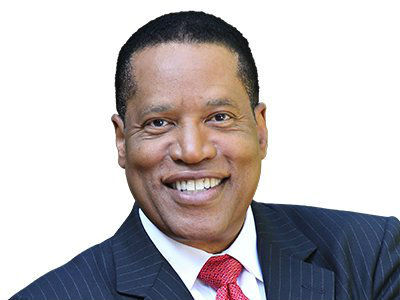
Larry Elder is an American lawyer, writer, and radio and television personality who calls himself the "Sage of South Central" a district of Los Angeles, Larry says his philosophy is to entertain, inform, provoke and to hopefully uplift. His calling card is "we have a country to save" and to him this means returning to the bedrock Constitutional principles of limited government and maximum personal responsibility. Elder's iconoclastic wit and intellectual agility makes him a particularly attractive voice in a nation that seems weary of traditional racial dialogue.” – Los Angeles Times.

Mike Gallagher Mike Gallagher began his broadcasting career in 1978 in Dayton, Ohio. Today, he is one of the most listened-to talk radio show hosts in America, recently having been ranked in the Talkers Magazine “Heavy Hundred” list – the 100 most important talk radio hosts in America. Prior to being launched into national syndication in 1998, Mike hosted the morning show on WABC-AM in New York City. Today, Talkers Magazine reports that his show is heard by over 3.75 million weekly listeners. Besides his radio work, Mike is seen on Fox News Channel as an on-air contributor, frequently appearing on the cable news giant.
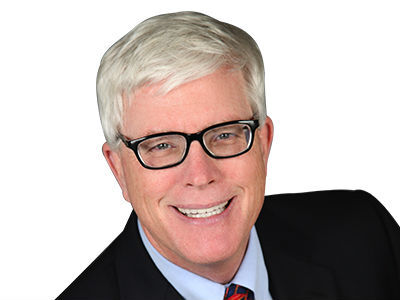
Hugh Hewitt is one of the nation’s leading bloggers and a genuine media revolutionary. He brings that expertise, his wit and what The New Yorker magazine calls his “amiable but relentless manner” to his nationally syndicated show each day.

When Dr. Sebastian Gorka was growing up, he listened to talk radio under his pillow with a transistor radio, dreaming that one day he would be behind the microphone. Beginning New Year’s Day 2019, he got his wish. Gorka now hosts America First every weekday afternoon 3 to 6pm ET. Gorka’s unique story works well on the radio. He is national security analyst for the Fox News Channel and author of two books: "Why We Fight" and "Defeating Jihad." His latest book releasing this fall is “War For America’s Soul.” He is uniquely qualified to fight the culture war and stand up for what is great about America, his adopted home country.

Broadcasting from his home station of KRLA in Los Angeles, the Dennis Prager Show is heard across the country. Everything in life – from politics to religion to relationships – is grist for Dennis’ mill. If it’s interesting, if it affects your life, then Dennis will be talking about it – with passion, humor, insight and wisdom.
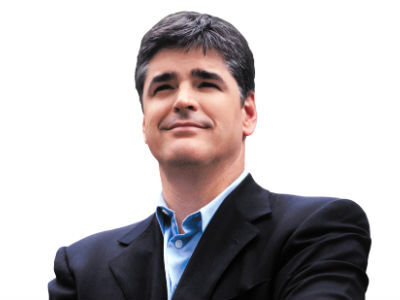
Sean Hannity is a conservative radio and television host, and one of the original primetime hosts on the Fox News Channel, where he has appeared since 1996. Sean Hannity began his radio career at a college station in California, before moving on to markets in the Southeast and New York. Today, he’s one of the most listened to on-air voices. Hannity’s radio program went into national syndication on September 10, 2001, and airs on more than 500 stations. Talkers Magazine estimates Hannity’s weekly radio audience at 13.5 million. In 1996 he was hired as one of the original hosts on Fox News Channel. As host of several popular Fox programs, Hannity has become the highest-paid news anchor on television.

Michelle Malkin is a mother, wife, blogger, conservative syndicated columnist, longtime cable TV news commentator, and best-selling author of six books. She started her newspaper journalism career at the Los Angeles Daily News in 1992, moved to the Seattle Times in 1995, and has been penning nationally syndicated newspaper columns for Creators Syndicate since 1999. She is founder of conservative Internet start-ups Hot Air and Twitchy.com. Malkin has received numerous awards for her investigative journalism, including the Council on Governmental Ethics Laws (COGEL) national award for outstanding service for the cause of governmental ethics and leadership (1998), the Reed Irvine Accuracy in Media Award for Investigative Journalism (2006), the Heritage Foundation and Franklin Center for Government & Public Integrity's Breitbart Award for Excellence in Journalism (2013), the Center for Immigration Studies' Eugene Katz Award for Excellence in the Coverage of Immigration Award (2016), and the Manhattan Film Festival's Film Heals Award (2018). Married for 26 years and the mother of two teenage children, she lives with her family in Colorado. Follow her at michellemalkin.com. (Photo reprinted with kind permission from Peter Duke Photography.)

Sponsored by:

Salem News Channel

RSS Feed

Re-Opening The Strait Of Hormuz

With Chris Burnett, Retired USMC, Candidate for U.S. Congress (MD-6).

Read More...

Faith & Freedom 250 - Episode 17: George Washington’s Warning: Morality & Religion Are Essential

Faith & Freedom 250 - Episode 17: George Washington’s Warning: Morality & Religion Are Essential Courtesy of The Herzog Foundation.

Read More...

Birthright Citizenship In SCOTUS

Birthright Citizenship In SCOTUS

Read More...

The Origins Of The Red-Green Alliance To Destroy The West

On today’s show, Josh takes a deep dive into the historical roots of Left-wing political violence. He explains how these movements stretch back to the late 1700s and highlights some of the violent episodes that shaped their legacy. Josh is also joined by Jamie Glazov, author of the new book United in Hate. Together, they discuss why elements of the modern Left often gravitate toward authoritarian ideas and how that tension intersects with debates over human rights and democracy.

Read More...

Magnitude 4.6 Earthquake Hits Northern California

A magnitude 4.6 earthquake shook Northern California early Thursday morning, awakening residents across a 100-mile area, including San Francisco. The U.S. Geological Survey reported that the quake was centered near Boulder Creek in the Santa Cruz Mountains at around 1:40 a.m. Residents as far north as Petaluma also reported feeling the tremor. There are no immediate reports of serious damage, and authorities say the region is assessing the impact. This follows a series of smaller quakes in the San Francisco Bay Area earlier this year, the largest of which was a magnitude 4.2 in February.

Read More...

Senate Moves To Fund DHS Amid Shutdown

The Senate is expected to move quickly Thursday to pass a measure funding most of the Department of Homeland Security, as lawmakers work to end the longest partial government shutdown in U.S. history. House Speaker Mike Johnson and Senate Majority Leader John Thune announced a two-step plan Wednesday aimed at fully funding DHS. While the measure has support from President Donald Trump, it remains unclear how soon the House will act, and some Republican lawmakers are expected to oppose parts of the proposal. Under the plan, the Senate would fund most DHS operations immediately, while Republicans plan to address U.S. Immigration and Customs Enforcement (ICE) and Border Patrol funding separately in later legislation. Lawmakers say the two-step approach is designed to restore funding quickly while navigating internal party disagreements. The shutdown, now the longest in U.S. history, has left thousands of DHS employees working without pay, contributing to delays and disruptions in services, including airport security.

Read More...

DHS Scraps Spending Rule to Speed Disaster Aid

Homeland Security Secretary Markwayne Mullin has rescinded a policy that required his office to personally approve Department of Homeland Security spending over $100,000. The rule, implemented by former Secretary Kristi Noem, faced criticism for slowing disaster response efforts, particularly at the Federal Emergency Management Agency (FEMA). Critics said it created unnecessary delays in delivering relief to communities affected by hurricanes, floods, and other emergencies. Mullin, who was sworn in last week, said the change will help speed up funding and improve response times for states and local agencies. “We want to make sure relief gets to the people who need it as quickly and efficiently as possible,” Mullin said in a statement. The move represents Mullin’s first major policy adjustment since taking office and is seen as a step toward reducing bureaucratic bottlenecks that had hampered disaster recovery operations.

Read More...

Safety failures cited in deadly Los Angeles grenade blast

A state investigation has found that the deaths of three Los Angeles County sheriff’s deputies in a 2025 grenade explosion involved serious and willful safety violations. Officials said the department failed to provide proper training and left explosives unattended, contributing to one of the department’s deadliest single-incident losses. The July 2025 explosion at a training facility killed detectives Joshua Kelley-Eklund, Victor Lemus, and William Osborn, members of the arson and explosives team. The deputies had recovered two grenades the previous day, believing them to be inert. One detonated at the training site, while the second remains missing. California’s Division of Occupational Safety and Health issued eight citations totaling about $350,000 in fines in January. The sheriff’s department is appealing the fines, citing limited access to federal training materials and ongoing investigations. The department has said it is cooperating with state authorities while updating its training protocols and equipment to prevent future tragedies.

Read More...

Trump Threatens to Pull U.S. Out Of NATO

President Donald Trump is once again threatening to pull the United States out of NATO, describing the alliance as a “paper tiger.” His comments come amid ongoing debates over U.S. defense commitments and the role of NATO in global security. White House correspondent Greg Clugston reports that Trump’s remarks signal a continuation of his critical stance toward the alliance, which has long been a cornerstone of American foreign policy. The president did not provide a clear timeline for any potential withdrawal but emphasized that he believes NATO member countries are not contributing enough to the collective defense. Trump’s threat raises questions about how allies in Europe might respond and whether the United States would face diplomatic or strategic repercussions. Analysts say such statements could heighten uncertainty about Washington’s long-term commitments to the alliance, though past administrations have stressed that the U.S. remains a key NATO partner.

Read More...

How is the War Perceived in the Tar Heel State

How is the War Perceived in the Tar Heel State

Read More...

Trump Says 'Core Strategic Objectives' In Iran War Are Nearing Completion

U.S. President Donald Trump said on Wednesday Washington's "core strategic objectives" in the Iran war were nearing completion. "I'm pleased to say that these core strategic objectives are nearing completion," Trump said in a primetime address. Trump said on Wednesday Washington will strike Iran "extremely hard" over the next two to three weeks and hit the country into the "Stone Ages." "We are going to hit them extremely hard over the next two to three weeks. We are going to bring them back to the Stone Ages, where they belong," Trump said in a nationally televised address.

Read More...

This Won't Be a Forever War

This Won't Be a Forever War

Read More...

Artemis 2 Has Launched!

Back to the Moon!

Read More...

Baby Dies From Gunshot Wound In Brooklyn

Police responded to shots fired in Brooklyn, NY Wednesday afternoon around 1 p.m. Authorities say a 7-month-old girl in a stroller was shot in the head and killed. She was pronounced dead at a hospital soon after. An investigation is underway, with ballistic evidence recovered at the scene.

Read More...

NASA’s Artemis II crew launches to the moon

NASA is preparing to launch the first crew of astronauts toward the moon in over 53 years with its second Artemis mission, a critical test flight in humanity's broader lunar goals as the U.S. races to reassert leadership in space faced with growing competition from China. Three U.S. and one Canadian astronaut are due for liftoff aboard NASA's Orion capsule and Space Launch System rocket on Wednesday for a 10-day test mission swinging around the moon and back, a winding journey taking them deeper into space than humans have ever gone before. The mission is the first crewed test flight in NASA's Artemis program, the flagship U.S. effort to begin regular flights to the moon, at an estimated cost of at least $93 billion since 2012. Not since Apollo 17 in 1972 have humans touched down on the moon's surface, a tricky feat NASA aims to repeat in 2028 at the rugged lunar south pole. The U.S. is the only country to have put humans on another celestial body with its six lunar landings of the Apollo program, driven by competition with the former Soviet Union. U.S. officials have more recently focused on China, a formidable technological rival that has made steady progress in its own moon program in recent years with a string of robotic lunar landings and a 2030 goal to put its own crew on the surface. NASA astronaut Christina Koch, Artemis II mission specialist, on Sunday said the moon is a "witness plate" to the solar system's formation, and a stepping stone to Mars, "where we might have the most likelihood of finding evidence of past life." "Many, many countries have recognized the value that there is in exploring further into the solar system, to the moon and on to Mars," she told reporters. "They recognize that not only can we gain all these extremely tangible benefits, but that we have the opportunity to answer the question that could be the question of our lifetime, which is, are we alone?" "Answering that question starts at the moon," she said. "The question is not should we go, but should we lead, or should we follow?" Through a series of increasingly advanced Artemis missions extending into the next decade, the U.S. aims to set precedent for how others will operate and coexist on the moon's surface, where someday countries and companies can exploit rocky lunar resources and practice for much more difficult missions to Mars. The other crew members are NASA astronauts Victor Glover and Reid Wiseman, and Jeremy Hansen, who will be the first Canadian astronaut to reach the lunar vicinity. Hansen's participation was part of a 2020 agreement between NASA and the Canadian Space Agency. "It was the result of decades of contribution and strategic investment on our part that led to this participation," said Mathieu Caron, head of CSA's astronaut office, citing Canadian robotics contributions on the International Space Station. COMMERCIAL LUNAR MARKET NASA is relying on an array of companies in its moon program, hoping to stimulate a commercial lunar market in the future, the value of which is hard to estimate, analysts say. Boeing and Northrop Grumman lead SLS and Lockheed Martin builds Orion for NASA. SpaceX and Blue Origin are developing their own landers with NASA funding, but under contracts that allow them to offer the spacecraft to other customers. A January PricewaterhouseCoopers report estimates $127 billion in revenues by 2050 from lunar surface activities, with investments potentially reaching $72 billion to $88 billion through the same period. For now, and in the near future, governments will drive companies' lunar strategies and revenue. It will be a long time before key infrastructure, such as energy and communications systems, develop to the point where commercial growth exists on the moon independently of government funding, said Akhil Rao, an economist at analysis firm Rational Futures who was a research economist at NASA. Rao, who was among the group of NASA economists and space policy staff laid off last year during the Trump administration's sweeping federal workforce cuts, said he does "not see a short-run economic value that companies would be able to derive that would allow NASA to be hands-off." The Artemis II mission will pose a greater test of NASA's Orion capsule and SLS, which conducted a similar uncrewed mission in 2022. The astronauts on board will test critical life-support systems, crew interfaces, navigation and communications. Liftoff is scheduled for April 1, though it could happen any day after until April 6, depending on weather conditions in Florida and any last-minute snags with the rocket. Thereafter, another launch window, determined largely by orbital mechanics between Earth and the moon, opens on April 30. Artemis III, planned for 2027, will involve the Orion capsule docking in Earth's orbit with NASA's two lunar landers - the Blue Moon system from Jeff Bezos' Blue Origin and Starship from Elon Musk's SpaceX. The delicate tag-up will demonstrate how the landers will pick up astronauts before heading for the moon's surface. That mission was added to the program in February by NASA's new administrator, Jared Isaacman, a billionaire private astronaut who has more broadly shaken up the program with new objectives. His decision pushed the program's first crewed lunar landing to Artemis IV.

Read More...

NASA Set For First Crewed Moon Return In Over Half A Century

NASA is preparing to launch the first crew of astronauts toward the moon in over 53 years with its second Artemis mission, a critical test flight in humanity's broader lunar goals as the U.S. races to reassert leadership in space faced with growing competition from China. Three U.S. and one Canadian astronaut are due for liftoff aboard NASA's Orion capsule and Space Launch System rocket on Wednesday for a 10-day test mission swinging around the moon and back, a winding journey taking them deeper into space than humans have ever gone before. The mission is the first crewed test flight in NASA's Artemis program, the flagship U.S. effort to begin regular flights to the moon, at an estimated cost of at least $93 billion since 2012. Not since Apollo 17 in 1972 have humans touched down on the moon's surface, a tricky feat NASA aims to repeat in 2028 at the rugged lunar south pole. The U.S. is the only country to have put humans on another celestial body with its six lunar landings of the Apollo program, driven by competition with the former Soviet Union. U.S. officials have more recently focused on China, a formidable technological rival that has made steady progress in its own moon program in recent years with a string of robotic lunar landings and a 2030 goal to put its own crew on the surface. NASA astronaut Christina Koch, Artemis II mission specialist, on Sunday said the moon is a "witness plate" to the solar system's formation, and a stepping stone to Mars, "where we might have the most likelihood of finding evidence of past life." "Many, many countries have recognized the value that there is in exploring further into the solar system, to the moon and on to Mars," she told reporters. "They recognize that not only can we gain all these extremely tangible benefits, but that we have the opportunity to answer the question that could be the question of our lifetime, which is, are we alone?" "Answering that question starts at the moon," she said. "The question is not should we go, but should we lead, or should we follow?" Through a series of increasingly advanced Artemis missions extending into the next decade, the U.S. aims to set precedent for how others will operate and coexist on the moon's surface, where someday countries and companies can exploit rocky lunar resources and practice for much more difficult missions to Mars. The other crew members are NASA astronauts Victor Glover and Reid Wiseman, and Jeremy Hansen, who will be the first Canadian astronaut to reach the lunar vicinity. Hansen's participation was part of a 2020 agreement between NASA and the Canadian Space Agency. "It was the result of decades of contribution and strategic investment on our part that led to this participation," said Mathieu Caron, head of CSA's astronaut office, citing Canadian robotics contributions on the International Space Station. COMMERCIAL LUNAR MARKET NASA is relying on an array of companies in its moon program, hoping to stimulate a commercial lunar market in the future, the value of which is hard to estimate, analysts say. Boeing and Northrop Grumman lead SLS and Lockheed Martin builds Orion for NASA. SpaceX and Blue Origin are developing their own landers with NASA funding, but under contracts that allow them to offer the spacecraft to other customers. A January PricewaterhouseCoopers report estimates $127 billion in revenues by 2050 from lunar surface activities, with investments potentially reaching $72 billion to $88 billion through the same period. For now, and in the near future, governments will drive companies' lunar strategies and revenue. It will be a long time before key infrastructure, such as energy and communications systems, develop to the point where commercial growth exists on the moon independently of government funding, said Akhil Rao, an economist at analysis firm Rational Futures who was a research economist at NASA. Rao, who was among the group of NASA economists and space policy staff laid off last year during the Trump administration's sweeping federal workforce cuts, said he does "not see a short-run economic value that companies would be able to derive that would allow NASA to be hands-off." The Artemis II mission will pose a greater test of NASA's Orion capsule and SLS, which conducted a similar uncrewed mission in 2022. The astronauts on board will test critical life-support systems, crew interfaces, navigation and communications. Liftoff is scheduled for April 1, though it could happen any day after until April 6, depending on weather conditions in Florida and any last-minute snags with the rocket. Thereafter, another launch window, determined largely by orbital mechanics between Earth and the moon, opens on April 30. Artemis III, planned for 2027, will involve the Orion capsule docking in Earth's orbit with NASA's two lunar landers - the Blue Moon system from Jeff Bezos' Blue Origin and Starship from Elon Musk's SpaceX. The delicate tag-up will demonstrate how the landers will pick up astronauts before heading for the moon's surface. That mission was added to the program in February by NASA's new administrator, Jared Isaacman, a billionaire private astronaut who has more broadly shaken up the program with new objectives. His decision pushed the program's first crewed lunar landing to Artemis IV.

Read More...

NASA is sending astronauts around the Moon.

For the first time since 1972, NASA is sending astronauts to the moon again.

Read More...

First ... 191 192 193 194 195 ... Last

Salem News Channel Today

Sponsored Links

On Air & Up Next

See the Full Program Guide