7 Inspiring Christian Black Women Who Impacted Change

Carbonatix Pre-Player Loader

Audio By Carbonatix

In honor of Black History Month, we remember faithful women who found sustaining strength and steadfast courage from their faith in Jesus to help them endure hardship and opposition in their calling to be advocates for dignity and equality for all people. Be inspired by these glimpses into the lives of Seven Christian Black women motivated by the truth of Scripture to impact change in the church and society.

Phyllis Wheatley (First African American Published Poet; c. 1753-1784)

Phyllis Wheatley’s celebrated poetry was rich in theological truths and called for equality for all regardless of the color of one’s skin. Born around 1753 in western Africa, Phyllis was torn from her home at seven years of age and sold to a slave trader. She was purchased by John Wheatley, a wealthy Massachusetts merchant who gave her the family name. Recognizing her sharp mind, the Wheatley family provided her with a rigorous education and supported her literary abilities before finally emancipating her in 1773. Growing up in the Wheatley household, Phyllis was exposed to Christianity and converted when she was 16 years old. Phyllis’ first book of poetry, Poems on Various Subjects, Religious and Moral, was published in London in 1773 after being rejected by American publishers. She quickly gained fame on both sides of the Atlantic although some people, including Thomas Jefferson, disparaged her work because of her gender and ethnicity.

Throughout her short life, Wheatley used biblical symbolism and literary skill to persuade Christians of the need to abolish slavery. In her best-known poem, “On Being Brought from Africa to America,” Wheatley presses her readers to consider Black Christians as equal recipients of salvation.

Sojourner Truth (Abolitionist, Women’s Rights Activist; 1797-1883)

A gifted orator, Sojourner was an unrelenting advocate for the abolition of slavery and equal rights for women. Born Isabella in the Hudson River Valley of New York, the future activist spent 30 years enslaved before escaping her cruel owners and finding refuge with Isaac and Maria Van Wagenen, who purchased her freedom for only $20. Their kindness and faith impacted Sojourner, and her nascent faith was firmly established after a dream where she felt the love of Jesus. After moving to New York City, she became a speaker in religious revivals and in 1843, she changed her name to Sojourner Truth because of her call to preach the gospel and speak out against slavery. Encouraged by prominent abolitionists to tell her story, she dictated (she never learned to read or write) her autobiography The Narrative of Sojourner Truth in 1850, which primarily recounts her spiritual awakening. In 1851 she gave her most famous speech, “Ain’t I A Woman?” that challenged prevailing beliefs promoting racial and gender inequality.

Sojourner’s legacy of a strong Black Christian woman who demonstrated great courage in the face of the horrors of slavery continues to inspire generations. Her convictions and faith were often woven together in her speeches and poems, including “The Great Sin of Prejudice Against Color.” A charismatic speaker, she would passionate ask her audience, “Children, who made your skin white? Was it not God? Who made mine black? Was it not the same God? Am I to blame, therefore, because my skin is black? Does it not cast reproach on our Maker to despise a part of His children, because He has been pleased to give them a black sin? And did not the same Savior die to save the one as well as the other?”

Harriet Tubman (Abolitionist; c. 1822-1913)

Harriet Tubman’s belief in the power of prayer to rescue people inspired a nation. Born into slavery around 1820 in Maryland, Harriet not only escaped slavery but helped hundreds of other African Americans find freedom through her work on the Underground Railroad. She was given the nickname “Moses” for safely bringing every person she led from bondage to freedom in the North. She also served as the first female leader of an armed expedition during the Civil War, directing the raid at Combahee Ferry that liberated more than 700 enslaved people. In her final years, she was active in the women’s suffrage movement.

Tubman was a woman of deep faith who had experienced God’s power firsthand. Contemporary biographer Sarah Bradford remarked that miraculous answers to prayer “never seemed to strike her as at all strange or mysterious; her prayer was the prayer of faith, and she expected an answer.”

Mary McLeod Bethune (Educator, Civil Rights Activist; 1875-1955)

Mary McLeod Bethune was the most influential Black woman in the 20th century because of her extensive work to advocate for educational opportunities for all people. The daughter of freed slaves, Mary was not deterred by the obstacles or abuse she suffered in her quest to get an education. Seeking additional education, she attended Moody Bible Institute in Chicago. The only Black student on campus,  Mary excelled in her studies and spiritual leadership. Enormous disappointment followed graduation when mission boards would not appoint her as a missionary to Africa because she was Black. Instead, she focused her attention on addressing the spiritual, educational, and physical needs of Black children in the United States. With a strong belief in God’s calling and only $1.50, she founded the Daytona Literary and Industrial Training Institute for Negro Girls on October 3, 1904, which later became Bethune-Cookman University. She helped start the United Negro College Fund, was a member of President Roosevelt’s “Black Cabinet,” and helped integrate the Red Cross.

Mary’s profound faith was integrated into all her endeavors. Writing about the purpose of her college, she wrote, “There is a crying need among us for women qualified as moral and Christian leaders. The Bible is prominent in every department of our work. It is the guide of our lives.” In a history of Bethune-Cookman University, the authors concluded: “spiritual strength, race pride, interracial harmony, and faith in America's possibilities were at the core of Bethune's beliefs and advocacies.”

Mahalia Jackson (Gospel Singer; Civil Rights Activist; 1911-1972)

Known as the Queen of Gospel, Mahalia Jackson used her voice to promote civil rights. The granddaughter of enslaved people who worked on rice and cotton plantations, Mahalia was born in New Orleans but moved to Chicago during the Great Migration, a term for the mass movement of Black Southerners to the North to escape Jim Crow laws and find fair job opportunities. Her 1947 release, “Move On Up a Little Higher” quickly became the bestselling Gospel single, bringing national and international recognition. She is also known for singing “I've Been ‘Buked and I’ve Been Scorned” at the March on Washington on August 28, 1963, before Martin Luther King Jr.’s “I Have a Dream” speech.

Mahalia refused lucrative offers to sing in nightclubs (or other places she considered unfit for a gospel singer) and turned down opportunities to sing to segregated audiences. In 1964, Mahalia wrote about her convictions and reason for singing, saying, “Using the gift God gave me, singing the old spiritual songs for people everywhere has been a great personal help for me. Not to become just an entertainer or a star, but to help give people faith—that is the most important thing I can do. Gospel songs are the songs of hope and faith.”

Fannie Lou Hamer (Civil Rights Activist; 1917-1977)

Fannie Lou Hamer rose from humble beginnings to become a respected advocate for civil and voting rights. Born in Mississippi, the 20th child of poor sharecroppers, Hamer began picking cotton at six years old. Her formal education ended after sixth grade when she began working as a timekeeper on a cotton plantation. In 1961, instead of removing a small tumor, the doctor performed a full hysterectomy without her permission, a common practice in the South to help reduce the Black population. In 1962, she organized a group of 17 Black volunteers to travel to the courthouse to register to vote. Denied the opportunity to register and fined for traveling in a bus deemed too yellow, she was also fired from her job and her home was confiscated as a result of her advocacy. Motivated by the biblical truth that all people are children of God, she co-founded the Mississippi Freedom Democratic Party, helped lead civil rights protests, and launched the Freedom Farm Cooperative to help Black farmers develop cooperatives that would provide affordable housing and economic opportunities.

Known for regularly bursting into a Gospel song, one of Fannie’s favorites was “This Little Light of Mine,” a song that she had learned as a girl in her Baptist church. Another song associated with Fannie came out of horrible suffering. Beaten and lying in a jail cell in June 1963, she asked the woman in the cell with her to sing the lyrics of “Walk with Me” throughout the night to help them find strength and be reminded that God was with them. Author Jemar Tisby wrote about Fannie, “She employed her knowledge of the Bible to develop a sophisticated political theology that led her to become one of the most notable activists in the civil rights era.”

Latasha Morrison (Modern Racial Reconciliation Advocate)

Latasha Morrison is a compelling modern voice calling the church to pursue racial unity and reconciliation based on biblical principles. A native of North Carolina, grew up knowing she was the descendant of sharecroppers. Latasha’s experiences of racial insensitivity in school and church, along with an African American history class in college that gave her the fuller story of Black history in America, were sparks that led her to explore the church’s role in addressing racial issues. Following college, she held several corporate positions and worked on the staff of primarily White churches in Georgia and Texas that helped her find her life’s calling. In conversations with White friends and co-workers regarding modern expressions of racism and discrimination, she started racial-reconciliation discussion groups. Those groups led her to found Be the Bridge in 2016, “an organization committed to bringing the reconciliation power of the gospel to the racial divide in America.”

Be the Bridge is actually composed of more than one thousand groups across five countries that help people of all ethnicities start respectful discussions, and build interracial and cross-cultural relationships to help the church move toward racial reconciliation as a force to impact culture. In her book, Be The Bridge, Latasha writes change is possible when Christians “acknowledge the truth of our racial history…lament injustice…confess our sins so that we may be healed by God…seek and extend forgiveness…repent and turn from our sin…seek restorative reconciliation…[and] bring reconciliation to others in [God’s] name.”

Read more about Black History Month:
The Importance of Black History Month to Christians
Celebrating Black History Month

Photo Credit: ©GettyImages/DisobeyArt
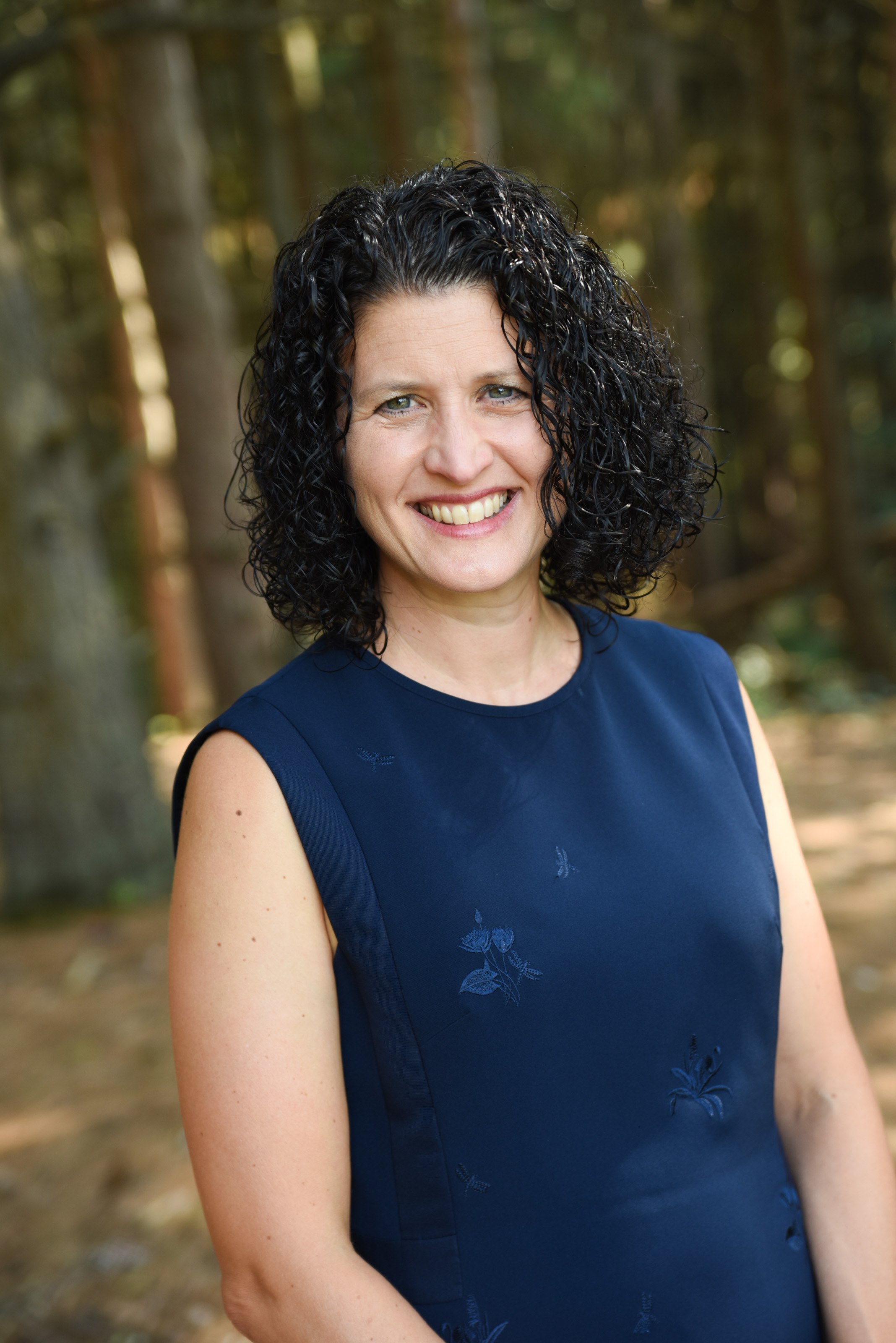

lisa samra headshot authorLisa M. Samra graduated with a Bachelor of Journalism from the University of Texas and earned a Master of Biblical Studies degree from Dallas Theological Seminary. Lisa now lives in Grand Rapids, Mich., with her husband and children. She leads the Jerusalem Project at Calvary Church, a ministry focused on partnering with local churches, training people for ministry, and planting new churches. She is a regular contributor to Crosswalk.com, Our Daily Bread, and her work has also appeared in a variety of publications and online sites. Lisa enjoys good coffee, running, and reading, just not all at the same time. 

 

Salem News Channel Today

Sponsored Links


September 26 - Phoenix, AZ
Scottsdale Center for the Performing Arts


November 2 - Detroit, MI
Zion Christian Church in Troy


October 6 - Los Angeles, CA
Pasadena Convention Center


November 5 - San Antonio, TX
Norris Centers – The Grand Red Oak Ballroom


October 8 - Sacramento, CA
William Jessup University


November 7 - Tampa, FL
The Palladium at St. Pete College


October 22 - Minneapolis, MN
Crowne Plaza AiRE


November 15 - San Francisco, CA
Fremont Marriott Silicon Valley


October 23 - Philadelphia, PA
Green Valley Country Club


November 16 - Denver, CO
CU South Denver - Formerly Wildlife Experience


November 2 - Chicago, IL
Chicago Westin Northwest in Itasca


November 21 - Cleveland, OH
Holiday Inn Rockside in Independence


Salem Radio Network Speakers

Larry Elder is an American lawyer, writer, and radio and television personality who calls himself the "Sage of South Central" a district of Los Angeles, Larry says his philosophy is to entertain, inform, provoke and to hopefully uplift. His calling card is "we have a country to save" and to him this means returning to the bedrock Constitutional principles of limited government and maximum personal responsibility. Elder's iconoclastic wit and intellectual agility makes him a particularly attractive voice in a nation that seems weary of traditional racial dialogue.” – Los Angeles Times.

Mike Gallagher Mike Gallagher began his broadcasting career in 1978 in Dayton, Ohio. Today, he is one of the most listened-to talk radio show hosts in America, recently having been ranked in the Talkers Magazine “Heavy Hundred” list – the 100 most important talk radio hosts in America. Prior to being launched into national syndication in 1998, Mike hosted the morning show on WABC-AM in New York City. Today, Talkers Magazine reports that his show is heard by over 3.75 million weekly listeners. Besides his radio work, Mike is seen on Fox News Channel as an on-air contributor, frequently appearing on the cable news giant.

Hugh Hewitt is one of the nation’s leading bloggers and a genuine media revolutionary. He brings that expertise, his wit and what The New Yorker magazine calls his “amiable but relentless manner” to his nationally syndicated show each day.

When Dr. Sebastian Gorka was growing up, he listened to talk radio under his pillow with a transistor radio, dreaming that one day he would be behind the microphone. Beginning New Year’s Day 2019, he got his wish. Gorka now hosts America First every weekday afternoon 3 to 6pm ET. Gorka’s unique story works well on the radio. He is national security analyst for the Fox News Channel and author of two books: "Why We Fight" and "Defeating Jihad." His latest book releasing this fall is “War For America’s Soul.” He is uniquely qualified to fight the culture war and stand up for what is great about America, his adopted home country.

Broadcasting from his home station of KRLA in Los Angeles, the Dennis Prager Show is heard across the country. Everything in life – from politics to religion to relationships – is grist for Dennis’ mill. If it’s interesting, if it affects your life, then Dennis will be talking about it – with passion, humor, insight and wisdom.

Sean Hannity is a conservative radio and television host, and one of the original primetime hosts on the Fox News Channel, where he has appeared since 1996. Sean Hannity began his radio career at a college station in California, before moving on to markets in the Southeast and New York. Today, he’s one of the most listened to on-air voices. Hannity’s radio program went into national syndication on September 10, 2001, and airs on more than 500 stations. Talkers Magazine estimates Hannity’s weekly radio audience at 13.5 million. In 1996 he was hired as one of the original hosts on Fox News Channel. As host of several popular Fox programs, Hannity has become the highest-paid news anchor on television.

Michelle Malkin is a mother, wife, blogger, conservative syndicated columnist, longtime cable TV news commentator, and best-selling author of six books. She started her newspaper journalism career at the Los Angeles Daily News in 1992, moved to the Seattle Times in 1995, and has been penning nationally syndicated newspaper columns for Creators Syndicate since 1999. She is founder of conservative Internet start-ups Hot Air and Twitchy.com. Malkin has received numerous awards for her investigative journalism, including the Council on Governmental Ethics Laws (COGEL) national award for outstanding service for the cause of governmental ethics and leadership (1998), the Reed Irvine Accuracy in Media Award for Investigative Journalism (2006), the Heritage Foundation and Franklin Center for Government & Public Integrity's Breitbart Award for Excellence in Journalism (2013), the Center for Immigration Studies' Eugene Katz Award for Excellence in the Coverage of Immigration Award (2016), and the Manhattan Film Festival's Film Heals Award (2018). Married for 26 years and the mother of two teenage children, she lives with her family in Colorado. Follow her at michellemalkin.com. (Photo reprinted with kind permission from Peter Duke Photography.)

Sponsored by:

7 Inspiring Christian Black Women Who Impacted Change

Carbonatix Pre-Player Loader

Audio By Carbonatix

In honor of Black History Month, we remember faithful women who found sustaining strength and steadfast courage from their faith in Jesus to help them endure hardship and opposition in their calling to be advocates for dignity and equality for all people. Be inspired by these glimpses into the lives of Seven Christian Black women motivated by the truth of Scripture to impact change in the church and society.

Phyllis Wheatley (First African American Published Poet; c. 1753-1784)

Phyllis Wheatley’s celebrated poetry was rich in theological truths and called for equality for all regardless of the color of one’s skin. Born around 1753 in western Africa, Phyllis was torn from her home at seven years of age and sold to a slave trader. She was purchased by John Wheatley, a wealthy Massachusetts merchant who gave her the family name. Recognizing her sharp mind, the Wheatley family provided her with a rigorous education and supported her literary abilities before finally emancipating her in 1773. Growing up in the Wheatley household, Phyllis was exposed to Christianity and converted when she was 16 years old. Phyllis’ first book of poetry, Poems on Various Subjects, Religious and Moral, was published in London in 1773 after being rejected by American publishers. She quickly gained fame on both sides of the Atlantic although some people, including Thomas Jefferson, disparaged her work because of her gender and ethnicity.

Throughout her short life, Wheatley used biblical symbolism and literary skill to persuade Christians of the need to abolish slavery. In her best-known poem, “On Being Brought from Africa to America,” Wheatley presses her readers to consider Black Christians as equal recipients of salvation.

Sojourner Truth (Abolitionist, Women’s Rights Activist; 1797-1883)

A gifted orator, Sojourner was an unrelenting advocate for the abolition of slavery and equal rights for women. Born Isabella in the Hudson River Valley of New York, the future activist spent 30 years enslaved before escaping her cruel owners and finding refuge with Isaac and Maria Van Wagenen, who purchased her freedom for only $20. Their kindness and faith impacted Sojourner, and her nascent faith was firmly established after a dream where she felt the love of Jesus. After moving to New York City, she became a speaker in religious revivals and in 1843, she changed her name to Sojourner Truth because of her call to preach the gospel and speak out against slavery. Encouraged by prominent abolitionists to tell her story, she dictated (she never learned to read or write) her autobiography The Narrative of Sojourner Truth in 1850, which primarily recounts her spiritual awakening. In 1851 she gave her most famous speech, “Ain’t I A Woman?” that challenged prevailing beliefs promoting racial and gender inequality.

Sojourner’s legacy of a strong Black Christian woman who demonstrated great courage in the face of the horrors of slavery continues to inspire generations. Her convictions and faith were often woven together in her speeches and poems, including “The Great Sin of Prejudice Against Color.” A charismatic speaker, she would passionate ask her audience, “Children, who made your skin white? Was it not God? Who made mine black? Was it not the same God? Am I to blame, therefore, because my skin is black? Does it not cast reproach on our Maker to despise a part of His children, because He has been pleased to give them a black sin? And did not the same Savior die to save the one as well as the other?”

Harriet Tubman (Abolitionist; c. 1822-1913)

Harriet Tubman’s belief in the power of prayer to rescue people inspired a nation. Born into slavery around 1820 in Maryland, Harriet not only escaped slavery but helped hundreds of other African Americans find freedom through her work on the Underground Railroad. She was given the nickname “Moses” for safely bringing every person she led from bondage to freedom in the North. She also served as the first female leader of an armed expedition during the Civil War, directing the raid at Combahee Ferry that liberated more than 700 enslaved people. In her final years, she was active in the women’s suffrage movement.

Tubman was a woman of deep faith who had experienced God’s power firsthand. Contemporary biographer Sarah Bradford remarked that miraculous answers to prayer “never seemed to strike her as at all strange or mysterious; her prayer was the prayer of faith, and she expected an answer.”

Mary McLeod Bethune (Educator, Civil Rights Activist; 1875-1955)

Mary McLeod Bethune was the most influential Black woman in the 20th century because of her extensive work to advocate for educational opportunities for all people. The daughter of freed slaves, Mary was not deterred by the obstacles or abuse she suffered in her quest to get an education. Seeking additional education, she attended Moody Bible Institute in Chicago. The only Black student on campus,  Mary excelled in her studies and spiritual leadership. Enormous disappointment followed graduation when mission boards would not appoint her as a missionary to Africa because she was Black. Instead, she focused her attention on addressing the spiritual, educational, and physical needs of Black children in the United States. With a strong belief in God’s calling and only $1.50, she founded the Daytona Literary and Industrial Training Institute for Negro Girls on October 3, 1904, which later became Bethune-Cookman University. She helped start the United Negro College Fund, was a member of President Roosevelt’s “Black Cabinet,” and helped integrate the Red Cross.

Mary’s profound faith was integrated into all her endeavors. Writing about the purpose of her college, she wrote, “There is a crying need among us for women qualified as moral and Christian leaders. The Bible is prominent in every department of our work. It is the guide of our lives.” In a history of Bethune-Cookman University, the authors concluded: “spiritual strength, race pride, interracial harmony, and faith in America's possibilities were at the core of Bethune's beliefs and advocacies.”

Mahalia Jackson (Gospel Singer; Civil Rights Activist; 1911-1972)

Known as the Queen of Gospel, Mahalia Jackson used her voice to promote civil rights. The granddaughter of enslaved people who worked on rice and cotton plantations, Mahalia was born in New Orleans but moved to Chicago during the Great Migration, a term for the mass movement of Black Southerners to the North to escape Jim Crow laws and find fair job opportunities. Her 1947 release, “Move On Up a Little Higher” quickly became the bestselling Gospel single, bringing national and international recognition. She is also known for singing “I've Been ‘Buked and I’ve Been Scorned” at the March on Washington on August 28, 1963, before Martin Luther King Jr.’s “I Have a Dream” speech.

Mahalia refused lucrative offers to sing in nightclubs (or other places she considered unfit for a gospel singer) and turned down opportunities to sing to segregated audiences. In 1964, Mahalia wrote about her convictions and reason for singing, saying, “Using the gift God gave me, singing the old spiritual songs for people everywhere has been a great personal help for me. Not to become just an entertainer or a star, but to help give people faith—that is the most important thing I can do. Gospel songs are the songs of hope and faith.”

Fannie Lou Hamer (Civil Rights Activist; 1917-1977)

Fannie Lou Hamer rose from humble beginnings to become a respected advocate for civil and voting rights. Born in Mississippi, the 20th child of poor sharecroppers, Hamer began picking cotton at six years old. Her formal education ended after sixth grade when she began working as a timekeeper on a cotton plantation. In 1961, instead of removing a small tumor, the doctor performed a full hysterectomy without her permission, a common practice in the South to help reduce the Black population. In 1962, she organized a group of 17 Black volunteers to travel to the courthouse to register to vote. Denied the opportunity to register and fined for traveling in a bus deemed too yellow, she was also fired from her job and her home was confiscated as a result of her advocacy. Motivated by the biblical truth that all people are children of God, she co-founded the Mississippi Freedom Democratic Party, helped lead civil rights protests, and launched the Freedom Farm Cooperative to help Black farmers develop cooperatives that would provide affordable housing and economic opportunities.

Known for regularly bursting into a Gospel song, one of Fannie’s favorites was “This Little Light of Mine,” a song that she had learned as a girl in her Baptist church. Another song associated with Fannie came out of horrible suffering. Beaten and lying in a jail cell in June 1963, she asked the woman in the cell with her to sing the lyrics of “Walk with Me” throughout the night to help them find strength and be reminded that God was with them. Author Jemar Tisby wrote about Fannie, “She employed her knowledge of the Bible to develop a sophisticated political theology that led her to become one of the most notable activists in the civil rights era.”

Latasha Morrison (Modern Racial Reconciliation Advocate)

Latasha Morrison is a compelling modern voice calling the church to pursue racial unity and reconciliation based on biblical principles. A native of North Carolina, grew up knowing she was the descendant of sharecroppers. Latasha’s experiences of racial insensitivity in school and church, along with an African American history class in college that gave her the fuller story of Black history in America, were sparks that led her to explore the church’s role in addressing racial issues. Following college, she held several corporate positions and worked on the staff of primarily White churches in Georgia and Texas that helped her find her life’s calling. In conversations with White friends and co-workers regarding modern expressions of racism and discrimination, she started racial-reconciliation discussion groups. Those groups led her to found Be the Bridge in 2016, “an organization committed to bringing the reconciliation power of the gospel to the racial divide in America.”

Be the Bridge is actually composed of more than one thousand groups across five countries that help people of all ethnicities start respectful discussions, and build interracial and cross-cultural relationships to help the church move toward racial reconciliation as a force to impact culture. In her book, Be The Bridge, Latasha writes change is possible when Christians “acknowledge the truth of our racial history…lament injustice…confess our sins so that we may be healed by God…seek and extend forgiveness…repent and turn from our sin…seek restorative reconciliation…[and] bring reconciliation to others in [God’s] name.”

Read more about Black History Month:
The Importance of Black History Month to Christians
Celebrating Black History Month

Photo Credit: ©GettyImages/DisobeyArt


lisa samra headshot authorLisa M. Samra graduated with a Bachelor of Journalism from the University of Texas and earned a Master of Biblical Studies degree from Dallas Theological Seminary. Lisa now lives in Grand Rapids, Mich., with her husband and children. She leads the Jerusalem Project at Calvary Church, a ministry focused on partnering with local churches, training people for ministry, and planting new churches. She is a regular contributor to Crosswalk.com, Our Daily Bread, and her work has also appeared in a variety of publications and online sites. Lisa enjoys good coffee, running, and reading, just not all at the same time. 

 

Salem News Channel Today

Sponsored Links

On Air & Up Next

See the Full Program Guide