Why White Christians Should Be Pursuers of Racial Reconciliation

Carbonatix Pre-Player Loader

Audio By Carbonatix

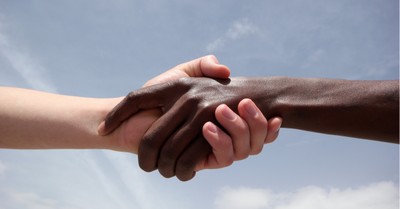
Racial Reconciliation is work that is close to the heart of God. His Word calls us to unity, calls us to become one body in Christ, and paints the picture of a future in heaven where every tongue and nation comes together to confess that he is God (Philippians 2:9-11). We are called to bring Heaven down to Earth. A huge way we do that is by building bridges that unite us with others that our culture has worked to push apart. Yet, if we are honest most of our congregations, friend groups, and neighborhoods do not reflect this heavenly picture.

The first problem that many of us face in pursuing this kind of unified church and world is that we don’t have eyes to see the problem. The dominant culture is so whitewashed that it barely registers on our radar that our churches and friend groups lack diversity. The first step for white Christians is realizing that there is a problem.

As white Americans, seeing people that look like us in the media, books, and our skin color is not a factor in our lives. But this is not true for all people. We can’t let our privilege hold us back from empathizing and lamenting with those that live conscious of their skin tone every day of their lives.

Truly Listening to Others

We have to have open ears to people that are walking a different road than ourselves. The first step to finding unity in a broken and divided world is by taking the time to pause and truly listen to each other. It’s important that we acknowledge the truth of experience and history that is being shared by the people of color around us.

Honestly, we all lose so much by not sharing in each other's struggles and not sharing each other's cultures. Life is fuller, richer, and more beautiful when it includes those with experiences and worldviews that are different from our own.

As fellow believers in the same body of Christ we are called to lament (Romans 12:15) with our brothers and sisters of color and grieve that for them in our world the color of their skin is a factor that they never have the privilege to ignore. This is not to say that we don’t all face challenges, disadvantages, and that Christ-following people of color aren’t supposed to mourn with White believers when they face trials. The Bible calls us to share our burdens.

The world we live in is charged with polarized speech and extreme worldviews that are stepping up the world’s microphones. It’s easy as a white person to shy away from issues like racial reconciliation because they are messy and hard to approach. It is important that we don’t let fear of not getting it right stop us from pursuing racial healing.

We don’t have to understand everything someone else is experiencing to love them through it. All that is required of us to show love is to be present and willing to do the work of hearing out a story that is not ours. Latasha Morrison’s first step for white bridge builders is to take time for quiet reflection. So, I ask you, if you have no idea what this whole conversation is even about, is to start with quiet reflection. Read the stories of others and ask the Holy Spirit to show you God’s heart for healing on this issue. Start small and watch God expand your heart for your brothers and sisters in Christ!

Why Is It Important That White Christians Join This Conversation?

From a practical standpoint, we have a lot less to lose than our black and brown counterparts. Sure, there is a chance we may have some uncomfortable conversations with friends when we put our stick in the sand to say there is a problem in our world that we should care about fixing. We may lose some followers online but we don’t have to be afraid that we may be targeted by our neighbors or employers or worse.

More than that, if we dream of even just a church that truly reflects the belief that we all are fearfully and wonderfully made by our Creator, it is going to take the intentional work of EVERY believer to make this dream a reality. We cannot let ourselves off the hook by saying well I don’t know the right words to say, we may offend someone, or that is just the problem of others. It’s better that we quietly enter the conversations and begin learning than shy away from the problem for fear we will do it wrong.

I feel all those feelings! Fear, apathy, and just being plain unaware of the problem have stopped me from being a bridge-builder in my community. I don’t know if I am getting this work right, but I see that it is important.

Being totally transparent is something that suddenly means so much to me. As I prepare to parent a biracial child, I feel the urgency. I see the need to build a better world that will allow him to live free, united, and where he does not have to consider the color of his skin every day of his life. I am ashamed that I did not feel this urgency sooner, as we should all care when parts of God’s church are in pain, but better late and imperfect on this journey than never engaging at all.

I want my boy to grow up with white allies that know how to kindly fight back and reassure him when someone thoughtlessly comments on his skin or hair. I want him to have every privilege that my white children have. I am grieved that the stories and statistics tell a very different story about the ways people may approach him as he grows older. I know that our culture has done harm to people that has been justified by racism. I want to be one who helps heal this wound in our world.

How Do We Start?

I agree wholeheartedly with Latasha Morrison when she invites us first to quiet reflection and learning. There is so much that most white Christians do not know about the history and point-of-view of our Black and Brown counterparts. Don’t be afraid to read things that challenge you. Thankfully, a book is a safe space to take in an idea and you are free to disagree with the author. Find books or listen to podcasts that tell the stories of POC and just read and listen.

Let their words inform, challenge, convict, and even move you to prayer and repentance. Unity begins when we take a posture of humility.

Connecting with a local Be the Bridge group is a great step to take. These groups facilitate meaningful conversation that aim to help us bring racial healing. This organization offers lots of great tools to help you learn and grow in this area.

Be intentional about consuming content from people that have different backgrounds than yourself. Have you ever paused to survey how many black or brown authors you’ve read, musicians you listen to, influencers you follow, or actors you praise. I bet you will be surprised to find how whitewashed this list is. Expand your heart for God’s diverse world by consuming content from all different types of people.

Expand your network, friend group, and more to include persons of color. This can be tricky because we live in a pretty segregated world. Our churches, neighborhoods, schools, and more often lack diversity. If this is true for you then pray and ask God to show you how to find connections with people that have a different cultural background than yourself. He is faithful to gently lead us to the places we need to be to be people of unity.

My encouragement is just to take one step out of your white world to see that God has made a place filled with diversity, beauty, and differences. We want our churches to reflect the variety that exists in God’s human creation. A key step in making this a reality is to be open to hearing the truth of the wounds that have pushed us apart and begin the healing work of repentance, forgiveness, and racial reconciliation.

Photo Credit: ©Getty Images/SafakOguz

Amanda Idleman is a writer whose passion is encouraging others to live joyfully. She writes devotions for Your Nightly Prayer, Crosswalk Couples Devotional, Your Daily Prayer, and more. She has work published with Her View from Home, on the MOPS Blog, and is a regular contributor for Crosswalk.comBiblestudytools.com, and Christianity.com. She has most recently published a devotional, Comfort: A 30 Day Devotional Exploring God's Heart of Love for Mommas, alongside her husband’s companion devotional, Shepherd. You can find out more about Amanda on her Facebook Page or follow her on Instagram.

 

Salem News Channel Today

Sponsored Links


September 26 - Phoenix, AZ
Scottsdale Center for the Performing Arts


November 2 - Detroit, MI
Zion Christian Church in Troy


October 6 - Los Angeles, CA
Pasadena Convention Center


November 5 - San Antonio, TX
Norris Centers – The Grand Red Oak Ballroom


October 8 - Sacramento, CA
William Jessup University


November 7 - Tampa, FL
The Palladium at St. Pete College


October 22 - Minneapolis, MN
Crowne Plaza AiRE


November 15 - San Francisco, CA
Fremont Marriott Silicon Valley


October 23 - Philadelphia, PA
Green Valley Country Club


November 16 - Denver, CO
CU South Denver - Formerly Wildlife Experience


November 2 - Chicago, IL
Chicago Westin Northwest in Itasca


November 21 - Cleveland, OH
Holiday Inn Rockside in Independence


Salem Radio Network Speakers

Larry Elder is an American lawyer, writer, and radio and television personality who calls himself the "Sage of South Central" a district of Los Angeles, Larry says his philosophy is to entertain, inform, provoke and to hopefully uplift. His calling card is "we have a country to save" and to him this means returning to the bedrock Constitutional principles of limited government and maximum personal responsibility. Elder's iconoclastic wit and intellectual agility makes him a particularly attractive voice in a nation that seems weary of traditional racial dialogue.” – Los Angeles Times.

Mike Gallagher Mike Gallagher began his broadcasting career in 1978 in Dayton, Ohio. Today, he is one of the most listened-to talk radio show hosts in America, recently having been ranked in the Talkers Magazine “Heavy Hundred” list – the 100 most important talk radio hosts in America. Prior to being launched into national syndication in 1998, Mike hosted the morning show on WABC-AM in New York City. Today, Talkers Magazine reports that his show is heard by over 3.75 million weekly listeners. Besides his radio work, Mike is seen on Fox News Channel as an on-air contributor, frequently appearing on the cable news giant.

Hugh Hewitt is one of the nation’s leading bloggers and a genuine media revolutionary. He brings that expertise, his wit and what The New Yorker magazine calls his “amiable but relentless manner” to his nationally syndicated show each day.

When Dr. Sebastian Gorka was growing up, he listened to talk radio under his pillow with a transistor radio, dreaming that one day he would be behind the microphone. Beginning New Year’s Day 2019, he got his wish. Gorka now hosts America First every weekday afternoon 3 to 6pm ET. Gorka’s unique story works well on the radio. He is national security analyst for the Fox News Channel and author of two books: "Why We Fight" and "Defeating Jihad." His latest book releasing this fall is “War For America’s Soul.” He is uniquely qualified to fight the culture war and stand up for what is great about America, his adopted home country.

Broadcasting from his home station of KRLA in Los Angeles, the Dennis Prager Show is heard across the country. Everything in life – from politics to religion to relationships – is grist for Dennis’ mill. If it’s interesting, if it affects your life, then Dennis will be talking about it – with passion, humor, insight and wisdom.

Sean Hannity is a conservative radio and television host, and one of the original primetime hosts on the Fox News Channel, where he has appeared since 1996. Sean Hannity began his radio career at a college station in California, before moving on to markets in the Southeast and New York. Today, he’s one of the most listened to on-air voices. Hannity’s radio program went into national syndication on September 10, 2001, and airs on more than 500 stations. Talkers Magazine estimates Hannity’s weekly radio audience at 13.5 million. In 1996 he was hired as one of the original hosts on Fox News Channel. As host of several popular Fox programs, Hannity has become the highest-paid news anchor on television.

Michelle Malkin is a mother, wife, blogger, conservative syndicated columnist, longtime cable TV news commentator, and best-selling author of six books. She started her newspaper journalism career at the Los Angeles Daily News in 1992, moved to the Seattle Times in 1995, and has been penning nationally syndicated newspaper columns for Creators Syndicate since 1999. She is founder of conservative Internet start-ups Hot Air and Twitchy.com. Malkin has received numerous awards for her investigative journalism, including the Council on Governmental Ethics Laws (COGEL) national award for outstanding service for the cause of governmental ethics and leadership (1998), the Reed Irvine Accuracy in Media Award for Investigative Journalism (2006), the Heritage Foundation and Franklin Center for Government & Public Integrity's Breitbart Award for Excellence in Journalism (2013), the Center for Immigration Studies' Eugene Katz Award for Excellence in the Coverage of Immigration Award (2016), and the Manhattan Film Festival's Film Heals Award (2018). Married for 26 years and the mother of two teenage children, she lives with her family in Colorado. Follow her at michellemalkin.com. (Photo reprinted with kind permission from Peter Duke Photography.)

Sponsored by:

Why White Christians Should Be Pursuers of Racial Reconciliation

Carbonatix Pre-Player Loader

Audio By Carbonatix

Racial Reconciliation is work that is close to the heart of God. His Word calls us to unity, calls us to become one body in Christ, and paints the picture of a future in heaven where every tongue and nation comes together to confess that he is God (Philippians 2:9-11). We are called to bring Heaven down to Earth. A huge way we do that is by building bridges that unite us with others that our culture has worked to push apart. Yet, if we are honest most of our congregations, friend groups, and neighborhoods do not reflect this heavenly picture.

The first problem that many of us face in pursuing this kind of unified church and world is that we don’t have eyes to see the problem. The dominant culture is so whitewashed that it barely registers on our radar that our churches and friend groups lack diversity. The first step for white Christians is realizing that there is a problem.

As white Americans, seeing people that look like us in the media, books, and our skin color is not a factor in our lives. But this is not true for all people. We can’t let our privilege hold us back from empathizing and lamenting with those that live conscious of their skin tone every day of their lives.

Truly Listening to Others

We have to have open ears to people that are walking a different road than ourselves. The first step to finding unity in a broken and divided world is by taking the time to pause and truly listen to each other. It’s important that we acknowledge the truth of experience and history that is being shared by the people of color around us.

Honestly, we all lose so much by not sharing in each other's struggles and not sharing each other's cultures. Life is fuller, richer, and more beautiful when it includes those with experiences and worldviews that are different from our own.

As fellow believers in the same body of Christ we are called to lament (Romans 12:15) with our brothers and sisters of color and grieve that for them in our world the color of their skin is a factor that they never have the privilege to ignore. This is not to say that we don’t all face challenges, disadvantages, and that Christ-following people of color aren’t supposed to mourn with White believers when they face trials. The Bible calls us to share our burdens.

The world we live in is charged with polarized speech and extreme worldviews that are stepping up the world’s microphones. It’s easy as a white person to shy away from issues like racial reconciliation because they are messy and hard to approach. It is important that we don’t let fear of not getting it right stop us from pursuing racial healing.

We don’t have to understand everything someone else is experiencing to love them through it. All that is required of us to show love is to be present and willing to do the work of hearing out a story that is not ours. Latasha Morrison’s first step for white bridge builders is to take time for quiet reflection. So, I ask you, if you have no idea what this whole conversation is even about, is to start with quiet reflection. Read the stories of others and ask the Holy Spirit to show you God’s heart for healing on this issue. Start small and watch God expand your heart for your brothers and sisters in Christ!

Why Is It Important That White Christians Join This Conversation?

From a practical standpoint, we have a lot less to lose than our black and brown counterparts. Sure, there is a chance we may have some uncomfortable conversations with friends when we put our stick in the sand to say there is a problem in our world that we should care about fixing. We may lose some followers online but we don’t have to be afraid that we may be targeted by our neighbors or employers or worse.

More than that, if we dream of even just a church that truly reflects the belief that we all are fearfully and wonderfully made by our Creator, it is going to take the intentional work of EVERY believer to make this dream a reality. We cannot let ourselves off the hook by saying well I don’t know the right words to say, we may offend someone, or that is just the problem of others. It’s better that we quietly enter the conversations and begin learning than shy away from the problem for fear we will do it wrong.

I feel all those feelings! Fear, apathy, and just being plain unaware of the problem have stopped me from being a bridge-builder in my community. I don’t know if I am getting this work right, but I see that it is important.

Being totally transparent is something that suddenly means so much to me. As I prepare to parent a biracial child, I feel the urgency. I see the need to build a better world that will allow him to live free, united, and where he does not have to consider the color of his skin every day of his life. I am ashamed that I did not feel this urgency sooner, as we should all care when parts of God’s church are in pain, but better late and imperfect on this journey than never engaging at all.

I want my boy to grow up with white allies that know how to kindly fight back and reassure him when someone thoughtlessly comments on his skin or hair. I want him to have every privilege that my white children have. I am grieved that the stories and statistics tell a very different story about the ways people may approach him as he grows older. I know that our culture has done harm to people that has been justified by racism. I want to be one who helps heal this wound in our world.

How Do We Start?

I agree wholeheartedly with Latasha Morrison when she invites us first to quiet reflection and learning. There is so much that most white Christians do not know about the history and point-of-view of our Black and Brown counterparts. Don’t be afraid to read things that challenge you. Thankfully, a book is a safe space to take in an idea and you are free to disagree with the author. Find books or listen to podcasts that tell the stories of POC and just read and listen.

Let their words inform, challenge, convict, and even move you to prayer and repentance. Unity begins when we take a posture of humility.

Connecting with a local Be the Bridge group is a great step to take. These groups facilitate meaningful conversation that aim to help us bring racial healing. This organization offers lots of great tools to help you learn and grow in this area.

Be intentional about consuming content from people that have different backgrounds than yourself. Have you ever paused to survey how many black or brown authors you’ve read, musicians you listen to, influencers you follow, or actors you praise. I bet you will be surprised to find how whitewashed this list is. Expand your heart for God’s diverse world by consuming content from all different types of people.

Expand your network, friend group, and more to include persons of color. This can be tricky because we live in a pretty segregated world. Our churches, neighborhoods, schools, and more often lack diversity. If this is true for you then pray and ask God to show you how to find connections with people that have a different cultural background than yourself. He is faithful to gently lead us to the places we need to be to be people of unity.

My encouragement is just to take one step out of your white world to see that God has made a place filled with diversity, beauty, and differences. We want our churches to reflect the variety that exists in God’s human creation. A key step in making this a reality is to be open to hearing the truth of the wounds that have pushed us apart and begin the healing work of repentance, forgiveness, and racial reconciliation.

Photo Credit: ©Getty Images/SafakOguz

Amanda Idleman is a writer whose passion is encouraging others to live joyfully. She writes devotions for Your Nightly Prayer, Crosswalk Couples Devotional, Your Daily Prayer, and more. She has work published with Her View from Home, on the MOPS Blog, and is a regular contributor for Crosswalk.comBiblestudytools.com, and Christianity.com. She has most recently published a devotional, Comfort: A 30 Day Devotional Exploring God's Heart of Love for Mommas, alongside her husband’s companion devotional, Shepherd. You can find out more about Amanda on her Facebook Page or follow her on Instagram.

 

Salem News Channel Today

Sponsored Links

On Air & Up Next

See the Full Program Guide