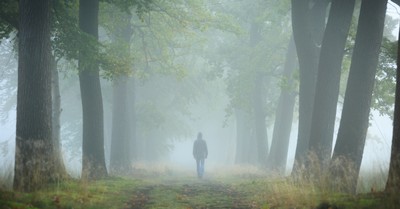
Why Is the Gentle Practice of Slow-Walking Going Viral?

Carbonatix Pre-Player Loader

Audio By Carbonatix

Brought to you by Christianity.com

A viral Tai Chi–inspired walking practice is gaining attention as a sustainable way to burn fat, boost balance, and quiet an anxious mind. The slow, intentional movements help regulate breathing, lower stress, and build core stability without the strain of high-impact exercise. As the season grows busy, many are discovering that this gentle form of movement offers a healthier rhythm—one that strengthens the body while bringing a centered, grounded calm.

If God often meets us in stillness rather than in striving, how might slowing our pace—even in something as simple as a daily walk—open our hearts to His peace and presence?

What's the most effective way to lose weight, stay healthy, and renew your mind? According to Marie Claire, recent studies show that Tai Chi, an artful walking practice, is trending for boosting minds and metabolisms alike. Don't believe the hype? Walking expert and chief medical advisor at All Trails, Dr. Suzanne Hackenmiller explains the intentional slow flow of motion this way: "Based on the ancient Chinese martial art of tai chi, it's less about getting from point A to B and more about developing a conscious connection with your body—focusing on maintaining good posture, keeping your balance, and controlling your breathing."

Resonating with the burnout, high-strung, and never-ending to-do lists in all of us, Tai Chi is gaining interest from individuals all over the world because of its simple, calming, accessible, and grounding benefits. Especially contrasted to our high-intensity workout culture, what if slowing our pace gets us back to the rhythms of stillness God always had in mind for His creation?

What Is "Slow-Walking?"

Rooted in gentle, intentional, and controlled movements, Tai Chi principles focus on balance, flow, and mindfulness. While many Christians are against yoga or mindful practices, there are biblical ways to renew ourselves and our minds by slowing down, being intentional, and meditating on God's Word.

Just like breathing, deep breathing and slowing our pace are skills that can be learned. These easy and accessible practices can be done inside or out, summer or winter, in need or plenty. Because what they require is something from our minds: The ability to pause, stop, and say yes to intentional habits and practices that actually matter. They require us to hit the brakes on the anxiety, the nervousness to do and be more, and instead, exchange that for a slower and more intentional way of life. 

Not only are these practices supportive of chronic stress and burnout, but they can fit into our daily lives. How? Because they model the 7-day structure that Genesis points to: Work 6 days and rest 1. Walk when you can, eat right, and care for your Temple. But don't forget, in the busyness of life, to pay attention to what matters. 
Quote from an article about slow-walking

What Is Tai-Chi?

By definition, Tai Chi is an art of embracing the body, mind, and spirit. In other words, it encompasses our bodies as bio-psycho-social-emotional beings. Getting its roots from Ancient China, it’s known to be one of the most effective practices for mental and physical health because of its easy accessibility and quick results.

Seen as a “mind-body” exercise, Tai Chi began as a famous martial art. While Tai Chi can mean many different things to many different people, at its core, it’s a moving meditation. That is, it combines gentle exercise with mindful thinking. Its purpose is to cultivate “inner life energy (qi)” throughout the body. 

With fluid movements, deep breathing, and relaxation techniques, the practice is effective because it balances what it calls “yin and yang” forces. For Christians, what’s important to note is the separation of “spirituality.” While many who practice Tai Chi believe in “a universal energy called chi (also spelled qi or ki depending on the language of origin),” or Taoism, they don’t believe in a supreme God or Creator. With caution, Got Questions urges Christians who are considering practicing Tai-Chi to take a step back: “Doing Tai Chi, even for physical purposes, is paying homage to a spiritual belief system at odds with God’s Word.”

What Are the Physical and Mental Benefits of "Slow-Walking?"

While Scripture speaks leaps and bounds about the benefit of rest and slowing down, it doesn't specifically mention walking or Tai Chi. What we do know, however, is that Jesus primarily walked, and He walked a lot. He was also known for slipping away to get quiet time with the Father, and He never turned down a good meal. 

Today, research shows that slowing down, especially in the face of anxiety, depression, and mental health challenges, has immense benefits. Physically, walking and practices like Tai Chi improve balance and stability, build core strength, burn fat at a sustainable pace, and are low-impact, meaning they're accessible for all ages. Mentally and emotionally, it can slow your heart rate and regulate breathing (this helps with deep breathing), reduce anxiety and depression, create a grounding meditative state, and reduce the pressure to "perform" when it comes to fitness. 

But you know what's greater than physical or mental benefits? Eternal benefits that outweigh this world. 

In Psalm 46:10, the Psalmist pens these words: "He says, 'Be still, and know that I am God; I will be exalted among the nations, I will be exalted in the earth'" (NLT). Why do I love this verse? Because in the lines prior, we read that someday, God will make wars cease. He will break the bows, shatter the spears, and burn shields with fire. And you know what we're called to do? Be still and know. Cease from striving. Slow down. 

Friends, fads like Tai Chi will continue to exist. Helpful habits for this generation will come and go. But the Word of the Lord and His truth will remain forever. Go for a walk? Absolutely. Learn to slow down? For sure. But then ask yourself these questions:

-"Where is God asking me to walk, not run?"
-"How can I cultivate a practice of Sabbath?"
-"Where am I striving when what I really need is to be still?"
-"How can I implement stillness in sacred spaces for my home and family?"
-”Is there an area of my life that I still need to surrender to the Lord?”
-”Am I living at a pace that is unsustainable and unhealthy? If yes, why? If not, can I make other necessary changes to live better?”
-”Am I comfortable with stillness and slowing down?”

Slowing our pace can help us to listen better, breathe deeper, and receive God's presence. But as we learn to walk a little slower, we might just hear God's rhythm for our lives that He established in days of old. Small, slow steps over time can reset your whole day and open your heart to peace. 

This week, try slow walking for 5-10 minutes. On your walks, choose to breathe intentionally, notice your surroundings, and walk with prayer or gratitude. Tai Chi or not, slowing down does a body good. 

Remember Jesus' words in Matthew 11:28-30:

"Come to me, all you who are weary and burdened, and I will give you rest. Take my yoke upon you and learn from me, for I am gentle and humble in heart, and you will find rest for your souls. For my yoke is easy and my burden is light” (NIV). 

Find a rest deeper than fading practices. Embrace a stillness that surpasses understanding. Come to Him who longs for you—exactly as you are. And when you do, know this: You will find rest for your souls. Even amidst this crumbling world. That is a promise He will continue to keep for eternity. The question is, will you believe it today? 

A Prayer to Slow Down

Dear Jesus,
Fads in this world will continue to come and go. While slowing down and embracing practices like Tai Chi might be helpful for rest, remind us that we can only find true and eternal rest in you alone. Show us how to slow down, be mindful of the lives you've given us, and live with restful spirits. Then, encourage us to help others live in this way. Please provide us with your real, true, and eternal rest that surpasses anything this world could offer. And when we stumble, please welcome us back with open arms and refreshment of our souls. Help us to realize that your way is better, and the rest you give is eternal. We love, praise, and thank you, Jesus.
 Amen. 

Photo Credit: ©iStock/Getty Images Plus/SanderStock

amber ginter headshotAmber Ginter is a teacher-turned-author who loves Jesus, her husband Ben, and granola. Growing up Amber looked for faith and mental health resources and found none. Today, she offers hope for young Christians struggling with mental illness that goes beyond simply reading your Bible and praying more. Because you can love Jesus and still suffer from anxiety. You can download her top faith and mental health resources for free to help navigate books, podcasts, videos, and influencers from a faith lens perspective. Visit her website at amberginter.com.

This article originally appeared on Christianity.com. For more faith-building resources, visit Christianity.com. Christianity.com
 

Salem News Channel Today

Sponsored Links


September 26 - Phoenix, AZ
Scottsdale Center for the Performing Arts


November 2 - Detroit, MI
Zion Christian Church in Troy


October 6 - Los Angeles, CA
Pasadena Convention Center


November 5 - San Antonio, TX
Norris Centers – The Grand Red Oak Ballroom


October 8 - Sacramento, CA
William Jessup University


November 7 - Tampa, FL
The Palladium at St. Pete College


October 22 - Minneapolis, MN
Crowne Plaza AiRE


November 15 - San Francisco, CA
Fremont Marriott Silicon Valley


October 23 - Philadelphia, PA
Green Valley Country Club


November 16 - Denver, CO
CU South Denver - Formerly Wildlife Experience


November 2 - Chicago, IL
Chicago Westin Northwest in Itasca


November 21 - Cleveland, OH
Holiday Inn Rockside in Independence


Salem Radio Network Speakers

Larry Elder is an American lawyer, writer, and radio and television personality who calls himself the "Sage of South Central" a district of Los Angeles, Larry says his philosophy is to entertain, inform, provoke and to hopefully uplift. His calling card is "we have a country to save" and to him this means returning to the bedrock Constitutional principles of limited government and maximum personal responsibility. Elder's iconoclastic wit and intellectual agility makes him a particularly attractive voice in a nation that seems weary of traditional racial dialogue.” – Los Angeles Times.

Mike Gallagher Mike Gallagher began his broadcasting career in 1978 in Dayton, Ohio. Today, he is one of the most listened-to talk radio show hosts in America, recently having been ranked in the Talkers Magazine “Heavy Hundred” list – the 100 most important talk radio hosts in America. Prior to being launched into national syndication in 1998, Mike hosted the morning show on WABC-AM in New York City. Today, Talkers Magazine reports that his show is heard by over 3.75 million weekly listeners. Besides his radio work, Mike is seen on Fox News Channel as an on-air contributor, frequently appearing on the cable news giant.

Hugh Hewitt is one of the nation’s leading bloggers and a genuine media revolutionary. He brings that expertise, his wit and what The New Yorker magazine calls his “amiable but relentless manner” to his nationally syndicated show each day.

When Dr. Sebastian Gorka was growing up, he listened to talk radio under his pillow with a transistor radio, dreaming that one day he would be behind the microphone. Beginning New Year’s Day 2019, he got his wish. Gorka now hosts America First every weekday afternoon 3 to 6pm ET. Gorka’s unique story works well on the radio. He is national security analyst for the Fox News Channel and author of two books: "Why We Fight" and "Defeating Jihad." His latest book releasing this fall is “War For America’s Soul.” He is uniquely qualified to fight the culture war and stand up for what is great about America, his adopted home country.

Broadcasting from his home station of KRLA in Los Angeles, the Dennis Prager Show is heard across the country. Everything in life – from politics to religion to relationships – is grist for Dennis’ mill. If it’s interesting, if it affects your life, then Dennis will be talking about it – with passion, humor, insight and wisdom.

Sean Hannity is a conservative radio and television host, and one of the original primetime hosts on the Fox News Channel, where he has appeared since 1996. Sean Hannity began his radio career at a college station in California, before moving on to markets in the Southeast and New York. Today, he’s one of the most listened to on-air voices. Hannity’s radio program went into national syndication on September 10, 2001, and airs on more than 500 stations. Talkers Magazine estimates Hannity’s weekly radio audience at 13.5 million. In 1996 he was hired as one of the original hosts on Fox News Channel. As host of several popular Fox programs, Hannity has become the highest-paid news anchor on television.

Michelle Malkin is a mother, wife, blogger, conservative syndicated columnist, longtime cable TV news commentator, and best-selling author of six books. She started her newspaper journalism career at the Los Angeles Daily News in 1992, moved to the Seattle Times in 1995, and has been penning nationally syndicated newspaper columns for Creators Syndicate since 1999. She is founder of conservative Internet start-ups Hot Air and Twitchy.com. Malkin has received numerous awards for her investigative journalism, including the Council on Governmental Ethics Laws (COGEL) national award for outstanding service for the cause of governmental ethics and leadership (1998), the Reed Irvine Accuracy in Media Award for Investigative Journalism (2006), the Heritage Foundation and Franklin Center for Government & Public Integrity's Breitbart Award for Excellence in Journalism (2013), the Center for Immigration Studies' Eugene Katz Award for Excellence in the Coverage of Immigration Award (2016), and the Manhattan Film Festival's Film Heals Award (2018). Married for 26 years and the mother of two teenage children, she lives with her family in Colorado. Follow her at michellemalkin.com. (Photo reprinted with kind permission from Peter Duke Photography.)

Sponsored by:

Why Is the Gentle Practice of Slow-Walking Going Viral?

Carbonatix Pre-Player Loader

Audio By Carbonatix

Brought to you by Christianity.com

A viral Tai Chi–inspired walking practice is gaining attention as a sustainable way to burn fat, boost balance, and quiet an anxious mind. The slow, intentional movements help regulate breathing, lower stress, and build core stability without the strain of high-impact exercise. As the season grows busy, many are discovering that this gentle form of movement offers a healthier rhythm—one that strengthens the body while bringing a centered, grounded calm.

If God often meets us in stillness rather than in striving, how might slowing our pace—even in something as simple as a daily walk—open our hearts to His peace and presence?

What's the most effective way to lose weight, stay healthy, and renew your mind? According to Marie Claire, recent studies show that Tai Chi, an artful walking practice, is trending for boosting minds and metabolisms alike. Don't believe the hype? Walking expert and chief medical advisor at All Trails, Dr. Suzanne Hackenmiller explains the intentional slow flow of motion this way: "Based on the ancient Chinese martial art of tai chi, it's less about getting from point A to B and more about developing a conscious connection with your body—focusing on maintaining good posture, keeping your balance, and controlling your breathing."

Resonating with the burnout, high-strung, and never-ending to-do lists in all of us, Tai Chi is gaining interest from individuals all over the world because of its simple, calming, accessible, and grounding benefits. Especially contrasted to our high-intensity workout culture, what if slowing our pace gets us back to the rhythms of stillness God always had in mind for His creation?

What Is "Slow-Walking?"

Rooted in gentle, intentional, and controlled movements, Tai Chi principles focus on balance, flow, and mindfulness. While many Christians are against yoga or mindful practices, there are biblical ways to renew ourselves and our minds by slowing down, being intentional, and meditating on God's Word.

Just like breathing, deep breathing and slowing our pace are skills that can be learned. These easy and accessible practices can be done inside or out, summer or winter, in need or plenty. Because what they require is something from our minds: The ability to pause, stop, and say yes to intentional habits and practices that actually matter. They require us to hit the brakes on the anxiety, the nervousness to do and be more, and instead, exchange that for a slower and more intentional way of life. 

Not only are these practices supportive of chronic stress and burnout, but they can fit into our daily lives. How? Because they model the 7-day structure that Genesis points to: Work 6 days and rest 1. Walk when you can, eat right, and care for your Temple. But don't forget, in the busyness of life, to pay attention to what matters. 

Quote from an article about slow-walking

What Is Tai-Chi?

By definition, Tai Chi is an art of embracing the body, mind, and spirit. In other words, it encompasses our bodies as bio-psycho-social-emotional beings. Getting its roots from Ancient China, it’s known to be one of the most effective practices for mental and physical health because of its easy accessibility and quick results.

Seen as a “mind-body” exercise, Tai Chi began as a famous martial art. While Tai Chi can mean many different things to many different people, at its core, it’s a moving meditation. That is, it combines gentle exercise with mindful thinking. Its purpose is to cultivate “inner life energy (qi)” throughout the body. 

With fluid movements, deep breathing, and relaxation techniques, the practice is effective because it balances what it calls “yin and yang” forces. For Christians, what’s important to note is the separation of “spirituality.” While many who practice Tai Chi believe in “a universal energy called chi (also spelled qi or ki depending on the language of origin),” or Taoism, they don’t believe in a supreme God or Creator. With caution, Got Questions urges Christians who are considering practicing Tai-Chi to take a step back: “Doing Tai Chi, even for physical purposes, is paying homage to a spiritual belief system at odds with God’s Word.”

What Are the Physical and Mental Benefits of "Slow-Walking?"

While Scripture speaks leaps and bounds about the benefit of rest and slowing down, it doesn't specifically mention walking or Tai Chi. What we do know, however, is that Jesus primarily walked, and He walked a lot. He was also known for slipping away to get quiet time with the Father, and He never turned down a good meal. 

Today, research shows that slowing down, especially in the face of anxiety, depression, and mental health challenges, has immense benefits. Physically, walking and practices like Tai Chi improve balance and stability, build core strength, burn fat at a sustainable pace, and are low-impact, meaning they're accessible for all ages. Mentally and emotionally, it can slow your heart rate and regulate breathing (this helps with deep breathing), reduce anxiety and depression, create a grounding meditative state, and reduce the pressure to "perform" when it comes to fitness. 

But you know what's greater than physical or mental benefits? Eternal benefits that outweigh this world. 

In Psalm 46:10, the Psalmist pens these words: "He says, 'Be still, and know that I am God; I will be exalted among the nations, I will be exalted in the earth'" (NLT). Why do I love this verse? Because in the lines prior, we read that someday, God will make wars cease. He will break the bows, shatter the spears, and burn shields with fire. And you know what we're called to do? Be still and know. Cease from striving. Slow down. 

Friends, fads like Tai Chi will continue to exist. Helpful habits for this generation will come and go. But the Word of the Lord and His truth will remain forever. Go for a walk? Absolutely. Learn to slow down? For sure. But then ask yourself these questions:

-"Where is God asking me to walk, not run?"
-"How can I cultivate a practice of Sabbath?"
-"Where am I striving when what I really need is to be still?"
-"How can I implement stillness in sacred spaces for my home and family?"
-”Is there an area of my life that I still need to surrender to the Lord?”
-”Am I living at a pace that is unsustainable and unhealthy? If yes, why? If not, can I make other necessary changes to live better?”
-”Am I comfortable with stillness and slowing down?”

Slowing our pace can help us to listen better, breathe deeper, and receive God's presence. But as we learn to walk a little slower, we might just hear God's rhythm for our lives that He established in days of old. Small, slow steps over time can reset your whole day and open your heart to peace. 

This week, try slow walking for 5-10 minutes. On your walks, choose to breathe intentionally, notice your surroundings, and walk with prayer or gratitude. Tai Chi or not, slowing down does a body good. 

Remember Jesus' words in Matthew 11:28-30:

"Come to me, all you who are weary and burdened, and I will give you rest. Take my yoke upon you and learn from me, for I am gentle and humble in heart, and you will find rest for your souls. For my yoke is easy and my burden is light” (NIV). 

Find a rest deeper than fading practices. Embrace a stillness that surpasses understanding. Come to Him who longs for you—exactly as you are. And when you do, know this: You will find rest for your souls. Even amidst this crumbling world. That is a promise He will continue to keep for eternity. The question is, will you believe it today? 

A Prayer to Slow Down

Dear Jesus,
Fads in this world will continue to come and go. While slowing down and embracing practices like Tai Chi might be helpful for rest, remind us that we can only find true and eternal rest in you alone. Show us how to slow down, be mindful of the lives you've given us, and live with restful spirits. Then, encourage us to help others live in this way. Please provide us with your real, true, and eternal rest that surpasses anything this world could offer. And when we stumble, please welcome us back with open arms and refreshment of our souls. Help us to realize that your way is better, and the rest you give is eternal. We love, praise, and thank you, Jesus.
 Amen. 

Photo Credit: ©iStock/Getty Images Plus/SanderStock

amber ginter headshotAmber Ginter is a teacher-turned-author who loves Jesus, her husband Ben, and granola. Growing up Amber looked for faith and mental health resources and found none. Today, she offers hope for young Christians struggling with mental illness that goes beyond simply reading your Bible and praying more. Because you can love Jesus and still suffer from anxiety. You can download her top faith and mental health resources for free to help navigate books, podcasts, videos, and influencers from a faith lens perspective. Visit her website at amberginter.com.

This article originally appeared on Christianity.com. For more faith-building resources, visit Christianity.com. Christianity.com
 

Salem News Channel Today

Sponsored Links

On Air & Up Next

See the Full Program Guide