Why the Jewish Roots of Christianity Matter

Carbonatix Pre-Player Loader

Audio By Carbonatix

For the first time in almost 2,000 years, Jews and Christians are learning how to be friends and relate to one another with respect and appreciation. To fully understand how new and delicate this relationship is, we must know our history and what has brought us to this moment. If charted out graphically, the history of Jewish-Christian relations would look more like a circle that is starting to close. The beginning of the circle, some 2,000 years ago, is from the time of Acts 2, when the early church was born and was an internal sect of the Jewish faith. The early Jewish believers in Jesus participated in the temple sacrificial system and observed the Sabbath and all the feast days.

From there, Christianity began to move away from its Jewish roots, resulting in two totally separate faiths that then became enemies. Some 500 years ago, the trajectory began to change, and the circle began to close as a large segment of Christianity returned to its biblical foundations. While we have made tremendous progress in mending the breach that was our history, we still have a way to go before it can be described as repaired.

Early Jewish Christianity Becomes Increasingly Gentile

Today, most Christians understand Jesus was Jewish, as were His disciples and the apostles. This is where the early church and our journey begin. All that we hold dear as Christians came through the Jewish people, and the better we understand the Jewish roots of our faith, the stronger our Christian faith becomes. The early Christian movement—known as “The Way”—was entirely Jewish for almost 10 years after the resurrection and ascension of Jesus. The book of Acts chronicles early tensions between the mainstream Jewish community and the early believers in Jesus. In fact, there were times when Jews persecuted the apostles for preaching about Jesus. For example, Steven was stoned to death, and when a Jewish mob sought to kill Paul, the Romans put him into custody in Caesarea to save his life. But at this point, these were internal squabbles within Judaism.

Gentiles began to join the early church within a few years, and tensions surfaced within the movement itself—between Jewish believers in Jesus and Gentile converts from pagan Roman society. Many of Paul’s epistles address disagreements among these different groups within the early church. As Christianity spread throughout the Roman Empire, it endured periods of intense persecution. As long as it had been a sect of the legal Jewish religion, the believers were safe. However, this became impossible as the two faiths developed quite separately from one another. Then Rome turned against the Jews as well, and both religions suffered tremendously at the hands of the Roman authorities.

After Roman forces destroyed Jerusalem and the temple in AD 70, the two faiths also became separated geographically. The headquarters for the Jewish faith moved north to Yavne in the Galilee, where Jewish leaders began to look inward as they focused on the survival of Judaism while in exile and without a temple. The headquarters for the Christian faith began to develop in Alexandria, Antioch, and Rome, where churches and their leadership were quickly becoming less Jewish and predominantly gentile.

Christianity Severed from Its Roots

Once the Roman emperor Constantine converted to Christianity in AD 312, everything changed for Christians. The once persecuted faith became the official state religion. The church now had political power but lost its spiritual purity over time. Early church fathers took advantage of their power and began to preach against the Jewish religion. It was time to get back at the Jews for their rejection of this new faith and draw a clear line of distinction between the two religions. This line of demarcation actually severed the Christian faith from its Jewish roots.

The apostle Paul had warned against this very thing in Romans 9-11. He admonished the believers in Rome to guard against arrogance and honor the Jewish roots of their faith. He likened the relationship to a tree of faith that Christians had been grafted into as wild olive branches. Christians were to be mindful that they were merely branches, and it was the root supporting and nourishing them. If only the early church fathers had heeded Paul’s warning.

Over the centuries, the sermons against Judaism developed into antisemitism that condoned the maltreatment of the Jewish people as “Christ-killers.” Because of the political power of the state church, antisemitic theology produced centuries of anti-Jewish legislation, persecution, ghettos, and even expulsions. The Jews were often forced out of one country into another, only to be later expelled from there as well—often by a king who was also the head of the state church.

Christianity Begins to Find Its Roots

The very thing that brought about a major change and began the closing of our circle of history was also strongly resisted by these same state churches—the translation of the Bible into the common languages. William Tyndale was executed for his English translation, which was then adopted by the church of England several months after his death at the stake. Once the people could read the Bible for themselves, not only did the church lose its control over them, but they discovered the Jewish roots of the Christian faith. They learned that Jesus was Jewish, and they found the Bible was full of prophecies that one day the Jewish people would return to their ancient homeland. They began to pray for that return, and a whole movement of Protestants in Britain became known as Restorationists because of their expectation of the restoration of the Jewish people to their land.

Numerous preachers taught about this future restoration of Israel, and over the years, several key individuals were involved in that return. A few notable examples include Rev. Hechler, who befriended and assisted Theodore Herzl; Lord Balfour, who penned the Balfour Declaration; Prime Minister Lloyd George, who supported and enacted the Balfour Declaration; General Orde Wingate, who trained Jewish troops in Palestine; and many others. While Christianity was making this tremendous and slow turnaround, Jew-hatred developed from an entirely different place: the Nazi movement in Germany. While Nazism had its own strange beliefs opposed to Christianity, Hitler knew how to silence the church in Germany: by distributing their antisemitic teachings to justify his plan of a final solution.

The Jews had already started returning to their homeland, and Christianity itself was finding its ancient biblical roots—but not quickly enough. Six million Jews died in the Holocaust, and centuries of Christian antisemitism had made it possible. Thankfully, the story does not end with the Holocaust, and much has happened since then to mend this breach between Jews and Christians. Despite this long, complicated history, there is one unmistakable truth: Christianity cannot be understood apart from its Jewish roots. The more Christians rediscover and comprehend the foundations of our faith—the people, the promises, and the covenant from which Christianity was birthed—the more the relationship between Jews and Christians will be healed.

Top photo credit: ©GettyImages/tomertu

This article was originally published on June 14, 2022, at ICEJUSA.org.

Related podcast:

ICEJ screenshot of embed, Dr. Susan Michael


Dr. Susan MichaelFor over 40 years, Dr. Susan Michael has advanced the International Christian Embassy Jerusalem (ICEJ) in the USA and worldwide. She serves as the USA President and sits on the ICEJ’s international Board of Directors. She is frequently asked to address complex issues to diverse audiences—including antisemitism, Jewish-Christian relations, and Middle East affairs—and does so with clarity and grace. Dr. Michael leads the American Christian Leaders for Israel (ACLI) network, has authored books, such as Encounter the 3D Bible: How to Read the Bible so It Comes to Life, and has developed educational resources, including the IsraelAnswers website, ICEJ U online courses, and curricula for Christian colleges.


Salem News Channel Today

Sponsored Links


September 26 - Phoenix, AZ
Scottsdale Center for the Performing Arts


November 2 - Detroit, MI
Zion Christian Church in Troy


October 6 - Los Angeles, CA
Pasadena Convention Center


November 5 - San Antonio, TX
Norris Centers – The Grand Red Oak Ballroom


October 8 - Sacramento, CA
William Jessup University


November 7 - Tampa, FL
The Palladium at St. Pete College


October 22 - Minneapolis, MN
Crowne Plaza AiRE


November 15 - San Francisco, CA
Fremont Marriott Silicon Valley


October 23 - Philadelphia, PA
Green Valley Country Club


November 16 - Denver, CO
CU South Denver - Formerly Wildlife Experience


November 2 - Chicago, IL
Chicago Westin Northwest in Itasca


November 21 - Cleveland, OH
Holiday Inn Rockside in Independence


Salem Radio Network Speakers

Larry Elder is an American lawyer, writer, and radio and television personality who calls himself the "Sage of South Central" a district of Los Angeles, Larry says his philosophy is to entertain, inform, provoke and to hopefully uplift. His calling card is "we have a country to save" and to him this means returning to the bedrock Constitutional principles of limited government and maximum personal responsibility. Elder's iconoclastic wit and intellectual agility makes him a particularly attractive voice in a nation that seems weary of traditional racial dialogue.” – Los Angeles Times.

Mike Gallagher Mike Gallagher began his broadcasting career in 1978 in Dayton, Ohio. Today, he is one of the most listened-to talk radio show hosts in America, recently having been ranked in the Talkers Magazine “Heavy Hundred” list – the 100 most important talk radio hosts in America. Prior to being launched into national syndication in 1998, Mike hosted the morning show on WABC-AM in New York City. Today, Talkers Magazine reports that his show is heard by over 3.75 million weekly listeners. Besides his radio work, Mike is seen on Fox News Channel as an on-air contributor, frequently appearing on the cable news giant.

Hugh Hewitt is one of the nation’s leading bloggers and a genuine media revolutionary. He brings that expertise, his wit and what The New Yorker magazine calls his “amiable but relentless manner” to his nationally syndicated show each day.

When Dr. Sebastian Gorka was growing up, he listened to talk radio under his pillow with a transistor radio, dreaming that one day he would be behind the microphone. Beginning New Year’s Day 2019, he got his wish. Gorka now hosts America First every weekday afternoon 3 to 6pm ET. Gorka’s unique story works well on the radio. He is national security analyst for the Fox News Channel and author of two books: "Why We Fight" and "Defeating Jihad." His latest book releasing this fall is “War For America’s Soul.” He is uniquely qualified to fight the culture war and stand up for what is great about America, his adopted home country.

Broadcasting from his home station of KRLA in Los Angeles, the Dennis Prager Show is heard across the country. Everything in life – from politics to religion to relationships – is grist for Dennis’ mill. If it’s interesting, if it affects your life, then Dennis will be talking about it – with passion, humor, insight and wisdom.

Sean Hannity is a conservative radio and television host, and one of the original primetime hosts on the Fox News Channel, where he has appeared since 1996. Sean Hannity began his radio career at a college station in California, before moving on to markets in the Southeast and New York. Today, he’s one of the most listened to on-air voices. Hannity’s radio program went into national syndication on September 10, 2001, and airs on more than 500 stations. Talkers Magazine estimates Hannity’s weekly radio audience at 13.5 million. In 1996 he was hired as one of the original hosts on Fox News Channel. As host of several popular Fox programs, Hannity has become the highest-paid news anchor on television.

Michelle Malkin is a mother, wife, blogger, conservative syndicated columnist, longtime cable TV news commentator, and best-selling author of six books. She started her newspaper journalism career at the Los Angeles Daily News in 1992, moved to the Seattle Times in 1995, and has been penning nationally syndicated newspaper columns for Creators Syndicate since 1999. She is founder of conservative Internet start-ups Hot Air and Twitchy.com. Malkin has received numerous awards for her investigative journalism, including the Council on Governmental Ethics Laws (COGEL) national award for outstanding service for the cause of governmental ethics and leadership (1998), the Reed Irvine Accuracy in Media Award for Investigative Journalism (2006), the Heritage Foundation and Franklin Center for Government & Public Integrity's Breitbart Award for Excellence in Journalism (2013), the Center for Immigration Studies' Eugene Katz Award for Excellence in the Coverage of Immigration Award (2016), and the Manhattan Film Festival's Film Heals Award (2018). Married for 26 years and the mother of two teenage children, she lives with her family in Colorado. Follow her at michellemalkin.com. (Photo reprinted with kind permission from Peter Duke Photography.)

Sponsored by:

Why the Jewish Roots of Christianity Matter

Carbonatix Pre-Player Loader

Audio By Carbonatix

For the first time in almost 2,000 years, Jews and Christians are learning how to be friends and relate to one another with respect and appreciation. To fully understand how new and delicate this relationship is, we must know our history and what has brought us to this moment. If charted out graphically, the history of Jewish-Christian relations would look more like a circle that is starting to close. The beginning of the circle, some 2,000 years ago, is from the time of Acts 2, when the early church was born and was an internal sect of the Jewish faith. The early Jewish believers in Jesus participated in the temple sacrificial system and observed the Sabbath and all the feast days.

From there, Christianity began to move away from its Jewish roots, resulting in two totally separate faiths that then became enemies. Some 500 years ago, the trajectory began to change, and the circle began to close as a large segment of Christianity returned to its biblical foundations. While we have made tremendous progress in mending the breach that was our history, we still have a way to go before it can be described as repaired.

Early Jewish Christianity Becomes Increasingly Gentile

Today, most Christians understand Jesus was Jewish, as were His disciples and the apostles. This is where the early church and our journey begin. All that we hold dear as Christians came through the Jewish people, and the better we understand the Jewish roots of our faith, the stronger our Christian faith becomes. The early Christian movement—known as “The Way”—was entirely Jewish for almost 10 years after the resurrection and ascension of Jesus. The book of Acts chronicles early tensions between the mainstream Jewish community and the early believers in Jesus. In fact, there were times when Jews persecuted the apostles for preaching about Jesus. For example, Steven was stoned to death, and when a Jewish mob sought to kill Paul, the Romans put him into custody in Caesarea to save his life. But at this point, these were internal squabbles within Judaism.

Gentiles began to join the early church within a few years, and tensions surfaced within the movement itself—between Jewish believers in Jesus and Gentile converts from pagan Roman society. Many of Paul’s epistles address disagreements among these different groups within the early church. As Christianity spread throughout the Roman Empire, it endured periods of intense persecution. As long as it had been a sect of the legal Jewish religion, the believers were safe. However, this became impossible as the two faiths developed quite separately from one another. Then Rome turned against the Jews as well, and both religions suffered tremendously at the hands of the Roman authorities.

After Roman forces destroyed Jerusalem and the temple in AD 70, the two faiths also became separated geographically. The headquarters for the Jewish faith moved north to Yavne in the Galilee, where Jewish leaders began to look inward as they focused on the survival of Judaism while in exile and without a temple. The headquarters for the Christian faith began to develop in Alexandria, Antioch, and Rome, where churches and their leadership were quickly becoming less Jewish and predominantly gentile.

Christianity Severed from Its Roots

Once the Roman emperor Constantine converted to Christianity in AD 312, everything changed for Christians. The once persecuted faith became the official state religion. The church now had political power but lost its spiritual purity over time. Early church fathers took advantage of their power and began to preach against the Jewish religion. It was time to get back at the Jews for their rejection of this new faith and draw a clear line of distinction between the two religions. This line of demarcation actually severed the Christian faith from its Jewish roots.

The apostle Paul had warned against this very thing in Romans 9-11. He admonished the believers in Rome to guard against arrogance and honor the Jewish roots of their faith. He likened the relationship to a tree of faith that Christians had been grafted into as wild olive branches. Christians were to be mindful that they were merely branches, and it was the root supporting and nourishing them. If only the early church fathers had heeded Paul’s warning.

Over the centuries, the sermons against Judaism developed into antisemitism that condoned the maltreatment of the Jewish people as “Christ-killers.” Because of the political power of the state church, antisemitic theology produced centuries of anti-Jewish legislation, persecution, ghettos, and even expulsions. The Jews were often forced out of one country into another, only to be later expelled from there as well—often by a king who was also the head of the state church.

Christianity Begins to Find Its Roots

The very thing that brought about a major change and began the closing of our circle of history was also strongly resisted by these same state churches—the translation of the Bible into the common languages. William Tyndale was executed for his English translation, which was then adopted by the church of England several months after his death at the stake. Once the people could read the Bible for themselves, not only did the church lose its control over them, but they discovered the Jewish roots of the Christian faith. They learned that Jesus was Jewish, and they found the Bible was full of prophecies that one day the Jewish people would return to their ancient homeland. They began to pray for that return, and a whole movement of Protestants in Britain became known as Restorationists because of their expectation of the restoration of the Jewish people to their land.

Numerous preachers taught about this future restoration of Israel, and over the years, several key individuals were involved in that return. A few notable examples include Rev. Hechler, who befriended and assisted Theodore Herzl; Lord Balfour, who penned the Balfour Declaration; Prime Minister Lloyd George, who supported and enacted the Balfour Declaration; General Orde Wingate, who trained Jewish troops in Palestine; and many others. While Christianity was making this tremendous and slow turnaround, Jew-hatred developed from an entirely different place: the Nazi movement in Germany. While Nazism had its own strange beliefs opposed to Christianity, Hitler knew how to silence the church in Germany: by distributing their antisemitic teachings to justify his plan of a final solution.

The Jews had already started returning to their homeland, and Christianity itself was finding its ancient biblical roots—but not quickly enough. Six million Jews died in the Holocaust, and centuries of Christian antisemitism had made it possible. Thankfully, the story does not end with the Holocaust, and much has happened since then to mend this breach between Jews and Christians. Despite this long, complicated history, there is one unmistakable truth: Christianity cannot be understood apart from its Jewish roots. The more Christians rediscover and comprehend the foundations of our faith—the people, the promises, and the covenant from which Christianity was birthed—the more the relationship between Jews and Christians will be healed.

Top photo credit: ©GettyImages/tomertu

This article was originally published on June 14, 2022, at ICEJUSA.org.

Related podcast:
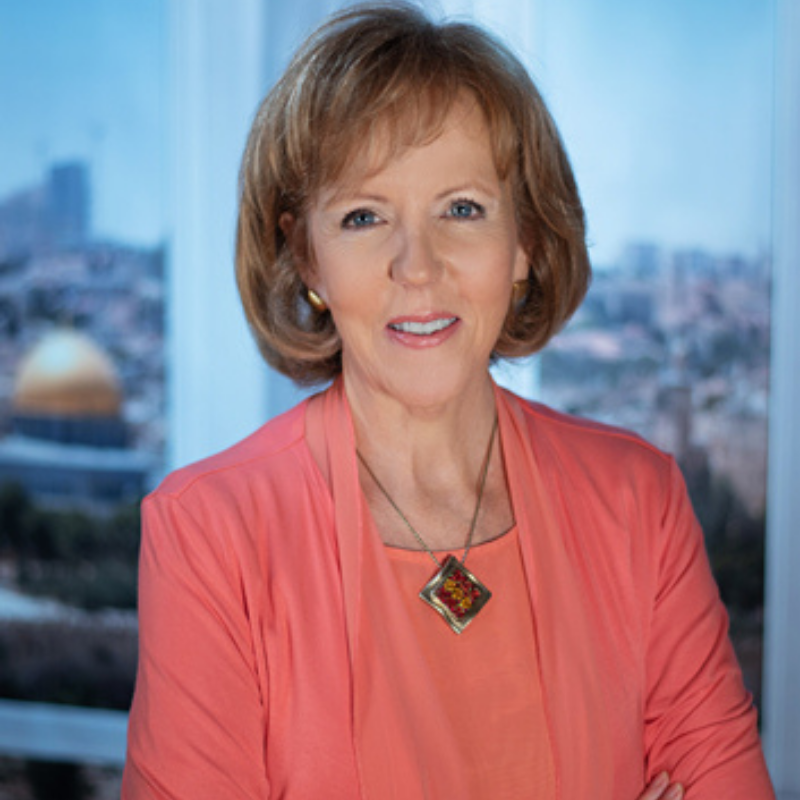
ICEJ screenshot of embed, Dr. Susan Michael


Dr. Susan MichaelFor over 40 years, Dr. Susan Michael has advanced the International Christian Embassy Jerusalem (ICEJ) in the USA and worldwide. She serves as the USA President and sits on the ICEJ’s international Board of Directors. She is frequently asked to address complex issues to diverse audiences—including antisemitism, Jewish-Christian relations, and Middle East affairs—and does so with clarity and grace. Dr. Michael leads the American Christian Leaders for Israel (ACLI) network, has authored books, such as Encounter the 3D Bible: How to Read the Bible so It Comes to Life, and has developed educational resources, including the IsraelAnswers website, ICEJ U online courses, and curricula for Christian colleges.

 

Salem News Channel Today

Sponsored Links

On Air & Up Next

See the Full Program Guide