











New-year hobby planning drives uptick in DIY health and wellness projects

Carbonatix Pre-Player Loader

Audio By Carbonatix

New-year hobby planning drives uptick in DIY health and wellness projects

The start of a new year is when millions of consumers try to make lasting changes in their lifestyles and habits, many aligning with their health and wellness ambitions.

While not unique, this trend’s knock-on effects are felt across a number of industries and sectors.

Furthermore, each generation sets its own health and wellness goals and is influenced by its own set of external pressures and expectations. So hobby planning around New Year’s resolutions is more diverse and changeable than you might expect.

To understand this interplay in more detail, Magical Butter looked at the kinds of projects people are picking for their 2026 resolutions as a result.

From New Year's Resolutions to Daily Rituals: How Gen Z is Redefining Wellness

The global wellness industry, which generates $2 trillion annually, is being reshaped by the habits and preferences of Gen Z and Millennial consumers, forcing brands and businesses within it to adapt, according to McKinsey.

The most significant shift experienced in recent years is one of routine; while health and wellness-focused hobbies might be adopted as part of a plan for annual transformation at the start of the year, they now play out day by day. So, for instance, rather than a person pledging to improve their fitness by exercising once a week, this is more likely to be achieved through meaningful, mindful reconfigurations of daily habits.

Diet is a particular focal point for hobby planning, because its impact on overall health—both in the short term and long term—is widely recognized by modern consumers. The weight management market is growing 9.94% a year, and the momentum it has achieved with younger people is reflected in other data sources.

For example, the International Food Information Council’s 2024 survey found that 66% of Gen Z respondents had adopted at least one specific diet in the previous 12 months. Compared with the 50% adoption rate for Gen Xers and around 40% for Baby Boomers, it’s clear that wellness matters more to the under-40s.

In terms of New Year’s goal-setting specifically, wellness habits continue to dominate resolutions made in different parts of the world. A January 2025 YouGov survey found that physical health improvements were the most common ambition, chosen by 52% of people for the following year.

DIY as a Central Principle

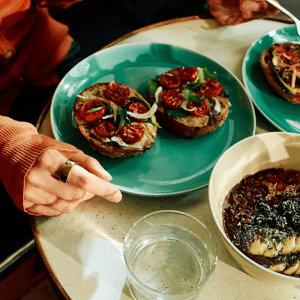
Another facet of modern wellness trends that sets them apart from their predecessors is a return to the do-it-yourself ethos. In the past, a person planning changes for the new year might have gone all-in on preprepared meals to cut calories from their diet. Now, cooking at home is far more commonplace. Research shows that between 2003 and 2023, this rose from 36% to 52% in men and from 69% to 72% in women. The same study found that men are spending more time on food prep each day on average.

That’s one of the reasons the kitchen gadgets market is expected to grow from $389.6 billion in 2025 to $582.3 billion in 2035. Consumers want to get involved in creating healthy dishes while still making it convenient. This is supported by the aforementioned McKinsey research, which shows that social media exposes Gen Z and Millennial consumers to more content designed to push them toward making wellness-related purchases than their older peers. As a result, although they account for just 25% of the market, they represent 40% of its spending power.

Wellness brands have emerged to cater to this trend. Demand for gadgets in everyday cooking appeals to consumers who want to take more control over the food they prepare, rather than outsourcing wellness-focused diet changes to processed, preprepared food suppliers.

The same principle applies to all areas of culinary hobbies and goal setting, whether that’s using hot air-powered popcorn makers to whip up a quick snack without relying on oil or adopting countertop air fryers to again reduce the reliance on fat in cooking, while also reducing energy usage in this context, tying in with sustainability goals.

The Safety Aspect

The rise in DIY kitchen-based health and wellness projects might speak to a generation-specific set of trends in New Year's goal-setting, but it comes with caveats. Chiefly, as consumers take food preparation into their own hands in greater numbers, the safety risks necessarily increase. For instance, according to the National Fire Protection Association, cooking is the leading cause of reported home fires in the United States.

Also important: increased vigilance when using new and unfamiliar ingredients, especially with on-trend botanical infusions, which often require precise temperature controls and extraction times that can be hazardous if mismanaged. The use of precision gadgets in the DIY cooking process can help address this concern, provided it's combined with adherence to the manufacturers’ preparation guidelines rather than a more slapdash, experimental approach.

How DIY Health and Wellness Projects Could Change Further in the Future

2026 looks set to be a year when consumers focus on the kitchen as their wellness hub. With DIY projects gaining traction, this will likely bring culinary skills to people who might not otherwise have developed them.

Whether this will stick in the long term is another question, one that has always been asked of New Year’s resolution-related trends. For something to avoid becoming a flash-in-the-pan fad and actually stay the course, it takes a tricky combination of convenience, provable efficacy, and social relevance. Factors such as increasing prices for premade meals and restaurant eating experiences might be as much a cause of DIY food projects staying the course as any health and wellness goal-setting.

This story was produced by Magical Butter and reviewed and distributed by Stacker.


Salem News Channel Today

Sponsored Links


September 26 - Phoenix, AZ
Scottsdale Center for the Performing Arts


November 2 - Detroit, MI
Zion Christian Church in Troy


October 6 - Los Angeles, CA
Pasadena Convention Center


November 5 - San Antonio, TX
Norris Centers – The Grand Red Oak Ballroom


October 8 - Sacramento, CA
William Jessup University


November 7 - Tampa, FL
The Palladium at St. Pete College


October 22 - Minneapolis, MN
Crowne Plaza AiRE


November 15 - San Francisco, CA
Fremont Marriott Silicon Valley


October 23 - Philadelphia, PA
Green Valley Country Club


November 16 - Denver, CO
CU South Denver - Formerly Wildlife Experience


November 2 - Chicago, IL
Chicago Westin Northwest in Itasca


November 21 - Cleveland, OH
Holiday Inn Rockside in Independence


Salem Radio Network Speakers
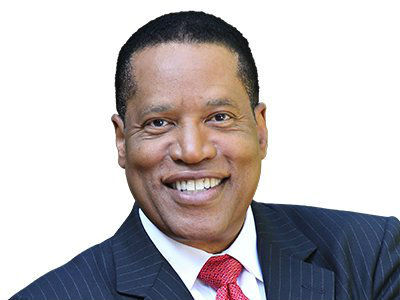
Larry Elder is an American lawyer, writer, and radio and television personality who calls himself the "Sage of South Central" a district of Los Angeles, Larry says his philosophy is to entertain, inform, provoke and to hopefully uplift. His calling card is "we have a country to save" and to him this means returning to the bedrock Constitutional principles of limited government and maximum personal responsibility. Elder's iconoclastic wit and intellectual agility makes him a particularly attractive voice in a nation that seems weary of traditional racial dialogue.” – Los Angeles Times.
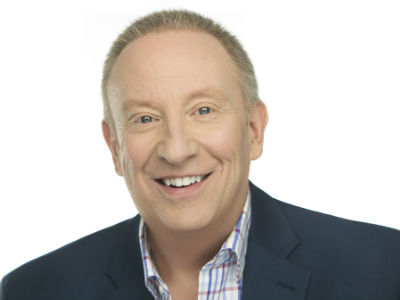
Mike Gallagher Mike Gallagher began his broadcasting career in 1978 in Dayton, Ohio. Today, he is one of the most listened-to talk radio show hosts in America, recently having been ranked in the Talkers Magazine “Heavy Hundred” list – the 100 most important talk radio hosts in America. Prior to being launched into national syndication in 1998, Mike hosted the morning show on WABC-AM in New York City. Today, Talkers Magazine reports that his show is heard by over 3.75 million weekly listeners. Besides his radio work, Mike is seen on Fox News Channel as an on-air contributor, frequently appearing on the cable news giant.
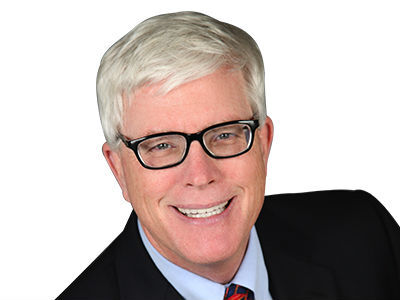
Hugh Hewitt is one of the nation’s leading bloggers and a genuine media revolutionary. He brings that expertise, his wit and what The New Yorker magazine calls his “amiable but relentless manner” to his nationally syndicated show each day.
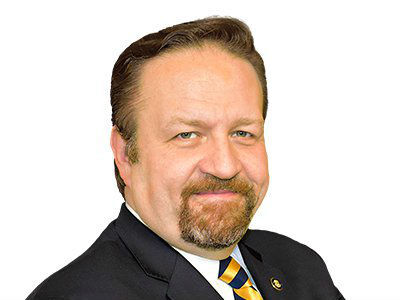
When Dr. Sebastian Gorka was growing up, he listened to talk radio under his pillow with a transistor radio, dreaming that one day he would be behind the microphone. Beginning New Year’s Day 2019, he got his wish. Gorka now hosts America First every weekday afternoon 3 to 6pm ET. Gorka’s unique story works well on the radio. He is national security analyst for the Fox News Channel and author of two books: "Why We Fight" and "Defeating Jihad." His latest book releasing this fall is “War For America’s Soul.” He is uniquely qualified to fight the culture war and stand up for what is great about America, his adopted home country.
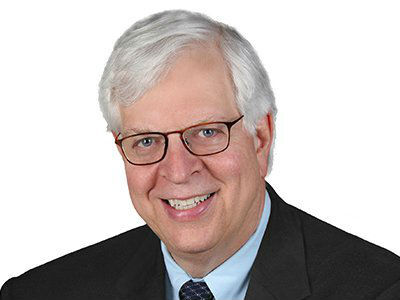
Broadcasting from his home station of KRLA in Los Angeles, the Dennis Prager Show is heard across the country. Everything in life – from politics to religion to relationships – is grist for Dennis’ mill. If it’s interesting, if it affects your life, then Dennis will be talking about it – with passion, humor, insight and wisdom.
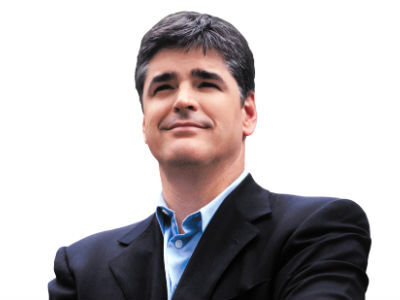
Sean Hannity is a conservative radio and television host, and one of the original primetime hosts on the Fox News Channel, where he has appeared since 1996. Sean Hannity began his radio career at a college station in California, before moving on to markets in the Southeast and New York. Today, he’s one of the most listened to on-air voices. Hannity’s radio program went into national syndication on September 10, 2001, and airs on more than 500 stations. Talkers Magazine estimates Hannity’s weekly radio audience at 13.5 million. In 1996 he was hired as one of the original hosts on Fox News Channel. As host of several popular Fox programs, Hannity has become the highest-paid news anchor on television.
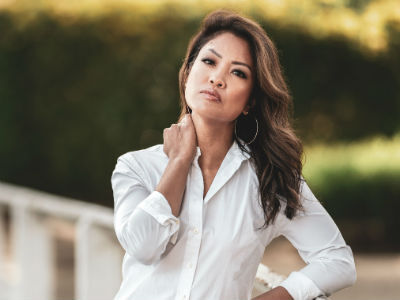
Michelle Malkin is a mother, wife, blogger, conservative syndicated columnist, longtime cable TV news commentator, and best-selling author of six books. She started her newspaper journalism career at the Los Angeles Daily News in 1992, moved to the Seattle Times in 1995, and has been penning nationally syndicated newspaper columns for Creators Syndicate since 1999. She is founder of conservative Internet start-ups Hot Air and Twitchy.com. Malkin has received numerous awards for her investigative journalism, including the Council on Governmental Ethics Laws (COGEL) national award for outstanding service for the cause of governmental ethics and leadership (1998), the Reed Irvine Accuracy in Media Award for Investigative Journalism (2006), the Heritage Foundation and Franklin Center for Government & Public Integrity's Breitbart Award for Excellence in Journalism (2013), the Center for Immigration Studies' Eugene Katz Award for Excellence in the Coverage of Immigration Award (2016), and the Manhattan Film Festival's Film Heals Award (2018). Married for 26 years and the mother of two teenage children, she lives with her family in Colorado. Follow her at michellemalkin.com. (Photo reprinted with kind permission from Peter Duke Photography.)

Sponsored by:

New-year hobby planning drives uptick in DIY health and wellness projects

Carbonatix Pre-Player Loader

Audio By Carbonatix

New-year hobby planning drives uptick in DIY health and wellness projects

The start of a new year is when millions of consumers try to make lasting changes in their lifestyles and habits, many aligning with their health and wellness ambitions.

While not unique, this trend’s knock-on effects are felt across a number of industries and sectors.

Furthermore, each generation sets its own health and wellness goals and is influenced by its own set of external pressures and expectations. So hobby planning around New Year’s resolutions is more diverse and changeable than you might expect.

To understand this interplay in more detail, Magical Butter looked at the kinds of projects people are picking for their 2026 resolutions as a result.

From New Year's Resolutions to Daily Rituals: How Gen Z is Redefining Wellness

The global wellness industry, which generates $2 trillion annually, is being reshaped by the habits and preferences of Gen Z and Millennial consumers, forcing brands and businesses within it to adapt, according to McKinsey.

The most significant shift experienced in recent years is one of routine; while health and wellness-focused hobbies might be adopted as part of a plan for annual transformation at the start of the year, they now play out day by day. So, for instance, rather than a person pledging to improve their fitness by exercising once a week, this is more likely to be achieved through meaningful, mindful reconfigurations of daily habits.

Diet is a particular focal point for hobby planning, because its impact on overall health—both in the short term and long term—is widely recognized by modern consumers. The weight management market is growing 9.94% a year, and the momentum it has achieved with younger people is reflected in other data sources.

For example, the International Food Information Council’s 2024 survey found that 66% of Gen Z respondents had adopted at least one specific diet in the previous 12 months. Compared with the 50% adoption rate for Gen Xers and around 40% for Baby Boomers, it’s clear that wellness matters more to the under-40s.

In terms of New Year’s goal-setting specifically, wellness habits continue to dominate resolutions made in different parts of the world. A January 2025 YouGov survey found that physical health improvements were the most common ambition, chosen by 52% of people for the following year.

DIY as a Central Principle

Another facet of modern wellness trends that sets them apart from their predecessors is a return to the do-it-yourself ethos. In the past, a person planning changes for the new year might have gone all-in on preprepared meals to cut calories from their diet. Now, cooking at home is far more commonplace. Research shows that between 2003 and 2023, this rose from 36% to 52% in men and from 69% to 72% in women. The same study found that men are spending more time on food prep each day on average.

That’s one of the reasons the kitchen gadgets market is expected to grow from $389.6 billion in 2025 to $582.3 billion in 2035. Consumers want to get involved in creating healthy dishes while still making it convenient. This is supported by the aforementioned McKinsey research, which shows that social media exposes Gen Z and Millennial consumers to more content designed to push them toward making wellness-related purchases than their older peers. As a result, although they account for just 25% of the market, they represent 40% of its spending power.

Wellness brands have emerged to cater to this trend. Demand for gadgets in everyday cooking appeals to consumers who want to take more control over the food they prepare, rather than outsourcing wellness-focused diet changes to processed, preprepared food suppliers.

The same principle applies to all areas of culinary hobbies and goal setting, whether that’s using hot air-powered popcorn makers to whip up a quick snack without relying on oil or adopting countertop air fryers to again reduce the reliance on fat in cooking, while also reducing energy usage in this context, tying in with sustainability goals.

The Safety Aspect

The rise in DIY kitchen-based health and wellness projects might speak to a generation-specific set of trends in New Year's goal-setting, but it comes with caveats. Chiefly, as consumers take food preparation into their own hands in greater numbers, the safety risks necessarily increase. For instance, according to the National Fire Protection Association, cooking is the leading cause of reported home fires in the United States.

Also important: increased vigilance when using new and unfamiliar ingredients, especially with on-trend botanical infusions, which often require precise temperature controls and extraction times that can be hazardous if mismanaged. The use of precision gadgets in the DIY cooking process can help address this concern, provided it's combined with adherence to the manufacturers’ preparation guidelines rather than a more slapdash, experimental approach.

How DIY Health and Wellness Projects Could Change Further in the Future

2026 looks set to be a year when consumers focus on the kitchen as their wellness hub. With DIY projects gaining traction, this will likely bring culinary skills to people who might not otherwise have developed them.

Whether this will stick in the long term is another question, one that has always been asked of New Year’s resolution-related trends. For something to avoid becoming a flash-in-the-pan fad and actually stay the course, it takes a tricky combination of convenience, provable efficacy, and social relevance. Factors such as increasing prices for premade meals and restaurant eating experiences might be as much a cause of DIY food projects staying the course as any health and wellness goal-setting.

This story was produced by Magical Butter and reviewed and distributed by Stacker.


Salem News Channel Today

Sponsored Links

On Air & Up Next

See the Full Program Guide