The most common street names in America and what they reveal about us

Carbonatix Pre-Player Loader

Audio By Carbonatix

The most common street names in America and what they reveal about us

Every American has an address, but few actually stop to think about what their street name says about where they live. Street names serve as the invisible thread that ties maps together, appearing on driver’s licenses, voter registrations, and every delivery label you print. However, they also reveal patterns of history, migration, and culture that stretch across centuries. ThatsThem has pulled together data from the Street Name Search database to gather the 10 most common street names throughout the country.

America’s top 10 most common street names

Across the U.S., certain street names appear again and again. These serve as familiar landmarks no matter what state you travel to. According to the Street Name Search database, which aggregates street names by city count within the country, the following 10 street names are the most prolific.

1. Main Street (9,361 cities)

The quintessential symbol of American life as presented on television, “Main Street” inevitably evokes feelings of community, commerce, and small-town pride. From coast to coast, it represents the heart of local economies. Whether it’s the place where diners are located, packages are dropped at the post office, or shopping takes place at a mom-and-pop location, it’s no wonder “Main Street” has become shorthand for everyday America throughout politics and pop culture.

2. Second Street (5,849 cities)

Interestingly enough, Second Street is actually more common than First Street. In many cities, early surveyors reserved First Street for riverfronts, industrial areas, or rail lines, as covered by AAA, which made Second Street the first true residential or commercial corridor. As a result, this subtle quirk shows how urban planning shaped linguistic habits across the country.

3. Third Street (5,341 cities)

Because of the grid pattern of early towns, Third Street is a common recurring name after Second Street. Many downtowns use numerical systems for ease of navigation, and Third Street typically sits near the city’s historical center as a result. This relic of early design priorities, which valued order and accessibility, resulted in it, ironically, this moniker becoming the third most popular street name in the country.

4. First Street (5,266 cities)

Coming in at (an equally ironic) fourth place, First Street still holds historical importance. In some places, it marks the oldest stretch of town, as it was often the literal first road surveyed or that which was reserved in the early days. Even if development eventually shifted the heart of the city elsewhere, First Street is where things typically began for a city.

5. Oak Street (4,770 cities)

“Oak” brings feelings of nature into urban environments and, as towns expanded, it is possible many cities began naming streets after the tree to maintain a close connection to the natural world. Offering a sense of beauty and familiarity, particularly in residential areas, Oak Street is a symbol of strength and endurance. This is a fitting attribute, considering oak edged out all other tree names as the most popular arboreal name for streets in the country.

6. Fourth Street (4,516 cities)

A staple of American grid systems in cities, Fourth Street continues the numbering trend seen earlier on this list. These streets often sit in transitional zones between downtown business districts and neighborhoods, where higher numbers begin, a metaphor for their position both physically and culturally.

7. Elm Street (4,422 cities)

Thanks in part to a popularized 20th-century horror film, Elm Street has become one of the most recognizable names in America. Yet, long before it took Hollywood by storm, this street name symbolized the opposite of the film: shade, beauty, and peace. Elms once lined countless city boulevards before a tree pandemic stemming from Dutch Elm Disease wiped out 50-100 million between 1930 and 1980, as detailed by the National Park Service. Now, in addition to being a horror reference, this name serves as a nostalgic tribute to lost greenery.

8. Pine Street (4,320 cities)

Similar to Oak Street, Pine Street evokes feelings of a distinctly American landscape. Stretching from New England forests to Pacific timber towns, the name’s simplicity and universality makes it adaptable to nearly every region throughout the country.

9. Church Street (4,257 cities)

Faith and community are the backbones of many American cities, and Church Street reflects this history. Many cities were built around a central church, given the evangelical start of the country, and this church often doubled as a meeting hall, school, or even shelter. As a result, the accompanying street was aptly named Church Street. The name endures even in secular times, serving as a marking point for where early towns first gathered.

10. Maple Street (4,122 cities)

Finally, Maple Street rounds out the top 10 most common city names as one that feels quintessentially suburban. Maple trees are known for their striking colors and versatility, which are two traits that mirror the cozy, family-oriented neighborhoods seen throughout the country.

A map of meaning hidden in plain sight

Every street name is a small reflection of the identity of an area, a linguistic landmark that connects us all through geography, history, and memory. Whether you live on a Main Street or a Pine Avenue, your address carries echoes of the past communities that created modern-day villages, towns and cities. Taken together, these names across America form more than a pattern. They form a story of growth and everyday life written on the country’s maps.

This story was produced by ThatsThem and reviewed and distributed by Stacker.
 

Salem News Channel Today

Sponsored Links


September 26 - Phoenix, AZ
Scottsdale Center for the Performing Arts


November 2 - Detroit, MI
Zion Christian Church in Troy


October 6 - Los Angeles, CA
Pasadena Convention Center


November 5 - San Antonio, TX
Norris Centers – The Grand Red Oak Ballroom


October 8 - Sacramento, CA
William Jessup University


November 7 - Tampa, FL
The Palladium at St. Pete College


October 22 - Minneapolis, MN
Crowne Plaza AiRE


November 15 - San Francisco, CA
Fremont Marriott Silicon Valley


October 23 - Philadelphia, PA
Green Valley Country Club


November 16 - Denver, CO
CU South Denver - Formerly Wildlife Experience


November 2 - Chicago, IL
Chicago Westin Northwest in Itasca


November 21 - Cleveland, OH
Holiday Inn Rockside in Independence


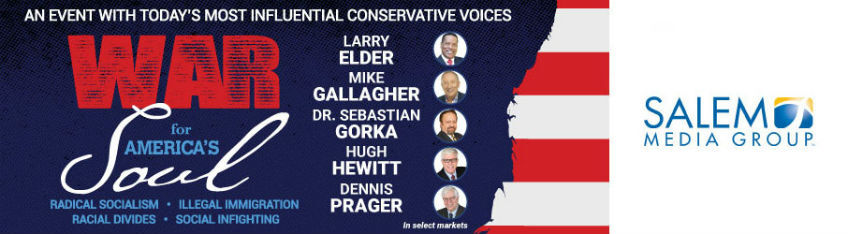
Salem Radio Network Speakers

Larry Elder is an American lawyer, writer, and radio and television personality who calls himself the "Sage of South Central" a district of Los Angeles, Larry says his philosophy is to entertain, inform, provoke and to hopefully uplift. His calling card is "we have a country to save" and to him this means returning to the bedrock Constitutional principles of limited government and maximum personal responsibility. Elder's iconoclastic wit and intellectual agility makes him a particularly attractive voice in a nation that seems weary of traditional racial dialogue.” – Los Angeles Times.

Mike Gallagher Mike Gallagher began his broadcasting career in 1978 in Dayton, Ohio. Today, he is one of the most listened-to talk radio show hosts in America, recently having been ranked in the Talkers Magazine “Heavy Hundred” list – the 100 most important talk radio hosts in America. Prior to being launched into national syndication in 1998, Mike hosted the morning show on WABC-AM in New York City. Today, Talkers Magazine reports that his show is heard by over 3.75 million weekly listeners. Besides his radio work, Mike is seen on Fox News Channel as an on-air contributor, frequently appearing on the cable news giant.

Hugh Hewitt is one of the nation’s leading bloggers and a genuine media revolutionary. He brings that expertise, his wit and what The New Yorker magazine calls his “amiable but relentless manner” to his nationally syndicated show each day.

When Dr. Sebastian Gorka was growing up, he listened to talk radio under his pillow with a transistor radio, dreaming that one day he would be behind the microphone. Beginning New Year’s Day 2019, he got his wish. Gorka now hosts America First every weekday afternoon 3 to 6pm ET. Gorka’s unique story works well on the radio. He is national security analyst for the Fox News Channel and author of two books: "Why We Fight" and "Defeating Jihad." His latest book releasing this fall is “War For America’s Soul.” He is uniquely qualified to fight the culture war and stand up for what is great about America, his adopted home country.

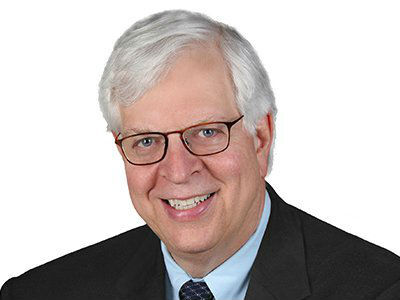
Broadcasting from his home station of KRLA in Los Angeles, the Dennis Prager Show is heard across the country. Everything in life – from politics to religion to relationships – is grist for Dennis’ mill. If it’s interesting, if it affects your life, then Dennis will be talking about it – with passion, humor, insight and wisdom.

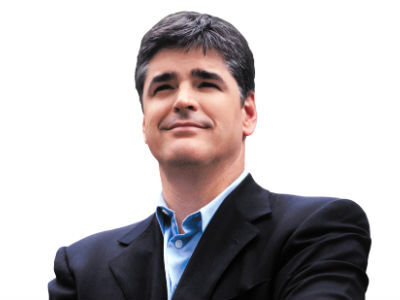
Sean Hannity is a conservative radio and television host, and one of the original primetime hosts on the Fox News Channel, where he has appeared since 1996. Sean Hannity began his radio career at a college station in California, before moving on to markets in the Southeast and New York. Today, he’s one of the most listened to on-air voices. Hannity’s radio program went into national syndication on September 10, 2001, and airs on more than 500 stations. Talkers Magazine estimates Hannity’s weekly radio audience at 13.5 million. In 1996 he was hired as one of the original hosts on Fox News Channel. As host of several popular Fox programs, Hannity has become the highest-paid news anchor on television.

Michelle Malkin is a mother, wife, blogger, conservative syndicated columnist, longtime cable TV news commentator, and best-selling author of six books. She started her newspaper journalism career at the Los Angeles Daily News in 1992, moved to the Seattle Times in 1995, and has been penning nationally syndicated newspaper columns for Creators Syndicate since 1999. She is founder of conservative Internet start-ups Hot Air and Twitchy.com. Malkin has received numerous awards for her investigative journalism, including the Council on Governmental Ethics Laws (COGEL) national award for outstanding service for the cause of governmental ethics and leadership (1998), the Reed Irvine Accuracy in Media Award for Investigative Journalism (2006), the Heritage Foundation and Franklin Center for Government & Public Integrity's Breitbart Award for Excellence in Journalism (2013), the Center for Immigration Studies' Eugene Katz Award for Excellence in the Coverage of Immigration Award (2016), and the Manhattan Film Festival's Film Heals Award (2018). Married for 26 years and the mother of two teenage children, she lives with her family in Colorado. Follow her at michellemalkin.com. (Photo reprinted with kind permission from Peter Duke Photography.)

Sponsored by:

The most common street names in America and what they reveal about us

Carbonatix Pre-Player Loader

Audio By Carbonatix

The most common street names in America and what they reveal about us

Every American has an address, but few actually stop to think about what their street name says about where they live. Street names serve as the invisible thread that ties maps together, appearing on driver’s licenses, voter registrations, and every delivery label you print. However, they also reveal patterns of history, migration, and culture that stretch across centuries. ThatsThem has pulled together data from the Street Name Search database to gather the 10 most common street names throughout the country.

America’s top 10 most common street names

Across the U.S., certain street names appear again and again. These serve as familiar landmarks no matter what state you travel to. According to the Street Name Search database, which aggregates street names by city count within the country, the following 10 street names are the most prolific.

1. Main Street (9,361 cities)

The quintessential symbol of American life as presented on television, “Main Street” inevitably evokes feelings of community, commerce, and small-town pride. From coast to coast, it represents the heart of local economies. Whether it’s the place where diners are located, packages are dropped at the post office, or shopping takes place at a mom-and-pop location, it’s no wonder “Main Street” has become shorthand for everyday America throughout politics and pop culture.

2. Second Street (5,849 cities)

Interestingly enough, Second Street is actually more common than First Street. In many cities, early surveyors reserved First Street for riverfronts, industrial areas, or rail lines, as covered by AAA, which made Second Street the first true residential or commercial corridor. As a result, this subtle quirk shows how urban planning shaped linguistic habits across the country.

3. Third Street (5,341 cities)

Because of the grid pattern of early towns, Third Street is a common recurring name after Second Street. Many downtowns use numerical systems for ease of navigation, and Third Street typically sits near the city’s historical center as a result. This relic of early design priorities, which valued order and accessibility, resulted in it, ironically, this moniker becoming the third most popular street name in the country.

4. First Street (5,266 cities)

Coming in at (an equally ironic) fourth place, First Street still holds historical importance. In some places, it marks the oldest stretch of town, as it was often the literal first road surveyed or that which was reserved in the early days. Even if development eventually shifted the heart of the city elsewhere, First Street is where things typically began for a city.

5. Oak Street (4,770 cities)

“Oak” brings feelings of nature into urban environments and, as towns expanded, it is possible many cities began naming streets after the tree to maintain a close connection to the natural world. Offering a sense of beauty and familiarity, particularly in residential areas, Oak Street is a symbol of strength and endurance. This is a fitting attribute, considering oak edged out all other tree names as the most popular arboreal name for streets in the country.

6. Fourth Street (4,516 cities)

A staple of American grid systems in cities, Fourth Street continues the numbering trend seen earlier on this list. These streets often sit in transitional zones between downtown business districts and neighborhoods, where higher numbers begin, a metaphor for their position both physically and culturally.

7. Elm Street (4,422 cities)

Thanks in part to a popularized 20th-century horror film, Elm Street has become one of the most recognizable names in America. Yet, long before it took Hollywood by storm, this street name symbolized the opposite of the film: shade, beauty, and peace. Elms once lined countless city boulevards before a tree pandemic stemming from Dutch Elm Disease wiped out 50-100 million between 1930 and 1980, as detailed by the National Park Service. Now, in addition to being a horror reference, this name serves as a nostalgic tribute to lost greenery.

8. Pine Street (4,320 cities)

Similar to Oak Street, Pine Street evokes feelings of a distinctly American landscape. Stretching from New England forests to Pacific timber towns, the name’s simplicity and universality makes it adaptable to nearly every region throughout the country.

9. Church Street (4,257 cities)

Faith and community are the backbones of many American cities, and Church Street reflects this history. Many cities were built around a central church, given the evangelical start of the country, and this church often doubled as a meeting hall, school, or even shelter. As a result, the accompanying street was aptly named Church Street. The name endures even in secular times, serving as a marking point for where early towns first gathered.

10. Maple Street (4,122 cities)

Finally, Maple Street rounds out the top 10 most common city names as one that feels quintessentially suburban. Maple trees are known for their striking colors and versatility, which are two traits that mirror the cozy, family-oriented neighborhoods seen throughout the country.

A map of meaning hidden in plain sight

Every street name is a small reflection of the identity of an area, a linguistic landmark that connects us all through geography, history, and memory. Whether you live on a Main Street or a Pine Avenue, your address carries echoes of the past communities that created modern-day villages, towns and cities. Taken together, these names across America form more than a pattern. They form a story of growth and everyday life written on the country’s maps.

This story was produced by ThatsThem and reviewed and distributed by Stacker.

 

Salem News Channel Today

Sponsored Links

On Air & Up Next

See the Full Program Guide