Why more households are investing in home gyms than ever before

Carbonatix Pre-Player Loader

Audio By Carbonatix

Why more households are investing in home gyms than ever before

The home-fitness boom that took off during the pandemic was widely expected to fade once gyms reopened. Once people could leave the house again, the thinking went, the living room would go back to being a living room.

Four years later, however, the trend has only accelerated. RITFIT found that people are buying more home gym equipment than ever. The global home fitness equipment market reached roughly $13.5 billion in 2025 and is projected to approach $23 billion by 2034, according to Fortune Business Insights. Gyms have bounced back, too. But the home fitness trend shows no signs of going anywhere.

Part of the reason is money. Health & Fitness Association data shows average monthly gym dues in the United States rose 9% to $60 in 2023, then climbed again to $69 in 2024. Meanwhile, the median monthly fee jumped to $38 from roughly $30, where it had held for most of the prior decade. Even Planet Fitness, which had kept its basic membership at $10 since 1998, raised it to $15 in 2024, attributing the increase to rising operating costs.

None of these increases would break the bank on their own. But gym memberships have always been an easy line to cross out when budgets get tight, and after years of cost-of-living pressure, many households have done exactly that.

Cost is now the No. 1 reason Americans cancel gym memberships, cited by 41% of those who left in a YouGov survey. At current prices, a mid-range home gym setup can total less than a year's worth of membership fees for a single household. This may be why nearly one in five departing members felt they could get the results they wanted without belonging to a gym.

Yet the math has favored home fitness for decades. A squat rack and a barbell have always been cheaper over time than a monthly membership. So, if cost alone were fueling the home fitness industry, it would have happened long ago. Something else has changed.

The first clue is that people are increasingly saying they feel busy and burnt out. Bureau of Labor Statistics data from 2024 shows Americans aged 35 to 44, a prime age group for gym membership, average less daily leisure time than any other adult age group. The causes are debated. Work is the obvious candidate: Globally, nearly two-thirds of employees reported increased workloads last year, an EY survey of 15,000 workers found. But researchers have also pointed to smartphones and social media as a driver of perceived time pressure and mental fatigue, which may help explain why burnout rates look remarkably similar across countries with very different working cultures.

Whatever the cause, the squeeze shows up in cancellation data. Roughly a quarter of Americans who dropped gym memberships in 2024 blamed a lack of time. In response, gyms have increasingly added 24-hour access and shorter group classes. Even so, for people who are short on time, working out at home simply makes more sense.

"When I get home from work, I just change my clothes and go right into a workout," said Christopher Kovach, 35, a home gym owner in the U.S. "I don't have to worry about traffic on the roads and not getting back home in time for the kids to get home from school."

Time and cost go a long way toward explaining the shift. Still, there's another cause that often gets overlooked: affordable home gym equipment has massively improved in recent years.

Not long ago, budget home gym equipment meant a bulky treadmill that dominated a room or a folding bench that wobbled under any real weight. That's no longer true. The quality gap between an average home setup and a commercial floor has narrowed significantly to the point where, for many households, the monthly membership fee is harder and harder to justify.

Part of that is down to innovation. The number of manufacturers competing in the compact, multi-functional segment has surged since 2020, with brands investing in modular designs and combination machines that merge Smith machines, cable crossovers and pull-down stations into single frames.

Where a home gym once required a dedicated room full of separate equipment, a single machine can now cover most of what a commercial gym floor offers. Industry analysts at Future Market Insights report that mid-range, space-efficient equipment is now among the fastest-growing categories in the industry.

That versatility has a particular appeal for families. "My whole family is able to get all their workouts in on the same machine, even when each person is at a drastically different stage of lifting," said Kovach.

None of this means the commercial gym is obsolete. For people who thrive on group classes, specialized coaching, or the social energy of a gym floor, a membership still has a lot going for it. But as more households run the numbers (and the clock), a growing share are arriving at the same conclusion: the best gym is the one they'll actually use. And for a lot of families, that turns out to be the one 30 seconds from the kitchen.

This story was produced by RITFIT and reviewed and distributed by Stacker.

 

Salem News Channel Today

Sponsored Links


September 26 - Phoenix, AZ
Scottsdale Center for the Performing Arts


November 2 - Detroit, MI
Zion Christian Church in Troy


October 6 - Los Angeles, CA
Pasadena Convention Center


November 5 - San Antonio, TX
Norris Centers – The Grand Red Oak Ballroom


October 8 - Sacramento, CA
William Jessup University


November 7 - Tampa, FL
The Palladium at St. Pete College


October 22 - Minneapolis, MN
Crowne Plaza AiRE


November 15 - San Francisco, CA
Fremont Marriott Silicon Valley


October 23 - Philadelphia, PA
Green Valley Country Club


November 16 - Denver, CO
CU South Denver - Formerly Wildlife Experience


November 2 - Chicago, IL
Chicago Westin Northwest in Itasca


November 21 - Cleveland, OH
Holiday Inn Rockside in Independence


Salem Radio Network Speakers

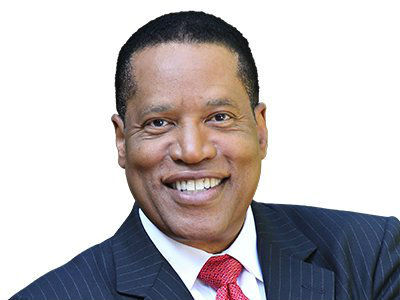
Larry Elder is an American lawyer, writer, and radio and television personality who calls himself the "Sage of South Central" a district of Los Angeles, Larry says his philosophy is to entertain, inform, provoke and to hopefully uplift. His calling card is "we have a country to save" and to him this means returning to the bedrock Constitutional principles of limited government and maximum personal responsibility. Elder's iconoclastic wit and intellectual agility makes him a particularly attractive voice in a nation that seems weary of traditional racial dialogue.” – Los Angeles Times.

Mike Gallagher Mike Gallagher began his broadcasting career in 1978 in Dayton, Ohio. Today, he is one of the most listened-to talk radio show hosts in America, recently having been ranked in the Talkers Magazine “Heavy Hundred” list – the 100 most important talk radio hosts in America. Prior to being launched into national syndication in 1998, Mike hosted the morning show on WABC-AM in New York City. Today, Talkers Magazine reports that his show is heard by over 3.75 million weekly listeners. Besides his radio work, Mike is seen on Fox News Channel as an on-air contributor, frequently appearing on the cable news giant.

Hugh Hewitt is one of the nation’s leading bloggers and a genuine media revolutionary. He brings that expertise, his wit and what The New Yorker magazine calls his “amiable but relentless manner” to his nationally syndicated show each day.

When Dr. Sebastian Gorka was growing up, he listened to talk radio under his pillow with a transistor radio, dreaming that one day he would be behind the microphone. Beginning New Year’s Day 2019, he got his wish. Gorka now hosts America First every weekday afternoon 3 to 6pm ET. Gorka’s unique story works well on the radio. He is national security analyst for the Fox News Channel and author of two books: "Why We Fight" and "Defeating Jihad." His latest book releasing this fall is “War For America’s Soul.” He is uniquely qualified to fight the culture war and stand up for what is great about America, his adopted home country.

Broadcasting from his home station of KRLA in Los Angeles, the Dennis Prager Show is heard across the country. Everything in life – from politics to religion to relationships – is grist for Dennis’ mill. If it’s interesting, if it affects your life, then Dennis will be talking about it – with passion, humor, insight and wisdom.

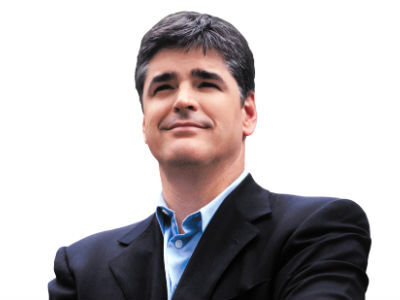
Sean Hannity is a conservative radio and television host, and one of the original primetime hosts on the Fox News Channel, where he has appeared since 1996. Sean Hannity began his radio career at a college station in California, before moving on to markets in the Southeast and New York. Today, he’s one of the most listened to on-air voices. Hannity’s radio program went into national syndication on September 10, 2001, and airs on more than 500 stations. Talkers Magazine estimates Hannity’s weekly radio audience at 13.5 million. In 1996 he was hired as one of the original hosts on Fox News Channel. As host of several popular Fox programs, Hannity has become the highest-paid news anchor on television.

Michelle Malkin is a mother, wife, blogger, conservative syndicated columnist, longtime cable TV news commentator, and best-selling author of six books. She started her newspaper journalism career at the Los Angeles Daily News in 1992, moved to the Seattle Times in 1995, and has been penning nationally syndicated newspaper columns for Creators Syndicate since 1999. She is founder of conservative Internet start-ups Hot Air and Twitchy.com. Malkin has received numerous awards for her investigative journalism, including the Council on Governmental Ethics Laws (COGEL) national award for outstanding service for the cause of governmental ethics and leadership (1998), the Reed Irvine Accuracy in Media Award for Investigative Journalism (2006), the Heritage Foundation and Franklin Center for Government & Public Integrity's Breitbart Award for Excellence in Journalism (2013), the Center for Immigration Studies' Eugene Katz Award for Excellence in the Coverage of Immigration Award (2016), and the Manhattan Film Festival's Film Heals Award (2018). Married for 26 years and the mother of two teenage children, she lives with her family in Colorado. Follow her at michellemalkin.com. (Photo reprinted with kind permission from Peter Duke Photography.)

Sponsored by:

Why more households are investing in home gyms than ever before

Carbonatix Pre-Player Loader

Audio By Carbonatix

Why more households are investing in home gyms than ever before

The home-fitness boom that took off during the pandemic was widely expected to fade once gyms reopened. Once people could leave the house again, the thinking went, the living room would go back to being a living room.

Four years later, however, the trend has only accelerated. RITFIT found that people are buying more home gym equipment than ever. The global home fitness equipment market reached roughly $13.5 billion in 2025 and is projected to approach $23 billion by 2034, according to Fortune Business Insights. Gyms have bounced back, too. But the home fitness trend shows no signs of going anywhere.

Part of the reason is money. Health & Fitness Association data shows average monthly gym dues in the United States rose 9% to $60 in 2023, then climbed again to $69 in 2024. Meanwhile, the median monthly fee jumped to $38 from roughly $30, where it had held for most of the prior decade. Even Planet Fitness, which had kept its basic membership at $10 since 1998, raised it to $15 in 2024, attributing the increase to rising operating costs.

None of these increases would break the bank on their own. But gym memberships have always been an easy line to cross out when budgets get tight, and after years of cost-of-living pressure, many households have done exactly that.

Cost is now the No. 1 reason Americans cancel gym memberships, cited by 41% of those who left in a YouGov survey. At current prices, a mid-range home gym setup can total less than a year's worth of membership fees for a single household. This may be why nearly one in five departing members felt they could get the results they wanted without belonging to a gym.

Yet the math has favored home fitness for decades. A squat rack and a barbell have always been cheaper over time than a monthly membership. So, if cost alone were fueling the home fitness industry, it would have happened long ago. Something else has changed.

The first clue is that people are increasingly saying they feel busy and burnt out. Bureau of Labor Statistics data from 2024 shows Americans aged 35 to 44, a prime age group for gym membership, average less daily leisure time than any other adult age group. The causes are debated. Work is the obvious candidate: Globally, nearly two-thirds of employees reported increased workloads last year, an EY survey of 15,000 workers found. But researchers have also pointed to smartphones and social media as a driver of perceived time pressure and mental fatigue, which may help explain why burnout rates look remarkably similar across countries with very different working cultures.

Whatever the cause, the squeeze shows up in cancellation data. Roughly a quarter of Americans who dropped gym memberships in 2024 blamed a lack of time. In response, gyms have increasingly added 24-hour access and shorter group classes. Even so, for people who are short on time, working out at home simply makes more sense.

"When I get home from work, I just change my clothes and go right into a workout," said Christopher Kovach, 35, a home gym owner in the U.S. "I don't have to worry about traffic on the roads and not getting back home in time for the kids to get home from school."

Time and cost go a long way toward explaining the shift. Still, there's another cause that often gets overlooked: affordable home gym equipment has massively improved in recent years.

Not long ago, budget home gym equipment meant a bulky treadmill that dominated a room or a folding bench that wobbled under any real weight. That's no longer true. The quality gap between an average home setup and a commercial floor has narrowed significantly to the point where, for many households, the monthly membership fee is harder and harder to justify.

Part of that is down to innovation. The number of manufacturers competing in the compact, multi-functional segment has surged since 2020, with brands investing in modular designs and combination machines that merge Smith machines, cable crossovers and pull-down stations into single frames.

Where a home gym once required a dedicated room full of separate equipment, a single machine can now cover most of what a commercial gym floor offers. Industry analysts at Future Market Insights report that mid-range, space-efficient equipment is now among the fastest-growing categories in the industry.

That versatility has a particular appeal for families. "My whole family is able to get all their workouts in on the same machine, even when each person is at a drastically different stage of lifting," said Kovach.

None of this means the commercial gym is obsolete. For people who thrive on group classes, specialized coaching, or the social energy of a gym floor, a membership still has a lot going for it. But as more households run the numbers (and the clock), a growing share are arriving at the same conclusion: the best gym is the one they'll actually use. And for a lot of families, that turns out to be the one 30 seconds from the kitchen.

This story was produced by RITFIT and reviewed and distributed by Stacker.

 

Salem News Channel Today

Sponsored Links

On Air & Up Next

See the Full Program Guide