




















Why we love to be scared: Understanding fear and its surprising value

Carbonatix Pre-Player Loader

Audio By Carbonatix

Why we love to be scared: Understanding fear and its surprising value

Each October, as Halloween decorations appear and horror movies fill streaming queues, people across the country indulge in fear. Haunted houses sell out, thrill-seekers line up for roller coasters and audiences eagerly brace for jump scares on screen. For a few weeks each year, fear becomes a form of entertainment, and people cannot get enough.

This fascination with being scared is not accidental. Fear is one of humanity’s oldest and most powerful emotions. When experienced in a safe or controlled way, it can be exhilarating and even enjoyable. But underneath that thrill lies something deeper, which LifeStance Health explores here: fear’s role in helping people survive, adapt and grow.

Why do we fear fear?

Fear has always been tied to control. People fear what they cannot predict or manage, such as the loss of safety, stability or familiarity. At its core, fear represents a perception of threat to stability. That primal reaction is deeply embedded in the nervous system, shaped by centuries of human evolution.

In therapy, fear often shows up when individuals confront change, especially when that change feels beyond their control. This discomfort is not a weakness. It is the body and mind recognizing a challenge to the equilibrium. Learning to tolerate that discomfort, rather than avoiding it, is one of the foundations of emotional resilience.

Fear’s power lies in its dual nature. It can protect or paralyze. It can motivate or overwhelm. Fears and phobias are part of everyday life, ranging from common ones like fear of heights, flying, or spiders to rare and unusual phobias. Regardless of how they appear, all fears share the same origin: the instinct to stay safe in the face of perceived danger. What determines whether fear becomes a force of protection or paralysis depends on how we approach it. The more we resist fear, the more it persists. When we face it directly, fear begins to lose its grip, transforming into awareness, courage and even joy.

Infographic listing the top 9 common or rare phobias.
LifeStance Health


What can fear teach us?

Whenever people encounter something unfamiliar or uncomfortable, fear naturally arises. On the other side of that discomfort often lies growth, mastery or strength. Often, the only way to reach that outcome is by moving through the fear rather than avoiding it.

Consider why millions voluntarily enter haunted houses each Halloween, knowing that behind every corner a masked actor awaits to startle them. Or why audiences pay to see horror films featuring monsters like Pennywise the Clown. Even knowing these threats are not real, the body reacts as if they are. Hearts race, adrenaline surges (common physiological responses associated with fear), and within seconds, the brain realizes the situation is safe. In some cases, fear may lead to laughter or relief. The cycle of fear, reaction and recovery is a powerful form of emotional conditioning.

The same process plays out in real life. Skydivers, for example, describe the moment of jumping from a plane as pure terror followed by euphoria. In those first seconds of free fall, fear peaks and then vanishes, replaced by exhilaration and focus. The body learns that facing fear, rather than retreating, leads to empowerment.

Fear can also highlight the difference between stress and anxiety. Stress is a necessary part of functioning because it mobilizes the body to respond to challenges. Fear can trigger stress in short bursts that help the brain learn and adapt. Anxiety develops when that stress response does not switch off, when fear lingers without resolution. In those moments, people may freeze, shut down or fawn in response to a threat, rather than move into productive action.

Why people like to be scared

Choosing to be scared is, paradoxically, an act of control. When fear is invited through movies, haunted houses or thrill rides, it typically becomes a safe experiment in vulnerability. It allows people to explore a primal state without real danger. The body releases adrenaline and dopamine, creating a rush of excitement followed by a sense of relief.

Among the three most powerful emotional states—love, laughter and fear—fear may be the most accessible. It can be summoned instantly by a story, an image or a darkened room. Love and laughter take longer to cultivate, but fear is always within reach, ready to remind us that we are alive.

Embracing fear as a strength

Fear is neither an enemy nor an evil. It is a natural response that signals awareness, fuels motivation and reminds us of what it feels like to be alive. Without fear, humanity would not have survived. When understood and managed, it becomes a guide, teaching when to act, when to adapt and when to trust one’s inner resilience.

The thrill of a haunted house or the rush of a scary movie are reminders of this truth. Fear connects people to their humanity. When met with courage and curiosity, it often ceases to be something to escape and becomes something that can be experienced as empowering in certain situations.

This story was published by LifeStance Health and reviewed and distributed by Stacker.


Salem News Channel Today

Sponsored Links


September 26 - Phoenix, AZ
Scottsdale Center for the Performing Arts


November 2 - Detroit, MI
Zion Christian Church in Troy


October 6 - Los Angeles, CA
Pasadena Convention Center


November 5 - San Antonio, TX
Norris Centers – The Grand Red Oak Ballroom


October 8 - Sacramento, CA
William Jessup University


November 7 - Tampa, FL
The Palladium at St. Pete College


October 22 - Minneapolis, MN
Crowne Plaza AiRE


November 15 - San Francisco, CA
Fremont Marriott Silicon Valley


October 23 - Philadelphia, PA
Green Valley Country Club


November 16 - Denver, CO
CU South Denver - Formerly Wildlife Experience


November 2 - Chicago, IL
Chicago Westin Northwest in Itasca


November 21 - Cleveland, OH
Holiday Inn Rockside in Independence


Salem Radio Network Speakers
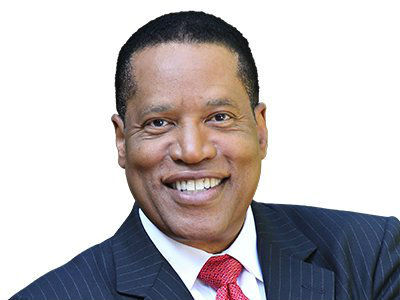
Larry Elder is an American lawyer, writer, and radio and television personality who calls himself the "Sage of South Central" a district of Los Angeles, Larry says his philosophy is to entertain, inform, provoke and to hopefully uplift. His calling card is "we have a country to save" and to him this means returning to the bedrock Constitutional principles of limited government and maximum personal responsibility. Elder's iconoclastic wit and intellectual agility makes him a particularly attractive voice in a nation that seems weary of traditional racial dialogue.” – Los Angeles Times.

Mike Gallagher Mike Gallagher began his broadcasting career in 1978 in Dayton, Ohio. Today, he is one of the most listened-to talk radio show hosts in America, recently having been ranked in the Talkers Magazine “Heavy Hundred” list – the 100 most important talk radio hosts in America. Prior to being launched into national syndication in 1998, Mike hosted the morning show on WABC-AM in New York City. Today, Talkers Magazine reports that his show is heard by over 3.75 million weekly listeners. Besides his radio work, Mike is seen on Fox News Channel as an on-air contributor, frequently appearing on the cable news giant.
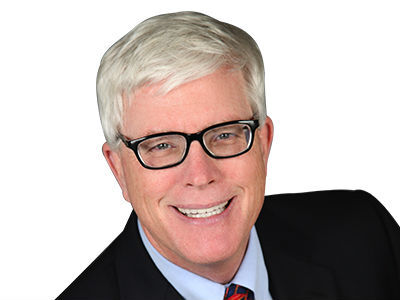
Hugh Hewitt is one of the nation’s leading bloggers and a genuine media revolutionary. He brings that expertise, his wit and what The New Yorker magazine calls his “amiable but relentless manner” to his nationally syndicated show each day.

When Dr. Sebastian Gorka was growing up, he listened to talk radio under his pillow with a transistor radio, dreaming that one day he would be behind the microphone. Beginning New Year’s Day 2019, he got his wish. Gorka now hosts America First every weekday afternoon 3 to 6pm ET. Gorka’s unique story works well on the radio. He is national security analyst for the Fox News Channel and author of two books: "Why We Fight" and "Defeating Jihad." His latest book releasing this fall is “War For America’s Soul.” He is uniquely qualified to fight the culture war and stand up for what is great about America, his adopted home country.
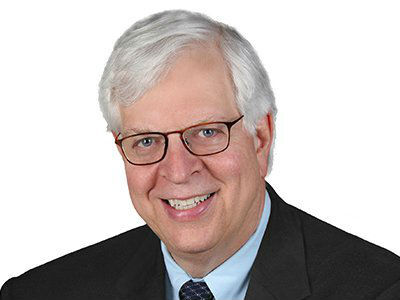
Broadcasting from his home station of KRLA in Los Angeles, the Dennis Prager Show is heard across the country. Everything in life – from politics to religion to relationships – is grist for Dennis’ mill. If it’s interesting, if it affects your life, then Dennis will be talking about it – with passion, humor, insight and wisdom.
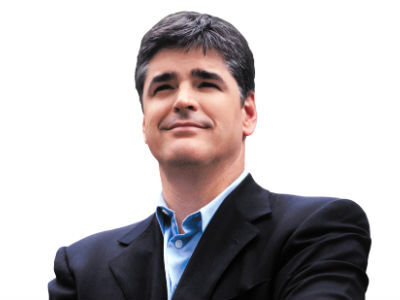
Sean Hannity is a conservative radio and television host, and one of the original primetime hosts on the Fox News Channel, where he has appeared since 1996. Sean Hannity began his radio career at a college station in California, before moving on to markets in the Southeast and New York. Today, he’s one of the most listened to on-air voices. Hannity’s radio program went into national syndication on September 10, 2001, and airs on more than 500 stations. Talkers Magazine estimates Hannity’s weekly radio audience at 13.5 million. In 1996 he was hired as one of the original hosts on Fox News Channel. As host of several popular Fox programs, Hannity has become the highest-paid news anchor on television.

Michelle Malkin is a mother, wife, blogger, conservative syndicated columnist, longtime cable TV news commentator, and best-selling author of six books. She started her newspaper journalism career at the Los Angeles Daily News in 1992, moved to the Seattle Times in 1995, and has been penning nationally syndicated newspaper columns for Creators Syndicate since 1999. She is founder of conservative Internet start-ups Hot Air and Twitchy.com. Malkin has received numerous awards for her investigative journalism, including the Council on Governmental Ethics Laws (COGEL) national award for outstanding service for the cause of governmental ethics and leadership (1998), the Reed Irvine Accuracy in Media Award for Investigative Journalism (2006), the Heritage Foundation and Franklin Center for Government & Public Integrity's Breitbart Award for Excellence in Journalism (2013), the Center for Immigration Studies' Eugene Katz Award for Excellence in the Coverage of Immigration Award (2016), and the Manhattan Film Festival's Film Heals Award (2018). Married for 26 years and the mother of two teenage children, she lives with her family in Colorado. Follow her at michellemalkin.com. (Photo reprinted with kind permission from Peter Duke Photography.)

Sponsored by:

Why we love to be scared: Understanding fear and its surprising value

Carbonatix Pre-Player Loader

Audio By Carbonatix

Why we love to be scared: Understanding fear and its surprising value

Each October, as Halloween decorations appear and horror movies fill streaming queues, people across the country indulge in fear. Haunted houses sell out, thrill-seekers line up for roller coasters and audiences eagerly brace for jump scares on screen. For a few weeks each year, fear becomes a form of entertainment, and people cannot get enough.

This fascination with being scared is not accidental. Fear is one of humanity’s oldest and most powerful emotions. When experienced in a safe or controlled way, it can be exhilarating and even enjoyable. But underneath that thrill lies something deeper, which LifeStance Health explores here: fear’s role in helping people survive, adapt and grow.

Why do we fear fear?

Fear has always been tied to control. People fear what they cannot predict or manage, such as the loss of safety, stability or familiarity. At its core, fear represents a perception of threat to stability. That primal reaction is deeply embedded in the nervous system, shaped by centuries of human evolution.

In therapy, fear often shows up when individuals confront change, especially when that change feels beyond their control. This discomfort is not a weakness. It is the body and mind recognizing a challenge to the equilibrium. Learning to tolerate that discomfort, rather than avoiding it, is one of the foundations of emotional resilience.

Fear’s power lies in its dual nature. It can protect or paralyze. It can motivate or overwhelm. Fears and phobias are part of everyday life, ranging from common ones like fear of heights, flying, or spiders to rare and unusual phobias. Regardless of how they appear, all fears share the same origin: the instinct to stay safe in the face of perceived danger. What determines whether fear becomes a force of protection or paralysis depends on how we approach it. The more we resist fear, the more it persists. When we face it directly, fear begins to lose its grip, transforming into awareness, courage and even joy.

Infographic listing the top 9 common or rare phobias.
LifeStance Health


What can fear teach us?

Whenever people encounter something unfamiliar or uncomfortable, fear naturally arises. On the other side of that discomfort often lies growth, mastery or strength. Often, the only way to reach that outcome is by moving through the fear rather than avoiding it.

Consider why millions voluntarily enter haunted houses each Halloween, knowing that behind every corner a masked actor awaits to startle them. Or why audiences pay to see horror films featuring monsters like Pennywise the Clown. Even knowing these threats are not real, the body reacts as if they are. Hearts race, adrenaline surges (common physiological responses associated with fear), and within seconds, the brain realizes the situation is safe. In some cases, fear may lead to laughter or relief. The cycle of fear, reaction and recovery is a powerful form of emotional conditioning.

The same process plays out in real life. Skydivers, for example, describe the moment of jumping from a plane as pure terror followed by euphoria. In those first seconds of free fall, fear peaks and then vanishes, replaced by exhilaration and focus. The body learns that facing fear, rather than retreating, leads to empowerment.

Fear can also highlight the difference between stress and anxiety. Stress is a necessary part of functioning because it mobilizes the body to respond to challenges. Fear can trigger stress in short bursts that help the brain learn and adapt. Anxiety develops when that stress response does not switch off, when fear lingers without resolution. In those moments, people may freeze, shut down or fawn in response to a threat, rather than move into productive action.

Why people like to be scared

Choosing to be scared is, paradoxically, an act of control. When fear is invited through movies, haunted houses or thrill rides, it typically becomes a safe experiment in vulnerability. It allows people to explore a primal state without real danger. The body releases adrenaline and dopamine, creating a rush of excitement followed by a sense of relief.

Among the three most powerful emotional states—love, laughter and fear—fear may be the most accessible. It can be summoned instantly by a story, an image or a darkened room. Love and laughter take longer to cultivate, but fear is always within reach, ready to remind us that we are alive.

Embracing fear as a strength

Fear is neither an enemy nor an evil. It is a natural response that signals awareness, fuels motivation and reminds us of what it feels like to be alive. Without fear, humanity would not have survived. When understood and managed, it becomes a guide, teaching when to act, when to adapt and when to trust one’s inner resilience.

The thrill of a haunted house or the rush of a scary movie are reminders of this truth. Fear connects people to their humanity. When met with courage and curiosity, it often ceases to be something to escape and becomes something that can be experienced as empowering in certain situations.

This story was published by LifeStance Health and reviewed and distributed by Stacker.


Salem News Channel Today

Sponsored Links

On Air & Up Next

See the Full Program Guide