House parties are the new speed dating: The surprising dating trends taking over in 2026

Carbonatix Pre-Player Loader

Audio By Carbonatix

House parties are the new speed dating: The surprising dating trends taking over in 2026

Years ago, a first date meant dinner and drinks after bumping into an interesting person at the gym, grocery store, or coffee shop. More recently, it was a meetup after an initial connection on a dating app. Today, however, it might increasingly mean chatting someone up at a house party, indicating an unexpected shift in where American romance is heading.

Across the country, singles are quietly rewriting the rules of courtship. This has been driven mainly by a combination of financial pressure, digital exhaustion, and a growing appetite for genuine connection. PeopleWin has compiled the facts and data from leading sources, including Tinder, Mashable, BMO, CNBC, Psychology Today, and more, to show how smaller settings, lower budgets, and a new emphasis on saying what you mean are the new hallmarks of dating.

The data: ‘Date-flation’ and the true cost of love

In 2026, love isn’t free, and the numbers are striking. Based on BMO’s Real Financial Progress Index, pulled from a sample of over 2,500 U.S. adults, the average all-in cost of a date has jumped to an astounding $189 in early 2026. Before gasping at the number, consider that this factors in everything, including predate grooming, transportation, and the actual outing itself. This is a 12.5% jump from $168 in 2025.

This amount adds up quicker than you may think. Americans who dated throughout 2025 and into 2026 spent an average of $2,323 on dates during a 12-month period. There are also no signs of leveling off.

There is a pronounced generational breakdown. Millennials are leading with an average cost of $252 per date, while Gen Z is right behind at around $205. For perspective, this rivals many average nightly hotel stays.

The result of this increase? More and more singles are starting to pull back.

That same BMO survey found that half of Americans said they had gone on fewer dates or chosen less expensive activities simply because of the rising costs. This directly caused a drop in average date frequency from 14 outings to roughly 12 year over year. On top of this, 47% of singles polled said that, for them, dating was not financially worth it.

The Kinsey Institute, based at Indiana University, yielded similar findings in a joint study with DatingNews.com. In their data, 37% of daters were pulling back, with 33% citing the economy as the reason.

BMO’s data also revealed something interesting about those who are continuing to date. Their researchers call it a “K-shaped” dating economy. Essentially, some singles are cutting costs to zero, while others are continuing to spend freely, resulting in a familiar “K” shape on a graph. Roughly 14% of Americans in that study reported that a typical date costs them nothing, up from 12% a year earlier.

As opposed to expensive restaurant visits at a new spot, people are swapping old-fashioned date ideas in favor of picnics, hikes, or home-cooked meals. When Americans are spending money on dates, those in the first group of the K-economy are minimizing wherever possible. The joint study uncovered that 35% of American singles are opting for coffee dates as a lower-stakes, lower-cost alternative to drinks and dinner. It’s clear money has become a factor in how singles are viewing the dating scene.

The decline of traditional dating formats

Money isn’t the only reason first dates look different today compared to 20 years ago. There have been two additional drivers of note behind the shift:

1. Dating app fatigue has hit a tipping point

For younger audiences, it can seem like apps like Tinder, Hinge, and Bumble are the primary way people meet today. Despite how it feels, it’s certainly not the only way. However, this disillusionment, coupled with the retreat from expensive dates, is leading to a unique type of frustration.

A Gen Z-focused study from Forbes showed that 79% of those surveyed found that all dating app users experienced burnout at some point. Women were particularly affected: around 80% cited fatigue, compared with only 74% of men who were asked the same question. The primary drivers mentioned were a lack of meaningful connections, disappointment in people seen, consistent rejection, and repetitive conversations.

The dissatisfaction with how many people meet nowadays is measurable in other ways too. Data from Global Dating Insights found that U.S. searches for the term “matchmaker” nearly doubled between January 2025 and January 2026. This was an increase from 2,370 monthly searches to 4,930. Projections suggest further growth to around 6,500 by mid-2026.

The surge reflects what is emerging as a key truth: modern generations aren’t anti-dating. Rather, they are anti-algorithm.

2. Expensive and high-pressure events create trouble

The second source of increased frustration is the actual locations of historical dates. Traditional speed-dating events and formal singles mixers tend to be costly and higher pressure. These are two qualities increasingly at odds with what singles say they want today. One matchmaking service launched in 2025, called It’s Just Lunch, sets up dates that feel more intentional and less performative. The hope is to provide something more organic to a modern generation of daters.

The new dating formats taking over in 2026

With traditional dates on the outs due to costs and frustration in the dating market, the question of what a date looks like in 2026 remains. Generally speaking, there are three main strategies:

1. House parties and friend-hosted gatherings

First, one of the clearest emerging trends is what Tinder has named “Friendfluence” in its 2025 Year in Swipe report. This centers around the growing role mutual social networks have played in facilitating romantic connections. This signals a broader return to the way many couples met historically. Whether through friends, at social gatherings, or in low-stakes shared settings, in-person meets are valued again. It’s just the dates themselves that differ.

In practice, this often looks like meeting someone at a house party, a backyard dinner, or a simple, casual group hangout. Psychology Today similarly noted that friend networks serve as a natural vetting mechanism, allowing daters a baseline of trust before any one-on-one interactions, which many dating apps lack. They do caution, however, that some people may not want to date people with the personality of their friends, which is often a present factor in those matched via friendfluence.

2. Activity-based and low-cost dates

With people yearning for a return to in-person first meetings, the dates they go on are changing as well. Activity-based dating has gained traction as an alternative to dinner and drinks because of lower costs. Experts quoted in the New York Post in late 2025 recommend sports leagues, fitness classes, hiking groups, and community events as effective avenues for meeting potential partners or for date spots.

The logic here is fairly straightforward. Shared activities create natural conversation, reduce the pressure of sustained eye contact, and cost significantly less than a restaurant meal.

3. Slow dating and intentional connection

Finally, it’s not just how people meet and what they do. There is also a broader philosophical shift toward what is being called “slow dating.” Rather than going through a high volume of quick-impression dates, often referred to as “hookup culture,” many modern daters are signaling a desire to have fewer interactions. The catch is they want those to be intentional.

The goal is to move back toward depth over volume, getting to know someone across a longer arc of time. All this is in the name of deciding if this is the right match for you.

What experts are saying about emotional honesty

Perhaps the most significant change in modern dating, though, is something that’s harder to label than spending habits or app usage. However, experts insist it’s no less real.

Singles entering the dating market are now more emotionally self-aware than their previous cohorts. They're also more willing to say so.

In Tinder’s Year in Swipe 2025 report, it announced that 2026 would be the year of no mixed signals. Young singles described themselves as heading into the new year as more open, honest, and emotionally fluent than ever before. For those in older generations, this may not seem like an issue.

However, Hinge’s 2025 Gen Z D.A.T.E Report offers a nuanced look at this emotional landscape. This view shows the scope of the problem.

The study, which surveyed roughly 30,000 Hinge users worldwide, found that 84% of Gen Z daters wanted to find new ways to build deeper emotional connections. However, they were also significantly more hesitant than millennials were in initiating deep conversations early on. To put a number on this, 36% of Gen Z daters were more reluctant than millennials. This number was so vast that Hinge researchers dubbed it “The Communication Gap.”

The gap also has a gendered side to it. Based on Hinge’s data, 49% of heterosexual Gen Z women were hesitant to start deep conversations. This was because they wanted the other person to go first, yet only 17% of Gen Z men said the same. Conversely, 42% of heterosexual Gen Z women claimed the men they date don’t want meaningful early conversations. However, 65% of Gen Z men say they do.

This study is an interesting dynamic, showing that both parties are holding back because of an assumption that the other party doesn’t want depth.

Additionally, a consistent set of values has emerged as markers of romantic desirability in various studies. BMO’s research outlined that the top three attractive financial traits reported for partners are financial responsibility, having a good plan, and a willingness to talk openly about money. Authenticity and communication are what modern daters are seeking.

Dating expert Julie Spira, writing for CyberDatingExpert.com, noted that 2026 was to be the year of emotional green flags. A potential partner being self-aware, communicative, and capable of vulnerability is closely watched. The desire to be known, not just found attractive, appears to be the defining romantic aspiration leading the charge throughout this year.

What this means for singles in 2026

Taken together, all of these trends suggest that the dating landscape in America is undergoing a shift. The app-driven, high-volume, and high-cost model that created so many frustrations in the 2010s and early-2020s is losing ground to something slower, cheaper, and, in many ways, more demanding. Real conversations, social accountability, and emotional honesty now dominate the dating world.

The shift is clearly not happening uniformly. With a “K-shaped” dating economy, some singles are still spending more than ever to try to woo a partner, while others have opted out entirely. App usage, while fatiguing, still remains the primary method for meeting new people in 2026. Tinder, Bumble, Hinge, and other competitors aren’t likely to go anywhere anytime soon.

However, the direction of the shift is clear. In-person and low-cost events with a focus on building genuine connections over time are making a comeback. This means a modern dater should show up to a house party, meet someone through a friend, and simply say what they’re looking for. After years of infinite scrolling and curated profiles, this may be exactly what a generation of exhausted daters is ready for.

This story was produced by PeopleWin and reviewed and distributed by Stacker.

 

Salem News Channel Today

Sponsored Links


September 26 - Phoenix, AZ
Scottsdale Center for the Performing Arts


November 2 - Detroit, MI
Zion Christian Church in Troy


October 6 - Los Angeles, CA
Pasadena Convention Center


November 5 - San Antonio, TX
Norris Centers – The Grand Red Oak Ballroom


October 8 - Sacramento, CA
William Jessup University


November 7 - Tampa, FL
The Palladium at St. Pete College


October 22 - Minneapolis, MN
Crowne Plaza AiRE


November 15 - San Francisco, CA
Fremont Marriott Silicon Valley


October 23 - Philadelphia, PA
Green Valley Country Club


November 16 - Denver, CO
CU South Denver - Formerly Wildlife Experience


November 2 - Chicago, IL
Chicago Westin Northwest in Itasca


November 21 - Cleveland, OH
Holiday Inn Rockside in Independence


Salem Radio Network Speakers

Larry Elder is an American lawyer, writer, and radio and television personality who calls himself the "Sage of South Central" a district of Los Angeles, Larry says his philosophy is to entertain, inform, provoke and to hopefully uplift. His calling card is "we have a country to save" and to him this means returning to the bedrock Constitutional principles of limited government and maximum personal responsibility. Elder's iconoclastic wit and intellectual agility makes him a particularly attractive voice in a nation that seems weary of traditional racial dialogue.” – Los Angeles Times.

Mike Gallagher Mike Gallagher began his broadcasting career in 1978 in Dayton, Ohio. Today, he is one of the most listened-to talk radio show hosts in America, recently having been ranked in the Talkers Magazine “Heavy Hundred” list – the 100 most important talk radio hosts in America. Prior to being launched into national syndication in 1998, Mike hosted the morning show on WABC-AM in New York City. Today, Talkers Magazine reports that his show is heard by over 3.75 million weekly listeners. Besides his radio work, Mike is seen on Fox News Channel as an on-air contributor, frequently appearing on the cable news giant.

Hugh Hewitt is one of the nation’s leading bloggers and a genuine media revolutionary. He brings that expertise, his wit and what The New Yorker magazine calls his “amiable but relentless manner” to his nationally syndicated show each day.

When Dr. Sebastian Gorka was growing up, he listened to talk radio under his pillow with a transistor radio, dreaming that one day he would be behind the microphone. Beginning New Year’s Day 2019, he got his wish. Gorka now hosts America First every weekday afternoon 3 to 6pm ET. Gorka’s unique story works well on the radio. He is national security analyst for the Fox News Channel and author of two books: "Why We Fight" and "Defeating Jihad." His latest book releasing this fall is “War For America’s Soul.” He is uniquely qualified to fight the culture war and stand up for what is great about America, his adopted home country.

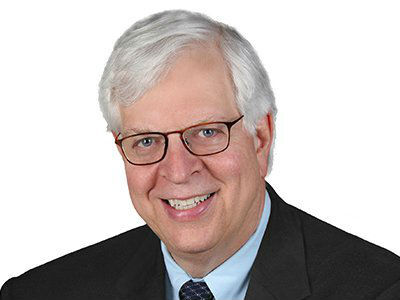
Broadcasting from his home station of KRLA in Los Angeles, the Dennis Prager Show is heard across the country. Everything in life – from politics to religion to relationships – is grist for Dennis’ mill. If it’s interesting, if it affects your life, then Dennis will be talking about it – with passion, humor, insight and wisdom.

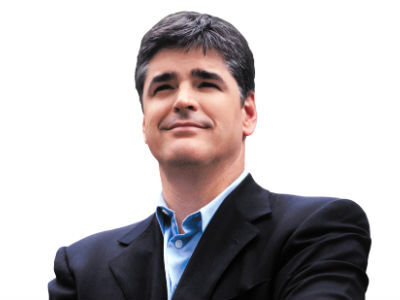
Sean Hannity is a conservative radio and television host, and one of the original primetime hosts on the Fox News Channel, where he has appeared since 1996. Sean Hannity began his radio career at a college station in California, before moving on to markets in the Southeast and New York. Today, he’s one of the most listened to on-air voices. Hannity’s radio program went into national syndication on September 10, 2001, and airs on more than 500 stations. Talkers Magazine estimates Hannity’s weekly radio audience at 13.5 million. In 1996 he was hired as one of the original hosts on Fox News Channel. As host of several popular Fox programs, Hannity has become the highest-paid news anchor on television.

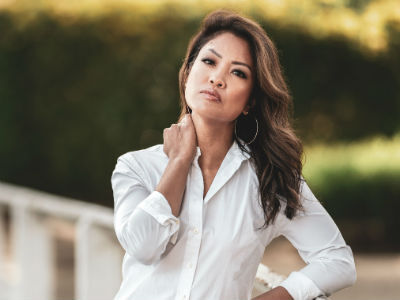
Michelle Malkin is a mother, wife, blogger, conservative syndicated columnist, longtime cable TV news commentator, and best-selling author of six books. She started her newspaper journalism career at the Los Angeles Daily News in 1992, moved to the Seattle Times in 1995, and has been penning nationally syndicated newspaper columns for Creators Syndicate since 1999. She is founder of conservative Internet start-ups Hot Air and Twitchy.com. Malkin has received numerous awards for her investigative journalism, including the Council on Governmental Ethics Laws (COGEL) national award for outstanding service for the cause of governmental ethics and leadership (1998), the Reed Irvine Accuracy in Media Award for Investigative Journalism (2006), the Heritage Foundation and Franklin Center for Government & Public Integrity's Breitbart Award for Excellence in Journalism (2013), the Center for Immigration Studies' Eugene Katz Award for Excellence in the Coverage of Immigration Award (2016), and the Manhattan Film Festival's Film Heals Award (2018). Married for 26 years and the mother of two teenage children, she lives with her family in Colorado. Follow her at michellemalkin.com. (Photo reprinted with kind permission from Peter Duke Photography.)

Sponsored by:

House parties are the new speed dating: The surprising dating trends taking over in 2026

Carbonatix Pre-Player Loader

Audio By Carbonatix

House parties are the new speed dating: The surprising dating trends taking over in 2026

Years ago, a first date meant dinner and drinks after bumping into an interesting person at the gym, grocery store, or coffee shop. More recently, it was a meetup after an initial connection on a dating app. Today, however, it might increasingly mean chatting someone up at a house party, indicating an unexpected shift in where American romance is heading.

Across the country, singles are quietly rewriting the rules of courtship. This has been driven mainly by a combination of financial pressure, digital exhaustion, and a growing appetite for genuine connection. PeopleWin has compiled the facts and data from leading sources, including Tinder, Mashable, BMO, CNBC, Psychology Today, and more, to show how smaller settings, lower budgets, and a new emphasis on saying what you mean are the new hallmarks of dating.

The data: ‘Date-flation’ and the true cost of love

In 2026, love isn’t free, and the numbers are striking. Based on BMO’s Real Financial Progress Index, pulled from a sample of over 2,500 U.S. adults, the average all-in cost of a date has jumped to an astounding $189 in early 2026. Before gasping at the number, consider that this factors in everything, including predate grooming, transportation, and the actual outing itself. This is a 12.5% jump from $168 in 2025.

This amount adds up quicker than you may think. Americans who dated throughout 2025 and into 2026 spent an average of $2,323 on dates during a 12-month period. There are also no signs of leveling off.

There is a pronounced generational breakdown. Millennials are leading with an average cost of $252 per date, while Gen Z is right behind at around $205. For perspective, this rivals many average nightly hotel stays.

The result of this increase? More and more singles are starting to pull back.

That same BMO survey found that half of Americans said they had gone on fewer dates or chosen less expensive activities simply because of the rising costs. This directly caused a drop in average date frequency from 14 outings to roughly 12 year over year. On top of this, 47% of singles polled said that, for them, dating was not financially worth it.

The Kinsey Institute, based at Indiana University, yielded similar findings in a joint study with DatingNews.com. In their data, 37% of daters were pulling back, with 33% citing the economy as the reason.

BMO’s data also revealed something interesting about those who are continuing to date. Their researchers call it a “K-shaped” dating economy. Essentially, some singles are cutting costs to zero, while others are continuing to spend freely, resulting in a familiar “K” shape on a graph. Roughly 14% of Americans in that study reported that a typical date costs them nothing, up from 12% a year earlier.

As opposed to expensive restaurant visits at a new spot, people are swapping old-fashioned date ideas in favor of picnics, hikes, or home-cooked meals. When Americans are spending money on dates, those in the first group of the K-economy are minimizing wherever possible. The joint study uncovered that 35% of American singles are opting for coffee dates as a lower-stakes, lower-cost alternative to drinks and dinner. It’s clear money has become a factor in how singles are viewing the dating scene.

The decline of traditional dating formats

Money isn’t the only reason first dates look different today compared to 20 years ago. There have been two additional drivers of note behind the shift:

1. Dating app fatigue has hit a tipping point

For younger audiences, it can seem like apps like Tinder, Hinge, and Bumble are the primary way people meet today. Despite how it feels, it’s certainly not the only way. However, this disillusionment, coupled with the retreat from expensive dates, is leading to a unique type of frustration.

A Gen Z-focused study from Forbes showed that 79% of those surveyed found that all dating app users experienced burnout at some point. Women were particularly affected: around 80% cited fatigue, compared with only 74% of men who were asked the same question. The primary drivers mentioned were a lack of meaningful connections, disappointment in people seen, consistent rejection, and repetitive conversations.

The dissatisfaction with how many people meet nowadays is measurable in other ways too. Data from Global Dating Insights found that U.S. searches for the term “matchmaker” nearly doubled between January 2025 and January 2026. This was an increase from 2,370 monthly searches to 4,930. Projections suggest further growth to around 6,500 by mid-2026.

The surge reflects what is emerging as a key truth: modern generations aren’t anti-dating. Rather, they are anti-algorithm.

2. Expensive and high-pressure events create trouble

The second source of increased frustration is the actual locations of historical dates. Traditional speed-dating events and formal singles mixers tend to be costly and higher pressure. These are two qualities increasingly at odds with what singles say they want today. One matchmaking service launched in 2025, called It’s Just Lunch, sets up dates that feel more intentional and less performative. The hope is to provide something more organic to a modern generation of daters.

The new dating formats taking over in 2026

With traditional dates on the outs due to costs and frustration in the dating market, the question of what a date looks like in 2026 remains. Generally speaking, there are three main strategies:

1. House parties and friend-hosted gatherings

First, one of the clearest emerging trends is what Tinder has named “Friendfluence” in its 2025 Year in Swipe report. This centers around the growing role mutual social networks have played in facilitating romantic connections. This signals a broader return to the way many couples met historically. Whether through friends, at social gatherings, or in low-stakes shared settings, in-person meets are valued again. It’s just the dates themselves that differ.

In practice, this often looks like meeting someone at a house party, a backyard dinner, or a simple, casual group hangout. Psychology Today similarly noted that friend networks serve as a natural vetting mechanism, allowing daters a baseline of trust before any one-on-one interactions, which many dating apps lack. They do caution, however, that some people may not want to date people with the personality of their friends, which is often a present factor in those matched via friendfluence.

2. Activity-based and low-cost dates

With people yearning for a return to in-person first meetings, the dates they go on are changing as well. Activity-based dating has gained traction as an alternative to dinner and drinks because of lower costs. Experts quoted in the New York Post in late 2025 recommend sports leagues, fitness classes, hiking groups, and community events as effective avenues for meeting potential partners or for date spots.

The logic here is fairly straightforward. Shared activities create natural conversation, reduce the pressure of sustained eye contact, and cost significantly less than a restaurant meal.

3. Slow dating and intentional connection

Finally, it’s not just how people meet and what they do. There is also a broader philosophical shift toward what is being called “slow dating.” Rather than going through a high volume of quick-impression dates, often referred to as “hookup culture,” many modern daters are signaling a desire to have fewer interactions. The catch is they want those to be intentional.

The goal is to move back toward depth over volume, getting to know someone across a longer arc of time. All this is in the name of deciding if this is the right match for you.

What experts are saying about emotional honesty

Perhaps the most significant change in modern dating, though, is something that’s harder to label than spending habits or app usage. However, experts insist it’s no less real.

Singles entering the dating market are now more emotionally self-aware than their previous cohorts. They're also more willing to say so.

In Tinder’s Year in Swipe 2025 report, it announced that 2026 would be the year of no mixed signals. Young singles described themselves as heading into the new year as more open, honest, and emotionally fluent than ever before. For those in older generations, this may not seem like an issue.

However, Hinge’s 2025 Gen Z D.A.T.E Report offers a nuanced look at this emotional landscape. This view shows the scope of the problem.

The study, which surveyed roughly 30,000 Hinge users worldwide, found that 84% of Gen Z daters wanted to find new ways to build deeper emotional connections. However, they were also significantly more hesitant than millennials were in initiating deep conversations early on. To put a number on this, 36% of Gen Z daters were more reluctant than millennials. This number was so vast that Hinge researchers dubbed it “The Communication Gap.”

The gap also has a gendered side to it. Based on Hinge’s data, 49% of heterosexual Gen Z women were hesitant to start deep conversations. This was because they wanted the other person to go first, yet only 17% of Gen Z men said the same. Conversely, 42% of heterosexual Gen Z women claimed the men they date don’t want meaningful early conversations. However, 65% of Gen Z men say they do.

This study is an interesting dynamic, showing that both parties are holding back because of an assumption that the other party doesn’t want depth.

Additionally, a consistent set of values has emerged as markers of romantic desirability in various studies. BMO’s research outlined that the top three attractive financial traits reported for partners are financial responsibility, having a good plan, and a willingness to talk openly about money. Authenticity and communication are what modern daters are seeking.

Dating expert Julie Spira, writing for CyberDatingExpert.com, noted that 2026 was to be the year of emotional green flags. A potential partner being self-aware, communicative, and capable of vulnerability is closely watched. The desire to be known, not just found attractive, appears to be the defining romantic aspiration leading the charge throughout this year.

What this means for singles in 2026

Taken together, all of these trends suggest that the dating landscape in America is undergoing a shift. The app-driven, high-volume, and high-cost model that created so many frustrations in the 2010s and early-2020s is losing ground to something slower, cheaper, and, in many ways, more demanding. Real conversations, social accountability, and emotional honesty now dominate the dating world.

The shift is clearly not happening uniformly. With a “K-shaped” dating economy, some singles are still spending more than ever to try to woo a partner, while others have opted out entirely. App usage, while fatiguing, still remains the primary method for meeting new people in 2026. Tinder, Bumble, Hinge, and other competitors aren’t likely to go anywhere anytime soon.

However, the direction of the shift is clear. In-person and low-cost events with a focus on building genuine connections over time are making a comeback. This means a modern dater should show up to a house party, meet someone through a friend, and simply say what they’re looking for. After years of infinite scrolling and curated profiles, this may be exactly what a generation of exhausted daters is ready for.

This story was produced by PeopleWin and reviewed and distributed by Stacker.

 

Salem News Channel Today

Sponsored Links

On Air & Up Next

See the Full Program Guide