How to spot early signs of a roof leak before it spreads

Carbonatix Pre-Player Loader

Audio By Carbonatix

How to spot early signs of a roof leak before it spreads

Weather-related damage remains a leading cause of homeowners insurance claims. What starts as a minor roof leak can escalate into thousands of dollars worth of structural repairs, mold remediation and interior restoration.

Roof leaks rarely announce themselves with obvious drips. They begin quietly behind walls or beneath insulation, causing damage long before visible symptoms appear. By the time water stains show on your ceiling, the leak may have been active for weeks.

This guide by AmeriPro Roofing provides a clear action plan to help assess and address potential issues.

Key Takeaways

Early roof leak detection can save thousands in repair costs and prevent serious structural damage. Here are the most critical facts to remember:

  • Mold growth accelerates quickly: Mold can begin growing on damp surfaces within just a day or two of water exposure, making early detection crucial for protecting indoor air quality.
  • Interior signs indicate active leaks: Water stains, peeling paint and musty odors inside your home may mean a leak has already penetrated your roofing system and requires immediate attention.
  • Attic inspections provide definitive proof: Checking your attic after storms reveals the most reliable evidence of roof leaks, including water stains on decking, damp insulation and visible mold growth.
  • Professional inspection is essential: While homeowners can spot warning signs, only certified inspectors have the training and tools to trace leaks to their true source and assess the full extent of hidden damage.

Understanding the Risks of a Small Leak

The EPA warns that mold can grow on damp surfaces within just 24 to 48 hours, turning a simple leak into a potential health hazard in less than two days. This rapid timeline underscores why early detection matters so much.
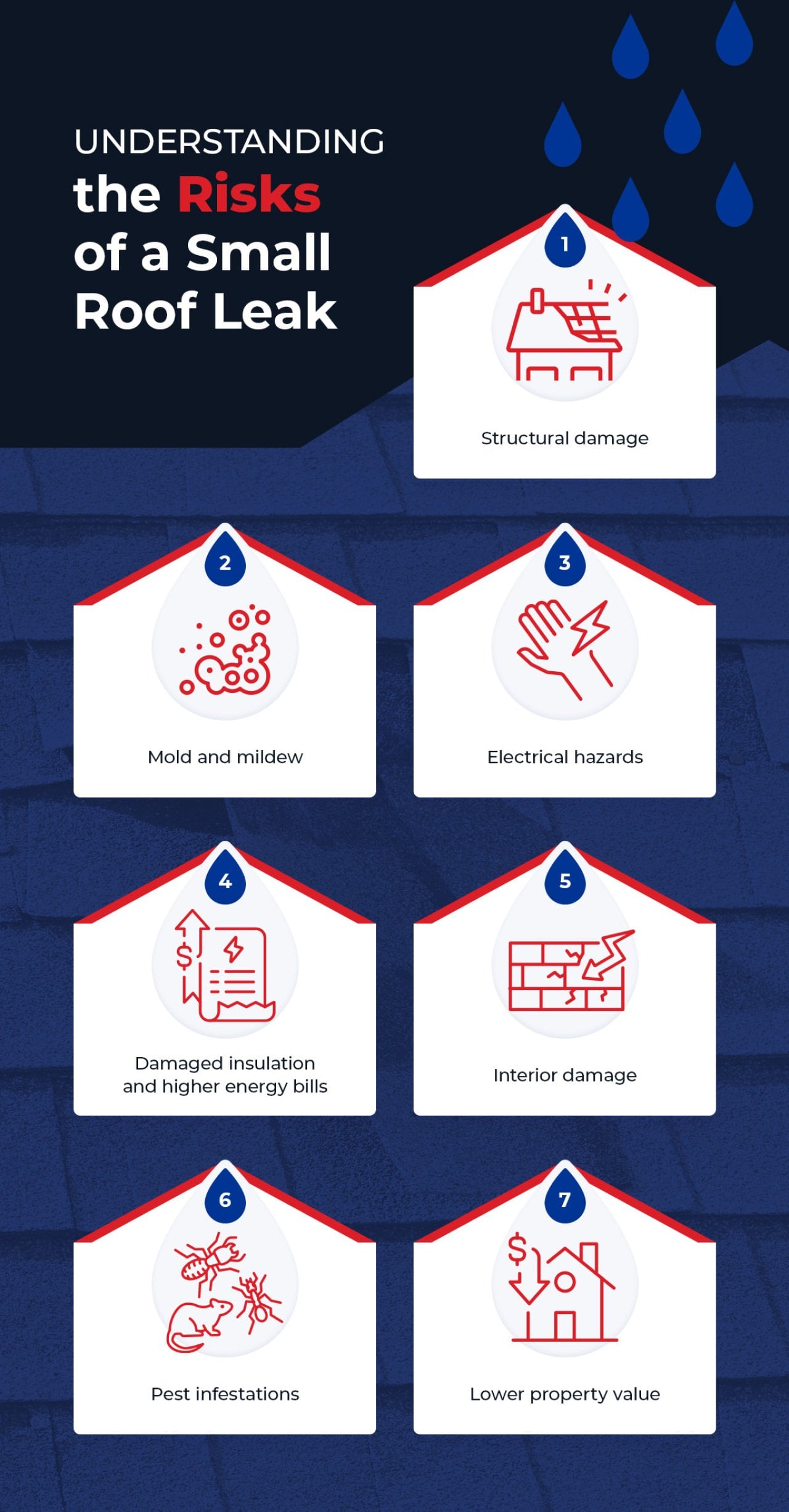
An infographic showing the risks of a small roof leak.
AmeriPro Roofing


Understanding the effects of neglected roof damage helps homeowners recognize the urgency of addressing even small leaks promptly. A small leak creates multiple pathways for damage to spread throughout your home:

  • Structural damage: Slow leaks can gradually damage roof decking, ceiling joists, rafters and other structural elements as water saturates the wood. Over time, this degradation can compromise your building’s structural integrity, potentially leading to extensive and costly repairs.
  • Mold and mildew: Moisture can create ideal conditions for mold and mildew. Mold can affect your home’s air quality and pose health risks to household members — particularly those with respiratory sensitivities or compromised immune systems.
  • Electrical hazards: Water can travel along rafters and drip onto electrical wiring in your attic or walls, creating serious fire hazards. Wet electrical systems pose immediate safety risks that extend beyond simple property damage.
  • Damaged insulation and higher energy bills: Saturated insulation can lose its thermal effectiveness completely. Wet insulation compresses and can’t trap air as intended, causing your heating and cooling systems to work harder and driving up monthly utility costs.
  • Interior damage: Among other issues, water can cause drywall deterioration, ceiling staining and structural sag. In severe cases, saturated drywall and ceiling materials can collapse, requiring expensive interior renovations that extend far beyond simple roof repairs.
  • Pest infestations: Damp wood and moist environments attract destructive pests including termites, carpenter ants and rodents. These pests are drawn to water and can cause additional structural damage. They can also establish colonies in your home’s compromised areas.
  • Lower property value: Documented water damage can significantly decrease your home’s resale value. Potential buyers and appraisers view water intrusion history as a major concern, often requiring substantial price reductions or extensive remediation before sale.

Early Warning Signs Inside Your Home

Your home’s interior provides the first and easiest inspection zone for detecting roof leaks. Certain signs indicate that water has already penetrated your roofing system, making its presence known through visible damage to ceilings, walls and paint.
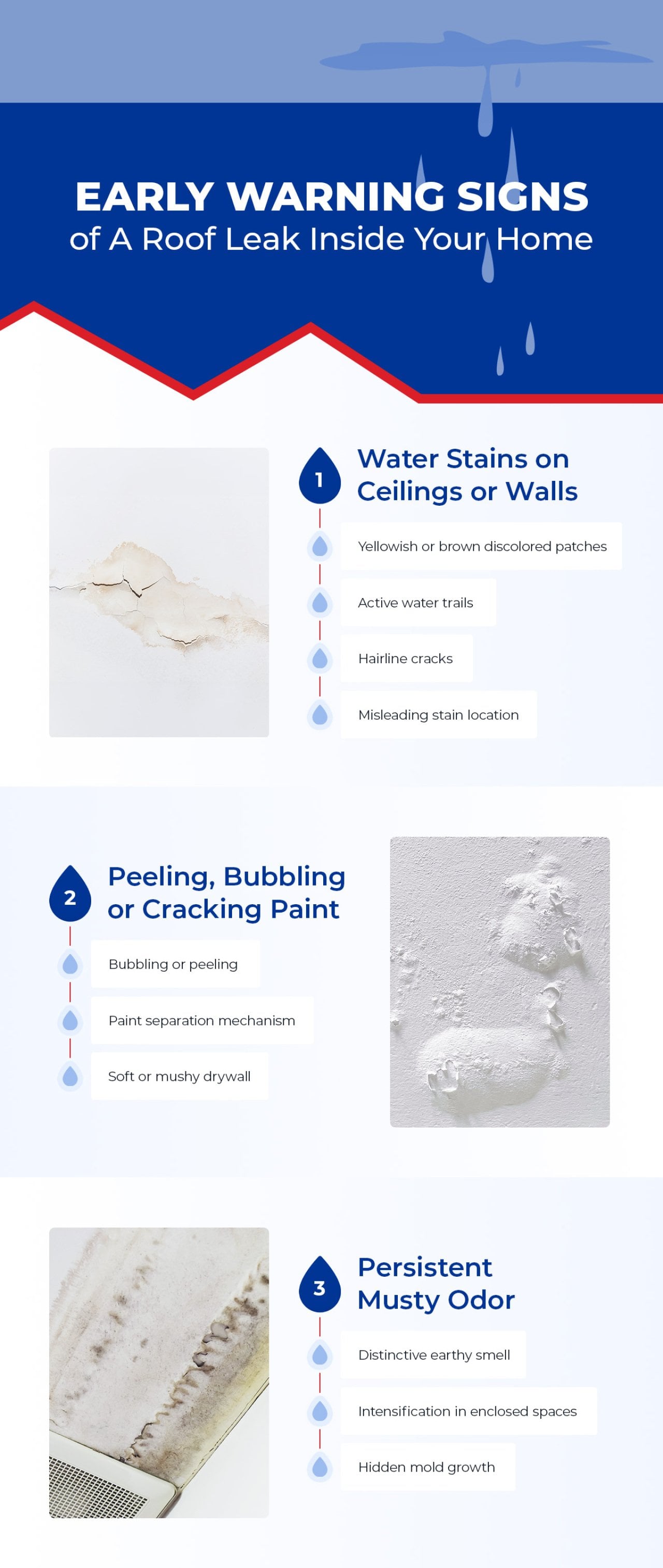
An infographic showing the early warning signs and things to check of a roof leak in a home.
AmeriPro Roofing


Water Stains on Ceilings or Walls

Water stains are among the most obvious indicators of a roof leak. Watch for these warning signs:

  • Yellowish or brown discolored patches: These stains typically appear on ceilings or upper walls, often forming distinctive rings or irregular shapes. Stains may start small but can gradually expand as water continues to accumulate.
  • Active water trails: Wet streaks running down walls, fresh drips falling from ceiling fixtures, or pooling water on floors beneath stained areas mean water is currently flowing into your home.
  • Hairline cracks: If you notice cracks radiating from water-stained areas, repeated wetting and drying cycles have likely compromised your ceiling’s structural integrity.
  • Misleading stain location: A visible stain doesn’t always correspond to the actual leak source. Water can travel along rafters, roof decking or pipes for several feet before dripping onto drywall or plaster.

Peeling, Bubbling or Cracking Paint

Paint damage can signal moisture intrusion behind your walls or ceiling. Look for these indicators:

  • Bubbling or peeling: Paint can separate from surfaces when moisture gets trapped behind the surface, breaking the bond between paint and drywall. You’ll notice bubbles forming under the paint layer or entire sections peeling away in sheets.
  • Paint separation mechanism: Water seeps between the wall material and the paint film, pushing the coating away from the surface.
  • Soft or mushy drywall: Press gently on areas where paint has bubbled or peeled. If the drywall feels spongy, crumbles easily or gives under light pressure, water may have thoroughly saturated the material. This indicates the leak has been active long enough to completely compromise structural integrity.

A Persistent Musty Odor

Musty smells often appear before visible damage becomes apparent. Key characteristics include:

  • Distinctive earthy smell: A musty odor, especially in upper-level rooms, closets or near ceiling areas, can indicate mold or mildew thriving on hidden moisture. This distinctive smell often appears before you notice visible mold growth or water stains.
  • Intensification in enclosed spaces: The smell becomes stronger in areas with limited air circulation, such as closets built against exterior walls or rooms directly beneath roof valleys.
  • Hidden mold growth: If you detect this odor but can’t locate visible moisture or stains, mold is likely growing in concealed areas such as inside walls, above ceiling tiles or within insulation. This hidden growth can spread extensively before becoming visible, potentially affecting indoor air quality throughout your home.

Warning Signs in Your Attic

Your attic provides the most definitive proof of a roof leak. Unlike interior rooms where finished surfaces can hide damage temporarily, attics expose the underside of your roof deck and structural components directly. With this unobstructed access, attic inspections can confirm your suspicions and help you locate leak sources.

Before entering your attic, take safety precautions. Use a bright flashlight or headlamp for adequate visibility and walk only on stable ceiling joists or installed flooring — never on the insulation or drywall between joists, as stepping through can cause serious injury and interior ceiling damage. For maximum safety, enlist the inspection services of a professional.

Consider visiting your attic during or immediately after rainfall when active leaks are most apparent. The most common signs of a roof leak in your attic include:

  • Water stains: Dark spots, discoloration or streaks on the underside of your roof deck or on rafters indicate water has penetrated through the roofing materials.
  • Damp or compressed insulation: Insulation that feels wet or appears compressed has likely absorbed water. Healthy insulation looks fluffy and maintains its full thickness. Saturated insulation may clump together, lose its insulating properties and even show mold growth on its surface.
  • Mold, mildew or musty odors: A distinct musty smell or visible fungus growth on wood surfaces, insulation or roof decking indicates ongoing moisture issues. Mold often appears as black, green or white fuzzy patches and thrives in the damp, dark conditions created by roof leaks.
  • Visible daylight: If you can see light entering from the outside through gaps in your roof deck or between shingles, water can enter through those same openings. Conduct this check during daylight hours by turning off attic lights and looking for pinpoints or streaks of outside light.
  • Rust on metal parts: Rust streaks on nails, flashing or other metal objects can indicate repeated moisture exposure. Metal components in a dry attic should remain rust-free. Corrosion signals that these elements have been exposed to moisture regularly, even if you haven’t noticed active dripping.
  • Damaged flashing: Examine metal flashing around chimneys, vent pipes and skylights. Damaged, missing or improperly installed flashing is a common source of leaks.
  • Active dripping: In severe cases, you may observe water actively dripping or see fresh water trails running down rafters during or immediately after rain. This clear evidence of active leakage requires immediate professional attention to prevent further damage.

Spotting Trouble From Outside

Inspect your roof externally and safely from ground level using binoculars. Try to avoid walking on the roof, as this poses safety risks and can further damage roofing materials. Ground-level inspection allows you to identify visible problems with shingles, gutters and roof penetrations that indicate potential or active leak sources.

Most roof leaks occur at vulnerable points where the roofing plane is interrupted, such as around chimneys, vent pipes, skylights and where different roof planes meet. These penetrations and transitions represent weak points in your roof’s protective barrier and deserve particular attention during visual inspections.

Damaged, Curled or Missing Shingles

Shingle damage compromises your roof’s first line of defense against water intrusion. Common forms of damage include:

  • Curled shingles: Edges that lift away from the roof surface create gaps where wind-driven rain can enter.
  • Cracked shingles: Visible splits or breaks in the material indicate weathering or impact damage.
  • Missing shingles: Obvious bare patches expose the underlayment or roof deck below.

When shingles are damaged or missing, they expose the underlayment beneath to direct weather exposure. Most underlayment materials aren’t designed to serve as long-term waterproofing and will eventually allow water penetration. For homeowners considering replacing damaged shingles, professional assessments can determine whether spot repairs or broader replacements are needed.

Damaged Flashing, Vents or Chimney Seals

Roof penetrations are the most common culprits for leak development. Examine these vulnerable areas carefully:

  • Flashing damage: Flashing consists of metal strips installed around chimneys, vent pipes, skylights and in roof valleys to direct water away from these vulnerable junctions.
  • Sealant deterioration: Look for cracked or missing sealant, which can appear as gaps, dried-out caulking or areas where the sealant has pulled away from the surface.
  • Metal corrosion: Rusted or corroded metal flashing indicates long-term moisture exposure and potential failure points.
  • Vent boot damage: Rubber or plastic collars around plumbing vent pipes can crack and deteriorate over time from sun exposure, creating another common leak source.
  • Chimney complexity: Pay particular attention to chimney areas, where flashing must seal the junction between masonry and roofing materials.

How Proactive Roof Maintenance Can Prevent Leaks

Preventive maintenance is the most cost-effective approach to preventing roof leaks. Regular inspections and simple upkeep tasks can extend your roof’s lifespan significantly and help you catch small problems before they cause major leaks.

Cleaning Gutters

Clogged gutters cause water to pool along your roof’s edge rather than flowing away from your home as designed. When gutters fill with leaves, twigs and debris, water has nowhere to go except backward under your shingles or over the gutter edges. This standing water can seep beneath the roof edge, saturating fascia boards and eventually finding its way into your attic or wall cavities.

Essential maintenance steps include:

  • Cleaning biannually: Clean your gutters at least twice yearly, typically in late spring and late fall after trees have dropped their leaves.
  • Inspection during cleaning: Inspect gutter hangers to ensure they’re secure, and check that gutters maintain proper slopes toward their downspouts.
  • Checking for standing water: Water remaining in gutters between cleaning sessions indicates improper pitch. This problem should be corrected to ensure adequate drainage.

Post-Storm Visual Checks

Major weather events can cause immediate roof damage that can lead to leaks during the next rainfall. Post-storm inspection protocol includes:

  • Immediate visual inspection: Conduct a ground-level inspection after any significant weather event. Look for missing or damaged shingles, debris accumulation in valleys or gutters, and any obvious changes to your roof’s appearance.
  • Hail damage signs: Damage may not be immediately obvious from the ground but often appears as dents or bruising on shingle surfaces. Large hail can crack shingles or knock granules loose, creating vulnerable spots.
  • Documentation: Photograph any visible damage and note the date. This record proves valuable if you need to file an insurance claim or consult with roofing professionals about necessary repairs.
  • Wind damage patterns: Wind damage typically manifests as lifted, creased or missing shingles, particularly along roof edges and ridges where wind forces concentrate.
  • Professional assessment: If you need help assessing your roof for storm damage, professional inspections after severe weather can document damage for insurance purposes and identify necessary repairs.

This story was produced by AmeriPro Roofing and reviewed and distributed by Stacker.

 

Salem News Channel Today

Sponsored Links


September 26 - Phoenix, AZ
Scottsdale Center for the Performing Arts


November 2 - Detroit, MI
Zion Christian Church in Troy


October 6 - Los Angeles, CA
Pasadena Convention Center


November 5 - San Antonio, TX
Norris Centers – The Grand Red Oak Ballroom


October 8 - Sacramento, CA
William Jessup University


November 7 - Tampa, FL
The Palladium at St. Pete College


October 22 - Minneapolis, MN
Crowne Plaza AiRE


November 15 - San Francisco, CA
Fremont Marriott Silicon Valley


October 23 - Philadelphia, PA
Green Valley Country Club


November 16 - Denver, CO
CU South Denver - Formerly Wildlife Experience


November 2 - Chicago, IL
Chicago Westin Northwest in Itasca


November 21 - Cleveland, OH
Holiday Inn Rockside in Independence


Salem Radio Network Speakers

Larry Elder is an American lawyer, writer, and radio and television personality who calls himself the "Sage of South Central" a district of Los Angeles, Larry says his philosophy is to entertain, inform, provoke and to hopefully uplift. His calling card is "we have a country to save" and to him this means returning to the bedrock Constitutional principles of limited government and maximum personal responsibility. Elder's iconoclastic wit and intellectual agility makes him a particularly attractive voice in a nation that seems weary of traditional racial dialogue.” – Los Angeles Times.

Mike Gallagher Mike Gallagher began his broadcasting career in 1978 in Dayton, Ohio. Today, he is one of the most listened-to talk radio show hosts in America, recently having been ranked in the Talkers Magazine “Heavy Hundred” list – the 100 most important talk radio hosts in America. Prior to being launched into national syndication in 1998, Mike hosted the morning show on WABC-AM in New York City. Today, Talkers Magazine reports that his show is heard by over 3.75 million weekly listeners. Besides his radio work, Mike is seen on Fox News Channel as an on-air contributor, frequently appearing on the cable news giant.

Hugh Hewitt is one of the nation’s leading bloggers and a genuine media revolutionary. He brings that expertise, his wit and what The New Yorker magazine calls his “amiable but relentless manner” to his nationally syndicated show each day.

When Dr. Sebastian Gorka was growing up, he listened to talk radio under his pillow with a transistor radio, dreaming that one day he would be behind the microphone. Beginning New Year’s Day 2019, he got his wish. Gorka now hosts America First every weekday afternoon 3 to 6pm ET. Gorka’s unique story works well on the radio. He is national security analyst for the Fox News Channel and author of two books: "Why We Fight" and "Defeating Jihad." His latest book releasing this fall is “War For America’s Soul.” He is uniquely qualified to fight the culture war and stand up for what is great about America, his adopted home country.

Broadcasting from his home station of KRLA in Los Angeles, the Dennis Prager Show is heard across the country. Everything in life – from politics to religion to relationships – is grist for Dennis’ mill. If it’s interesting, if it affects your life, then Dennis will be talking about it – with passion, humor, insight and wisdom.

Sean Hannity is a conservative radio and television host, and one of the original primetime hosts on the Fox News Channel, where he has appeared since 1996. Sean Hannity began his radio career at a college station in California, before moving on to markets in the Southeast and New York. Today, he’s one of the most listened to on-air voices. Hannity’s radio program went into national syndication on September 10, 2001, and airs on more than 500 stations. Talkers Magazine estimates Hannity’s weekly radio audience at 13.5 million. In 1996 he was hired as one of the original hosts on Fox News Channel. As host of several popular Fox programs, Hannity has become the highest-paid news anchor on television.

Michelle Malkin is a mother, wife, blogger, conservative syndicated columnist, longtime cable TV news commentator, and best-selling author of six books. She started her newspaper journalism career at the Los Angeles Daily News in 1992, moved to the Seattle Times in 1995, and has been penning nationally syndicated newspaper columns for Creators Syndicate since 1999. She is founder of conservative Internet start-ups Hot Air and Twitchy.com. Malkin has received numerous awards for her investigative journalism, including the Council on Governmental Ethics Laws (COGEL) national award for outstanding service for the cause of governmental ethics and leadership (1998), the Reed Irvine Accuracy in Media Award for Investigative Journalism (2006), the Heritage Foundation and Franklin Center for Government & Public Integrity's Breitbart Award for Excellence in Journalism (2013), the Center for Immigration Studies' Eugene Katz Award for Excellence in the Coverage of Immigration Award (2016), and the Manhattan Film Festival's Film Heals Award (2018). Married for 26 years and the mother of two teenage children, she lives with her family in Colorado. Follow her at michellemalkin.com. (Photo reprinted with kind permission from Peter Duke Photography.)

Sponsored by:

How to spot early signs of a roof leak before it spreads

Carbonatix Pre-Player Loader

Audio By Carbonatix

How to spot early signs of a roof leak before it spreads

Weather-related damage remains a leading cause of homeowners insurance claims. What starts as a minor roof leak can escalate into thousands of dollars worth of structural repairs, mold remediation and interior restoration.

Roof leaks rarely announce themselves with obvious drips. They begin quietly behind walls or beneath insulation, causing damage long before visible symptoms appear. By the time water stains show on your ceiling, the leak may have been active for weeks.

This guide by AmeriPro Roofing provides a clear action plan to help assess and address potential issues.

Key Takeaways

Early roof leak detection can save thousands in repair costs and prevent serious structural damage. Here are the most critical facts to remember:

  • Mold growth accelerates quickly: Mold can begin growing on damp surfaces within just a day or two of water exposure, making early detection crucial for protecting indoor air quality.
  • Interior signs indicate active leaks: Water stains, peeling paint and musty odors inside your home may mean a leak has already penetrated your roofing system and requires immediate attention.
  • Attic inspections provide definitive proof: Checking your attic after storms reveals the most reliable evidence of roof leaks, including water stains on decking, damp insulation and visible mold growth.
  • Professional inspection is essential: While homeowners can spot warning signs, only certified inspectors have the training and tools to trace leaks to their true source and assess the full extent of hidden damage.

Understanding the Risks of a Small Leak

The EPA warns that mold can grow on damp surfaces within just 24 to 48 hours, turning a simple leak into a potential health hazard in less than two days. This rapid timeline underscores why early detection matters so much.

An infographic showing the risks of a small roof leak.
AmeriPro Roofing


Understanding the effects of neglected roof damage helps homeowners recognize the urgency of addressing even small leaks promptly. A small leak creates multiple pathways for damage to spread throughout your home:

  • Structural damage: Slow leaks can gradually damage roof decking, ceiling joists, rafters and other structural elements as water saturates the wood. Over time, this degradation can compromise your building’s structural integrity, potentially leading to extensive and costly repairs.
  • Mold and mildew: Moisture can create ideal conditions for mold and mildew. Mold can affect your home’s air quality and pose health risks to household members — particularly those with respiratory sensitivities or compromised immune systems.
  • Electrical hazards: Water can travel along rafters and drip onto electrical wiring in your attic or walls, creating serious fire hazards. Wet electrical systems pose immediate safety risks that extend beyond simple property damage.
  • Damaged insulation and higher energy bills: Saturated insulation can lose its thermal effectiveness completely. Wet insulation compresses and can’t trap air as intended, causing your heating and cooling systems to work harder and driving up monthly utility costs.
  • Interior damage: Among other issues, water can cause drywall deterioration, ceiling staining and structural sag. In severe cases, saturated drywall and ceiling materials can collapse, requiring expensive interior renovations that extend far beyond simple roof repairs.
  • Pest infestations: Damp wood and moist environments attract destructive pests including termites, carpenter ants and rodents. These pests are drawn to water and can cause additional structural damage. They can also establish colonies in your home’s compromised areas.
  • Lower property value: Documented water damage can significantly decrease your home’s resale value. Potential buyers and appraisers view water intrusion history as a major concern, often requiring substantial price reductions or extensive remediation before sale.

Early Warning Signs Inside Your Home

Your home’s interior provides the first and easiest inspection zone for detecting roof leaks. Certain signs indicate that water has already penetrated your roofing system, making its presence known through visible damage to ceilings, walls and paint.

An infographic showing the early warning signs and things to check of a roof leak in a home.
AmeriPro Roofing


Water Stains on Ceilings or Walls

Water stains are among the most obvious indicators of a roof leak. Watch for these warning signs:

  • Yellowish or brown discolored patches: These stains typically appear on ceilings or upper walls, often forming distinctive rings or irregular shapes. Stains may start small but can gradually expand as water continues to accumulate.
  • Active water trails: Wet streaks running down walls, fresh drips falling from ceiling fixtures, or pooling water on floors beneath stained areas mean water is currently flowing into your home.
  • Hairline cracks: If you notice cracks radiating from water-stained areas, repeated wetting and drying cycles have likely compromised your ceiling’s structural integrity.
  • Misleading stain location: A visible stain doesn’t always correspond to the actual leak source. Water can travel along rafters, roof decking or pipes for several feet before dripping onto drywall or plaster.

Peeling, Bubbling or Cracking Paint

Paint damage can signal moisture intrusion behind your walls or ceiling. Look for these indicators:

  • Bubbling or peeling: Paint can separate from surfaces when moisture gets trapped behind the surface, breaking the bond between paint and drywall. You’ll notice bubbles forming under the paint layer or entire sections peeling away in sheets.
  • Paint separation mechanism: Water seeps between the wall material and the paint film, pushing the coating away from the surface.
  • Soft or mushy drywall: Press gently on areas where paint has bubbled or peeled. If the drywall feels spongy, crumbles easily or gives under light pressure, water may have thoroughly saturated the material. This indicates the leak has been active long enough to completely compromise structural integrity.

A Persistent Musty Odor

Musty smells often appear before visible damage becomes apparent. Key characteristics include:

  • Distinctive earthy smell: A musty odor, especially in upper-level rooms, closets or near ceiling areas, can indicate mold or mildew thriving on hidden moisture. This distinctive smell often appears before you notice visible mold growth or water stains.
  • Intensification in enclosed spaces: The smell becomes stronger in areas with limited air circulation, such as closets built against exterior walls or rooms directly beneath roof valleys.
  • Hidden mold growth: If you detect this odor but can’t locate visible moisture or stains, mold is likely growing in concealed areas such as inside walls, above ceiling tiles or within insulation. This hidden growth can spread extensively before becoming visible, potentially affecting indoor air quality throughout your home.

Warning Signs in Your Attic

Your attic provides the most definitive proof of a roof leak. Unlike interior rooms where finished surfaces can hide damage temporarily, attics expose the underside of your roof deck and structural components directly. With this unobstructed access, attic inspections can confirm your suspicions and help you locate leak sources.

Before entering your attic, take safety precautions. Use a bright flashlight or headlamp for adequate visibility and walk only on stable ceiling joists or installed flooring — never on the insulation or drywall between joists, as stepping through can cause serious injury and interior ceiling damage. For maximum safety, enlist the inspection services of a professional.

Consider visiting your attic during or immediately after rainfall when active leaks are most apparent. The most common signs of a roof leak in your attic include:

  • Water stains: Dark spots, discoloration or streaks on the underside of your roof deck or on rafters indicate water has penetrated through the roofing materials.
  • Damp or compressed insulation: Insulation that feels wet or appears compressed has likely absorbed water. Healthy insulation looks fluffy and maintains its full thickness. Saturated insulation may clump together, lose its insulating properties and even show mold growth on its surface.
  • Mold, mildew or musty odors: A distinct musty smell or visible fungus growth on wood surfaces, insulation or roof decking indicates ongoing moisture issues. Mold often appears as black, green or white fuzzy patches and thrives in the damp, dark conditions created by roof leaks.
  • Visible daylight: If you can see light entering from the outside through gaps in your roof deck or between shingles, water can enter through those same openings. Conduct this check during daylight hours by turning off attic lights and looking for pinpoints or streaks of outside light.
  • Rust on metal parts: Rust streaks on nails, flashing or other metal objects can indicate repeated moisture exposure. Metal components in a dry attic should remain rust-free. Corrosion signals that these elements have been exposed to moisture regularly, even if you haven’t noticed active dripping.
  • Damaged flashing: Examine metal flashing around chimneys, vent pipes and skylights. Damaged, missing or improperly installed flashing is a common source of leaks.
  • Active dripping: In severe cases, you may observe water actively dripping or see fresh water trails running down rafters during or immediately after rain. This clear evidence of active leakage requires immediate professional attention to prevent further damage.

Spotting Trouble From Outside

Inspect your roof externally and safely from ground level using binoculars. Try to avoid walking on the roof, as this poses safety risks and can further damage roofing materials. Ground-level inspection allows you to identify visible problems with shingles, gutters and roof penetrations that indicate potential or active leak sources.

Most roof leaks occur at vulnerable points where the roofing plane is interrupted, such as around chimneys, vent pipes, skylights and where different roof planes meet. These penetrations and transitions represent weak points in your roof’s protective barrier and deserve particular attention during visual inspections.

Damaged, Curled or Missing Shingles

Shingle damage compromises your roof’s first line of defense against water intrusion. Common forms of damage include:

  • Curled shingles: Edges that lift away from the roof surface create gaps where wind-driven rain can enter.
  • Cracked shingles: Visible splits or breaks in the material indicate weathering or impact damage.
  • Missing shingles: Obvious bare patches expose the underlayment or roof deck below.

When shingles are damaged or missing, they expose the underlayment beneath to direct weather exposure. Most underlayment materials aren’t designed to serve as long-term waterproofing and will eventually allow water penetration. For homeowners considering replacing damaged shingles, professional assessments can determine whether spot repairs or broader replacements are needed.

Damaged Flashing, Vents or Chimney Seals

Roof penetrations are the most common culprits for leak development. Examine these vulnerable areas carefully:

  • Flashing damage: Flashing consists of metal strips installed around chimneys, vent pipes, skylights and in roof valleys to direct water away from these vulnerable junctions.
  • Sealant deterioration: Look for cracked or missing sealant, which can appear as gaps, dried-out caulking or areas where the sealant has pulled away from the surface.
  • Metal corrosion: Rusted or corroded metal flashing indicates long-term moisture exposure and potential failure points.
  • Vent boot damage: Rubber or plastic collars around plumbing vent pipes can crack and deteriorate over time from sun exposure, creating another common leak source.
  • Chimney complexity: Pay particular attention to chimney areas, where flashing must seal the junction between masonry and roofing materials.

How Proactive Roof Maintenance Can Prevent Leaks

Preventive maintenance is the most cost-effective approach to preventing roof leaks. Regular inspections and simple upkeep tasks can extend your roof’s lifespan significantly and help you catch small problems before they cause major leaks.

Cleaning Gutters

Clogged gutters cause water to pool along your roof’s edge rather than flowing away from your home as designed. When gutters fill with leaves, twigs and debris, water has nowhere to go except backward under your shingles or over the gutter edges. This standing water can seep beneath the roof edge, saturating fascia boards and eventually finding its way into your attic or wall cavities.

Essential maintenance steps include:

  • Cleaning biannually: Clean your gutters at least twice yearly, typically in late spring and late fall after trees have dropped their leaves.
  • Inspection during cleaning: Inspect gutter hangers to ensure they’re secure, and check that gutters maintain proper slopes toward their downspouts.
  • Checking for standing water: Water remaining in gutters between cleaning sessions indicates improper pitch. This problem should be corrected to ensure adequate drainage.

Post-Storm Visual Checks

Major weather events can cause immediate roof damage that can lead to leaks during the next rainfall. Post-storm inspection protocol includes:

  • Immediate visual inspection: Conduct a ground-level inspection after any significant weather event. Look for missing or damaged shingles, debris accumulation in valleys or gutters, and any obvious changes to your roof’s appearance.
  • Hail damage signs: Damage may not be immediately obvious from the ground but often appears as dents or bruising on shingle surfaces. Large hail can crack shingles or knock granules loose, creating vulnerable spots.
  • Documentation: Photograph any visible damage and note the date. This record proves valuable if you need to file an insurance claim or consult with roofing professionals about necessary repairs.
  • Wind damage patterns: Wind damage typically manifests as lifted, creased or missing shingles, particularly along roof edges and ridges where wind forces concentrate.
  • Professional assessment: If you need help assessing your roof for storm damage, professional inspections after severe weather can document damage for insurance purposes and identify necessary repairs.

This story was produced by AmeriPro Roofing and reviewed and distributed by Stacker.

 

Salem News Channel Today

Sponsored Links

On Air & Up Next

See the Full Program Guide