Renovation nation: 9 home remodeling trends for 2026

Carbonatix Pre-Player Loader

Audio By Carbonatix

Renovation nation: 9 home remodeling trends for 2026

Homeowners taking on renovation projects this year are in great company. More than half of U.S. homeowners (54%) tackled renovation projects in 2025 — everything from full gut renovations to repainting rooms. This data comes courtesy of the latest Houzz & Home Study from Houzz, an AI-powered all-in-one software platform for construction and design. The annual study, fielded between January and March 2026, offers insights from more than 20,000 U.S. respondents into home renovation trends for both homeowners and construction and design pros. Here are nine key insights.

1. Budget Levels Are Steady or Rising

Not only is the median renovation budget in 2025 the same as it was in 2024, but homeowners with budgets in the highest 10% are investing even more (a median of $150,000 in 2025 versus $140,000 in 2024). This indicates that fluctuations in the national economy are affecting renovation plans and spending less than you might think. And the percentage of homeowners planning renovations this year is similar as well, dipping by only 2 percentage points year over year despite uncertainty around tariffs and the economy.

“Home renovation continues at historic levels, even as homeowners take a more cautious approach to future projects,” says Marine Sargsyan, head of economic research at Houzz. What’s driving this market strength? “Pent-up demand from homeowners who are finally able to act on long-planned renovations,” she says.

2. Older Generations Are Spending More

Among all the generations surveyed, Seniors (age 81 or older) spent at a higher level on renovations in 2025, with the median at $25,000. Gen X homeowners (ages 46 to 61) and Baby Boomers (ages 62 to 80) follow, with median spend of $24,000 and $22,000, respectively. Interestingly, however, among those with the highest 10% of budgets, Seniors spent far less ($114,000) than both Gen Xers and Baby Boomers (tied at $150,000) in 2025.

As for which generation increased their spending the most in 2025, that honor also goes to Seniors, for their kitchens. They nearly doubled their investment in kitchens year over year, from $15,000 to $27,500.

Another interesting fact: For projects with the top 10% of budgets, investments differed greatly between the two youngest groups: $125,000 for Millennials (ages 30 to 45) and $52,000 for Gen Zers (ages 18 to 29).
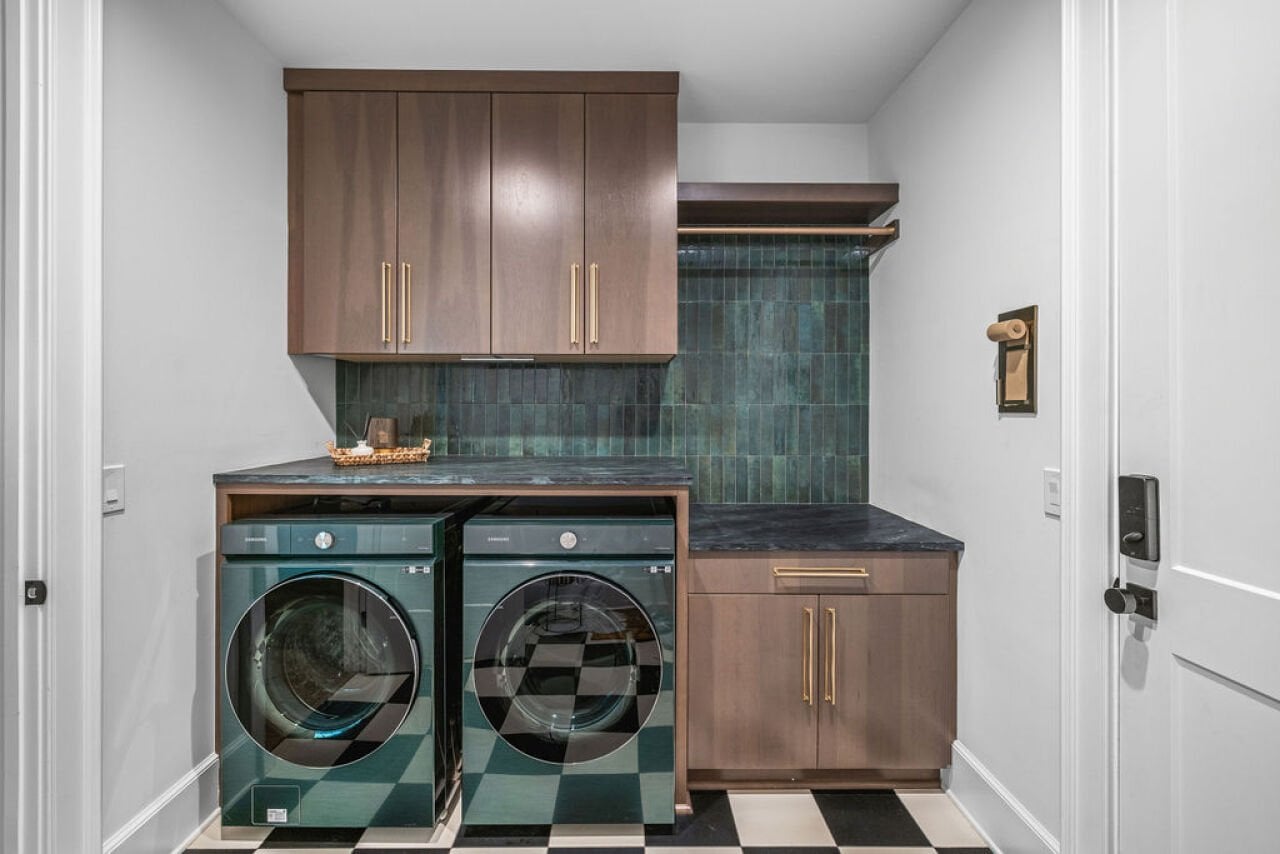
Modern laundry room with dark turquoise appliances, tiled backsplash, wooden cabinets and with brass hardware and a black-and-white checkerboard floor.
Design by Boyce Design + Build; Photography by Norton Aerial Media, LLC


3. Gen Z Is Getting Busy

Gen Zers now account for 0.5% of renovators. While that might not sound like a lot, that percentage has more than doubled from the year prior, when it was 0.2%.

“Gen Zers are carving out a growing share of the renovation market, driven in large part by their foray into homeownership and the immediate need to address functional upgrades,” Sargsyan says. In fact, they’re the most likely to renovate following a recent home purchase, with 61% of them citing this motivator. That’s almost twice the percentage of Millennials (31%) and far ahead of both Gen Xers (19%) and Baby Boomers (18%).

Which spaces are Gen Zers focusing on? That would be interior room remodels, with 76% of them tackling these projects — the highest share of any generation. That’s followed by home system upgrades (69%). Similar to members of other generations, Gen Zers make kitchens their top priority, with 35% of them taking on kitchen remodels. But they’re more likely than members of older generations to take on projects involving secondary spaces, particularly laundry rooms (33% versus 14% of Millennials and Gen Xers, for example) and closets (24% versus 17% of Millennials, for example).

4. Credit Card Use Is Growing

Although homeowners still turn to savings most frequently for their home projects, with more than 4 in 5 (84%) going this route, credit card use has grown by 5 percentage points year over year. In fact, more than a third of homeowners (34%) now use this funding source. After that are secured home loans (13%) — specifically, HELOCs (7%), cash-out refinancing (3%) and home equity loans (3%).

Homeowners who spent more than $50,000 are much more likely to use a secured home loan than those spending $5,000 or less (23% versus 6%, respectively), and the same holds true for using cash from a home sale (20% versus 3%, respectively).

Those spending less are more likely to use credit cards than those spending more (37% versus 29%, respectively) and are slightly more likely to use cash from savings as well (85% versus 81%, respectively).

Bathroom with white marble floor and shower tiles and a standalone soaking tub.
Design by SK Interiors; Photography by Christy Kosnic


5. Time Is on Homeowners' Sides

With busy work schedules and personal lives seemingly the norm these days, finally having the time to renovate is the top motivator for starting a home improvement project, as cited by 40% of renovating homeowners. But money matters too, with 36% pointing to finally having financing in place. Those figures closely align with the previous year’s (40% and 35%, respectively).

Other factors for starting a remodeling project include personalizing a recently purchased home (20%), addressing damage due to home age (19%) and adapting to lifestyle changes (16%).

But looking at the bigger picture, nearly two-thirds of homeowners (61%) plan to stay in their homes for 11 years or more, and 44% describe their residence as a forever home.

“We’re seeing a clear shift toward investing in forever homes rather than moving, with many adapting their spaces to meet changing needs,” Sarsyan says. Among those homeowners planning to stay awhile or even forever, it’s only natural to invest in renovations to express personality and increase comfort for the long haul, particularly to accommodate family changes and aging in place.
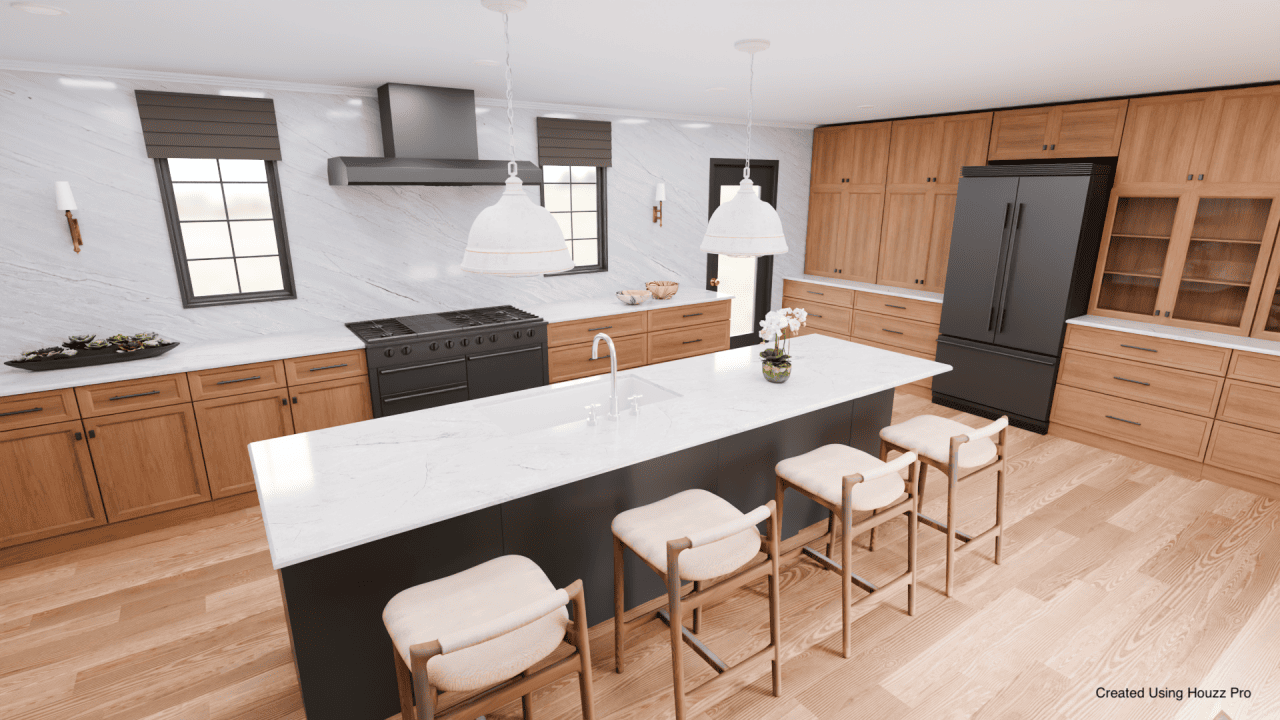
A kitchen with white marble backsplash and a marble-topped breakfast bar.
3D render created using Houzz Pro


6. Vast Majority Tap Pro Expertise

More than 9 in 10 renovating homeowners (91%) hire professionals, highlighting the essential role of industry experts across many kinds of remodeling projects — in terms of both their skillsets and their ability to access industry software that aids in budgeting, scheduling and coordinating. General contractors top the list, with 29% of renovating homeowners engaging them.

Almost half of renovating homeowners (48%) also directly hire specialty service providers without the aid of a construction manager, covering a range of trades. The most popular among these providers are electricians (hired by 41%) and air conditioning or heating specialists (40%), but plumbers are close behind (36%).

7. Thoughtful Planning Takes Time

You might think that construction takes the most time during a renovation, but that’s not the case. The planning phase tends to take substantially longer — in some cases, almost double the time. Kitchen projects have the longest timeline overall on average: 9.5 months spent on planning and 5.8 months spent on construction.

Even projects involving secondary spaces take longer to plan than execute. Closets and home offices, for example, take 6.6 and 6.1 months on average to plan, respectively, while construction takes 4.3 and 3.4 months on average, respectively.

8. Budgets Are Flexible — and Some Homeowners Don’t Even Set One

Not good at or interested in budgeting for a remodel? You might be surprised by how many homeowners feel the same way. A quarter of homeowners did not set a budget for their project (25%). Of those who did, more than one-third (37%) went over budget, showing that sticking strictly to it isn’t always a high priority. Only about a third of renovating homeowners (35%) spent what they’d planned to for their 2025 projects.

Causes for budget overruns are sometimes out of homeowners’ hands and sometimes due to their own choices. More than half of homeowners who exceeded their budget (52%) cited unexpected product or service costs, emphasizing the need for clarity and transparency around prices at every stage of the project. However, 35% intentionally chose products or materials that were more expensive than initially planned, and 31% expanded the scope of their project midrenovation, indicating that satisfaction with the results sometimes outweighs cost.

Other reasons for budget overruns include unexpected project complexity (32%) and discovering construction-related issues once the project is underway (22%).

Bedroom with large windows, navy blue walls and a design painted on the ceiling and furnished with bed, dresser, settee, and matching decor like lamps, rugs, pillows and plants.
Refined Interiors; Photography by Houzz


9. Painting Is a Popular Project

Whether painting new surfaces or repainting old ones to make them look new, homeowners have put paint at the top of the popularity list, with 62% of renovators purchasing it. That share is down by 3 percentage points year over year, but paint is still the No. 1 home improvement product purchase.

Other common purchases: light fixtures (purchased by 48%), faucets and shower heads (46%), lawn and garden supplies (44%), and building materials (41%).

And making a home comfy-cozy is just as important as boosting its functionality. Among purchases for interior rooms, pillows and throw blankets are nearly tied with rugs for the No. 1 spot (47% and 48%, respectively). And beauty matters too, with 42% buying artwork for their rooms.

Whether you’ve already started making your home work better for you, or you’re still dreaming of the day that might happen, knowing about the nine trends above will hopefully help you make better choices and get results you can live with happily for as long as you live there.

About the Houzz & Home Study

The annual U.S. Houzz & Home Study covers a wide range of renovation projects in 2025, from interior remodels and additions to home systems, exterior upgrades and outdoor projects. Data gathered includes historical and planned spends, professional involvement, motivations and challenges behind building, renovation and decorating projects, as well as planned activities for 2026. The 2026 study includes more than 20,000 respondents in the U.S. alone, providing insights into the home improvement activity of the millions of users of the Houzz site and mobile apps. The 2026 U.S. Houzz & Home survey was sent to registered users of Houzz and fielded between January and March 2026.

This story was produced by Houzz and reviewed and distributed by Stacker.

 

Salem News Channel Today

Sponsored Links


September 26 - Phoenix, AZ
Scottsdale Center for the Performing Arts


November 2 - Detroit, MI
Zion Christian Church in Troy


October 6 - Los Angeles, CA
Pasadena Convention Center


November 5 - San Antonio, TX
Norris Centers – The Grand Red Oak Ballroom


October 8 - Sacramento, CA
William Jessup University


November 7 - Tampa, FL
The Palladium at St. Pete College


October 22 - Minneapolis, MN
Crowne Plaza AiRE


November 15 - San Francisco, CA
Fremont Marriott Silicon Valley


October 23 - Philadelphia, PA
Green Valley Country Club


November 16 - Denver, CO
CU South Denver - Formerly Wildlife Experience


November 2 - Chicago, IL
Chicago Westin Northwest in Itasca


November 21 - Cleveland, OH
Holiday Inn Rockside in Independence


Salem Radio Network Speakers

Larry Elder is an American lawyer, writer, and radio and television personality who calls himself the "Sage of South Central" a district of Los Angeles, Larry says his philosophy is to entertain, inform, provoke and to hopefully uplift. His calling card is "we have a country to save" and to him this means returning to the bedrock Constitutional principles of limited government and maximum personal responsibility. Elder's iconoclastic wit and intellectual agility makes him a particularly attractive voice in a nation that seems weary of traditional racial dialogue.” – Los Angeles Times.

Mike Gallagher Mike Gallagher began his broadcasting career in 1978 in Dayton, Ohio. Today, he is one of the most listened-to talk radio show hosts in America, recently having been ranked in the Talkers Magazine “Heavy Hundred” list – the 100 most important talk radio hosts in America. Prior to being launched into national syndication in 1998, Mike hosted the morning show on WABC-AM in New York City. Today, Talkers Magazine reports that his show is heard by over 3.75 million weekly listeners. Besides his radio work, Mike is seen on Fox News Channel as an on-air contributor, frequently appearing on the cable news giant.

Hugh Hewitt is one of the nation’s leading bloggers and a genuine media revolutionary. He brings that expertise, his wit and what The New Yorker magazine calls his “amiable but relentless manner” to his nationally syndicated show each day.

When Dr. Sebastian Gorka was growing up, he listened to talk radio under his pillow with a transistor radio, dreaming that one day he would be behind the microphone. Beginning New Year’s Day 2019, he got his wish. Gorka now hosts America First every weekday afternoon 3 to 6pm ET. Gorka’s unique story works well on the radio. He is national security analyst for the Fox News Channel and author of two books: "Why We Fight" and "Defeating Jihad." His latest book releasing this fall is “War For America’s Soul.” He is uniquely qualified to fight the culture war and stand up for what is great about America, his adopted home country.

Broadcasting from his home station of KRLA in Los Angeles, the Dennis Prager Show is heard across the country. Everything in life – from politics to religion to relationships – is grist for Dennis’ mill. If it’s interesting, if it affects your life, then Dennis will be talking about it – with passion, humor, insight and wisdom.

Sean Hannity is a conservative radio and television host, and one of the original primetime hosts on the Fox News Channel, where he has appeared since 1996. Sean Hannity began his radio career at a college station in California, before moving on to markets in the Southeast and New York. Today, he’s one of the most listened to on-air voices. Hannity’s radio program went into national syndication on September 10, 2001, and airs on more than 500 stations. Talkers Magazine estimates Hannity’s weekly radio audience at 13.5 million. In 1996 he was hired as one of the original hosts on Fox News Channel. As host of several popular Fox programs, Hannity has become the highest-paid news anchor on television.

Michelle Malkin is a mother, wife, blogger, conservative syndicated columnist, longtime cable TV news commentator, and best-selling author of six books. She started her newspaper journalism career at the Los Angeles Daily News in 1992, moved to the Seattle Times in 1995, and has been penning nationally syndicated newspaper columns for Creators Syndicate since 1999. She is founder of conservative Internet start-ups Hot Air and Twitchy.com. Malkin has received numerous awards for her investigative journalism, including the Council on Governmental Ethics Laws (COGEL) national award for outstanding service for the cause of governmental ethics and leadership (1998), the Reed Irvine Accuracy in Media Award for Investigative Journalism (2006), the Heritage Foundation and Franklin Center for Government & Public Integrity's Breitbart Award for Excellence in Journalism (2013), the Center for Immigration Studies' Eugene Katz Award for Excellence in the Coverage of Immigration Award (2016), and the Manhattan Film Festival's Film Heals Award (2018). Married for 26 years and the mother of two teenage children, she lives with her family in Colorado. Follow her at michellemalkin.com. (Photo reprinted with kind permission from Peter Duke Photography.)

Sponsored by:

Renovation nation: 9 home remodeling trends for 2026

Carbonatix Pre-Player Loader

Audio By Carbonatix

Renovation nation: 9 home remodeling trends for 2026

Homeowners taking on renovation projects this year are in great company. More than half of U.S. homeowners (54%) tackled renovation projects in 2025 — everything from full gut renovations to repainting rooms. This data comes courtesy of the latest Houzz & Home Study from Houzz, an AI-powered all-in-one software platform for construction and design. The annual study, fielded between January and March 2026, offers insights from more than 20,000 U.S. respondents into home renovation trends for both homeowners and construction and design pros. Here are nine key insights.

1. Budget Levels Are Steady or Rising

Not only is the median renovation budget in 2025 the same as it was in 2024, but homeowners with budgets in the highest 10% are investing even more (a median of $150,000 in 2025 versus $140,000 in 2024). This indicates that fluctuations in the national economy are affecting renovation plans and spending less than you might think. And the percentage of homeowners planning renovations this year is similar as well, dipping by only 2 percentage points year over year despite uncertainty around tariffs and the economy.

“Home renovation continues at historic levels, even as homeowners take a more cautious approach to future projects,” says Marine Sargsyan, head of economic research at Houzz. What’s driving this market strength? “Pent-up demand from homeowners who are finally able to act on long-planned renovations,” she says.

2. Older Generations Are Spending More

Among all the generations surveyed, Seniors (age 81 or older) spent at a higher level on renovations in 2025, with the median at $25,000. Gen X homeowners (ages 46 to 61) and Baby Boomers (ages 62 to 80) follow, with median spend of $24,000 and $22,000, respectively. Interestingly, however, among those with the highest 10% of budgets, Seniors spent far less ($114,000) than both Gen Xers and Baby Boomers (tied at $150,000) in 2025.

As for which generation increased their spending the most in 2025, that honor also goes to Seniors, for their kitchens. They nearly doubled their investment in kitchens year over year, from $15,000 to $27,500.

Another interesting fact: For projects with the top 10% of budgets, investments differed greatly between the two youngest groups: $125,000 for Millennials (ages 30 to 45) and $52,000 for Gen Zers (ages 18 to 29).

Modern laundry room with dark turquoise appliances, tiled backsplash, wooden cabinets and with brass hardware and a black-and-white checkerboard floor.
Design by Boyce Design + Build; Photography by Norton Aerial Media, LLC


3. Gen Z Is Getting Busy

Gen Zers now account for 0.5% of renovators. While that might not sound like a lot, that percentage has more than doubled from the year prior, when it was 0.2%.

“Gen Zers are carving out a growing share of the renovation market, driven in large part by their foray into homeownership and the immediate need to address functional upgrades,” Sargsyan says. In fact, they’re the most likely to renovate following a recent home purchase, with 61% of them citing this motivator. That’s almost twice the percentage of Millennials (31%) and far ahead of both Gen Xers (19%) and Baby Boomers (18%).

Which spaces are Gen Zers focusing on? That would be interior room remodels, with 76% of them tackling these projects — the highest share of any generation. That’s followed by home system upgrades (69%). Similar to members of other generations, Gen Zers make kitchens their top priority, with 35% of them taking on kitchen remodels. But they’re more likely than members of older generations to take on projects involving secondary spaces, particularly laundry rooms (33% versus 14% of Millennials and Gen Xers, for example) and closets (24% versus 17% of Millennials, for example).

4. Credit Card Use Is Growing

Although homeowners still turn to savings most frequently for their home projects, with more than 4 in 5 (84%) going this route, credit card use has grown by 5 percentage points year over year. In fact, more than a third of homeowners (34%) now use this funding source. After that are secured home loans (13%) — specifically, HELOCs (7%), cash-out refinancing (3%) and home equity loans (3%).

Homeowners who spent more than $50,000 are much more likely to use a secured home loan than those spending $5,000 or less (23% versus 6%, respectively), and the same holds true for using cash from a home sale (20% versus 3%, respectively).

Those spending less are more likely to use credit cards than those spending more (37% versus 29%, respectively) and are slightly more likely to use cash from savings as well (85% versus 81%, respectively).

Bathroom with white marble floor and shower tiles and a standalone soaking tub.
Design by SK Interiors; Photography by Christy Kosnic


5. Time Is on Homeowners' Sides

With busy work schedules and personal lives seemingly the norm these days, finally having the time to renovate is the top motivator for starting a home improvement project, as cited by 40% of renovating homeowners. But money matters too, with 36% pointing to finally having financing in place. Those figures closely align with the previous year’s (40% and 35%, respectively).

Other factors for starting a remodeling project include personalizing a recently purchased home (20%), addressing damage due to home age (19%) and adapting to lifestyle changes (16%).

But looking at the bigger picture, nearly two-thirds of homeowners (61%) plan to stay in their homes for 11 years or more, and 44% describe their residence as a forever home.

“We’re seeing a clear shift toward investing in forever homes rather than moving, with many adapting their spaces to meet changing needs,” Sarsyan says. Among those homeowners planning to stay awhile or even forever, it’s only natural to invest in renovations to express personality and increase comfort for the long haul, particularly to accommodate family changes and aging in place.

A kitchen with white marble backsplash and a marble-topped breakfast bar.
3D render created using Houzz Pro


6. Vast Majority Tap Pro Expertise

More than 9 in 10 renovating homeowners (91%) hire professionals, highlighting the essential role of industry experts across many kinds of remodeling projects — in terms of both their skillsets and their ability to access industry software that aids in budgeting, scheduling and coordinating. General contractors top the list, with 29% of renovating homeowners engaging them.

Almost half of renovating homeowners (48%) also directly hire specialty service providers without the aid of a construction manager, covering a range of trades. The most popular among these providers are electricians (hired by 41%) and air conditioning or heating specialists (40%), but plumbers are close behind (36%).

7. Thoughtful Planning Takes Time

You might think that construction takes the most time during a renovation, but that’s not the case. The planning phase tends to take substantially longer — in some cases, almost double the time. Kitchen projects have the longest timeline overall on average: 9.5 months spent on planning and 5.8 months spent on construction.

Even projects involving secondary spaces take longer to plan than execute. Closets and home offices, for example, take 6.6 and 6.1 months on average to plan, respectively, while construction takes 4.3 and 3.4 months on average, respectively.

8. Budgets Are Flexible — and Some Homeowners Don’t Even Set One

Not good at or interested in budgeting for a remodel? You might be surprised by how many homeowners feel the same way. A quarter of homeowners did not set a budget for their project (25%). Of those who did, more than one-third (37%) went over budget, showing that sticking strictly to it isn’t always a high priority. Only about a third of renovating homeowners (35%) spent what they’d planned to for their 2025 projects.

Causes for budget overruns are sometimes out of homeowners’ hands and sometimes due to their own choices. More than half of homeowners who exceeded their budget (52%) cited unexpected product or service costs, emphasizing the need for clarity and transparency around prices at every stage of the project. However, 35% intentionally chose products or materials that were more expensive than initially planned, and 31% expanded the scope of their project midrenovation, indicating that satisfaction with the results sometimes outweighs cost.

Other reasons for budget overruns include unexpected project complexity (32%) and discovering construction-related issues once the project is underway (22%).

Bedroom with large windows, navy blue walls and a design painted on the ceiling and furnished with bed, dresser, settee, and matching decor like lamps, rugs, pillows and plants.
Refined Interiors; Photography by Houzz


9. Painting Is a Popular Project

Whether painting new surfaces or repainting old ones to make them look new, homeowners have put paint at the top of the popularity list, with 62% of renovators purchasing it. That share is down by 3 percentage points year over year, but paint is still the No. 1 home improvement product purchase.

Other common purchases: light fixtures (purchased by 48%), faucets and shower heads (46%), lawn and garden supplies (44%), and building materials (41%).

And making a home comfy-cozy is just as important as boosting its functionality. Among purchases for interior rooms, pillows and throw blankets are nearly tied with rugs for the No. 1 spot (47% and 48%, respectively). And beauty matters too, with 42% buying artwork for their rooms.

Whether you’ve already started making your home work better for you, or you’re still dreaming of the day that might happen, knowing about the nine trends above will hopefully help you make better choices and get results you can live with happily for as long as you live there.

About the Houzz & Home Study

The annual U.S. Houzz & Home Study covers a wide range of renovation projects in 2025, from interior remodels and additions to home systems, exterior upgrades and outdoor projects. Data gathered includes historical and planned spends, professional involvement, motivations and challenges behind building, renovation and decorating projects, as well as planned activities for 2026. The 2026 study includes more than 20,000 respondents in the U.S. alone, providing insights into the home improvement activity of the millions of users of the Houzz site and mobile apps. The 2026 U.S. Houzz & Home survey was sent to registered users of Houzz and fielded between January and March 2026.

This story was produced by Houzz and reviewed and distributed by Stacker.

 

Salem News Channel Today

Sponsored Links

On Air & Up Next

See the Full Program Guide























