Survey finds that 85% of Americans ghosted a hard conversation in a single month

Carbonatix Pre-Player Loader

Audio By Carbonatix

Survey finds that 85% of Americans ghosted a hard conversation in a single month

At some point in the past month, millions of Americans likely did the same thing: They contemplated saying something, but ultimately stayed silent.

Maybe it was the comment at the dinner table that wasn't worth the fight, the colleague whose politics were too far from theirs, or the family group chat where a message sat half-drafted, then deleted. Whatever the moment, the calculation was the same: stay quiet, keep the peace, and move on.

This is the texture of American dialogue in 2026. Instead of being angrier and more combative, it’s quieter and more withdrawn. A new survey from Quantum Connections: Global Dialogue Initiative put numbers to what many people already sense but rarely say out loud: Americans have largely stopped having the hard conversations, and most of them have made peace with that.

Americans Have Stopped Talking

The Quantum Connections 2026 American Dialogue Report surveyed 1,000 U.S. adults in March 2026 about how they navigate disagreement, seek information, and engage (or don't) with people who see the world differently. The results describe a country that, on the surface, believes in open dialogue and considers itself fairly open-minded. Below the surface, however, the reality is more complicated.

In March, 85% of Americans say they avoided at least one conversation in the past 30 days because they feared it would turn into an argument. More than a third did so four or more times in a single month, while 61% report regularly thinking "it's just not worth getting into it" when a conversation starts tilting toward disagreement.

The math, for most people, is simple: Friction costs more than the conversation is worth.

We See Bias in Others, But Not Ourselves

When it comes to bias, Americans are remarkably clear-eyed about everyone but themselves.

Asked whether Americans generally seek out information that confirms what they already believe, 91% agreed, with 40% agreeing strongly. But when the same question turned personal, the consensus dissolved: Fifty-two percent described themselves as people who consider a mix of perspectives. Another 26% said they actively go out of their way to seek out different viewpoints, while only 22% admitted to mostly looking for information that confirms what they already think.

If 9 in 10 Americans believe their fellow citizens are trapped in confirmation bias, but only 1 in 5 thinks the same is true of themselves, then Americans have lost the ability to see themselves clearly, making a collective diagnosis they’re unwilling to apply individually.

Gen Z Is Both the Best and Worst at Difficult Conversations

No generation has a more complicated relationship with political dialogue than Generation Z, and the data reflects that contradiction in full.

Gen Z adults are the most likely of any age group to ask a question when they encounter a different viewpoint, with 40% saying that's their first instinct. They're also the least likely to simply change the subject. By those measures, they're the generation most oriented toward genuine dialogue.

And yet, 34% of Gen Z adults say they "very often" think conversations aren't worth having — the highest rate of any age group. Thirty percent report frequently seeing people end relationships over political or social differences — nearly double the rate among Gen X.

Gen Z adults see the problem more clearly than anyone, and they have the instinct to engage. They are also, by their own account, the most exhausted by the attempt. What the data suggests is that this generation hasn't yet been given the tools to make their instincts productive. The desire is there, but the skill needs to catch up.

Heavy AI Users Are the Most Likely to Give Up on Real Conversations

Sixty-one percent of Americans now use AI tools like ChatGPT, Claude, or Gemini at least weekly. Among the heaviest users who reach for AI daily, an interesting pattern emerges: They are more likely to seek out different viewpoints (34%, versus 24% of lighter users). They read more and are more optimistic about where the country's curiosity is heading.

But daily AI users are also 52% more likely to say that real human conversations aren't worth the effort. Nearly a third of daily AI users report very often thinking that engaging with someone who disagrees with them simply isn't worth it, compared to 21% of those who use AI less frequently.

Perhaps expanded access to information is making genuine curiosity feel less necessary. If any perspective is a search query away, the friction of a real conversation may start to feel more like an inconvenience than an opportunity.

Dialogue Is a Skill, and Americans Are Out of Practice

Fifty-one percent of Americans believe the country is becoming more curious, and they may not be wrong. More information is available than ever, more perspectives are technically accessible, and more people report, at least in self-description, seeking them out.

What the behavioral data shows, however, is that curiosity as a practice — something that happens between people, in real time, with an uncertain outcome — is in retreat. Nearly half of Americans believe people make up their minds too quickly, more than half feel pressure to hold strong opinions, and 85% walked away from at least one conversation in a single month that they knew mattered.

Dialogue has always been more than an exchange of information. It is the willingness to sit with someone whose conclusions differ from yours and to stay long enough to understand how they got there. That willingness is quietly eroding through thousands of small decisions to let something go, keep the peace, and tell yourself the disagreement isn’t worth it.

The good news is that skills that erode can be rebuilt.

It starts small, so the next time you feel that familiar pull to disengage, simply pause and sit with the discomfort instead of stepping away from it. If someone says something you disagree with, try repeating it back to them before you respond. The act of restating forces you to actually hear it and to listen without judgment. You can ask questions and dig into where they're coming from rather than where you're going next. When you finally share your own view, resist the urge to lead with blame or certainty. Instead, prioritize the human connection above the argument you're trying to win.

These are soft skills, but they require strong intention and willingness to be present with someone who sees the world differently. Letting that kind of interaction change you, even a little, is how real connection gets built.

This story was produced by Quantum Connections: Global Dialogue Initiative and reviewed and distributed by Stacker.


 

Salem News Channel Today

Sponsored Links


September 26 - Phoenix, AZ
Scottsdale Center for the Performing Arts


November 2 - Detroit, MI
Zion Christian Church in Troy


October 6 - Los Angeles, CA
Pasadena Convention Center


November 5 - San Antonio, TX
Norris Centers – The Grand Red Oak Ballroom


October 8 - Sacramento, CA
William Jessup University


November 7 - Tampa, FL
The Palladium at St. Pete College


October 22 - Minneapolis, MN
Crowne Plaza AiRE


November 15 - San Francisco, CA
Fremont Marriott Silicon Valley


October 23 - Philadelphia, PA
Green Valley Country Club


November 16 - Denver, CO
CU South Denver - Formerly Wildlife Experience


November 2 - Chicago, IL
Chicago Westin Northwest in Itasca


November 21 - Cleveland, OH
Holiday Inn Rockside in Independence


Salem Radio Network Speakers

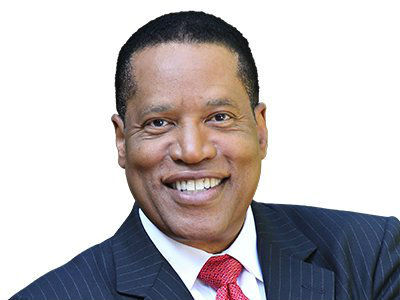
Larry Elder is an American lawyer, writer, and radio and television personality who calls himself the "Sage of South Central" a district of Los Angeles, Larry says his philosophy is to entertain, inform, provoke and to hopefully uplift. His calling card is "we have a country to save" and to him this means returning to the bedrock Constitutional principles of limited government and maximum personal responsibility. Elder's iconoclastic wit and intellectual agility makes him a particularly attractive voice in a nation that seems weary of traditional racial dialogue.” – Los Angeles Times.

Mike Gallagher Mike Gallagher began his broadcasting career in 1978 in Dayton, Ohio. Today, he is one of the most listened-to talk radio show hosts in America, recently having been ranked in the Talkers Magazine “Heavy Hundred” list – the 100 most important talk radio hosts in America. Prior to being launched into national syndication in 1998, Mike hosted the morning show on WABC-AM in New York City. Today, Talkers Magazine reports that his show is heard by over 3.75 million weekly listeners. Besides his radio work, Mike is seen on Fox News Channel as an on-air contributor, frequently appearing on the cable news giant.

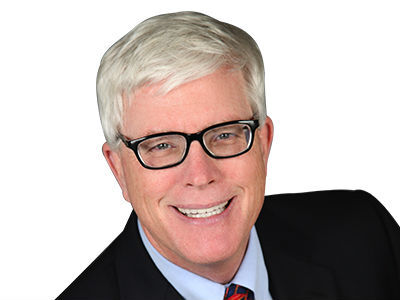
Hugh Hewitt is one of the nation’s leading bloggers and a genuine media revolutionary. He brings that expertise, his wit and what The New Yorker magazine calls his “amiable but relentless manner” to his nationally syndicated show each day.

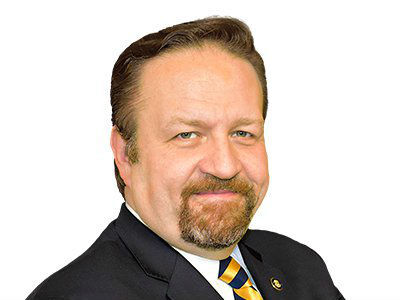
When Dr. Sebastian Gorka was growing up, he listened to talk radio under his pillow with a transistor radio, dreaming that one day he would be behind the microphone. Beginning New Year’s Day 2019, he got his wish. Gorka now hosts America First every weekday afternoon 3 to 6pm ET. Gorka’s unique story works well on the radio. He is national security analyst for the Fox News Channel and author of two books: "Why We Fight" and "Defeating Jihad." His latest book releasing this fall is “War For America’s Soul.” He is uniquely qualified to fight the culture war and stand up for what is great about America, his adopted home country.

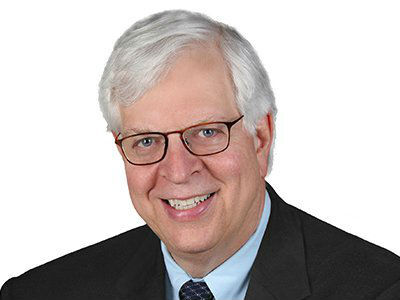
Broadcasting from his home station of KRLA in Los Angeles, the Dennis Prager Show is heard across the country. Everything in life – from politics to religion to relationships – is grist for Dennis’ mill. If it’s interesting, if it affects your life, then Dennis will be talking about it – with passion, humor, insight and wisdom.

Sean Hannity is a conservative radio and television host, and one of the original primetime hosts on the Fox News Channel, where he has appeared since 1996. Sean Hannity began his radio career at a college station in California, before moving on to markets in the Southeast and New York. Today, he’s one of the most listened to on-air voices. Hannity’s radio program went into national syndication on September 10, 2001, and airs on more than 500 stations. Talkers Magazine estimates Hannity’s weekly radio audience at 13.5 million. In 1996 he was hired as one of the original hosts on Fox News Channel. As host of several popular Fox programs, Hannity has become the highest-paid news anchor on television.

Michelle Malkin is a mother, wife, blogger, conservative syndicated columnist, longtime cable TV news commentator, and best-selling author of six books. She started her newspaper journalism career at the Los Angeles Daily News in 1992, moved to the Seattle Times in 1995, and has been penning nationally syndicated newspaper columns for Creators Syndicate since 1999. She is founder of conservative Internet start-ups Hot Air and Twitchy.com. Malkin has received numerous awards for her investigative journalism, including the Council on Governmental Ethics Laws (COGEL) national award for outstanding service for the cause of governmental ethics and leadership (1998), the Reed Irvine Accuracy in Media Award for Investigative Journalism (2006), the Heritage Foundation and Franklin Center for Government & Public Integrity's Breitbart Award for Excellence in Journalism (2013), the Center for Immigration Studies' Eugene Katz Award for Excellence in the Coverage of Immigration Award (2016), and the Manhattan Film Festival's Film Heals Award (2018). Married for 26 years and the mother of two teenage children, she lives with her family in Colorado. Follow her at michellemalkin.com. (Photo reprinted with kind permission from Peter Duke Photography.)

Sponsored by:

Survey finds that 85% of Americans ghosted a hard conversation in a single month

Carbonatix Pre-Player Loader

Audio By Carbonatix

Survey finds that 85% of Americans ghosted a hard conversation in a single month

At some point in the past month, millions of Americans likely did the same thing: They contemplated saying something, but ultimately stayed silent.

Maybe it was the comment at the dinner table that wasn't worth the fight, the colleague whose politics were too far from theirs, or the family group chat where a message sat half-drafted, then deleted. Whatever the moment, the calculation was the same: stay quiet, keep the peace, and move on.

This is the texture of American dialogue in 2026. Instead of being angrier and more combative, it’s quieter and more withdrawn. A new survey from Quantum Connections: Global Dialogue Initiative put numbers to what many people already sense but rarely say out loud: Americans have largely stopped having the hard conversations, and most of them have made peace with that.

Americans Have Stopped Talking

The Quantum Connections 2026 American Dialogue Report surveyed 1,000 U.S. adults in March 2026 about how they navigate disagreement, seek information, and engage (or don't) with people who see the world differently. The results describe a country that, on the surface, believes in open dialogue and considers itself fairly open-minded. Below the surface, however, the reality is more complicated.

In March, 85% of Americans say they avoided at least one conversation in the past 30 days because they feared it would turn into an argument. More than a third did so four or more times in a single month, while 61% report regularly thinking "it's just not worth getting into it" when a conversation starts tilting toward disagreement.

The math, for most people, is simple: Friction costs more than the conversation is worth.

We See Bias in Others, But Not Ourselves

When it comes to bias, Americans are remarkably clear-eyed about everyone but themselves.

Asked whether Americans generally seek out information that confirms what they already believe, 91% agreed, with 40% agreeing strongly. But when the same question turned personal, the consensus dissolved: Fifty-two percent described themselves as people who consider a mix of perspectives. Another 26% said they actively go out of their way to seek out different viewpoints, while only 22% admitted to mostly looking for information that confirms what they already think.

If 9 in 10 Americans believe their fellow citizens are trapped in confirmation bias, but only 1 in 5 thinks the same is true of themselves, then Americans have lost the ability to see themselves clearly, making a collective diagnosis they’re unwilling to apply individually.

Gen Z Is Both the Best and Worst at Difficult Conversations

No generation has a more complicated relationship with political dialogue than Generation Z, and the data reflects that contradiction in full.

Gen Z adults are the most likely of any age group to ask a question when they encounter a different viewpoint, with 40% saying that's their first instinct. They're also the least likely to simply change the subject. By those measures, they're the generation most oriented toward genuine dialogue.

And yet, 34% of Gen Z adults say they "very often" think conversations aren't worth having — the highest rate of any age group. Thirty percent report frequently seeing people end relationships over political or social differences — nearly double the rate among Gen X.

Gen Z adults see the problem more clearly than anyone, and they have the instinct to engage. They are also, by their own account, the most exhausted by the attempt. What the data suggests is that this generation hasn't yet been given the tools to make their instincts productive. The desire is there, but the skill needs to catch up.

Heavy AI Users Are the Most Likely to Give Up on Real Conversations

Sixty-one percent of Americans now use AI tools like ChatGPT, Claude, or Gemini at least weekly. Among the heaviest users who reach for AI daily, an interesting pattern emerges: They are more likely to seek out different viewpoints (34%, versus 24% of lighter users). They read more and are more optimistic about where the country's curiosity is heading.

But daily AI users are also 52% more likely to say that real human conversations aren't worth the effort. Nearly a third of daily AI users report very often thinking that engaging with someone who disagrees with them simply isn't worth it, compared to 21% of those who use AI less frequently.

Perhaps expanded access to information is making genuine curiosity feel less necessary. If any perspective is a search query away, the friction of a real conversation may start to feel more like an inconvenience than an opportunity.

Dialogue Is a Skill, and Americans Are Out of Practice

Fifty-one percent of Americans believe the country is becoming more curious, and they may not be wrong. More information is available than ever, more perspectives are technically accessible, and more people report, at least in self-description, seeking them out.

What the behavioral data shows, however, is that curiosity as a practice — something that happens between people, in real time, with an uncertain outcome — is in retreat. Nearly half of Americans believe people make up their minds too quickly, more than half feel pressure to hold strong opinions, and 85% walked away from at least one conversation in a single month that they knew mattered.

Dialogue has always been more than an exchange of information. It is the willingness to sit with someone whose conclusions differ from yours and to stay long enough to understand how they got there. That willingness is quietly eroding through thousands of small decisions to let something go, keep the peace, and tell yourself the disagreement isn’t worth it.

The good news is that skills that erode can be rebuilt.

It starts small, so the next time you feel that familiar pull to disengage, simply pause and sit with the discomfort instead of stepping away from it. If someone says something you disagree with, try repeating it back to them before you respond. The act of restating forces you to actually hear it and to listen without judgment. You can ask questions and dig into where they're coming from rather than where you're going next. When you finally share your own view, resist the urge to lead with blame or certainty. Instead, prioritize the human connection above the argument you're trying to win.

These are soft skills, but they require strong intention and willingness to be present with someone who sees the world differently. Letting that kind of interaction change you, even a little, is how real connection gets built.

This story was produced by Quantum Connections: Global Dialogue Initiative and reviewed and distributed by Stacker.

 

Salem News Channel Today

Sponsored Links

On Air & Up Next

See the Full Program Guide