The surprising science of fireside connection

Carbonatix Pre-Player Loader

Audio By Carbonatix

The surprising science of fireside connection

Gathering around a fire, whether it is a bonfire outdoors or a fireplace on date night, is a way to bring people together. Modern Flames explores the physiological and evolutionary evidence behind the human habit of socializing beside a fire.

Campfire Principle

Charles Vogl, an internationally best-selling author who focuses on community, posits in the Campfire Principle that campfires nurture relationships and intimate conversations because, “At campfires, we have time, proximity, freedom, and intimacy to connect meaningfully with others if we choose.” Even in larger groups, gathering around a campfire fosters a level of intimacy that connects individuals with one another by sharing moments of vulnerability.

The act of gathering around a fire dates far back in our evolutionary history, with anthropologists claiming that the central role of a fire encouraged communication (sharing stories) and reinforced social bonding. This long-standing tradition of storytelling over the fire connects us to one another, making us feel less lonely and more a part of a community.

Fireside Relaxation Study

The sensory details of a fire also create positive physical and mental responses, including easing anxiety, lowering blood pressure, and contributing to mindfulness, according to the Fireside Relaxation Study by the University of Alabama.

“Findings confirm that hearth and campfires induce relaxation as part of a multisensory, absorptive, and social experience,” Professor Chris Lynn concludes. The flicker of the flames and the crackling sounds of the fire burning help you to disconnect from technology and the anxiety and worries that come with modern life.

By giving in to “being present,” you gain mindfulness, a meditative state that’s achieved by focusing one’s awareness on the present moment. The warmth of the fire also allows you to relax tense muscles, and is linked to a better night’s sleep.

The ‘Third Place’ Theory

The third place effect, introduced by sociologist Ray Oldenburg, argues that people need a third place where they can gather, interact informally, and build community – a separate space from home and work (the “first place” and “second place,” respectively).

Gathering around a fire has long served as a powerful third place. Today, however, there’s a shift where the “first place” (home) merges with the “third place.” Due to rising living costs, overcrowding, shorter hours for free time, and social burnout, the home is now the primary gathering place, which underscores the positive effects of a fireplace or fire pit, which include promoting feelings of belonging and fostering conversation.

Conclusion

Whether you are gathering for your next outdoor bonfire or having wine on date night by your fireplace, when you cozy up to your loved ones and enjoy the effects of the crackling flames, you’re joining a tradition that humans have embraced for thousands of years.

This story was produced by Modern Flames and reviewed and distributed by Stacker.

 

Salem News Channel Today

Sponsored Links


September 26 - Phoenix, AZ
Scottsdale Center for the Performing Arts


November 2 - Detroit, MI
Zion Christian Church in Troy


October 6 - Los Angeles, CA
Pasadena Convention Center


November 5 - San Antonio, TX
Norris Centers – The Grand Red Oak Ballroom


October 8 - Sacramento, CA
William Jessup University


November 7 - Tampa, FL
The Palladium at St. Pete College


October 22 - Minneapolis, MN
Crowne Plaza AiRE


November 15 - San Francisco, CA
Fremont Marriott Silicon Valley


October 23 - Philadelphia, PA
Green Valley Country Club


November 16 - Denver, CO
CU South Denver - Formerly Wildlife Experience


November 2 - Chicago, IL
Chicago Westin Northwest in Itasca


November 21 - Cleveland, OH
Holiday Inn Rockside in Independence


Salem Radio Network Speakers

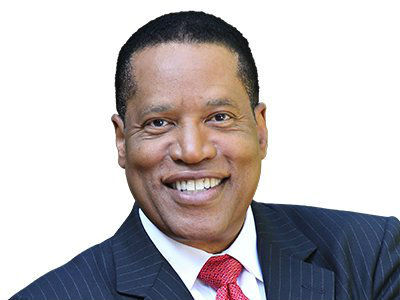
Larry Elder is an American lawyer, writer, and radio and television personality who calls himself the "Sage of South Central" a district of Los Angeles, Larry says his philosophy is to entertain, inform, provoke and to hopefully uplift. His calling card is "we have a country to save" and to him this means returning to the bedrock Constitutional principles of limited government and maximum personal responsibility. Elder's iconoclastic wit and intellectual agility makes him a particularly attractive voice in a nation that seems weary of traditional racial dialogue.” – Los Angeles Times.

Mike Gallagher Mike Gallagher began his broadcasting career in 1978 in Dayton, Ohio. Today, he is one of the most listened-to talk radio show hosts in America, recently having been ranked in the Talkers Magazine “Heavy Hundred” list – the 100 most important talk radio hosts in America. Prior to being launched into national syndication in 1998, Mike hosted the morning show on WABC-AM in New York City. Today, Talkers Magazine reports that his show is heard by over 3.75 million weekly listeners. Besides his radio work, Mike is seen on Fox News Channel as an on-air contributor, frequently appearing on the cable news giant.

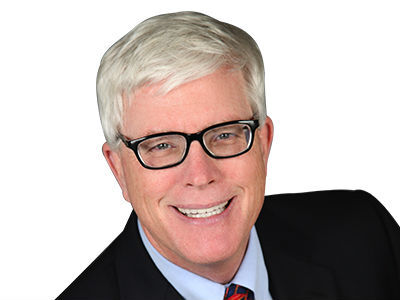
Hugh Hewitt is one of the nation’s leading bloggers and a genuine media revolutionary. He brings that expertise, his wit and what The New Yorker magazine calls his “amiable but relentless manner” to his nationally syndicated show each day.

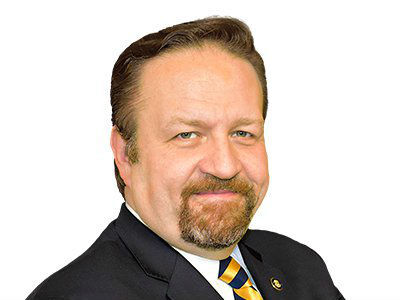
When Dr. Sebastian Gorka was growing up, he listened to talk radio under his pillow with a transistor radio, dreaming that one day he would be behind the microphone. Beginning New Year’s Day 2019, he got his wish. Gorka now hosts America First every weekday afternoon 3 to 6pm ET. Gorka’s unique story works well on the radio. He is national security analyst for the Fox News Channel and author of two books: "Why We Fight" and "Defeating Jihad." His latest book releasing this fall is “War For America’s Soul.” He is uniquely qualified to fight the culture war and stand up for what is great about America, his adopted home country.

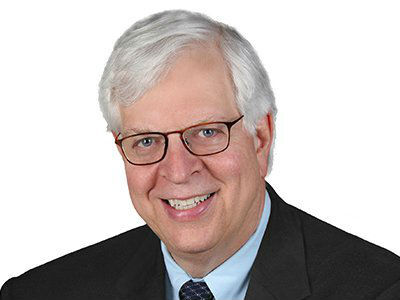
Broadcasting from his home station of KRLA in Los Angeles, the Dennis Prager Show is heard across the country. Everything in life – from politics to religion to relationships – is grist for Dennis’ mill. If it’s interesting, if it affects your life, then Dennis will be talking about it – with passion, humor, insight and wisdom.

Sean Hannity is a conservative radio and television host, and one of the original primetime hosts on the Fox News Channel, where he has appeared since 1996. Sean Hannity began his radio career at a college station in California, before moving on to markets in the Southeast and New York. Today, he’s one of the most listened to on-air voices. Hannity’s radio program went into national syndication on September 10, 2001, and airs on more than 500 stations. Talkers Magazine estimates Hannity’s weekly radio audience at 13.5 million. In 1996 he was hired as one of the original hosts on Fox News Channel. As host of several popular Fox programs, Hannity has become the highest-paid news anchor on television.

Michelle Malkin is a mother, wife, blogger, conservative syndicated columnist, longtime cable TV news commentator, and best-selling author of six books. She started her newspaper journalism career at the Los Angeles Daily News in 1992, moved to the Seattle Times in 1995, and has been penning nationally syndicated newspaper columns for Creators Syndicate since 1999. She is founder of conservative Internet start-ups Hot Air and Twitchy.com. Malkin has received numerous awards for her investigative journalism, including the Council on Governmental Ethics Laws (COGEL) national award for outstanding service for the cause of governmental ethics and leadership (1998), the Reed Irvine Accuracy in Media Award for Investigative Journalism (2006), the Heritage Foundation and Franklin Center for Government & Public Integrity's Breitbart Award for Excellence in Journalism (2013), the Center for Immigration Studies' Eugene Katz Award for Excellence in the Coverage of Immigration Award (2016), and the Manhattan Film Festival's Film Heals Award (2018). Married for 26 years and the mother of two teenage children, she lives with her family in Colorado. Follow her at michellemalkin.com. (Photo reprinted with kind permission from Peter Duke Photography.)

Sponsored by:

The surprising science of fireside connection

Carbonatix Pre-Player Loader

Audio By Carbonatix

The surprising science of fireside connection

Gathering around a fire, whether it is a bonfire outdoors or a fireplace on date night, is a way to bring people together. Modern Flames explores the physiological and evolutionary evidence behind the human habit of socializing beside a fire.

Campfire Principle

Charles Vogl, an internationally best-selling author who focuses on community, posits in the Campfire Principle that campfires nurture relationships and intimate conversations because, “At campfires, we have time, proximity, freedom, and intimacy to connect meaningfully with others if we choose.” Even in larger groups, gathering around a campfire fosters a level of intimacy that connects individuals with one another by sharing moments of vulnerability.

The act of gathering around a fire dates far back in our evolutionary history, with anthropologists claiming that the central role of a fire encouraged communication (sharing stories) and reinforced social bonding. This long-standing tradition of storytelling over the fire connects us to one another, making us feel less lonely and more a part of a community.

Fireside Relaxation Study

The sensory details of a fire also create positive physical and mental responses, including easing anxiety, lowering blood pressure, and contributing to mindfulness, according to the Fireside Relaxation Study by the University of Alabama.

“Findings confirm that hearth and campfires induce relaxation as part of a multisensory, absorptive, and social experience,” Professor Chris Lynn concludes. The flicker of the flames and the crackling sounds of the fire burning help you to disconnect from technology and the anxiety and worries that come with modern life.

By giving in to “being present,” you gain mindfulness, a meditative state that’s achieved by focusing one’s awareness on the present moment. The warmth of the fire also allows you to relax tense muscles, and is linked to a better night’s sleep.

The ‘Third Place’ Theory

The third place effect, introduced by sociologist Ray Oldenburg, argues that people need a third place where they can gather, interact informally, and build community – a separate space from home and work (the “first place” and “second place,” respectively).

Gathering around a fire has long served as a powerful third place. Today, however, there’s a shift where the “first place” (home) merges with the “third place.” Due to rising living costs, overcrowding, shorter hours for free time, and social burnout, the home is now the primary gathering place, which underscores the positive effects of a fireplace or fire pit, which include promoting feelings of belonging and fostering conversation.

Conclusion

Whether you are gathering for your next outdoor bonfire or having wine on date night by your fireplace, when you cozy up to your loved ones and enjoy the effects of the crackling flames, you’re joining a tradition that humans have embraced for thousands of years.

This story was produced by Modern Flames and reviewed and distributed by Stacker.

 

Salem News Channel Today

Sponsored Links

On Air & Up Next

See the Full Program Guide