
















8 winter lawn care mistakes to avoid, according to experts

Carbonatix Pre-Player Loader

Audio By Carbonatix

8 winter lawn care mistakes to avoid, according to experts

Winter dormancy doesn’t mean neglecting your lawn. Many homeowners make critical mistakes, like failing to remove leaves or winterize their sprinklers, which can lead to spring damage, disease, and costly repairs.

To help you avoid these pitfalls, LawnStarter consulted with lawn care experts who shared their professional insights on the most common winter mistakes. Knowing which of these eight winter lawn care mistakes to avoid will help get your spring off to the best start.

A single one of these mistakes can set your lawn back come spring, so if you're unsure of your own skills, consider hiring a local lawn care pro.

1. Cutting Grass Too Short Before Winter

One of the biggest mistakes people make before winter is scalping their lawn by mowing too short on their final mow. It’s generally recommended to mow cool-season grasses at 2 to 2.5 inches before winter and to maintain the regular recommended mowing height for warm-season grasses.

“The recommendation to mow short at the end of winter has been around for decades, mostly to reduce snow mold,” says Paul Koch, chair of the Department of Plant Pathology at the University of Wisconsin-Madison. “However, there's really no evidence to support that lowering the height in late fall reduces snow mold in lawns.”

Lowering the height removes the green tissue that helps produce food to get your grass through the winter, he explained. It causes stress, making “the turf thinner the next spring and more vulnerable to weed germination.”

Ideal mowing heights vary, “but in general we recommend a height of 2.5-3.5 inches for cool-season lawn grasses,” Koch says.

Here’s his explanation why: “This provides a nice combination of being high enough to promote dense growth of both leaves and roots and low enough to still not look too shaggy and to also mow off the many weeds that could grow at higher heights of cut.”

2. Applying the Wrong Fertilizer or Fertilizing Too Late

Fall fertilization is critical for a healthy spring lawn, but timing and formulation matter tremendously. You don’t want to skip fall fertilization completely, and you don’t want to grab just any fertilizer off the store shelf and apply it whenever you have a free 15 minutes.

The key is applying a winterizing fertilizer with higher potassium content in late fall for cool-season and transition-zone lawns, and in early fall for warm-season turfgrasses. Avoid fertilizing once the grass is fully dormant or the ground is frozen.

You don’t want to apply high-nitrogen fertilizer too late in the season, as this encourages a flush of new growth right before winter. To help avoid this, Bryan Hopkins, professor and turf expert at Brigham Young University, recommends, “at least half of each application should be slow-release” fertilizer.

3. Not Removing Leaves and Debris

Before the snow flies, rake or mulch leaves, remove fallen branches, and clear away any toys, furniture, or equipment left on the lawn.

Why should you remove leaves from your lawn? A thick layer “can suffocate the turf or increase snow mold, which can damage the turf over the winter,” Koch says.

“If you can't see the grass blades through the tree leaves, then it's too thick,” he says.

But you can mulch your leaves to return nutrients to the soil.

Make sure to mulch/mow the leaves and spread them out “so that green grass leaves are still visible through the tree leaves,” Koch advises. “This will allow the tree leaves to work down into the turf canopy and provide added organic matter and nutrients without suffocating the turf.”

4. Walking on Frozen or Snow-Covered Grass

When snow is covering your lawn, you often don’t think twice about cutting across the grass instead of staying on sidewalks and driveways. However, foot traffic can cause significant damage to frozen or snow-covered grass.

Frozen grass is brittle and breaks easily when walked on, creating brown, dead patches that show up in spring. Walking across snow-covered lawns can also compact the soil beneath the roots and create ice layers that damage crowns.

Stick to walkways, stepping stones, or gravel paths to avoid crossing your lawn during the winter. If you have to walk across it, change your route to prevent concentrated damage in specific areas or paths, or lay down sheets of plywood to disperse the weight and force.

5. Ignoring Snow Mold Prevention

Snow mold is a common fungal disease that thrives under snow cover, particularly when snow blankets unfrozen ground or falls during fluctuating freeze-thaw cycles.

The two different types — gray snow mold and pink snow mold — create circular patches or matted, discolored grass that appears as the snow melts.

Of the two, “Pink snow patch is a more damaging pathogen and can kill turf,” says Tim Abbey, commercial horticulture educator at Penn State Extension.

To prevent snow mold problems, Abbey recommends “no late-season nitrogen applications, don’t leave the turf high, and avoid an over-reliance on fungicides during the growing season.”

Abbey “usually doesn’t recommend fungicide applications for home lawns,” even as prevention.

Other ways to prevent snow mold include:

  • Remove leaves and other debris that trap moisture. (See #3 above.)
  • Improve air circulation by pruning overhanging branches or thick shrubbery.

6. Using Salt or Chemical Deicers Carelessly

Rock salt and deicers are great at melting ice on walkways and driveways, but they can cause big problems for your lawn and the soil.

Here’s why: Salt draws moisture out of grass roots and causes leaf burn, which appears as brown, dead strips along sidewalks and driveways. Over time, it can accumulate in the soil, creating long-term problems.

To prevent salt damage to your grass, apply deicing products sparingly and only where needed. After the winter snow melts, thoroughly flush grassy areas close to any concrete with water to dilute the salt concentration and move it out of the root zone.

7. Not Winterizing Your Irrigation System

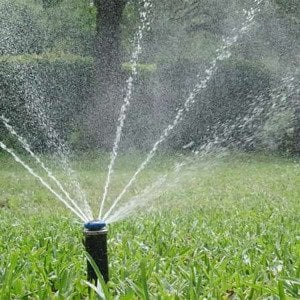
Failing to properly winterize your sprinkler system can result in expensive repairs, even in mild climates with occasional freezing temperatures. Water left in the pipes expands when frozen, which can cause burst pipes, cracked valves, and leaky sprinkler heads.

To winterize your system, drain all water from the pipes, valves, manifold, and sprinkler heads, and insulate above-ground components and backflow preventers.

8. Not Watering or Overwatering

Fall and winter watering are tricky, as both extremes can harm your lawn.

Dormant grass needs less water, but since the roots are still functioning during dormancy, your lawn can still experience drought stress.

On the flip side, overwatered lawns are more susceptible to fungal diseases, root rot, and snow mold.

In cold climates, water the ground thoroughly before it freezes to ensure adequate moisture reserves. When cool-season grasses are dormant and “If winter is open and dry without much rain or snow, you should water one or two times a month from November to April,” says Jim Klett, professor emeritus of Horticulture and Landscape Architecture at Colorado State University

Klett offers these tips for watering your grass in winter:

  • When to water: “Only water when temperatures are above 40 degrees and soil is not frozen,” he says. “The best time is midday when it is the warmest.”
  • How much to water: Use cups to measure, and “add 0.5 to 1 inch of water. Check to be sure it is not running off. If so, stop watering, let it soak in, and then apply again to get that amount.”

In mild climates, maintain a regular watering schedule adjusted for slower growth and higher evaporation rates.

FAQ About Winter Lawn Care Mistakes to Avoid

Can I overseed bare patches during winter?
Overseeding during winter is generally a mistake in cold climates. Cool-season grass seed requires soil temperatures of about 50 degrees to germinate, and frozen ground prevents root establishment.

If you live in a warm climate with mild winters, you can overseed your lawn with cool-season grasses, but it’s best to do it in late summer or early fall.

Should I aerate my lawn in winter?
No, it’s usually counterproductive to aerate in winter. Frozen or waterlogged soil can damage aerating equipment and harm grass roots. Winter aeration also creates soil openings that expose roots to harsh cold and frost heaving.

The best time to aerate is during your grass’s active growing season: early spring or fall for cool-season grasses, and late spring for warm-season turf.

How often should I check my lawn during winter?
It’s good practice to check your lawn every two to three weeks during winter, even though it’s dormant. Look for issues like snow mold, animal damage (including the presence of winter rodents like voles), and compaction from excessive foot traffic. After heavy snowfall or storms, check for broken branches on trees or drainage problems.

Keep Your Lawn Winter-Ready with the Help of a Pro

Avoiding these winter lawn care mistakes keeps your lawn healthy and ready for spring growth. From proper mowing heights to timely fertilization and sprinkler winterization, small steps now help prevent major headaches later.

If tackling winter prep feels overwhelming and time consuming, hire a local lawn care professional who can handle everything from leaf removal to fertilization, ensuring your lawn survives winter and greens up beautifully in spring.

This story was produced by LawnStarter and reviewed and distributed by Stacker.


Salem News Channel Today

Sponsored Links


September 26 - Phoenix, AZ
Scottsdale Center for the Performing Arts


November 2 - Detroit, MI
Zion Christian Church in Troy


October 6 - Los Angeles, CA
Pasadena Convention Center


November 5 - San Antonio, TX
Norris Centers – The Grand Red Oak Ballroom


October 8 - Sacramento, CA
William Jessup University


November 7 - Tampa, FL
The Palladium at St. Pete College


October 22 - Minneapolis, MN
Crowne Plaza AiRE


November 15 - San Francisco, CA
Fremont Marriott Silicon Valley


October 23 - Philadelphia, PA
Green Valley Country Club


November 16 - Denver, CO
CU South Denver - Formerly Wildlife Experience


November 2 - Chicago, IL
Chicago Westin Northwest in Itasca


November 21 - Cleveland, OH
Holiday Inn Rockside in Independence


Salem Radio Network Speakers

Larry Elder is an American lawyer, writer, and radio and television personality who calls himself the "Sage of South Central" a district of Los Angeles, Larry says his philosophy is to entertain, inform, provoke and to hopefully uplift. His calling card is "we have a country to save" and to him this means returning to the bedrock Constitutional principles of limited government and maximum personal responsibility. Elder's iconoclastic wit and intellectual agility makes him a particularly attractive voice in a nation that seems weary of traditional racial dialogue.” – Los Angeles Times.

Mike Gallagher Mike Gallagher began his broadcasting career in 1978 in Dayton, Ohio. Today, he is one of the most listened-to talk radio show hosts in America, recently having been ranked in the Talkers Magazine “Heavy Hundred” list – the 100 most important talk radio hosts in America. Prior to being launched into national syndication in 1998, Mike hosted the morning show on WABC-AM in New York City. Today, Talkers Magazine reports that his show is heard by over 3.75 million weekly listeners. Besides his radio work, Mike is seen on Fox News Channel as an on-air contributor, frequently appearing on the cable news giant.

Hugh Hewitt is one of the nation’s leading bloggers and a genuine media revolutionary. He brings that expertise, his wit and what The New Yorker magazine calls his “amiable but relentless manner” to his nationally syndicated show each day.

When Dr. Sebastian Gorka was growing up, he listened to talk radio under his pillow with a transistor radio, dreaming that one day he would be behind the microphone. Beginning New Year’s Day 2019, he got his wish. Gorka now hosts America First every weekday afternoon 3 to 6pm ET. Gorka’s unique story works well on the radio. He is national security analyst for the Fox News Channel and author of two books: "Why We Fight" and "Defeating Jihad." His latest book releasing this fall is “War For America’s Soul.” He is uniquely qualified to fight the culture war and stand up for what is great about America, his adopted home country.

Broadcasting from his home station of KRLA in Los Angeles, the Dennis Prager Show is heard across the country. Everything in life – from politics to religion to relationships – is grist for Dennis’ mill. If it’s interesting, if it affects your life, then Dennis will be talking about it – with passion, humor, insight and wisdom.

Sean Hannity is a conservative radio and television host, and one of the original primetime hosts on the Fox News Channel, where he has appeared since 1996. Sean Hannity began his radio career at a college station in California, before moving on to markets in the Southeast and New York. Today, he’s one of the most listened to on-air voices. Hannity’s radio program went into national syndication on September 10, 2001, and airs on more than 500 stations. Talkers Magazine estimates Hannity’s weekly radio audience at 13.5 million. In 1996 he was hired as one of the original hosts on Fox News Channel. As host of several popular Fox programs, Hannity has become the highest-paid news anchor on television.

Michelle Malkin is a mother, wife, blogger, conservative syndicated columnist, longtime cable TV news commentator, and best-selling author of six books. She started her newspaper journalism career at the Los Angeles Daily News in 1992, moved to the Seattle Times in 1995, and has been penning nationally syndicated newspaper columns for Creators Syndicate since 1999. She is founder of conservative Internet start-ups Hot Air and Twitchy.com. Malkin has received numerous awards for her investigative journalism, including the Council on Governmental Ethics Laws (COGEL) national award for outstanding service for the cause of governmental ethics and leadership (1998), the Reed Irvine Accuracy in Media Award for Investigative Journalism (2006), the Heritage Foundation and Franklin Center for Government & Public Integrity's Breitbart Award for Excellence in Journalism (2013), the Center for Immigration Studies' Eugene Katz Award for Excellence in the Coverage of Immigration Award (2016), and the Manhattan Film Festival's Film Heals Award (2018). Married for 26 years and the mother of two teenage children, she lives with her family in Colorado. Follow her at michellemalkin.com. (Photo reprinted with kind permission from Peter Duke Photography.)

Sponsored by:

8 winter lawn care mistakes to avoid, according to experts

Carbonatix Pre-Player Loader

Audio By Carbonatix

8 winter lawn care mistakes to avoid, according to experts

Winter dormancy doesn’t mean neglecting your lawn. Many homeowners make critical mistakes, like failing to remove leaves or winterize their sprinklers, which can lead to spring damage, disease, and costly repairs.

To help you avoid these pitfalls, LawnStarter consulted with lawn care experts who shared their professional insights on the most common winter mistakes. Knowing which of these eight winter lawn care mistakes to avoid will help get your spring off to the best start.

A single one of these mistakes can set your lawn back come spring, so if you're unsure of your own skills, consider hiring a local lawn care pro.

1. Cutting Grass Too Short Before Winter

One of the biggest mistakes people make before winter is scalping their lawn by mowing too short on their final mow. It’s generally recommended to mow cool-season grasses at 2 to 2.5 inches before winter and to maintain the regular recommended mowing height for warm-season grasses.

“The recommendation to mow short at the end of winter has been around for decades, mostly to reduce snow mold,” says Paul Koch, chair of the Department of Plant Pathology at the University of Wisconsin-Madison. “However, there's really no evidence to support that lowering the height in late fall reduces snow mold in lawns.”

Lowering the height removes the green tissue that helps produce food to get your grass through the winter, he explained. It causes stress, making “the turf thinner the next spring and more vulnerable to weed germination.”

Ideal mowing heights vary, “but in general we recommend a height of 2.5-3.5 inches for cool-season lawn grasses,” Koch says.

Here’s his explanation why: “This provides a nice combination of being high enough to promote dense growth of both leaves and roots and low enough to still not look too shaggy and to also mow off the many weeds that could grow at higher heights of cut.”

2. Applying the Wrong Fertilizer or Fertilizing Too Late

Fall fertilization is critical for a healthy spring lawn, but timing and formulation matter tremendously. You don’t want to skip fall fertilization completely, and you don’t want to grab just any fertilizer off the store shelf and apply it whenever you have a free 15 minutes.

The key is applying a winterizing fertilizer with higher potassium content in late fall for cool-season and transition-zone lawns, and in early fall for warm-season turfgrasses. Avoid fertilizing once the grass is fully dormant or the ground is frozen.

You don’t want to apply high-nitrogen fertilizer too late in the season, as this encourages a flush of new growth right before winter. To help avoid this, Bryan Hopkins, professor and turf expert at Brigham Young University, recommends, “at least half of each application should be slow-release” fertilizer.

3. Not Removing Leaves and Debris

Before the snow flies, rake or mulch leaves, remove fallen branches, and clear away any toys, furniture, or equipment left on the lawn.

Why should you remove leaves from your lawn? A thick layer “can suffocate the turf or increase snow mold, which can damage the turf over the winter,” Koch says.

“If you can't see the grass blades through the tree leaves, then it's too thick,” he says.

But you can mulch your leaves to return nutrients to the soil.

Make sure to mulch/mow the leaves and spread them out “so that green grass leaves are still visible through the tree leaves,” Koch advises. “This will allow the tree leaves to work down into the turf canopy and provide added organic matter and nutrients without suffocating the turf.”

4. Walking on Frozen or Snow-Covered Grass

When snow is covering your lawn, you often don’t think twice about cutting across the grass instead of staying on sidewalks and driveways. However, foot traffic can cause significant damage to frozen or snow-covered grass.

Frozen grass is brittle and breaks easily when walked on, creating brown, dead patches that show up in spring. Walking across snow-covered lawns can also compact the soil beneath the roots and create ice layers that damage crowns.

Stick to walkways, stepping stones, or gravel paths to avoid crossing your lawn during the winter. If you have to walk across it, change your route to prevent concentrated damage in specific areas or paths, or lay down sheets of plywood to disperse the weight and force.

5. Ignoring Snow Mold Prevention

Snow mold is a common fungal disease that thrives under snow cover, particularly when snow blankets unfrozen ground or falls during fluctuating freeze-thaw cycles.

The two different types — gray snow mold and pink snow mold — create circular patches or matted, discolored grass that appears as the snow melts.

Of the two, “Pink snow patch is a more damaging pathogen and can kill turf,” says Tim Abbey, commercial horticulture educator at Penn State Extension.

To prevent snow mold problems, Abbey recommends “no late-season nitrogen applications, don’t leave the turf high, and avoid an over-reliance on fungicides during the growing season.”

Abbey “usually doesn’t recommend fungicide applications for home lawns,” even as prevention.

Other ways to prevent snow mold include:

  • Remove leaves and other debris that trap moisture. (See #3 above.)
  • Improve air circulation by pruning overhanging branches or thick shrubbery.

6. Using Salt or Chemical Deicers Carelessly

Rock salt and deicers are great at melting ice on walkways and driveways, but they can cause big problems for your lawn and the soil.

Here’s why: Salt draws moisture out of grass roots and causes leaf burn, which appears as brown, dead strips along sidewalks and driveways. Over time, it can accumulate in the soil, creating long-term problems.

To prevent salt damage to your grass, apply deicing products sparingly and only where needed. After the winter snow melts, thoroughly flush grassy areas close to any concrete with water to dilute the salt concentration and move it out of the root zone.

7. Not Winterizing Your Irrigation System

Failing to properly winterize your sprinkler system can result in expensive repairs, even in mild climates with occasional freezing temperatures. Water left in the pipes expands when frozen, which can cause burst pipes, cracked valves, and leaky sprinkler heads.

To winterize your system, drain all water from the pipes, valves, manifold, and sprinkler heads, and insulate above-ground components and backflow preventers.

8. Not Watering or Overwatering

Fall and winter watering are tricky, as both extremes can harm your lawn.

Dormant grass needs less water, but since the roots are still functioning during dormancy, your lawn can still experience drought stress.

On the flip side, overwatered lawns are more susceptible to fungal diseases, root rot, and snow mold.

In cold climates, water the ground thoroughly before it freezes to ensure adequate moisture reserves. When cool-season grasses are dormant and “If winter is open and dry without much rain or snow, you should water one or two times a month from November to April,” says Jim Klett, professor emeritus of Horticulture and Landscape Architecture at Colorado State University

Klett offers these tips for watering your grass in winter:

  • When to water: “Only water when temperatures are above 40 degrees and soil is not frozen,” he says. “The best time is midday when it is the warmest.”
  • How much to water: Use cups to measure, and “add 0.5 to 1 inch of water. Check to be sure it is not running off. If so, stop watering, let it soak in, and then apply again to get that amount.”

In mild climates, maintain a regular watering schedule adjusted for slower growth and higher evaporation rates.

FAQ About Winter Lawn Care Mistakes to Avoid

Can I overseed bare patches during winter?
Overseeding during winter is generally a mistake in cold climates. Cool-season grass seed requires soil temperatures of about 50 degrees to germinate, and frozen ground prevents root establishment.

If you live in a warm climate with mild winters, you can overseed your lawn with cool-season grasses, but it’s best to do it in late summer or early fall.

Should I aerate my lawn in winter?
No, it’s usually counterproductive to aerate in winter. Frozen or waterlogged soil can damage aerating equipment and harm grass roots. Winter aeration also creates soil openings that expose roots to harsh cold and frost heaving.

The best time to aerate is during your grass’s active growing season: early spring or fall for cool-season grasses, and late spring for warm-season turf.

How often should I check my lawn during winter?
It’s good practice to check your lawn every two to three weeks during winter, even though it’s dormant. Look for issues like snow mold, animal damage (including the presence of winter rodents like voles), and compaction from excessive foot traffic. After heavy snowfall or storms, check for broken branches on trees or drainage problems.

Keep Your Lawn Winter-Ready with the Help of a Pro

Avoiding these winter lawn care mistakes keeps your lawn healthy and ready for spring growth. From proper mowing heights to timely fertilization and sprinkler winterization, small steps now help prevent major headaches later.

If tackling winter prep feels overwhelming and time consuming, hire a local lawn care professional who can handle everything from leaf removal to fertilization, ensuring your lawn survives winter and greens up beautifully in spring.

This story was produced by LawnStarter and reviewed and distributed by Stacker.


Salem News Channel Today

Sponsored Links

On Air & Up Next

See the Full Program Guide